

Rodhos
Suspended between the cobalt blue of the Aegean and the clear azure of the Mediterranean sky, Rhodes emerges as a bridge of stone...
Updated 7 July 2026
This season · July · Summer
What to do in Rodhos now
The story
The story of Rodhos
A millennia-old chronicle: from city-states to the Knights
The history of Rhodes is inextricably linked to its strategic position. Founded in 408 BC through the union of the island's three great city-states — Lindos, Ialysos and Kameiros — the city of Rhodes rapidly became a leading commercial and cultural center of the Hellenistic world. It was during this golden age that the legendary Colossus was erected, the giant bronze statue dedicated to Helios that dominated the entrance to the harbor. After the decline of Greek independence, the island passed under Roman and then Byzantine rule, always maintaining a key role along the maritime routes to the Holy Land.
The decisive turning point came in 1309, when the Knights of the Order of St. John of Jerusalem took possession of the island, transforming it into a mighty Christian stronghold at the heart of the Aegean. For over two centuries, Rhodes was the bulwark against the Ottoman advance, until the capitulation of 1522 following a heroic siege. Turkish rule lasted until 1912, when Italy occupied the Dodecanese, launching a vast program of restoration and public works that gave the modern city its present-day appearance, before its definitive reunification with Greece in 1948.
The Medieval City: a labyrinth of history
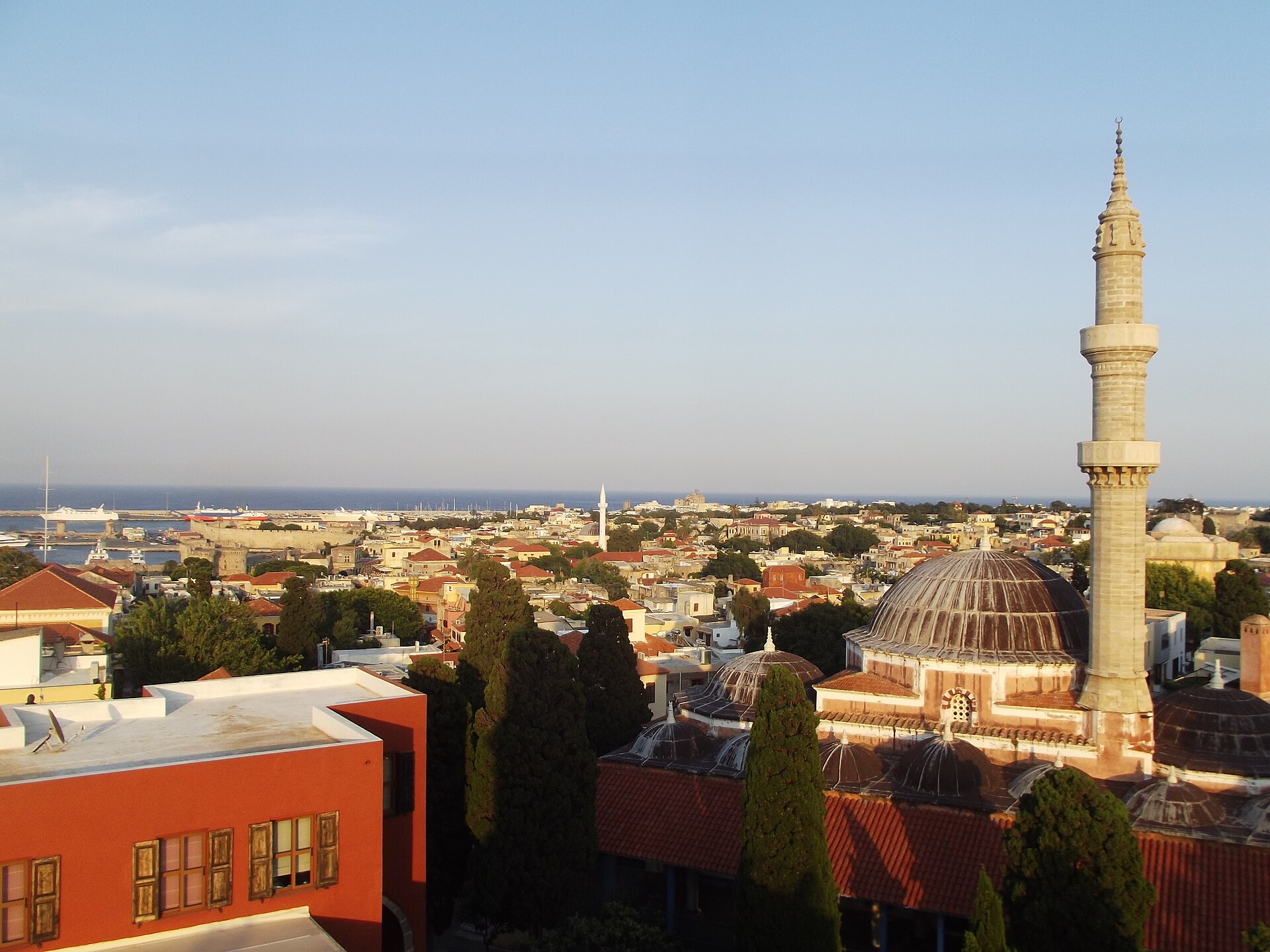
The Old Town of Rhodes is one of the best-preserved medieval fortifications in Europe. Enclosed within walls roughly four kilometers long, it is a maze of narrow streets where the Gothic architecture of the Knights blends with Ottoman mosques and the inner courtyards of Greek houses. Wandering here means losing yourself among craft shops, taverns fragrant with oregano, and hidden little squares where time seems to have stopped. Passing through the majestic monumental gates, such as the Marine Gate or the d'Amboise Gate, prepares the visitor for an immersive journey into the island's chivalric past.
The Palace of the Grand Master
Atop the Old Town rises the Palace of the Grand Master, the citadel within the citadel. Originally built in the 14th century as the administrative seat and residence of the head of the Order of the Knights, the building impresses with its imposing crenellated towers and the appearance of an impregnable fortress. Although much of the original structure was damaged by an explosion in 1856, the palace was meticulously rebuilt during the Italian period. Inside, spacious halls house precious Hellenistic and Roman-era floor mosaics from the island of Kos, along with exhibitions recounting the daily life and deeds of the Knights.
The Street of the Knights
The Street of the Knights (Odos Ippoton) is perhaps the most famous and evocative medieval street in the world. About 600 meters long, it connects the Palace of the Grand Master with the harbor area. Along this straight, dark cobblestone axis stand the 'Inns of the Tongues', the sumptuous residences where knights lodged according to their geographic origin (France, Spain, Italy, England, etc.). The absence of modern shop windows and the uniformity of the Gothic style create an austere, solemn atmosphere, especially at dusk, when the soft light accentuates the outlines of the noble coats of arms carved into the limestone.
The Port of Mandraki and the myth of the Colossus
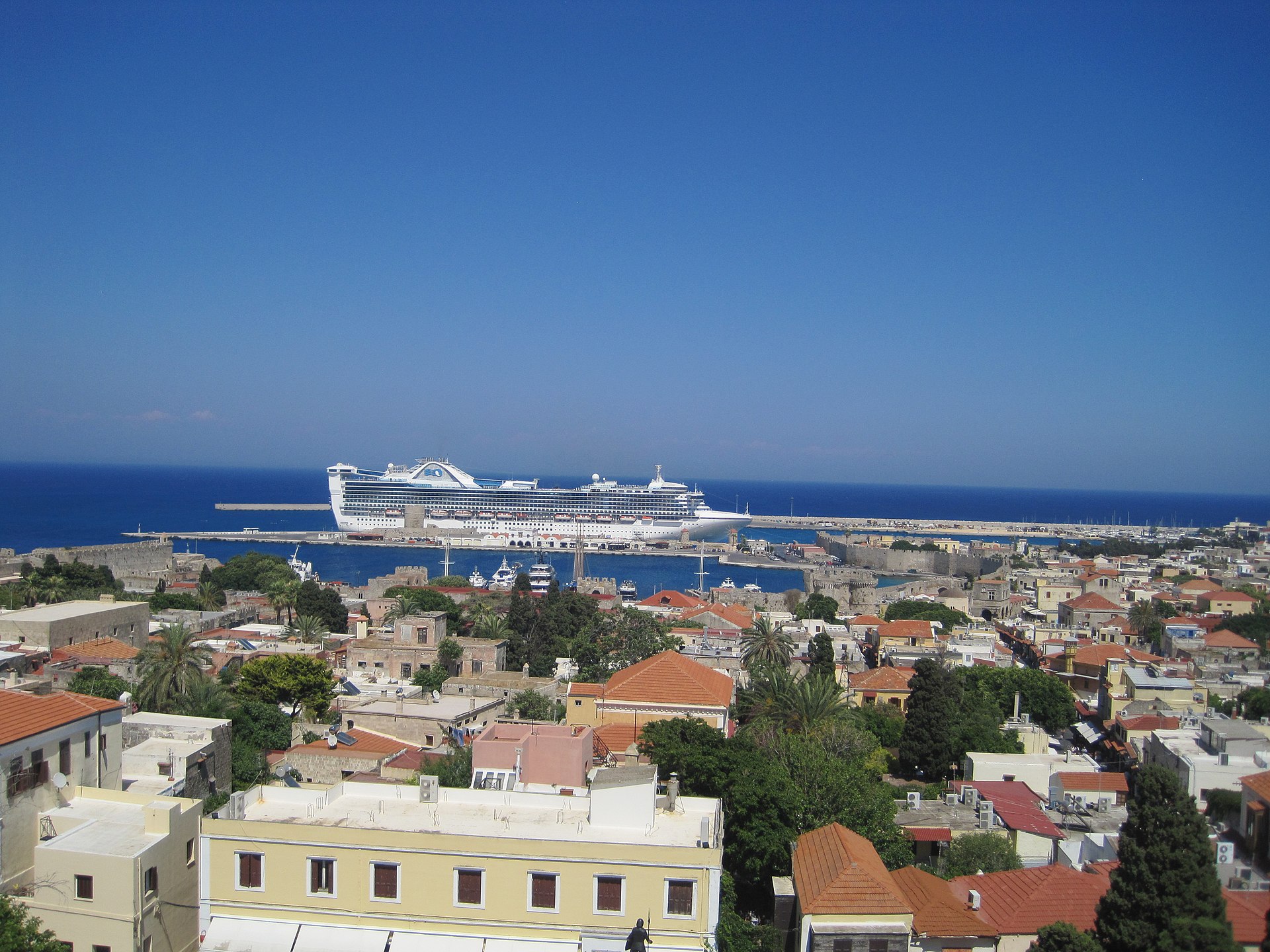
Mandraki is Rhodes' ancient military harbor, today bustling with yachts and excursion boats. At the harbor entrance, where legend has it the feet of the Colossus of Rhodes once stood, two columns now rise topped with bronze statues of a stag and a doe (Elafos and Elafina), symbols of the city. Along the pier stand three characteristic medieval windmills and the Fortress of St. Nicholas, which serves as a lighthouse. This spot is the beating heart of modern Rhodes, where an evening stroll blends with the sea breeze and the scenic view of the walls reflected in the water.
The Acropolis of Rhodes and Monte Smith
On the hill overlooking the city, known as Monte Smith (named after the English admiral who established an observation post there in 1802), lie the remains of the Acropolis of Rhodes. Unlike other Greek acropolises, this one was not fortified, but formed a monumental area dedicated to worship and sport. Here you can admire the partially reconstructed columns of the Temple of Pythian Apollo, the perfectly preserved 2nd-century BC Hellenistic stadium, and the small marble theater. It is the ideal place to enjoy a spectacular sunset, with views stretching all the way to the coast of Turkey.
Lindos: the island's white pearl
Located about 50 kilometers south of the capital, Lindos is an unmissable stop. It appears as a cascade of white Cycladic-style houses clinging to the rock, dominated by a spectacular acropolis encircled by medieval walls. Climbing on foot or donkey-back through the winding lanes, you reach the Doric temple of Athena Lindia, perched on a cliff plunging into the sea. The view over St. Paul's Bay, with its heart shape and turquoise waters, is one of the most iconic images of all Greece. Lindos retains a timeless charm despite its touristic popularity.
Nature and Landscape: from Butterflies to the Seven Springs
The interior of Rhodes holds unexpected surprises. The Valley of the Butterflies (Petaloudes) is a unique biotope where, between June and August, thousands of Panaxia Quadripunctaria butterflies gather, drawn by the scent of the sweetgum trees. Another magical place is Epta Piges (Seven Springs), a wooded area where water flows fresh all year round, forming streams and a small lake reached through an underground tunnel. The coastline varies dramatically: the western side is windswept and ideal for windsurfing, while the eastern side offers sheltered beaches such as Faliraki, Tsambika, and the famous Anthony Quinn Bay.
Traditions and flavors of the Dodecanese
The cuisine of Rhodes is a triumph of local ingredients enriched by Middle Eastern influences. You cannot leave the island without trying 'pitaroudia', crispy chickpea fritters with mint and onion, or 'melekouni', a traditional sweet made from honey and sesame typical of weddings. Wine production has ancient roots: local wines, especially those grown on the slopes of Mount Attavyros, are among the best in Greece. Folk traditions come alive during religious festivals (panigiria), where lyre music and group dances bring entire villages together in a ritual of conviviality that unites generations.
Unmissable experiences in Rhodes
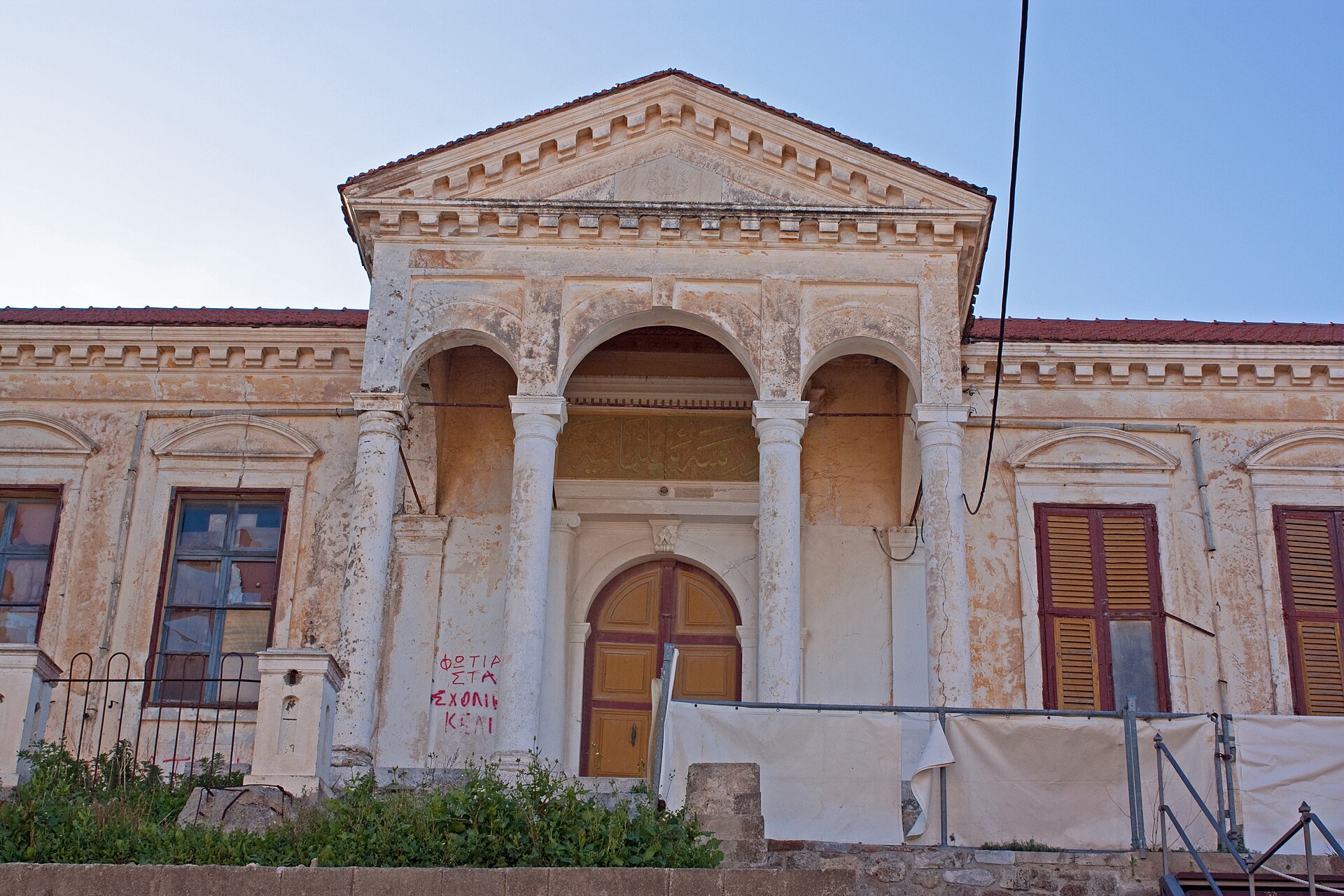
- Get lost in the Jewish Quarter of the Old Town and visit the Kahal Shalom synagogue.
- Swim in the crystal-clear waters of Anthony Quinn Bay, surrounded by rocks and pine trees.
- Explore the ruins of ancient Kameiros, nicknamed the 'Greek Pompeii'.
- Watch a sound-and-light show in the garden of the Palace of the Grand Master.
- Walk through the Seven Springs tunnel for a refreshing and unusual experience.
- Enjoy a sunset aperitif on one of the panoramic terraces near the Clock Tower.
When to go and how to experience the island
Rhodes enjoys a privileged climate with over 300 sunny days a year. Spring (May-June) and early autumn (September-October) are the best times to visit: temperatures are pleasant, nature is lush, and crowds are moderate. Summer is ideal for those seeking beach life and nightlife, though the heat can be intense. To experience the island authentically, it is advisable to rent a car to venture beyond the classic routes, visiting mountain villages such as Embonas or Siana, where Greek hospitality (philoxenia) still manifests itself in its purest and most genuine form.
FAQ
Quanto tempo occorre per visitare Rodi?
È facile muoversi con i mezzi pubblici?
La città vecchia è accessibile ai disabili?
Qual è la spiaggia migliore per le famiglie?
Getting there
- Aeroporto Internazionale di Rodi-Diagoras (RHO) - 14 km dal centro città
- Non sono presenti linee ferroviarie sull'isola.
- La città di Rodi è il fulcro stradale dell'isola; la litoranea orientale collega rapidamente il nord con Lindos e il sud.
- Dall'aeroporto è possibile prendere un taxi o il bus navetta che parte ogni 30 minuti circa.
Perfect for
Un paradiso per chi ama il passato, con un mix unico di rovine greche, castelli medievali e architettura ottomana.
Offre spiagge per ogni gusto, dalle calette rocciose ideali per lo snorkeling ai lunghi litorali sabbiosi attrezzati.
La città di Rodi e Faliraki offrono un'ampia scelta di club e bar, rendendola una delle isole più vivaci del Dodecaneso.
To see
