

Mastikhari
Mastichari reveals itself to the traveler's eye like a watercolor in soft hues, where the crystalline blue of the Aegean meets the...
Updated 7 July 2026
This season · July · Summer
What to do in Mastikhari now
The story
The story of Mastikhari
Historical roots: from maritime landing to welcoming village
The history of Mastichari is intrinsically linked to that of nearby Antimachia, the hilltop settlement for which Mastichari originally served as a "skala", that is, a maritime outlet and trading port. While the hinterland offered protection from the pirate raids that plagued the Dodecanese for centuries, the coast was the place of trade and fishing. During the period of rule by the Knights of St John (14th-16th centuries), the area was an integral part of the island's defensive system, with the fortress of Antimachia keeping watch over the sea routes. Later, under the Ottoman Empire and then during the Italian possession (1912-1943), Mastichari retained its rural and maritime character, only evolving in the second half of the twentieth century into a tourist destination that has managed to integrate new accommodation facilities into the village's original fabric.
The Early Christian Basilica of Agios Ioannis
A few steps from the water's edge, in the eastern part of the village, lie the remains of the Basilica of Agios Ioannis (St John), one of the most significant testimonies to early Christianity on the island of Kos. Dating back to the 5th century AD, this three-aisled structure speaks of an era when Christianity was consolidating itself as the dominant cultural and religious force in the Aegean. Although today only the foundations, a few columns and fragments of floor mosaics remain, its position right by the sea gives the site a mystical aura. Visitors can clearly make out the plan of the building and imagine the richness of the decorations that once welcomed the faithful, testifying to the strategic and spiritual importance of this stretch of coast as early as late antiquity.
The Port of Mastichari: the beating heart of the community
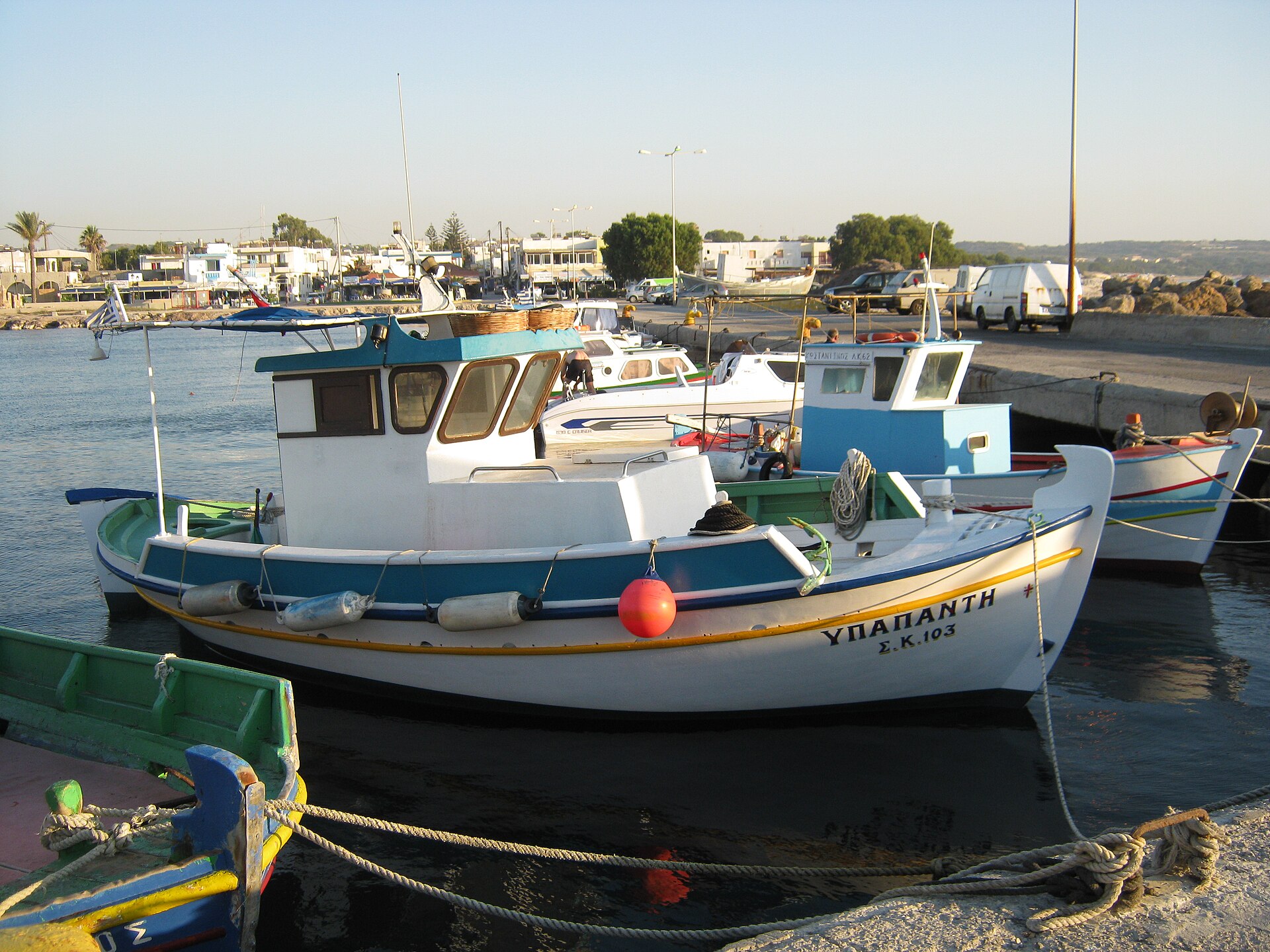
The harbor is not just a piece of logistical infrastructure, but the true social hub of the village. Here life flows with a reassuring regularity: early in the morning you can watch the fishing boats return laden with nets and the day's catch, while during the day the pier comes alive with the departure of ferries bound for Kalymnos. This daily connection with the island of the sponge divers gives Mastichari a unique dynamism, making it a privileged gateway for exploring the archipelago. The tavernas overlooking the quay offer the ideal vantage point for enjoying the spectacle of boats maneuvering, while sipping a Greek coffee or an ouzo, immersed in a setting where tourism has not yet erased the dimension of daily work tied to the sea.
The Beach and the dune system
Mastichari's beach is renowned as one of the widest and sandiest on the whole island of Kos. Characterized by fine, pale sand, it stretches for several kilometers, offering both areas equipped with sunbeds and umbrellas and completely wild stretches where pioneer vegetation and small dunes create an almost African landscape. The waters, an intense turquoise, shelve gently, making swimming safe for families. However, its exposure to the northern winds also makes it a top destination for windsurfing and kitesurfing enthusiasts, who find ideal conditions here for gliding over the waves. At sunset, the beach is transformed: the sun disappears exactly behind the facing islands, painting the sky in shades of violet and orange that reflect on the shoreline.
Antimachia: the castle and rural tradition
About 5 kilometers from Mastichari, on a plateau overlooking the coast, stands the village of Antimachia, an essential stop for understanding the identity of the place. Here you will find the imposing Castle of Antimachia, a fortress built by the Knights of St John in the 14th century. Its perimeter walls, still exceptionally well preserved, enclose the remains of ancient dwellings and two Byzantine churches. Besides the fortress, the village is home to the "Papas Windmill", a traditional windmill still in working order, and the "House of Antimachia", an ethnographic museum that faithfully reproduces a farmhouse dwelling from the last century. These sites offer a profound glimpse into the resilient life of the inhabitants of Kos, between farming, grain milling and the defense of the territory.
Landscape and Nature: the Alikes salt pans
A short distance from Mastichari, heading east along the coast, you come upon the protected area of the Alikes salt pans (near Tigaki). This lagoon ecosystem, once used for salt extraction, is today a sanctuary for biodiversity and an unmissable destination for birdwatching. During the migratory months, the shallow waters of the salt pans host colonies of pink flamingos, herons and other species of waterfowl that find refuge and food here. The contrast between the white of the salt crusts, the green of the marsh vegetation and the blue of the sea creates a natural scene of extraordinary beauty, ideal for walks on foot or by bicycle, away from the bustle of the more crowded towns.
Traditions and Flavors: the Wine and Honey Festival
The popular culture of Mastichari and its surroundings expresses itself powerfully during the summer celebrations. In August, the village and nearby Antimachia come alive for the Wine Festival and the Honey Festival, events celebrating the territory's finest products. Kos thyme honey is considered among the best in Greece for its purity and aroma, while the local wines, produced from vines that benefit from the island's volcanic soil, accompany traditional dishes such as "Pitaridia" (homemade pasta cooked in meat broth) or "Possia", a goat's cheese aged in red wine. Taking part in these festivals means immersing yourself in traditional dances, live music and a generous hospitality rooted in the Greek concept of 'philoxenia'.
Not-to-be-missed experiences in Mastichari
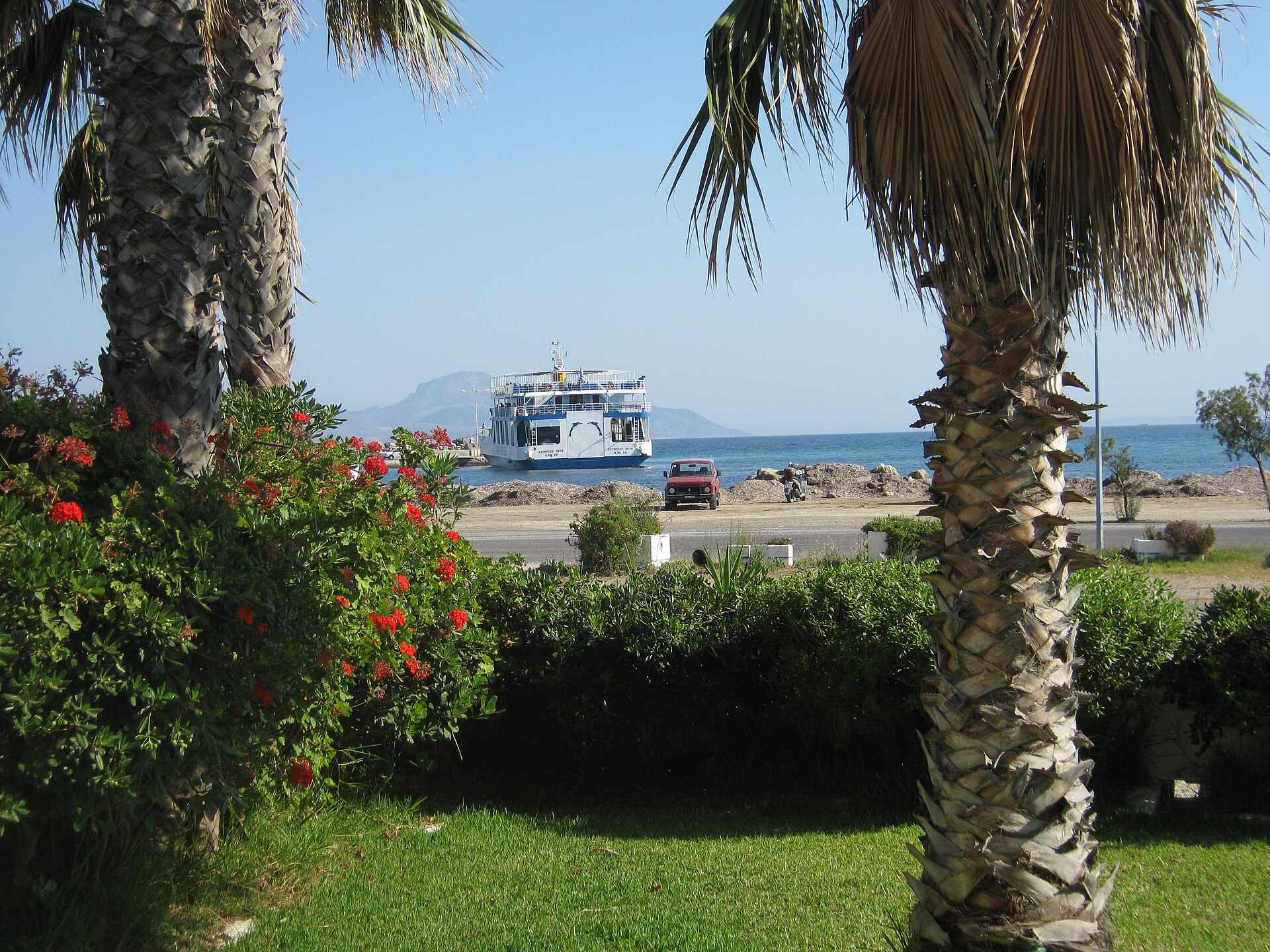
- A boat trip to Kalymnos and Pserimos departing from the local harbor.
- A dinner of the freshest fish in one of the seafront tavernas at sunset.
- A windsurfing or kitesurfing session taking advantage of the Meltemi wind.
- A visit to the traditional windmill of Antimachia to discover the ancient art of grain milling.
- A morning stroll among the ruins of the early-Christian basilica of Agios Ioannis.
- A tasting of the local cheese aged in wine (Possia) at a producer in the hinterland.
When to go and how to experience the village
The ideal period to visit Mastichari runs from May to October. Late spring (May and June) offers mild temperatures, lush nature and absolute tranquility, perfect for those seeking relaxation. July and August are the hottest and windiest months, ideal for seaside life and for experiencing the lively atmosphere of the village festivals, although the number of visitors increases considerably. September and early October are perhaps the magic moment: the sea is still warm, the light turns more golden and the pace slows down, allowing you to fully enjoy the authentic dimension of the village. To get around, besides the car, the bicycle is a much-loved means of transport thanks to the flat terrain of the coast, which makes it easy to explore the neighboring beaches.
FAQ
Come si raggiunge Mastikhari dall'aeroporto?
È una località adatta alle famiglie con bambini?
Qual è il momento migliore per vedere il tramonto?
Posso visitare altre isole partendo da qui?
Getting there
- Aeroporto Internazionale di Kos 'Hippocrates' (KGS) - 8 km
- Non presenti sull'isola
- Dalla città di Kos seguire la strada principale dell'isola verso ovest per circa 22 km, seguendo le indicazioni per l'aeroporto e poi per Mastikhari.
- Noleggiare un'auto o uno scooter è consigliato per esplorare l'entroterra e il castello di Antimachia in autonomia.
Perfect for
Perfetto per chi cerca ampie spiagge sabbiose e condizioni ideali per windsurf e kitesurf grazie al vento costante.
Un paradiso per gli amanti del pesce fresco e dei prodotti tipici come il miele di timo e il formaggio nel vino.
Atmosfera tranquilla, ritmi lenti e servizi a misura di bambino lo rendono ideale per una fuga rigenerante.
To see
