

Kardhamaina
On the stones of the sanctuary of Apollo at Halasarna, just a little north of the modern-day port of Kardamena, inscriptions are c...
Updated 8 July 2026
This season · July · Summer
What to do in Kardhamaina now
The story
The story of Kardhamaina
Ancient origins: from Halasarna to Kardamena
The archaeological site of Halasarna, just north of the town centre, holds the traces of one of the most important demes of ancient Kos. Excavation campaigns, carried out since the 1990s, have brought to light a sanctuary dedicated to Apollo, the remains of a small theatre and, above all, a rich corpus of stone inscriptions documenting civic organisation, cults and relations with the mother city of Kos. Halasarna flourished between the Hellenistic and Roman ages, exploiting a favourable position on the island's southern coast, open to the sea and sheltered from the northern winds. According to some scholars, the very name Kardamena would derive from dialectal corruptions linked to this ancient settlement, a sign of a millennia-long continuity of life along this stretch of coast.
The Paleokastro rock and the Knights of St John
On the hill overlooking the old village, the remains of a fortification known as Paleokastro can be glimpsed, a defensive stronghold of Byzantine origin reinforced in the 15th century by the Knights of St John, the religious-military order that ruled Kos and the whole Dodecanese from 1315 to 1523. The stronghold was part of a network of coastal watchtowers designed to signal, with fires and smoke, the arrival of pirate ships or Ottoman raids along the island's southern coast, particularly exposed as it faces Anatolia and the Turkish sea routes. Today irregular stretches of dry-stone walls remain, little developed but reachable with a short walk by anyone wishing to understand why the old village grew set back from the coastline, easier to defend and less exposed to sudden landings.
The 20th century: from earthquake to tourist discovery
Like the whole island of Kos, Kardamena too bears the marks of a turbulent recent history: from 1912 to 1943 the Dodecanese was under Italian administration, a period that left traces in the town planning and architecture of some of the island's public buildings, while the violent earthquake of 1933 heavily damaged several coastal towns, forcing rebuilding and new urban layouts. Only in 1948 were Kos and the other Dodecanese islands reunited with Greece, after a brief period under British administration in the post-war years. For decades Kardamena remained a quiet village of fishermen and farmers, devoted to growing olives and vines; the turning point came in the 1980s, when the first British tour operators discovered its long, sandy beach, triggering rapid building growth that in just a few years transformed the seafront into one of the liveliest areas of the island.
The beach and the coastal landscape
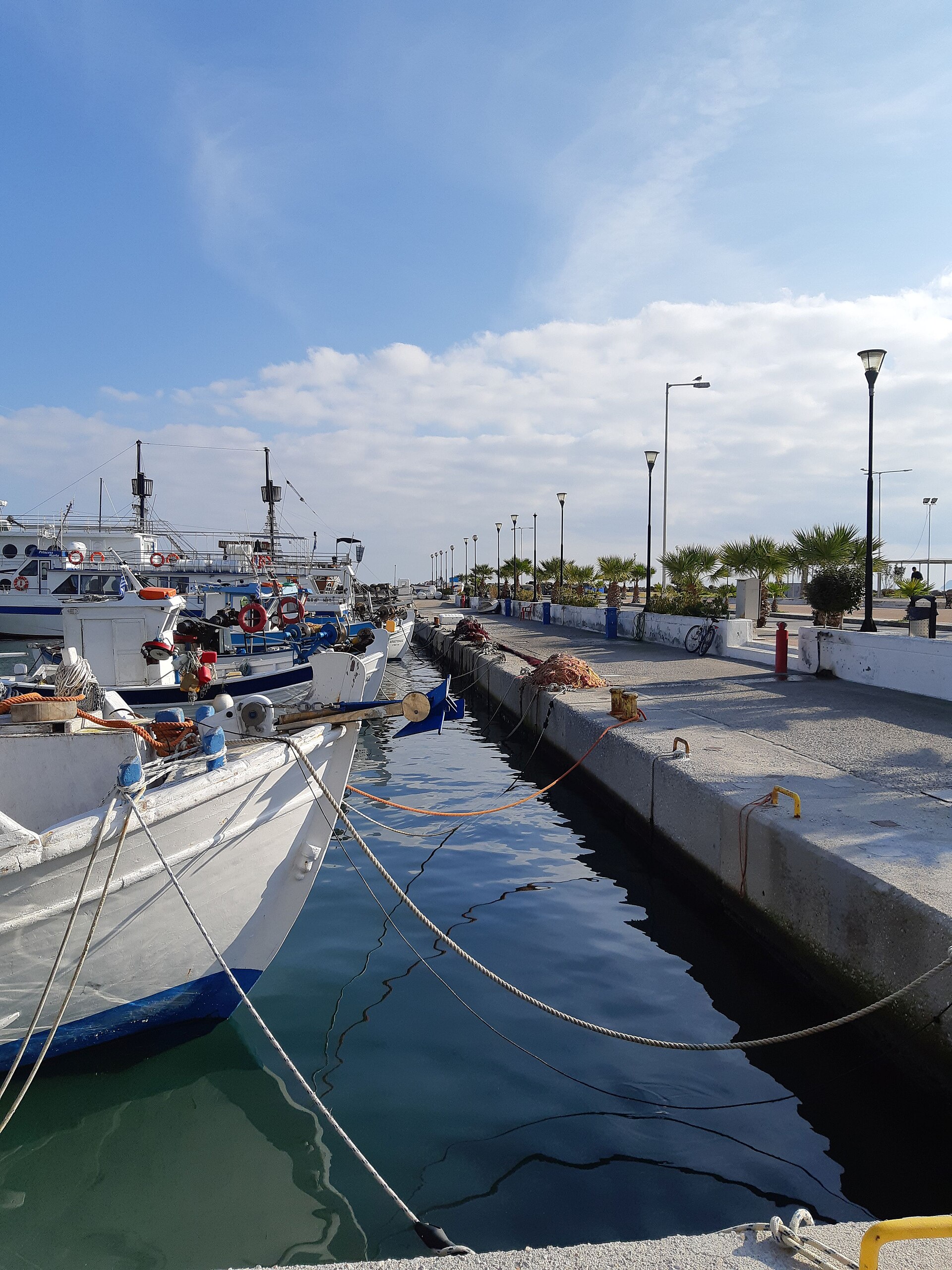
Kardamena's beach stretches for over two kilometres along a south-facing arc of coast, with pale sand and shallows that shelve gently, ideal for families especially along the western stretch, closer to the small harbour. To the east, where the shore widens and grows wilder, the meltemi wind that blows steadily during the summer months creates near-constant conditions for windsurfing and kitesurfing, a discipline that has made the village an internationally recognised destination among enthusiasts. Behind the beach, tamarisks and a few stretches of sandy dunes separate the shore from the plain planted with olive trees and vegetables; on the clearest days, to the south-east the dark silhouette of the Nisyros volcano stands out sharply, while to the east, beyond a narrow stretch of sea, the coasts of Turkey can be glimpsed.
Unmissable surroundings: Antimachia, Kefalos and Nisyros
About ten kilometres toward the airport lies the village of Antimachia, with its castle of the Knights of St John still enclosing two frescoed Byzantine churches and, just outside the walls, a row of restored stone windmills, testimony to an agricultural economy that for centuries coexisted with the maritime one. Continuing toward the island's south-western tip, one reaches Kefalos, a village perched on a headland from which the eye sweeps over the bay of Kamari and the islet of Agios Stefanos, where the ruins of two early Christian basilicas from the 5th-6th century emerge almost at water level. From Kardamena, daily ferry excursions also depart for Nisyros, a small volcanic island of the Dodecanese whose Stefanos crater, still active with sulphurous fumaroles, can be visited in under an hour's walk from the village of Nikia.
Flavours, traditions and when to go
The cuisine of Kardamena and the whole Dodecanese has a maritime soul: grilled fish, octopus sun-dried with oil and oregano, rock shrimp, but also land dishes such as kolokythokeftedes, the courgette fritters typical of Kos, and pitaridia, fresh homemade pasta dressed with tomato and local cheese, accompanied by thyme honey from the inland areas and light white wines. The patronal feast of Agia Anna, at the end of July, still draws the whole village with processions and traditional dances, while on 15 August families gather in the tavernas of the harbour. To enjoy Kardamena without the crowds, the ideal period remains May to mid-June or September to early October, when the sea is already warm and temperatures are mild; July and August remain the liveliest and windiest months, perfect instead for those seeking nightlife and water sports.
Experiences not to be missed
- Stroll among the remains of the Hellenistic sanctuary of Halasarna, just outside the village
- Climb up to the Paleokastro rock for a sweeping view over the bay and the hinterland
- Try windsurfing or kitesurfing on the eastern stretch of the beach, among the windiest in Kos
- Take the daily ferry to the volcanic crater of Nisyros
- Visit the castle and the restored windmills of Antimachia
- Dine in a harbour taverna with fresh fish and kolokythokeftedes
FAQ
Come si arriva a Kardamena?
Qual è il periodo migliore per visitarla?
Cosa vedere in un giorno a Kardamena?
Dove si parcheggia in paese?
Quanti giorni conviene restare?
È adatta a famiglie con bambini o con animali?
Getting there
- Aeroporto Internazionale di Kos 'Ippocrate' (KGS), circa 9 km
- Da Kos città, circa 27 km, si segue la strada litoranea verso sud-est; collegamenti diretti anche da Antimachia e da Kefalos.
- In alta stagione conviene noleggiare uno scooter o un'auto per raggiungere in autonomia Antimachia, Kefalos e le spiagge meno affollate, ed eventualmente prenotare in anticipo il traghetto per Nisyros.
Perfect for
Spiaggia lunga e sabbiosa, con fondali dolci a ovest e vento costante a est, perfetto per windsurf e kitesurf.
Dal santuario ellenistico di Halasarna alla fortezza dei Cavalieri di San Giovanni, strati di storia a pochi passi dal centro.
Base ideale per il traghetto giornaliero verso il vulcano di Nisyros e per i borghi di Antimachia e Kefalos.
D'estate il lungomare si anima di locali e musica fino a tardi, con un'offerta pensata soprattutto per un pubblico giovane.
Taverne di pesce fresco e piatti tipici del Dodecaneso, dai kolokythokeftedes alla pitaridia.
To see
