Afandou
There is an etymology worth more than a thousand descriptions: in the Greek of the local inhabitants, "áfantos" means invisible, v...
Updated 8 July 2026
This season · July · Summer
What to do in Afandou now
The story
The story of Afandou
A name that means invisible
The most common explanation of the place name traces back to the Greek word for "invisible": the village, set back from the shoreline and sheltered by a strip of low dunes, could not be seen from the open sea, unlike other coastal villages more exposed to raids by Saracen pirates and corsairs who for centuries plagued the coasts of the Dodecanese. Others trace the name to a figure or an ancient landowner, but it is the version of the "little town the sea cannot see" that the inhabitants tell most readily. It is not a minor detail: it describes a relationship with the coast built on caution and distance, very different from the more exposed one found in other tourist resorts on the island, and it explains why the original settlement still lies set back from the long beach that bears its name.
Afandou's sword and its origins in Aegean prehistory
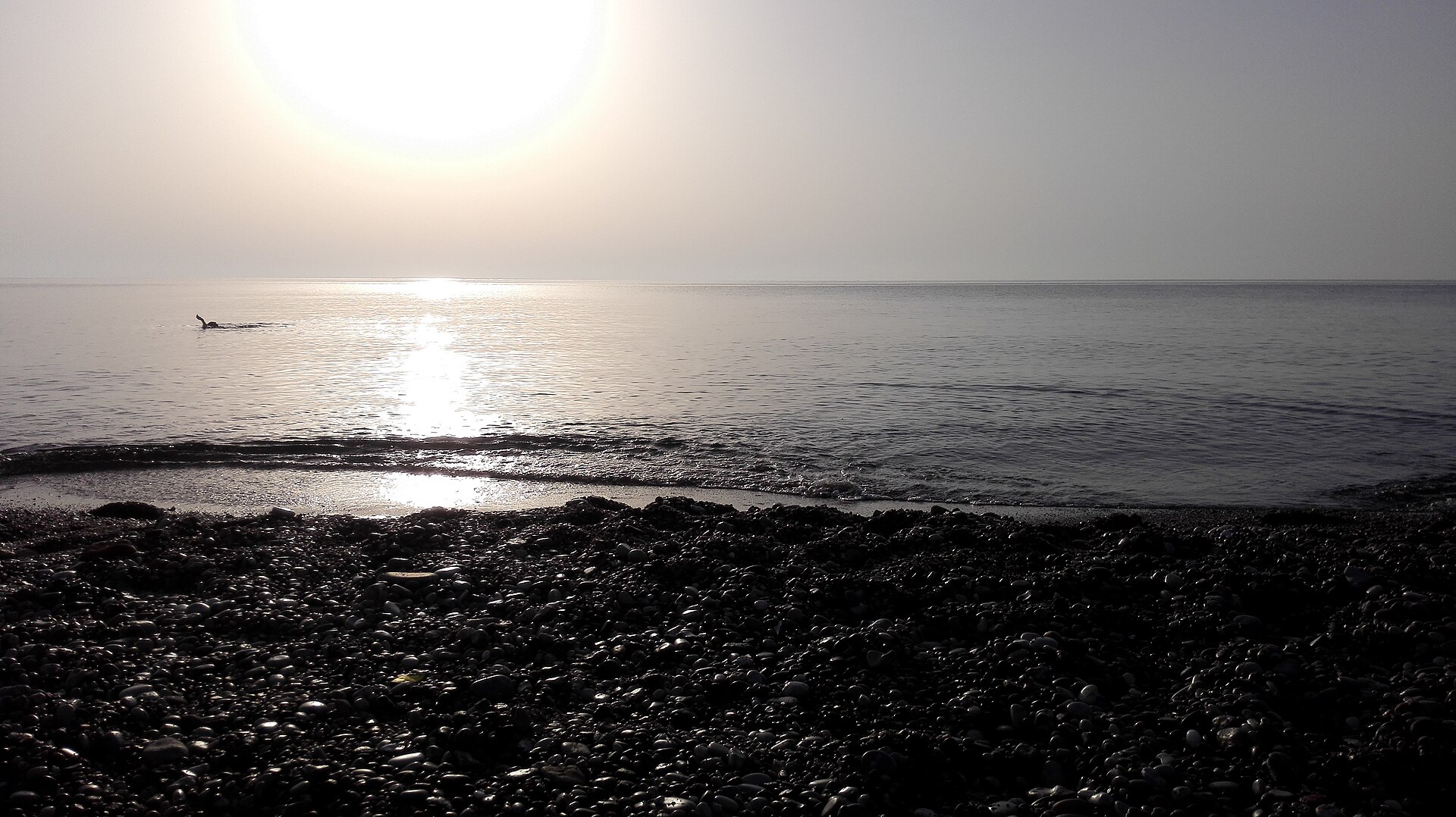
Long before the name appeared in medieval sources, this stretch of the eastern coast of Rhodes was already frequented in Mycenaean times. From a chamber tomb near the village comes one of the most celebrated finds in Rhodian archaeology: a bronze sword finely decorated with a lion-hunt scene, now kept in the Archaeological Museum of Rhodes, inside the Palace of the Grand Master of the Knights Hospitaller. The find shows how the coastal plain was already a place of settlement and exchange in the late Bronze Age, when Rhodes maintained trade relations with the Mycenaean world and the eastern Aegean. The necropoleis scattered across the hinterland, little explored and partly still under cultivated fields, tell of a continuity of settlement that predates the island's written history by far.
Knights, sultans and the Italian interlude
Like the rest of Rhodes, Afandou too passed through the great chapters of the island's history: the long Byzantine period, the rule of the Knights Hospitaller of Saint John between 1309 and 1522, who made Rhodes one of the most fortified Christian strongholds in the eastern Mediterranean, and finally the Ottoman conquest that followed the famous siege of 1522. Under the Turks the village, like many farming settlements on the island, kept a rural economy tied to grain and livestock. The turning point came in 1912, with the Italian occupation of the Dodecanese: the Italian administrators invested in infrastructure, land reclamation and the tourist development of the eastern coast, leaving Afandou a particular legacy, that of golf, which will be discussed further on. The Dodecanese passed definitively to Greece only in 1947, after the Second World War.
The longest beach on the eastern coast
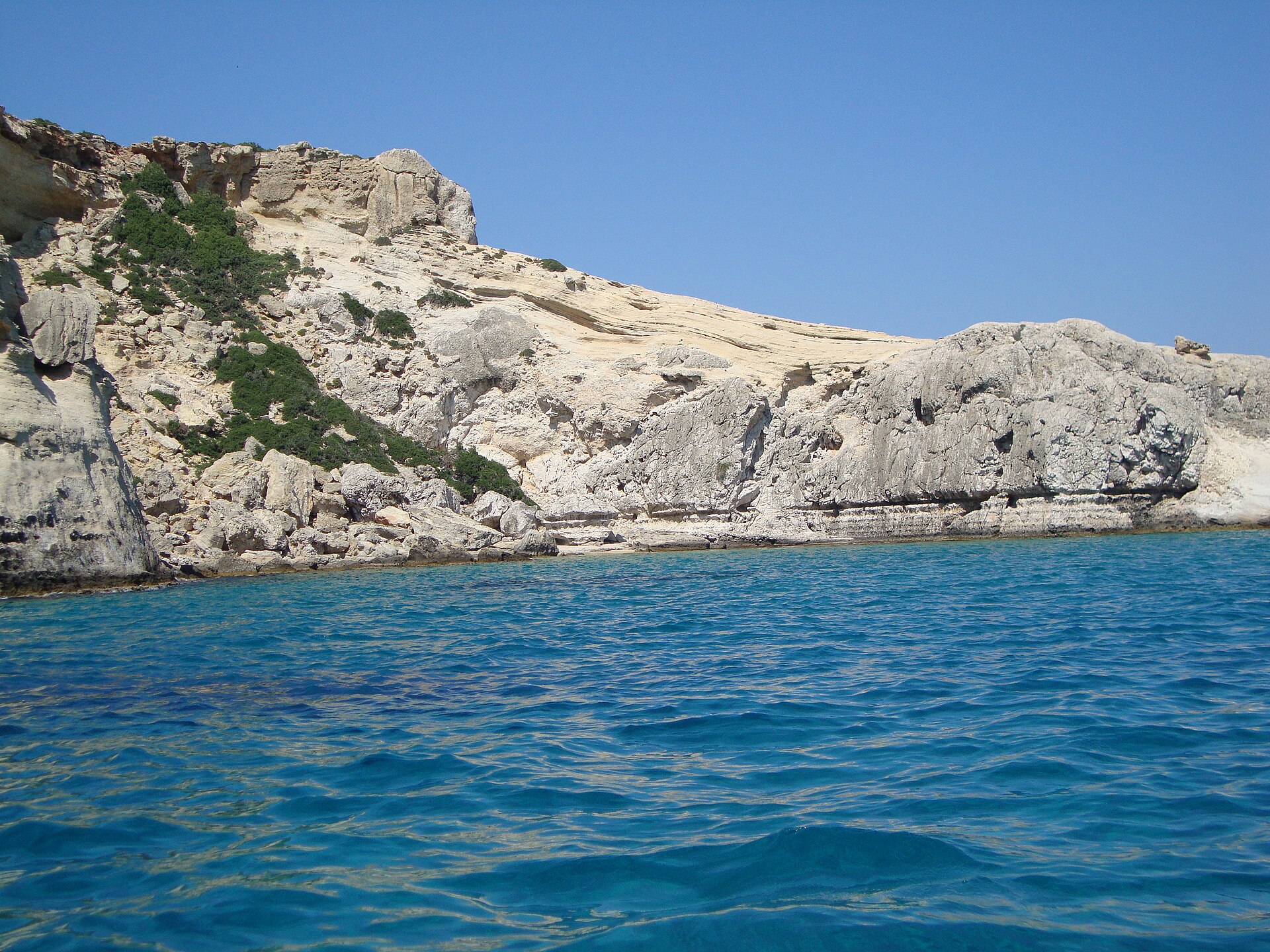
Afandou's shoreline stretches for about four kilometres of fine pebbles and compact sand, one of the largest beaches on all of Rhodes. Unlike the crowded bays further south, here the landscape remains wide and lightly built up: a beach backed by low scrub, a few fish taverns with tables almost on the pebbles, and a sea that shelves gently, ideal for families with children. The coast is exposed to the wind that blows steadily during the central hours of the day, the same meltemi that makes Prasonisi famous further south: here the intensity is milder, but enough to make the beach popular with windsurfers and kitesurfers who are not seeking extreme conditions. In the quieter stretches, towards the north, you can walk for a long time without meeting almost anyone even in high summer.
The oldest golf course in Greece
Among the most surprising legacies of the Italian administration is Afandou's golf course, laid out among the dunes and Mediterranean scrub in the 1920s and considered one of the first and oldest golf courses built in Greece. Eighteen holes designed to make the most of the natural shape of the land, among pines, eucalyptus and broom, with the sea visible here and there from the higher fairways: a course that has passed through almost a century of history while remaining surprisingly true to its original design. Today it draws golfers mainly from Northern Europe, but even for those who don't play, a walk through the green area surrounding it is worthwhile, cool and quiet compared with the farming plain around it, an unexpected counterpoint to the rest of Afandou's landscape.
The village, the Panagia and the carpet workshops
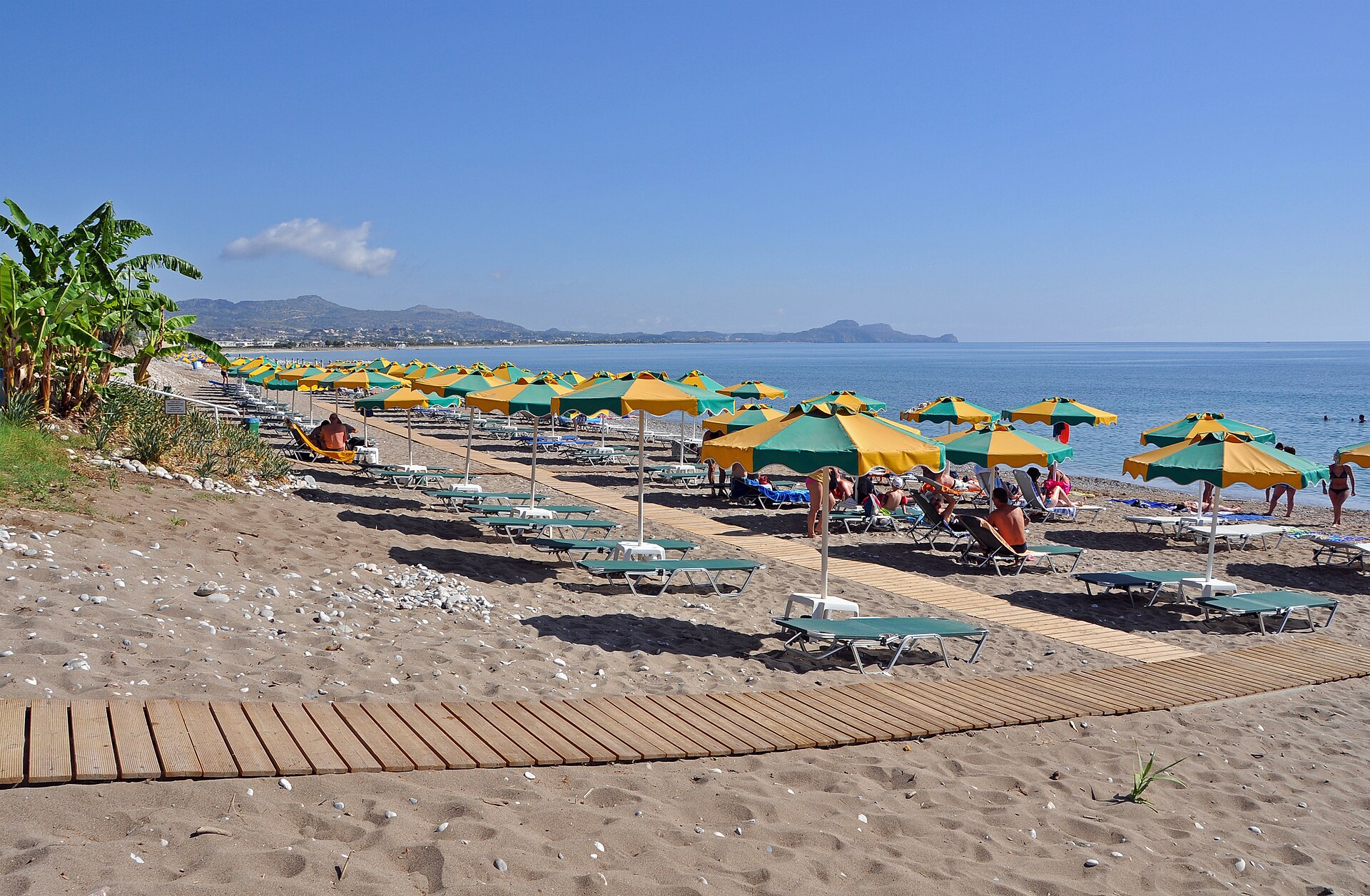
The centre of Afandou unfolds along a grid of narrow streets, courtyards with bougainvillea and whitewashed low houses, typical of Rhodian rural architecture. The religious heart of the town is the church of the Panagia, the Virgin, which holds ancient icons and a finely worked iconostasis: a building reworked several times over the centuries, like almost all the village churches on the island, but which still preserves traces of fine painted decoration. Around the main square a few workshops survive tied to a craft that once employed entire families: the hand-weaving of carpets and kilims, once among the most renowned on Rhodes together with those of Archangelos, today carried on by a handful of weavers who still work at the vertical loom according to techniques passed down from mother to daughter.
The Traganou caves, sculpted by the sea
A little south of the main beach, the rocky coast opens into a series of coves and caves carved by the wave motion over centuries of erosion: these are the Traganou caves, a succession of arches, narrow channels and natural pools of an intense blue, framed by pale rocks smoothed by salt. It is one of the most photographed spots on the eastern coast of Rhodes, a frequent destination for photo shoots and small civil weddings by the sea, but it remains above all a place to experience in the water: with mask and fins you swim among the formations, move from one natural pool to another, and watch the play of light filtering through the rock arches during the central hours of the day, when the sun is highest and the seabed reveals all its clarity.
Epta Piges, the oasis of the seven springs
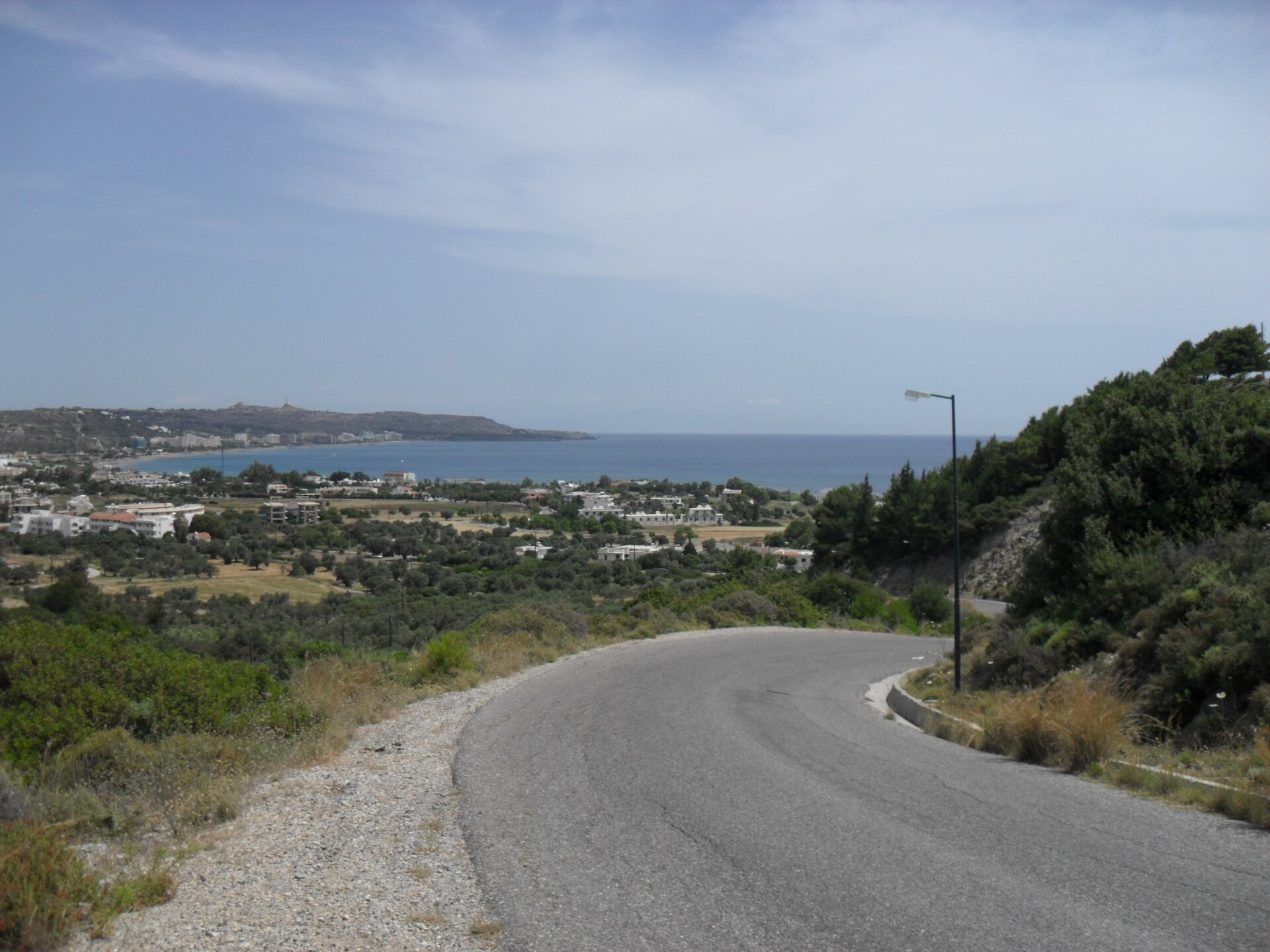
A few kilometres inland, on the boundary between the territories of Afandou and Archangelos, hides one of the most surprising landscapes on Rhodes: Epta Piges, the "seven springs", a gorge shaded by centuries-old plane trees where the water flows into an artificial lake created in the 1920s by Italian engineers for irrigation purposes. From here a tunnel dug into the rock begins, about a hundred metres long and almost completely dark, which is walked through with water up to the ankles to reach the basin on the other side: a cool and slightly adventurous experience, much loved by families in the hot months. Around the lake, where peacocks once roamed freely among the trees, there are shaded taverns ideal for a stop away from the coast's direct sun.
Tsambika, the sanctuary suspended on the headland
Continuing south along the coast, a rocky headland about three hundred metres high holds the monastery of Tsambika, reached by a climb on foot of several hundred steps that rewards you with a panorama sweeping over the whole eastern coast of the island. The sanctuary is the destination of a deeply felt pilgrimage by women on the island who wish for a child, according to a popular tradition tied to the icon kept inside; on the feast day, 8 September, the monastery fills with the faithful. At the foot of the headland lies Tsambika beach, a crescent of golden sand enclosed between the rocks, smaller than Afandou's but among the most scenic on the whole eastern coast of the island.
Potatoes, watermelons and the town's farming life
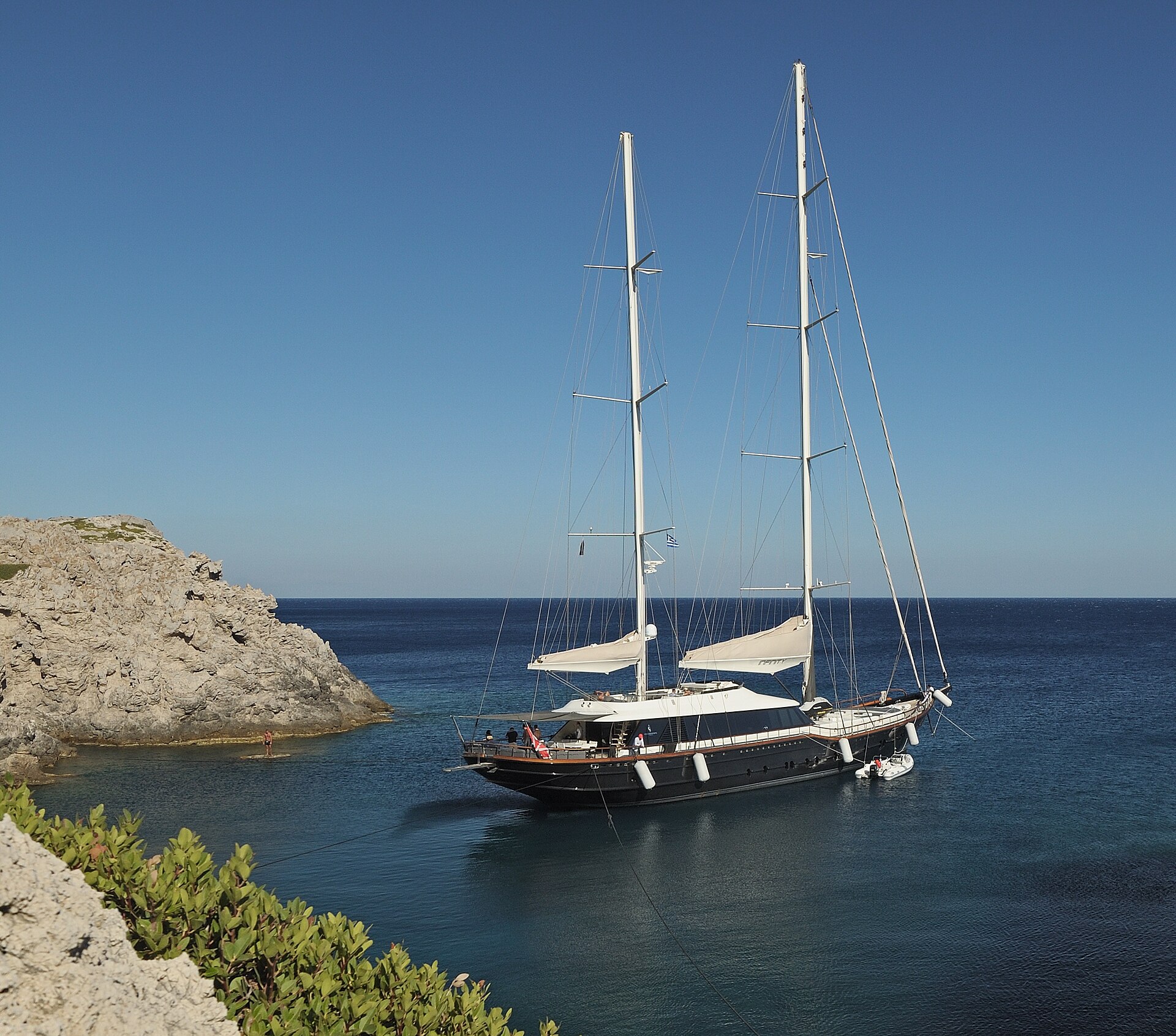
Beyond the coastal strip, Afandou remains first and foremost a farming town: the plain surrounding it is among the most fertile on Rhodes, growing potatoes, watermelons, vegetables and grain thanks to generous soil and a system of wells and channels developed over time. Afandou's potatoes enjoy a solid local reputation, prized in the markets of Rhodes town for their texture and flavour. This farming soul coexists with little friction alongside the coast's tourist economy: many families in the town still live off both trades together, the fields early in the morning and work in hospitality during the hottest hours, a balance that has allowed Afandou to grow as a seaside destination without losing its rural character entirely.
The flavours of Afandou
The town's table reflects this dual identity, farming and seafaring. In the simplest taverns you find the dishes of Rhodian tradition: oven-baked potatoes with oregano, stuffed aubergines and courgettes, fresh cheeses such as mizithra or skotiri, typical of the island's hinterland, served with local extra virgin oil and homemade bread that is often still baked in wood-fired ovens on feast days. Along the coast fish naturally prevails, grilled with few seasonings, together with octopus dried in the sun and served with local wine. Also worth trying are the honey-and-sesame sweets, and in the summer months the watermelons grown right in the fields you see along the road to the beach.
When to go and how to experience the town
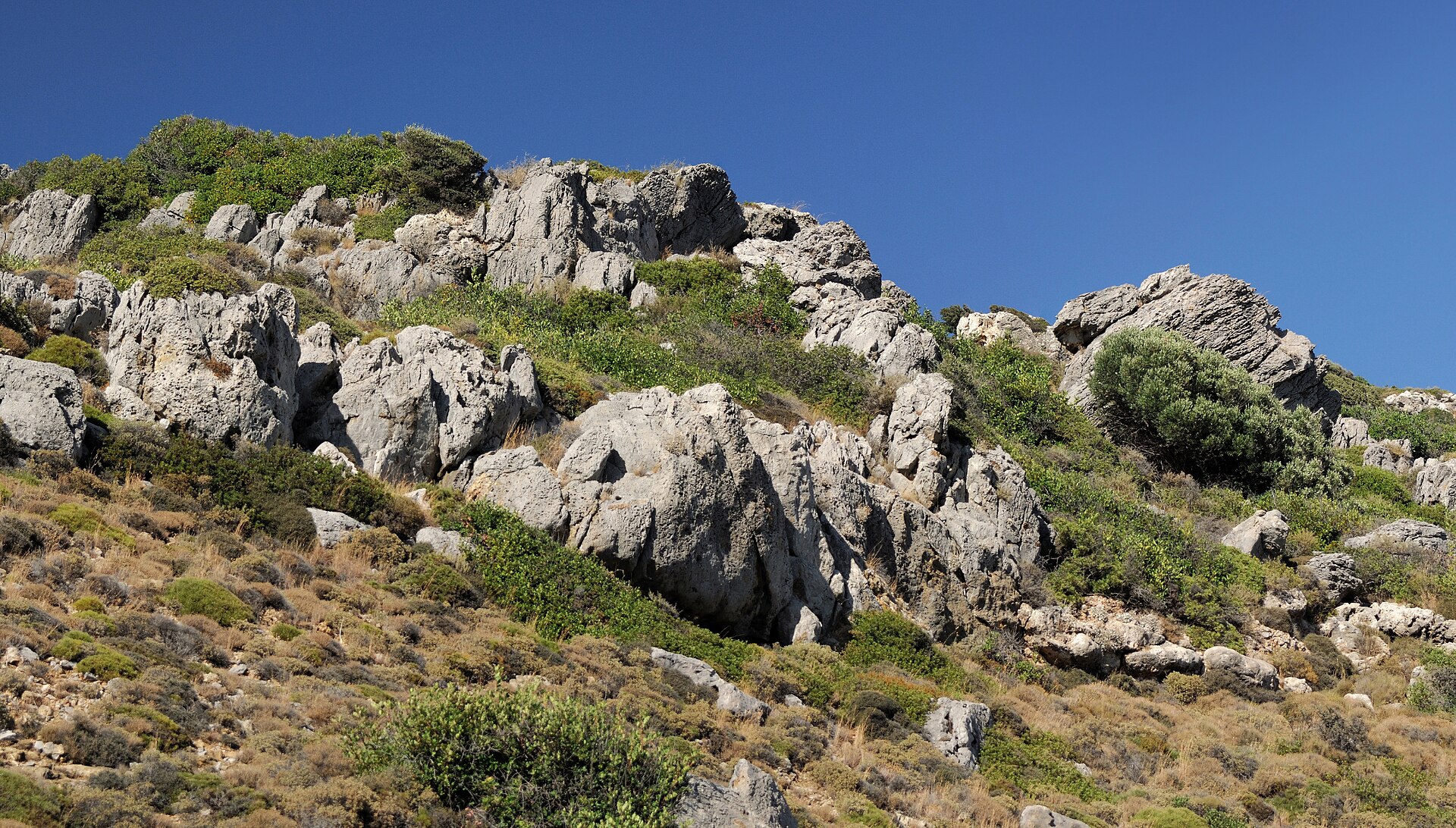
The ideal season runs from May to early October, with June and September offering the best compromise between pleasant temperatures, warm sea and fewer crowds than July and August. Those looking for wind for water sports will find more consistent conditions in the early afternoon, when the meltemi strengthens along the whole eastern coast. In the low season, from April to early May and in October, the farming plain around the town is coloured respectively with wildflowers and the colours of the harvest, an evocative moment for those who prefer a slower kind of tourism, made of walks in the hinterland, visits to Epta Piges without queues and rounds of golf in milder temperatures.
- Swim among the natural pools of the Traganou caves
- Walk through the water tunnel of Epta Piges
- Climb the steps of the Tsambika monastery for the view over the coast
- Play a round on Afandou's historic golf course
- Stroll along the long beach heading north during the quieter hours
- Seek out the last traditional carpet weavers in the town centre
- Taste the local potatoes at a country tavern
FAQ
Come si raggiunge Afandou da Rodi città?
Quando è il periodo migliore per visitarla?
Cosa vedere in un solo giorno ad Afandou?
Dove si parcheggia vicino alla spiaggia?
È adatta alle famiglie con bambini?
Si possono portare gli animali in spiaggia?
Getting there
- Aeroporto Internazionale di Rodi "Diagoras" (Paradisi), circa 25 km
- Dalla città di Rodi si segue la strada costiera che risale verso sud lungo il litorale orientale in direzione Lindos; il tragitto richiede circa venti-venticinque minuti d'auto.
- Chi arriva via mare può appoggiarsi al porto di Rodi città, ben collegato con Il Pireo e le altre isole del Dodecaneso, e proseguire poi in auto o con i bus KTEL verso Afandou.
Perfect for
Quattro chilometri di spiaggia e le piscine naturali delle grotte di Traganou per chi cerca acqua limpida senza il caos delle baie più turistiche.
Dalla spada micenea al golf italiano degli anni Venti, un paese che racconta secoli di dominazioni diverse senza mai diventare un museo a cielo aperto.
Il campo da golf più antico di Grecia e un vento costante che rende la costa una delle mete più interessanti dell'isola per windsurf e kitesurf.
L'oasi ombreggiata di Epta Piges e la piana agricola alle spalle del paese offrono un volto di Rodi lontano dalle spiagge affollate.
Le ultime tessitrici di tappeti tradizionali e il pellegrinaggio femminile al santuario di Tsambika custodiscono un lato dell'isola poco raccontato.
To see