

Radhimë
Radhimë is one of those names that, on the map of the Albanian Riviera, seem to pass almost unnoticed next to the more celebrated...
Updated 8 July 2026
This season · July · Summer
What to do in Radhimë now
The story
The story of Radhimë
Origins and history of an ancient stretch of coast
The territory where Radhimë stands has been linked since antiquity to the fortunes of nearby Orikum, a colony founded by Greek settlers on the shores of the Bay of Vlorë in a remote age, when Hellenic sailors sought safe harbours along the route to the Adriatic. The bay's sheltered position, protected by the Karaburun peninsula, made it a valuable port of call for centuries, contested among Illyrians, Greeks and later Romans. It was in these very waters that, during the Roman civil war, naval and military manoeuvres unfolded as part of the campaign that would lead to the decisive clash at Pharsalus, with Caesar's and Pompey's legions facing off along this coast as well. In the following centuries the area shared the fate of the Vlorë region, passing under Byzantine and later Ottoman rule, until becoming part of modern Albania, always retaining its character as a small settlement turned toward the sea.
From fishing village to Riviera destination
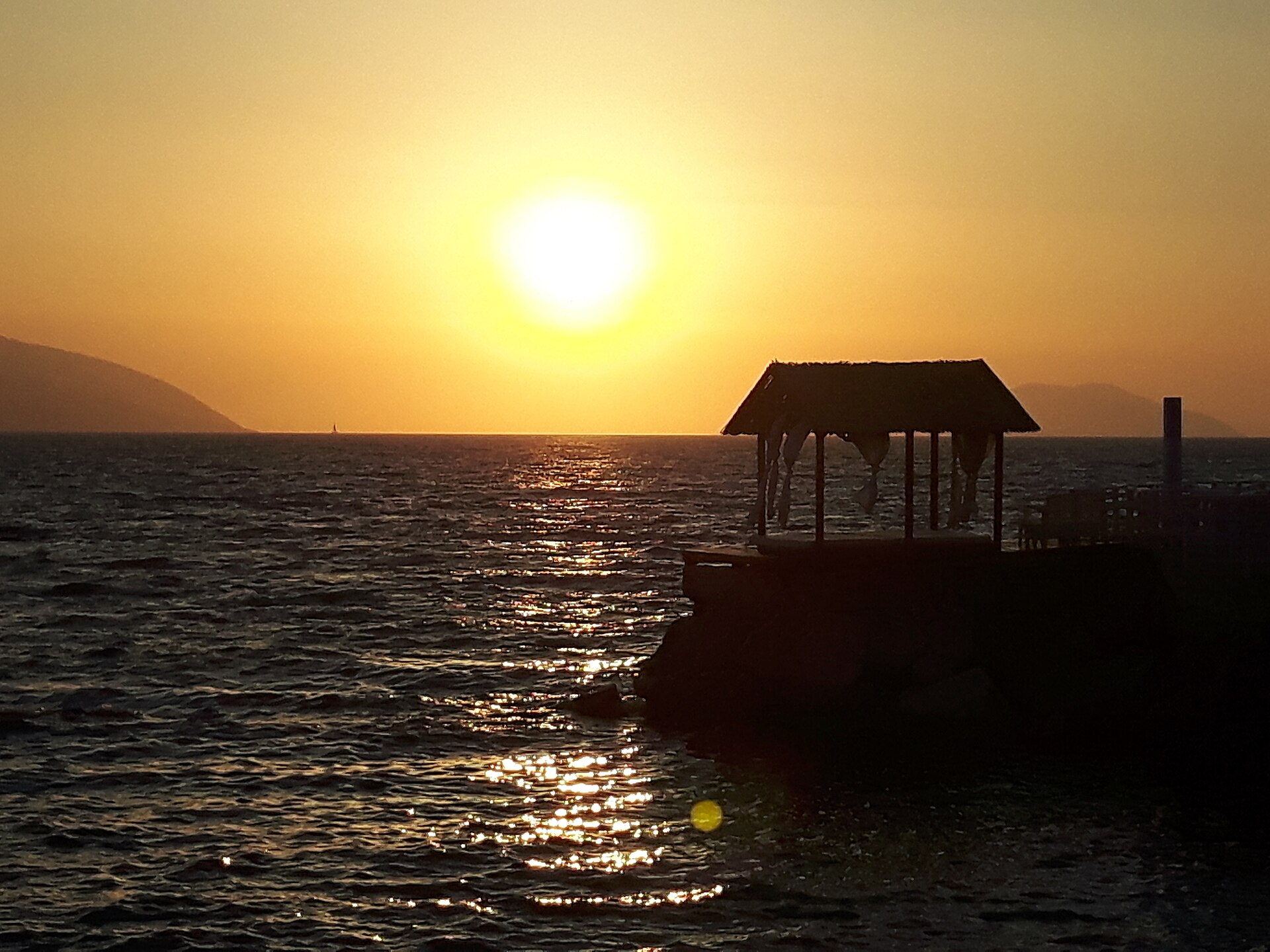
For much of the twentieth century Radhimë remained a farming and fishing village, isolated from the rest of the country partly because of its proximity to Sazan, a militarised island off-limits during the communist regime, which turned the entire bay into a special-control zone. Only after Albania opened up to tourism, starting in the 1990s and gaining momentum in the new millennium, did the village begin to be discovered by travellers heading up the Riviera in search of beaches less crowded than those of Vlorë town. Today the low houses of the original core still coexist with the vegetable gardens and olive groves of the hinterland, and a seafront that has gradually been equipped with beach clubs, small family-run hotels and fish restaurants, without entirely losing the intimate character that sets it apart from the coast's more fashionable resorts.
Radhimë Beach
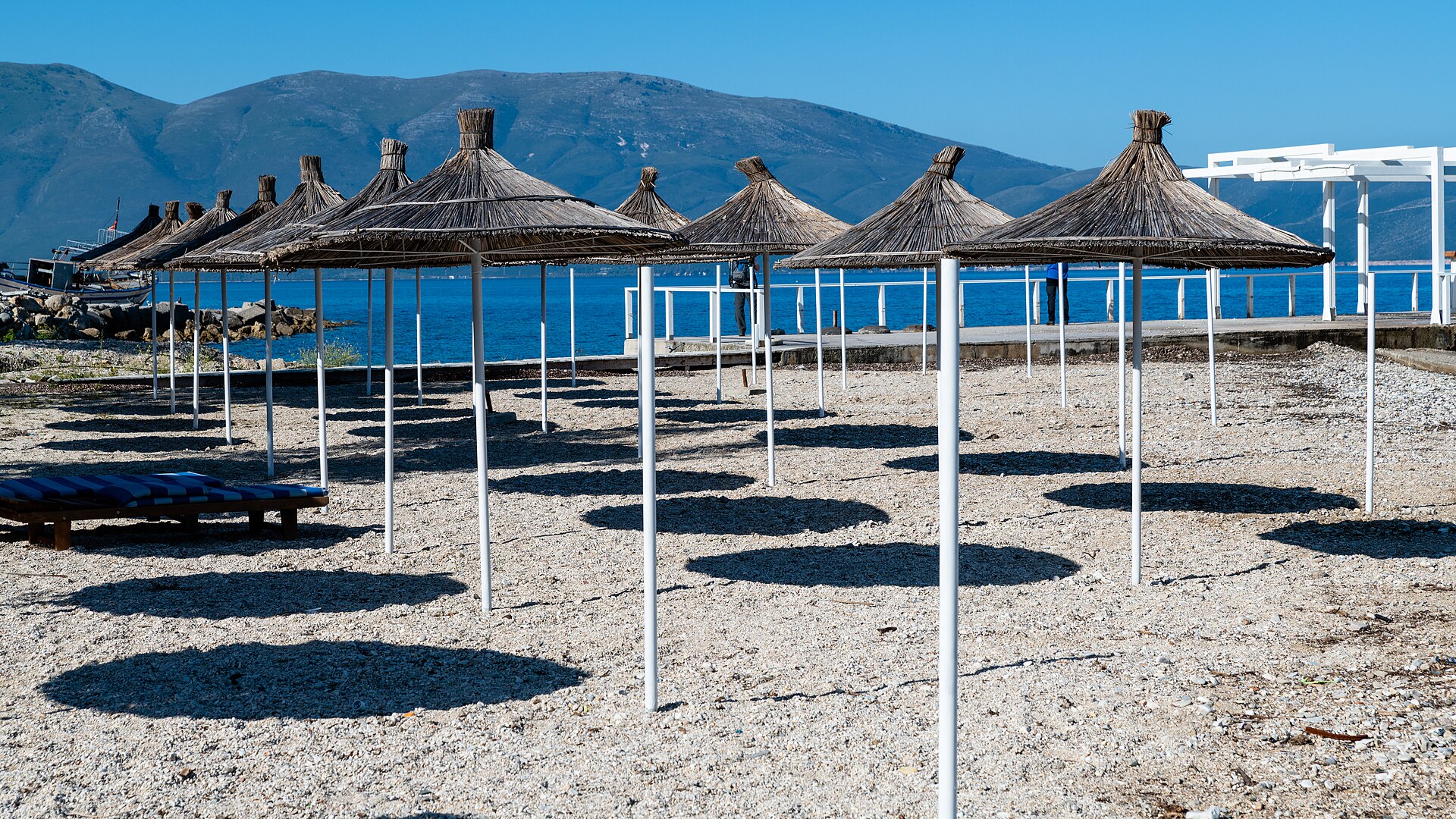
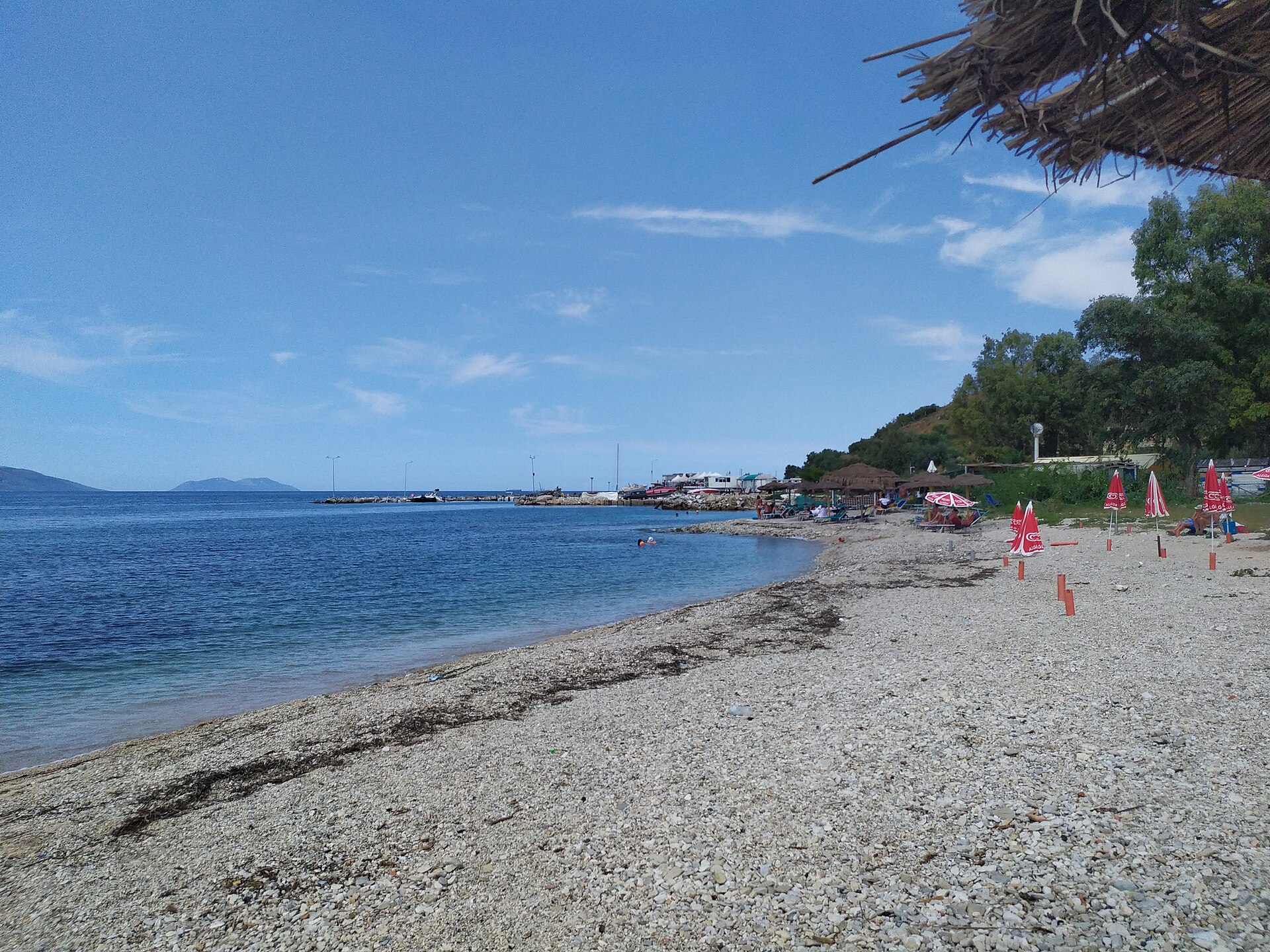
The heart of the village's appeal is its beach, a long arc of pale pebbles and compact sand that slopes gently into a sea whose colours shift from turquoise to deep blue as the seabed drops away. Shallow water extending well out from the shore makes it suitable for families with children, while the combination of shallowness and clarity lets visitors observe the seabed with nothing more than mask and snorkel. The bay is naturally sheltered from the mistral winds thanks to the shape of the coastline and the presence of the Karaburun peninsula just to the south, a condition that generally guarantees calm seas for much of the summer season.
Grama Bay and the sailors' inscriptions
A short distance away by sea, heading up along the wild Karaburun coast, lies the Bay of Grama, one of the most fascinating and least-known spots on the entire Riviera. Its limestone walls, smoothed by wind and salt, hold hundreds of inscriptions and graffiti carved by sailors, merchants and travellers across different eras, some dating back to the Hellenistic and Roman periods, others more recent: a genuine stone diary left by those who, over the centuries, found shelter from the storms of the Ionian Sea in this inlet. Reachable only by sea, on small boats or organised trips from Radhimë and the neighbouring villages, Grama also offers a sea of almost unreal clarity, framed by sheer rock walls.
The Karaburun peninsula and Sazan island
To the south, the coastline rises into the long, jagged Karaburun peninsula, today the heart of the Karaburun-Sazan National Marine Park, the first established in Albania to protect coastal ecosystems. Sea caves, coves reachable only by boat, seabeds rich in posidonia meadows and a coast almost devoid of human settlement make it a natural sanctuary that can be explored on rigid-inflatable boat trips departing right from the piers of Radhimë and Orikum. Opposite, closing off the mouth of the Bay of Vlorë, rises the silhouette of Sazan island, for decades a sealed military base and for that reason left essentially untouched: today it can be visited with permits and organised excursions, offering a rare glimpse of island nature left outside of time.
Orikum and the vestiges of antiquity
A short way north of Radhimë lies the town of Orikum, heir to the name of the ancient port city that flourished here in Hellenistic and Roman times. Traces of the ancient settlement, among the remains of fortifications and harbour structures uncovered by archaeological excavations, testify to the strategic importance of this natural harbour, exploited for centuries as a naval base thanks to the shelter offered by the bay. Today Orikum is also a starting point for excursions toward Karaburun and home to a small marina, making it the most convenient gateway for those wishing to explore by sea the entire protected coastline south of Radhimë.
Between sea and mountains: the landscape of the Bay of Vlorë
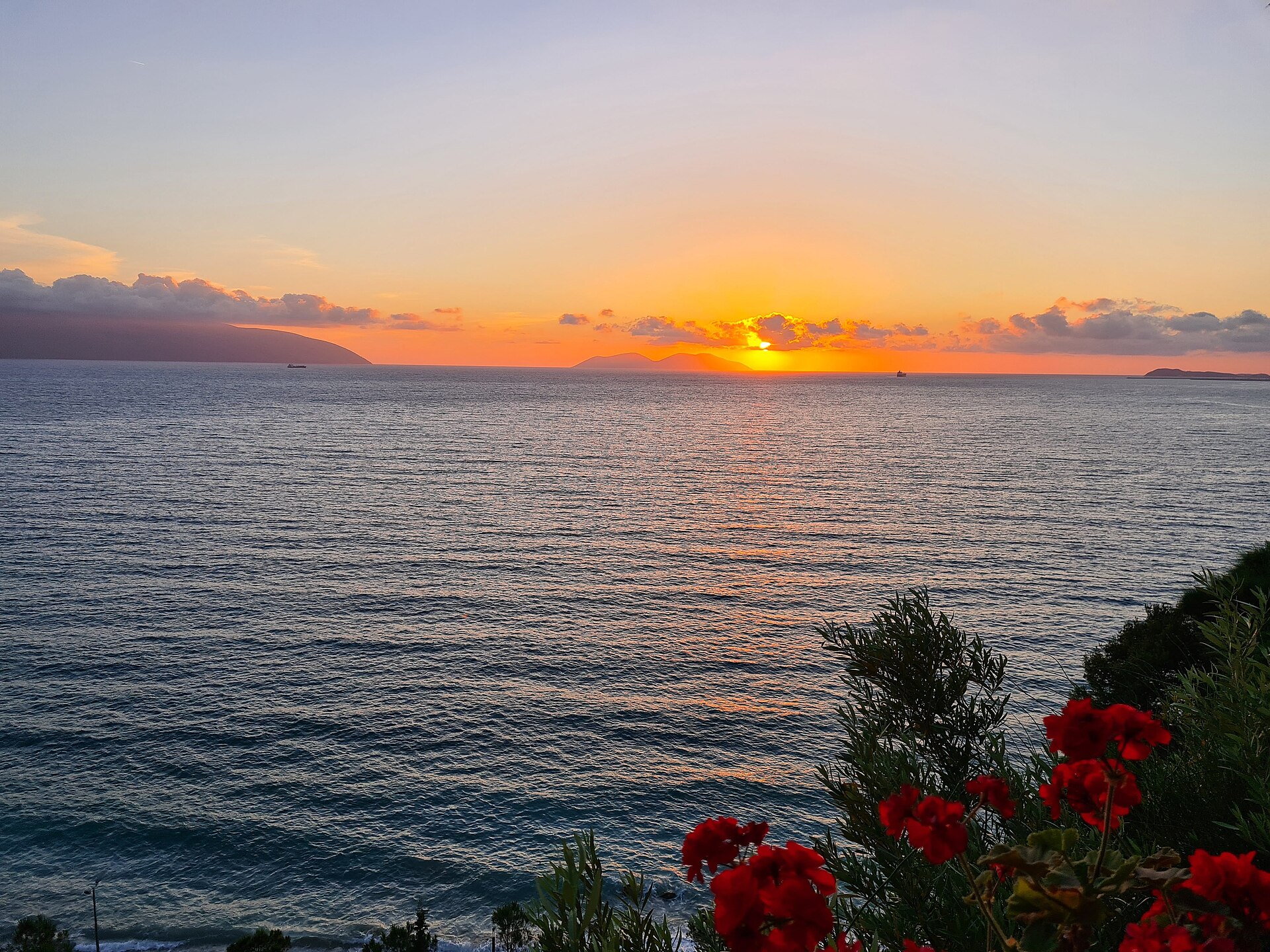
What makes the landscape around Radhimë unique is the close contrast between the blue of the sea and the dark green of the mountains that drop almost sheer to the coast. Behind the village rise the first foothills of the mountain range that culminates, further south, in the famous Llogara Pass, with its pine forest suspended almost a thousand metres above sea level. Radhimë's immediate hinterland, gentler by comparison, is instead a succession of olive groves, vineyards and Mediterranean scrub that scents the air with thyme and helichrysum during the summer months, while the wide, sheltered Bay of Vlorë offers sunsets that tinge the water and the distant silhouette of Sazan red.
Traditions, cuisine and village life
Radhimë's cuisine, like that of the whole Riviera, is the cuisine of a people of fishermen and farmers: freshly grilled fish, mussels and seafood from the bay, olive oil produced in the hinterland's groves, goat cheeses and vegetables from the garden, all often accompanied by a glass of homemade raki. In the family-run restaurants overlooking the beach, one still senses a simple, direct hospitality typical of southern Albanian villages, where meals are eaten unhurriedly, following the slow rhythms of summer days. Patron-saint festivals and community occasions, though less flashy than elsewhere, remain an important moment in the village's social life, often enlivened by folk music and traditional dances.
When to go to Radhimë
The ideal season to visit Radhimë runs from late May to September, when the sea reaches pleasant temperatures and the beach clubs are fully operational. July and August are the peak months, drawing mostly Albanian and Balkan visitors, while June and September offer the same crystal-clear sea with milder weather and fewer crowds, ideal conditions also for excursions to Grama and Karaburun. In spring and early autumn the surrounding landscape takes on different colours, with a green hinterland and temperatures well suited to walks and hikes, for those who prefer slower, nature-focused tourism.
Experiences not to be missed
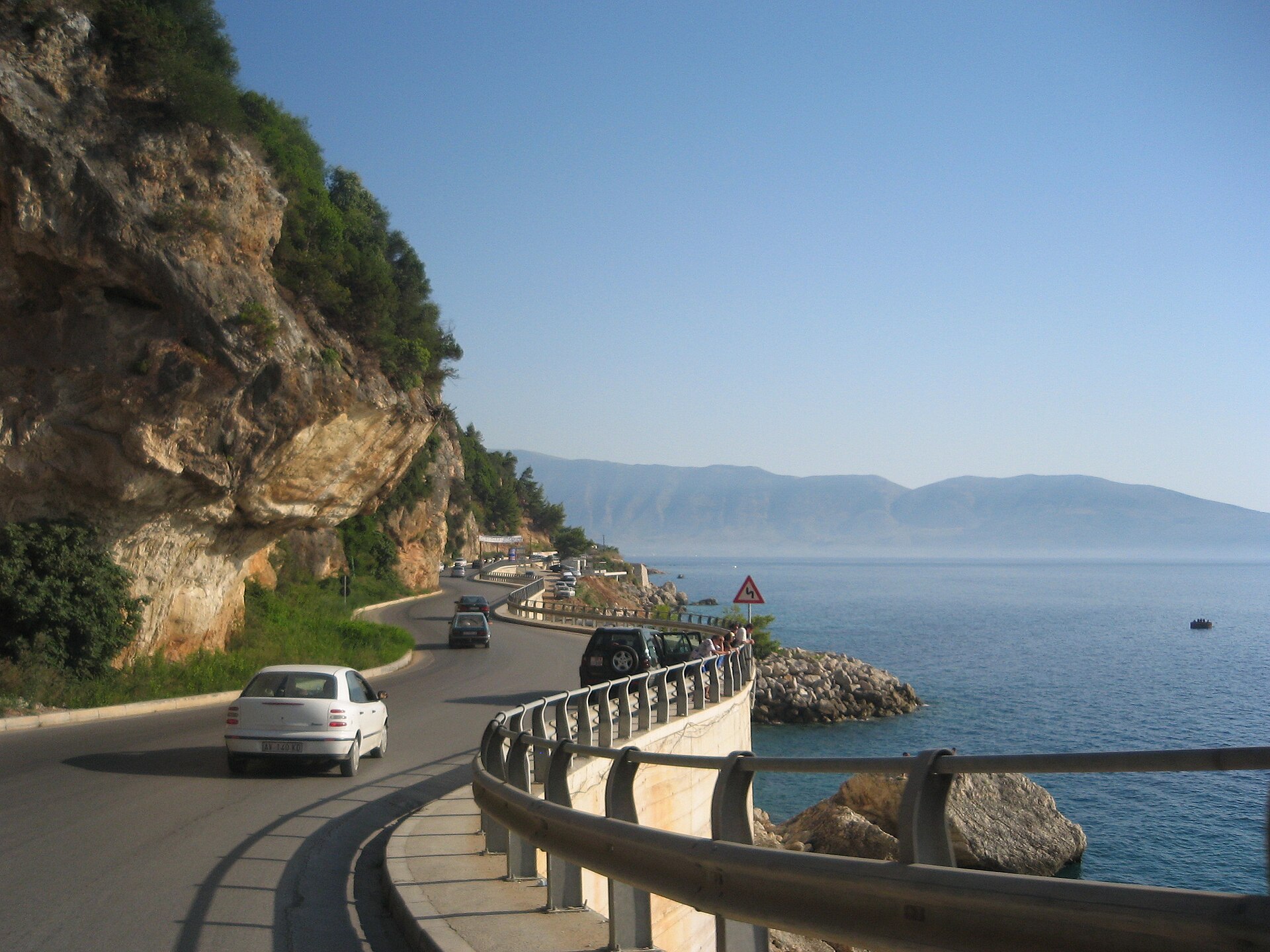
- Swimming and snorkelling in the shallow, transparent waters of Radhimë beach
- A boat trip to Grama Bay to admire the ancient inscriptions carved into the rock
- A rigid-inflatable boat tour along the wild coast of the Karaburun peninsula, among caves and secluded coves
- A visit, with a permit or organised tour, to Sazan island, long inaccessible
- A fresh fish dinner at a seafront restaurant, at sunset
- A stroll among the excavations and the small harbour of nearby Orikum
Surroundings to explore
Radhimë makes a quiet base for exploring the whole Bay of Vlorë and the start of the Albanian Riviera. A few minutes' drive away is Vlorë, a port city rich in history, with its seafront promenade, museums and the Independence Monument. Continuing south, beyond Orikum, the scenic road climbs to the Llogara Pass, one of the most spectacular stretches of the entire Balkan coast, before descending toward Dhërmi, Himarë and the Riviera's other famous resorts. For those who love the sea without travelling far, the coves immediately south of the village also offer almost deserted stretches of coast, reachable on foot or by boat.
FAQ
Come si raggiunge Radhimë?
Qual è il periodo migliore per visitarla?
Cosa vedere in una sola giornata?
Dove si parcheggia?
È adatta a famiglie con bambini?
Quanto tempo conviene restare?
Getting there
- Aeroporto Internazionale di Tirana "Nënë Tereza", circa 150 km / 2,5-3 ore d'auto
- Da Vlorë si segue la strada costiera SH8 in direzione sud verso Orikum; Radhimë si trova poco prima dell'ingresso a Orikum, ben segnalata dal litorale.
- In alta stagione conviene arrivare al mattino presto per trovare posto sulla spiaggia e parcheggio comodo; per le escursioni verso Grama e Karaburun è consigliabile prenotare il giorno prima presso i moli di Radhimë o Orikum.
Perfect for
Acque basse e trasparenti, ideali per famiglie e snorkeling lungo tutta la baia.
Porta d'accesso al Parco Marino di Karaburun-Sazan, tra grotte, calette e fondali protetti.
Vicinanza a Orikum, antico scalo greco-romano, e alla baia di Grama con le sue iscrizioni antiche.
Pesce freschissimo, olio d'oliva locale e ospitalità semplice nei ristoranti sul lungomare.
Punto di partenza per gite in barca verso Sazan e la costa selvaggia del Karaburun.
To see
What to see in Radhimë
Routes · Trovido Route
