

Qeparo
Along the Albanian Riviera, where the coastal road climbs among centuries-old olive trees and sheer drops to the Ionian Sea, Qepar...
Updated 8 July 2026
This season · July · Summer
What to do in Qeparo now
The story
The story of Qeparo
The origins and history of Qeparo
The origins of Qeparo are rooted in the history of the Himara region, a mountainous and coastal area whose rugged terrain has always granted it relative autonomy from the central powers that have succeeded one another across the Balkans. The earliest evidence of stable settlements in the area dates back to the Byzantine period, when local communities settled on the heights to protect themselves from raids coming from the sea, choosing defensible positions hidden from the sight of potential raiders. Like most of the villages on the Riviera, Qeparo too came under Venetian influence in the medieval era, before facing, from the 15th century onward, the Ottoman expansion into the Balkans.
Unlike many other Albanian areas, the inhabitants of Himara and its villages, Qeparo included, long retained a state of semi-independence, obtaining fiscal and administrative privileges in exchange for formal loyalty to the sultan, while preserving their Orthodox Christian faith in a regional context where Islamization was advancing elsewhere. This historical peculiarity explains the dense presence of small churches and chapels scattered among the stone houses of the old village, a symbol of a religious and cultural identity defended across the centuries. The 20th century, with the annexation to modern Albania, the monarchy of Zog, the Italian occupation and then the communist regime of Enver Hoxha, brought radical changes: many families left the stone houses of the ancient village to move closer to the coast and the new coastal road, giving rise to the settlement we know today as Qeparo i Ri.
Qeparo i Vjetër, the ancient stone village
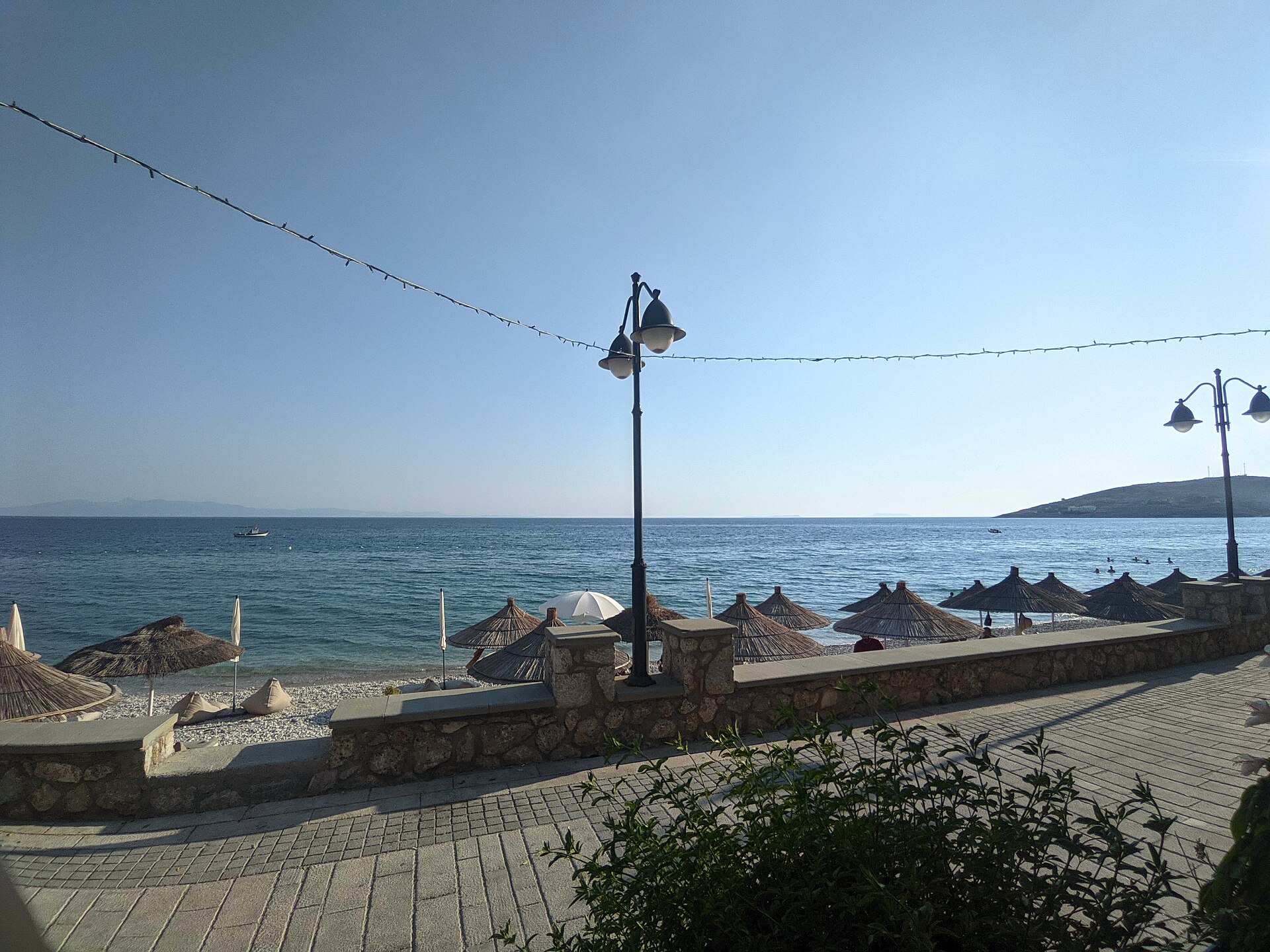
Climbing from the coast along a winding road that snakes among olive terraces, one reaches Qeparo i Vjetër, the historic heart of the village, today almost entirely abandoned yet still extraordinarily intact in its urban layout. The houses, built of local stone with characteristic grey slate roofs, are arranged in tiers along the slope, connected by narrow alleys designed to provide shelter from wind and sun rather than for the passage of vehicles, which simply never existed here. Many dwellings still retain architectural features typical of the Riviera's fortified houses: thick walls, small windows, and loopholes that once also served a defensive purpose.
Walking among these silent houses, with vegetation creeping between the stones and prickly pears colonizing the abandoned courtyards, gives a sense of almost melancholic suspension, but also an authenticity that few other places on the Riviera can still offer. The old village is not an open-air museum equipped for tourism, but a real, often silent place, deserving a respectful visit at a slow pace, perhaps during the cooler hours of the day, when the raking light enhances the stone and the view over the sea below opens up in all its breadth.
The church and the marks of Orthodox faith
Among the architectural features that characterize the ancient village, the presence of religious buildings tied to the Orthodox Christian tradition stands out, the identity-defining core of the Qeparo community throughout the Ottoman era. Small stone churches, often simple in their outer form but housing valuable icons and frescoes inside, dot the old village and the surrounding countryside, testimony to the faith that the inhabitants of Himara defended even in periods of greatest pressure toward conversion. Some of these chapels are today abandoned or partially restored, while others are still opened on the occasion of feasts in the Orthodox calendar, when the old inhabitants of the village, now relocated elsewhere or abroad, return to celebrate the feast of the patron saint.
This bond between faith, stone and memory is one of the most evocative aspects of Qeparo: the churches of the old village are not mere monuments to photograph, but places that continue to mark, at least once a year, the rhythm of a dispersed community that has never fully severed the thread connecting it to its roots. For those who take the time to explore the alleys unhurriedly, coming across one of these chapels, perhaps with the door ajar and a candle still lit, is one of the most authentic moments the Albanian Riviera can offer.
Qeparo i Ri and life on the coast
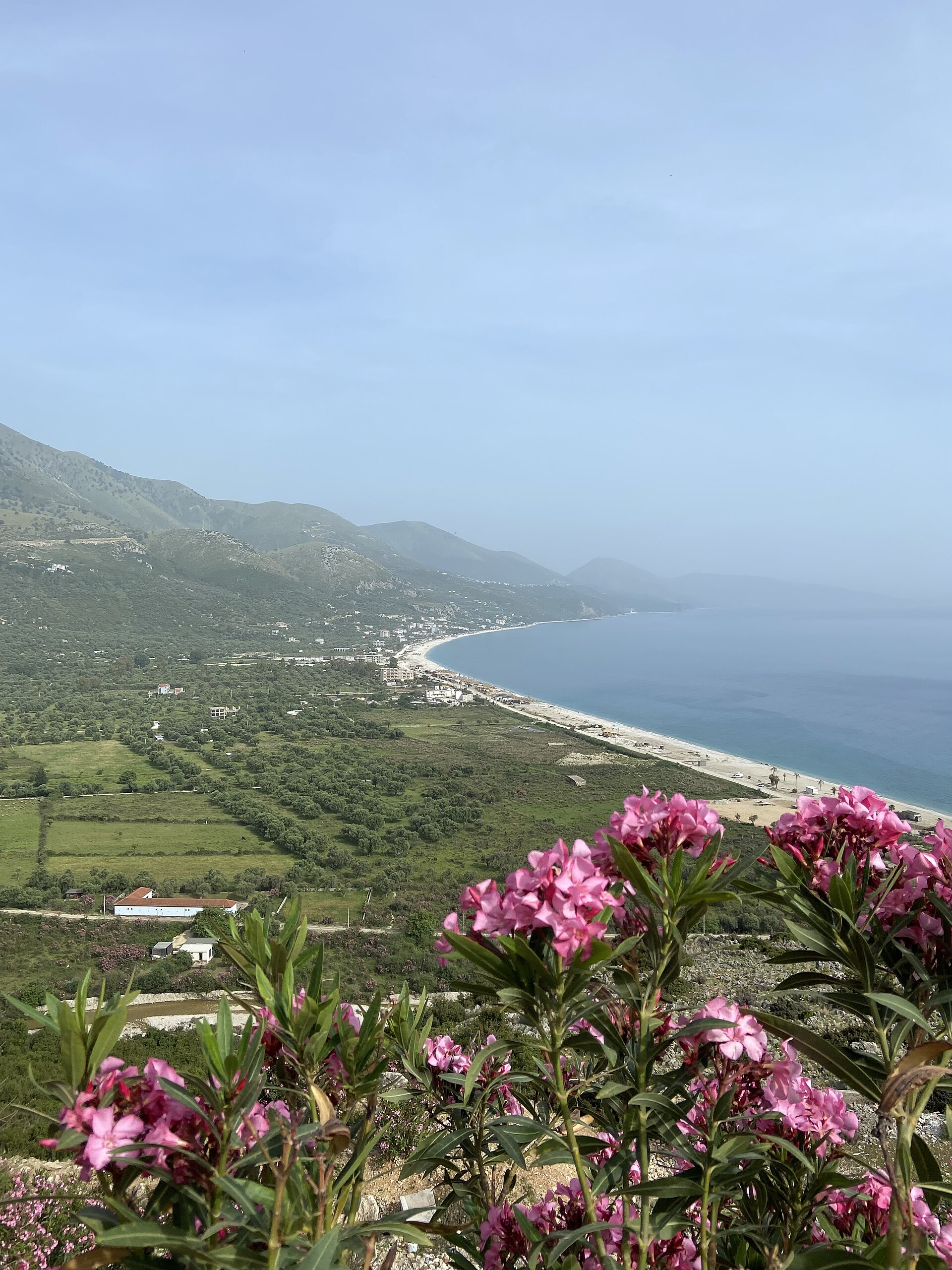
Descending toward the sea, one reaches Qeparo i Ri, the new village, which grew from the mid-20th century onward along the coastal road linking Himara to Borsh and, further south, to Saranda. Here life has gradually shifted from agriculture toward tourism, while still retaining a genuine spirit compared to the Riviera's better-known centers. Modern houses, small family-run hotels and fish taverns overlook a bay of light-colored pebbles, while olive trees, the area's historic crop, continue to occupy the terraces behind the settlement, a reminder that Qeparo's economy has always been tied as much to the sea as to the land.
Qeparo's main beach, wide and well exposed, alternates stretches of fine pebbles with low, easily accessible rocks, its sea sloping gently and taking on, on clear days, the shades of blue and emerald green typical of the Albanian Ionian coast. Compared to other, more crowded spots on the Riviera, Qeparo i Ri still retains an intimate atmosphere, frequented mainly by those seeking a quiet stay, far from the large summer tourist flows that affect Himara or Dhërmi.
The landscape: between mountain and Ionian Sea
The territory of Qeparo packs, within just a few kilometers, two profoundly different and complementary landscapes. Behind the village rise the southern foothills of the Ceraunian Mountains, a range that runs parallel to the coast and here reaches considerable heights, covered by Mediterranean scrub, holm oak woods and, higher up, mountain pastures. This mountain barrier has always isolated the Riviera from the Albanian hinterland, helping to preserve its distinctive cultural and linguistic traits, and today rewards those who walk the trails climbing from the old village toward the ridges with spectacular views.
Toward the sea, the landscape changes radically: terraced olive groves slope down to the coastline, interrupted by ravines and small seasonal streams that in the spring months still bring a touch of bright green amid the grey of the stone. The coastline, jagged and rich in small inlets, offers an alternation of pebble beaches, low cliffs and more secluded coves reachable only on foot or by boat, much loved by those seeking a swim far from rows of sun umbrellas. The meeting of mountain and sea, so close and abrupt, is probably the most fascinating distinctive trait of the entire Albanian Riviera, and Qeparo offers one of its most representative glimpses.
Traditions, cuisine and rural life
The material culture of Qeparo, like that of the entire Himara region, has historically revolved around two resources: the olive and the sea. The centuries-old olive groves surrounding the village produce an intensely flavored oil, prized throughout the Riviera, and to this day many families, including those who have emigrated, return in the autumn months for the olive harvest, a ritual that has marked the local agricultural calendar for generations. Alongside this agricultural vocation is a maritime one, with small-scale fishing supplying the new village's taverns with fresh fish, cooked according to simple recipes that let the ingredients shine: grilled blue fish, chargrilled octopus, salads dressed with local oil and the famous Albanian feta cheese.
The religious feasts tied to the Orthodox calendar remain the main occasion when the community, scattered between Albania, Greece and emigrant communities abroad, gathers again in Qeparo, bringing life and voices back among the houses of the old village for a few days. On these occasions it is not uncommon to witness traditional songs and dances of the Himara region, a cultural heritage blending Greek and Albanian influences, the fruit of the cultural border position this coastal strip has always occupied.
Experiences to have in Qeparo
- Explore on foot the stone alleys of Qeparo i Vjetër, the abandoned old village on the ridge
- Swim in the pebble bay of Qeparo i Ri, with a view of the Corfu Channel
- Walk the scenic trails through the olive groves connecting the old village to the new one
- Search out secluded coves along the coast, reachable on foot or by boat
- Visit the small Orthodox churches of the ancient village, when open
- Dine at a family-run tavern with fresh fish and local olive oil
- Admire the sunset from the heights of the old village, as the sea turns gold
When to go and how to experience Qeparo

The best time to visit Qeparo runs from May to September, when the Mediterranean climate guarantees warm, sunny days ideal for the sea, with temperatures that can become quite intense during the peak summer months, though tempered by the coastal breeze. June and September remain the most balanced choices for those wishing to combine swimming with walks and excursions, avoiding the full crowds of July and August, which in any case, compared to other Riviera destinations, remain rather contained here. Spring, with the olive groves in bloom and the Mediterranean scrub lush, is instead the ideal time for those who favor trekking and visiting the ancient village, with milder temperatures.
Qeparo lends itself well to a slow-paced stay: it is not a place to tick off on a quick stop, but an ideal base for exploring the entire Riviera in short stages, alternating days at the sea with excursions into the mountainous hinterland. Those who stay here generally appreciate the tranquility and authenticity of the place, qualities that go hand in hand with a more essential range of services compared to the larger tourist centers: for this very reason, Qeparo is particularly suited to independent travelers, lovers of photography and local history, and to those seeking a more direct connection with everyday life on the Albanian Riviera.
FAQ
Qeparo i Vjetër e Qeparo i Ri sono lo stesso posto?
Quanto tempo serve per visitare Qeparo?
Come si raggiunge il villaggio vecchio di Qeparo?
Il mare di Qeparo è adatto alle famiglie con bambini?
Dove si parcheggia a Qeparo?
Ci sono ristoranti aperti tutto l'anno a Qeparo?
Getting there
- Aeroporto Internazionale di Tirana Madre Teresa, circa 3 ore e mezza di auto
- Aeroporto di Corfù, raggiungibile in traghetto verso Saranda e poi in auto, circa 1 ora dalla costa
- Qeparo si trova lungo la strada statale costiera SH8 che collega Vlorë (Valona) a Sarandë, tra gli abitati di Himara e Borsh; da Valona si impiega circa un'ora e mezza, da Sarandë circa 40 minuti, percorrendo un tracciato panoramico ma tortuoso.
- La strada costiera è spettacolare ma stretta e con molte curve: meglio guidare con calma, evitare le ore più calde per il tratto verso il villaggio vecchio e fare rifornimento di carburante prima di lasciare i centri principali, poiché i distributori lungo la Riviera non sono frequenti.
Perfect for
Una baia di ciottoli con acque turchesi e calette appartate raggiungibili a piedi o in barca, ideali per chi cerca un litorale ancora poco affollato.
Il villaggio abbandonato di Qeparo i Vjetër racconta secoli di resistenza culturale e religiosa della comunità di Himara sotto le diverse dominazioni.
I sentieri tra uliveti e pendici montane collegano borgo vecchio e costa, regalando panorami ampi sul canale di Corfù.
Olio d'oliva locale, pesce fresco e formaggi tradizionali serviti nelle taverne familiari del villaggio nuovo.
Le case di pietra silenziose del borgo antico, illuminate dalla luce radente del tramonto, sono tra gli scorci più suggestivi della Riviera.
To see
What to see in Qeparo
Routes · Trovido Route
