

Orikum
Where the plain of Vlorë stops being flat and the mountains of the Ceraunian range begin to plunge into the Ionian Sea, Orikum ris...
Updated 8 July 2026
This season · July · Summer
What to do in Orikum now
The story
The story of Orikum
The origins of Oricum, between Illyrians and Greeks
The name Orikum has its roots in ancient Oricum, a port that Greek sources traced, according to legend, to sailors who arrived from Colchis on the trail of the Argonauts and who, weary of the pursuit, settled on this shore. Beyond the myth, the area was inhabited by Illyrian tribes linked to the Chaonian and Epirote world, and it soon became a port contested between Illyrians and Greek colonists overlooking the southern Adriatic. Its position, sheltered at the mouth of the Gulf of Vlorë and protected by the Karaburun peninsula, made it a natural stopover along the routes connecting Greece to Italy, an obligatory stage for anyone who had to cross the Strait of Otranto at its narrowest point between the two shores of the Mediterranean.
The name of Oricum enters the great narrative of Roman history in 48 BC, when Julius Caesar, evading the Pompeian fleet that patrolled the Adriatic, landed on the coast of Epirus right near this port to give battle to Pompey and carry the civil war eastward. Oricum surrendered almost without a fight, and became a support base for the operations that would soon lead to the siege of Dyrrachium and the decisive battle of Pharsalus. The chronicles of the time, starting with Caesar's own accounts, describe a strategic city, equipped with arsenals and a harbour capable of hosting entire fleets: a role that Orikum, quietly, played for centuries as a hinge between the Greek world and the Italic one.
The archaeological site and today's village
Of the ancient city there remain stretches of walls, the remains of a small theatre and traces of a paleo-Christian basilica with mosaic floors, discovered in the surrounding area and a sign of the vitality the settlement maintained even in Byzantine times, when the coast was a hub of trade between Constantinople and the West. It is an archaeological area still little trodden by mass tourism, where Mediterranean vegetation has reclaimed much of the space and stones emerge among brambles and wild olive trees: a discreet charm, for those who love to imagine rather than see everything already reconstructed. The modern settlement of Orikum, which grew up not far away, remains a close-knit village, with low houses, an informal seafront and the calm atmosphere of people who live off fishing and, increasingly, seasonal tourism.
The Lagoon of Orikum
Behind the beach opens the Lagoon of Orikum, a sheet of brackish water separated from the sea by a sandy bar and fed by fresh water flowing down from the hills behind. It is a precious transitional environment, a refuge for herons, coots and, during migration periods, for birds that stop along the Adriatic flyway; the salt-tolerant vegetation that surrounds it forms a flat, luminous landscape, quite different from the mountains visible just a little further south. For local fishermen the lagoon has always been a source of mullet and eels, caught with traditional techniques that still survive, on a small scale, alongside the offshore fishing practised in the open gulf.
The beach and the Marina of Orikum
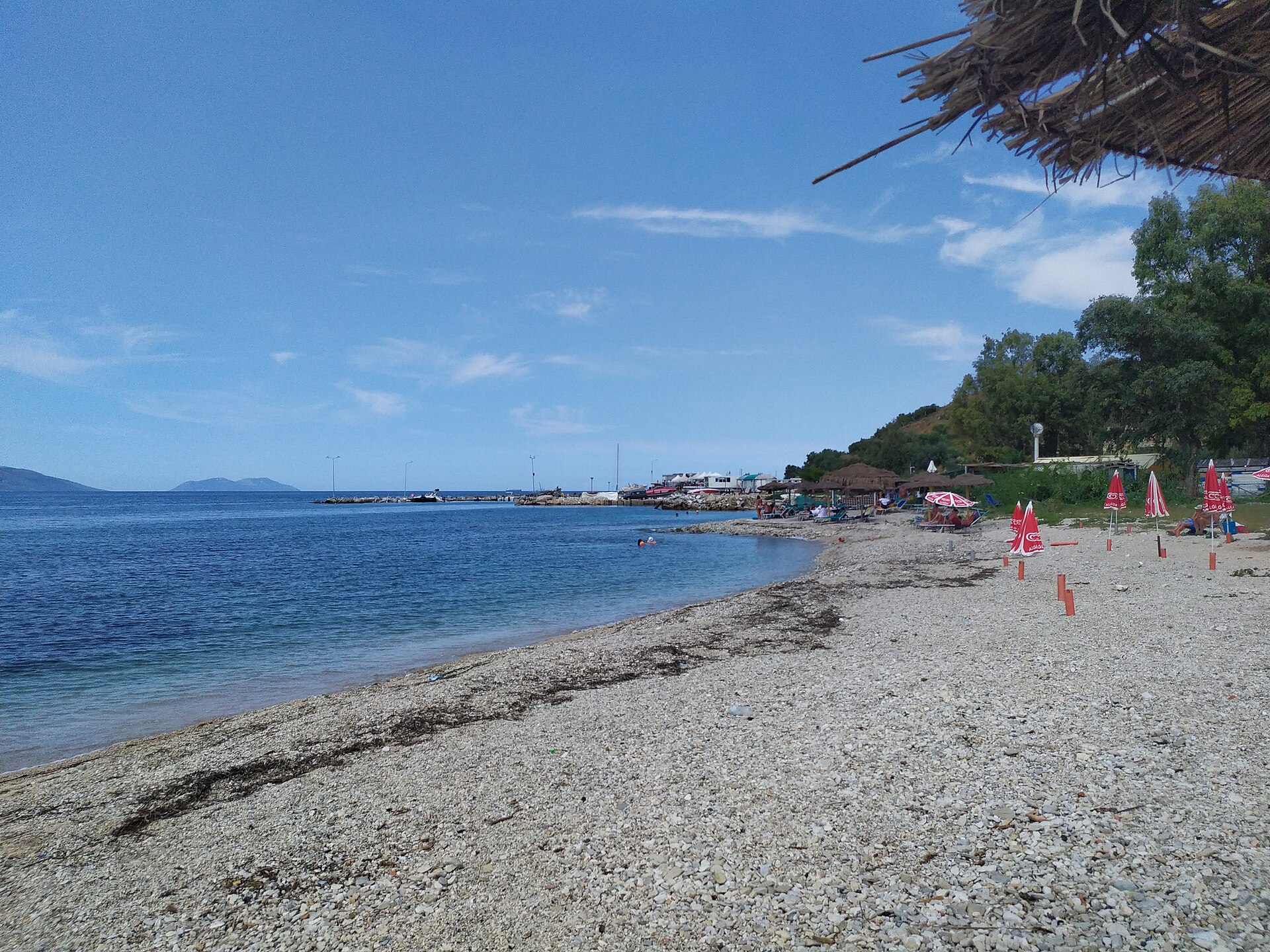
The beach of Orikum stretches for several kilometres of pale sand and fine pebbles, fringed by a pine wood that offers natural shade in the hottest hours and slopes gently into a shallow sea, suitable also for families. Next to the beach stands the Marina of Orikum, one of the best-equipped tourist harbours on the entire Albanian coast, able to host pleasure boats and having become in recent years a reference point for those sailing up or down the Riviera. From here excursions also depart towards the more isolated coves of the Karaburun peninsula, reachable only by sea or with long walks, and the village serves as a convenient base for those wishing to explore the Gulf of Vlorë without giving up services and comfort.
The Llogara Pass and the protected waters of Karaburun
From Orikum the main road begins to climb towards the Llogara Pass, at over a thousand metres above sea level, where the national park of the same name shelters woods of black pine, beech and juniper overlooking the Ionian Sea from above: within a few hairpin bends you pass from the Mediterranean climate of the gulf to an almost alpine air, with viewpoints from which the eye takes in the Ceraunian mountains and the coast descending towards Dhërmi and Himarë. Crossing Llogara historically meant leaving the Gulf of Vlorë behind to enter the most isolated stretch of the Riviera. Facing Orikum, closing the same gulf, lies instead the uninhabited Karaburun peninsula and, a little further on, the island of Sazan, for decades a closed military base and therefore left almost untouched: together they give their name to the Karaburun-Sazan National Marine Park, the first established in Albania, with spectacular seabeds, submerged caves and the Bay of Grama, where generations of sailors have carved names and symbols into the limestone rock since antiquity.
Traditions, flavours and village life
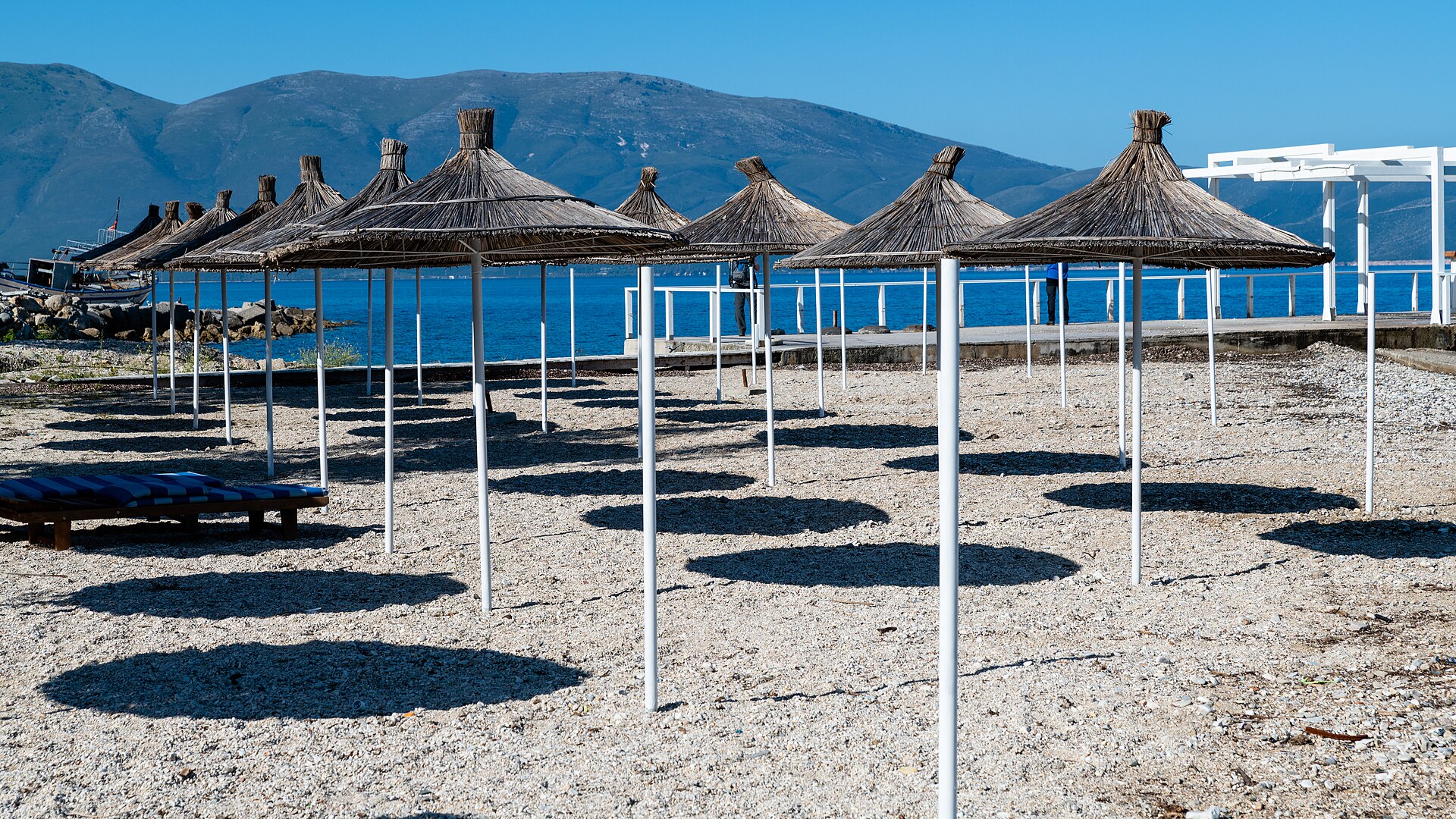
Orikum's cuisine remains tied to the sea and the surrounding countryside: freshly landed grilled fish, mussels and seafood from the gulf, olive oil from the hills of Vlorë and fresh cheeses that accompany the summer tables at the small family-run restaurants along the beach. Compared with the more fashionable resorts of the Riviera, Orikum keeps a slow, almost domestic rhythm, marked by the boats returning at sunset and evenings spent between the marina and the seafront. The best season to visit is from late May to September for the sea, while spring and early autumn offer ideal conditions for hiking at Llogara and exploring Karaburun without the crowds and heat of August.
- Strolling among the remains of ancient Oricum, imagining Caesar's landing
- Swimming on the sandy beach overlooking the Gulf of Vlorë
- Booking a boat excursion to the Bay of Grama and the caves of Karaburun
- Climbing to the Llogara Pass for the view over the Riviera and the Ionian Sea
- Watching migratory birds in the Lagoon of Orikum at dawn
- Dining on fresh fish at one of the restaurants along the seafront
FAQ
Come si arriva a Orikum?
Qual è il periodo migliore per visitare Orikum?
Cosa vedere a Orikum in un solo giorno?
Dove si può parcheggiare?
Orikum è adatta a famiglie con bambini?
Si possono fare immersioni o snorkeling?
Getting there
- Aeroporto Internazionale di Tirana Madre Teresa, circa 150 km e 2 ore e mezza d'auto
- Da Tirana si segue la statale verso Fier e Vlorë, poi la costiera SH8 fino a Orikum (circa 15 minuti da Vlorë); da sud si arriva superando il Passo di Llogara lungo la stessa SH8, provenendo da Himarë e Dhërmi.
- Prenotare le escursioni in barca verso Karaburun e la Baia di Grama al mattino presto, quando il mare è più calmo; in alta stagione conviene evitare i weekend di agosto per traffico e affollamento sulla spiaggia.
Perfect for
Spiaggia sabbiosa, marina attrezzata e acque protette da esplorare in barca o snorkeling.
L'antica Oricum, tra leggenda greca e la guerra civile romana di Cesare e Pompeo.
La laguna con la sua avifauna e il Parco Nazionale di Llogara alle porte del paese.
Trekking al valico di Llogara e uscite in barca verso le grotte di Karaburun.
Pesce fresco, olio locale e cucina di mare nei ristoranti a conduzione familiare.
To see
What to see in Orikum
Routes · Trovido Route
