

Himarë
Himarë announces itself from afar as a white patch clinging to the flank of the Ceraunian Mountains, suspended between the deep bl...
Updated 8 July 2026
This season · July · Summer
What to do in Himarë now
The story
The story of Himarë
The origins and the myth of Chimaira
The first traces of settlement in the Himarë area date back to the Illyrian and Greek-Epirote period, when the Ionian coast was dotted with small ports and fortified villages in dialogue with the Greek colonies of the Strait of Otranto. The city's own name, in its classical form Chimaira, recalls the hybrid mythological creature of Greek tradition, and some scholars have linked it to the natural phenomena of the area, where legend tells of fires and vapours emerging from the rock. Beyond the legend, its strategic position - a defensible promontory backed by the mountains, overlooking the whole gulf - made it a contested stronghold over the centuries, first Hellenistic then Roman, when the region entered the orbit of the province of Epirus, a crossing point for the commercial and military routes linking the Adriatic to the Ionian.
Byzantines, Ali Pasha and Ottoman rule
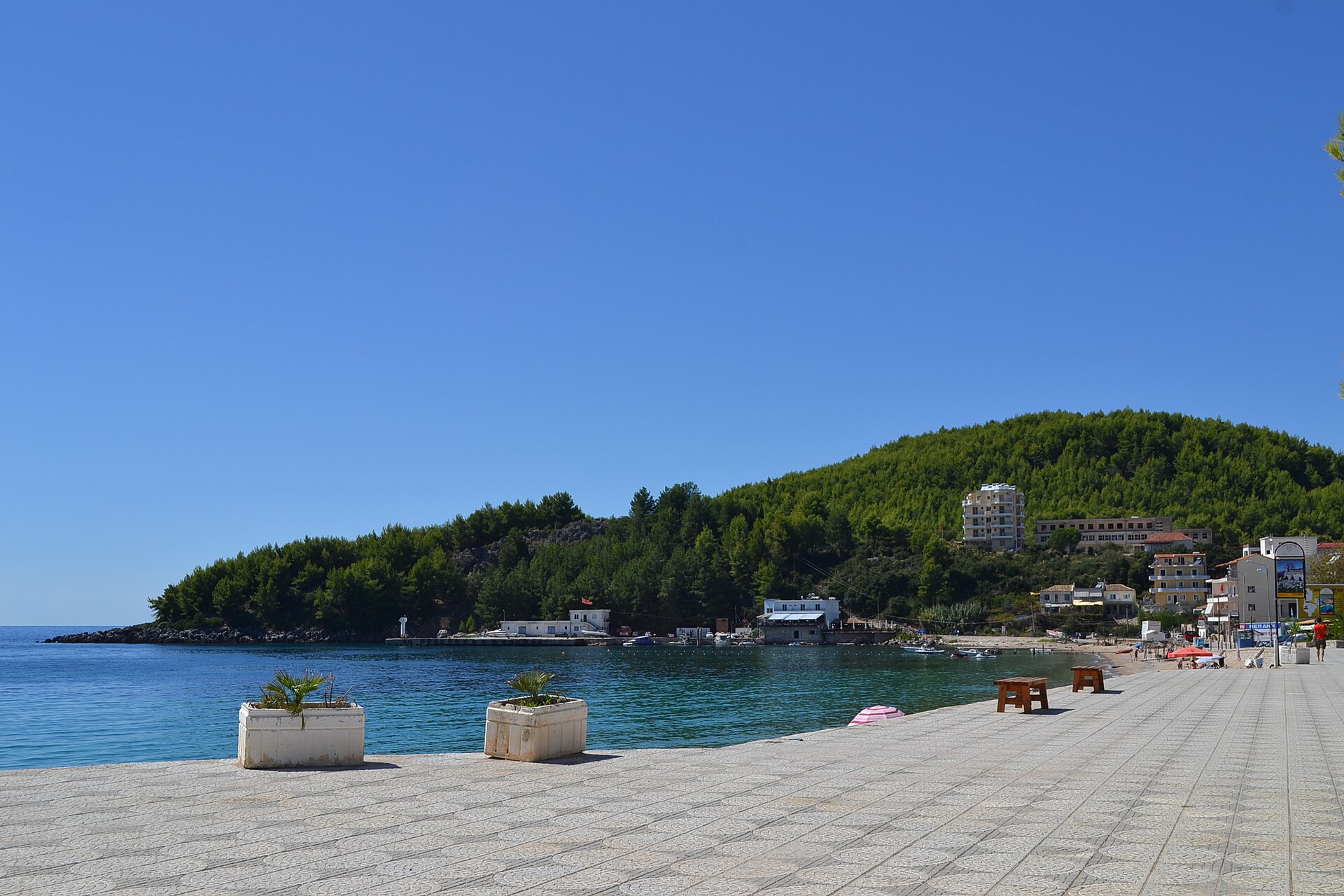
With the fall of the Western Roman Empire, Himarë came under Byzantine influence, which left here its most enduring legacy: the Orthodox rite, the Greek language still spoken today by part of the population, and the first stone churches that dot the villages of the area. In the following centuries the region retained relative autonomy even under Ottoman pressure, thanks to the ruggedness of the terrain and the determination of its inhabitants, so much so that Himarë is remembered as one of the least subdued areas of southern Albania. A crucial chapter concerns Ali Pasha of Tepelena, the powerful and ruthless Ottoman governor who in the early nineteenth century repeatedly tried to break local resistance, building fortresses along the coast - including that of Porto Palermo - to control a shoreline that kept slipping from his grasp.
Himarë Castle and the upper village
On the hill overlooking the bay stand the remains of Himarë Castle, a fortified complex of late antique and Byzantine origin, reworked several times in the Ottoman period. The dry-stone walls, today partly absorbed into the houses of the old settlement, once traced a defensive perimeter that protected the population from seaborne assaults, frequent along a coast exposed to pirate raids and the ambitions of rival powers. Climbing through the paved alleys, stretches of wall, stone portals and small churches wedged between the houses can still be seen, while the highest point offers a view stretching from the open sea to the ridges of the Ceraunian Mountains: one of the most striking panoramas of the entire Albanian Riviera.
Himara e Vjetër, the old stone town
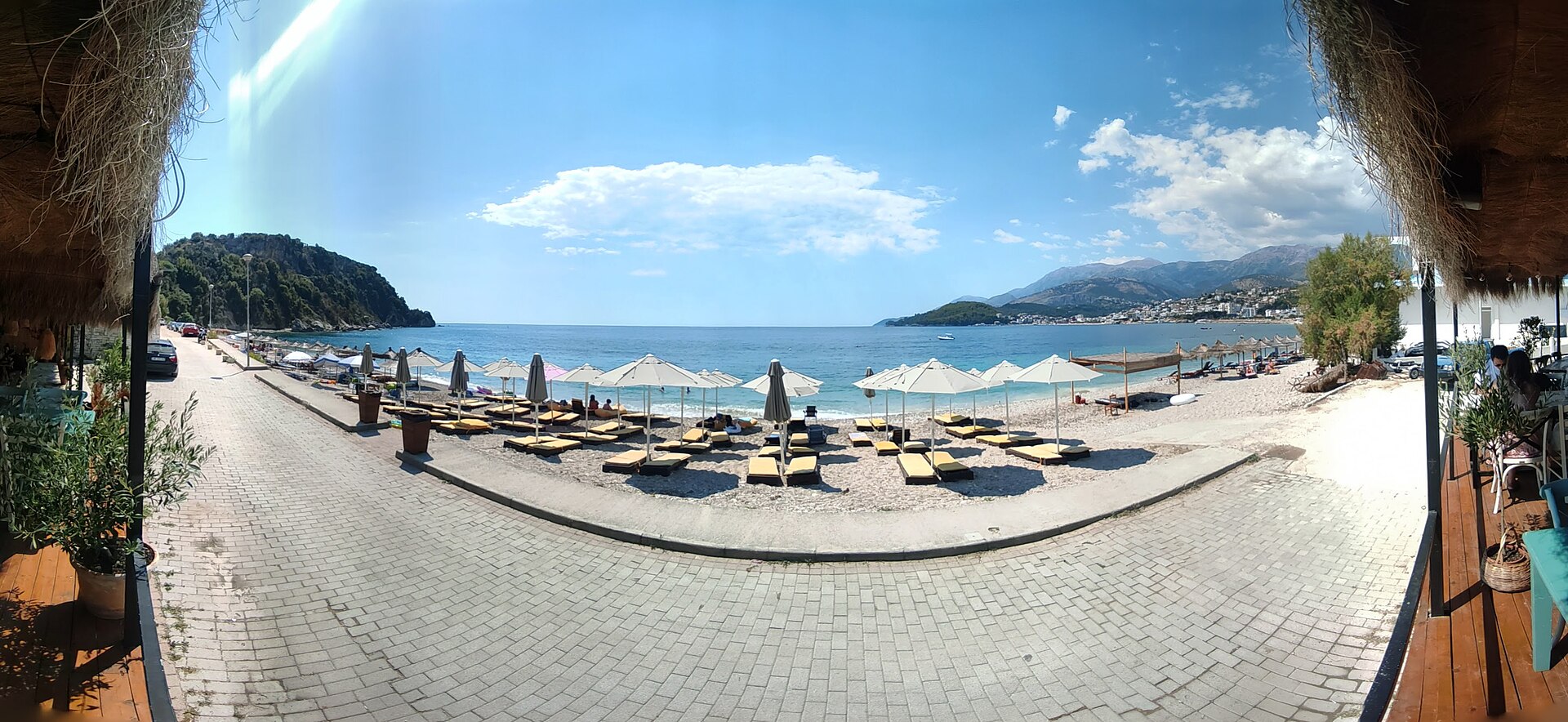
Distinct from the modern centre that has developed along the beach, Himara e Vjetër - 'old Himarë' - is the historic settlement clinging to the slope, a maze of two- or three-storey stone houses, narrow stairways and courtyards shaded by vines and fig trees. Long semi-abandoned in favour of the more convenient settlements below, in recent years it has been undergoing a slow revival, with some houses restored and turned into small guesthouses. Wandering through its alleys, where the grey stone warms in the sun and windows frame glimpses of the sea, is the best way to understand how life was lived on this coast before the arrival of paved roads and tourism, when every house was also designed for defence.
Porto Palermo Castle
A short way south of Himarë, on a small promontory closing off one of the Riviera's most beautiful bays, stands Porto Palermo Castle, built by Ali Pasha of Tepelena in the early nineteenth century over the remains of earlier fortifications, perhaps of Venetian origin. Its trilobate plan, designed for crossfire artillery, and its almost isolated position on the water make it one of the best-preserved military monuments of southern Albania. Inside, visitors can see the vaulted halls once used as barracks and storerooms, while the bay itself, with its turquoise waters enclosed between rocky walls, is today one of the most photographed swimming spots in the area, helped also by the nearby, more secluded inlet of Kolomodhi.
The Orthodox churches and religious heritage
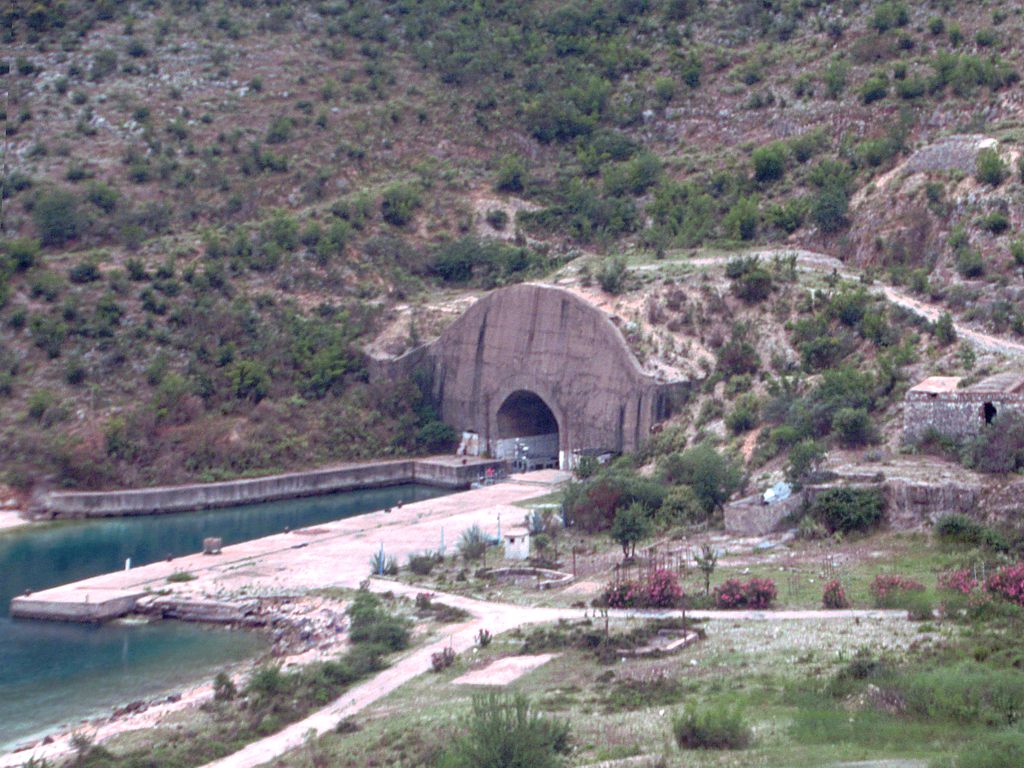
The Orthodox faith deeply permeates the landscape of Himarë and the neighbouring villages: small stone churches, often dating from the seventeenth century or earlier, stand isolated among the olive groves or wedged into the settlements, decorated with Byzantine and post-Byzantine frescoes that testify to a pictorial tradition never interrupted. In the old town and the surrounding hamlets there are numerous sacred buildings dedicated to saints dear to the Greek-Orthodox tradition, destinations for local pilgrimages especially during the summer patronal feasts, when the community gathers for celebrations that combine religious rite and popular festivity. This heritage, often unobtrusive but widespread throughout the territory, tells the identity-story of a community that has crossed the centuries while preserving its own language and rites better than any museum could.
The beaches and the Ionian coastline
Himarë's coastline alternates small white pebble beaches with coves reachable only by sea or via steep paths, in a succession of waters that shift from turquoise to deep blue as the seabed drops away. Livadhi, wide and well-equipped, is the main beach of the centre; a little further south lie the more intimate inlets of Potam and Spilaj, while heading north the coastline of Dhërmi and Jal offers some of the Riviera's most photographed views. Not far away, the Gjipe canyon opens between sheer limestone walls down to an isolated beach, a destination for excursions for those seeking a still-unspoiled corner of nature. The water quality, among the clearest in the eastern Mediterranean, remains the real reason why more and more travellers are choosing this coast.
The hinterland, the Ceraunian Mountains and Llogara Park
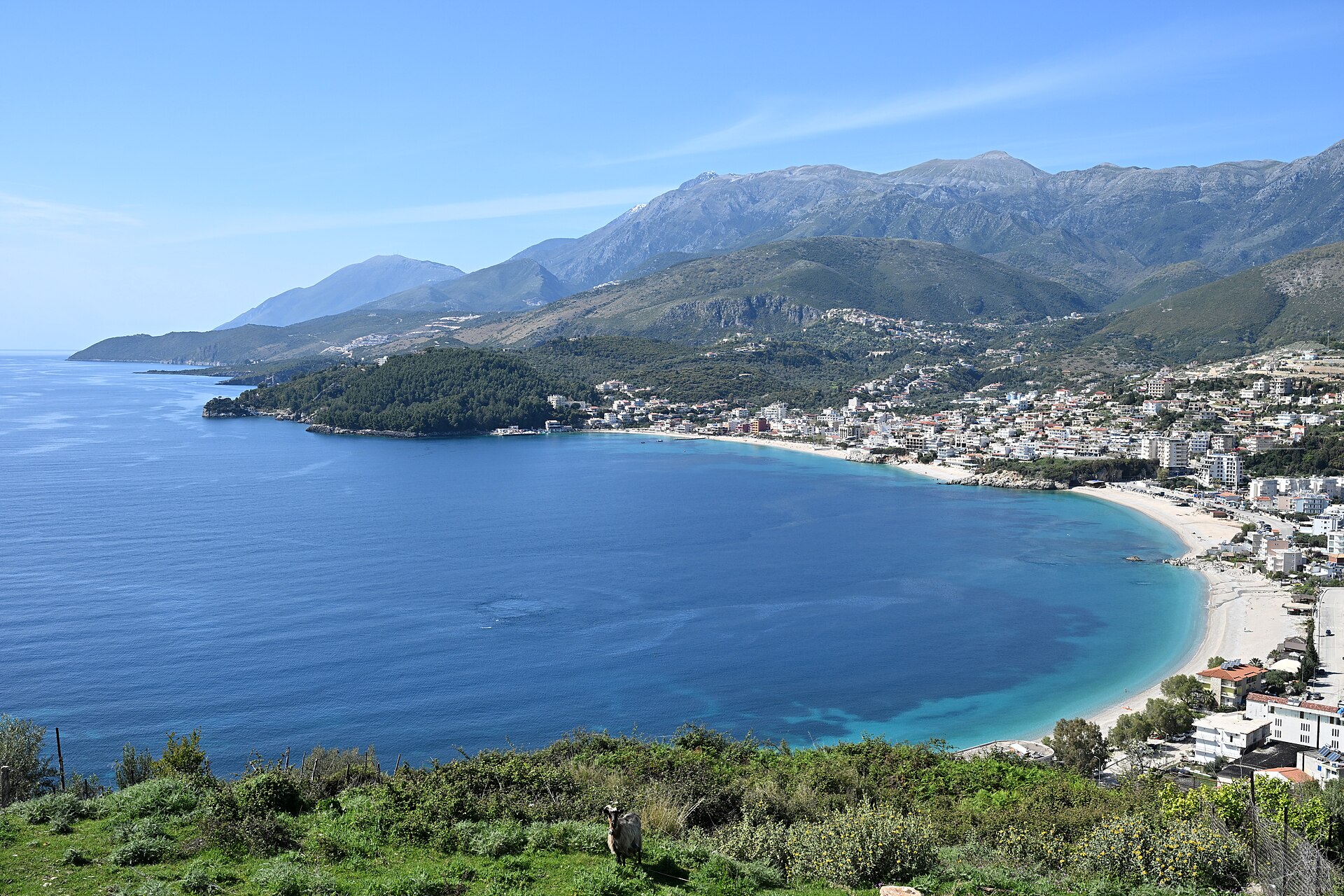
Behind Himarë the terrain rises rapidly into the Ceraunian Mountains, a limestone range that separates the Ionian coast from the hinterland and which culminates, a short way to the north, in Llogara National Park: black pine forests, beech woods and rock faces that in just a few kilometres drop from the 1,000-metre pass down to sea level, with a panorama that on clear days embraces the whole gulf as far as Corfu. This extreme elevation change, rare along Mediterranean coasts, creates a mosaic of microclimates: while olives and citrus grow at the water's edge, mountain pastures open up a little higher, grazed in summer by shepherds and their flocks. For hikers the area offers ridge trails, equipped viewpoints and the chance to try paragliding right from the Llogara pass.
The villages of the Riviera: Dhërmi, Vuno, Palasë and Qeparo
Himarë is the centre of a municipality that brings together several historic villages, each with its own character. Dhërmi, further north at the foot of the Llogara Pass, is today the Riviera's most fashionable destination, with an old core up on the hill and a long stretch of beaches below that in recent years has become a hub of bars and resorts. Vuno, perched on the slope just above the coast, retains an almost intact medieval layout and Byzantine churches of great value. Palasë, overlooking one of the coastline's widest bays, is the starting point for the trail to Gjipe beach. Further south, Qeparo alternates an old, semi-abandoned and evocative stone settlement with a new centre that has grown along the coastal road.
Traditions, the Greek community and popular culture
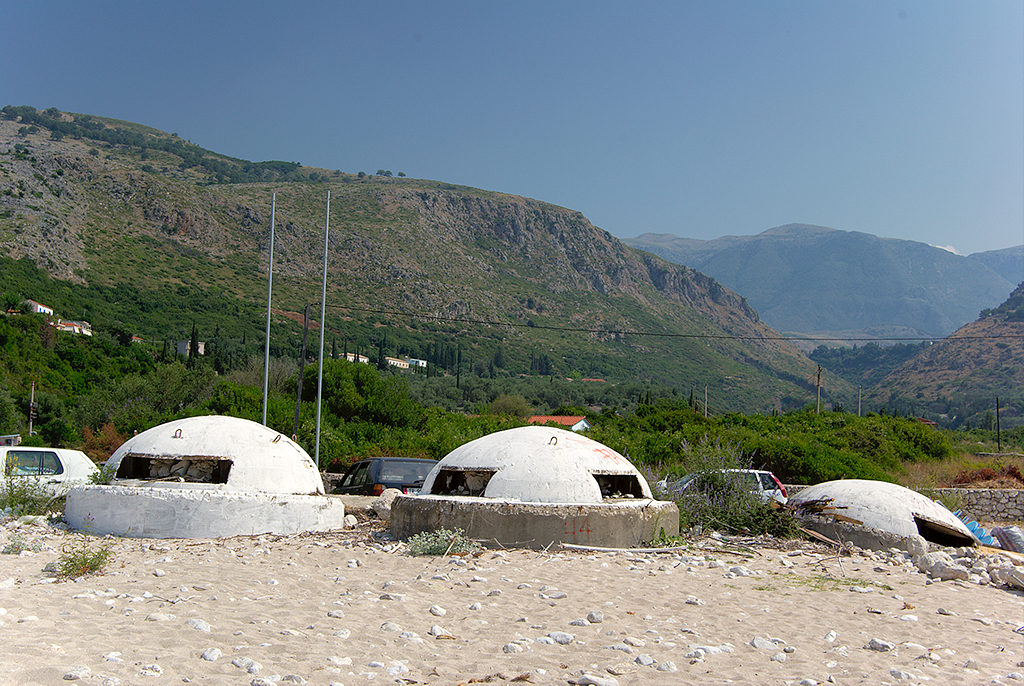
Himarë belongs to an area historically recognised as home to a substantial minority of Greek language and culture, a presence with roots going back to the Byzantine centuries, kept alive through the language spoken at home, folk songs and Orthodox religious celebrations. This double soul, Albanian and Greek, can be felt in the place names, often handed down in both languages, and in the summer patronal feasts, when the villages come alive with processions, music and traditional dances. Emigrant communities, numerous especially towards Greece, often return in summer for the festivities, temporarily reviving villages that for the rest of the year remain quiet, and helping to keep alive a heritage of customs, recipes and family memories that would otherwise risk being lost.
Flavours: oil, fish and citrus of the Riviera
Himarë's cuisine tells of the land's double nature, suspended between sea and mountain. The centuries-old olive groves covering the slopes around the town produce an intense, aromatic oil, a base ingredient in almost every dish, while the citrus groves running down to the coast - a rarity at these latitudes - yield oranges and lemons with a particularly concentrated scent. Fresh fish, grilled or in simple soups, dominates the tables of the seafront restaurants, often accompanied by garden vegetables and sheep's cheese produced in the nearby mountain pastures. There is no shortage of Balkan-tradition sweets, made with honey and dried fruit, and homemade raki, often distilled precisely from grape marc or local fruit, offered as a gesture of hospitality in every home.
Experiences not to be missed
- Wander through the stone alleys of Himara e Vjetër up to the castle remains, with a view over the gulf
- Swim in the bay of Porto Palermo Castle and visit Ali Pasha's fortress
- Walk the trail to the Gjipe canyon and beach, between sheer rock walls
- Climb to the Llogara Pass for the view over the gulf and, in season, try paragliding
- Explore the hillside villages of Vuno and old Qeparo, among Byzantine churches and stone houses
- Dine at a seafront restaurant with fresh fish, local oil and a glass of homemade raki
- Join, if you happen to be there in summer, an Orthodox patronal feast in one of the area's villages
When to go and how to experience Himarë
The ideal season for Himarë runs from late May to early October, when the sea reaches pleasant temperatures and the long days allow you to combine beach time, hikes and village exploration. July and August remain the busiest months, especially with visitors from the Balkans and Greece, while June and September offer the same sea at a more relaxed pace and lower prices. For mountain lovers, spring and early autumn are perfect for walking in Llogara Park, when temperatures at altitude stay cool even at midday. Getting around by rental car remains the most convenient way to explore the jagged coastline and the hinterland villages, often linked by scenic but winding roads.
FAQ
Come si arriva a Himarë?
Quanti giorni servono per visitare Himarë e dintorni?
Qual è il periodo migliore per andare al mare?
Le spiagge di Himarë sono adatte alle famiglie con bambini?
Dove si parcheggia per visitare il castello di Porto Palermo?
Si può visitare Himarë anche senza auto?
Getting there
- Aeroporto Internazionale di Tirana 'Madre Teresa' (TIA), circa 190 km, 3-3,5 ore d'auto lungo la costa
- Da Vlorë si segue la strada costiera SH8 che sale al Passo di Llogara (circa 1000 m) e poi scende a tornanti fino a Himarë; da Saranda si percorre la stessa SH8 in direzione nord, circa 1 ora e 15 minuti.
- La strada attraverso il Passo di Llogara è panoramica ma stretta e con molte curve: meglio percorrerla con calma e, se possibile, evitare il buio o la nebbia in quota.
Perfect for
Calette di ciottoli e acque turchesi da Livadhi a Gjipe, tra le più limpide della costa ionica albanese.
Castelli, mura bizantine e la fortezza di Ali Pascià a Porto Palermo raccontano secoli di dominazioni e resistenze.
Dal livello del mare ai boschi del Parco di Llogara in pochi chilometri, tra sentieri, panorami e parapendio.
Un'identità greco-albanese fatta di lingua, riti ortodossi e feste patronali che animano i villaggi in estate.
Olio d'oliva, agrumi coltivati fino a riva mare, pesce fresco e raki fatto in casa in ogni trattoria di paese.
To see
What to see in Himarë
Routes · Trovido Route
