

Dhërmi
Where the Ceraunian Mountains drop sheer into the Ionian Sea, amid terraced olive groves and pale stone, stands Dhërmi, one of the...
Updated 8 July 2026
The story
The story of Dhërmi
History: from Illyrian origins to foreign rule
Dhërmi's origins reach back into a remote past, tied to the Illyrian peoples who first inhabited this stretch of Ionian coast, a territory contested among different peoples for its strategic position along the maritime routes of the Adriatic and Ionian seas. With Greek and later Roman expansion, the area came within the orbit of the great powers of the ancient Mediterranean, while remaining peripheral and mountainous. It was in the Byzantine era that the village took on the hillside form it still keeps today, set back from a coast exposed to raids. There followed the long Ottoman domination, which brought centuries of coexistence between the local population, predominantly Greek Orthodox, and the central Muslim power, leaving traces in the architecture and culture. The Communist twentieth century froze its development, yet preserved the integrity of its landscape: only since the 2000s has Dhërmi begun its rapid transformation into a tourist destination, a change that still coexists with the slow rhythms of the mountain village.
The old village and its Orthodox churches
The identity heart of Dhërmi is the historic village that unfolds up the slope, traditionally divided into small clusters or mahalla, each with its own church and its own square. The houses of local stone, with grey slate roofs and courtyards enclosed by low walls, speak of an architecture designed for the mountain climate rather than for a panoramic view: paved alleys, stone fountains, carved doorways, terraced kitchen gardens with glimpses of the distant sea. Numerous small Orthodox churches dot the village, some with frescoes and fine iconostases the work of local craftsmen of Byzantine influence, testimony to the community's deep religiosity. Around them are still organised today the patron saint's feasts that punctuate the summer, occasions for gathering for both residents and the many emigrants who return to their native village exactly at this time of year, amid songs, traditional dances and convivial banquets in the little squares.
Dhërmi's beaches and the Gjipe canyon
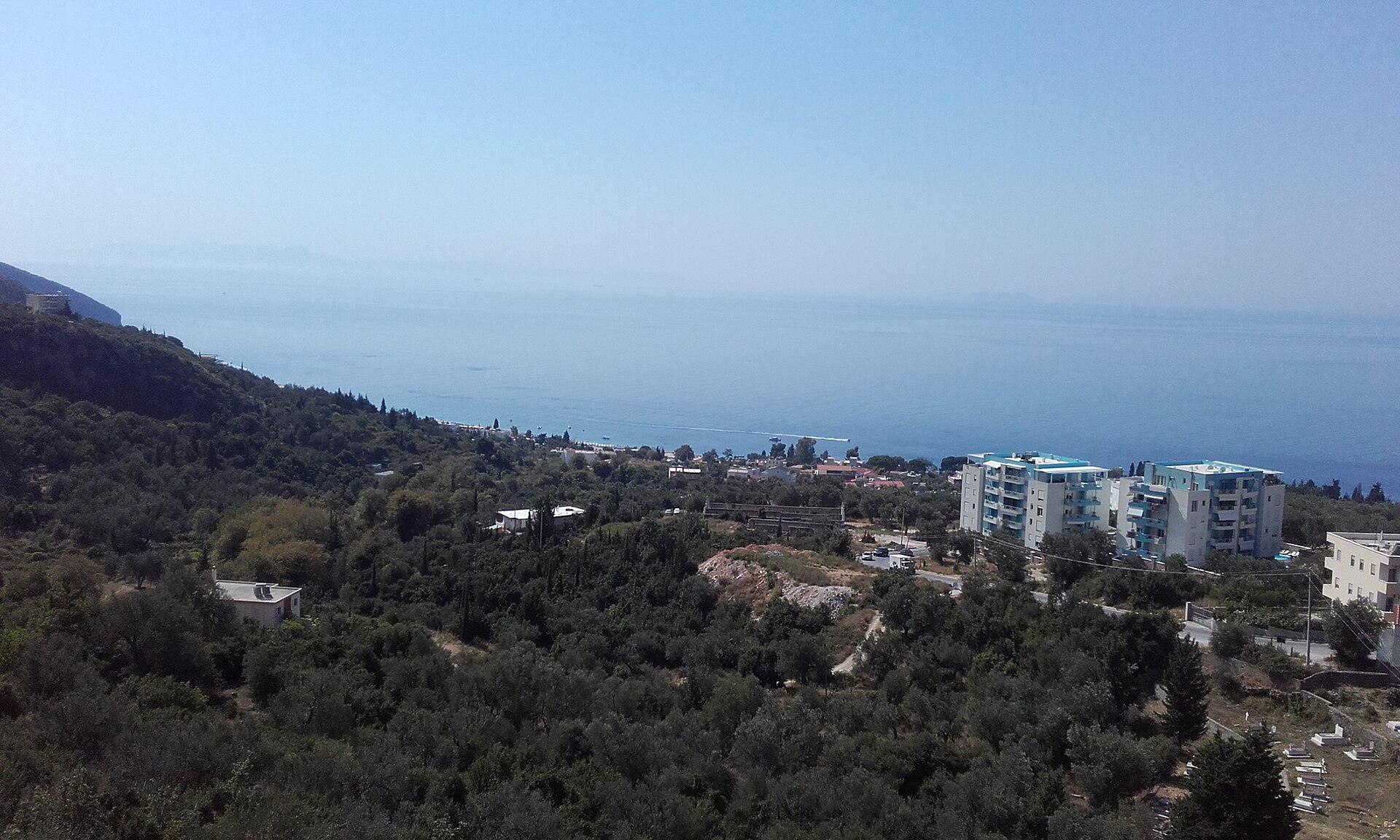
Dhërmi's coastal strip runs for several kilometres in a succession of coves and beaches whose seabed drops quickly into a deep blue, typical of the mountainous Ionian coast. Some stretches are now fitted out with beach clubs and venues that liven up summer evenings, others remain more secluded and quiet. A few kilometres to the south opens one of the most spectacular sights of the entire Riviera: the Gjipe canyon, a gorge carved into the limestone rock by a seasonal stream, which opens onto an isolated beach of pale pebbles framed by sheer cliffs, reachable on foot through the gorge or by sea. Few essential services, intensely turquoise water and a silence broken only by the wind convey the sense of a still-wild coast, one that in recent years has become an almost obligatory stop.
- Dhërmi's main beach, the widest and best equipped, the heart of summer beach life
- Jaliskari, a more intimate cove prized for the clarity of its water
- Gjipe, a wild beach at the mouth of the canyon of the same name
- Livadhi, a quieter stretch to the south, loved by those seeking relaxation
- Small coves reachable only by boat along the coast towards Himarë
Llogara Pass, the Ceraunian Mountains and the neighbouring villages
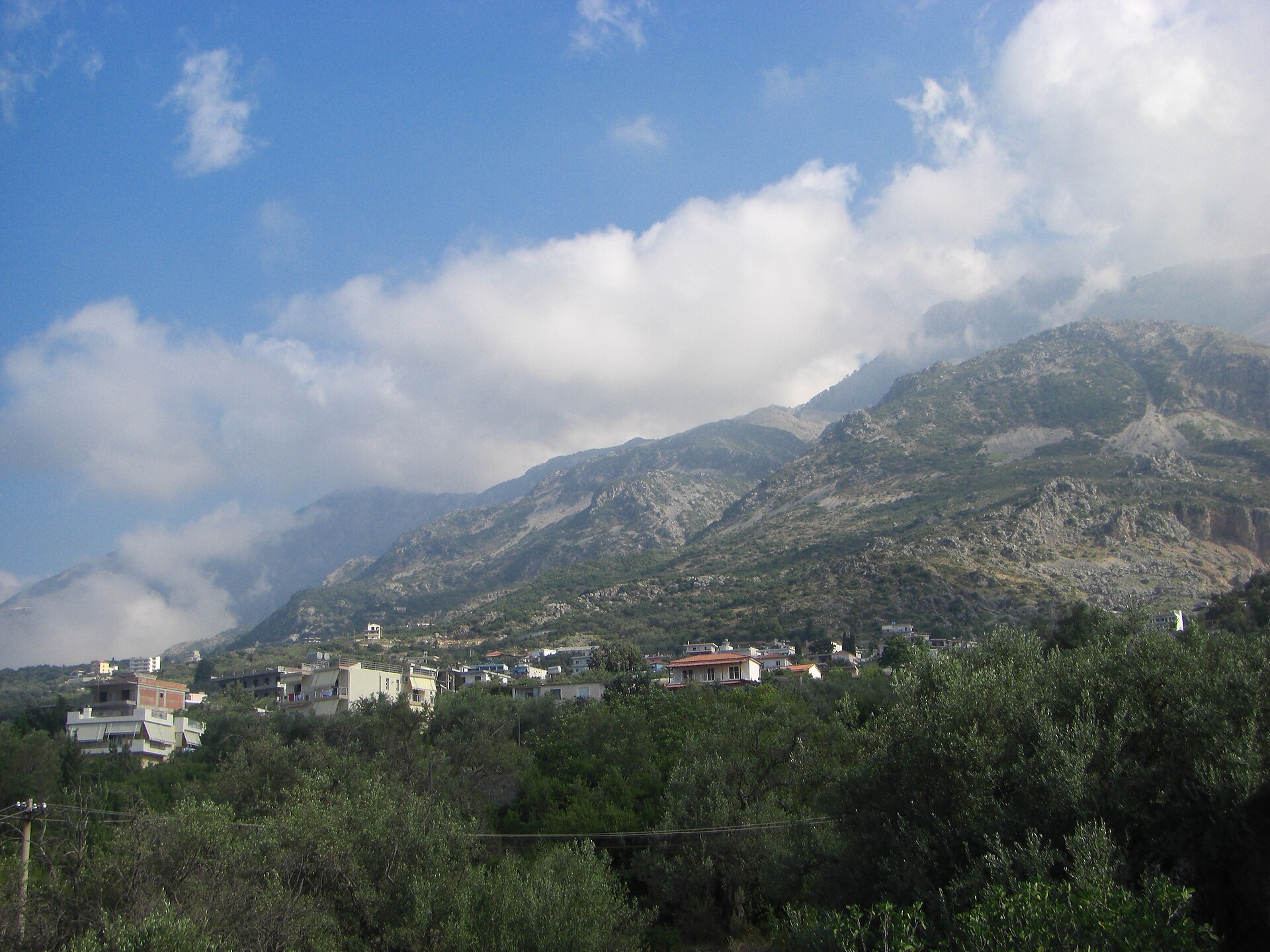
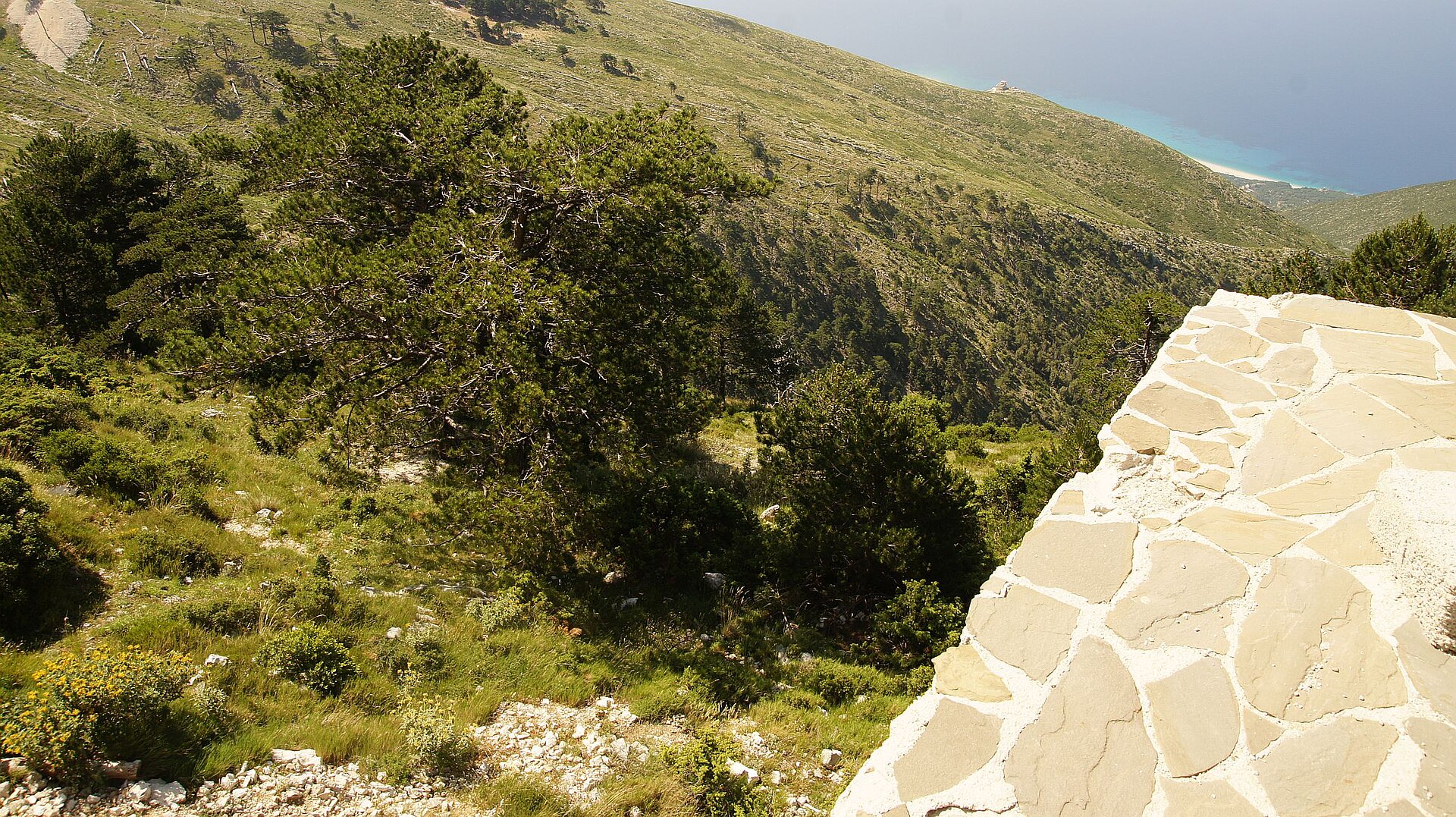
Arriving in Dhërmi from the north almost always means crossing the Llogara Pass, one of the most spectacular mountain passes in the Balkans, where the road climbs through fragrant pine forests to over a thousand metres before winding back down towards the sea: it is the point where the Ceraunian Mountains, which give the entire Albanian Riviera its name, all but touch the sky before plunging almost vertically into the Ionian Sea. Descending from the mountain towards the sea, the landscape turns into a succession of terraces planted with olive trees, some centuries old, that speak of the community's agricultural soul. Dhërmi is also part of a system of villages well worth exploring together: to the south Himarë, a larger centre with its own castle and a lively seafront; to the north Vuno, perched on the mountain with a strikingly beautiful Orthodox church, and Palasë, the last settlement before the climb to the pass, a starting point for the coast's most isolated beaches. Throughout the area a strong bond with the Greek language and culture remains alive, still spoken by many residents alongside Albanian.
Flavours and cuisine of the Riviera
Dhërmi's table reflects the meeting of mountain and sea typical of the whole Albanian Riviera: fresh grilled fish served in restaurants overlooking the water, but also goat's and sheep's cheeses, intensely flavoured local olive oil, seasonal vegetables and dishes from the pastoral tradition such as lamb stew or byrek, the typical savoury filled pie found throughout Albania. Greek culinary influences are not lacking either, noticeable in some desserts and in the generous use of mountain herbs, while wine and raki, the local grappa often distilled at home, remain unfailing protagonists of every convivial meal, especially on festive occasions and at the gatherings that enliven the upper village during summer.
When to go and how to experience Dhërmi
The proper beach season runs from June to September, with July and August bringing the biggest crowds, the liveliest nightlife and the highest prices along the coast. Those seeking a calmer experience, with still pleasant temperatures and the chance to enjoy trails and beaches without crowds, should consider June or the second half of September. In the low season the coastline empties almost completely and many establishments close, but the upper village remains reachable regardless and offers an authentic atmosphere for those more interested in history and landscape than in swimming. Whatever the time of year, it is worth devoting time to both the coast and the hillside village, to truly grasp Dhërmi's two souls.
- Explore on foot the stone alleys of the upper village and its small Orthodox churches
- Reach the Gjipe canyon and beach by walking along the gorge
- Drive across the Llogara Pass at sunset for the view over the Riviera
- Take a swim in the less crowded coves towards Livadhi or reach them by boat
- Dine at one of the seafront restaurants with fresh fish and a view of the Ionian sunset
- Visit the nearby villages of Himarë, Vuno and Palasë to compare the coast's different souls
FAQ
Quanti giorni servono per visitare Dhërmi?
Dhërmi è adatta a un viaggio con bambini?
Dove si parcheggia a Dhërmi in alta stagione?
Si può visitare Dhërmi anche fuori stagione?
Gli animali domestici sono ammessi in spiaggia?
Come si raggiunge la spiaggia di Gjipe?
Getting there
- Aeroporto Internazionale di Tirana Nënë Tereza, circa 190 km, il più vicino con voli internazionali
- Aeroporto di Corfù (Grecia), collegato via traghetto per Saranda, opzione comoda in estate
- Si arriva in auto lungo la strada costiera SH8 che collega Vlorë a Saranda, attraversando il celebre Passo di Llogara; il tragitto da Tirana richiede circa 4 ore, quello da Vlorë circa 1 ora e mezza.
- In alta stagione la strada costiera può essere molto trafficata nei fine settimana: partire al mattino presto riduce sensibilmente i tempi di percorrenza, soprattutto in prossimità del Passo di Llogara.
Perfect for
Calette di ciottoli bianchi, acque turchesi e fondali profondi tipici della costa ionica albanese.
Sentieri tra ulivi terrazzati, il canyon di Gjipe e i boschi del Passo di Llogara per chi ama camminare.
Il borgo antico e le sue piccole chiese ortodosse raccontano secoli di storia greco-ortodossa e balcanica.
Pesce fresco, olio d'oliva locale e piatti della tradizione pastorale nei ristoranti sul mare.
Vedute mozzafiato dal Passo di Llogara e dai sentieri che collegano il villaggio alto alla costa.
To see
What to see in Dhërmi
Routes · Trovido Route
