

Borsh
There is a stretch of the Albanian Ionian coast where olive groves run down almost to the water's edge, and that stretch has a nam...
Updated 8 July 2026
This season · July · Summer
What to do in Borsh now
The story
The story of Borsh
Origins and history of an Ionian crossroads
The territory of Borsh has been inhabited since antiquity, when the inlets of the Ceraunian coast offered natural landings to the trade routes connecting the Greek world to the Adriatic. In the Hellenistic and later Roman era the area gravitated in the orbit of Butrint and the coastal cities of Epirus, while in the Byzantine period it became a fortified outpost along the coast, functional to controlling maritime traffic and defending against raids. In the following centuries the region passed under the rule of the Angevins, the despots of Epirus, the Venetians and finally the Ottomans, who here as throughout southern Albania left a deep imprint, coexisting with a population that kept its Orthodox identity firmly alive. The history of Borsh, like that of the whole Riviera, is thus a frontier history, written by successive dominations that contested a strategic and fertile coastline.
Sopot Castle: the fortress suspended over the valley
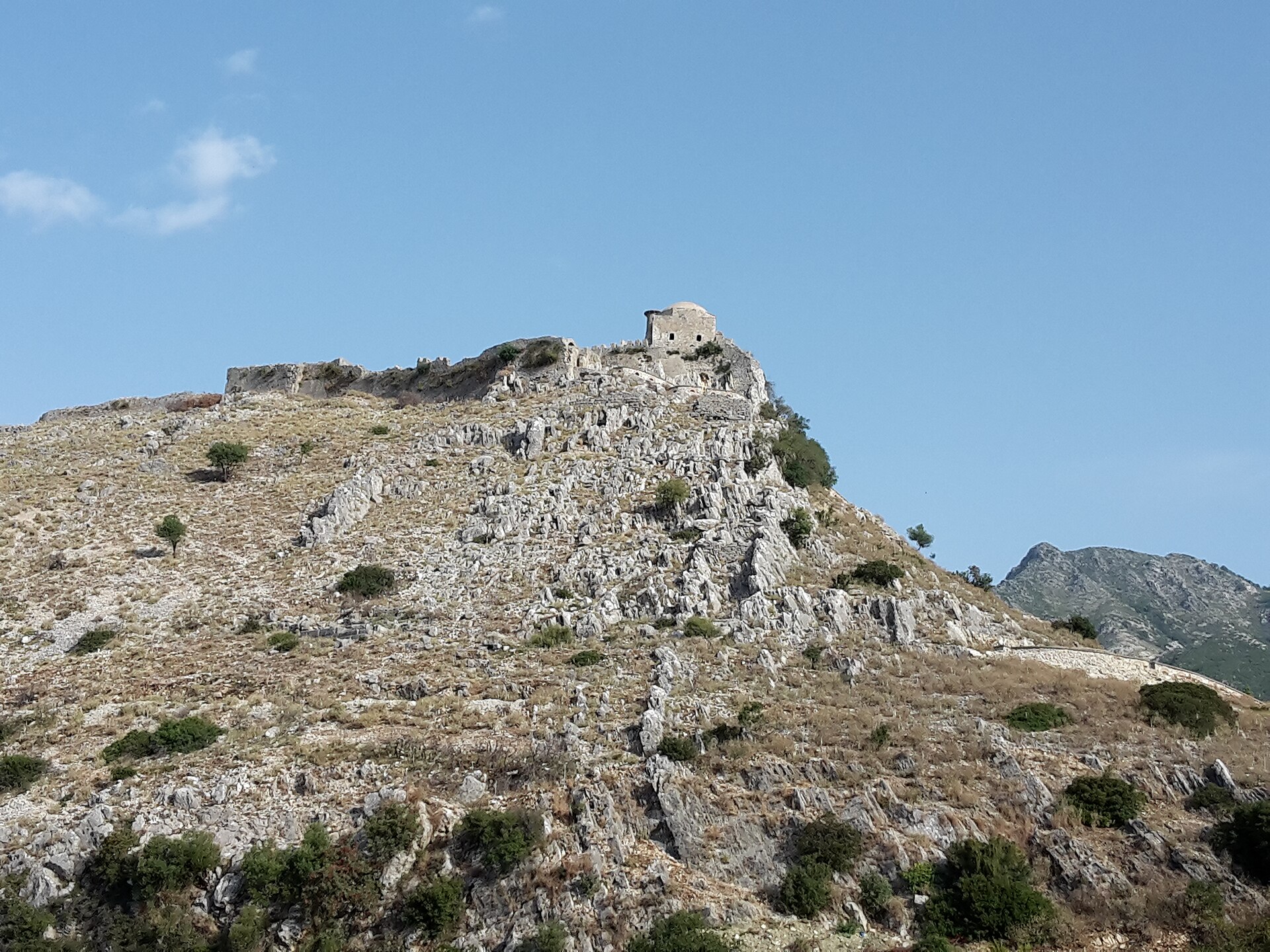
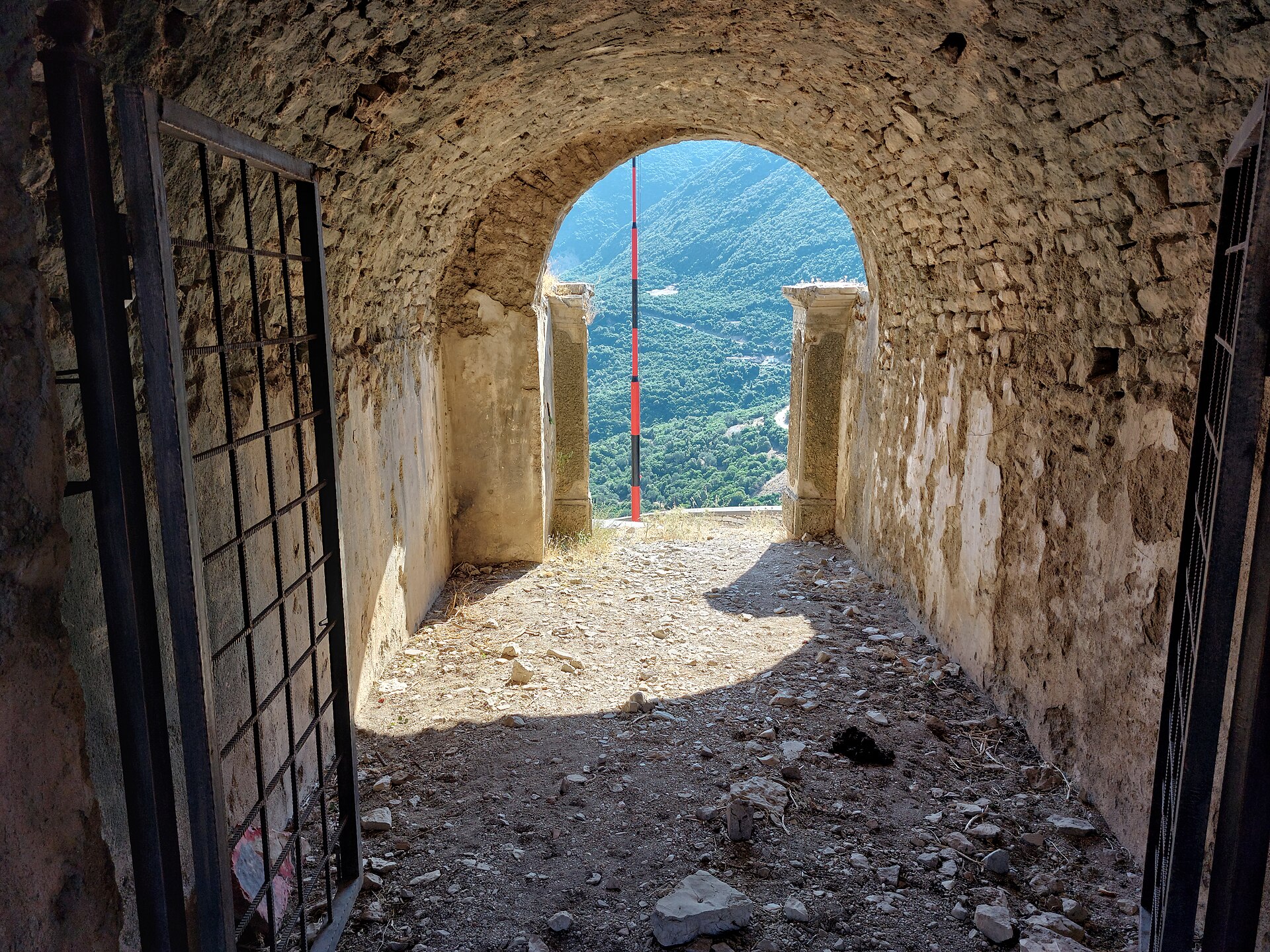
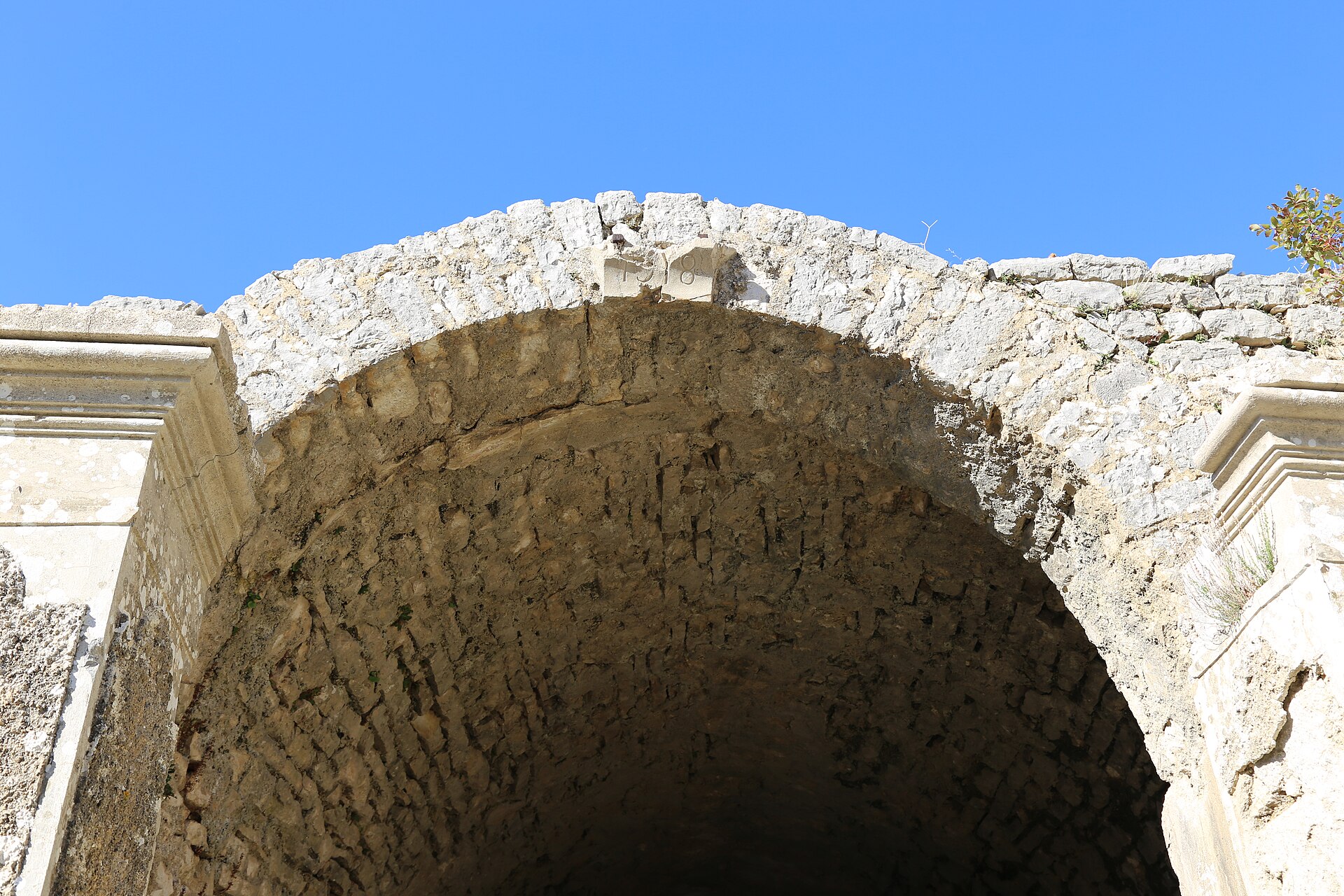
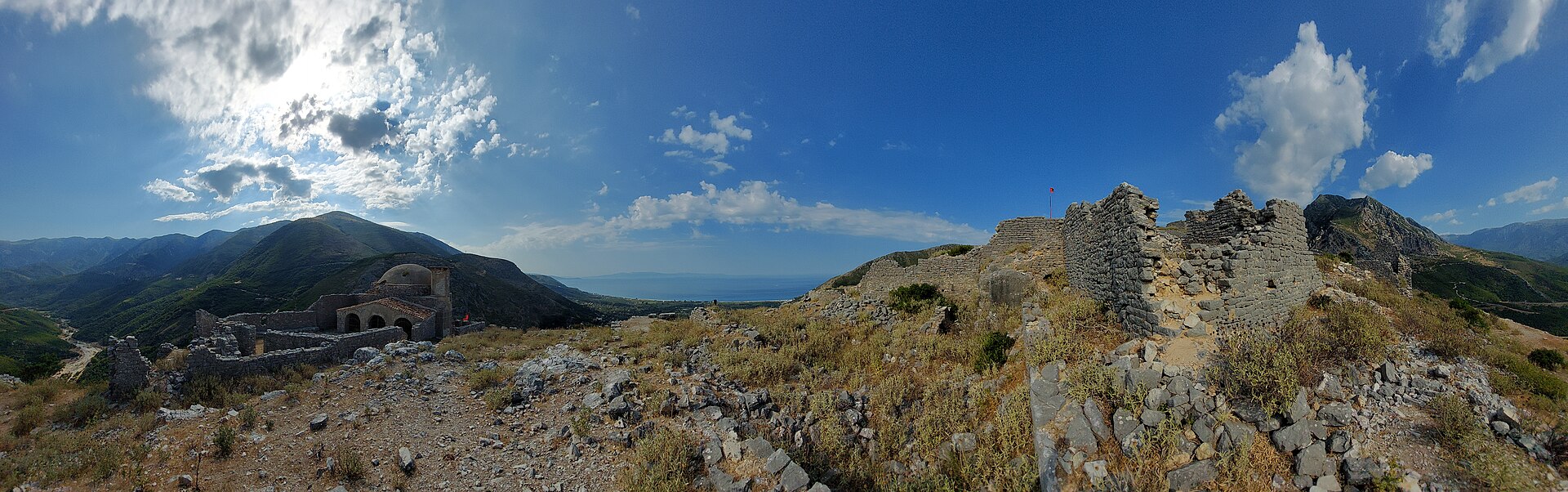
Perched on a spur at about 300 metres above sea level, Sopot Castle (Kalaja e Sopotit) dominates the entire Borsh valley and a wide stretch of Ionian coast. Its origins go back to the Byzantine period, when the fortification served to watch over both the sea and the inland routes climbing towards the Ceraunian Mountains; it was later remodelled and reused, following a pattern common to many Albanian coastal fortresses readapted by the Ottomans. Today what remains are stone walls broken by time, stubby towers and a perimeter still discernible in the vegetation, but it is above all the view that makes the climb memorable: from up there the eye takes in the olive groves, the long beach and, on clear days, the silhouette of the island of Corfu on the horizon. It is a place little equipped for mass tourism, and precisely for this reason it retains an authentic, almost secret atmosphere.
Borsh i Vjetër: the old village between stone and olive trees
Climbing from the coastal highway towards the interior you reach the historic core of Borsh, a cluster of stone houses that climbs the slope with narrow lanes, dry-stone walls and small Orthodox churches with worn frescoes. It is the identity heart of the village, inhabited mostly by a community that has kept alive the language and traditions of the Riviera's Greek minority, in a centuries-old dialogue with Albanian identity. Walking through these houses means crossing courtyards scented with fig and pomegranate, passing elders sitting in the shade, glimpsing wood-fired ovens still in use: a rural, Mediterranean Albania that the coast's tourism boom has so far left relatively untouched.
Borsh beach: one of the longest stretches of sand in Albania
What makes Borsh a name known among travellers most attentive to the Riviera is its beach, which at about seven kilometres in length is among the most extensive of the entire Albanian coast. It is a shoreline of fine pebbles and mixed sand, washed by an Ionian Sea whose colours shift from turquoise to deep blue as the seabed slopes away. Unlike the smaller, more crowded bays of Himara or Dhërmi, here space is not lacking: even in the high-season months it is possible to find almost deserted stretches, especially at the two ends of the beach, away from the few beach establishments concentrated in the central part. The land behind the beach, dotted with reed beds and small seasonal streams, adds a touch of wild nature that has by now been lost elsewhere along the Riviera.
The centuries-old olive groves: a landscape that is also memory
Between the old village and the sea stretches a belt of olive groves that, according to local estimates, counts tens of thousands of trees, some of them centuries old with gnarled, hollow trunks bearing witness to farming unbroken across generations. This agrarian landscape, which in summer offers cool shade along the paths and in autumn comes alive with the harvest, is one of the most characteristic and photogenic features of Borsh: rows sloping down towards the sea, dry-stone walls, the silvery green of the leaves contrasting with the blue of the Ionian. The oil produced from them, often made in small family-run mills, is one of the signature products of the Albanian Riviera and remains to this day at the heart of local cuisine.
The Ceraunian Mountains and the wild hinterland
Behind Borsh the landscape quickly changes register: the olive groves give way to steeper, barer slopes dotted with Mediterranean scrub, climbing towards the peaks of the Ceraunian Mountains (Karaburun-Ceraunia), the range that separates the Ionian coast from the mountainous hinterland of southern Albania. Little-trodden paths link the old village to small rural settlements and to panoramic points from which the whole bay can be seen; for those who love trekking off the more touristy circuits, this area offers an authentic Mediterranean mountain experience, with views spanning from the sea to the inland peaks, in a silence broken only by the bells of grazing flocks.
Surroundings: Qeparo, Himara and the rest of the Riviera
Borsh is an excellent base for exploring the entire Albanian Riviera without the crowds of the more famous resorts. A few kilometres south lies Qeparo, with its abandoned, panoramic old village and the crystal-clear waters of its bay; heading north, following the SH8 highway as it climbs through breathtaking hairpin bends, you reach Himara, a livelier town and historic centre of the coast's Greek minority, and further on the legendary Llogara Pass, gateway to the national park of the same name. Heading south, past Piqeras and Lukova, the road eventually leads to Sarandë and the ruins of Butrint. Travelling along this stretch of coast, with frequent stops in the small bays that open up at every bend, is in itself one of the most memorable experiences of a trip to Albania.
Traditions, faith and popular culture
The community of Borsh belongs largely to the Riviera's Greek Orthodox minority, a historic presence reflected in the small churches scattered among the houses of the old village, in the religious festivals marked out by the Orthodox calendar, and in an everyday bilingualism that coexists naturally alongside Albanian. The summer patron saint celebrations, with processions, music and communal feasts, remain among the best moments to capture the authentic soul of the place, far removed from the equipped beaches of the low tourist season. It is a border culture, grown out of a centuries-old dialogue between two shores of the same sea.
Flavours of Borsh: oil, fish and Mediterranean cuisine
Borsh's table tells the same story as its landscape: local olive oil poured generously, Ionian fish grilled or cooked in simple soups, garden vegetables, goat cheeses and home-baked bread. In the family-run restaurants along the beach you find dishes that blend Greek and Albanian influences, from fried fish to savoury byrek, from brined olives to honey sweets. It is a cuisine that seeks substance rather than effect, faithful to seasonality and to the products of the land, perfect paired with a glass of home-made raki.
When to go and how to experience Borsh
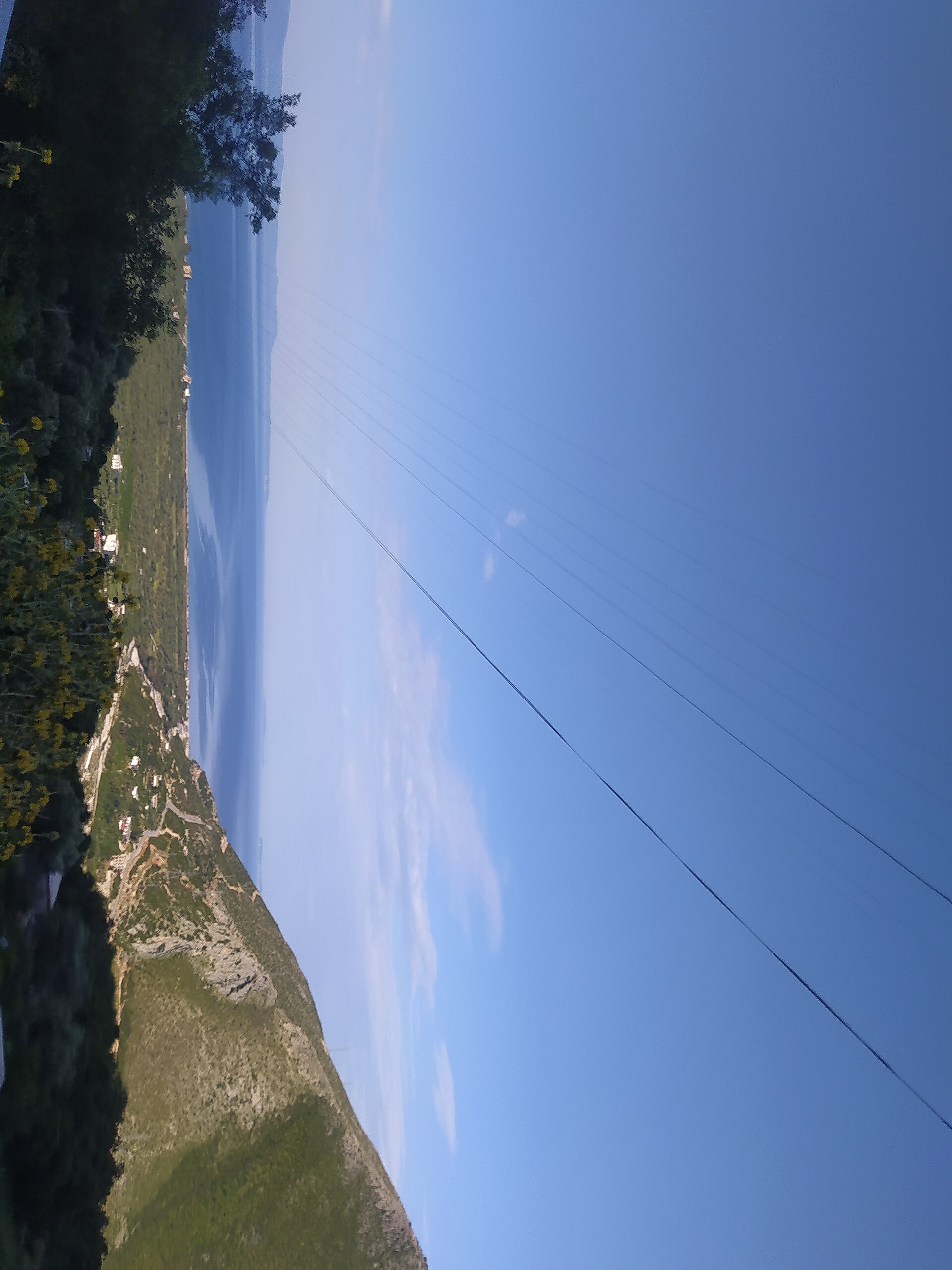
The beach season runs roughly from June to September, with July and August bringing the most intense heat but also the most inviting sea; those seeking tranquillity would do well to prefer June or the second half of September, when temperatures remain pleasant and the beach, already spacious in itself, empties out further. Spring, between April and May, is the ideal time for trekking to Sopot Castle and the trails of the Ceraunian Mountains, with the Mediterranean scrub in bloom and mild temperatures. In winter the village lives at a slow, almost deserted pace, suited only to those seeking a rural, out-of-season Albania.
Experiences not to be missed in Borsh
- Swimming at dawn on the seven-kilometre-long beach, when it is still almost deserted
- Climbing up to the ruins of Sopot Castle for the view over the coast and the olive groves
- Strolling through the stone lanes of the old village, among Orthodox churches and flower-filled courtyards
- Driving or riding a scooter along the SH8 highway between Borsh, Qeparo and Himara with panoramic stops
- Tasting the local extra-virgin olive oil at a family-run mill
- Dining on fresh Ionian fish at a tavern on the seafront
- Trekking into the hinterland of the Ceraunian Mountains among Mediterranean scrub and shepherd's trails
FAQ
Quanti giorni servono per visitare Borsh?
Qual è il periodo migliore per andare a Borsh?
Come si arriva alla spiaggia di Borsh?
Il castello di Sopot è visitabile liberamente?
Borsh è adatta alle famiglie con bambini?
Dove si parcheggia a Borsh?
Getting there
- Aeroporto Internazionale di Tirana "Madre Teresa" (TIA), circa 200 km e 3-3,5 ore d'auto
- Aeroporto di Corfù (Grecia), collegato via traghetto per Sarandë e poi circa 1 ora d'auto
- Borsh si raggiunge percorrendo la statale costiera SH8, la spettacolare strada panoramica che collega Vlorë a Sarandë attraversando il passo di Llogara, Himara e Qeparo; il tratto è tortuoso ma asfaltato e percorribile tutto l'anno.
- Nei mesi estivi la SH8 può essere trafficata nei fine settimana: meglio viaggiare al mattino presto o pianificare soste frequenti nelle baie panoramiche lungo il percorso.
Perfect for
Una delle spiagge più lunghe e meno affollate della Riviera Albanese, con acque turchesi e tratti ancora selvaggi.
Il castello di Sopot e le stratificazioni bizantine, veneziane e ottomane raccontano secoli di storia di frontiera.
Uliveti secolari, macchia mediterranea e i monti Ceraunia offrono paesaggi e sentieri fuori dai circuiti di massa.
Olio d'oliva locale, pesce dell'Ionio e una cucina mediterranea semplice e autentica.
Un borgo vecchio in pietra dove convivono identità albanese e tradizione greco-ortodossa della Riviera.
Routes · Trovido Route
