Gjirokastër
Qyteti i Gurit, the city of stone: this is what Albanians have called it for generations, and you only need to look up at the grey...
Updated 10 July 2026
This season · July · Summer
What to do in Gjirokastër now
The story
The story of Gjirokastër
The origins and long history of Gjirokastër
The earliest traces of settlement in the area date back to the Illyrian era, when the Drino valley was already a strategic corridor between the Ionian coast and the Balkan interior. A little further south stood Antigonea, a Hellenistic city founded in the 3rd century BC, and it cannot be ruled out that the first nuclei of present-day Gjirokastër arose as its natural heir in the Byzantine era, when sources mention a fortified centre called Argyropolis, the city of silver, from which some scholars derive the city's very name. The real leap in scale, however, came with the Ottoman conquest of 1417, when the Byzantine fortress was absorbed into a broader defensive system and the settlement we know today began to grow around it, destined to become one of the most important administrative centres of southern Albania under the Sublime Porte.
The Ottoman era and the birth of the city of stone
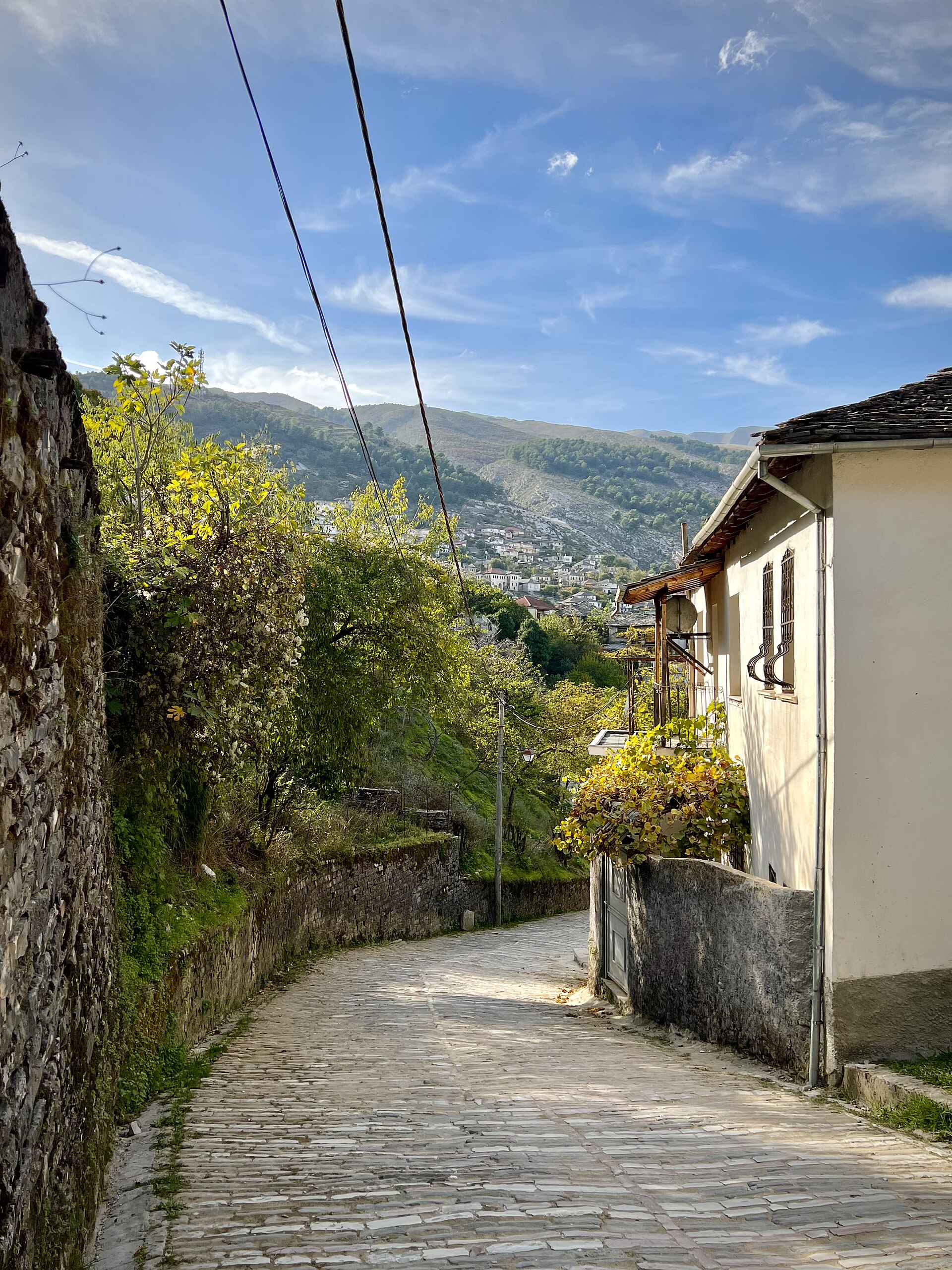
For four centuries Gjirokastër lived under Ottoman rule, developing the terraced stone urban layout that still distinguishes it today. A great fire in the early nineteenth century razed much of the bazaar to the ground, but this gave the opportunity to rebuild it according to the pattern we still see today: stone workshops at ground level, fortified dwellings in the higher quarters. This was the period when the region fell under the influence of Ali Pasha of Tepelena, the powerful local lord who from nearby Tepelenë controlled much of historic Epirus and who, in 1812, had the castle's clock tower built right here in Gjirokastër, still one of the city's symbols today.
Gjirokastër Castle, sentinel over the valley
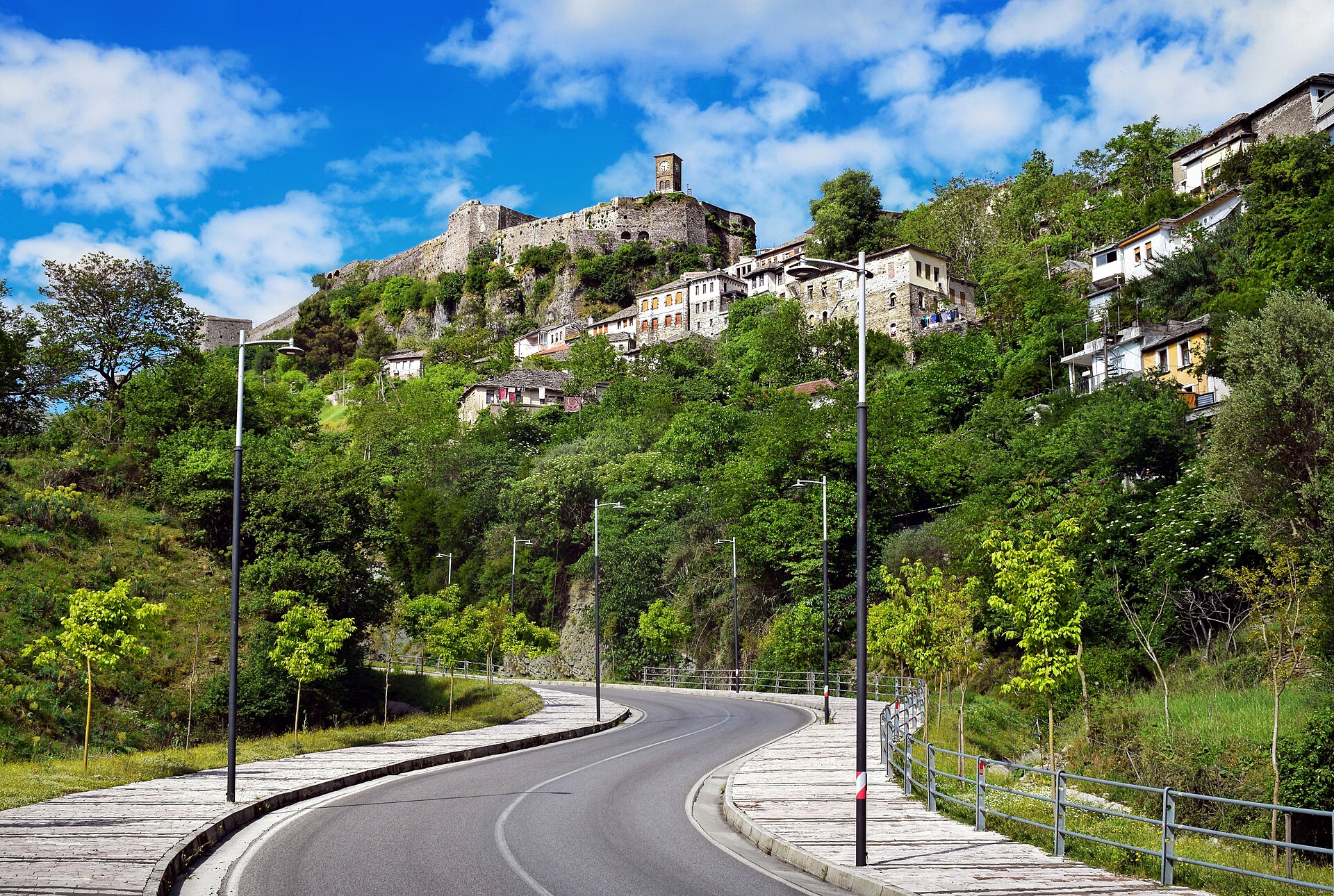
Perched on the rocky spur that dominates the town, the castle is one of the largest in the Balkans and holds within it almost a thousand years of history. Its walls today house the National Museum of Weapons, with a route that traces Albania's military history from the Ottoman era to the Second World War, and it even preserves the wreckage of an American military aircraft, which became a symbol of the isolationist paranoia of the communist regime, which displayed it as proof of alleged espionage incursions. The castle also served as a prison, first under Zog's monarchy and then under Hoxha's regime, and in its great courtyard, every four or five years, the National Folklore Festival is held, the country's most important cultural event.
The Old Bazaar and the artisans' workshops
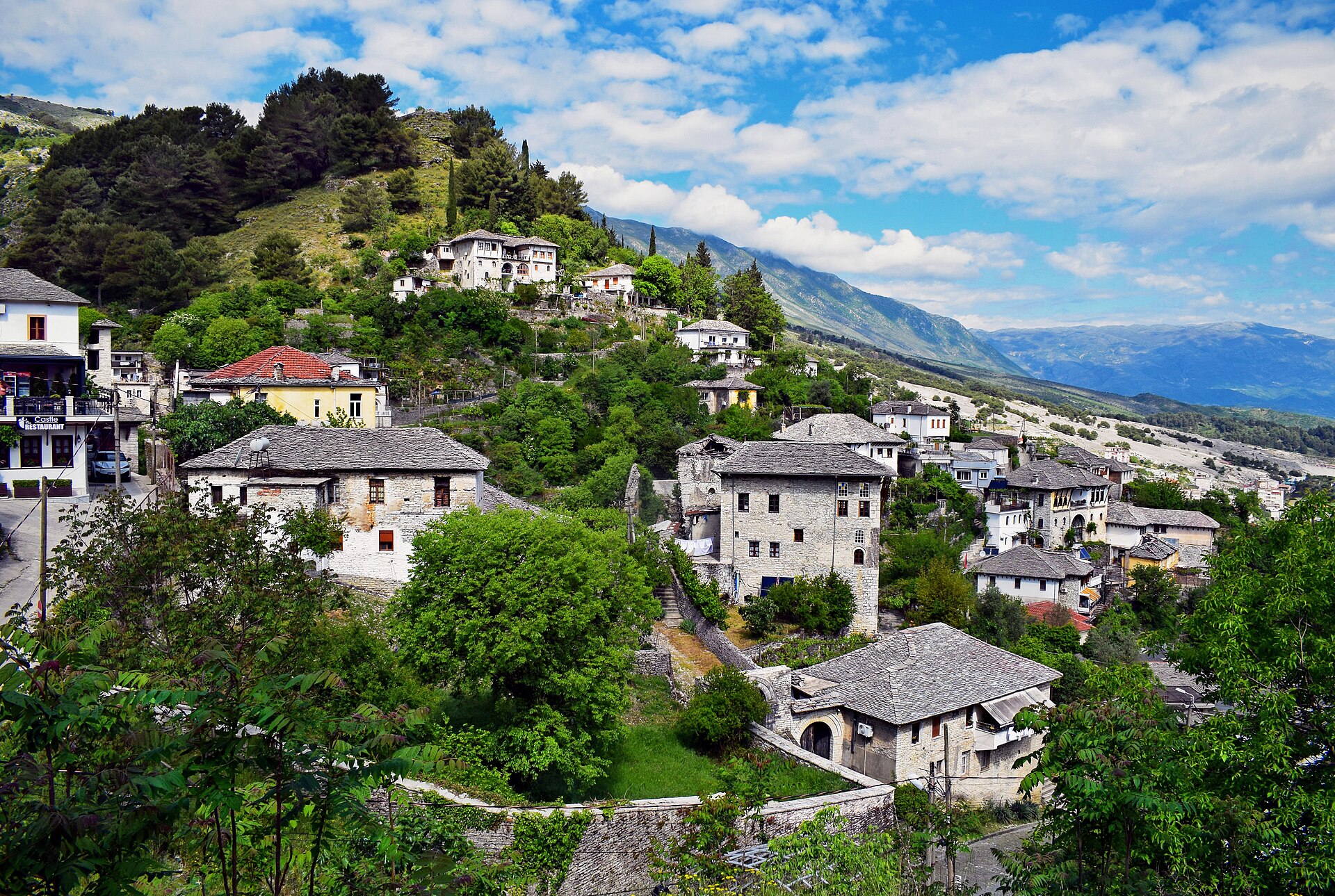
The Pazari i Vjetër, the old bazaar, has been the commercial and social heart of the city for centuries. Rebuilt after the nineteenth-century fire, it still retains its layout of low stone workshops, once occupied by silversmiths, tailors and blacksmiths, and today by souvenir shops, traditional rugs and small cafés. Strolling through its cobbled lanes, especially in the early morning hours when the shopkeepers raise their wooden shutters, gives back an authentic image of Ottoman provincial life, with the castle's clock tower forming the backdrop to every view.
The Ottoman tower-houses: the kulla of Zekate and Skenduli
The most original architectural feature of Gjirokastër is the kulla, the stone tower-house designed to combine residential and defensive functions: a blind, massive base, upper floors with loggias and flared windows, gabled roofs covered with local slate slabs. The Zekate House, built in the early nineteenth century, is the most spectacular example, with its frescoed rooms and double-height master hall; the Skenduli House, not far away, instead preserves a more intimate layout, with rooms decorated for guests and family according to the strict separation typical of the wealthiest Ottoman households.
Enver Hoxha's house and the Ethnographic Museum
In the upper quarter of the city stands the birthplace of Enver Hoxha, the dictator who led communist Albania from 1944 to 1985. The original building, destroyed by a fire in 1916, was rebuilt in traditional style and transformed, with a certain irony of history, into the Ethnographic Museum: its rooms today tell of the daily life, costumes and trades of a well-off Gjirokastër family, more than the biography of its most famous inhabitant, offering nonetheless a precious glimpse into the interior architecture of the kulla.
Ismail Kadare and Chronicle in Stone
Gjirokastër is also the city of Ismail Kadare, the most important Albanian writer of the twentieth century, who in the novel Chronicle in Stone recounts his own childhood spent here during the Italian and then German occupation, giving back a vivid portrait of the stone houses, the bombings and the voices of the bazaar. His pages have made the city a literary place as well as a historical one, and walking today through the alleys described in the book, with the same houses and the same views, is for many visitors an experience that adds depth to the monumental visit.
Places of worship and the Bazaar Mosque
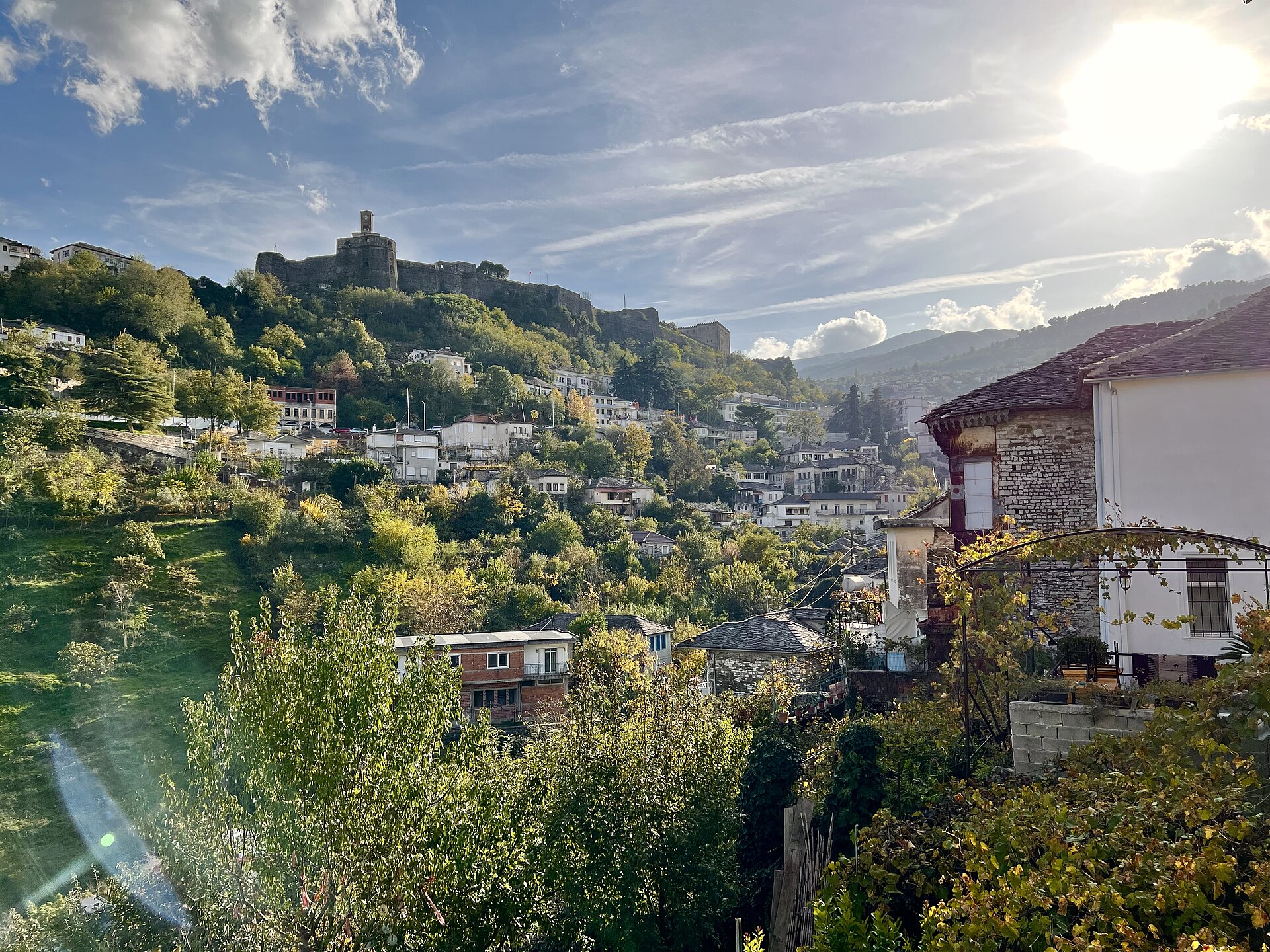
Like many Ottoman cities in the Balkans, Gjirokastër too has known for centuries the coexistence of Muslim, Orthodox and Catholic communities. The Bazaar Mosque, rebuilt in the mid-eighteenth century, is one of the few religious buildings in the city to survive the forced atheisation campaign of the communist regime, which in the 1960s closed or converted most Albanian places of worship; today it has once again become a reference point for the local Muslim community and an important piece of the bazaar's urban landscape.
Antigonea, the ancient city of Pyrrhus
About ten kilometres south of the city, along the Drino valley, lies the archaeological park of Antigonea, founded in 295 BC by King Pyrrhus of Epirus and dedicated to his wife Antigone. Excavations have brought to light cyclopean walls, dwellings with mosaic floors and a small museum housing the most significant finds. It is a stop that allows the view to widen from Ottoman Gjirokastër to a much older layer of the region's history, in an olive-grove landscape that makes the visit even more evocative.
The landscape: the Drino valley and the blue eye of the karst
The city looks out over a broad, fertile valley, crossed by the Drino river and dotted with olive groves, vineyards and orchards, closed to the east by the Mali i Gjerë range. About twenty kilometres away, towards Sarandë, lies one of the most photographed natural wonders of southern Albania: the Blue Eye Spring, Syri i Kaltër, a karstic pool that gushes from great depth with an intensely cobalt-blue colour, surrounded by woods and meadows where you can take a refreshing swim along the stream it feeds.
Traditions and the National Folklore Festival
Every four or five years the castle of Gjirokastër becomes the stage for the National Folklore Festival, which brings together groups in traditional costume from every Albanian region and from the diaspora. The most eagerly awaited moment is the performance of iso-polyphony, the multi-part singing typical of southern Albania, recognised by UNESCO as an intangible cultural heritage of humanity: deep voices sustaining a continuous drone while others weave melodies around it, a sonic experience that, more than any monument, tells of this part of the country's identity.
The flavours of Gjirokastër
Local cuisine reflects the city's layered history: the most characteristic dish is qifqi, rice balls flavoured with mint and steamed, served as a starter almost exclusively here and in the surrounding province. There is no shortage of byrek filled with cheese or wild greens, fërgesë made with peppers, tomato and fresh cheese, and the sweet oshaf, prepared with dried figs and milk or yoghurt. All of it is often accompanied by a glass of home-made raki, a grape or fruit spirit that in the bazaar's taverns accompanies every conversation.
- Exploring the castle and the National Museum of Weapons early in the morning, with the valley wrapped in mist
- Getting lost among the shops of the Old Bazaar and sitting in a historic café with a view of the clock tower
- Visiting the Zekate House and the Skenduli House to understand kulla architecture from the inside
- Stopping by the Ethnographic Museum in the house where Enver Hoxha was born
- Reaching the Blue Eye Spring, Syri i Kaltër, in a day trip for a swim among the rocks
- Walking among the ruins of Antigonea, the city founded by Pyrrhus of Epirus
- Listening live, if the calendar allows, to a local iso-polyphony group
- Tasting qifqi and oshaf in a tavern in the old town
When to go and how to experience the city
Spring and early autumn are the best seasons to visit Gjirokastër, with mild temperatures ideal for tackling its steep cobbled climbs and golden light on the stone rooftops. Summer brings fairly intense dry heat to the Drino valley, mitigated only by the altitude of the historic centre, while winter can be cold and at times snowy on the surrounding heights. Anyone who happens to be there in the year of the National Folklore Festival should plan their visit around those days: it is the moment when the normally quiet city fills with music, costumes and life late into the night.
FAQ
Come si arriva a Gjirokastër?
Quanto tempo serve per visitarla?
Qual è il periodo migliore per andare?
Dove si può parcheggiare?
È adatta a famiglie con bambini o a chi ha difficoltà motorie?
Cosa vedere se si ha solo mezza giornata?
Getting there
- Aeroporto Internazionale di Tirana Madre Teresa, circa 230 km, 3-4 ore d'auto
- Aeroporto di Corfù (Grecia), da cui si può proseguire in traghetto verso Sarandë, poi in auto fino a Gjirokastër (circa 1 ora)
- Si raggiunge percorrendo la statale che collega Tirana a Sarandë attraverso la valle del Drino; da Sarandë circa un'ora d'auto, da Berat circa due ore e mezza.
- Il centro storico è pedonale, ripido e acciottolato: lascia l'auto nei parcheggi vicino al bazar o alla base del castello e prosegui a piedi con scarpe comode.
Perfect for
Una delle città ottomane meglio conservate dei Balcani, patrimonio UNESCO dal 2005, tra castello, bazar e case-torri secolari.
Le case-torri in pietra, i kulla, con tetti d'ardesia raccontano un modo di costruire unico, nato dalla necessità di difesa e prestigio familiare.
Patria di Ismail Kadare e sede del Festival Nazionale del Folklore, cassa di risonanza della polifonia iso albanese, patrimonio UNESCO immateriale.
La valle del Drino, gli uliveti e la vicina Sorgente dell'Occhio Blu offrono un contrappunto naturale alla pietra grigia della città.
Qifqi, byrek, fërgesë e oshaf accompagnati da un bicchiere di raki nelle taverne del bazar antico.
To see
What to see in Gjirokastër
Routes · Trovido Route