

Argirocastro
In 1336 a Byzantine chronicler recorded the name of Gjirokastër for the first time, the "city of silver" perched on a rocky spur a...
Updated 8 July 2026
Argirocastro
Explore
Towns in the province
This season · July · Summer
What to do in Argirocastro now
The story
The story of Argirocastro
Origins and the legacy of antiquity
The territory around Gjirokastër was already inhabited in Illyrian and later Hellenistic times, when the area belonged to Chaonia, one of the historic regions of Epirus. A few kilometres south of the modern city, among the olive groves of the Drino valley, lie the ruins of Antigonea, a city founded in the 3rd century BC by Pyrrhus, King of Epirus, and dedicated to his wife Antigone. Destroyed by the Romans in 148 BC during the Macedonian Wars, Antigonea is today a little-visited but fascinating archaeological site, with the remains of cyclopean walls, an early Christian basilica, and floor mosaics brought to light by excavations. Walking among these stones, with the valley opening up below, gives a real sense of how long this border land has been a crossroads of peoples and empires.
The long Ottoman rule and the age of Ali Pasha
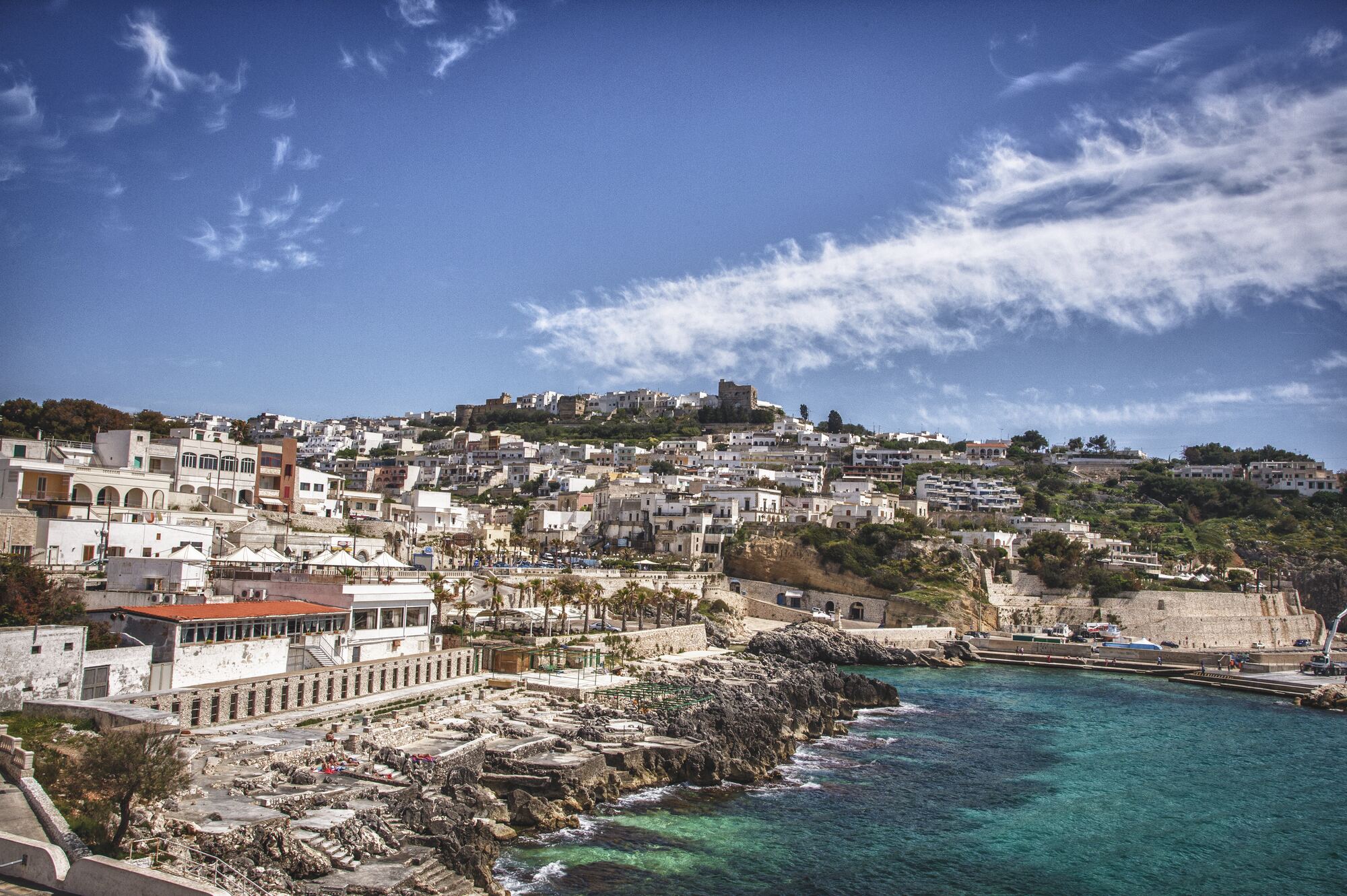
Conquered by the Ottomans in the 15th century, Gjirokastër entered a phase of growth that shaped the face it still wears today: the urban fabric we see now, made up of stone tower-houses and a covered bazaar, dates largely from this period. Its golden age came between the 18th and early 19th centuries, when the region fell within the orbit of Ali Pasha of Tepelena, the powerful and unscrupulous local lord who governed much of Epirus and southern Albania in all but name, torn between nominal loyalty to the Sublime Porte and near-independent ambitions. Under his influence, Gjirokastër consolidated its role as the commercial and administrative hub of the whole Drino valley, enriching itself with mosques, hammams and noble residences, traces of which still survive in the fabric of the old town.
The twentieth century: wars, dictatorship and rebirth
The twentieth century brought Gjirokastër a peculiar destiny: it was here, in 1908, that Enver Hoxha was born, the man who would lead communist Albania for more than forty years under one of the most isolationist regimes in Europe. His birthplace, in the Palorto quarter, is today the city's Ethnographic Museum, and tells more of the everyday Ottoman life of a bey family than of the dictator's biography. The same period also saw the birth of Ismail Kadare, Albania's best-known writer, who set his novel "Chronicle in Stone" right here in Gjirokastër, a portrait of the city under the bombing of the Second World War. During the regime the city was declared a national museum-town, which paradoxically spared its historic architecture from the demolitions that struck other Albanian centres, leaving us today one of the best-preserved Ottoman towns in the Balkans.
The fortress that dominates the valley
Gjirokastër Castle, one of the largest in the Balkans, has occupied the rocky spur above the old town since the Middle Ages, but the structure we see today is the result of successive expansions, notably those ordered by Ali Pasha in the early 19th century and by King Zog in the 1930s. Inside is the Weapons Museum, whose displays run from Ottoman arms to an Italian tank captured during the Second World War and an American fighter jet, a symbol of the anti-imperialist rhetoric with which the communist regime displayed it as a trophy. The castle's terraces offer the finest overall view of the stone city and the Drino plain, and every five years the great courtyard becomes the stage for the National Folklore Festival, the event that since 1968 has brought together the musical traditions of every region of Albania.
The old bazaar and the fortress-houses
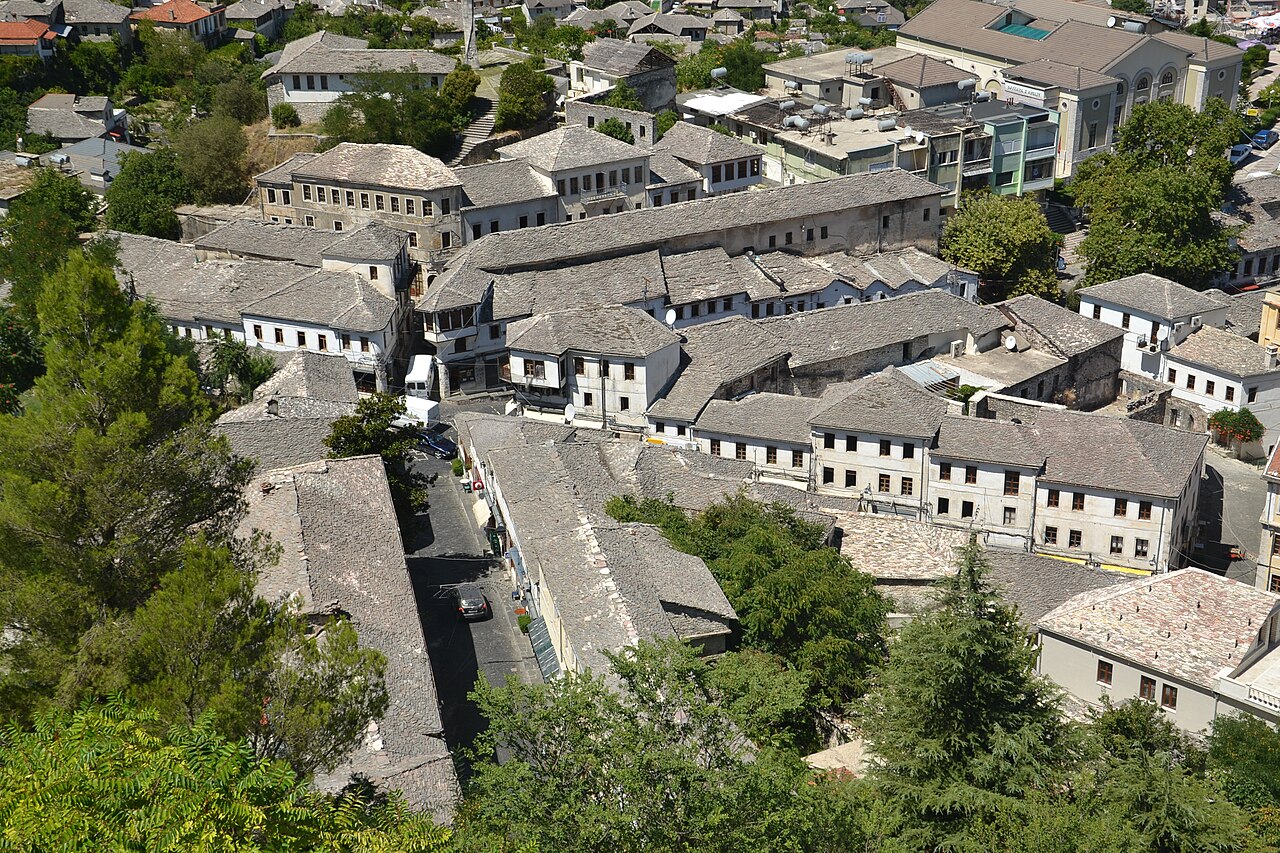
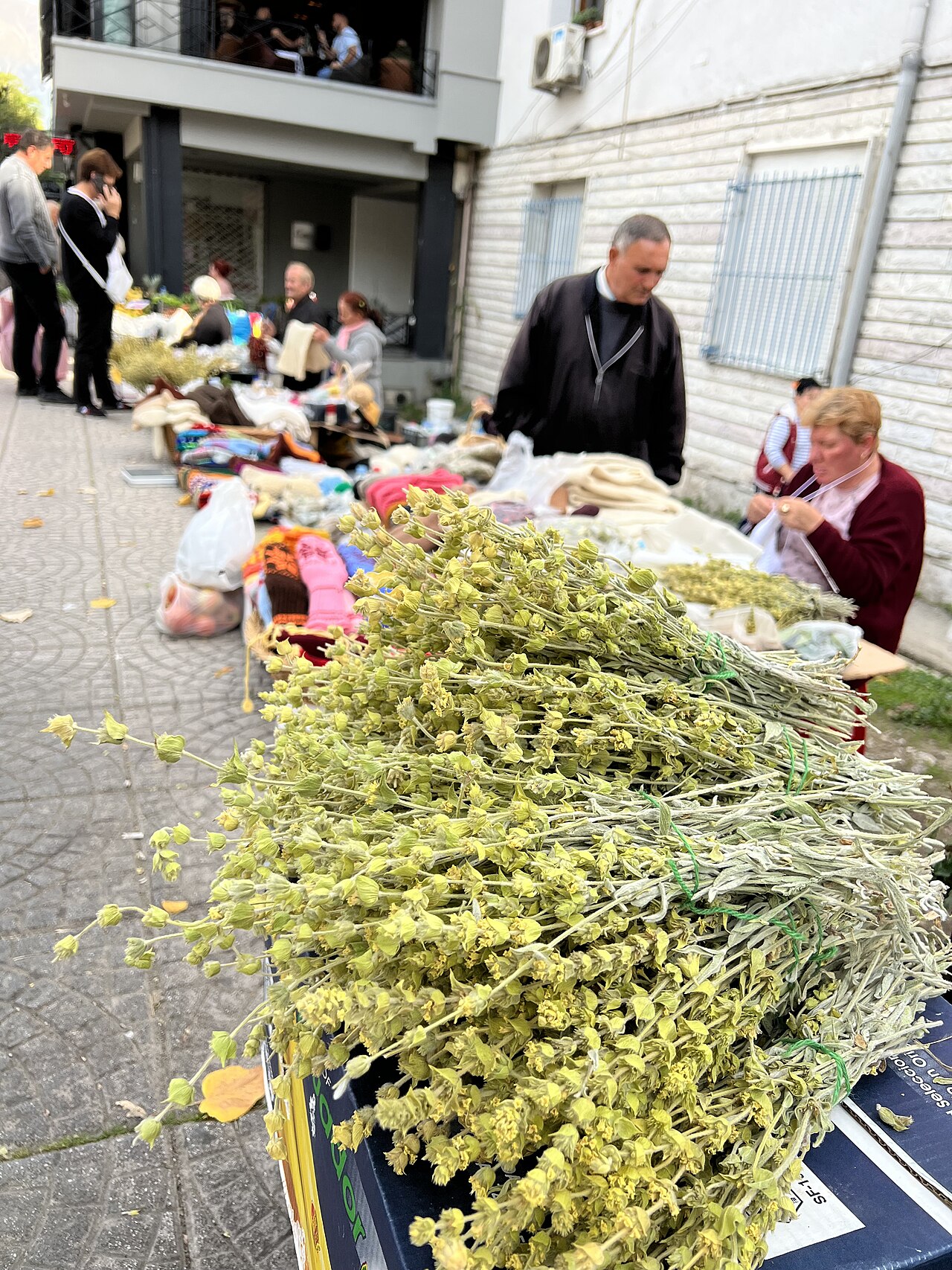
The Old Bazaar (Pazari i Vjetër), rebuilt in its current form after a fire in 1932, remains the commercial heart of the historic town: shops selling copperware, textiles and local produce open onto an arcaded square ringed by two-storey stone buildings. Around the bazaar spreads the historic residential quarter, made up of the famous kulla, the fortified tower-houses typical of southern Albania: thick walls of local stone, small defensive windows on the lower floors, and bright, spacious halls above, with slate roofs that from a distance look like the scales of a single creature of rock. Some of these houses, such as Zekate House and Skenduli House, can still be visited today and preserve painted ceilings, decorated niches, and heating and ventilation systems remarkably advanced for their time.
The Dropull valley and the Greek minority
South of Gjirokastër stretches the Dropull valley, some twenty villages inhabited largely by a historic Greek-speaking minority, present in this area for centuries and recognised as such by the Albanian state. Byzantine Orthodox churches, some with frescoes dating back to the 14th century, dot a farming landscape of olive groves and vineyards, while bilingual signs and religious services in Greek speak of a long-standing coexistence with the Muslim and Orthodox Christian Albanian majority. It is an area to be explored at the same unhurried pace as the old town, stopping in small village cafés where time seems to flow at a different rhythm from nearby Gjirokastër.
Zagoria, the highlands and the stone villages
East of the city opens the region of Zagoria, a mountainous plateau dotted with some twenty villages, likewise built of stone, often semi-abandoned after post-war emigration but still able to conjure an authentic picture of rural life in the Ottoman Balkans. Trekking trails link the villages of Zagoria through oak woods and high-altitude pastures, with views reaching as far as the Tomorr mountains and the border with Greece. It remains a territory little touched by mass tourism, ideal for those seeking a quieter, lesser-known side of Albania than the coast.
The Vjosa river and the Blue Eye
The province of Gjirokastër is crossed by the Vjosa, one of the last great rivers in Europe still free of dams, its gravel bed changing shape with every season between rapids, pebble islands and turquoise waters. A little further south, on the border with Vlorë province, lies Syri i Kaltër, the Blue Eye, a karst spring gushing from a chasm dozens of metres deep, giving the water an almost unnatural cobalt-blue colour: it is one of the most photographed natural attractions in southern Albania, easily reached on a half-day trip from Gjirokastër. This whole territory, amid gorges, canyons and black pine forests, is today at the centre of a project to create Europe's first national river park along the course of the Vjosa.
Flavours and traditions of the table
The cuisine of Gjirokastër reflects the meeting of Ottoman tradition, Greek influences and pastoral mountain elements. The city's signature dish is qifqi, small balls of rice kneaded with eggs, mint and aromatic herbs and then fried until golden, served as a starter or snack in the cafés of the old town. There is no shortage of byrek filled with cheese or spinach, aged sheep's cheeses from the mountain pastures of Zagoria, robust wine produced in the hills around the Drino valley, and, in autumn, oshaf, a quince-based dessert served on feast days. Garlic, grown in abundance on the surrounding plain, is an almost obsessive presence in many local recipes, so much so that it is considered a hallmark of the region's cuisine.
- Strolling through the cobbled lanes of the Old Bazaar and haggling in the copper and textile shops
- Climbing up to Gjirokastër Castle for the Weapons Museum and the view over the Drino plain
- Visiting a historic kulla, such as Zekate House or Skenduli House, to understand the local fortified architecture
- Taking a day trip to the Blue Eye and the Vjosa canyons
- Exploring the Orthodox villages of the Dropull valley and their frescoed churches
- Walking among the Hellenistic ruins of Antigonea at sunset
- Tasting qifqi with a glass of local wine in a restaurant in the old town
- Following a trail through the stone villages of the Zagoria plateau
When to go and how to experience the province
Spring, between April and June, and early autumn, between September and October, are the best seasons to visit Gjirokastër: temperatures remain pleasant for walking along the stone stairways and for excursions to Zagoria and the Vjosa, while summer can get very hot in the city's basin. Anyone visiting during the year of the National Folklore Festival, held every five years, should arrange accommodation well in advance, since the city fills with visitors from all over Albania. Outside that occasion, Gjirokastër remains a peaceful destination, ideal for a stay of two or three nights from which to set out on day trips to the Ionian coast, the Dropull valley or the Vjosa canyons.
FAQ
Quanto tempo serve per visitare Argirocastro?
Dove si parcheggia per visitare la città vecchia?
Quando si tiene il Festival Nazionale del Folklore?
Argirocastro è adatta a una visita con bambini?
Si può visitare Argirocastro in gita di un giorno dalla costa?
Ci sono animali ammessi nei siti storici?
Getting there
- Aeroporto Internazionale di Tirana Nënë Tereza, circa 230 km e 4 ore d'auto
- Aeroporto di Corfù (Grecia), collegato via traghetto a Saranda e poi circa 1 ora d'auto fino ad Argirocastro
- La città è collegata da una strada statale a scorrimento veloce che risale la valle del Drino da Tepelenë e prosegue verso il confine greco di Kakavijë; da Saranda e dalla costa ionica si arriva in circa un'ora attraverso i tornanti del passo di Muzinë.
- Conviene noleggiare un'auto per esplorare a proprio ritmo Dropull, Zagoria e l'Occhio Blu, mete poco servite dai mezzi pubblici; nel centro storico si cammina solo a piedi, con calzature adatte al selciato di pietra.
Perfect for
Duemila anni di stratificazioni, dalle rovine elleniche di Antigonea al lungo dominio ottomano fino alle cicatrici del Novecento.
Le case-torre in pietra e il bazar ottomano fanno di Argirocastro uno dei centri storici meglio conservati dei Balcani.
La Vjosa libera, i canyon e l'Occhio Blu regalano paesaggi fluviali tra i più spettacolari e ancora selvaggi d'Europa.
Il Festival Nazionale del Folklore e i villaggi di Dropull e Zagoria custodiscono tradizioni musicali e religiose secolari.
Il qifqi, i formaggi di montagna e l'aglio onnipresente raccontano una cucina di confine tra Epiro e Albania.
To see
