

Berat
They call it "the city of a thousand windows": just look up at Mangalem hill at sunset to understand why
Updated 8 July 2026
Berat
This season · July · Summer
What to do in Berat now
The story
The story of Berat
From Illyrian origins to Antipatrea
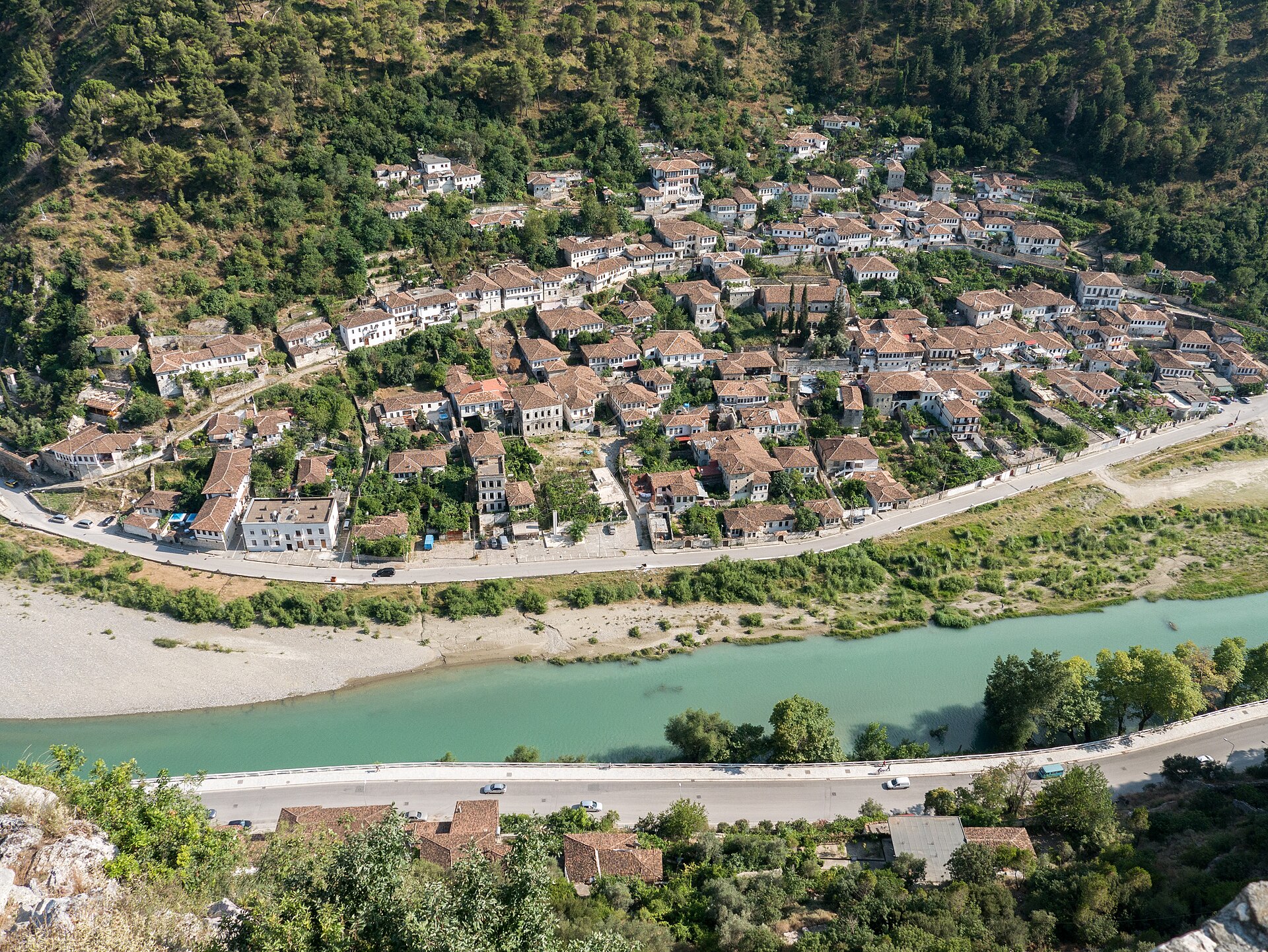
The hill on which Berat Castle stands was already inhabited in Illyrian times, when the city bore the name Antipatrea, founded according to tradition by Cassander of Macedon in honor of his father Antipater, in the 4th century BC. Its position, dominating the Osum valley and one of the natural routes linking the coast to the Balkan interior, made it for centuries a strategic stronghold contested by Illyrians, Romans and later the Byzantine Empire, which built much of the walls still visible today. The current name, Berat, is thought to derive from the Slavic "beligrad", white city, coined during the centuries of Bulgarian and Serbian influence in the early Middle Ages, when the fortress passed repeatedly between local despots and regional powers before the definitive arrival of the Ottomans.
The Ottoman age and the birth of the city we see today
With the Ottoman conquest of 1417, Berat entered a long period of stability that shaped its architectural face: on the slopes below the castle rose the two-storey houses with wide windows and timber overhangs, the mosques, the hammams, the covered bazaars. The Mangalem quarter became the Muslim core of the city, while Gorica, on the other bank of the Osum, remained predominantly Christian Orthodox: a coexistence of faiths and trades that has come down through the centuries almost intact. It is to this fortunate period, between the 17th and 19th centuries, that we owe the urban fabric recognized in 2008 by UNESCO as a World Heritage Site, together with Gjirokastër, as a rare example of a Balkan Ottoman town that has reached us with its social and architectural structure still legible.
Berat Castle, an inhabited fortress
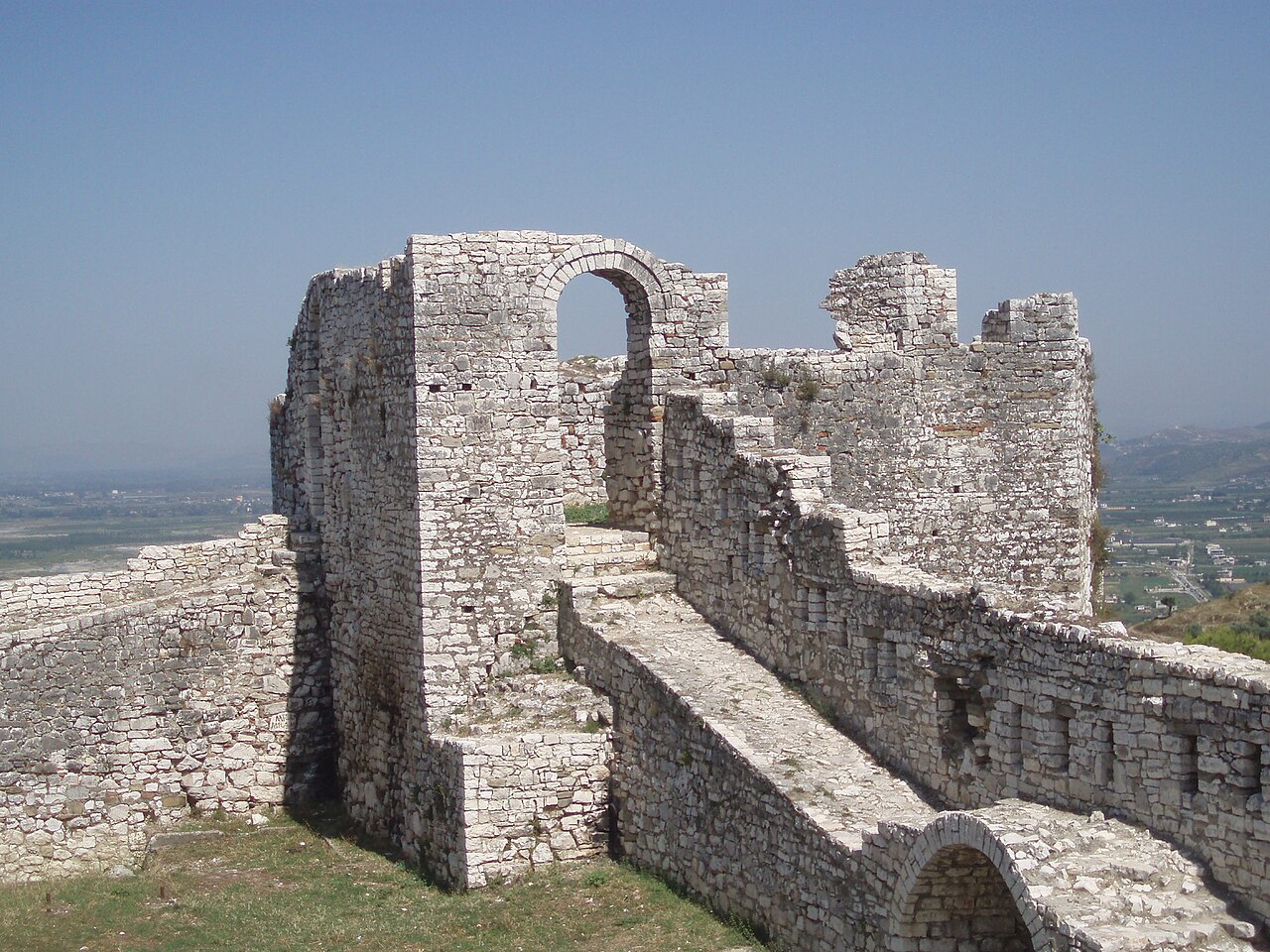
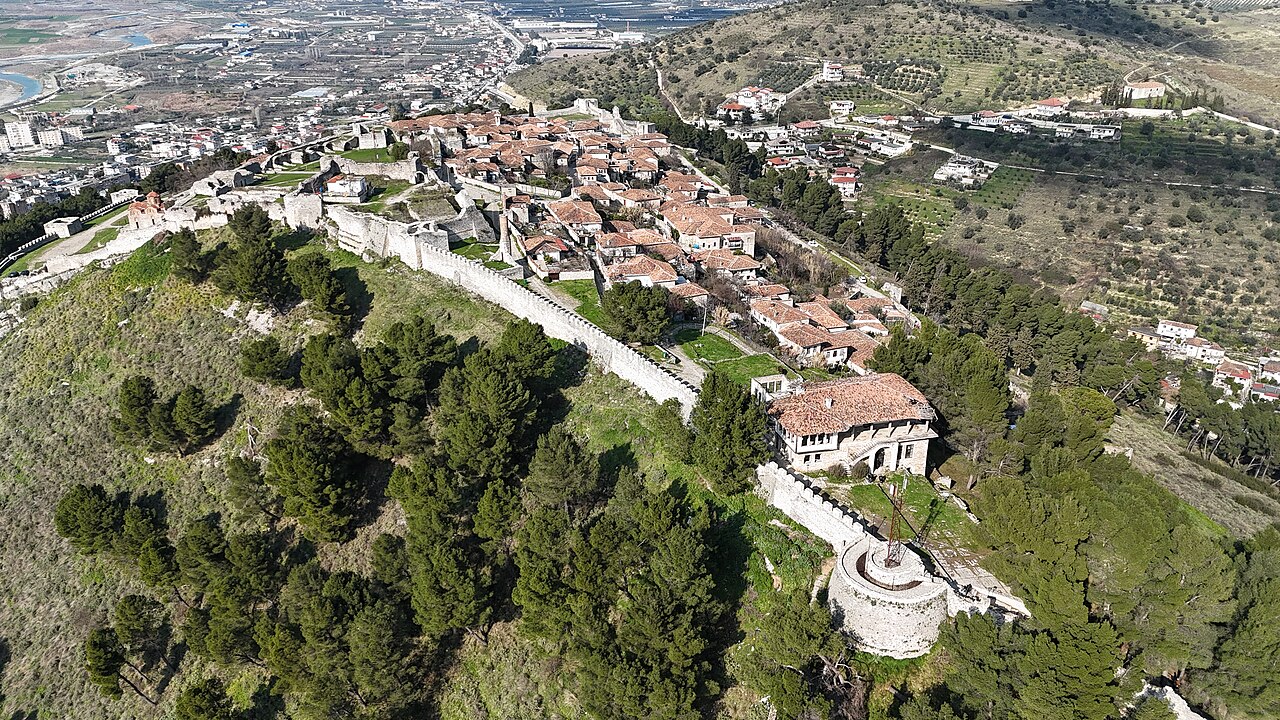
The Kalaja e Beratit crowns the city from a steep promontory above the Osum and is anything but a frozen monument: within its walled perimeter, spanning over four hectares, some forty families still live in traditional houses, amid vegetable gardens, Byzantine churches and the remains of mosques. The oldest foundations date back to Illyrian times, but its current appearance is largely Byzantine, with Angevin, Serbian and finally Ottoman reworkings. Inside it there are more than twenty churches, many in ruins or repurposed, and the Cathedral of the Dormition of Mary, now home to the Onufri Museum. Walking the cobbled lanes of the fortress early in the morning, as families open their shops and roosters still crow among the Byzantine walls, is one of the most authentic experiences the province has to offer.
Mangalem, the quarter of a thousand windows
At the foot of the castle, Mangalem is the quarter that gave Berat its most famous nickname. The houses, built between the 18th and 19th centuries for Muslim merchant and craftsman families, climb one above the other along the slope, each with rows of windows aligned to frame the central sitting room (oda), the social heart of the traditional Albanian house. The urban front reflected in the Osum, with its whitewashed walls and exposed dark timber beams, has become the symbol image of the city and now appears on postcards, coins and in the very logo of the UNESCO site. Wandering its cobbled streets, past small neighborhood mosques and old coppersmiths' workshops, remains the best way to understand how Berat lived three centuries ago.
Gorica and the bridge over the Osum
On the opposite bank of the Osum, Gorica is Berat's more intimate, less touristy face: this is where Christian Orthodox families once prevailed, and the quarter still preserves minor churches, courtyards hidden behind tall stone walls and a slower pace of life than Mangalem. The two quarters are joined by the Gorica Bridge, a seven-arched stone structure rebuilt in its current form in 1780 on the site of an older crossing, today pedestrian and one of the city's most photographed spots, especially in the evening when the lights of both sides reflect in the water. Crossing it on foot, perhaps stopping at one of the small riverside eateries, is the daily ritual of anyone visiting Berat.
The historic mosques of Mangalem
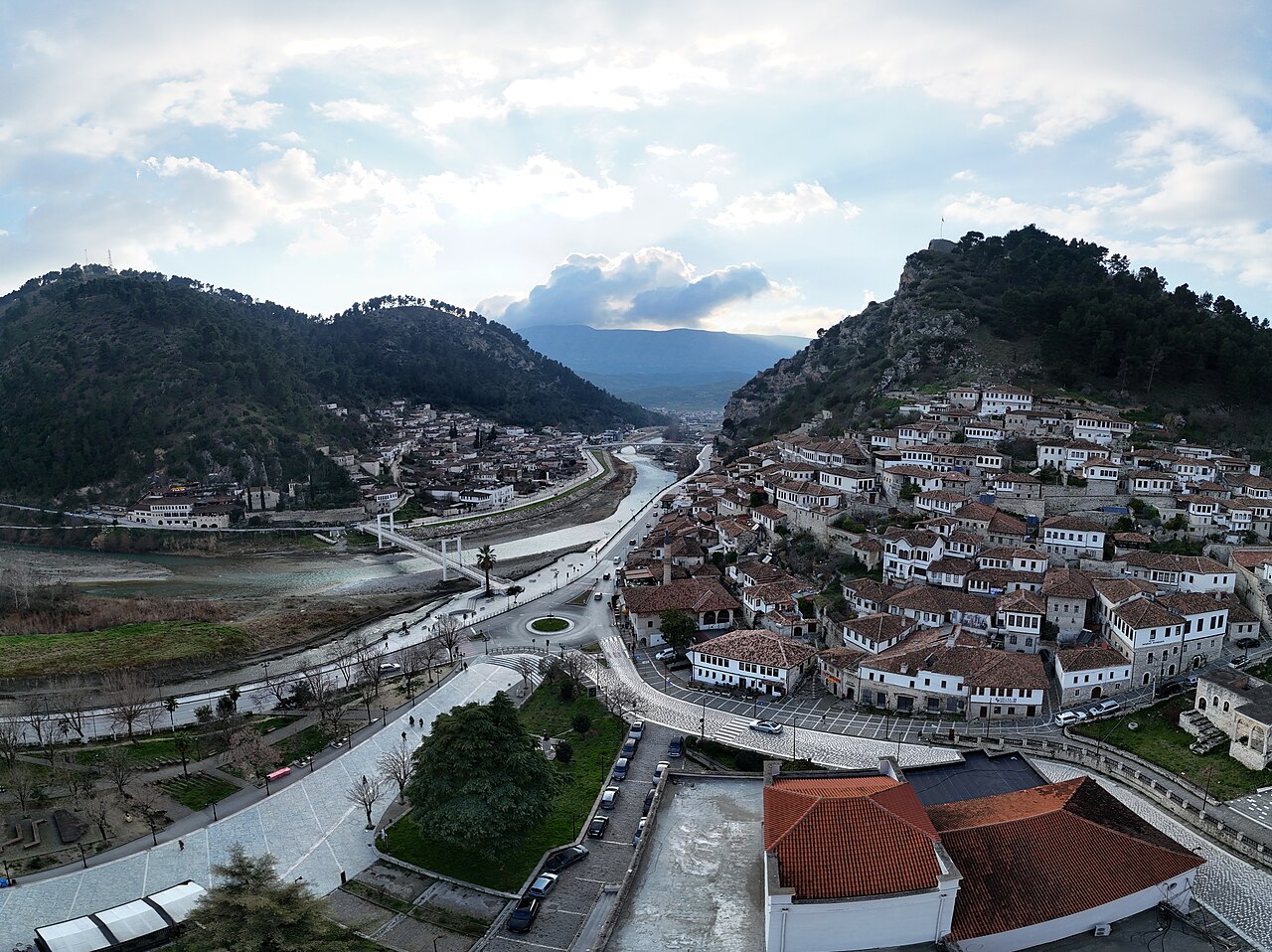
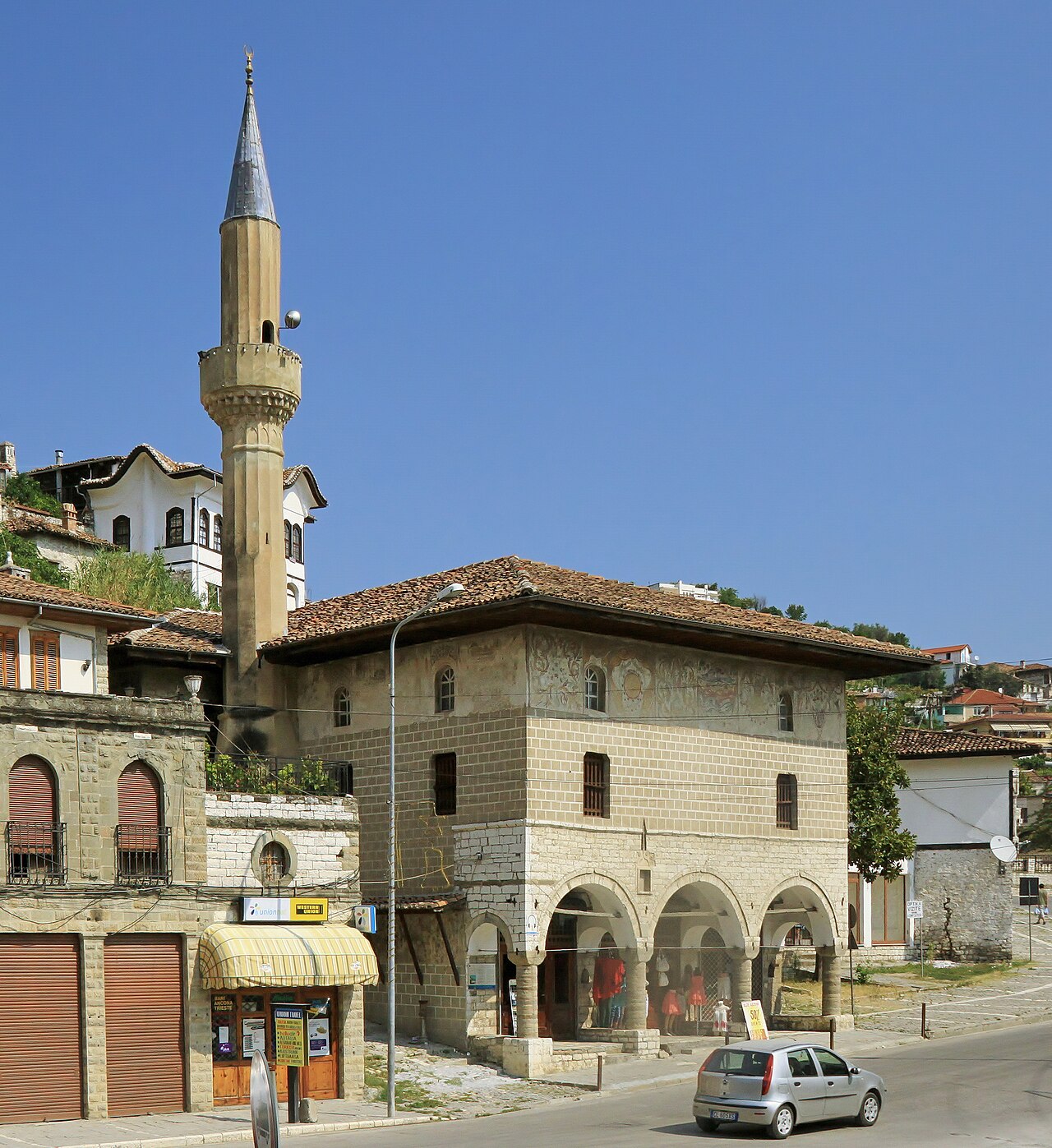
Berat preserves some of the most interesting examples of Ottoman religious architecture in Albania. The Xhamia e Plumbit, the Lead Mosque, takes its name from the lead sheeting covering its dome and is among the oldest in the city. Even more distinctive is the Xhamia e Beqarëve, the Bachelors' Mosque, built in 1827 by the guild of young unmarried merchants and adorned with frescoes depicting views of Ottoman cities, floral motifs and even seascapes, rare in local Islamic iconography. Both testify to how Berat's craftsmen's community invested in the beauty of its places of worship as a mark of collective prestige, in an ongoing dialogue with the Orthodox churches standing not far away.
The Onufri Museum and the sixteenth-century icons
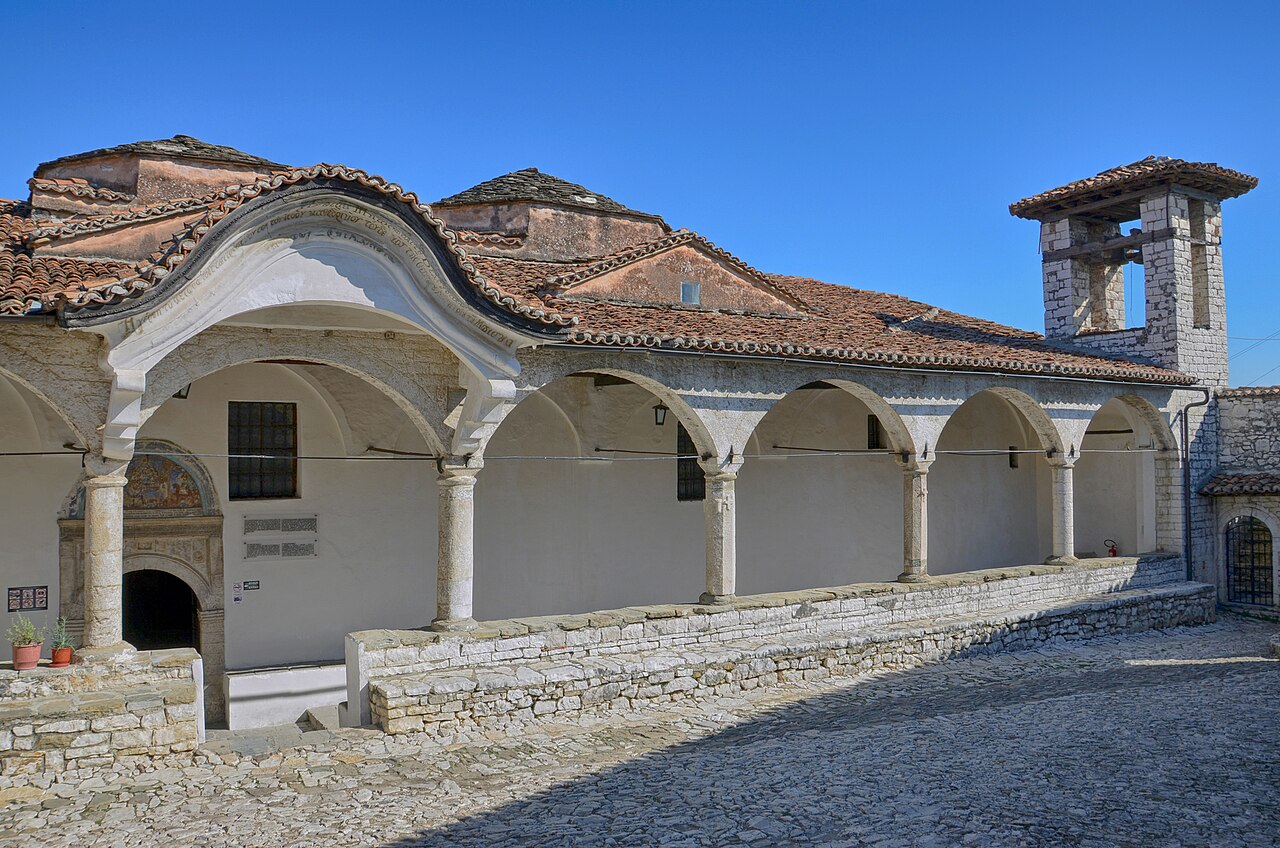
Inside the Cathedral of the Dormition of Mary, within the castle, is the Onufri Museum, dedicated to Albania's most important icon painter of the 16th century. Onufri developed a palette of intense reds, obtained with pigments whose exact composition is still under study, that make his works instantly recognizable against the contemporary Byzantine tradition. The museum houses dozens of icons by him and his workshop, together with finely carved wooden iconostases and liturgical objects, offering the most complete portrait of Albania's Orthodox sacred art. For anyone interested in Balkan art history it is an essential stop, often underrated compared to the city's purely urban charm.
The Osum River and the canyons toward Skrapar
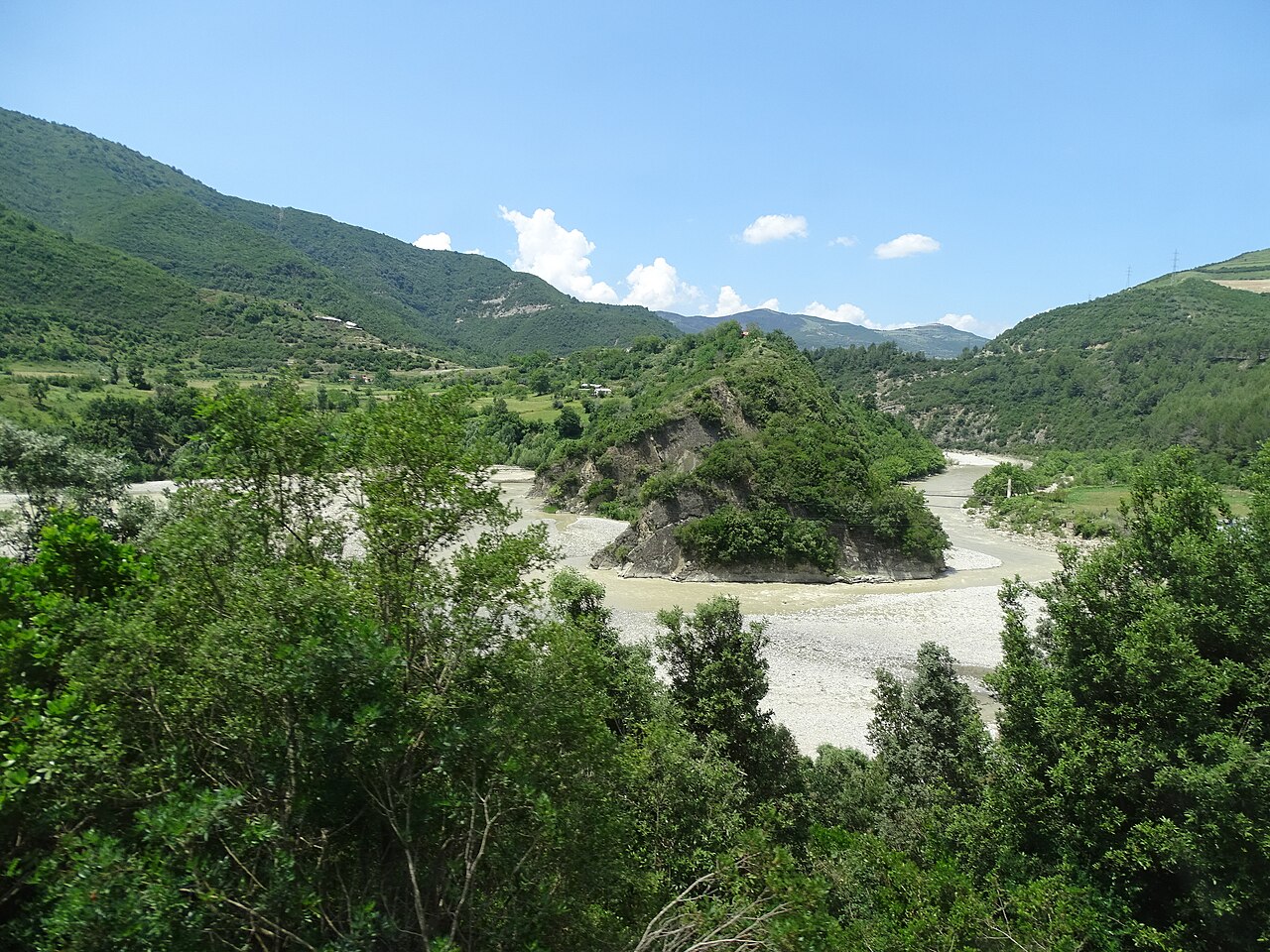
The Osum is not merely the stretch of water separating Mangalem from Gorica: heading upstream to the southeast, in the district of Skrapar which forms part of the province, over millions of years the river has carved a spectacular canyon near Çorovodë, with limestone walls up to a hundred metres high and emerald waters that in summer lend themselves to inflatable-boat trips or light rafting. It is a landscape that changes radically compared with the historic town: narrow gorges, caves, suspension bridges and scenic trails that draw a still niche nature-based tourism. The combination, within the same province, of a UNESCO historic centre and a river canyon of this scale is one of Berat's lesser-known distinguishing features.
Mount Tomorr, the sacred mountain
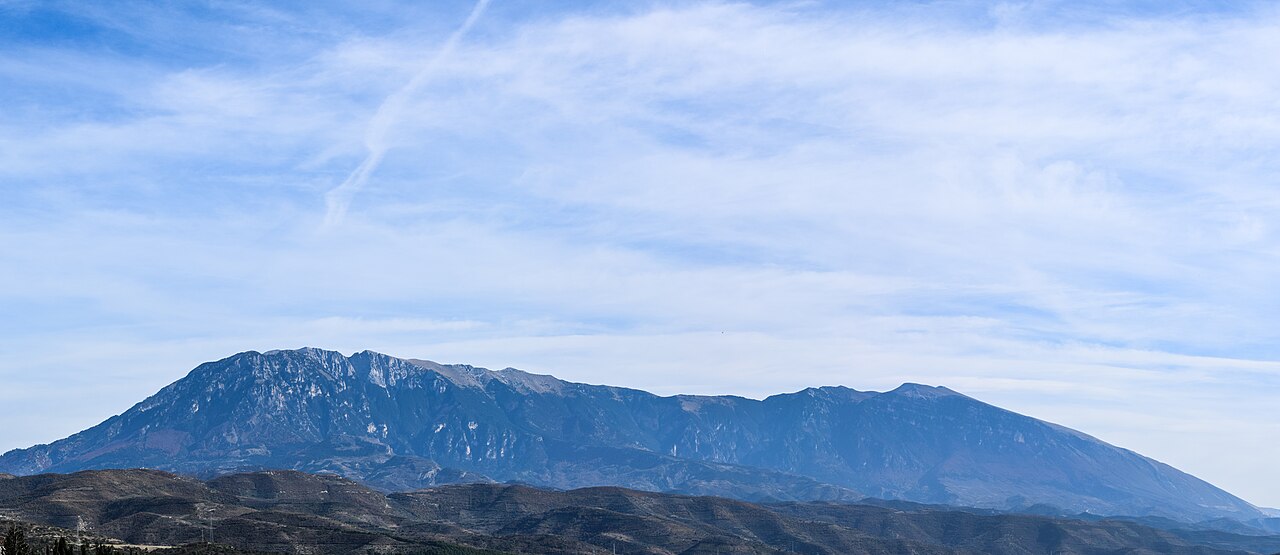
Dominating the province's eastern horizon is the Tomorr massif, which rises above 2,400 metres and has been venerated for millennia: the Illyrians associated it with a sky deity, and even today the Bektashi cult of Kulmak, on its summit, draws thousands of pilgrims every August for one of Albania's most heartfelt popular religious festivals, in a syncretism blending Sufi Islam, pastoral traditions and pagan memory. Tomorr National Park protects beech forests, high-altitude pastures and a fauna that still includes the brown bear, and offers multi-day trekking trails for those wishing to leave the classic tourist routes behind and discover a wilder, more silent Albania.
Roshnik and the wine road
On the hills southwest of Berat, the village of Roshnik is the heart of a winemaking tradition some trace back as far as Illyrian times. The native white grape Shesh i Bardhë, and its red counterpart Shesh i Zi, are still vinified in many family cellars using semi-artisanal methods, often open to visitors for informal tastings accompanied by goat cheese and local cured meats. In recent years some producers have begun making more structured labels, helping Berat gain recognition as an emerging wine destination in the Balkans, complementing the historical-architectural narrative of the old town.
Surroundings: Ardenica, Kuçovë and the province's villages
The province of Berat extends beyond its main town toward landscapes and smaller centres well worth a detour. The Monastery of Ardenica, just outside the administrative boundaries but culturally linked to the area, preserves post-Byzantine frescoes and is the place where, in 1451, the wedding of national hero George Kastrioti Skanderbeg was celebrated. Closer by, Kuçovë still bears traces of its twentieth-century history as an oil town and air base, with a small aviation museum housed in an underground bunker. Poliçan, at the foot of Tomorr, is instead the gateway to the national park. These are places that tell the story of a less photographed Albania, the industrial and rural Albania of the twentieth century, just a few kilometres from the postcard views of the old town.
Flavors and popular traditions
Berat's cuisine reflects the meeting of Ottoman tradition and Balkan peasant culture: tavë kosi, baked lamb with yogurt and rice, and fërgesë, stewed peppers and tomatoes with cheese, are dishes found in the small family taverns of the two historic quarters, often served with freshly baked bread and local homemade raki distilled from grapes or plums. There is no shortage of desserts of Turkish heritage either, such as baklava and sultjash, a milk rice pudding. Folk festivals, from Kulmak on Tomorr to Gorica's Orthodox celebrations, remain the best occasion to sample street food and understand how the coexistence of different religious communities has left concrete traces at the table too.
When to go and how to experience Berat
Spring, from April to June, and early autumn, September and October, offer the best conditions: mild temperatures, golden light on the windows of Mangalem and fewer crowds than in the peak summer months, when the heat in the Osum valley can become intense. July and August still suit those wishing to combine a visit to the city with an excursion to the Skrapar canyons or a climb up Tomorr, an ideal destination in the warm months. A stay of two or three nights allows one to leisurely explore the castle, Mangalem and Gorica, dedicate a day to the hinterland among vineyards and canyons, and enjoy evenings in restaurants overlooking the Osum, when the city truly lights up its thousand windows.
Experiences not to miss in the province of Berat
- Stroll along the Osum River at sunset to watch the windows of Mangalem light up one after another
- Climb up to Berat Castle and explore the Byzantine churches and the houses still inhabited within it
- Visit the Onufri Museum with its sixteenth-century icons in unmistakable reds
- Cross the Gorica Bridge and get lost among the lanes of the Christian Orthodox quarter
- Go rafting or take a boat trip through the Osum canyons near Çorovodë, in the Skrapar area
- Taste Shesh i Bardhë and Shesh i Zi at a family cellar in Roshnik
- Climb up to the Bektashi sanctuary of Kulmak on Mount Tomorr, ideally during the August pilgrimage
- Visit the Monastery of Ardenica and its post-Byzantine frescoes
FAQ
Quanti giorni servono per visitare Berat?
Qual è il periodo migliore per visitare Berat?
Dove si parcheggia per visitare il centro storico?
Il Castello di Berat è adatto a bambini e persone con mobilità ridotta?
Cosa vedere in un solo giorno a Berat?
Berat è una buona base per visitare i canyon dell'Osum?
Getting there
- Aeroporto Internazionale di Tirana "Nënë Tereza", circa 90-100 km e 1h45-2h di auto
- Da Tirana si percorre la SH4 verso sud fino a Lushnjë, quindi la SH73 verso Berat, per un totale di circa 2 ore; da Valona e dalla costa ionica l'accesso avviene tramite le strade interne attraverso Fier, in circa 1h30.
- La rete ferroviaria albanese non collega più stabilmente Berat: il modo più affidabile resta l'auto a noleggio o i furgon (minibus condivisi) da Tirana, che partono con buona frequenza dalla stazione dei bus della capitale.
Perfect for
Castello bizantino, quartieri ottomani e moschee raccontano oltre duemila anni di stratificazioni, riconosciuti dall'UNESCO.
I canyon dell'Osum verso Skrapar e il massiccio del Tomorr offrono rafting, trekking e paesaggi selvaggi a poca distanza dalla città.
I vigneti di Roshnik e la cucina di tradizione ottomana rendono la provincia una meta per chi cerca sapori autentici e poco turistici.
Le facciate di Mangalem al tramonto e il ponte di Gorica sull'Osum sono tra gli scorci più fotografati dei Balcani.
Il pellegrinaggio bektashi di Kulmak sul Tomorr e la convivenza secolare tra fedi diverse offrono uno sguardo raro sulla cultura popolare albanese.
To see
