

Mangalem
Local legend has it that in Mangalem the houses were raised window after window according to an unwritten rule: never an opening d...
Updated 8 July 2026
This season · July · Summer
What to do in Mangalem now
The story
The story of Mangalem
History and origins of Mangalem
Berat's origins lie in the Illyrian settlement of Antipatrea, founded according to tradition in the 4th century BC on the hill that still bears the castle walls today, at a crossroads between the Balkan hinterland and the Adriatic coast. Passing under Roman, then Byzantine, and briefly Bulgarian rule, the city took on the urban layout we recognise today mainly during the nearly five centuries of Ottoman rule, which began in 1417. It was in that era that Mangalem was born and grew, the quarter at the foot of the fortress inhabited mostly by Muslim families and devoted to trade and craftsmanship, while on the opposite bank of the Osum, Gorica developed, with an Orthodox Christian majority. The houses that still characterise the quarter today date largely from the 18th and 19th centuries, when Berat was a thriving trading centre under the guidance of local notable families, some of whom also funded mosques and public works.
The quarter of a thousand windows
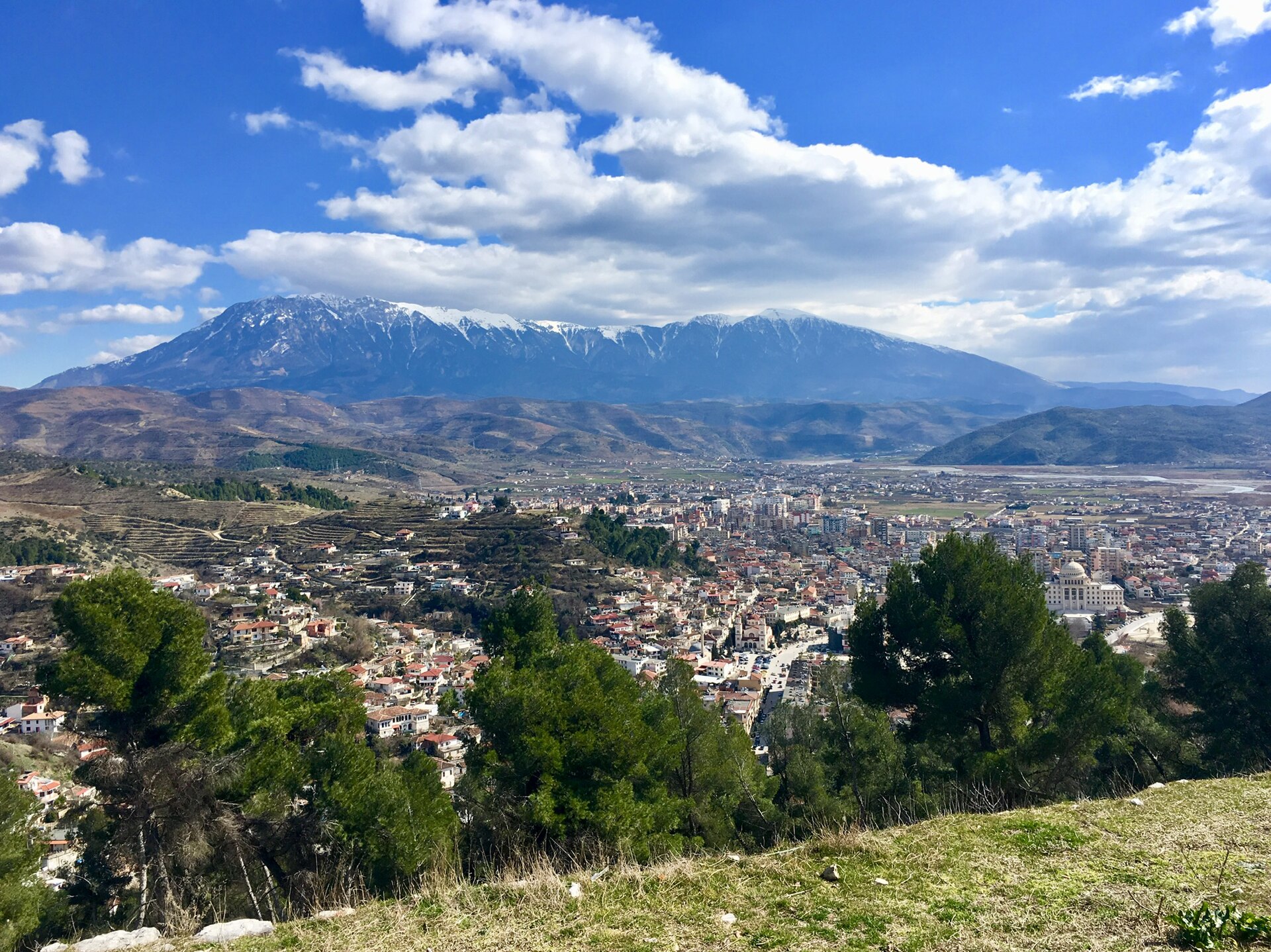
Walking through Mangalem means moving through a maze of cobbled lanes, narrow stairways and dry-stone walls that climb toward the castle at a gradient that tests even the fittest calves. The typical houses, known as shtëpi berati, have a stone ground floor once used as a storeroom or stable and one or two upper floors in wood and white plaster, opened by regular rows of dark-framed windows and jutting balconies called çardak, designed to catch the summer breeze and look out over the valley without giving up family privacy. The overall effect, seen from the bridge over the Osum or from the castle, is that of a white amphitheatre reflecting the light differently at every hour, and it is precisely this play of overlapping windows that has given the quarter its best-known nickname across Albania.
The Sultan's Mosque, Xhamia e Mbretit
At the lowest point of Mangalem, where the quarter opens toward the bridge over the Osum, stands the Sultan's Mosque, built in the early 16th century and considered one of the oldest still active in Albania. The building, plain on the outside and more modest than its name might suggest, retains a wooden colonnaded porch added at a later date and an interior with painted geometric decorations that testify to the provincial Ottoman taste of the period. Damaged by earthquakes and restored several times over the centuries, the mosque remains a landmark for the quarter's small Muslim community and an excellent first taste, for visitors, of the religious architecture that dots all of Mangalem.
The Lead Mosque, Xhamia e Plumbit
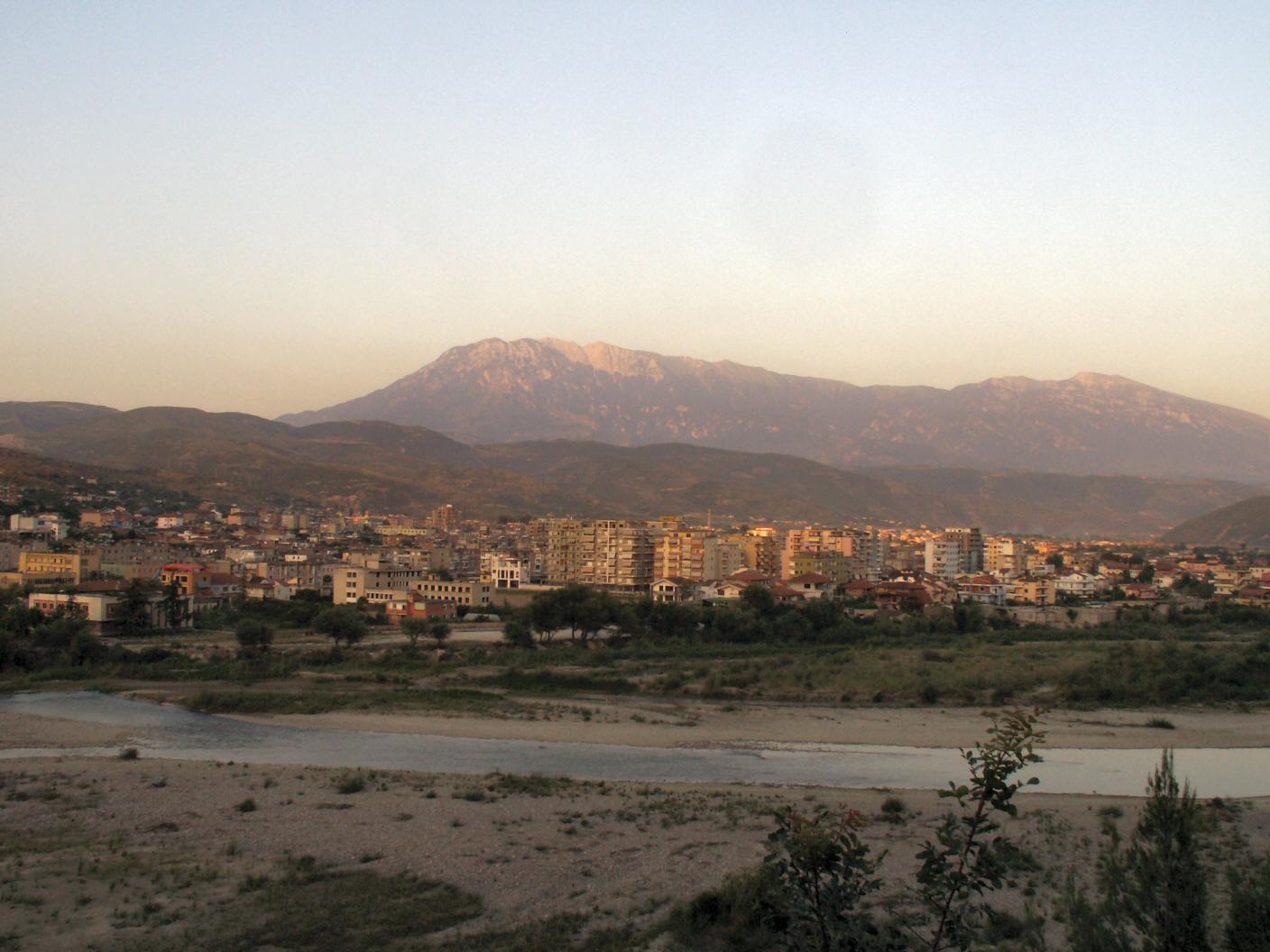
A little further into the quarter, around the mid-16th century, the Lead Mosque was built, so named for its dome covered with lead sheets, a material that was then extremely costly and reserved for only a few prestigious buildings across the region. Commissioned by a local notable as a mark of both status and devotion, the mosque is striking for the balance of its proportions and for the small Ottoman cemetery that surrounds it, with stone headstones carved with floral motifs and stylised turbans that tell of the rank of the deceased. It is one of the best-preserved buildings in the quarter and a valuable example of how minor Ottoman religious architecture adapted to Mangalem's steep slope.
The Halveti Dervish Tekke
Just above the two mosques, hidden among the alleys, stands the tekke of the Halveti brotherhood, a building for worship and gathering built in the second half of the 18th century for the dervishes of one of the Sufi mystical orders once most deeply rooted in Albania. Inside, a finely carved and painted wooden ceiling, together with decorated niches and calligraphic inscriptions, conveys the intimate atmosphere of the ceremonies once held there, made up of chanting, music and shared meditation. Having survived the long period of state-imposed atheism in the second half of the 20th century, when many Albanian places of worship were closed or destroyed, Mangalem's tekke is today one of the best-preserved testimonies of Sufi culture in the Balkans and a place of rare quiet at the heart of the quarter.
Berat Castle, sentinel over Mangalem
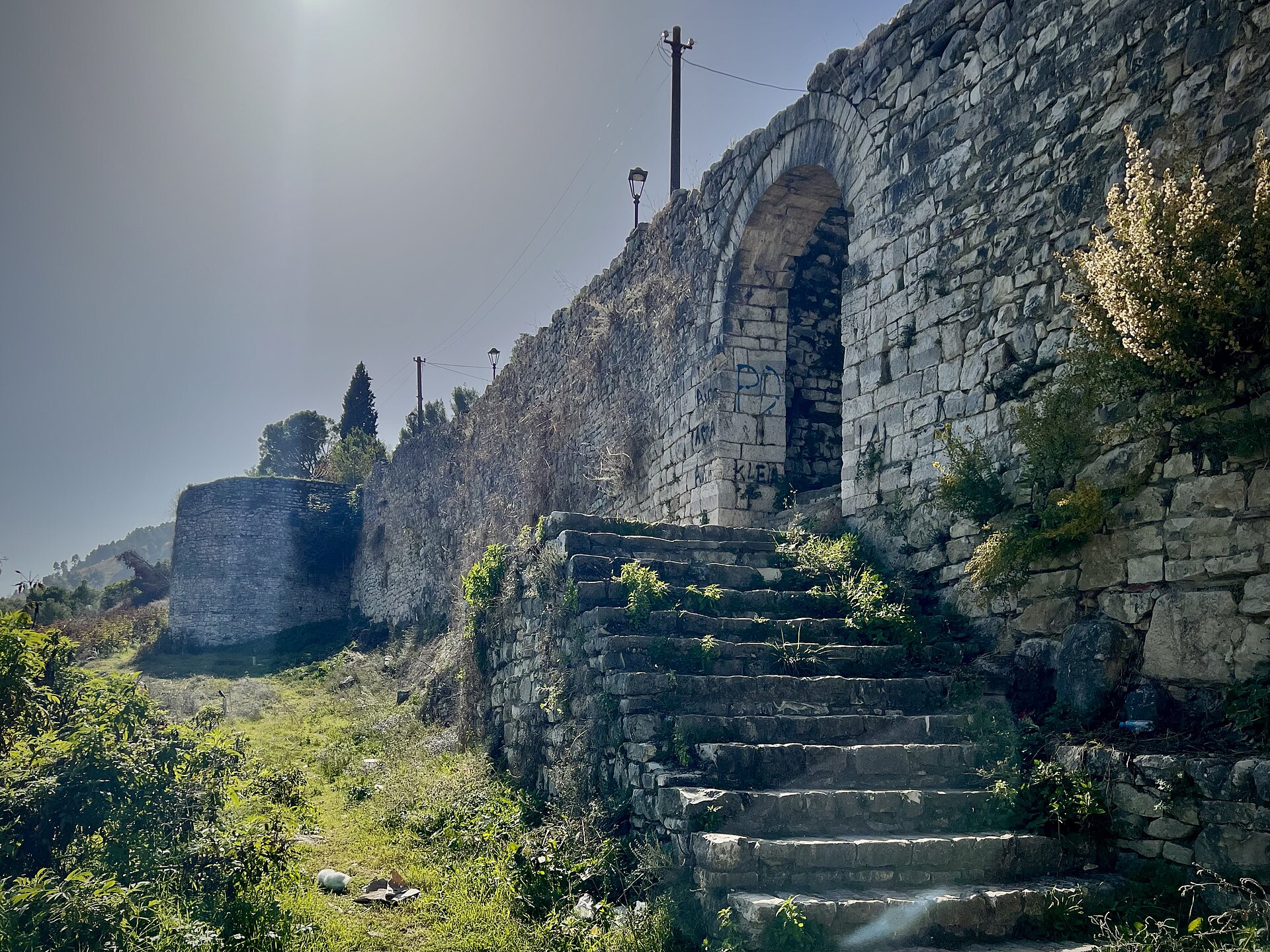
Above Mangalem's white rooftops rises Berat Castle, the Kalaja, a walled enclosure that still encloses a small inhabited village today, with Byzantine churches, traditional houses and the remains of Ottoman-era mosques and cisterns. The earliest fortifications date back to the Illyrian era, but the current appearance of the walls, largely walkable on foot, is due mainly to Byzantine and later Ottoman rebuilding between the 9th and 13th centuries. Climbing up here, perhaps in the late afternoon, allows you not only to visit the Onufri Museum with its post-Byzantine icons, but also to enjoy from above the most complete view over Mangalem, the Osum and the mountains enclosing the valley.
The Osum River and the bridge to Gorica
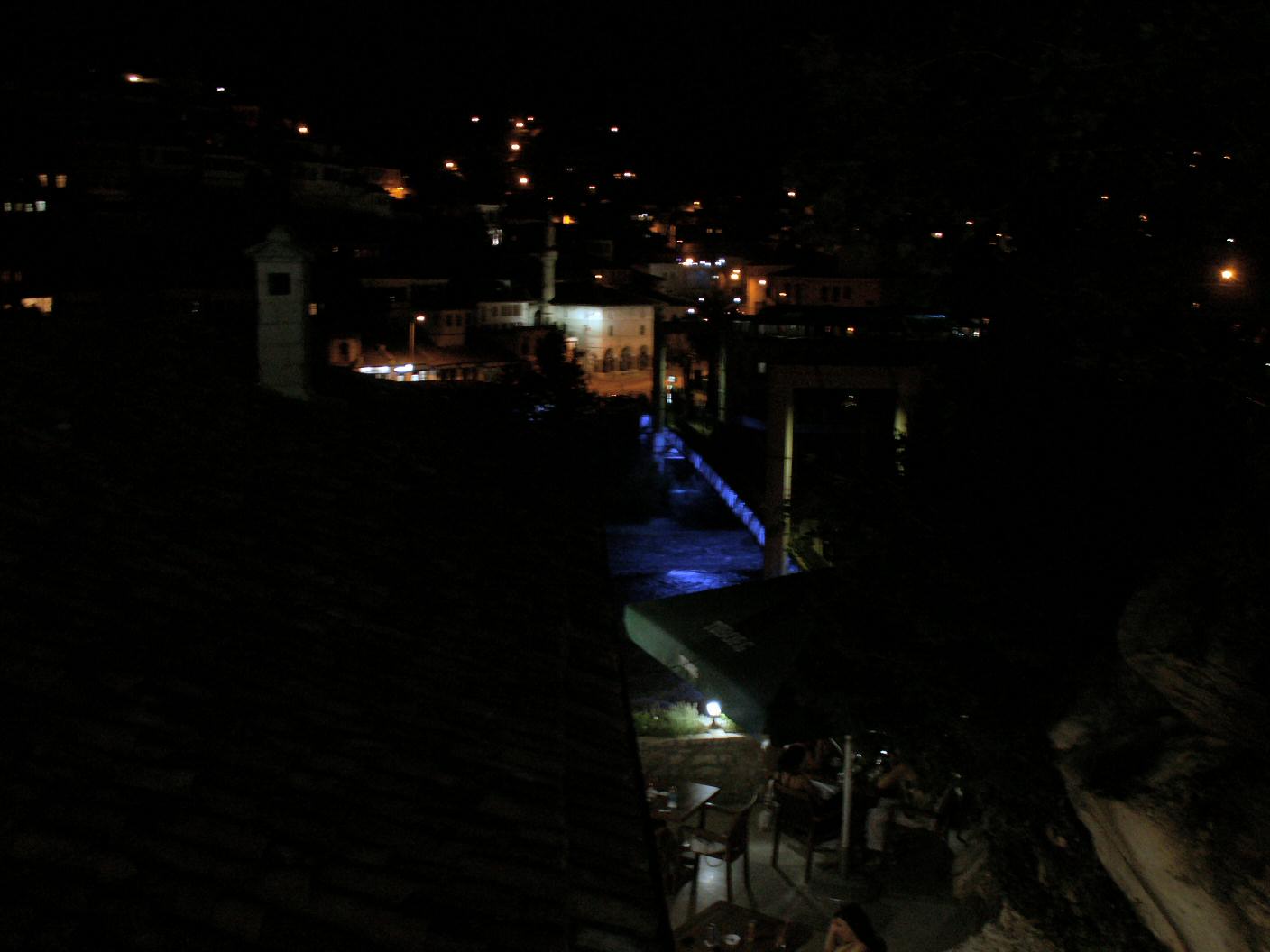
At the foot of Mangalem flows the Osum, which rises in the mountains of south-central Albania and crosses spectacular gorges before slowing here, dividing the old town in two. The stone bridge connecting the quarter to Gorica, rebuilt in Ottoman times on the course of an older crossing, with its low arches and parapets worn by time, is one of Berat's most photographed viewpoints, especially at dawn when the low light sets Mangalem's windows ablaze. In summer the river's pebbly bed, often shallow, becomes a strolling spot for families and children, while the shaded banks offer a cool refuge during the hottest hours of the day.
Workshops, crafts and neighborhood life
Mangalem is not an open-air museum but a still-inhabited quarter, where the ground floors of many houses house family workshops handed down through generations: wood carvers, embroiderers, small home-made rakia distilleries and souvenir shops selling carpets, filigree objects and hand-painted ceramics. In the inner courtyards, often invisible from the street, vines, pomegranates and fig trees are grown, colouring the white walls in autumn, while in the wider little squares the quarter's elders still gather to chat over a Turkish coffee, offering visitors an authentic glimpse of everyday life that resists the passage of tour groups.
Flavors and culinary traditions
The cuisine you find in Mangalem is typical of the Albanian hinterland, made of garden vegetables, fresh cheeses and grilled meats, but with a few specialities tied specifically to Berat, such as tavë berati, a baked dish of rice, meat and egg cooked in a clay pot, or peppers stuffed with feta served as a starter in the small taverns overlooking the Osum. Homemade grape or plum rakia, produced by many families, is never lacking, often offered as a welcome even before ordering, while on warm evenings the outdoor tables along the river fill up with groups of friends and families, in a social ritual worth as much as a visit to the monuments.
When to go and how to experience Mangalem
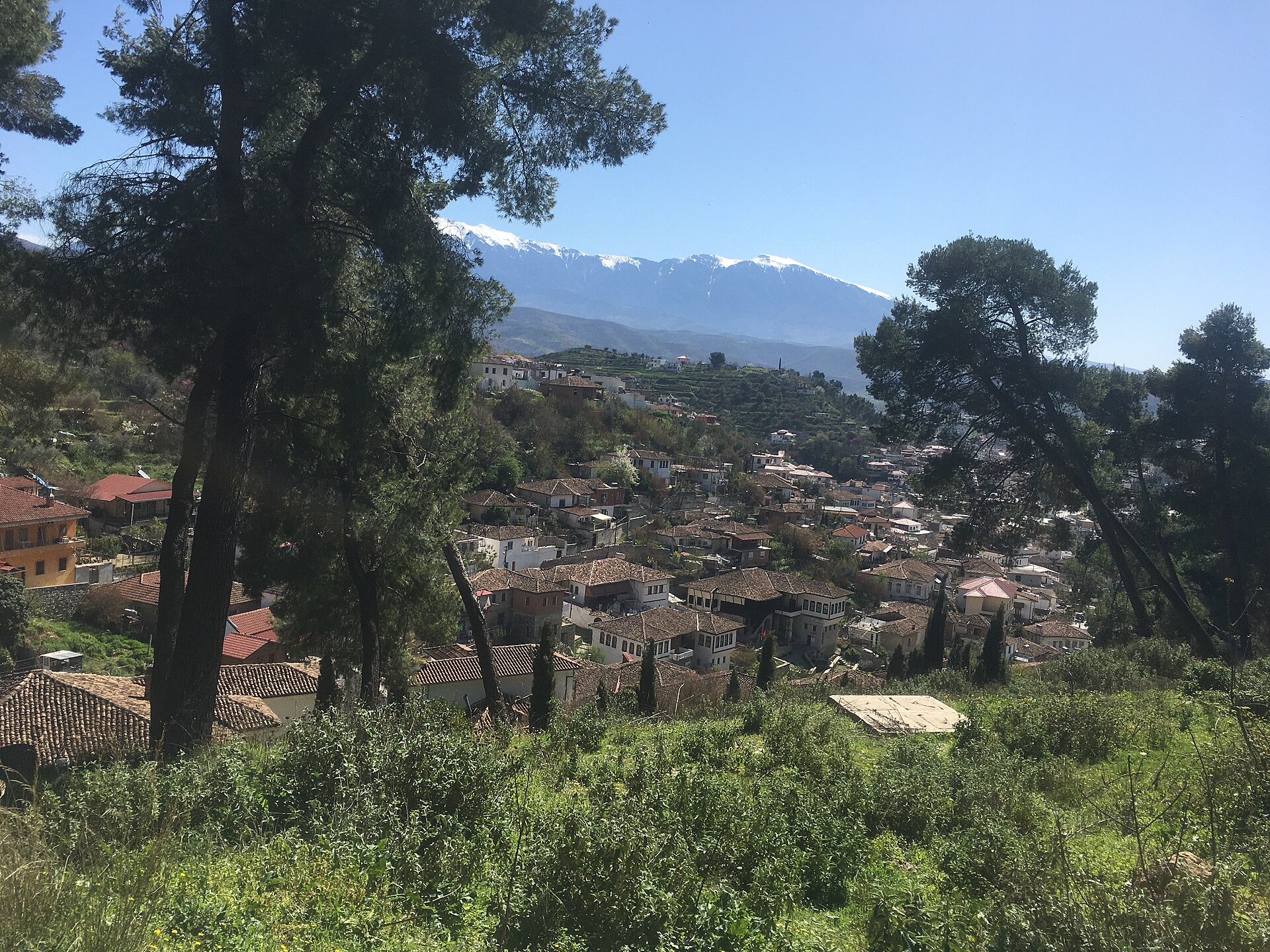
Spring and early autumn are the best times to visit Mangalem, with mild temperatures that make the climb toward the castle pleasant and light that brings out the white of the houses without the heavy summer haze. Summer nonetheless remains the liveliest season, with riverside taverns open late and a tourist bustle that peaks in July and August; winter, quieter and sometimes harsh, instead offers an almost deserted quarter, ideal for those seeking atmosphere and photographs without crowds. In every season it is worth dedicating at least half a day to Mangalem, arriving early in the morning for the best light and climbing to the castle in the late afternoon, when the low sun sets the thousand windows ablaze from afar.
- Walk at dawn along Mangalem's lanes to photograph the white houses without crowds
- Visit the Sultan's Mosque and the Lead Mosque with their small Ottoman cemeteries
- Step into the Halveti dervish tekke to admire the carved wooden ceiling
- Climb up to Berat Castle and visit the Onufri Icon Museum
- Cross the bridge over the Osum to Gorica at sunset for the city's most famous view
- Dine at a riverside tavern trying tavë berati and local rakia
- Shop in the artisan workshops for woodcarving and traditional embroidery
FAQ
Come si arriva a Mangalem?
Quanto tempo serve per visitarlo?
Dove si parcheggia per visitare il quartiere?
Mangalem è adatto a famiglie con bambini?
Qual è il periodo migliore per la luce fotografica?
Si possono portare animali domestici?
Getting there
- Aeroporto Internazionale di Tirana Nënë Tereza, circa 120 km da Berat
- Da Tirana si segue la strada statale SH3 e poi la SH4 in direzione sud, con un tempo di percorrenza di circa due ore e mezza in auto o poco più in autobus di linea; da Valona e dalla costa ionica il tragitto è simile in durata attraverso le montagne dell'entroterra.
- Non esistono collegamenti ferroviari verso Berat: auto a noleggio o autobus interurbani restano le opzioni più pratiche, e conviene arrivare in città con calma per lasciare il veicolo ai margini del centro storico prima di inoltrarsi a piedi in Mangalem.
Perfect for
Un quartiere ottomano quasi intatto, tra case dalle mille finestre, moschee cinquecentesche e una tekke sufi di rara conservazione.
Il castello sovrastante e il ponte sull'Osum regalano alcune delle vedute più fotografate dell'intera Albania.
Botteghe artigiane, cortili interni e caffè turchi restituiscono la vita quotidiana di un quartiere ancora abitato, non musealizzato.
Taverne sul fiume, tavë berati e rakia fatta in casa per un'esperienza gastronomica genuina.
Alba e tramonto trasformano le facciate bianche di Mangalem in un gioco di luci ideale per chi ama la fotografia di viaggio.
To see
