

Foinikounda
Nestled along the southern coast of Messenia, deep in the heart of the Peloponnese, Foinikounda reveals itself to the traveler as...
Updated 8 July 2026
This season · July · Summer
What to do in Foinikounda now
The story
The story of Foinikounda
Historical roots: from ancient Phoenicus to the present day
The history of Foinikounda has its roots in classical antiquity, when it was known as Phoenicus (Phinikous). Mentioned by the geographer Pausanias, the locality served as a sheltered natural port, essential for the trade routes connecting the Ionian Sea with the Aegean. The name is thought to derive from the Phoenicians, who probably established a trading post here for the production and trade of precious purple dye. Over the centuries, the area followed the fortunes of Messenia, passing under Byzantine, Venetian and Ottoman rule. During the Venetian period, Foinikounda lay within the sphere of influence of the "two eyes of the Serenissima", the nearby fortresses of Methoni and Koroni, serving as a secondary landing point. The modern village began to take shape in the 1840s, founded by inhabitants from nearby Lachanada, consolidating itself as a community of fishermen and farmers before its tourist discovery in the second half of the twentieth century.
The seafront and the heart of the village
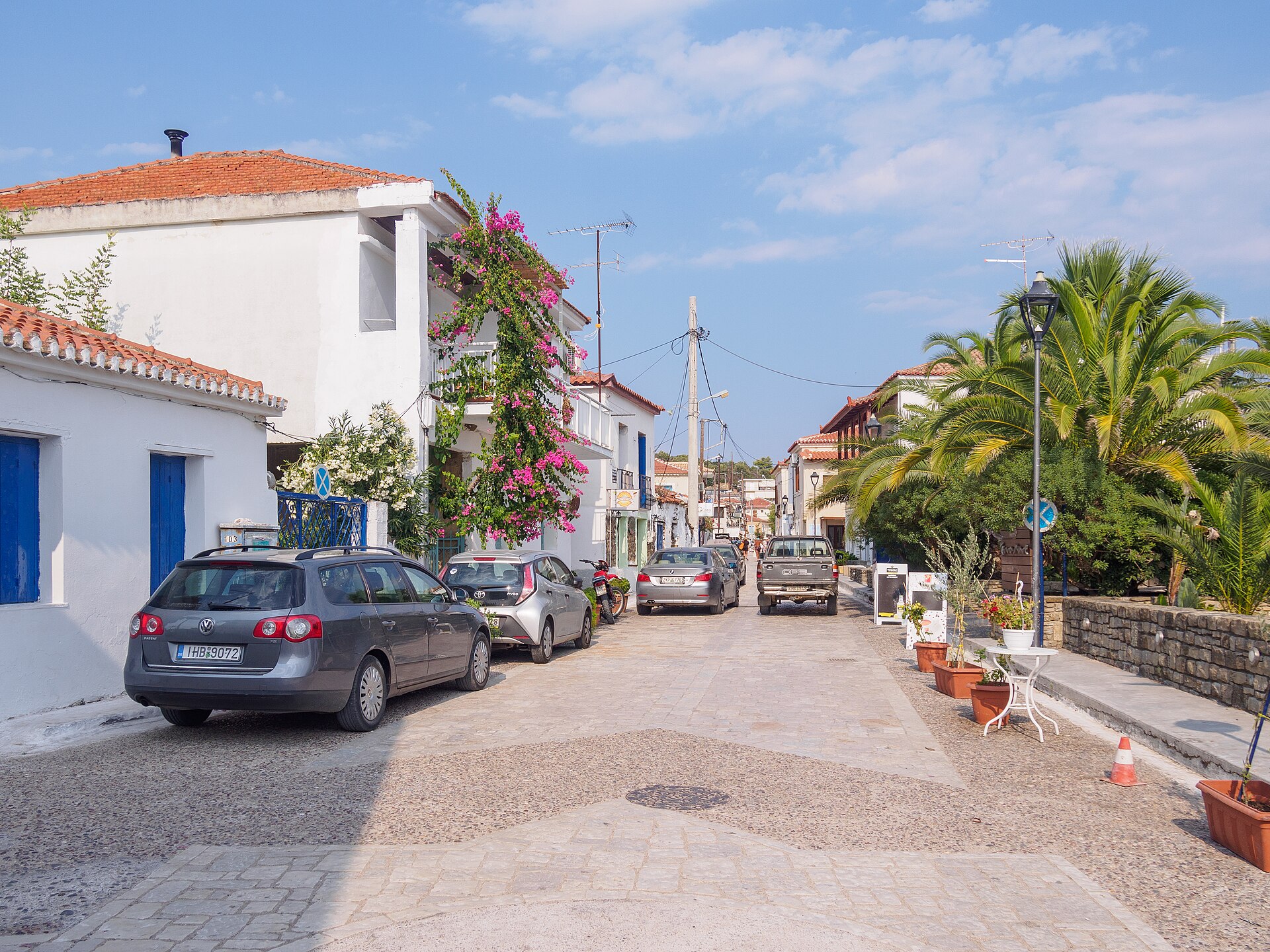
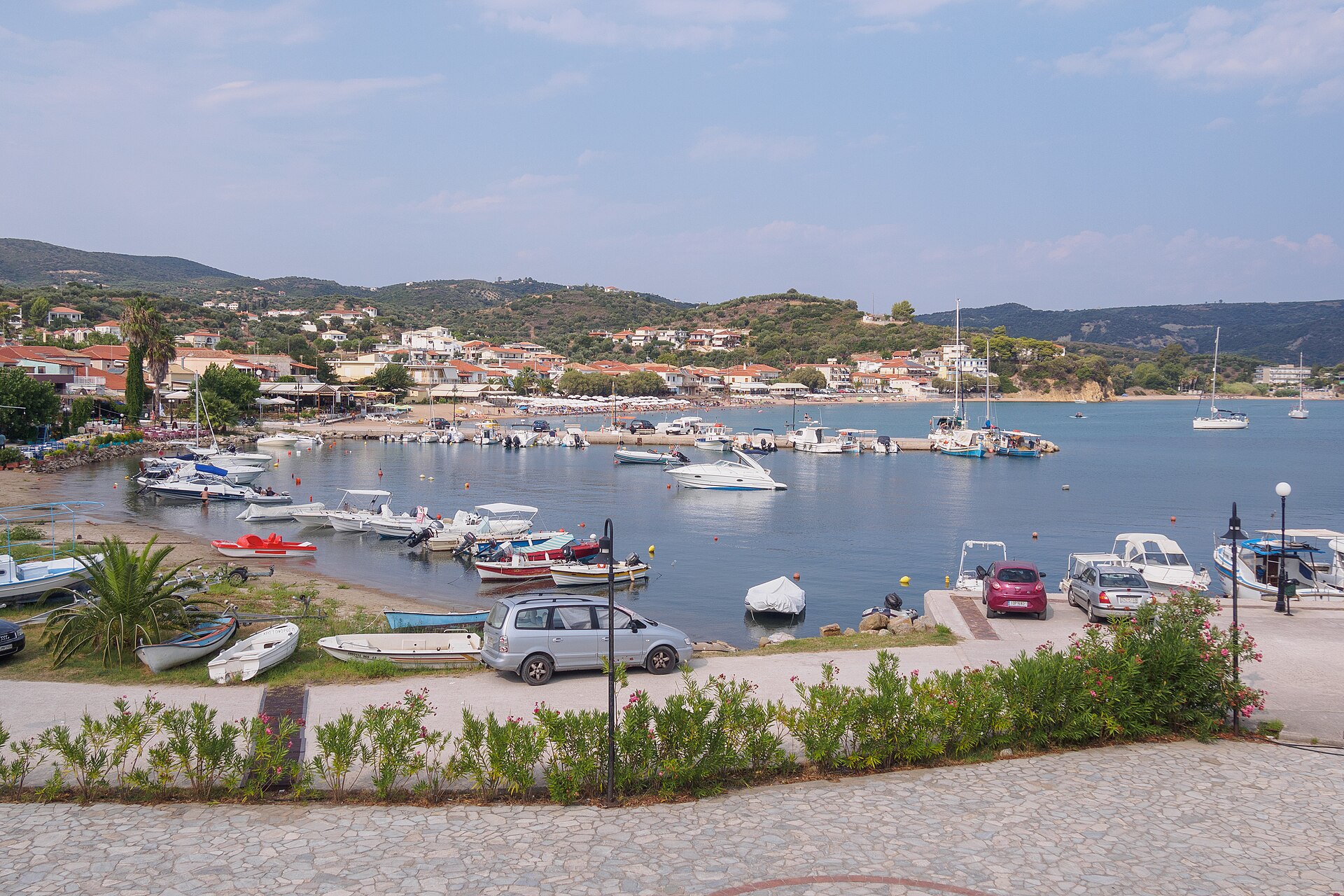
The vital center of Foinikounda develops around its characteristic seafront promenade, a pedestrian area where life flows slowly and pleasantly. Here, traditional taverns alternate with modern cafés and small artisan shops selling local products, from natural sponges to ceramics. The main pier is the reference point for observing the fishermen's activity as, every morning, they sell the day's catch directly from their colorful boats. Architecturally, the village retains the simplicity of low white-plastered houses, typical of the Greek coast, with balconies adorned with bougainvillea creating vivid chromatic contrasts against the blue sky. It is the ideal place for the classic evening "volta", the ritual stroll that brings residents and tourists together in a convivial, relaxed atmosphere, typical of small Mediterranean towns.
Foinikounda beach: an amphitheater of sand
The town beach of Foinikounda is undoubtedly one of its greatest prides. It is a wide stretch of very fine sand that extends right at the foot of the village, making it extremely accessible. The waters that lap it are famous for their crystal-clear transparency and for a seabed that slopes gently, making it perfect for families with children. Despite its proximity to the center, the beach maintains a well-kept appearance and remarkably clear water, often awarded for its quality. Along the shore there are stretches equipped with umbrellas and sun loungers, managed by the bars behind them, but there is no shortage of open free areas for those who prefer more direct contact with nature. The view stretches toward the horizon where the silhouettes of the Oinousses islands can be made out, creating a coastal panorama of rare beauty.
Anemomylos: paradise for water sports
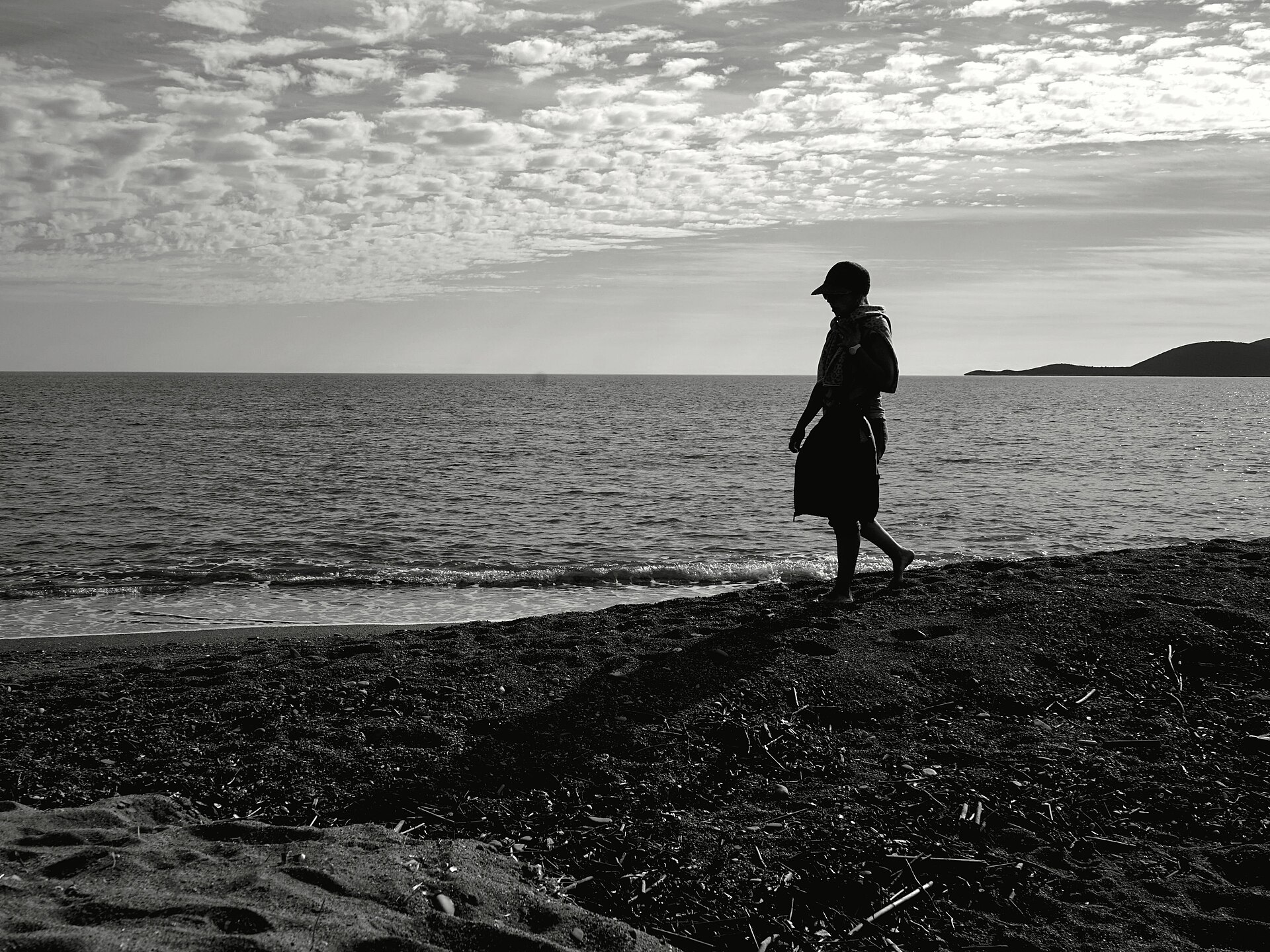
Moving west of the town center, the coast opens into the long, wild beach of Anemomylos. The name, meaning "windmill", is no coincidence: this area is in fact swept by constant thermal winds that make it one of the favorite destinations in Greece for windsurfing and kitesurfing enthusiasts. The beach is vast, made up of a mix of sand and small pebbles, and is surrounded by sparse Mediterranean vegetation that gives it an unspoiled look. Several high-quality campsites can be found here, popular with international travelers seeking close contact with the natural environment. Even for those who don't practice sports, Anemomylos offers pockets of absolute peace and spectacular sunsets, with the sun plunging directly into the Ionian Sea.
Loutsa and Tsapi: coves and coastal secrets
Around Foinikounda lie lesser-known but equally charming seaside gems. Loutsa beach, a short distance to the east, is a small sheltered bay characterized by calm waters and seabeds of interest for snorkeling. Even more secluded is Tsapi beach, reachable via a winding but scenic road or by sea. Tsapi is a true refuge from the world: a crescent of sand and pebbles nestled between steep hills, where only a couple of taverns serve genuine dishes in the shade of tamarisk trees. These places represent the ideal alternative for those seeking silence and wishing to escape the buzz of the main center, offering a more intimate and wild seaside experience, typical of deep Messenia.
The Oinousses Archipelago and the Island of Sapientza
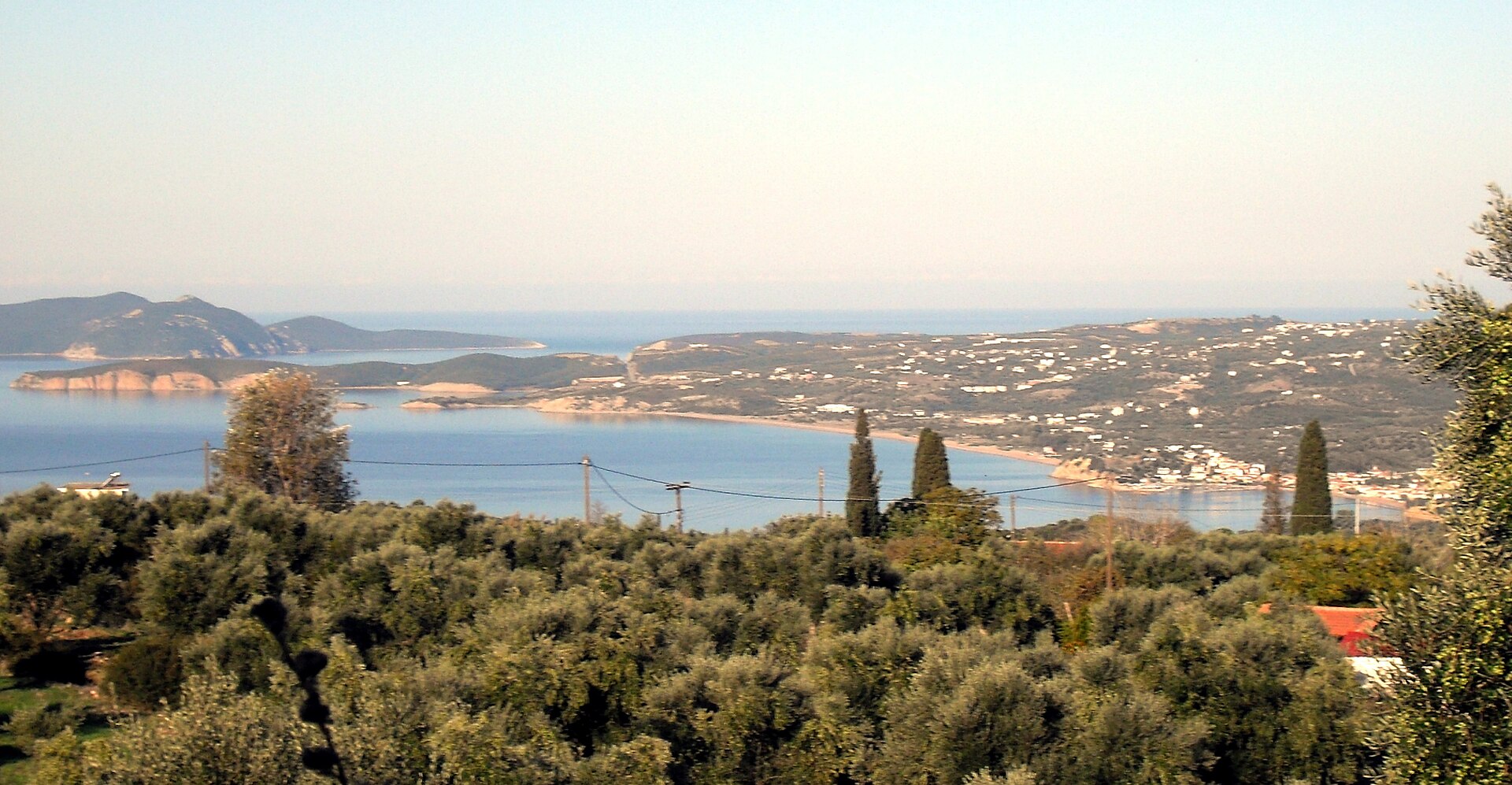
Directly facing Foinikounda stands the Messenian Oinousses archipelago, of which the island of Sapientza is the largest and most fascinating. The island is a protected nature reserve, home to rare species such as the mouflon and the wild goat (kri-kri). A visit to Sapientza, possible by boats departing from the port of Methoni or Foinikounda, allows you to discover the splendid Ammos beach, with its white sand and waters reminiscent of the tropics. On the island there also stands an imposing lighthouse built by the British in the 19th century, from which there is a breathtaking view over the entire gulf. Interestingly, in the waters south of Sapientza lies the deepest point of the Mediterranean, the Calypso Deep, which reaches 5,267 meters.
Nearby excursions: Methoni and Koroni
Foinikounda is the perfect logistical base for exploring the two historic fortresses that dominate the region. Just ten minutes away by car is Methoni, with its Venetian castle jutting out into the sea, culminating in the striking octagonal Bourtzi tower, connected by a stone bridge. To the east, about twenty minutes away, lies Koroni, a town of Venetian charm with narrow alleys and staircases leading up to its fortress, still inhabited today and home to a women's monastery. Visiting these two centers allows one to understand the strategic importance of Messenia in past centuries and to admire imposing military architecture perfectly integrated into the coastal landscape, offering a fascinating contrast with the seaside modernity of Foinikounda.
Flavors of Messenia: local gastronomy
The cuisine of Foinikounda is a triumph of the products of the Messenian land. The star ingredient is extra virgin olive oil of the Koroneiki variety, considered among the best in the world for its fragrance and organoleptic properties. In the village taverns, fresh fish is a must-try, but also traditional meat dishes such as "gournopoula" (roast suckling pig with crispy skin), an essential regional specialty during festivals. Other authentic flavors include Sfela cheese (a tasty, slightly spicy feta), Kalamata olives and "pasteli", a sesame and honey sweet. Pairing the meal with a local wine or a glass of ouzo while watching the sea is an integral part of the sensory experience this place offers its visitors.
When to go and how to experience the place
The ideal period to visit Foinikounda runs from late spring to early autumn. May and June offer lush nature, mild temperatures and still uncrowded beaches, ideal for those seeking tranquility and wanting to go on walking or cycling excursions. July and August are the liveliest months, with the village filling with life and color, perfect for those who love summer buzz. September is perhaps the magical month: the sea water is very warm, the light turns more golden and the atmosphere becomes more intimate. To experience Foinikounda to the fullest, the advice is to rent a vehicle to explore the surrounding coves and inland villages, letting yourself be guided by curiosity and the desire to discover a Greece that is still genuine and far from the busiest mass tourism circuits.
- Evening stroll along the pedestrian seafront among taverns and small shops.
- A day of relaxation on the town beach or at Anemomylos.
- Boat excursion to the island of Sapientza to see the lighthouse and Ammos beach.
- Dinner of the freshest fish at one of the taverns overlooking the pier.
- Visit to the nearby Venetian fortresses of Methoni and Koroni.
- Snorkeling in the crystal-clear waters of Loutsa bay.
- Tasting local Gournopoula at one of the roast houses in the center.
FAQ
Foinikounda è adatta alle famiglie?
È necessario noleggiare un'auto?
Com'è il parcheggio in estate?
Ci sono attività per i giovani?
Quanto tempo restare a Foinikounda?
Getting there
- Aeroporto di Kalamata (KLX) - 45 km
- Non ci sono collegamenti ferroviari diretti; la stazione più vicina è a Kalamata, collegata via bus.
- Da Atene, percorrere l'autostrada A7 verso Kalamata, poi seguire le indicazioni per Pylos e Methoni fino a Foinikounda.
- Durante il viaggio da Kalamata, la strada attraversa colline di ulivi con viste mozzafiato sul Golfo Messenico; guidate con prudenza per le curve.
Perfect for
Un paradiso di sabbia dorata e acque turchesi, con opzioni che vanno dal relax totale agli sport ventosi.
Posizione strategica per visitare i castelli veneziani di Methoni e Koroni, pilastri storici del Peloponneso.
Eccellente olio d'oliva, pesce fresco e cucina tradizionale messeniaca in un contesto di autentica ospitalità.
L'incontaminata isola di Sapientza e l'entroterra collinare offrono scenari naturali selvaggi e protetti.
To see
