

Yithio
Overlooking the cobalt waters of the Laconian Gulf, Yithio (or Gytheio) reveals itself to the traveller as one of the most authent...
Updated 8 July 2026
This season · July · Summer
What to do in Yithio now
The story
The story of Yithio
A history suspended between myth and Spartan power
The origins of Yithio are shrouded in the golden mist of legend: tradition holds that the city was founded by Heracles and Apollo after their reconciliation, a symbolic act balancing strength and harmony. Historically, Yithio became the main port and naval arsenal of Sparta, serving as a vital hub for the trade and military expeditions of the Laconian polis. During the Roman era, the city enjoyed a period of extraordinary prosperity as a member of the Confederation of Free Laconians, becoming a renowned centre for the export of porphyry marble and the prized purple dye obtained from local shellfish. After centuries of decline marked by raids and earthquakes, Yithio was reborn in the 19th century, transforming into southern Greece's most important commercial port, a golden age that bequeathed the splendid neoclassical architectural fabric we still admire today.
Cranae Island: where legendary love was born
Connected to the mainland by a slender raised causeway, the island of Cranae (or Marathonisi) is the mythological heart of Yithio. According to Homer, it was here that Paris and Helen of Troy spent their first night of passion after fleeing Sparta, before setting sail for Asia Minor. The island is a place of absolute peace, where maritime pines offer shade and the wind carries the scent of resin and salt. Beyond its legendary significance, Cranae holds important historical and architectural landmarks, making it an essential stop for understanding the identity of the place. Walking along its paths means retracing the steps of ancient heroes and romantic travellers, surrounded by a panorama that embraces the entire bay and the mountains of Laconia.
The Tzanetakis Tower and the memory of the Mani
On the island of Cranae stands the Tzanetakis Tower, a superb fortified structure built in 1829 during the final period of Ottoman occupation. This building is a perfect example of the defensive architecture typical of the Mani region, characterised by exposed stone and severe lines. Today the tower houses the Historical and Ethnological Museum of the Mani, offering visitors an in-depth journey through the culture, traditions and struggles for independence of this proud people. Inside, the exhibits recount the daily life and deeds of the local clans, allowing a deeper understanding of the social context that forged the unique character of the southern Peloponnese, in a setting that keeps the charm of the past intact.
The Yithio Lighthouse: a sentinel of white marble
At the outermost tip of Cranae stands the imposing Yithio lighthouse, built in 1873. Made entirely of local white marble, the lighthouse rises about 23 metres and is one of the most iconic beacons in all of Greece. Its circular structure, topped by a dark lantern, stands out sharply against the blue of sky and sea, offering an unforgettable visual landmark for anyone approaching the harbour. Reaching the base of the lighthouse at sunset is an almost mystical experience: the sound of waves breaking on the rocks and the low light tinting the marble in rosy hues create an atmosphere of rare beauty, ideal for photography or simply for a moment of solitary reflection facing the immensity of the Mediterranean.
The Roman Theatre and the vestiges of the ancient city
Located at the foot of Akoumaros hill, in the northern part of the modern town, lies the small but striking Roman Theatre, dating back to the 2nd century AD. Though modest in size compared to the great theatres of classical Greece, this structure retains excellent acoustics and a series of well-preserved stone seating rows. The theatre attests to the cultural importance of Yithio under Roman rule, when the city was a vibrant centre of social and artistic life. Today the surrounding area also holds the remains of ancient baths and the foundations of Roman buildings, partly submerged or hidden by vegetation, inviting archaeology enthusiasts on a treasure hunt among the traces of a glorious past that still emerges from the Laconian soil.
The waterfront and neoclassical architecture
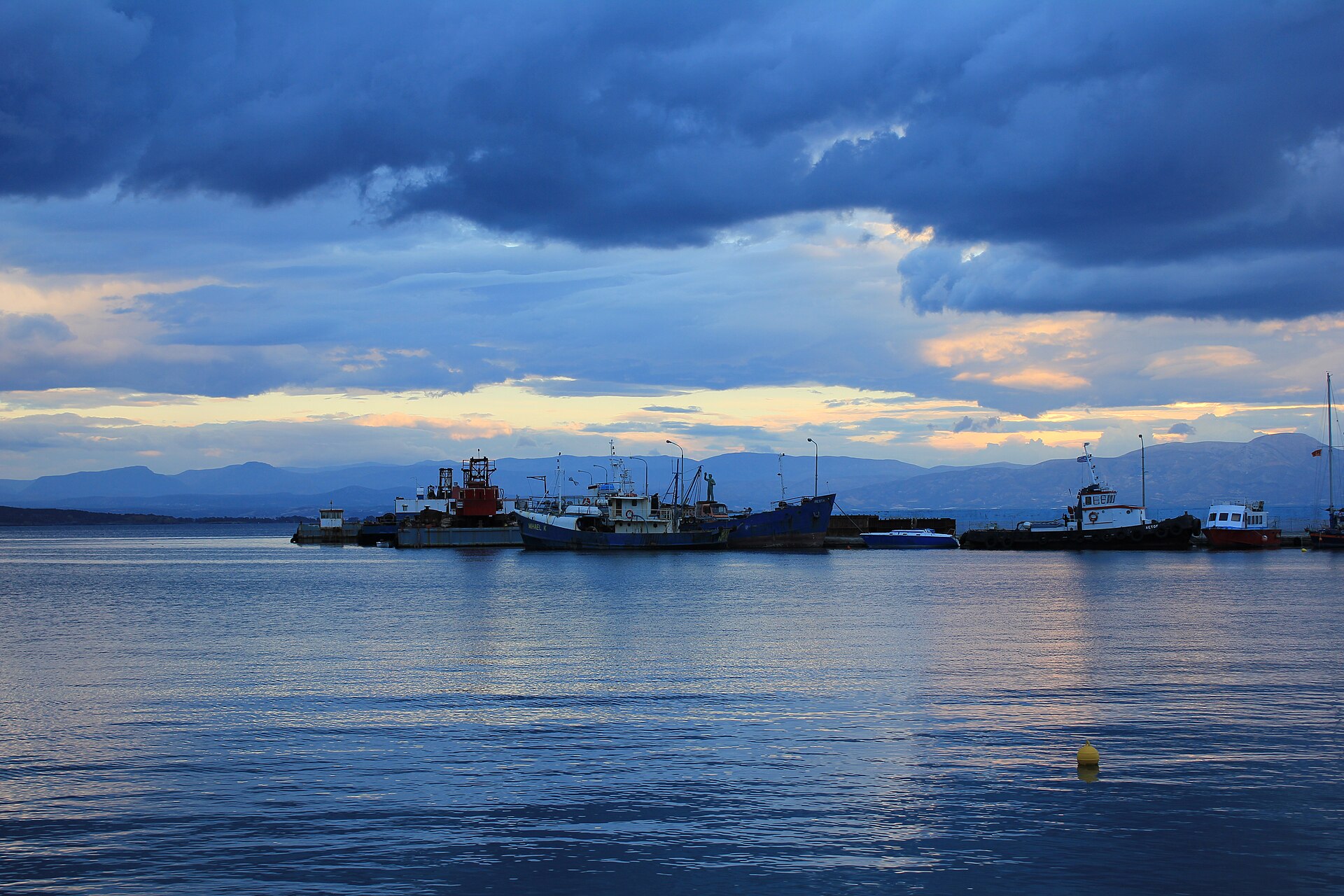
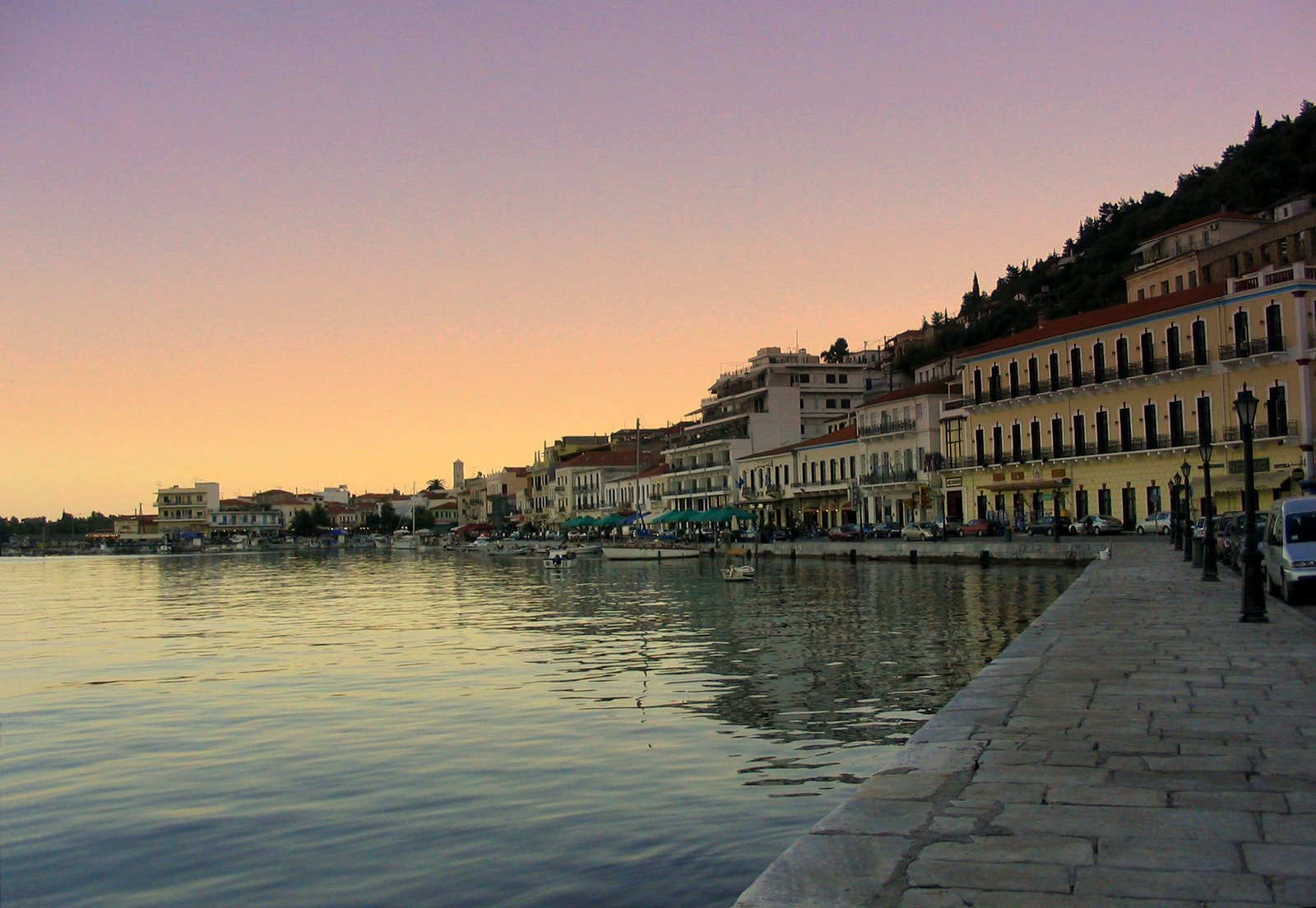
The true protagonist of Yithio is its scenic waterfront, a long promenade that runs along the harbour and the foothills of the hill. Here the town's social life is concentrated, amid open-air cafés, traditional taverns and the majestic neoclassical mansions that give Yithio its aristocratic touch. Many of these buildings, including the Town Hall designed by the famous architect Ernst Ziller, feature wrought-iron balconies, decorated cornices and tiled roofs reminiscent of central European aesthetics adapted to the Greek light. Walking along the quay, watching octopuses laid out to dry in the sun — a typical, almost artistic sight — allows one to savour the decadent yet lively elegance of a town that has managed to preserve its architectural identity despite the passing centuries.
Mavrovouni: golden sand and wild nature
Just two kilometres south of the town centre stretches Mavrovouni beach, one of the most beautiful and expansive in the entire Peloponnese. This stretch of golden sand and small pebbles extends for over six kilometres, washed by crystal-clear waters that have repeatedly earned the Blue Flag. Mavrovouni is not only a paradise for swimmers and windsurfing enthusiasts, thanks to steady afternoon winds, but also a site of great ecological importance: loggerhead sea turtles (Caretta caretta) choose these shores to lay their eggs. The sand dunes and Mediterranean scrub bordering the beach create an extraordinary chromatic contrast with the deep blue of the gulf, making this area the ideal place for those seeking authentic contact with nature without giving up comfort.
The surroundings: gateway to the Mani and Mystras
Yithio serves as an ideal logistical base for exploring some of southern Greece's most celebrated wonders. To the south opens the Mani peninsula, with its stone tower villages such as Vathia and the spectacular Diros Caves, an underground labyrinth of stalactites and stalagmites navigable by boat. A short distance to the northwest lies Mystras, the Byzantine ghost town declared a UNESCO World Heritage Site, where frescoed churches and imperial palaces rise on the slopes of Mount Taygetus. The legendary fortified town of Monemvasia is also reachable on a day trip, allowing travellers to immerse themselves in a variety of landscapes and historical periods that make this region an unparalleled concentration of beauty and culture.
Laconian flavours: between sea and olive groves
Yithio's cuisine is a hymn to simplicity and the quality of local ingredients. The signature dish is undoubtedly octopus, cooked in a thousand ways but unmissable in its grilled version after being sun-dried. The mainland, however, offers equally precious treasures: Laconian olive oil, celebrated for its low acidity and fruity flavour, seasons every dish. Not to be missed is 'syglino', pork smoked with aromatic herbs and preserved in fat, and local 'pites' filled with wild greens. The meal often ends with desserts made from Taygetus honey or juicy oranges from the Eurotas valley, all accompanied by a glass of chilled white wine produced in the vineyards surrounding the town, in a sensory experience that celebrates the unbreakable bond between people and land.
Experiences not to be missed in Yithio
- Stroll at sunset on Cranae island to the white marble lighthouse.
- Enjoy a lunch of ultra-fresh fish and grilled octopus in the harbour taverns.
- Explore the small Roman Theatre and imagine the performances of antiquity.
- Spend a day relaxing and enjoying water sports on the vast Mavrovouni beach.
- Visit the Mani Museum inside the Tzanetakis Tower to discover local history.
- Photograph the neoclassical façades of the waterfront reflected in the calm waters of the gulf.
When to go and how to experience the town
The best time to visit Yithio runs from late spring to early autumn. May and June offer mild temperatures and nature in full bloom, ideal for excursions, while September brings warm waters and a calmer atmosphere after the August tourist peak. During summer the town buzzes with energy, with cultural events and festivals animating the squares. Experiencing Yithio means adopting a slow pace: waking early to watch the fishermen return, dedicating the hot hours to the sea at Mavrovouni, and reserving the evening for conviviality along the waterfront. It is a destination that rewards those who know how to observe details and who love getting lost in the alleys climbing the hill, discovering panoramic corners where the view stretches freely to the snow-capped peaks of Taygetus or toward the infinite horizon of the Ionian Sea.
FAQ
Quanto tempo occorre per visitare Yithio?
Dove si può parcheggiare a Yithio?
La città è adatta alle famiglie con bambini?
È possibile visitare le Grotte di Diros partendo da qui?
Getting there
- Aeroporto di Kalamata (KLX) - 130 km
- Aeroporto Internazionale di Atene (ATH) - 270 km
- Non ci sono linee ferroviarie dirette; la stazione più vicina è Corinto, poi si prosegue in bus o auto.
- Da Atene prendere l'autostrada A7 verso Tripoli e poi seguire le indicazioni per Sparta e Yithio (circa 3 ore).
- Noleggiare un'auto è fondamentale per esplorare i dintorni e la penisola della Mani in totale libertà.
Perfect for
Ideale per chi cerca le tracce dell'antica Sparta e i luoghi legati alle leggende omeriche di Elena e Paride.
Perfetto per gli amanti delle lunghe spiagge sabbiose e delle acque pulite, con ottimi servizi per il windsurf.
Una meta imperdibile per ammirare il neoclassicismo greco e le caratteristiche torri fortificate della Mani.
To see
Da vedere a Yithio
Routes · Trovido Route
