

Paralio Astros
Suspended between the deep blue of the Argolic Gulf and the majestic profile of Mount Parnon, Paralio Astros reveals itself to the...
Updated 8 July 2026
This season · July · Summer
What to do in Paralio Astros now
The story
The story of Paralio Astros
A history carved between the rocks and the sea
The origins of Paralio Astros are linked to its strategic position along the maritime routes of the eastern Peloponnese. Known in antiquity for its proximity to centres of power such as Argos and Sparta, the area saw a flourishing of settlements as early as the Mycenaean and Classical periods. However, it is during the Middle Ages that the site takes on a precise identity, when the hill of Nisi became a fundamental defensive stronghold. In the 13th century, under the rule of the Franks led by William II of Villehardouin, the fortification known as the Castle of Estella was built. In the following centuries, control of the territory passed through the hands of Byzantines, Venetians and Ottomans, each of whom left their mark on the urban and defensive structure. A moment of crucial historical importance occurred in 1823, during the Greek War of Independence, when the Second National Assembly was held in nearby Astros, an event that laid the legislative foundations of the modern Greek state and which is still celebrated with great pride by the local community today.
The Castle of Paralio Astros: the sentinel of Nisi
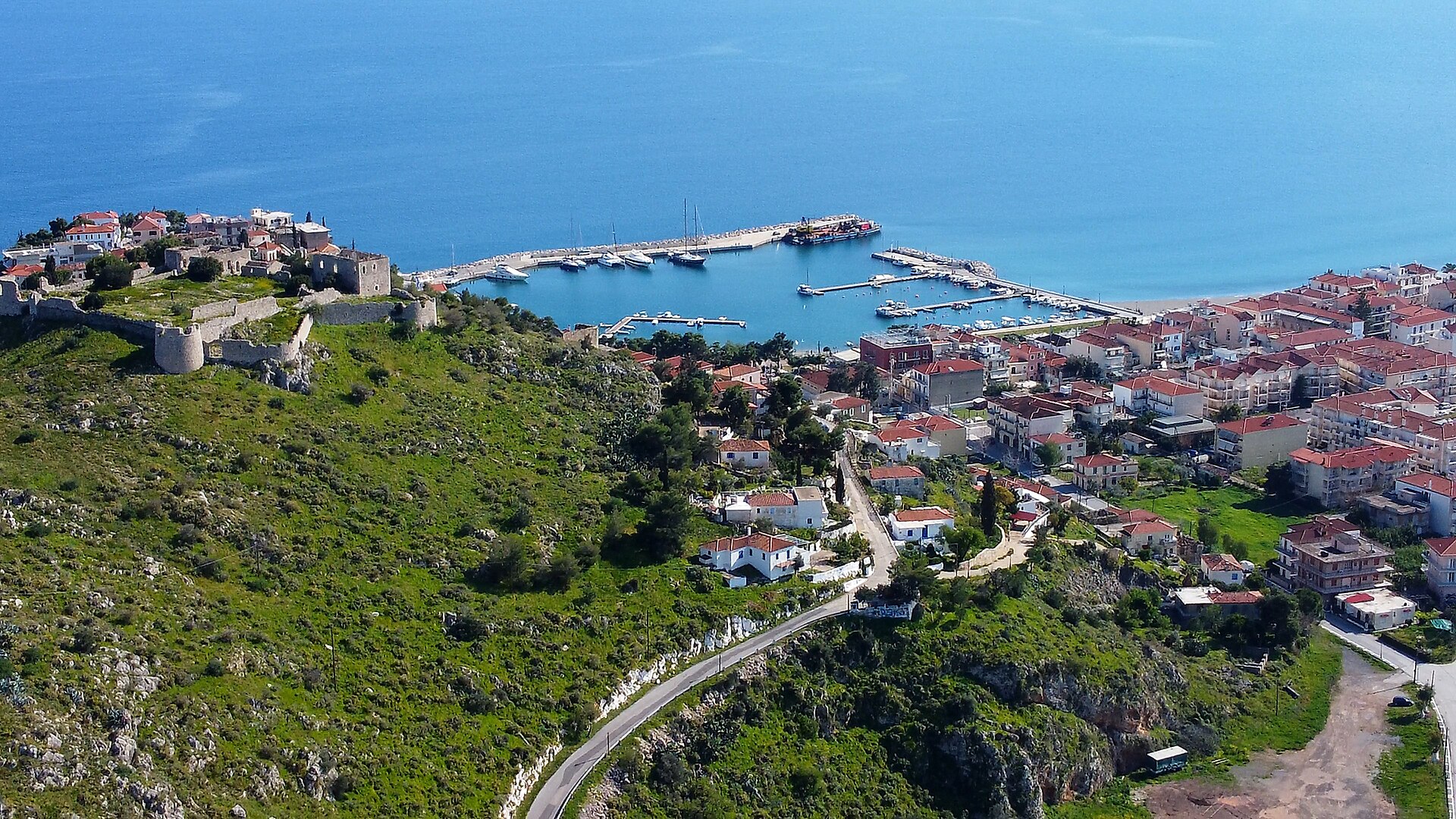
The most iconic and evocative monument of the town is undoubtedly its Castle, which dominates the entire settlement and the harbour below from the top of the Nisi hill. Originally built in 1256, its architecture reflects the various phases of occupation: the Frankish foundations blend with Venetian-era reinforcements and Ottoman interventions. The fortress was not just a military observation point, but a true fortified village that offered refuge to the population during pirate raids. Today, visitors can explore the remains of the towers and perimeter walls, from which one enjoys a breathtaking panoramic view stretching from the mountains of Arcadia to the coasts of the Argolid. Particularly interesting is the presence of three historic residences built within the perimeter walls in the 18th century, belonging to the Zafeiropoulos family, who played a key role in the revolution against the Turks, turning the ancient fortress into a symbol of resistance and freedom.
The Nisi district and its traditional architecture
Descending from the castle towards the harbour, one is immersed in the Nisi district, the oldest and most picturesque soul of Paralio Astros. This area retains intact the charm of the fishing villages of old, with its narrow, cobbled streets climbing up the slope. The houses, built mainly of local stone, feature red-tiled roofs and flower-decked balconies overlooking the sea directly. Walking here means taking a step back in time, far from the noise of modernity. Many of these dwellings have been skilfully restored, preserving the architectural features typical of coastal Arcadia. It is in these alleyways that one discovers small hidden corners, votive chapels and secret gardens scented with jasmine and citrus, bearing witness to a care for the land and a cultural continuity that the residents defend with dedication, making Nisi the ideal place for an evening stroll full of atmosphere.
The harbour and the seafront: the beating heart of social life
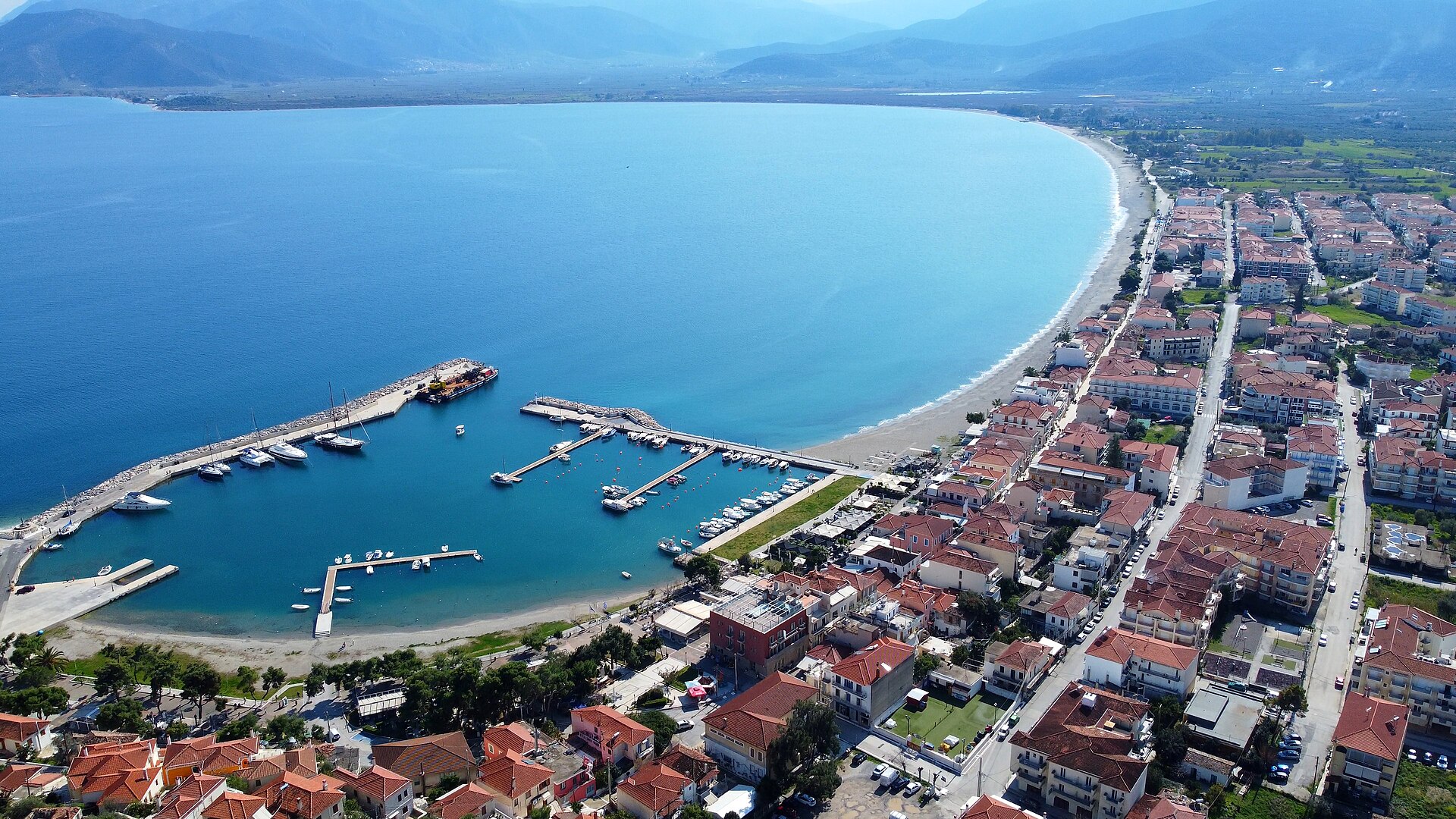
The harbour of Paralio Astros is the town's centre of gravity, a place where its commercial and touristic functions coexist harmoniously. Here, both the colourful traditional fishing boats, the 'kaikia', and yachts and pleasure craft that choose this port for its tranquillity and excellent services find their moorings. The seafront, largely pedestrianised, is dotted with traditional taverns, modern cafés and small craft shops. It is the perfect place to enjoy freshly landed fish or sip a Greek coffee while watching the boats come and go. At sunset, the harbour is transformed: the lights are reflected on the calm water and the area becomes the stage for the 'volta', the traditional Greek evening stroll. The quayside comes alive with families, couples and travellers, creating a warm, convivial atmosphere that embodies the very essence of Peloponnesian hospitality.
The Moustos Lagoon: a sanctuary of biodiversity
A few kilometres south of the town lies the Moustos Lagoon, a wetland ecosystem of inestimable value included in the Natura 2000 network. This wetland, fed by underground sources of fresh and brackish water, serves as a crucial stopover point for the migratory routes of birds between Europe and Africa. Birdwatching enthusiasts can spot herons, flamingos and various species of wild ducks that populate the reed beds and the stretches of water. The lagoon is surrounded by lush vegetation that contrasts with the aridity of some surrounding areas, creating a unique microclimate. Beyond its naturalistic value, the waters of the lagoon have been known since antiquity for their therapeutic properties thanks to the presence of minerals and mud. A visit to Moustos offers a fully immersive nature experience, allowing one to understand the environmental complexity of this stretch of coast where the sea meets the mountain springs.
The beaches: between golden sand and white pebbles
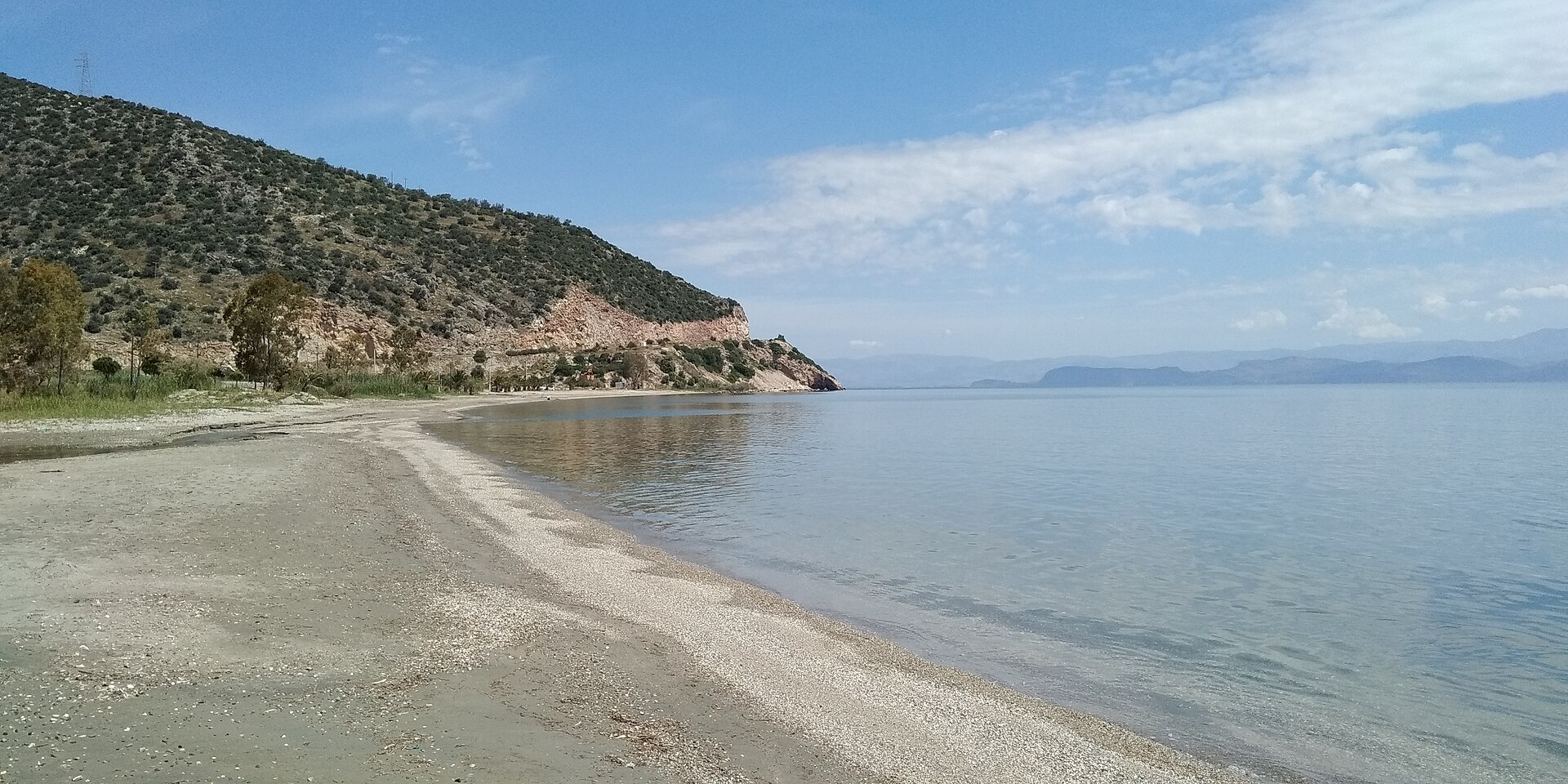
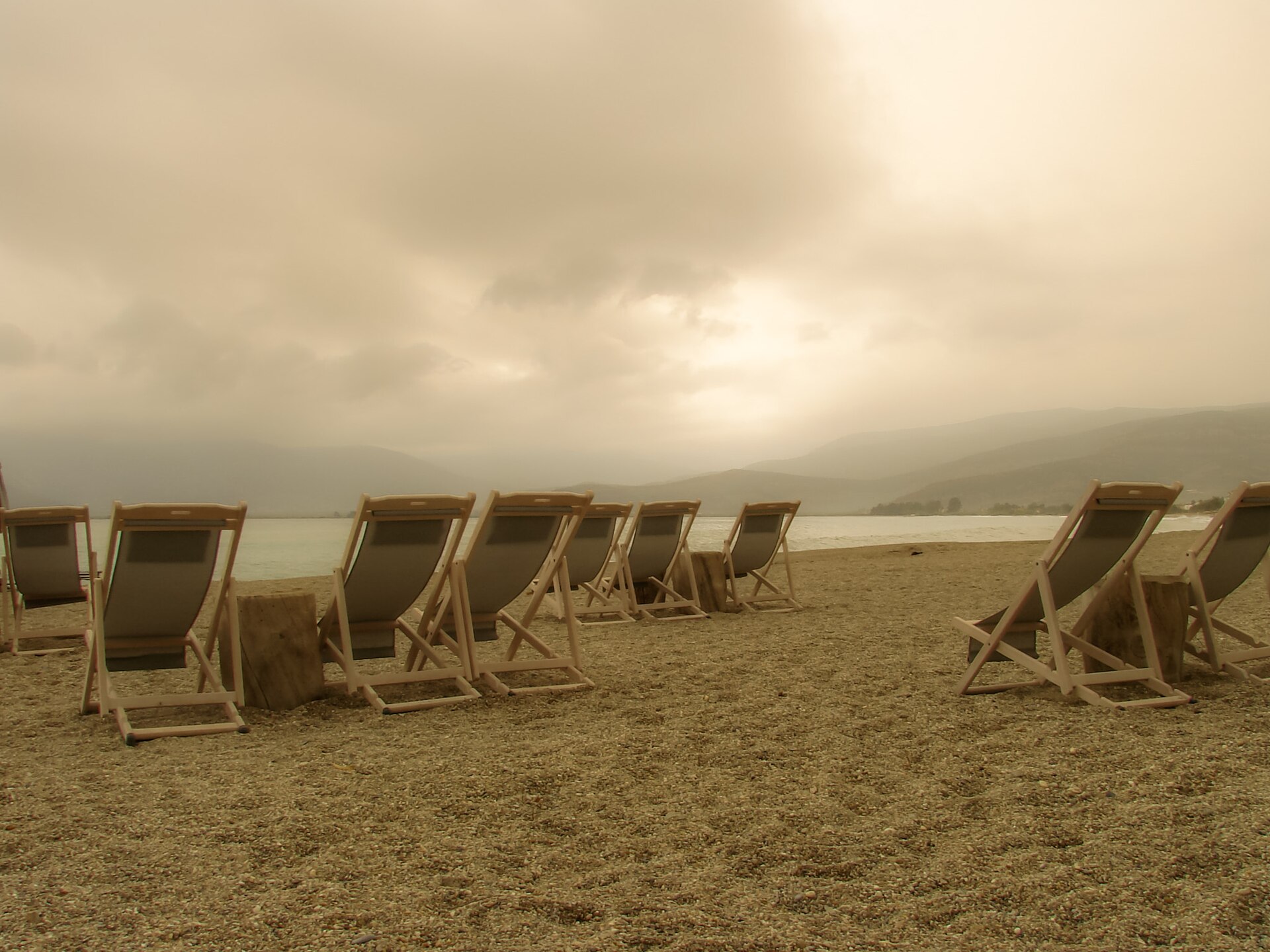
The coastline of Paralio Astros offers a variety of options to suit every type of bather. The main beach, which stretches north of the harbour, is characterised by a long stretch of sand mixed with small pebbles and a gently sloping seabed, making it ideal for families with children. Continuing north, one comes across Atsigganos beach, very popular for its size and for the presence of numerous beach bars offering services and entertainment. For those seeking a wilder contact with the sea, the area south of the harbour, towards the Moustos lagoon, offers quieter, more secluded coves such as Callisto, where the waters take on turquoise hues and the Mediterranean scrub almost reaches down to the shore. The cleanliness of the waters is a constant, often rewarded with the Blue Flag, guaranteeing a top-level bathing experience in a landscape setting that is always varied and never monotonous.
What to see in Paralio Astros and the surrounding area
- The Castle of Estella: the medieval fortress that dominates the hill of Nisi.
- The Archaeological Museum of Astros: located inland, it houses artefacts spanning from prehistoric to Roman times.
- The Moustos Lagoon: a protected area perfect for birdwatching and nature walks.
- The Lighthouse of Paralio Astros: located on the tip of the headland, a romantic spot to watch the sunrise.
- The villas of the Zafeiropoulos brothers: excellent examples of 18th-century fortified residential architecture.
- The Monastery of Loukou: located a short distance away, it is a jewel of Byzantine art surrounded by lush nature.
Culinary traditions and flavours of Arcadia
The cuisine of Paralio Astros is a happy union between the produce of Arcadia's mountainous hinterland and the treasures of the sea. Olive oil produced on the surrounding hills is the basis of every dish, renowned for its low acidity and fruity flavour. In the harbour taverns, fish is the undisputed star: red mullet, sea bream and octopus are cooked simply, often grilled, to bring out their freshness. However, there is no shortage of land-based dishes typical of Arcadian tradition, such as roast lamb with potatoes or 'pites' (savoury pies) filled with wild herbs gathered on the slopes of Mount Parnon. A local product not to be missed is the artisanal 'graviera' cheese and 'feta', often accompanied by local thyme honey. To finish the meal, spoon sweets made with the area's famous citrus fruits or 'diples' (fried pastries with honey) offer an explosion of sweetness that rounds off an authentic sensory experience.
When to go and how to experience the village
The ideal time to visit Paralio Astros depends on the type of experience desired. Summer (June-August) is perfect for those who love seaside life, lively evenings and the warmth of the Greek sun, although temperatures can be high. For those who prefer hiking and cultural discovery, spring and autumn offer mild weather and spectacular colours: the spring bloom turns the hills into a multicoloured carpet, while autumn is the time of the olive and wine harvest. Experiencing Paralio Astros means adopting a slow pace: waking up early to watch the fishermen at work, dedicating the hot hours to the sea or to reading in the shade of a pine tree, and reserving the late afternoon for exploring the historic sites. It is a destination that invites contemplation and the recovery of a human dimension of travel, where every encounter and every glimpse becomes part of a precious memory.
FAQ
Qual è il modo migliore per raggiungere Paralio Astros?
È una destinazione adatta alle famiglie?
Cosa si può vedere in un giorno?
Ci sono problemi di parcheggio?
Getting there
- Aeroporto Internazionale di Atene Eleftherios Venizelos (170 km)
- Linea ferroviaria fino a Corinto, poi proseguimento in bus o auto a noleggio.
- Percorrere l'autostrada A7 (Atene-Corinto-Tripoli), uscire per Argo e seguire le indicazioni per Astros e Paralio Astros sulla strada costiera.
- Se arrivate da Atene, la strada costiera dopo Argo offre panorami spettacolari sul Golfo Argolico, vale la pena percorrerla con calma.
Perfect for
Ideale per chi cerca spiagge variegate, acque pulite e un lungomare vivace ma non caotico.
Il castello e le fortificazioni del Nisi offrono uno spaccato affascinante del periodo franco e veneziano nel Peloponneso.
La vicinanza alla Laguna di Moustos e alle pendici del monte Parnon la rende perfetta per il birdwatching e il trekking.
To see
