

Palaia Epidhavros
Nestled along the jagged coastline of the Argolid, where the deep blue of the Saronic Gulf meets the intense green of pine forests...
Updated 8 July 2026
This season · July · Summer
What to do in Palaia Epidhavros now
The story
The story of Palaia Epidhavros
The roots of a millennia-old port: the history
The history of Palaia Epidhavros is inextricably linked to the figure of Asclepius, the god of medicine. Although the main sanctuary lay a few kilometres away, the coastal town was the logistical and political hub of the region. Founded in the Mycenaean era, as attested by the tholos tombs found nearby, the town reached its peak splendour between the 6th and 4th centuries BC. During this period, Epidaurus was an independent city-state, with its own fleet and advanced civic institutions. Its strategic position made it a crucial hub for pilgrims arriving by sea from every corner of the Mediterranean to consult the priest-physicians.
Over the centuries, the town endured various rulers, from the Romans and Byzantines to the Venetians and Ottomans. Each era left its trace, though often hidden beneath the soil or the waters of the harbour. In the 19th century, following the Greek War of Independence, the village regained vigour as an agricultural centre, specialising in citrus production. It is precisely this continuity of habitation that makes Palaia Epidhavros special: it is not an abandoned open-air museum, but a place where life continues to flow over the same stones that once saw the Greeks of classical antiquity pass by.
The Small Theatre of Epidaurus
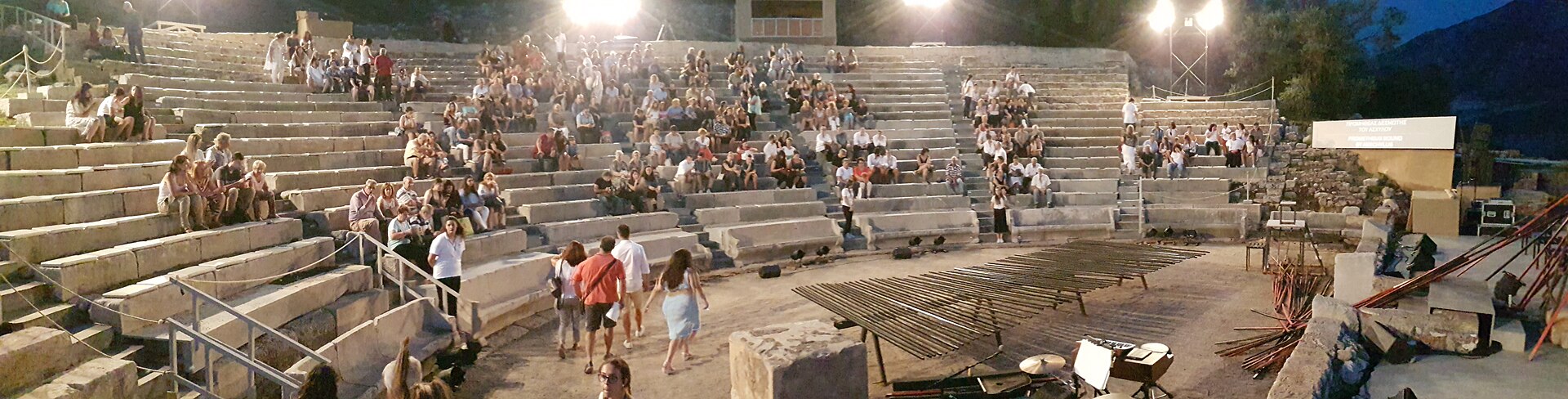
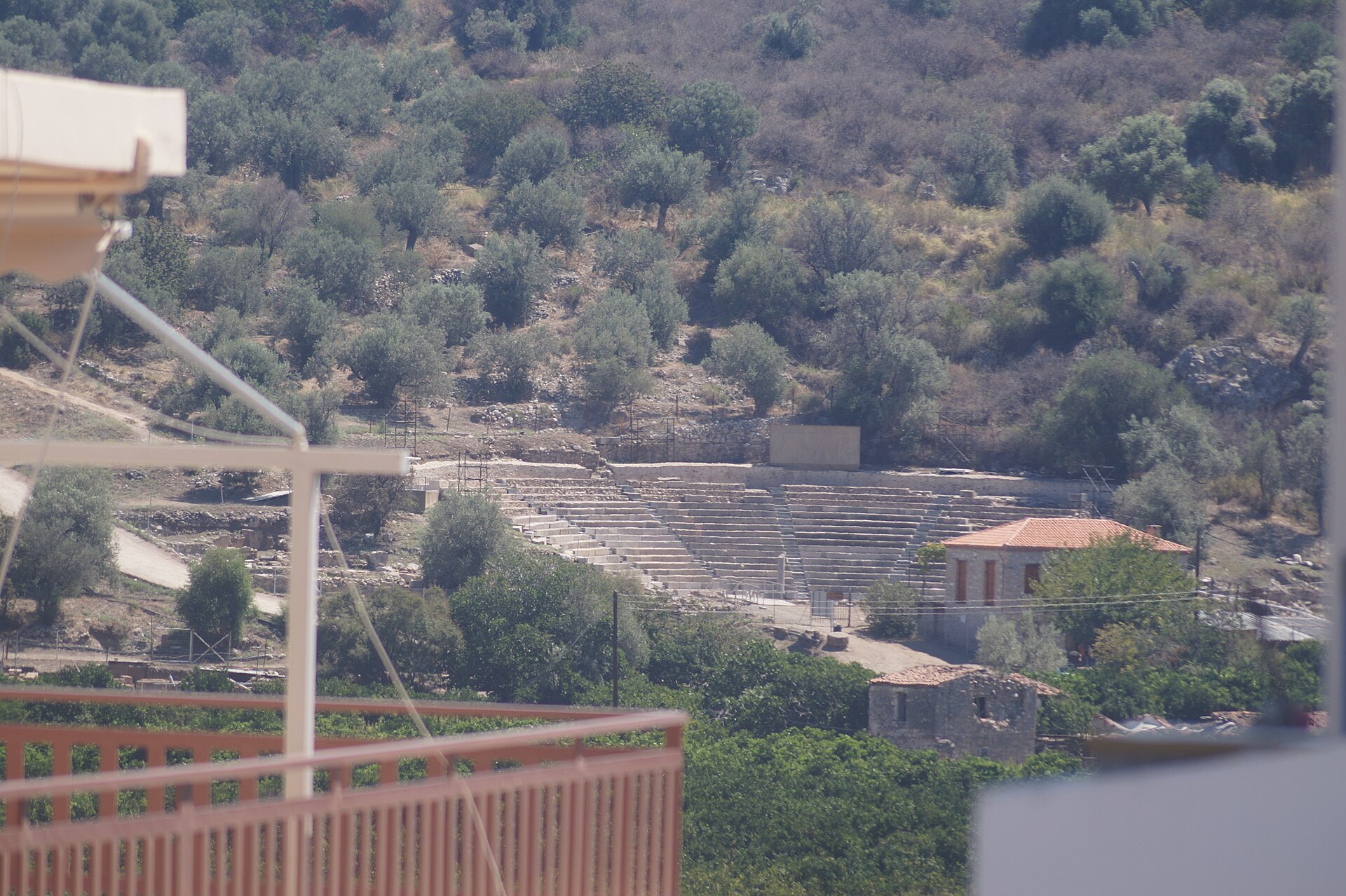
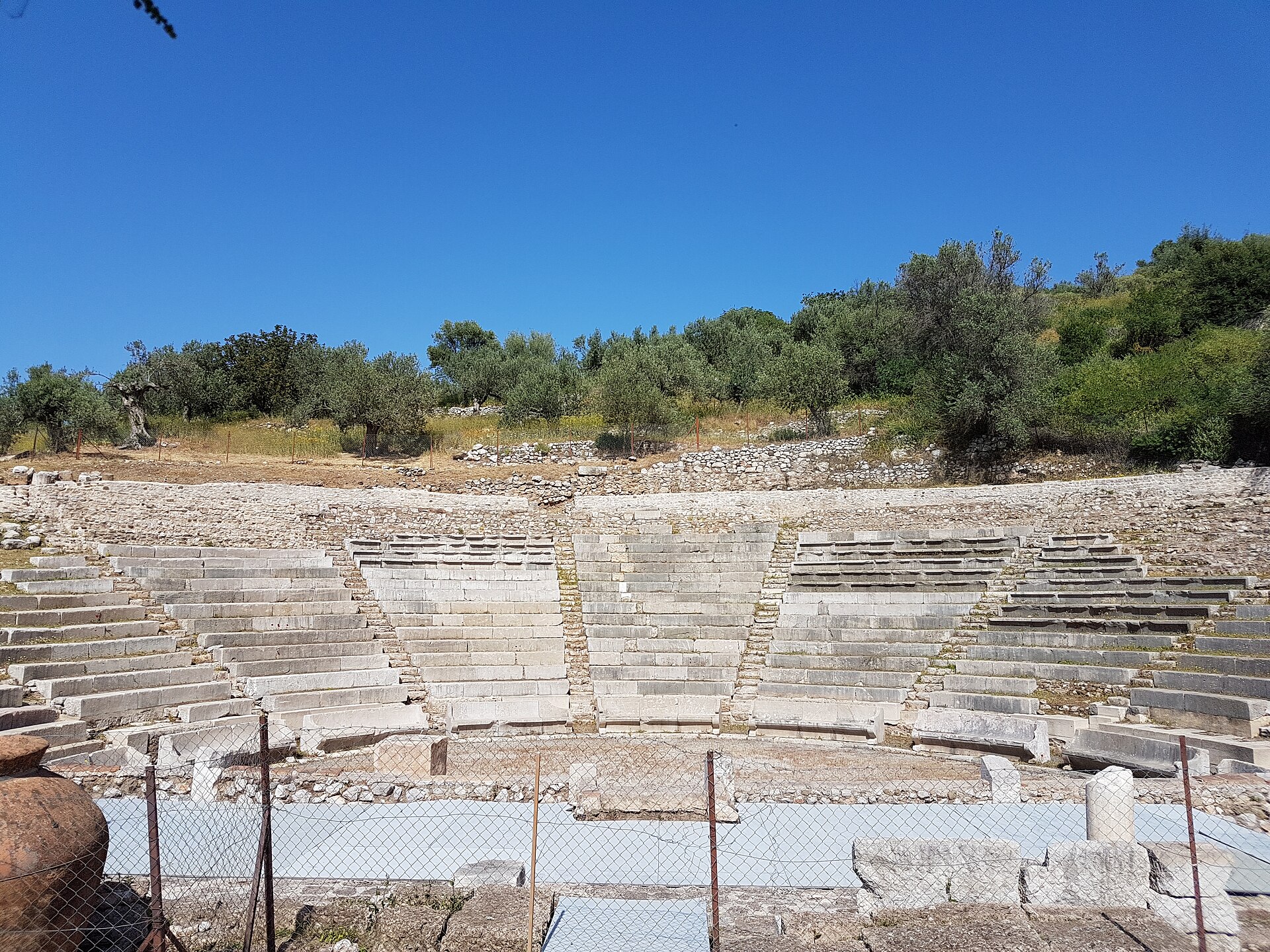
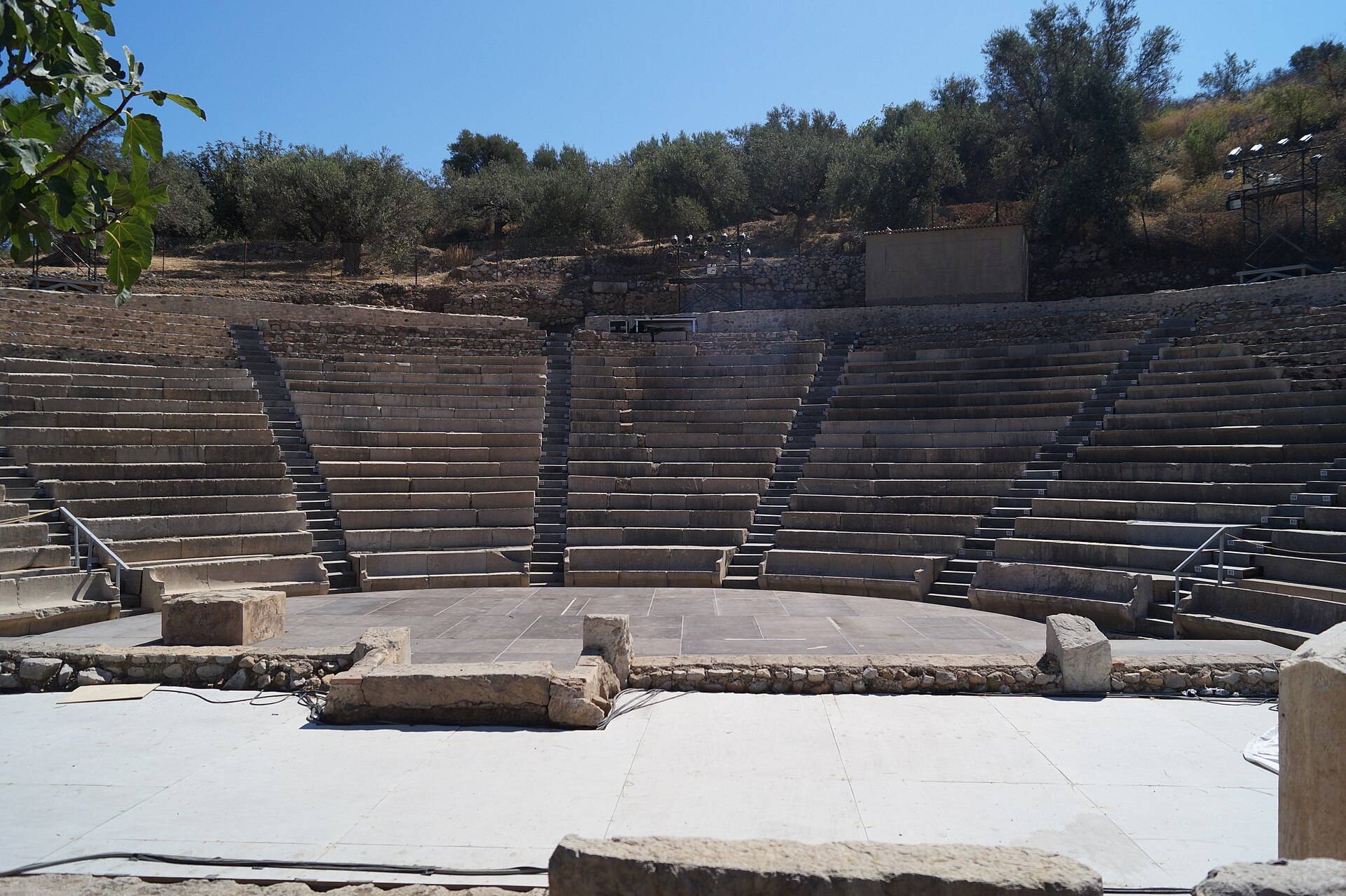
Located on the 'Nisi' peninsula, which encloses the village's harbour to the south, the Small Theatre is one of the most evocative gems in Greece. Dating back to the 4th century BC, it was built not for grand national dramas but for the religious and civic needs of the local community. For centuries it lay buried beneath an orange grove, until it was brought back to light in the 1970s. Its limestone structure, with a capacity of around 2,000 spectators, is perfectly preserved and offers exceptional acoustics, albeit on a smaller scale than its 'bigger brother' further inland.
What makes this monument unique is its setting: seated on the tiered steps, the gaze sweeps beyond the orchestra to meet the sea and the mountains of the Argolid. Today the theatre has come back to life thanks to 'Musical July', a series of concerts and performances that transforms this ancient space into a magical stage beneath the stars. It is a place of rare intimacy, where the distance between actor and spectator dissolves, immersed in the scent of the surrounding vegetation.
The Sunken City of Kalymnios
Just a few metres from the shore of Kalymnios beach lies one of Palaia Epidhavros's most fascinating secrets: the so-called 'Sunken City'. At a depth of barely two metres, the remains of a large Roman villa and ancient harbour structures are clearly visible. One can make out the outlines of rooms, paved floors and even large jars (pithoi) half-buried in the sand. This site requires no diving gear; a simple mask and snorkel are enough to swim over two thousand years of history.
The submersion is due to seismic subsidence that caused the coastline to sink. Swimming above these ruins, with fish darting between the ancient walls, is an almost dreamlike experience. It is a silent reminder of the power of nature and the fragility of human works, but also a unique opportunity to touch (almost) the everyday life of a bygone era, set within a natural landscape of extraordinary beauty.
The Harbour and the Waterfront
The social heart of Palaia Epidhavros is undoubtedly its harbour. Here, brightly coloured fishing boats bob alongside modern yachts, creating a harmonious contrast. The waterfront is an ideal setting for an evening stroll, dotted with traditional tavernas where fresh fish is the undisputed star. It is not unusual to see fishermen mending their nets or beating octopus against the quay to tenderise it, a ritual repeated unchanged across generations.
The Nisi Peninsula and the Church of Panagia
The peninsula that shelters the harbour, known as 'Nisi' (island), is an area of great scenic and historical value. Besides the Small Theatre, it is home to paths winding among Aleppo pines, offering panoramic views over the gulf. At the top of the hill stands the small church of Panagia, built on ancient foundations. This trail is much loved by locals for morning jogs or for enjoying the silence away from the village centre. Along the way, one can spot fragments of ancient cyclopean walls, evidence of the fortification that once protected the town's acropolis.
The Great Sanctuary of Asclepius and the Ancient Theatre
Although it lies about 15 minutes away by car (in the municipality of Ligourio), no visit to Palaia Epidhavros is complete without a trip to the Sanctuary of Asclepius, a UNESCO World Heritage site. This was the most important healing centre of the ancient world, a place where medicine and spirituality were united. The famous Theatre of Epidaurus, with its geometric perfection and acoustics that allow a whisper to be heard from the topmost row, is the highlight of this visit. It is a monument to Greek rationality and beauty, still able to host up to 14,000 people today during the prestigious Athens and Epidaurus Festival.
The Beaches: between relaxation and nature
The beaches of Palaia Epidhavros are characterised by crystal-clear waters and vegetation that often reaches down to touch the sea. Vagionia is the beach closest to the centre, ideal for those seeking convenience without sacrificing water clarity. Gialasi, located to the south, is a long stretch of pebbles and sand, much loved by families for its shallow waters and available amenities. For those seeking greater tranquillity, the small coves along the coastal road offer corners of absolute peace, where the sound of cicadas is the only accompaniment.
Traditions and Flavours: the gold of the Argolid
Local cuisine reflects the richness of the land. Palaia Epidhavros is famous for its citrus fruits: oranges, lemons and mandarins grow abundantly in the surrounding plain. Every year in July, an agritourism market is held on the harbour, where one can buy jams, liqueurs and fruit-based sweets. Equally important is the olive oil, with its intense, fruity flavour, which seasons traditional dishes such as 'moussaka' or grilled fish. Tasting the local honey, made from thyme and orange-blossom flowers, is a sensory experience that captures the essence of this region.
Experiences not to be missed
- Snorkelling over the Sunken City at Kalymnios beach.
- Watching a theatrical performance or a concert at the Small Theatre during the month of July.
- Strolling at sunset along the Nisi peninsula among the pines and ancient ruins.
- Sampling local products at the harbour's agritourism market.
- Taking a kayak trip along the coast to discover sea caves and secluded coves.
- Dining at a taverna on the pier, sampling grilled octopus and local wine.
When to go and how to experience the place
The best time to visit Palaia Epidhavros runs from May to the end of September. Spring is ideal for excursions and for enjoying the citrus blossom, while summer is the season of cultural festivals. July and August are the hottest and busiest months, but offer the unique thrill of experiencing theatrical evenings. For those who prefer tranquillity, September offers mild temperatures and still-warm sea, perfect for enjoying the beaches in total relaxation. Getting around on foot within the village is very easy, while to explore the surrounding area and the Great Theatre it is advisable to have a car or use local buses.
FAQ
Quanto tempo serve per visitare Palaia Epidhavros?
È adatto alle famiglie con bambini?
Dove si può parcheggiare per andare al porto?
Si può nuotare nella Città Sommersa?
Getting there
- Aeroporto Internazionale di Atene Eleftherios Venizelos (ATH) - 150 km
- Linea ferroviaria Proastiakos fino a Corinto, poi bus o taxi per circa 60 km.
- Da Atene, percorrere l'autostrada per Corinto (A75), uscire verso Epidauro/Argos e seguire le indicazioni per Palaia Epidhavros.
- Noleggiare un'auto ad Atene è l'opzione migliore per esplorare l'Argolide con autonomia.
Perfect for
Un viaggio tra teatri antichi, acropoli e rovine romane sommerse unico nel suo genere.
Sede di festival teatrali e musicali di prestigio internazionale in location millenarie.
Acque cristalline e calette immerse nel verde, perfette per chi cerca pace e natura.
To see
