

Navplio
Overlooking the cobalt waters of the Argolic Gulf, Nafplio (or Nauplia) presents itself to the traveller as one of the most elegan...
Updated 7 July 2026
This season · July · Summer
What to do in Navplio now
The story
The story of Navplio
A History Between Two Worlds: from the Origins to Independence
Nafplio's roots reach into myth, tied to the figure of Nauplius, son of Poseidon, but it is in the Middle Ages that the city takes on crucial importance. After the Fourth Crusade, it became a Venetian possession known as "Napoli di Romania", turning into one of the safest and most fortified ports of the eastern Mediterranean. The Serenissima left an indelible mark, still visible today in the fortifications and urban layout, before giving way to the Ottomans in 1540. The city then experienced a second Venetian period at the end of the 17th century, during which the most imposing defensive works were built, such as the fortress of Palamidi.
The moment of greatest political splendour came with the Greek War of Independence. Nafplio was one of the first cities to be freed from the Turkish yoke and became, from 1823 to 1834, the official capital of the newborn Greek State. Here Ioannis Kapodistrias, the first governor, arrived to try to modernise the country, and here he was tragically assassinated, marking a dramatic turning point in national history. This glorious and troubled past can be read in every monument, making the city an open-air museum of Hellenic resilience.
The Fortress of Palamidi: Sentinel of the Gulf
Perched on a rocky ridge 216 metres high, the Fortress of Palamidi is a masterpiece of Venetian military engineering, completed in record time between 1711 and 1714. The structure is not a single block, but a complex system of eight independent bastions, designed so that if one fell, the others could continue to defend themselves. Climbing the famous 999 steps (which are in fact just under 900) that begin in the old town is a tiring but rewarding experience: the view that opens up over the Argolic Gulf and the red rooftops of Nafplio is simply unmatched.
Within the walls, besides the bastions named after ancient heroes such as Achilles and Themistocles, stands the tiny church of Saint Andrew and the cell where Theodoros Kolokotronis, the hero of the Greek revolution, was imprisoned. The precision of the sloping walls and the majesty of the entrance gates testify to the power of the Serenissima in its last great defensive effort on Greek soil. Visiting Palamidi early in the morning allows one to enjoy the golden light caressing the limestone, making the atmosphere almost epic.
Bourtzi: the Castle on the Water
The islet of Bourtzi is Nafplio's iconic image, a floating fortress that seems to emerge directly from the waves at the centre of the harbour. Built by the Venetians in 1473 to a design by the architect Antonio Gambello, the castle was meant to protect the city from pirate raids and naval attacks. Its shape follows the profile of the islet, creating a fortified perimeter that housed cannons ready to cross fire with those of the town's pier. Over the centuries its function changed dramatically: from a prison to a residence for the city's executioners (who lived here isolated from the population), until it became a luxury hotel in the 1930s.
Akronafplia: the Ancient Heart
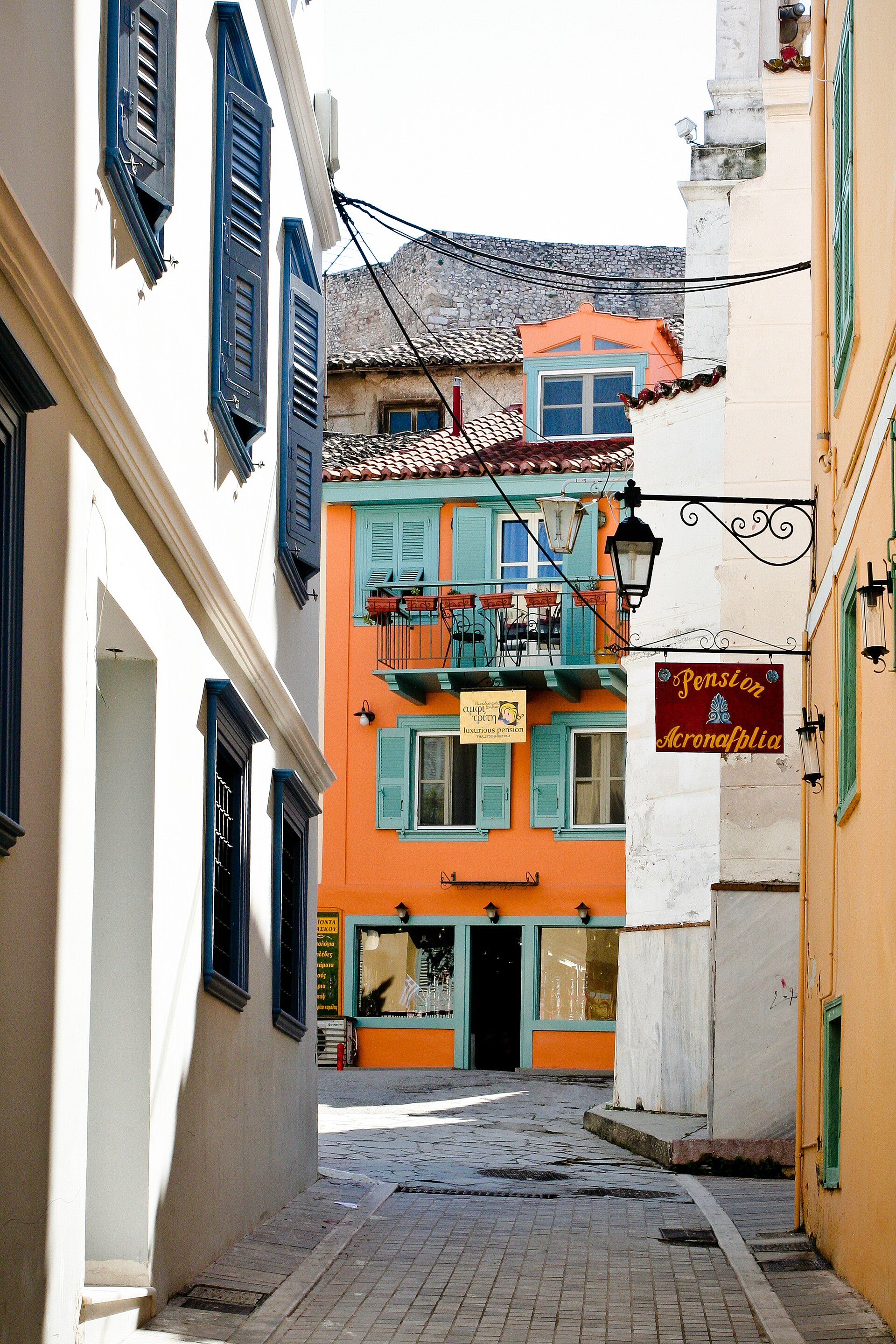
The Akronafplia peninsula represents the oldest part of the city, where the historical layering is most evident. Here lie the remains of pre-Hellenic Cyclopean walls, upon which Byzantine, Venetian and Ottoman fortifications were later grafted. Less scenic than Palamidi but equally fascinating, Akronafplia offers a panoramic walk among prickly pears and silent ruins. It was once the nerve centre of city life, before urban development shifted downhill, at the foot of the rock, giving rise to today's old town.
Syntagma Square and the Urban Living Room
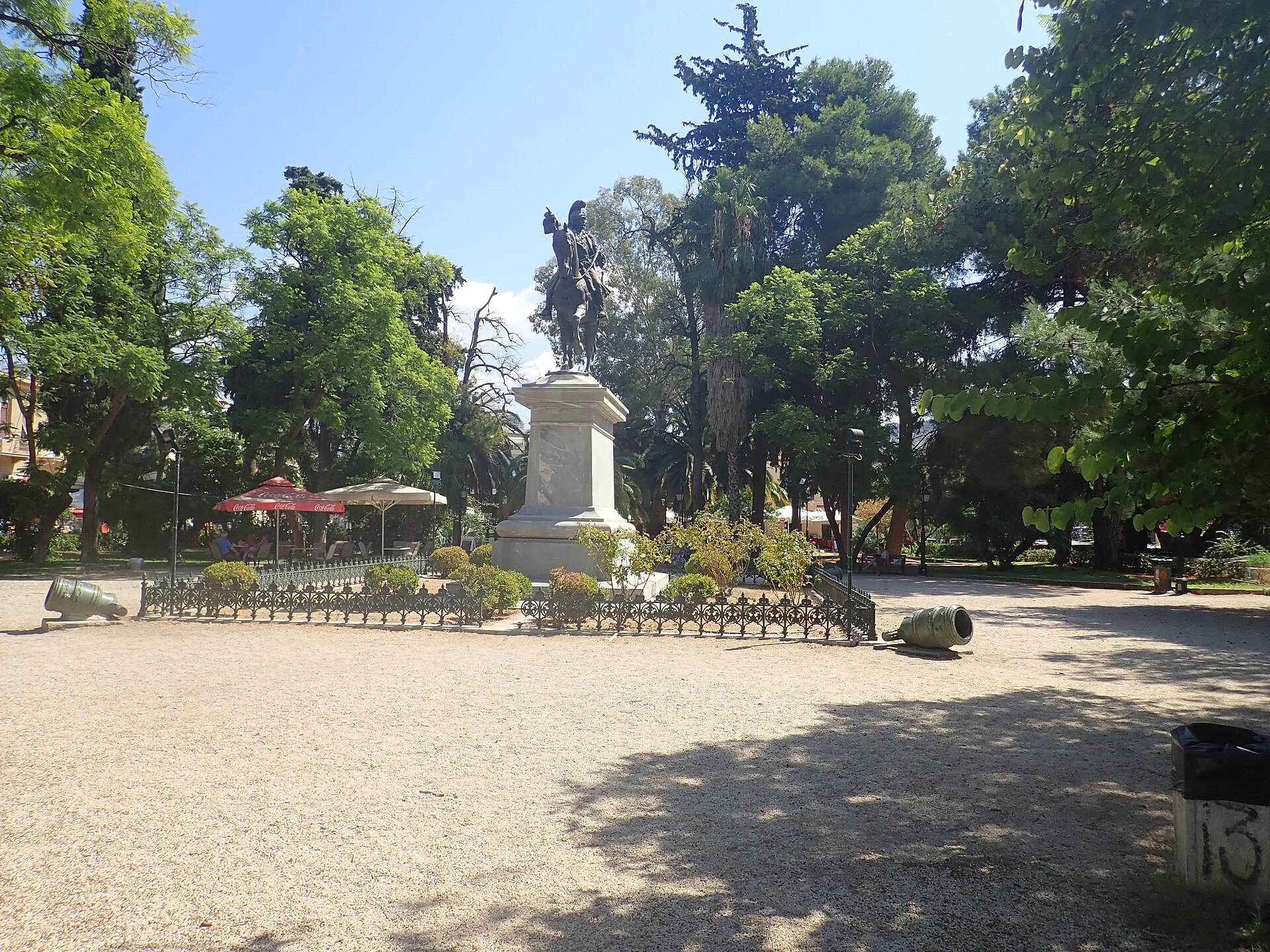
The beating heart of Nafplio is Syntagma Square (Constitution Square), a broad marble-paved space surrounded by historic buildings of great value. Here stands the imposing Venetian Arsenal, which today houses the Archaeological Museum, keeper of the famous Mycenaean armour of Dendra. Also facing the square are the former Trianon mosque, now a cultural centre, and the building that housed the first national printing press. It is the ideal place to observe the ritual of Greek coffee, seated at tables in the shade of the plane trees, while children play on the polished marble and city life flows with elegant slowness.
Saint Spyridon: the Place of Destiny
The small church of Agios Spyridon, built in 1702, holds a place of honour in Greek collective memory. It was precisely on the threshold of this temple that, on 9 October 1831, Ioannis Kapodistrias was killed by members of the Mavromichalis clan. Still today, set into the wall beside the entrance, the mark left by the bullet that ended the life of the man who sought to give a European order to the newly born Greece can be seen beneath a glass case. The church's interior, intimate and adorned with precious icons, invites silence and reflection on the fragility of political dreams.
Landscape and Nature: between Cliffs and Orange Groves
Nafplio enjoys a privileged position where the Peloponnese's limestone rock meets the sea. The Arvanitia promenade, a pedestrian path that skirts the base of the Akronafplia rock, offers spectacular glimpses of sheer cliffs and crystal-clear waters, leading to the small beach of the same name. Not far away stretches Karathona Bay, a long crescent of golden sand surrounded by eucalyptus and olive trees, perfect for those seeking a wider, better-equipped shoreline. Moving inland, the landscape quickly changes into the fertile plain of the Argolid, a sea of orange and olive groves that in spring fill the air with the scent of orange blossom.
Surroundings: the Legacy of Agamemnon and Tiryns
Staying in Nafplio means holding the keys to some of the most important archaeological sites in the world. Just 4 kilometres away lies Tiryns, with its Cyclopean walls that Homer described with awe. A little further on, majestic Mycenae evokes the myths of the House of Atreus and Agamemnon's gold mask. Less than half an hour by car brings you to the theatre of Epidaurus, famous for its perfect acoustics and set within a pine forest that in ancient times housed the sanctuary of Asclepius, god of medicine. These excursions make Nafplio the perfect base for a journey through time.
Traditions and Flavours: Komboloi and Amygdalota
Popular culture in Nafplio expresses itself in unique objects and flavours. The city is home to the world's only Komboloi Museum, dedicated to the famous worry beads once run through the fingers, a symbol of status in times past and today the object of fine craftsmanship in amber, coral or bone. At the table, Argolid cuisine triumphs with the use of excellent olive oil and fresh citrus fruits. Not to be missed are "amygdalota", almond sweets scented with rosewater, and dishes made with the freshest fish in the harbour quarter. In the evening, the taverns of Staikopoulou Street offer the chance to sample local Peloponnesian wines, such as the red Nemea.
- Climb on foot to the Fortress of Palamidi at sunset for an unforgettable view.
- Take the boat from the pier to visit the islet of Bourtzi.
- Visit the Komboloi Museum and buy a handcrafted piece.
- Walk the Arvanitia coastal path for a refreshing swim beneath the rock.
- Dine at one of the taverns hidden in the lanes of the old town, away from the harbour.
- Explore the Archaeological Museum in Syntagma Square to admire the Dendra armour.
FAQ
Quanto tempo occorre per visitare Nafplio?
Dove è meglio parcheggiare?
Nafplio è adatta ai bambini?
Qual è il periodo migliore per andare?
Getting there
- Aeroporto Internazionale di Atene (ATH) - 170 km
- La stazione ferroviaria non è attualmente operativa per treni passeggeri diretti; si consiglia il bus KTEL.
- Da Atene, percorrere l'autostrada A7 in direzione Corinto/Tripoli, uscendo per Nafplio/Argos (circa 2 ore di viaggio).
- I bus KTEL partono regolarmente dalla stazione Kifissos di Atene e sono puntuali, puliti ed economici.
Perfect for
Una base strategica per esplorare il cuore della civiltà micenea e i fasti del dominio veneziano.
Con i suoi vicoli fioriti e i tramonti sul mare, è considerata la città più romantica della Grecia continentale.
Ideale per chi cerca musei specialistici, botteghe di artigiani del cuoio e la cultura del komboloi.
To see
