

Kiato
Overlooking the cobalt waters of the Gulf of Corinth, Kiato presents itself as a luminous gateway between the sea and the mountain...
Updated 8 July 2026
This season · July · Summer
What to do in Kiato now
The story
The story of Kiato
The legacy of Sicyon: a journey through time
The history of Kiato is inextricably linked to that of ancient Sicyon (Sikyona), located on a plateau a short distance from the coast. Founded in the Mycenaean era, Sicyon became an unrivaled center of power and culture during the archaic and classical periods. It was under the tyranny of Cleisthenes that the city reached its apogee, becoming a beacon for the visual arts. Here panel painting was born, and the school of sculpture flourished that produced Lysippos, the official portraitist of Alexander the Great, as its most illustrious exponent. The city played a crucial role in Greek political affairs, oscillating between alliances with Sparta and independent stances, until its destruction and subsequent reconstruction by Demetrius Poliorcetes in 303 BC, who relocated it to a more secure acropolis to protect it from raids.
The Archaeological Park of Ancient Sicyon
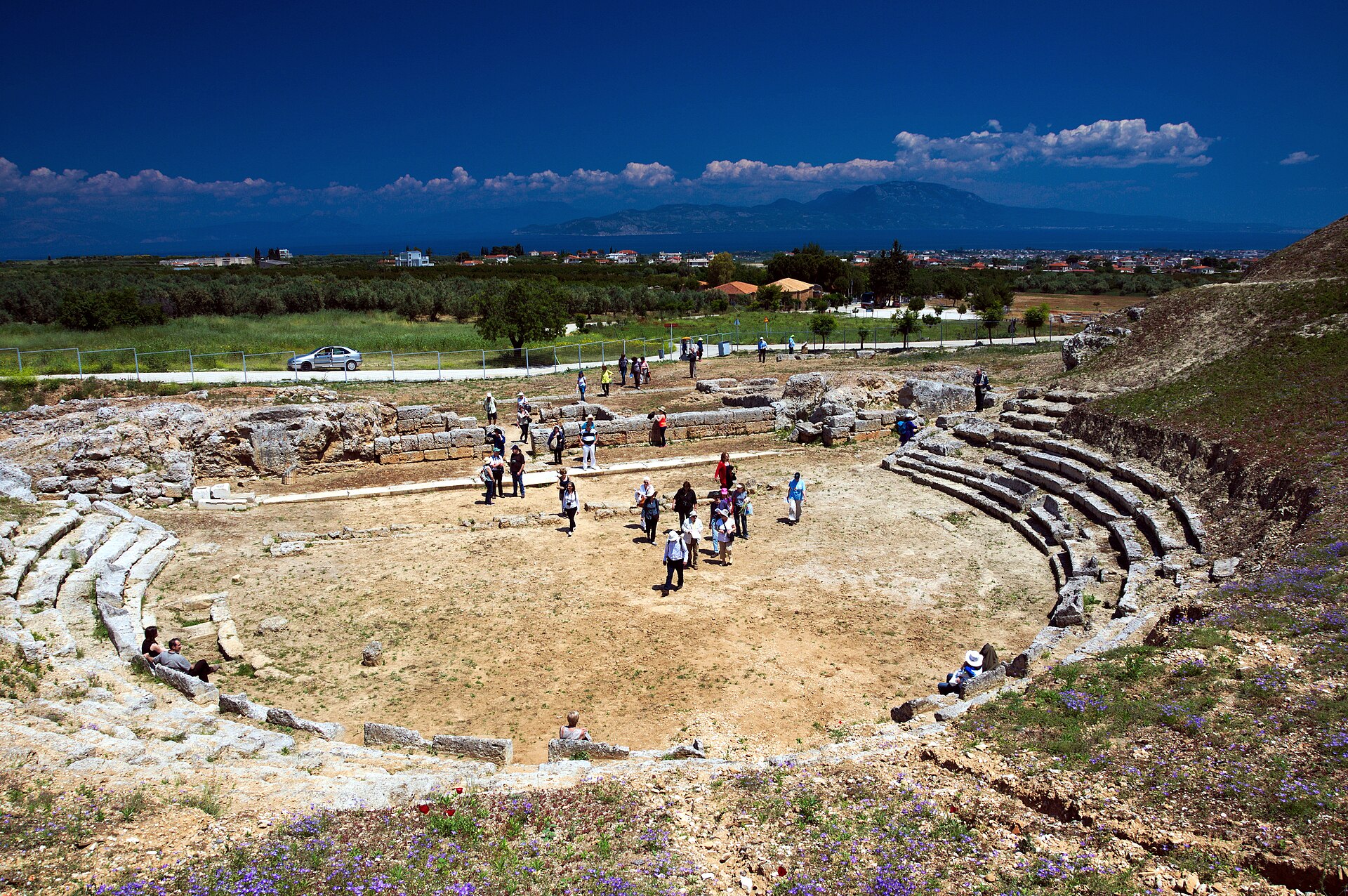
The monumental heart of the area lies about 4 kilometers from the modern center. The archaeological site of Ancient Sicyon is a natural terrace overlooking the coastal plain and the gulf. This place is not merely a repository of ancient stones, but a stage where the echo of great assemblies and athletic competitions can still be felt. The structures brought to light reveal the urban planning importance of the Hellenistic city, with wide streets and rigorous planning. Visiting Sicyon today allows one to immerse oneself in an atmosphere of rare tranquility, far from the crowds of more famous sites, while enjoying a panorama that embraces the Isthmus of Corinth and the mountains of Roumeli across the sea.
The Great Hellenistic Theatre
Among the most significant monuments, the Theatre stands out as one of the largest in ancient Greece, capable of holding up to 10,000 spectators. Built in the 3rd century BC, it impresses with its imposing cavea carved directly into the hillside. A feature that makes it unique is the presence of two vaulted underground galleries that allowed actors to reach the orchestra, a rare architectural refinement for the era. Despite the passing centuries, the structure retains prodigious acoustics and a majesty that invites contemplation of the surrounding landscape, which served as a natural backdrop for the tragedies and comedies staged there millennia ago.
The Roman Baths and the Archaeological Museum
At the foot of the acropolis lie the remains of the imposing Roman Baths, testimony to the prestige the city retained even under imperial rule. Part of this complex has been cleverly converted into the local Archaeological Museum. Inside, its rooms house a precious collection spanning from the Mycenaean period to the early Christian era. Of particular note are the mosaic floors, sculptures reminiscent of Lysippos's style, and painted ceramics that testify to the vibrancy of Sicyonian trade. Though compact, the museum offers a precise and fascinating narrative of the region's aesthetic and social evolution, making tangible the mastery of local craftsmen.
The Stadium and the Gymnasium
Not far from the theatre extend the remains of the Stadium, about 200 meters long, where athletic competitions were held in honor of the local deities. Although partially buried, its perimeter is clearly distinguishable and conveys the importance sport held in the education of Sicyon's citizens. A short distance away, the Gymnasium is arranged on two levels, connected by a monumental staircase. This space was the center of social and intellectual life, where young men not only trained their bodies but were instructed by philosophers. The monumental fountains that once adorned the area suggest an architectural luxury aimed at celebrating the wealth and culture of the polis.
The coastal landscape and the harbor
Modern Kiato develops along the coastline, offering an authentic Mediterranean experience. Its harbor is a landmark for local fishermen and for the pleasure boats that sail the Gulf of Corinth. The seafront promenade is a long walk ideal for sunset, when the sky turns pink and the lights of the coastal towns opposite begin to shimmer. The beaches, made mostly of smooth white pebbles, slope down into a crystalline, deep sea typical of this stretch of coast. It is a perfect place for those seeking clean, refreshing waters without having to face the long crossings to the islands, with the added advantage of having all the town's amenities within easy reach.
The hinterland: between Stymphalia and Ziria
Behind Kiato, the terrain rises sharply toward the mountains, offering scenery of wild beauty. One of the most evocative excursions leads to Lake Stymphalia, the setting of Hercules's sixth labor against the monstrous birds. Today the area is a protected wetland of great ecological value, dominated by the ruins of a Cistercian abbey and a modern environmental museum. Continuing on, one reaches the slopes of Mount Ziria (Cyllene), where according to myth the god Hermes was born. In winter the area becomes a small ski resort, while in other seasons it is a paradise for hikers seeking trails through fir forests and springs of the purest water.
Flavors and traditions of Corinthia
Kiato's cuisine is a mirror of its fertile land. The area is renowned throughout Greece for producing superior-quality apricots, sweet and fragrant, which in summer become the undisputed stars of the markets. No less important is grape cultivation: we are on the doorstep of the Nemea wine region, and in Kiato one can taste excellent Agiorgitiko red wines. In the seafront taverns, fresh fish from the gulf is served simply, often accompanied by local extra virgin olive oil. Also not to be missed are the 'sultanas,' the golden raisins that for decades formed the backbone of the region's rural economy.
Experiences not to be missed
- Watch a sunset from the theatre of Ancient Sicyon, with the gulf spread out before you.
- Stroll along Kiato's harbor early in the morning to watch fishermen returning with the day's catch.
- Drive the scenic road up to the village of Souli for a bird's-eye view over the citrus plain.
- Taste a glass of Nemea wine at one of the wine bars in the historic center.
- Explore the shores of Lake Stymphalia and visit the Environmental Museum to discover the local myths and nature.
- Take a refreshing swim in the deep waters of Diminio beach, just outside the center.
When to go and how to experience Kiato
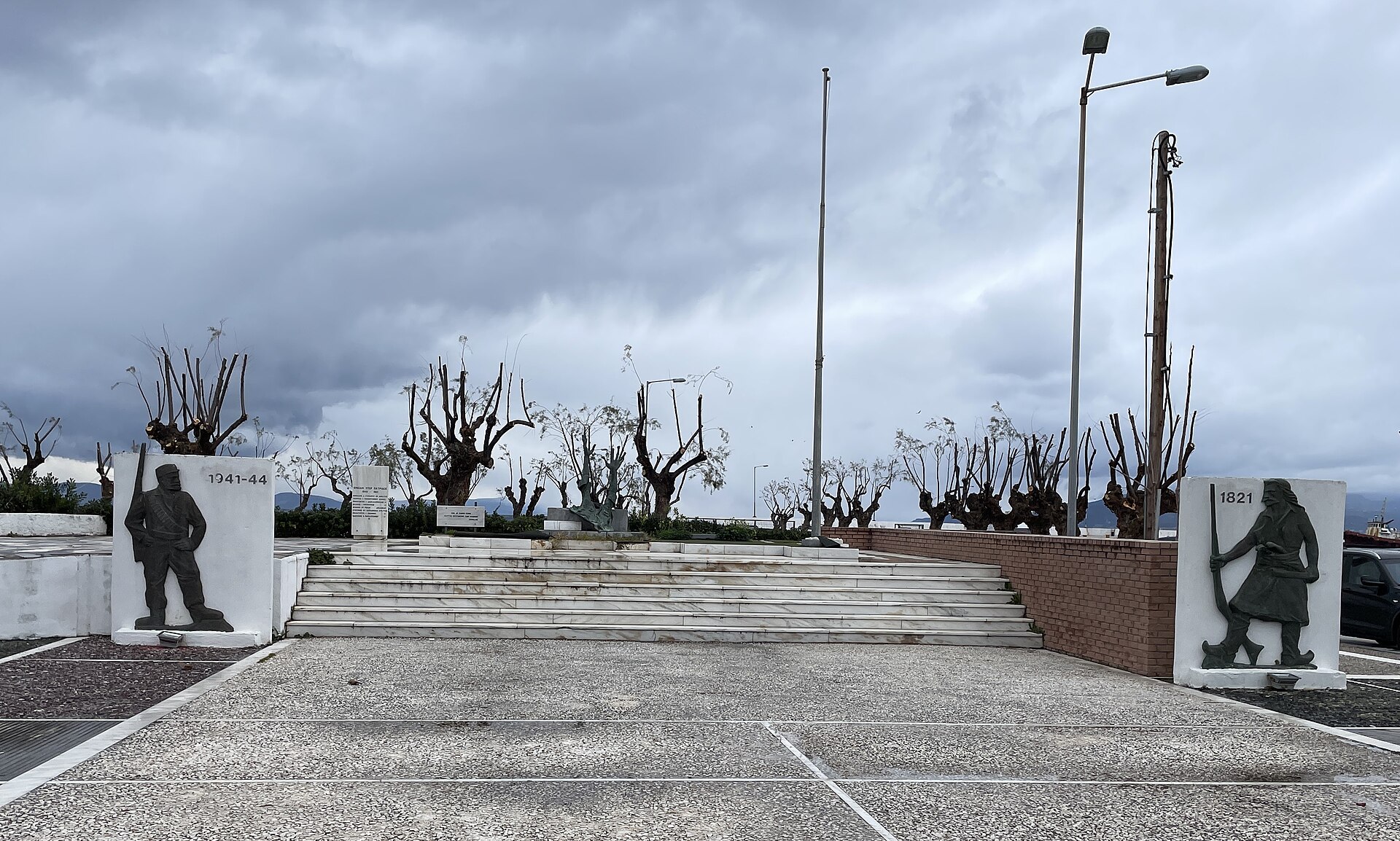
Kiato is a year-round destination, but spring and autumn offer the ideal climate for exploring the archaeological sites without the intense heat of summer. In May, the blossoming citrus groves wrap the town in an intoxicating fragrance. Summer is perfect for those wishing to combine culture with seaside life, taking advantage of lively evenings along the promenade. Winter, on the other hand, makes Kiato an excellent base for those who want to ski on Mount Ziria while still sleeping near the coast. To fully experience the place, it is advisable to move slowly, stopping at local markets and following the rhythms of the locals, for whom morning coffee and the evening stroll are the pivotal moments of the day.
FAQ
Quanto tempo occorre per visitare Kiato e l'Antica Sicione?
Kiato è adatta alle famiglie con bambini?
È facile parcheggiare vicino al sito archeologico?
La città è collegata bene con Atene?
Getting there
- Aeroporto Internazionale di Atene Eleftherios Venizelos (ATH) - 120 km
- Linea Proastiakos da Atene e dall'Aeroporto, capolinea stazione di Kiato.
- Autostrada A8 (Atene-Patrasso), uscita Kiato. Circa 1 ora e 15 minuti da Atene.
- Il treno è il mezzo più comodo e panoramico per arrivare dal centro di Atene senza lo stress del traffico.
Perfect for
Un tuffo nella storia di una delle polis più raffinate della Grecia, tra teatri imponenti e scuole di scultura classiche.
Dalle spiagge del Golfo alle vette della Ziria, passando per le zone umide mitologiche del Lago Stinfalo.
Il regno dell'albicocca e dell'uva sultanina, a un passo dalle celebri cantine vinicole di Nemea.
To see
Da vedere a Kiato
Routes · Trovido Route
