

Kardhamili
Nestled along the jagged coastline of Messenia, where the deep blue of the Messenian Gulf meets the steep slopes of Mount Taygetus...
Updated 8 July 2026
This season · July · Summer
What to do in Kardhamili now
The story
The story of Kardhamili
A thousand-year history: from myth to independence
The history of Kardamyli has its roots in myth. As mentioned by Homer, it was already a strategic port in the Mycenaean era, serving as a sea outlet for the mighty Sparta through the passes of the Taygetus. During the Byzantine and Venetian periods, the town retained its importance as a defensive outpost, but it was in the 18th and 19th centuries that Kardamyli became one of the strongholds of Greek resistance against Ottoman occupation. Here lived the powerful Troupakis-Mourtzinos family, who played a crucial role in preparing the Greek War of Independence of 1821. It was within these very walls that the legendary hero Theodoros Kolokotronis planned the first moves of the uprising. The architecture of the place reflects this warlike past: the tower houses were not simple dwellings, but true private fortresses designed to withstand sieges and family feuds, typical of Maniot culture.
The Old Town (Palaia Kardamyli)
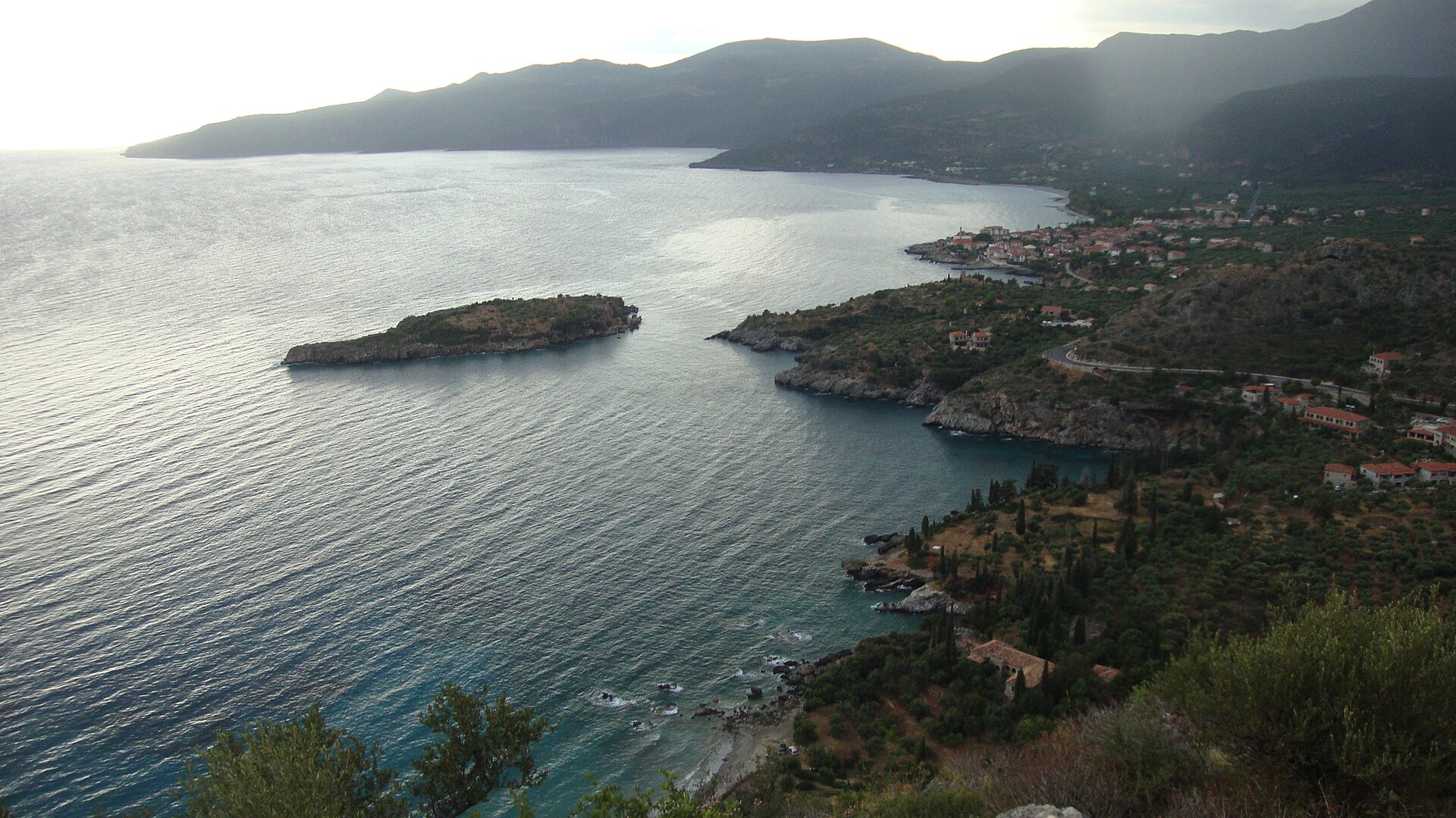
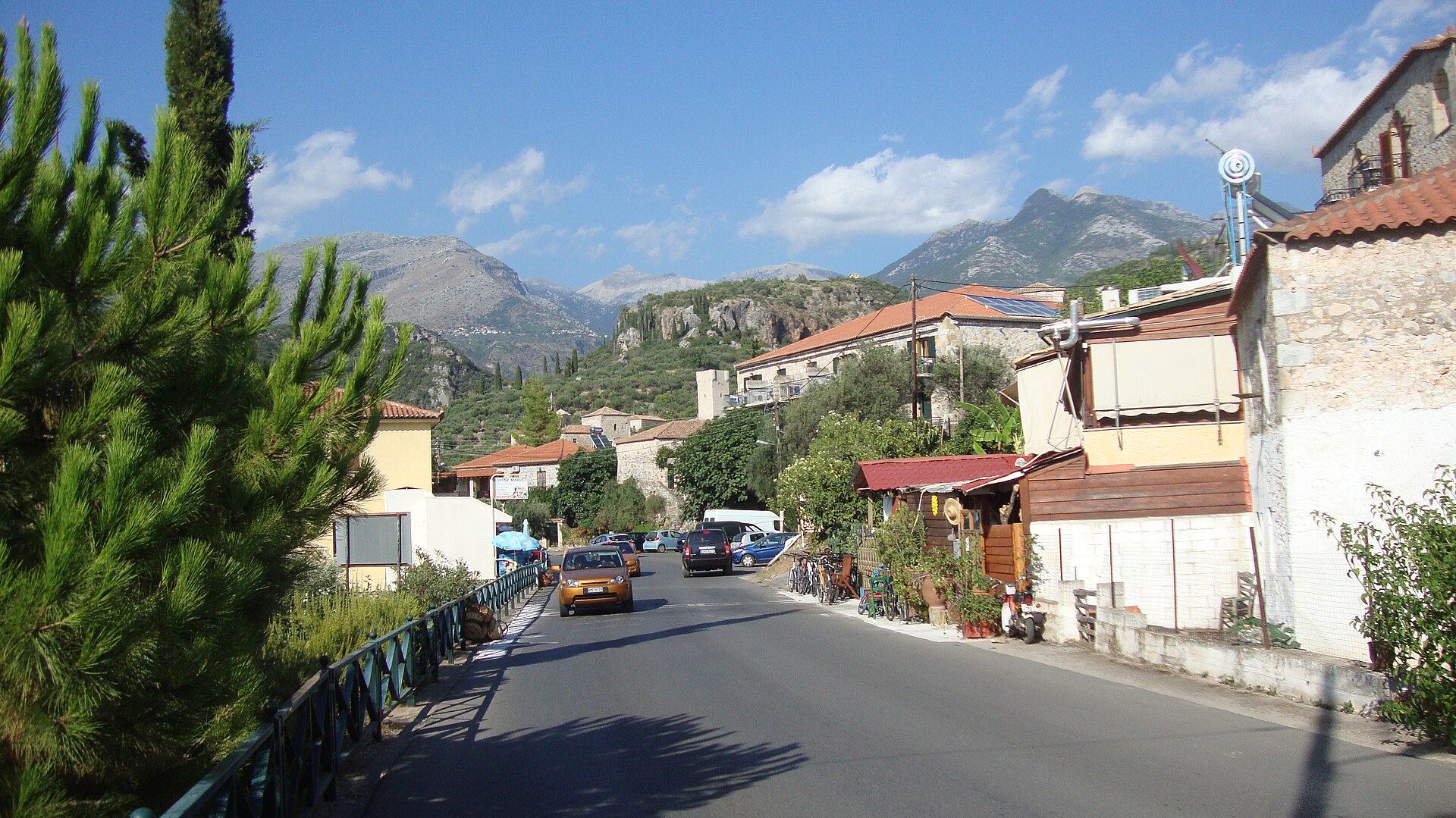
Set on a small hill overlooking the modern harbour, the Old Town is a fortified complex of extraordinary charm. It is a settlement of carefully restored tower houses that offer a vivid glimpse of life in medieval and modern Mani. Walking among these ochre-coloured stone walls, surrounded by cypresses and prickly pears, means taking a leap back in time. The central core is dominated by the Mourtzinos family complex, but every corner reveals fascinating architectural details, such as small arches, arrow slits and carved portals that tell of an era in which security was the absolute priority.
The Mourtzinos Fortified Complex
The beating heart of the Old Town is the Troupakis-Mourtzinos tower-castle. This monument, now transformed into an excellent museum, allows visitors to explore a typical Maniot noble residence. The complex includes the main tower, a private chapel, an olive press and several service buildings, all enclosed within defensive walls. Inside, the exhibits explain the social organisation of the region, based on clans and territorial defence. It is an essential place for understanding how the harsh geography of the Peloponnese shaped the indomitable character of its inhabitants and their architecture, unique in the world.
The Church of Agios Spyridon
Adjacent to the Mourtzinos castle stands the Church of Agios Spyridon, one of the most beautiful religious buildings in Messenia. Built in the 18th century, the church is striking for its imposing multi-tiered bell tower, decorated with refined stone reliefs showing Byzantine and Venetian influences. The interior, though sober, retains an atmosphere of deep spirituality. The peculiarity of this church lies in its role as the family chapel of the local lords, serving as a visible symbol of their power and devotion, perfectly set within the surrounding rocky landscape.
The Tombs of the Dioscuri
Just outside the village, carved directly into the rock face, are the so-called Tombs of the Dioscuri. According to local legend, this is where Castor and Pollux, the twin sons of Zeus and Leda, would rest. Although the mythological attribution is more evocative than historical — the tombs probably date back to the Hellenistic or Roman period — the site exudes an archaic fascination. These are two rectangular burial chambers cut with precision into the rock, bearing witness to the continuity of human settlement in Kardamyli since ancient times and the deep bond between this land and classical mythology.
Patrick Leigh Fermor's House
Immersed in an olive grove overlooking the sea in the Kalamitsi area, the villa of writer Patrick Leigh Fermor is today one of the most beloved attractions. Designed by Fermor himself together with the architect Nikos Hadjimichalis, the house is a masterpiece of landscape integration, built with local materials and inspired by Byzantine monasteries and Maniot towers. Donated to the Benaki Museum, the house is open to the public for guided tours that allow visitors to admire the study where the writer composed his masterpieces, the shady loggia and the garden sloping down towards a private cove. It is a place of absolute peace, which explains better than a thousand words why so many artists chose Kardamyli as their muse.
The Vyros Gorge and Mount Taygetus
Behind Kardamyli lies the majestic Vyros Gorge, a deep canyon carved by the stream that flows down from the peaks of the Taygetus. This is a hiker's paradise: the paths, once used to connect the coast with the hinterland and its isolated monasteries, wind between limestone walls, oak woods and ancient stone bridges. Walking through the gorge means immersing yourself in a wild, silent nature, where you can discover small Byzantine chapels set into the rocks, such as that of Agios Georgios. The contrast between the harshness of the mountains and the closeness of the sea is one of the elements that makes the Kardamyli landscape so unique and dramatic.
Beaches and coastline: between pebbles and turquoise waters
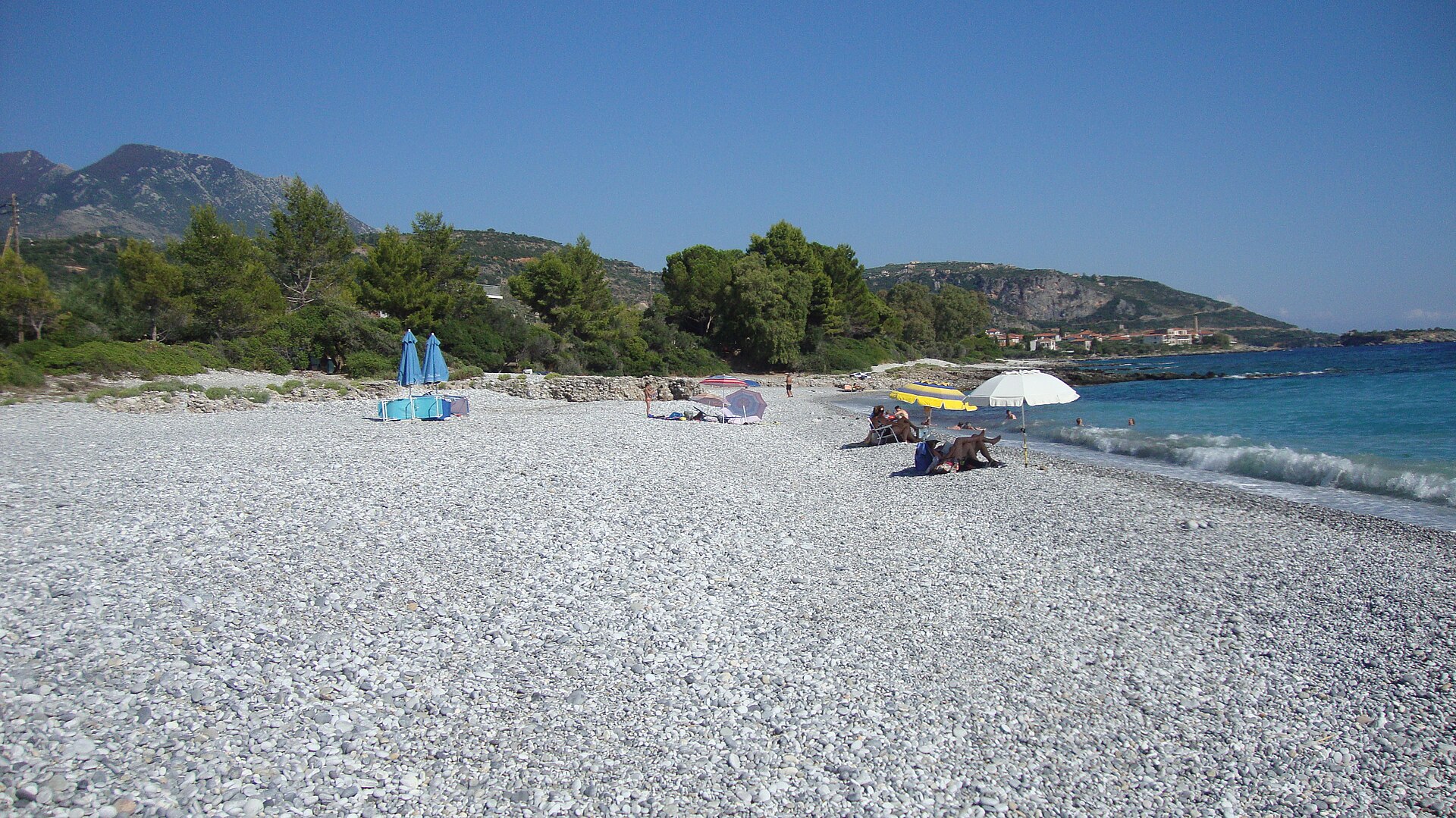
The beaches of Kardamyli do not offer golden sand, but smooth white pebbles that make the water appear almost unreally clear. The main beach is Ritsa, located north of the village, wide and served by a few shady taverns. For those seeking more intimate spots, Foneas beach, with its iconic central rock for diving, and the nearby Delfinia, surrounded by dense pine woods, offer postcard-perfect scenery. These coves are ideal for snorkelling, thanks to their rocky seabeds rich in marine life, and retain a wild appearance, far from the chaos of the more commercial beach resorts.
Traditions, flavours and Maniot culture
The cuisine of Kardamyli is a hymn to simplicity and the quality of local ingredients. The undisputed star is the extra virgin olive oil from the Koroneiki and Kalamata varieties, considered among the best in the world. Among the typical dishes not to be missed are 'siglino' (pork smoked with aromatic herbs), 'lalagia' (crispy fried strips of dough) and savoury pies with wild mountain herbs. The local culture is still steeped in a strong sense of honour and hospitality; it is not unusual to witness village festivals where the traditional music of the Mani accompanies dances handed down through generations, celebrating an unbreakable bond with one's own land.
- Explore the Old Town on foot at sunset, when the stone turns pink.
- Follow the trails of the Vyros Gorge up to the monastery of Lykaki.
- Book a visit to Patrick Leigh Fermor's House to breathe in the literary atmosphere of the place.
- Take a dip in the emerald waters of Foneas beach.
- Dine at one of the seafront taverns, tasting fresh fish and local olive oil.
- Visit the nearby fishing village of Agios Nikolaos for a coffee at the harbour.
When to go and how to experience Kardamyli
The best time to visit Kardamyli is spring (April-June) or early autumn (September-October). In spring, nature bursts into a riot of wildflowers and the climate is perfect for hiking in the Taygetus, while in September the sea water is still warm and the summer crowds have thinned out. Summer is hot but breezy, ideal for those seeking a purely seaside holiday. To fully experience the place, forget the car once you arrive: Kardamyli is best discovered on foot, following the slow rhythm of days that begin with a breakfast overlooking the sea and end with a stroll among the towers of the old town under an incredibly clear, starry sky.
FAQ
È adatta alle famiglie con bambini?
Dove posso parcheggiare?
Quanto tempo serve per visitarla?
Serve l'auto per muoversi?
Getting there
- Aeroporto di Kalamata (KLX) - 45 km
- Non ci sono linee ferroviarie dirette; la stazione più vicina è a Corinto, poi si prosegue in bus o auto.
- Da Atene, prendere l'autostrada A7 verso Kalamata, poi seguire la strada costiera panoramica verso sud in direzione Mani/Areopoli.
- La strada da Kalamata a Kardhamili è molto panoramica ma piena di curve; guidate con prudenza e godetevi il panorama.
Perfect for
Un luogo di culto per i lettori di Patrick Leigh Fermor e per chi cerca ispirazione intellettuale.
Punto di partenza ideale per esplorare la Gola di Vyros e i sentieri del Taigeto.
Un esempio perfetto di architettura fortificata maniota e storia dell'indipendenza greca.
To see
