

Arkhaia Olimbia
Imagine a silent valley, where the murmur of the Alfeios and Kladeos rivers blends with the rustle of Aleppo pines and centuries-o...
Updated 8 July 2026
This season · July · Summer
What to do in Arkhaia Olimbia now
The story
The story of Arkhaia Olimbia
A millennia-old legacy: the history of the sanctuary
Olympia's origins reach back into the second millennium BC, initially as a place of worship for earth and fertility deities. However, it was in the 10th century BC that the site began to take shape as a center dedicated to Zeus. The watershed date is 776 BC, the year in which, according to tradition, the first official Olympic Games were held. From that moment, Olympia became the hub of the Panhellenic world, unifying often-warring city-states under the aegis of the 'Ekecheiria', the sacred truce. During the golden centuries of classical Greece, the sanctuary was enriched with extraordinary monuments, attracting not only athletes but also poets such as Pindar and historians such as Herodotus. Even under Roman rule, Olympia retained immense prestige, enjoying the favor of emperors such as Hadrian and Nero. Its decline began in the 4th century AD, when Emperor Theodosius I banned the games, considering them pagan rites. Devastating earthquakes and the flooding of the Alfeios and Kladeos rivers covered the site with meters of silt, paradoxically preserving it until the systematic excavations began in the 19th century.
The Temple of Zeus: home of a god
The architectural and spiritual heart of the sanctuary was the majestic Temple of Zeus, built between 470 and 456 BC by the architect Libon of Elis. This Doric peripteral building represented the pinnacle of the classical architectural order in proportion and visual power. Although its colossal column drums now lie on the ground, toppled by earthquakes, its grandeur is still palpable. Inside was housed one of the Seven Wonders of the Ancient World: the chryselephantine (gold and ivory) statue of Zeus, the work of the celebrated sculptor Phidias. The god was depicted seated on a throne, so immense that, as contemporaries wrote, had he stood up he would have lifted off the roof. The temple's pediments, now on display in the local museum, depict the mythical chariot race between Pelops and Oenomaus and the battle of the Centaurs against the Lapiths, symbols of civilization's triumph over barbarism.
The Stadium: where the myth was born
Crossing the crypt, the evocative vaulted corridor leading to the Stadium, is a breathtaking experience for every traveler. The Stadium of Olympia, in its current form dating back to the 5th century BC, is a rectangle of packed earth surrounded by grassy embankments that could hold up to 45,000 spectators. There were no stone seats, except for the judges of the games, the Hellanodikai. What makes this place unique is the survival of the starting and finishing lines, the 'balbides', stone slabs with grooves for the athletes' feet. Here the 'stadion' was run, a sprint race of about 192 meters. Feeling the silence of the valley while imagining the roar of the crowd and the labored breathing of the runners is the most direct way to understand the Greek agonistic spirit, intended not merely as physical effort but as moral elevation before the gods.
The Heraion: the oldest temple and the Olympic flame
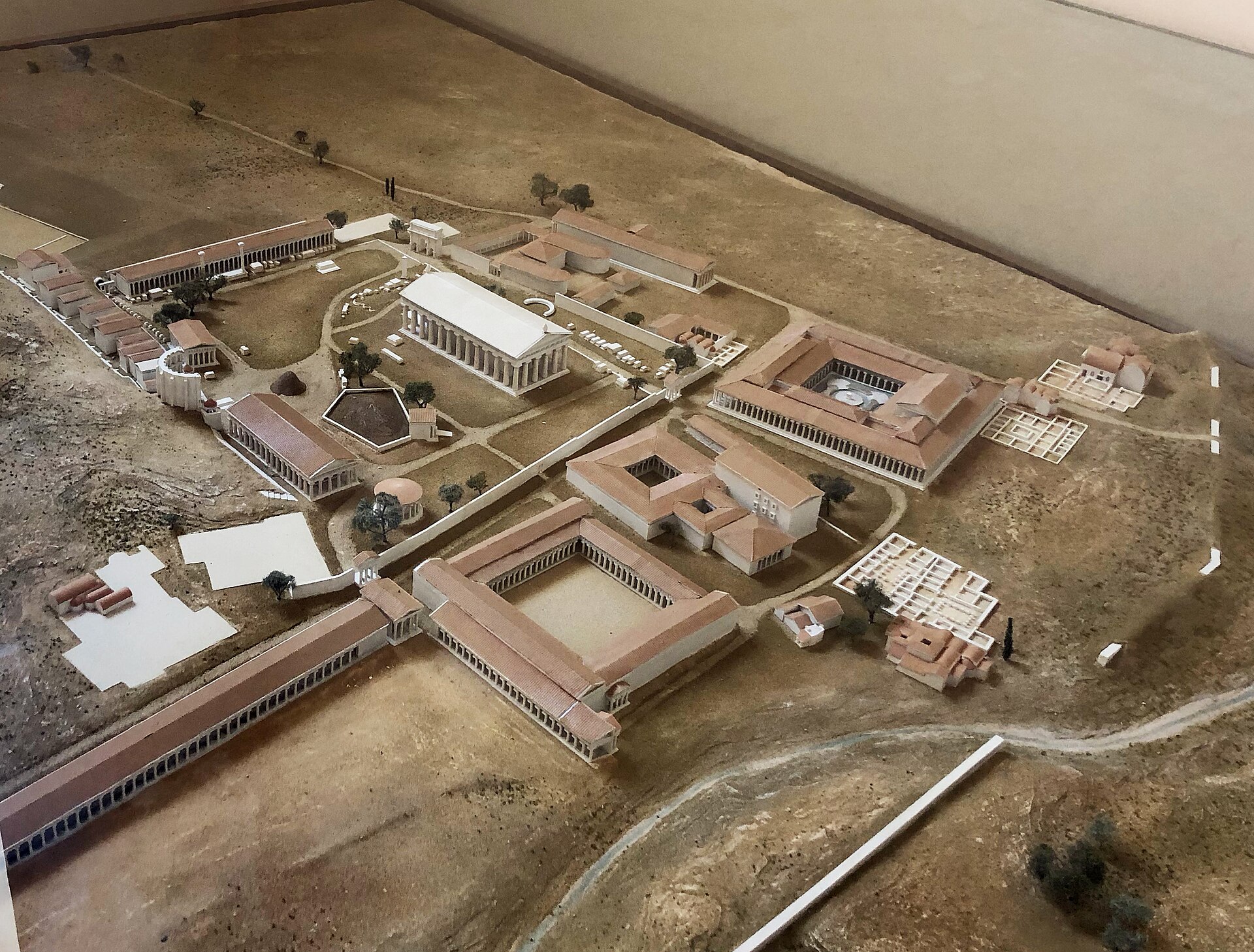
A short distance from the Temple of Zeus stands the Heraion, dedicated to the goddess Hera. Built around 600 BC, it is one of the oldest Doric temples in Greece. Its distinctive feature lies in the fact that its original wooden columns were gradually replaced with stone columns over the centuries, creating a living catalogue of the evolution of the Doric style. Today, this place is famous the world over for a ceremonial reason: it is precisely in front of the altar of Hera that the Olympic flame of the modern games is lit, using a parabolic mirror that concentrates the sun's rays. Seeing the ruins of the Heraion means standing at the exact spot where the sacred fire begins its journey to the world, an unbroken bridge between antiquity and the present day.
The Philippeion and the Leonidaion
Among the most elegant structures on the site, the Philippeion stands out as the only circular building located within the Altis, the sacred precinct. It was begun by Philip II of Macedon after the Battle of Chaeronea and completed by his son, Alexander the Great. This Ionic monument with 18 columns was intended to celebrate the Macedonian dynasty, marking a turning point in which the self-glorification of rulers entered sacred space. A little further south lies the Leonidaion, the largest building in the sanctuary. Built in the 4th century BC and financed by Leonidas of Naxos, it served as a luxury guesthouse for the distinguished guests and dignitaries who arrived in Olympia during the games. Its structure, arranged around a central courtyard with a peristyle, anticipates the layout of the great Roman villas.
The Archaeological Museum of Olympia
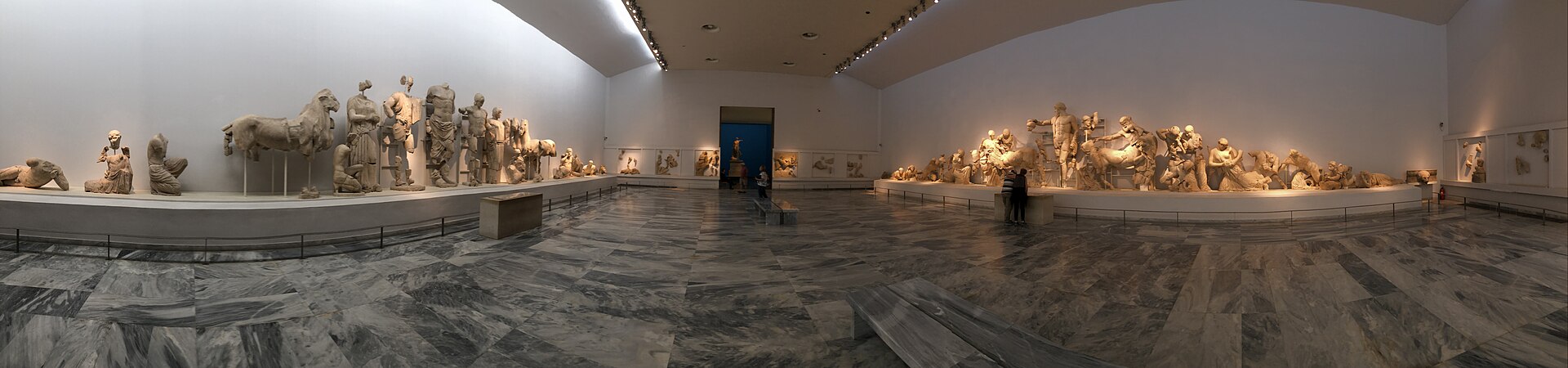
No visit can be considered complete without exploring the Archaeological Museum, located a short distance from the site. It is regarded as one of the most important museums in Greece for the quality of its collections. The central hall houses the imposing sculptural decorations of the Temple of Zeus, masterpieces of the 'severe style'. But the true star of the show is the Hermes with the infant Dionysus, a work attributed to Praxiteles: the perfection of the marble's rendering and the delicacy of movement make this statue an absolute icon of universal art. No less thrilling is the Nike of Paionios, which still seems to descend in flight from its pedestal. The museum also holds the helmet of Miltiades, the general who won at Marathon, offered as a votive gift to Zeus, an object that instantly narrows the distance between us and the great events of history.
The landscape of Elis and the Hill of Kronos
The landscape surrounding Ancient Olympia is an integral part of its magic. The site is dominated by the Hill of Kronos, a modest pine-covered rise that in antiquity was considered the dwelling of Zeus's father. The vegetation is lush, thanks to the presence of the Alfeios and Kladeos rivers, which converge right here. This microclimate makes the area unusually green compared to the typical dryness of Greek summers. Walking along the riverbanks, in the shade of giant plane trees, offers moments of cool relief and allows visitors to observe the nature that, for centuries, has protected and concealed the ruins. The hinterland of Elis is a succession of gentle hills planted with olive groves and vineyards, an authentic rural landscape where the rhythm of life still seems dictated by the seasons and the work of the fields.
Traditions, flavors and hospitality
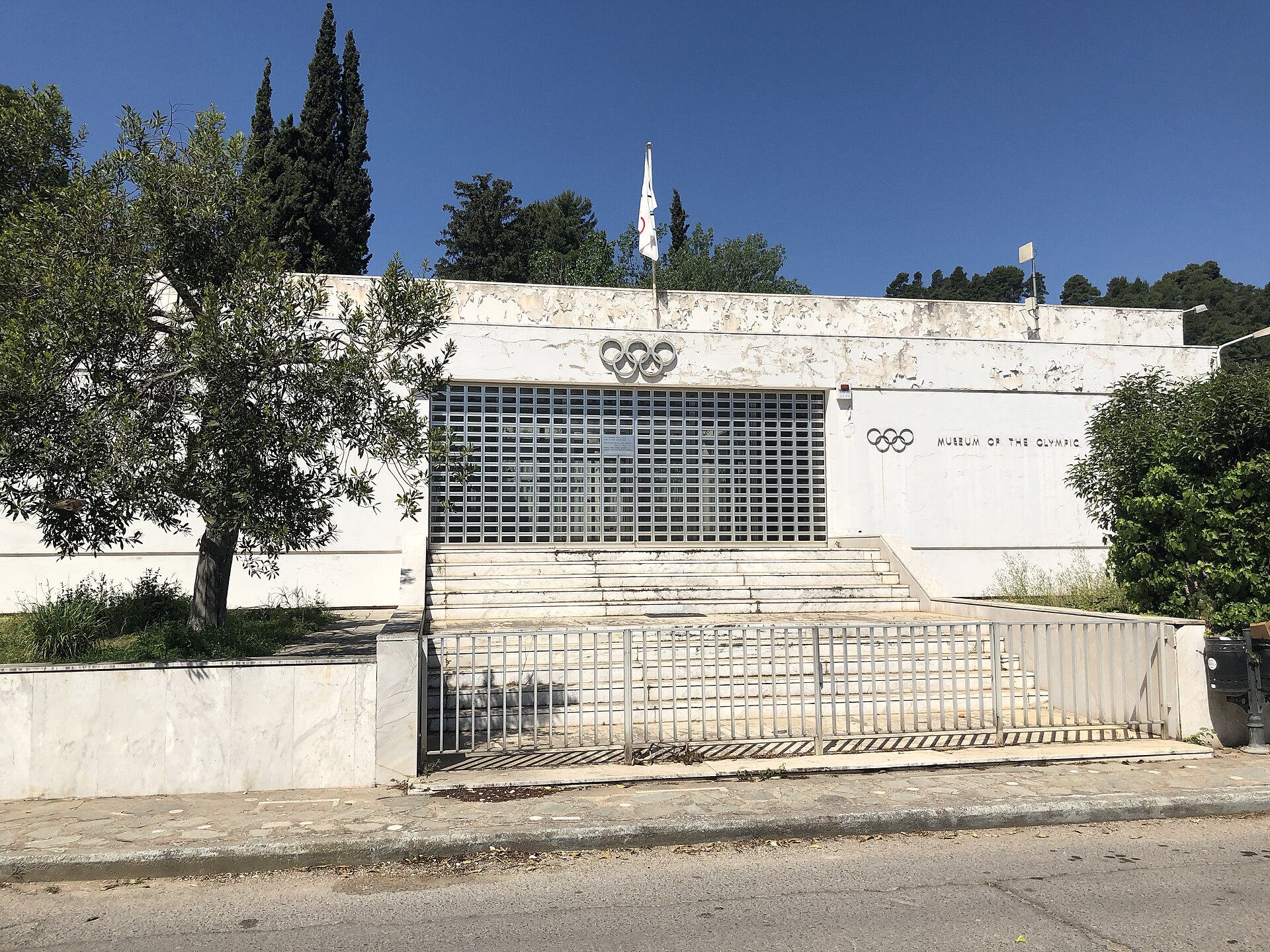
The modern town of Olympia lives in symbiosis with its past, yet retains a lively spirit. The area's culinary traditions reflect the generosity of the Peloponnesian land. Here, extra virgin olive oil is an institution, with an intense, fruity flavor. In the local taverns, it is a must to try 'spit-roasted pork' or lamb dishes, accompanied by the wines of Elis, which boast a millennia-old history. Thyme honey and dried figs are the sweet offerings of this land. Every year, the ceremony of lighting the Olympic flame attracts delegations from around the world, transforming the town into a global crossroads of cultures. Besides the archaeological museums, it is worth visiting the Museum of the History of the Ancient Olympic Games and the Museum of the Modern Olympic Games, to understand how an idea born here almost three thousand years ago continues to inspire humanity.
Experiences not to be missed
- Run on the track of the ancient Stadium, starting from the original 'balbides'.
- Admire the perfection of the Hermes of Praxiteles in the Archaeological Museum.
- Witness the Olympic flame lighting ceremony (if your visit coincides with the event).
- Stroll at sunset among the columns of the Gymnasium and the Palaestra.
- Sample local wines at one of Elis's historic wineries.
- Explore the remains of the Workshop of Phidias, where the statue of Zeus was created.
When to go and how to experience the place
To fully enjoy the beauty of Olympia, the best periods are spring and autumn. From April to June, the site bursts into wildflowers and the climate is ideal for long outdoor walks. September and October offer warm colors and mild temperatures, with fewer crowds than the summer months. If you visit the site in summer, it is advisable to arrive at opening time, 8:00 a.m., to avoid the intense midday heat and enjoy the raking light that enhances the architectural forms. Set aside at least half a day for the archaeological site and a couple of hours for the main museum. Olympia is not a hit-and-run destination: it deserves an evening stay to breathe in the village's tranquil atmosphere and enjoy dinner beneath the stars in one of its shaded squares.
FAQ
Quanto tempo serve per visitare il sito e il museo?
Il sito è accessibile a chi ha difficoltà motorie?
È possibile parcheggiare vicino all'area archeologica?
Si possono scattare foto all'interno del museo?
Getting there
- Araxos (GPA) - 75 km
- Atene (ATH) - 290 km
- Linea locale da Pyrgos (circa 20 minuti di viaggio).
- Da Atene si percorre l'autostrada verso Corinto e poi verso Patrasso o Tripoli/Pyrgos. Da Patrasso si scende lungo la costa occidentale (E55) fino a Pyrgos, seguendo poi le indicazioni per Olympia.
- Se arrivate in auto da Atene, la strada via Tripoli offre panorami spettacolari sulle montagne del Peloponneso.
Perfect for
Uno dei siti più importanti al mondo per comprendere l'età classica e l'origine dei Giochi Olimpici.
Un luogo carico di energia sacra, dove la tregua olimpica e il culto di Zeus hanno plasmato la cultura greca.
La valle dell'Alfeo offre un paesaggio rigoglioso e sereno, perfetto per chi cerca una pausa rigenerante nel verde.
To see
What to see in Arkhaia Olimbia
Routes · Trovido Route
