

Arkhaia Korinthos
Climbing up the slopes of the imposing Acrocorinth, Arkhaia Korinthos — Ancient Corinth — is not merely an archaeological site, bu...
Updated 8 July 2026
This season · July · Summer
What to do in Arkhaia Korinthos now
The story
The story of Arkhaia Korinthos
A history of trade, conquest and rebirth
The history of Corinth is inextricably linked to its geographical position. Thanks to control of the diolkos, the paved ramp that allowed ships to be dragged from one sea to the other, avoiding the long voyage around the Peloponnese, the city amassed immense wealth. After its golden age under the tyrants Cypselus and Periander, Corinth became Athens' chief commercial rival. However, the city's fate took a tragic turn in 146 BC, when the Roman consul Lucius Mummius razed it to the ground to punish the Achaean League. For a century it remained a heap of rubble, until Julius Caesar, sensing its strategic value, refounded it as Colonia Laus Iulia Corinthiensis. This new Corinth became a cosmopolitan metropolis, a Roman administrative center and a meeting point between eastern and western cultures, before passing through Byzantine, Frankish, Venetian and Ottoman rule, each of which left an indelible mark on the walls of Acrocorinth.
The Temple of Apollo: sentinel of antiquity
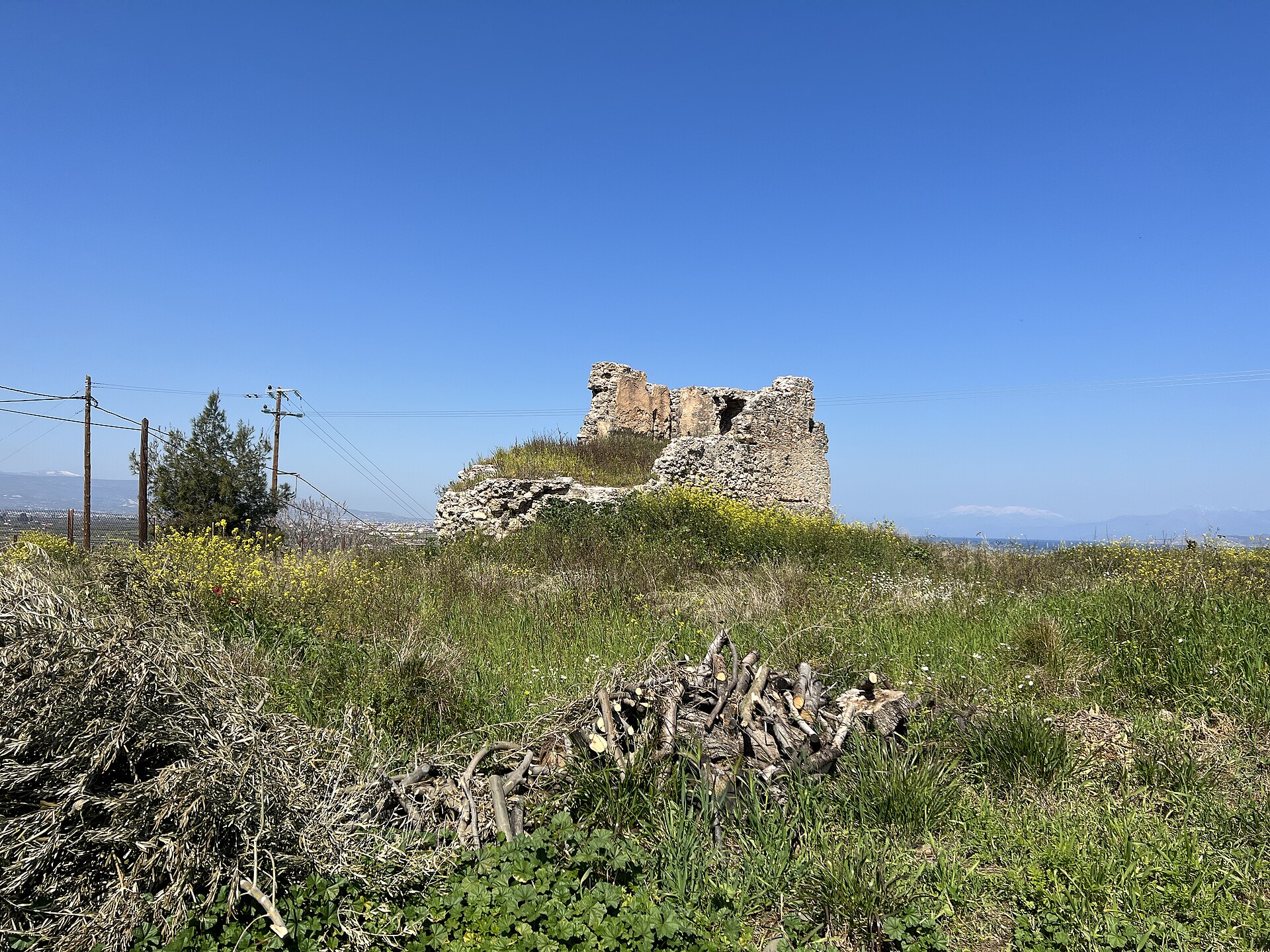
The iconic monument of Arkhaia Korinthos is undoubtedly the Temple of Apollo, built around 540 BC on a rise overlooking the agora. What makes it extraordinary, beyond its antiquity, is its construction technique: the seven Doric columns that still rise against the sky today are monolithic, that is, carved from a single block of local limestone, unlike most Greek temples made of stacked drums. Originally the temple had 38 columns, and its massive structure reflects the power of archaic Corinth. Observing it at sunset, when the stone turns ochre, one senses the solemnity of a place that has withstood earthquakes and pillaging, remaining the only prominent vertical element bearing witness to the city's greatness before the Roman conquest.
The Bema and the passage of Saint Paul
In the heart of the Roman Forum stands the Bema, a large raised platform of blue and white marble from which magistrates addressed the crowd and administered justice. This place holds fundamental importance not only archaeologically but also religiously: according to the Acts of the Apostles, it was here that Saint Paul was brought before the proconsul Gallio in 51 AD, accused by his detractors of teaching a religion contrary to the law. Gallio's refusal to judge purely theological matters allowed Paul to continue his mission, making Corinth one of the most significant centers of early Christianity. Today the Bema is a pilgrimage destination from all over the world, representing the exact spot where classical philosophy and the new Christian faith clashed and conversed.
The Peirene Fountain: a gift from the gods
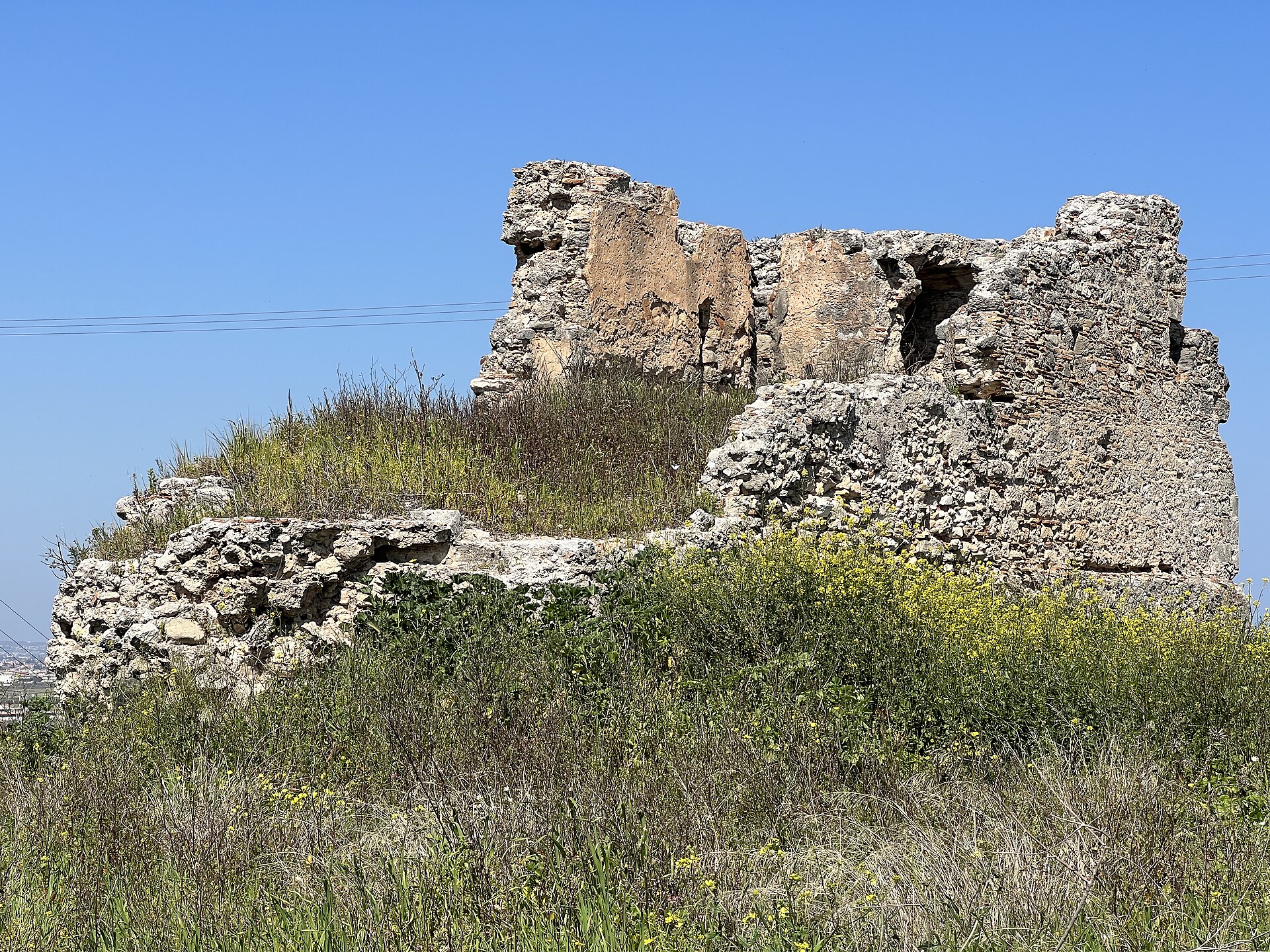
Descending toward the lower part of the settlement, one comes across the Peirene Fountain, the most famous water system of the ancient city. Legend has it that the spring arose from the tears of the nymph Peirene, grieving over the loss of her son. Architecturally, the fountain is a masterpiece of hydraulic engineering that evolved over the centuries: from simple Greek basins it grew into a monumental Roman façade with six arches giving access to pools of fresh water. The walls were decorated with frescoes depicting marine scenes, and the whole complex served as a lush public nymphaeum. Even today it is possible to admire the complexity of the underground channels that carried water from the bowels of the earth into the heart of the metropolis, ensuring citizens' survival even during long sieges.
Acrocorinth: the fortress among the clouds
Towering over the archaeological site at a height of 575 meters, Acrocorinth is one of the most spectacular acropolises in all of Greece. This fortified citadel is a palimpsest of military history: its walls, nearly two kilometers long, show layers ranging from the Mycenaean period to Venetian and Ottoman reconstructions. Climbing to the summit is an unmissable experience, not only to visit the remains of the Temple of Aphrodite (where sacred prostitution was once practiced), but to enjoy a view stretching from the Isthmus to the mountains of Parnassus. The fortress is defended by three tiers of monumental gates, and inside one walks among the ruins of Byzantine churches, mosques and medieval cisterns, immersed in wild nature that has reclaimed the once-inaccessible ramparts.
The Archaeological Museum and the treasures of Corinth
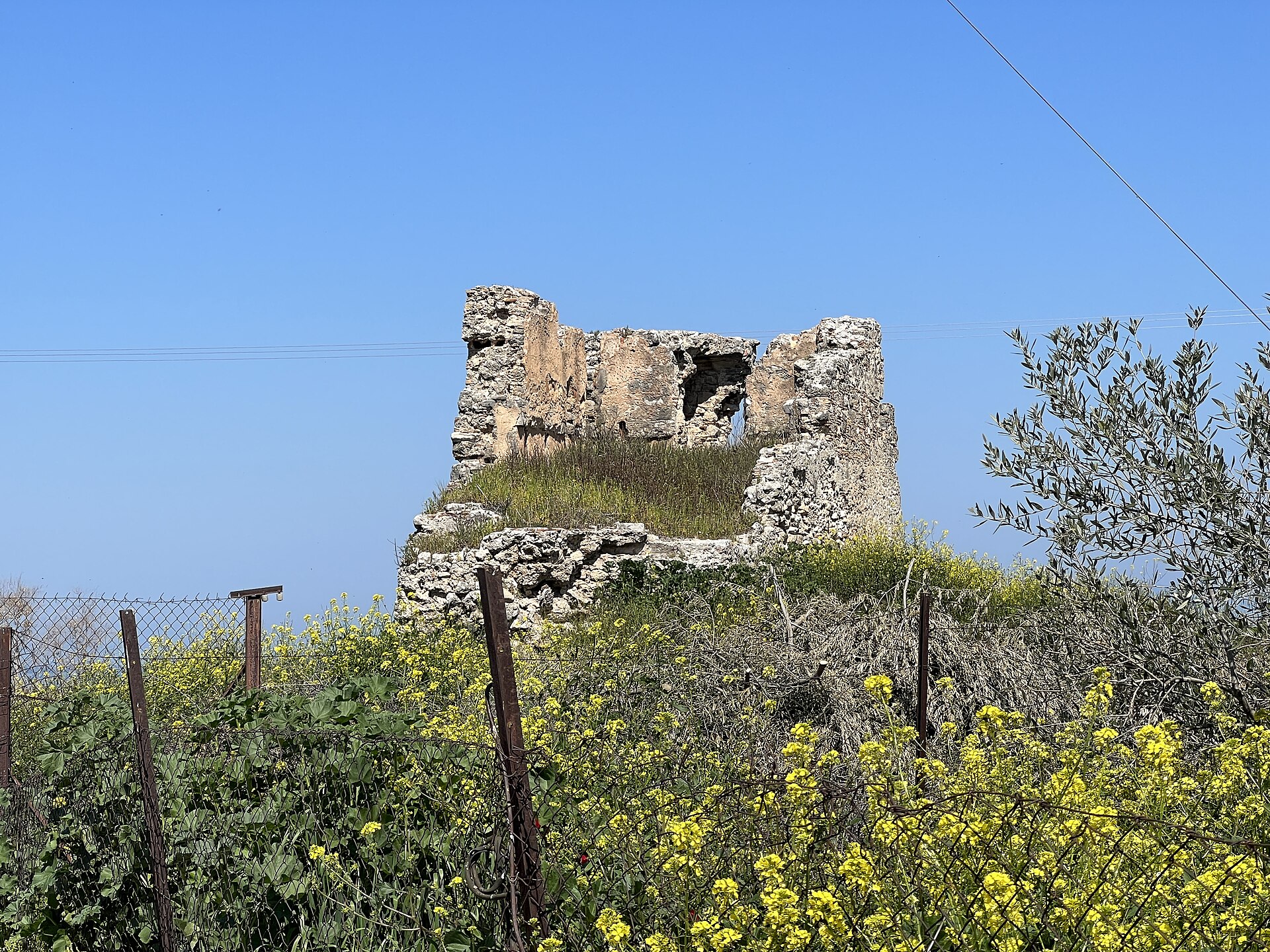
Located within the site, the Archaeological Museum of Corinth is an essential stop for understanding local artistic refinement. The collection is famous above all for its Protocorinthian and Corinthian pottery, characterized by miniaturistic decorations of exotic animals and floral motifs that were exported throughout the Mediterranean basin. Also of extraordinary craftsmanship are the Roman mosaics from the surrounding patrician villas and the statues of emperors of the Julio-Claudian dynasty. A particularly evocative section is dedicated to the sanctuary of Asclepius, with a collection of terracotta votive offerings reproducing parts of the human body, evidence of the healing practices and popular devotion that animated the city in centuries past.
Surroundings and landscape: between two seas
The landscape surrounding Arkhaia Korinthos is dominated by the duality of sea and land. A short distance away lies the famous Corinth Canal, a bold feat of engineering that cuts through the isthmus with vertical rock walls 80 meters high. Not far off, the remains of the ancient port of Kechries on the Saronic Gulf recall the point from which Saint Paul set sail for Ephesus. The hinterland, by contrast, is a succession of vineyards and olive groves climbing toward Nemea, famous for its fine red wines and the remains of the temple of Zeus. The coast offers seaside resorts such as Loutraki, known since antiquity for its thermal springs, where today one can relax while watching the silhouette of Acrocorinth stand out against the horizon, in a perfect balance between modern relaxation and ancient allure.
Traditions and flavors of Corinthia
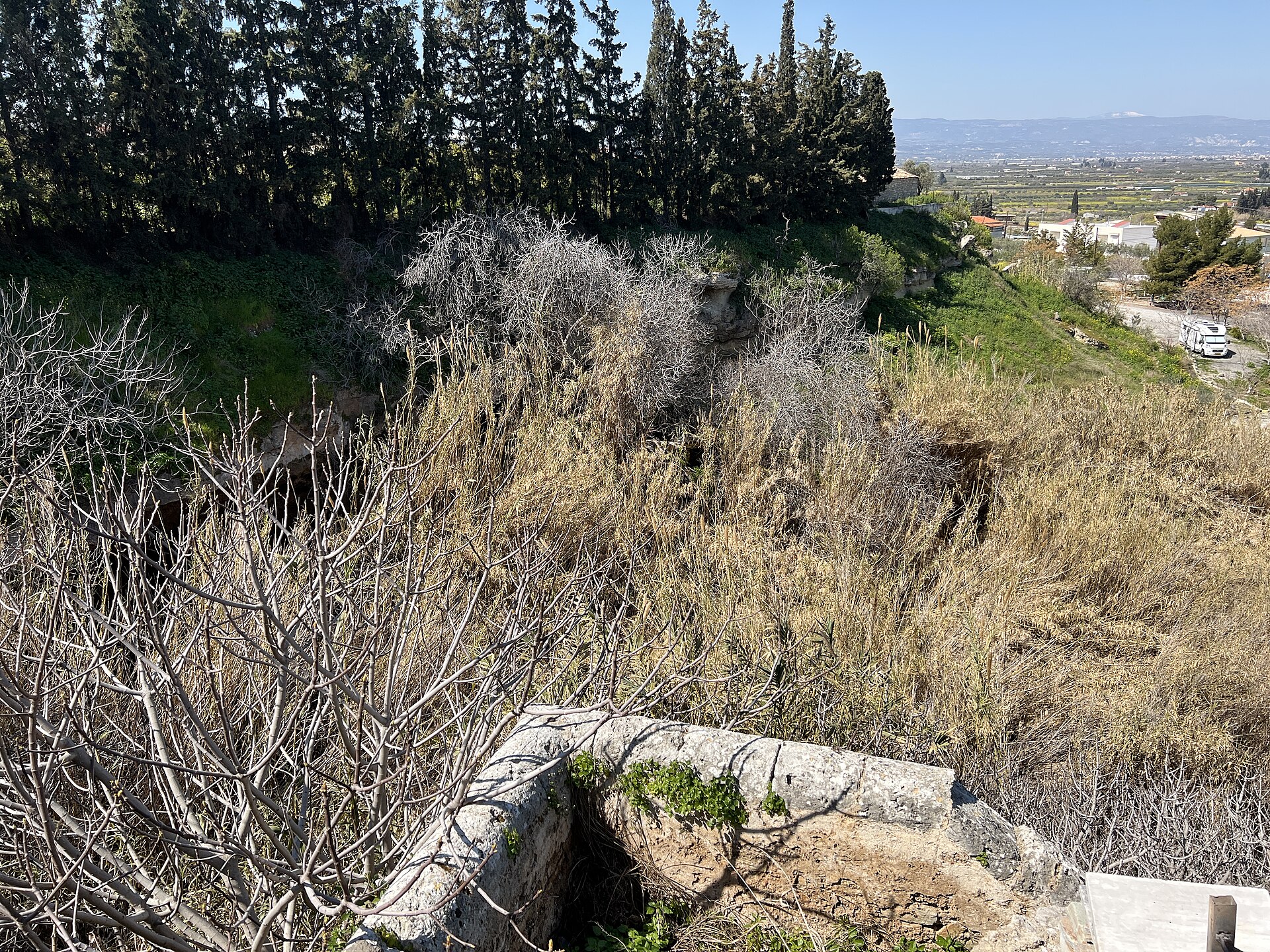
The gastronomic culture of this land is a child of its fertility. The star product is the Corinthian raisin (currant), a small, seedless variety of black grape that is sun-dried and which for centuries represented the leading item of Greek exports. In the kitchen, these raisins are used both in traditional desserts and in sweet-and-sour meat dishes. One cannot leave the area without tasting the local extra virgin olive oil and the wines of Nemea, especially Agiorgitiko, a full-bodied red nicknamed 'Blood of Hercules'. The taverns of the modern village of Arkhaia Korinthos offer honest dishes such as oven-roasted lamb with wild oregano and pies filled with wild greens, all accompanied by the typical Peloponnesian hospitality, warm and unpretentious.
Not-to-be-missed experiences
- Stroll along the Lechaion Road, the paved street that connected the port to the city, imagining the bustle of carts and shops.
- Climb Acrocorinth early in the morning to avoid the heat and enjoy solitude among the fortress ruins.
- Visit the site of Isthmia, where every two years games were held in honor of Poseidon, rivals of the Olympic Games.
- Taste local wines in a Nemea winery, pairing full-bodied reds with Peloponnesian cheeses.
- Watch a ship pass through the narrow Corinth Canal from the pedestrian bridge.
- Explore the small modern village next to the excavations, where daily life moves slowly among cafés and archaeological replica shops.
Tips for experiencing the place
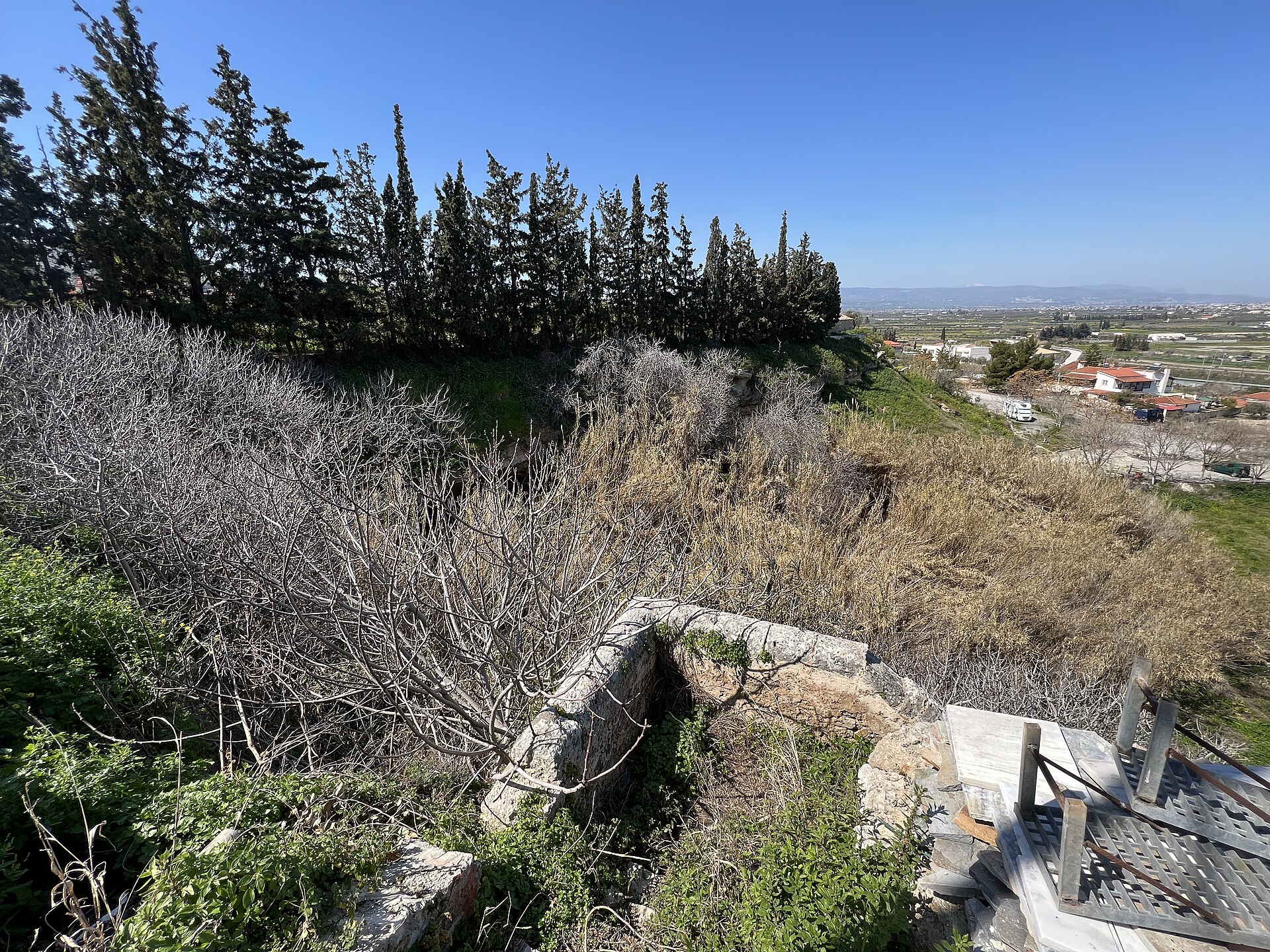
To fully enjoy Arkhaia Korinthos, the best period is spring (April-June), when the site is dotted with poppies and wildflowers and temperatures are ideal for the climb to Acrocorinth. Autumn also offers warm colors and golden light perfect for photography. During summer, it is strongly recommended to visit the site at opening time (8:00 am) to avoid the intense heat, as shaded areas are scarce. Wear comfortable shoes with good grip, especially for the slippery stones of the agora and the steep paths of the fortress. Set aside at least half a day for the main site and museum, and another half day for Acrocorinth; the latter requires your own vehicle or a taxi to reach the entrance, located about 4 km from the lower village.
FAQ
Quanto tempo occorre per visitare l'intera area?
È possibile arrivare con i mezzi pubblici da Atene?
Il sito è accessibile a persone con mobilità ridotta?
Dove conviene parcheggiare?
Si può visitare l'Acrocorinto gratuitamente?
Getting there
- Aeroporto Internazionale di Atene Eleftherios Venizelos (ATH) - circa 110 km
- Linea Proastiakos da Atene o dall'aeroporto fino alla stazione di Korinthos (nuova città).
- Autostrada A8 (Atene-Patrasso), uscita per Ancient Corinth. Il tragitto dura circa un'ora da Atene.
- Se viaggiate in auto, non fermatevi solo al Canale; proseguite per pochi minuti seguendo le indicazioni 'Ancient Corinth' per raggiungere il sito storico.
Perfect for
Un viaggio nel tempo tra resti arcaici, splendore romano e fortificazioni medievali uniche al mondo.
Sulle tracce di San Paolo, visitando i luoghi reali citati nelle celebri Lettere ai Corinzi.
Dalla cima dell'Acrocorinto si gode di una delle viste più vaste e spettacolari di tutto il Peloponneso.
Terra dell'uva passa e dei grandi rossi di Nemea, ideale per gli amanti dei sapori autentici mediterranei.
To see
What to see in Arkhaia Korinthos
Routes · Trovido Route
