

Areopoli
Welcome to Areopoli, the stone heart and indomitable soul of the Mani peninsula, deep in the southern Peloponnese
Updated 8 July 2026
The story
The story of Areopoli
From its origins to Tsimova: the history of Areopoli
The history of Areopoli is inseparably tied to its strategic position and the rebellious nature of its inhabitants. Once known as Tsimova, the town was for centuries the nerve center of the Mani region, a territory the Ottomans never managed to fully subdue. During the Middle Ages and the period of Venetian rule, Areopoli developed as a stronghold of powerful family clans, whose internal conflicts and external resistance shaped the town's urban layout, characterized by its famous tower-houses. The historic turning point came in the 19th century: the Mavromichalis family, one of the most influential in the area, led the 1821 uprising. Only in 1912 did the town take on its current name, Areopoli, to honor the martial valor of its citizens and its bond with the god Ares. Every stone in the center tells of this legacy, made of codes of honor, family feuds (the famous Mani vendettas), and a visceral love for one's own land.
The Church of the Taxiarches: the spiritual heart
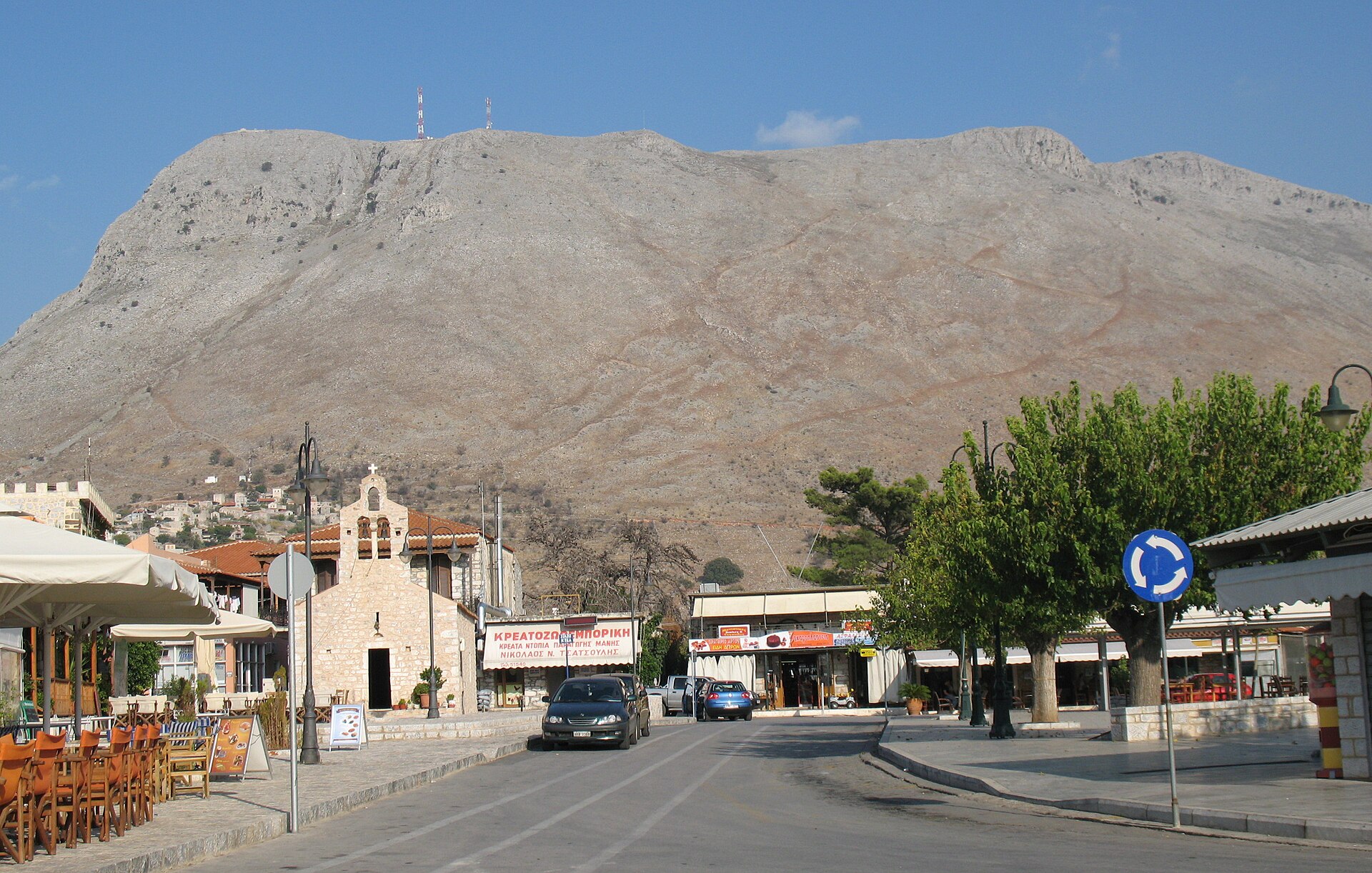
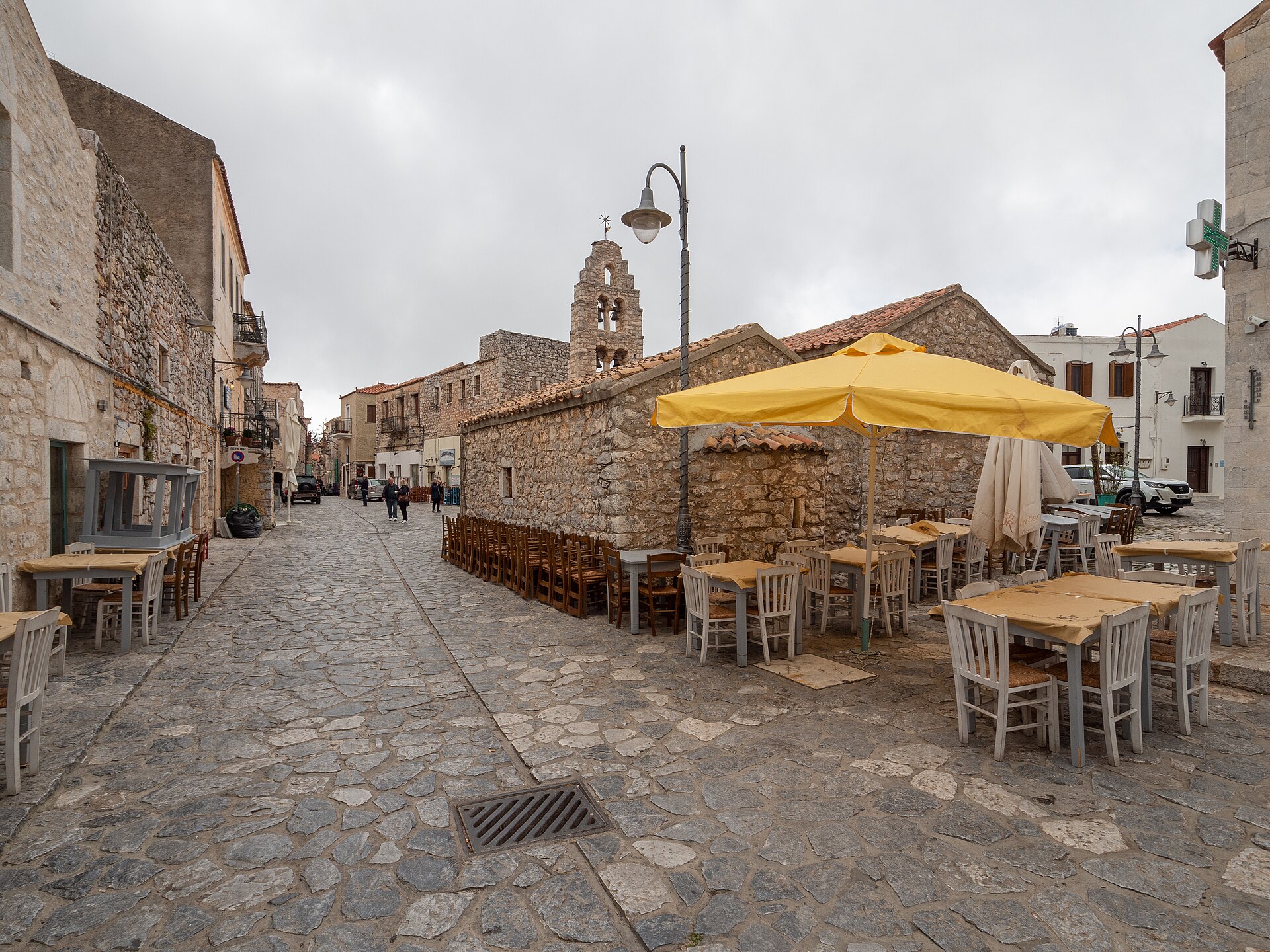
Towering over the main square, the Church of the Taxiarches (the Archangels Michael and Gabriel) is Areopoli's most significant religious monument. Built in the 17th century, it stands out for its imposing multi-tiered bell tower, which rises above the town's rooftops like a sentinel. The façade is a masterpiece of Laconian folk art: above the main entrance, one can admire refined stone reliefs depicting religious figures, floral motifs, and heraldic symbols. The intimate, cozy interior houses a finely carved wooden iconostasis. It was here that the leaders of the revolution received their blessing before setting off for war, making this place not only a temple of faith but a true sanctuary of the Greek nation.
Plateia Athanaton: the square of the immortals
The beating heart of Areopoli's social life is Plateia Athanaton, the Square of the Immortals. This spacious open area is dominated by the bronze statue of Petrobey Mavromichalis, the last 'Bey' of the Mani and a central figure of the Greek revolution. The square is surrounded by traditional cafés and taverns occupying restored old buildings, offering a privileged vantage point on the everyday life of the town. Here, amid the chatter of locals and the tolling of church bells, one can breathe in the pride of a community that has never forgotten its roots. The square serves as a hinge between the older part of the town and the more modern one, representing the point where official history meets the present.
Pikoulakis Tower: a window onto the past
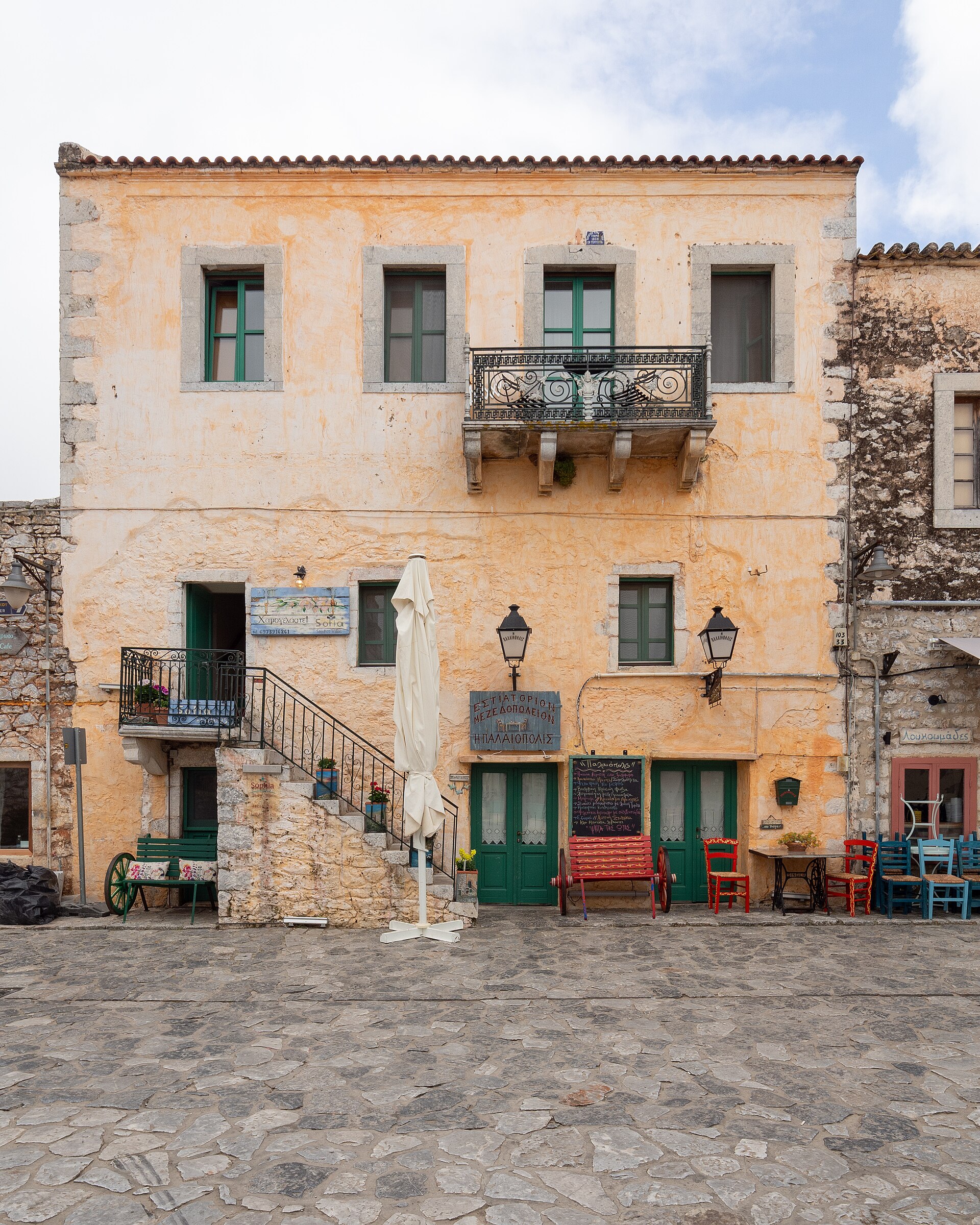
The Pikoulakis Tower is one of the best-preserved examples of the defensive architecture typical of the Mani. This fortified structure now houses the Byzantine Museum of Areopoli, an institution that offers deeper insight into the religious and everyday life of the region between the Early Christian period and the late Middle Ages. The exhibition is curated down to the smallest detail and focuses on the theme 'The stories of faith in the Mani', displaying icons, architectural fragments, and liturgical objects from the area's many rural churches. Visiting the tower also means understanding local military engineering: the loopholes, thick walls, and vertical structure were designed to withstand prolonged sieges, bearing witness to an era in which safety was a luxury to be won with stone.
Limeni: the emerald-colored harbor
Just five kilometers from the center of Areopoli lies Limeni, its ancient harbor and today one of the most photographed spots in Greece. Limeni is a fishing hamlet nestled in a bay of emerald-colored waters, where stone houses seem to rise directly out of the rocks. Here stands the restored mansion of the Mavromichalis family, an imposing building that testifies to the wealth of the lords of the Mani. There are no sandy beaches, but you can access the crystal-clear sea directly from the rocks or the small piers. Dining at one of the waterside taverns, watching the sea turtles that often swim undisturbed in the bay at sunset, is an experience that reconciles you with the wild beauty of this land.
The Caves of Diros: a journey underground
Just south of Areopoli lies one of the most fascinating cave systems in Europe: the Caves of Diros (Vlychada). This underground labyrinth, carved out by a river over millennia, is mostly visited aboard small boats guided by expert boatmen. The route winds through forests of stalactites and stalagmites in fantastical shapes, mirrored in icy, crystal-clear waters. The cave was already inhabited in the Neolithic era and served as a refuge for millennia, before being sealed by an earthquake and rediscovered only in the 20th century. The silence broken only by the dripping of water and the majesty of the limestone formations make the visit an almost mystical experience, a perfect counterpoint to the sunlit surface above.
The landscape of the Mani: between rock and sea
The territory surrounding Areopoli is characterized by a harshness that enchants. We are in the 'Messa Mani', where the western slope of Mount Taygetus drops steeply toward the sea. The vegetation consists mainly of centuries-old olive trees, prickly pears, and Mediterranean scrub, which manage to thrive in poor, stony soil. This aridity is offset by extraordinary light and a jagged coastline, rich in hidden coves and sea caves. The hinterland is dotted with ghost villages and tiny Byzantine churches scattered among the fields, connected by old stone paths (the 'kalderimia') that offer spectacular trekking routes for those wishing to explore the most authentic and less-trodden side of the peninsula.
Traditions and flavors of the Maniot table
The cuisine of Areopoli reflects the subsistence economy of the past, transforming simple ingredients into dishes of incredible intensity. The star product is olive oil, dense and fragrant, extracted from Koroneiki olives. Not to be missed is 'syglino', pork smoked with aromatic herbs and preserved under fat, often served with eggs or in salads. 'Lalagia', on the other hand, are strips of crispy fried dough, typical of festivities but now available year-round in local bakeries. The pastoral tradition yields flavorful cheeses such as mizithra, which often seasons 'pitaroudia', a kind of savory herb pie. Every meal is a ritual of hospitality, often accompanied by local wine and the typical courtesy of the Maniots, who welcome visitors as honored guests.
Experiences not to be missed
- Admiring the sunset from Limeni, watching the sun disappear into the Ionian Sea.
- Getting lost in the less-trodden alleys of the historic center to discover small shrines and flower-filled courtyards.
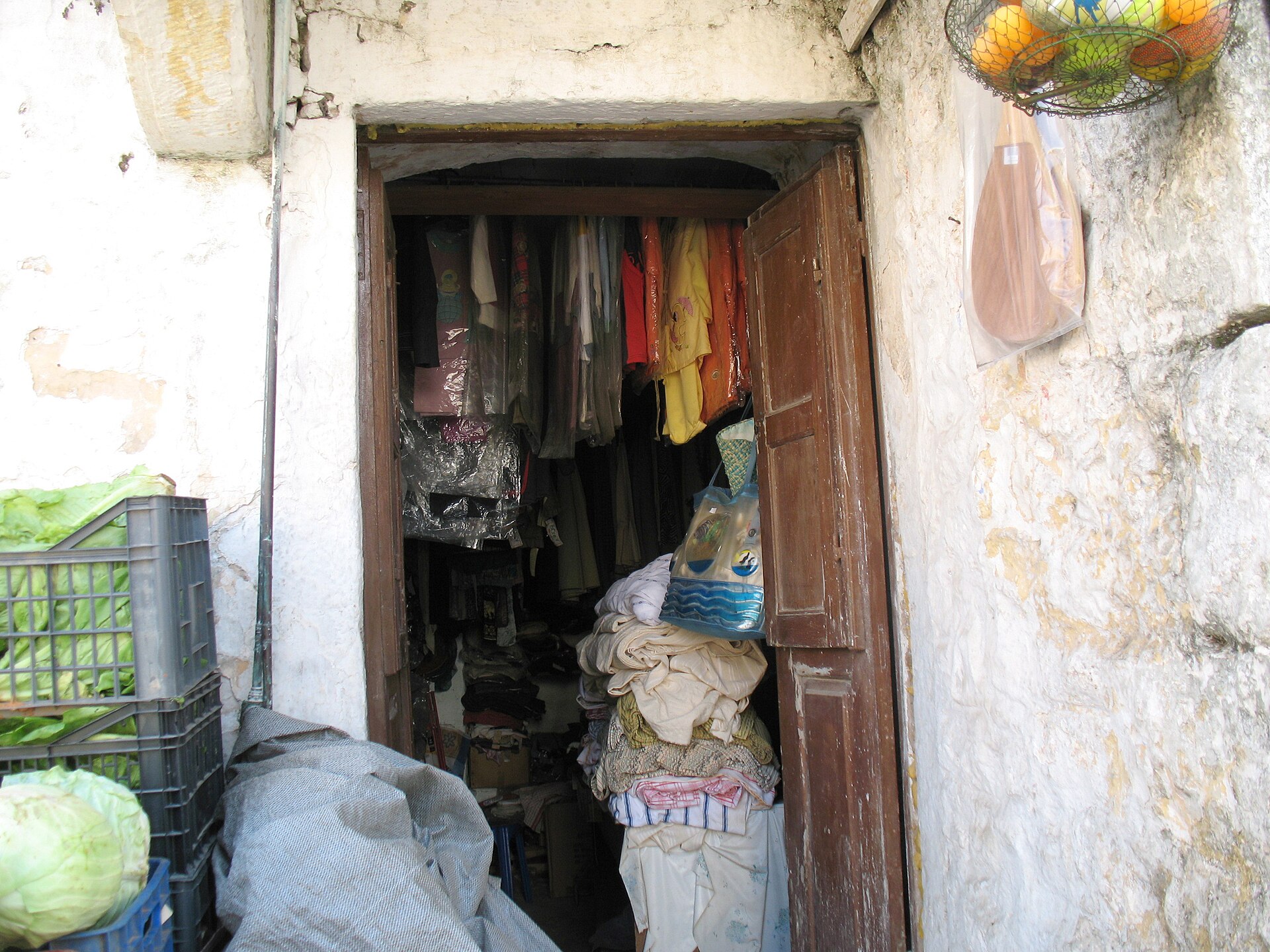
- Buying thyme honey and wild herbs at the small shops of Areopoli.
- Taking part in the celebrations of March 17, when the town fills with traditional costumes and parades.
- Taking a dip in the icy, invigorating waters of the underground springs at Limeni.
- Visiting the abandoned village of Vathia, a little further south, to see the Mani's most spectacular towers.
When to go and how to experience Areopoli
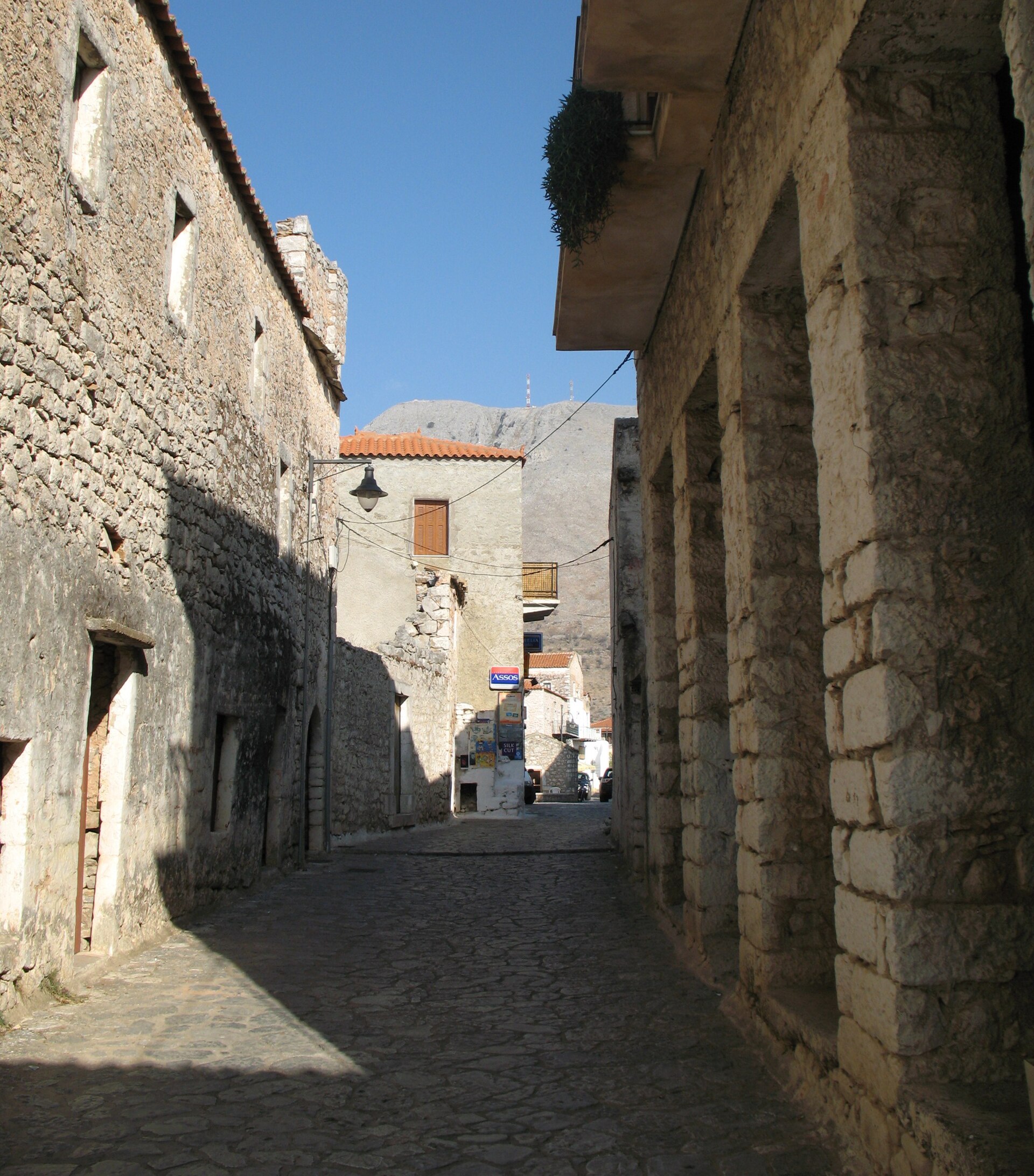
The best time to visit Areopoli is undoubtedly spring (April-June), when nature is in bloom and temperatures are ideal for excursions. Autumn (September-October) also offers warm days and a still-pleasant sea, with fewer crowds than in August. Summer can be very hot, but the evening sea breeze makes the nights pleasant. To fully experience the place, it is recommended to stay in one of the tower-houses converted into boutique hotels: sleeping within walls centuries thick lets you sense the deep essence of this town. Remember that Areopoli is a town made for walking; leave your car in the outer parking areas and let instinct guide you through its stone streets.
FAQ
Quanto tempo serve per visitare Areopoli?
È una destinazione adatta alle famiglie?
Dove si può parcheggiare ad Areopoli?
Si può fare il bagno ad Areopoli?
Getting there
- Aeroporto di Kalamata (KLX) - circa 80 km
- Aeroporto Internazionale di Atene (ATH) - circa 290 km
- Non ci sono linee ferroviarie dirette nel Mani; la stazione più vicina è Kalamata, ma è scarsamente servita.
- Da Atene prendere l'autostrada A7 verso Kalamata, poi seguire le indicazioni per Sparta e Gythio, infine per Areopoli. Il viaggio dura circa 3 ore e mezza.
- Noleggiare un'auto è fondamentale per esplorare la penisola del Mani, poiché i mezzi pubblici sono limitati e non raggiungono le calette più belle.
Perfect for
Un tuffo nel Risorgimento greco tra torri fortificate e chiese bizantine cariche di fascino.
Un esempio unico al mondo di borgo fortificato dove la pietra è l'unico elemento costruttivo dominante.
Sapori decisi e autentici, basati su olio d'oliva eccellente, carni affumicate e prodotti della terra aspra.
To see
