

Polikhrono
Immersed in the dazzling light of the Kassandra peninsula, the first 'finger' of Halkidiki, Polychrono reveals itself to travelers...
Updated 8 July 2026
This season · July · Summer
What to do in Polikhrono now
The story
The story of Polikhrono
Deep roots: from ancient Neapolis to rebirth
The history of Polychrono has its roots in classical antiquity, when this area was home to the flourishing colony of Neapolis, founded by settlers from Euboea, precisely from Eretria, around the 7th century BC. For centuries, Neapolis was a key hub for maritime trade, benefiting from the natural protection of the gulf. However, the city's fate was marked by barbarian invasions: in 540 AD, the hordes of the Huns razed the settlement to the ground, ushering in a long period of oblivion. Only in the 11th century did life flourish again, thanks to shepherds and farmers who founded a new village, initially naming it 'Polychrono' for the richness of the local flora. This spirit of resilience was tested once again in 1821, during the Greek War of Independence, when the Ottomans completely burned down the village in reprisal. Once again, the inhabitants returned to rebuild their homes, giving rise to the town we admire today.
The Church of Agios Athanasios
The spiritual heart of Polychrono is the Church of Agios Athanasios, a building that stands out for its sober, elegant architecture typical of the Macedonian area. Built in 1912, the very year the region was liberated from Ottoman rule, the church is dedicated to the village's patron saint, whose feast day is celebrated with great fervour every 2 May. The interior is a celebration of Orthodox spirituality, with a finely worked iconostasis and frescoes recounting the devotion of a community that has always found in faith the glue to overcome historical hardships. Its position, slightly elevated above sea level, makes it a constant visual landmark and a place of peace to retreat to during the hottest hours of the day, surrounded by the scent of incense and by silence.
The Square of the Nativity of Christ
Heading down towards the oldest part of the settlement, you come across the evocative Square of the Nativity of Christ (Gennisi tou Christou). This public space is the hub of Polychrono's historic social life. Here stands the church of the same name, a smaller and more intimate building than Agios Athanasios, which preserves the atmosphere of centuries past. The square is the ideal place to observe the daily life of the inhabitants, with elders gathering on the benches and children playing in the shade of the trees. The surrounding architecture bears the marks of the late-19th-century reconstruction, with the use of local stone and wood, elements that give the village a homely warmth and a sense of historical continuity that resists the advance of modern tourism.
The Traditional Olive Press and Olive Oil Culture
Polychrono is not just about the sea, but also fertile land. One of the most fascinating testimonies to its agricultural past is the old traditional olive press, now turned into a small museum space. Olive oil production was, for centuries, the main source of livelihood for local families, and a visit to this site offers insight into the laborious, ingenious techniques used in the past. Here you can admire the large stone mills and manual presses, tools that speak of a visceral bond with the land. This site is not only a monument to rural industrial archaeology, but also a tribute to the quality of Halkidiki's olive oil, still considered one of the region's gastronomic treasures, celebrated for its intense flavour and superior organoleptic properties.
The Acropolis of Neapolis and the Archaeological Remains
For lovers of ancient history, a must-see stop is the hill where the Acropolis of Neapolis once stood. Although much of the structures have been eroded by time or covered by vegetation, the area retains a magnetic charm. Excavations have brought to light sections of defensive walls, remains of dwellings and pottery fragments that bear witness to the cultural vitality of the Eretrian colony. Walking among these silent ruins, with the sea stretching out below, lets you picture the ancient ships that once landed on the coast laden with goods. It is a place for reflection, where the grandeur of the Greek past merges with the wild beauty of Mediterranean nature, offering one of the most striking views of the entire Kassandra peninsula.
Lake Mavrobara: a sanctuary for turtles
About three kilometres from the village centre, heading inland into the hills, you discover a true natural gem: Lake Mavrobara. It is a small freshwater lake, the only one on the peninsula, located at an altitude of about 200 metres and surrounded by a lush pine forest. This unique ecosystem is a protected natural monument, as it is home to two rare species of freshwater turtle: Emys orbicularis and Mauremys caspica. The lake is fed by underground springs and keeps a cool microclimate even at the height of summer. A well-marked trail lets you reach the site on foot or by mountain bike, offering a fully immersive experience in Macedonian biodiversity, far from the bustle of the coast, wrapped in a silence broken only by birdsong.
The Shoreline and the Waters of the Toroneos Gulf
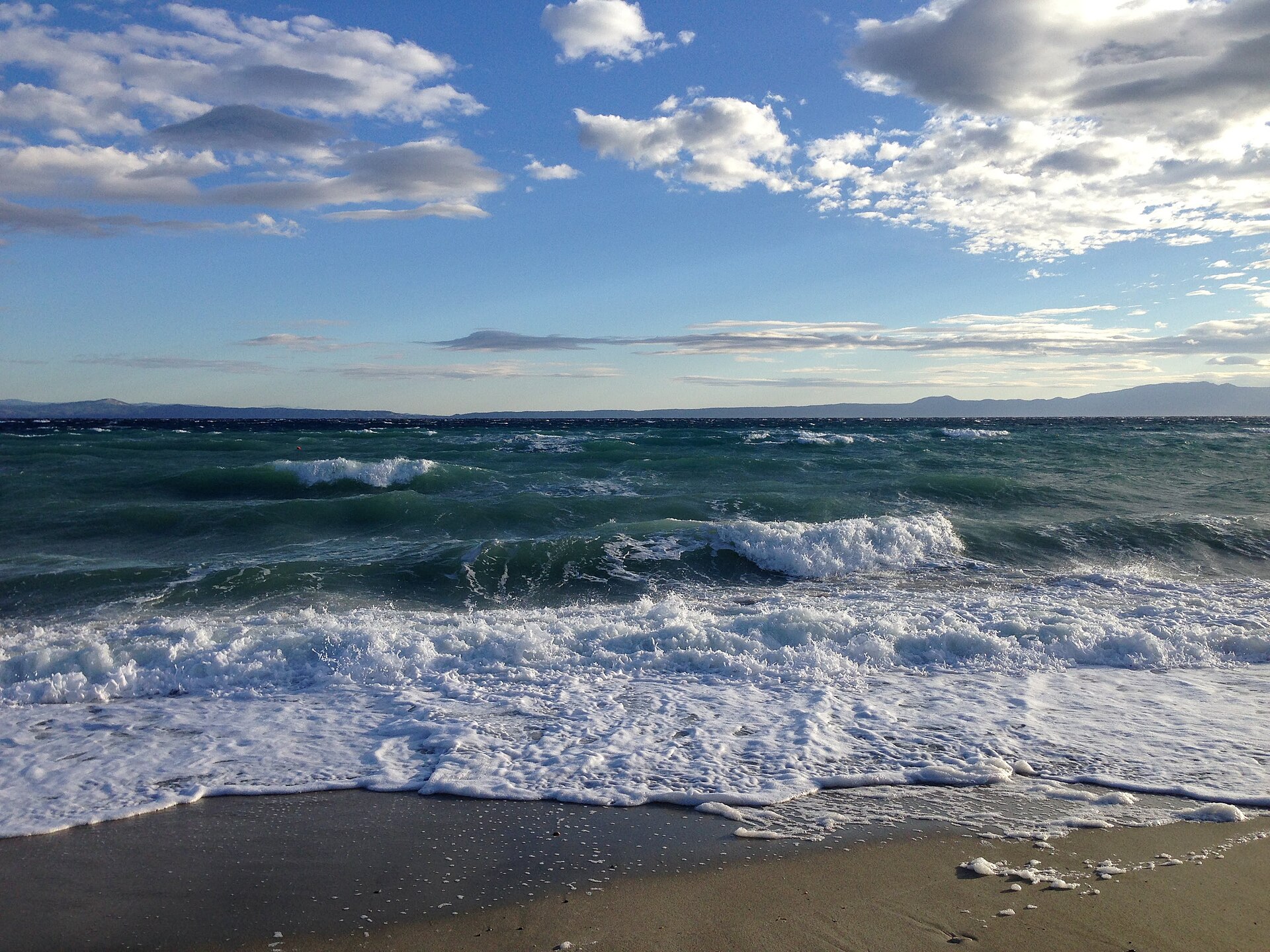
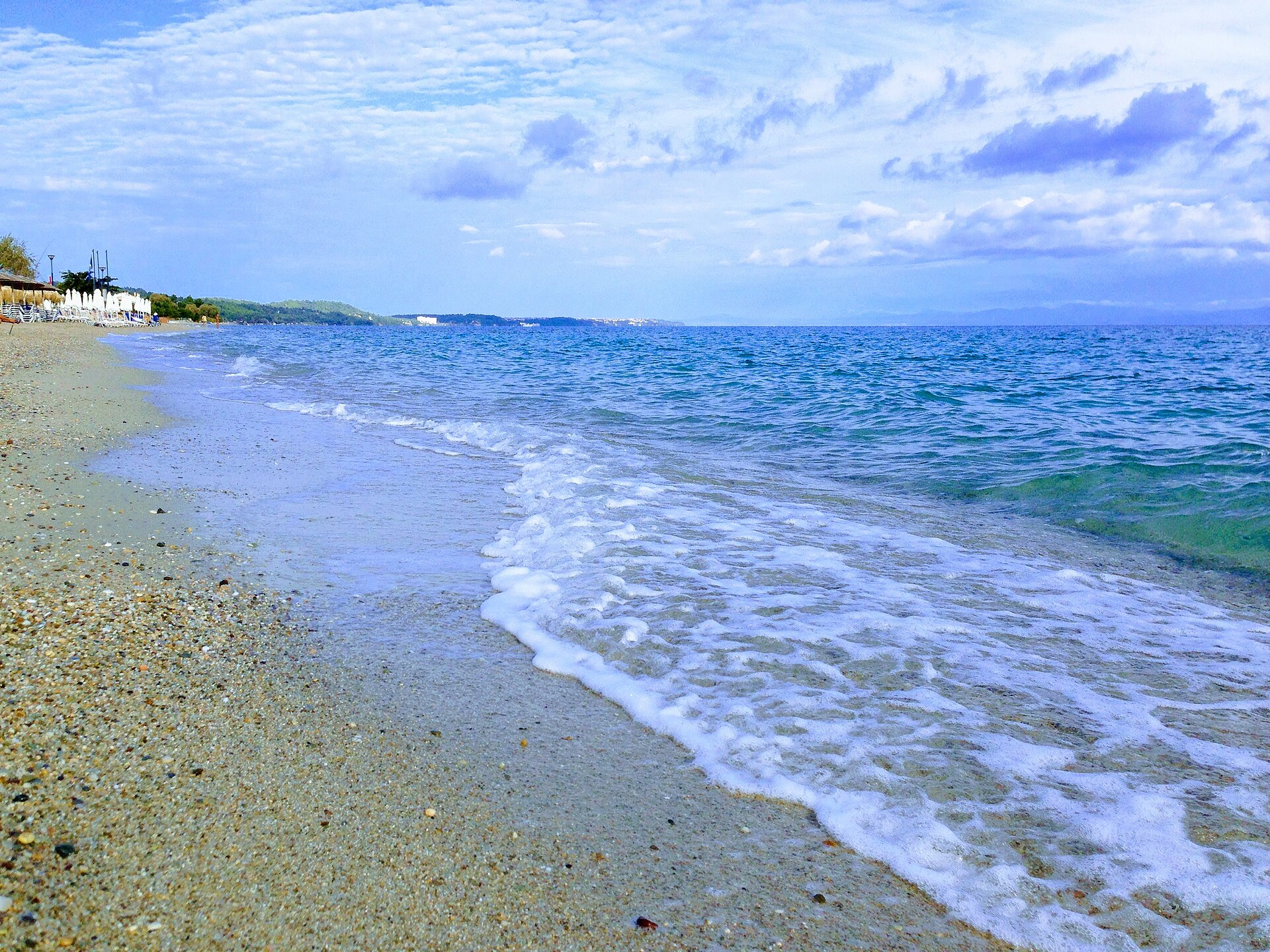
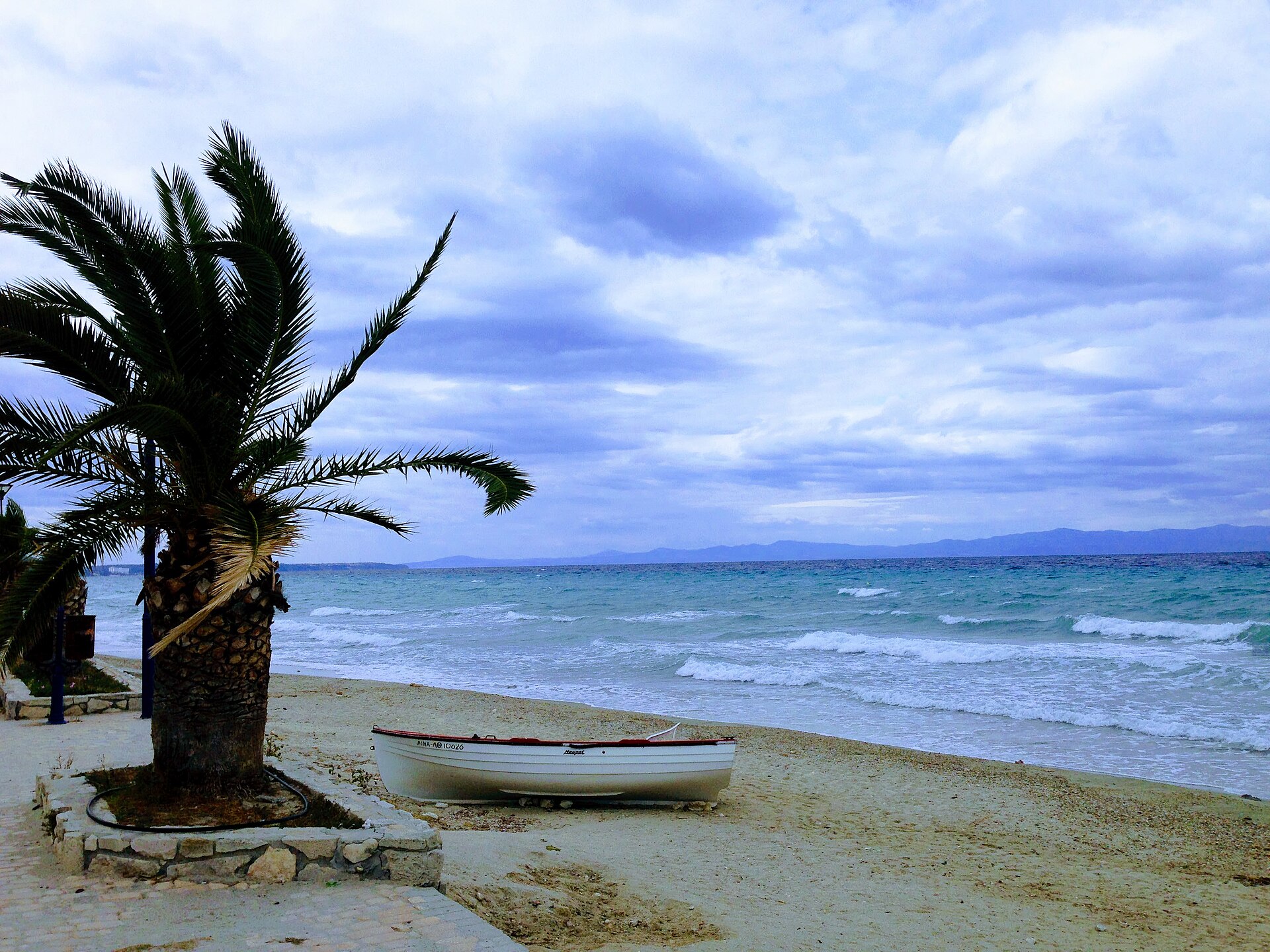
Polychrono beach is a long stretch of golden sand mixed with small pebbles, extending for over seven kilometres and ideally linking up with the nearby resorts of Hanioti and Pefkohori. What makes this stretch of coast special is the extraordinary clarity of the water, which shelves gently, making it perfect even for less experienced swimmers. Thanks to its exposure, the sea is usually calm, turning into a giant natural pool with turquoise reflections. Along the shore, areas equipped with modern beach bars alternate with wide stretches of free, unspoilt beach. The seafront promenade, closed to traffic in the evening, becomes the stage for summer life, among fish taverns serving the day's catch and small local craft shops.
Traditions and flavours: honey and local cuisine
Polychrono's popular culture is intrinsically linked to the fruits of the land. Besides olive oil, the village is renowned for its production of pine and flower honey, a real Halkidiki excellence. Culinary traditions come alive in the local taverns, where you can taste typical dishes such as 'moussaka' prepared according to the Macedonian recipe, stuffed squid and the inevitable 'mezedes' accompanied by ouzo. During the summer, the calendar is punctuated by cultural festivals and evenings of traditional Greek music, where the sound of the bouzouki invites residents and tourists alike to join in the circle dances. This conviviality is the true spirit of the place, a human warmth that turns a simple meal into a moment of sharing and discovery of this community's deep roots.
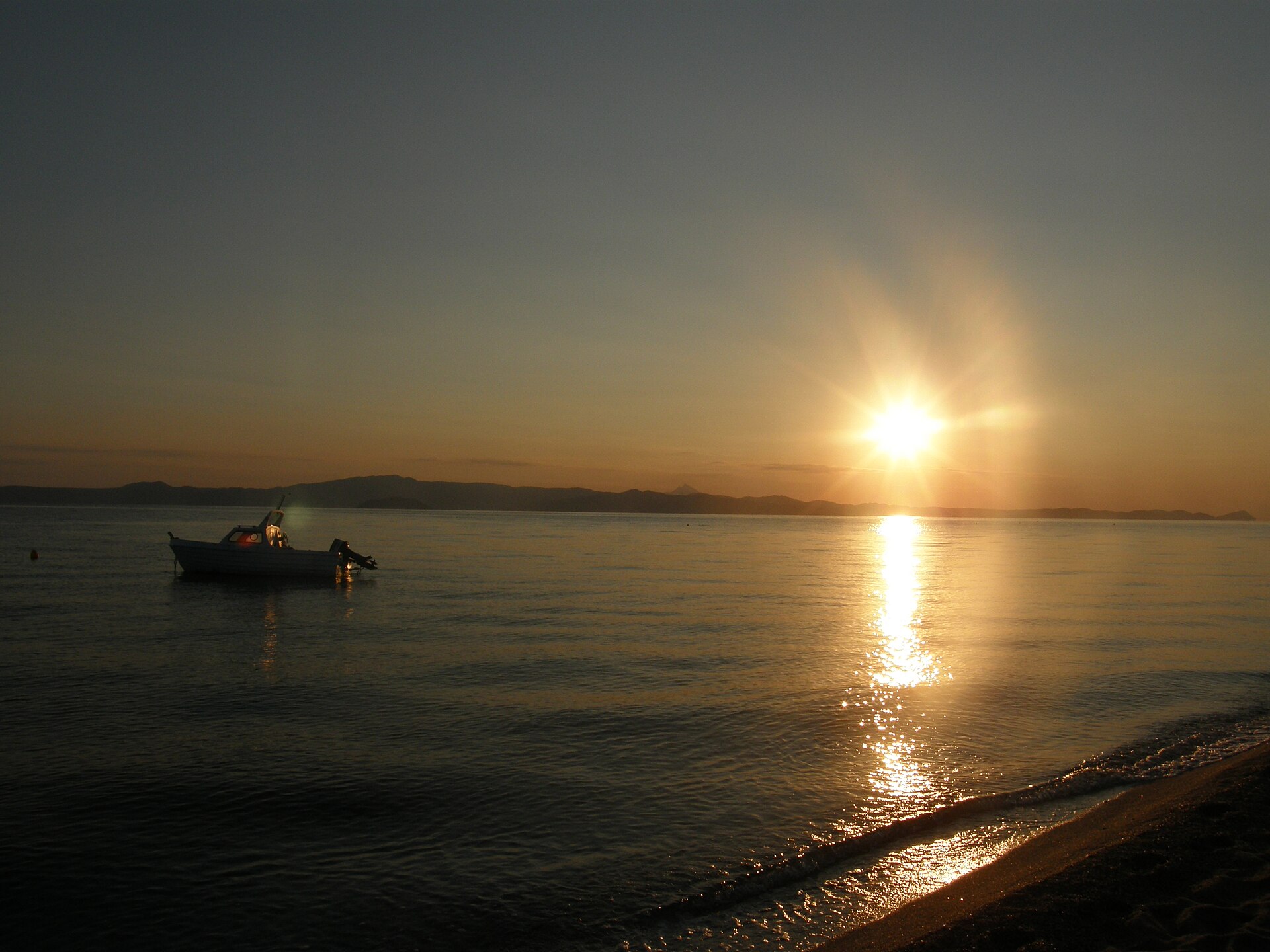
- Stroll along the shoreline at sunset, enjoying the sea breeze.
- Hike to Lake Mavrobara to spot the turtles.
- Visit the ancient acropolis of Neapolis for a dive into classical history.
- Taste the local honey and olive oil straight from the producers.
- Explore the alleys of the old village, away from the touristy seafront.
- Rent a boat to discover the hidden coves of the Toroneos Gulf.
When to go and how to experience the place
The ideal time to visit Polychrono runs from May to the end of September. Late spring and early autumn offer mild temperatures, ideal for nature hikes and for enjoying the beach in complete tranquillity. July and August are the liveliest months, perfect for those seeking entertainment and nightlife, but it is in June and September that the village reveals its most poetic face, bathed in a golden light that wraps around everything. To fully experience Polychrono, it's best to alternate beach days with inland exploration: wake up early for a walk among the pines, spend the afternoon relaxing on the sand, and end the day at a traditional taverna, letting the owners recommend the dishes of the day.
FAQ
Com'è la spiaggia di Polikhrono?
È una località adatta alle famiglie con bambini?
Cosa si può vedere nei dintorni?
È facile trovare parcheggio?
Quanto tempo serve per visitare Polikhrono?
Getting there
- Aeroporto di Salonicco-Macedonia (SKG) - circa 90 km
- Stazione ferroviaria di Salonicco (collegata poi via bus KTEL)
- Da Salonicco seguire la A25 verso Nea Moudania, poi proseguire sulla strada costiera della penisola di Kassandra in direzione sud-est.
- Noleggiare un'auto all'aeroporto di Salonicco è il modo più comodo per esplorare anche le spiagge limitrofe e l'entroterra.
Perfect for
Acque trasparenti e Bandiera Blu, ideali per nuoto e snorkeling in totale relax.
Sentieri tra le pinete e l'eccezionale riserva naturale del Lago Mavrobara con le sue tartarughe.
Servizi eccellenti, fondali sicuri e un'atmosfera accogliente che mette a proprio agio grandi e piccoli.
To see