

Nikiti
Imagine a place where the deep green of Aleppo pines plunges without hesitation into the crystalline blue of the Aegean, where the...
Updated 8 July 2026
This season · July · Summer
What to do in Nikiti now
The story
The story of Nikiti
A history between land and sea: from its origins to the present day
Nikiti's roots reach back into a remote past, indissolubly linked to the ancient city of Galepsos, mentioned by Herodotus as a centre that supplied troops to Xerxes during the Persian Wars. Over the centuries, the population moved inland to escape the constant threat of pirates who plagued the coasts of the Aegean Sea. The present-day core of the historic village arose around the 14th century, initially as a possession (metochion) of the monasteries of Mount Athos, particularly that of Xenophontos. Historical documents from the 1300s already mention the settlement under the name 'Neakitou', which over time evolved into today's Nikiti.
Under Ottoman rule, the village maintained relative autonomy thanks to its economic importance linked to honey and silk production. The real change came, however, after the liberation of Macedonia in 1912 and, more dramatically, in the 1950s, when the inhabitants began rebuilding their homes along the coast, giving rise to the modern section of Nikiti. This transition created a unique architectural duality: the upper part, guardian of memory and tradition, and the lower part, dynamic and geared towards international tourism, which today makes Nikiti one of the most vibrant centres of the peninsula.
Palaia Nikiti: the charm of the old village
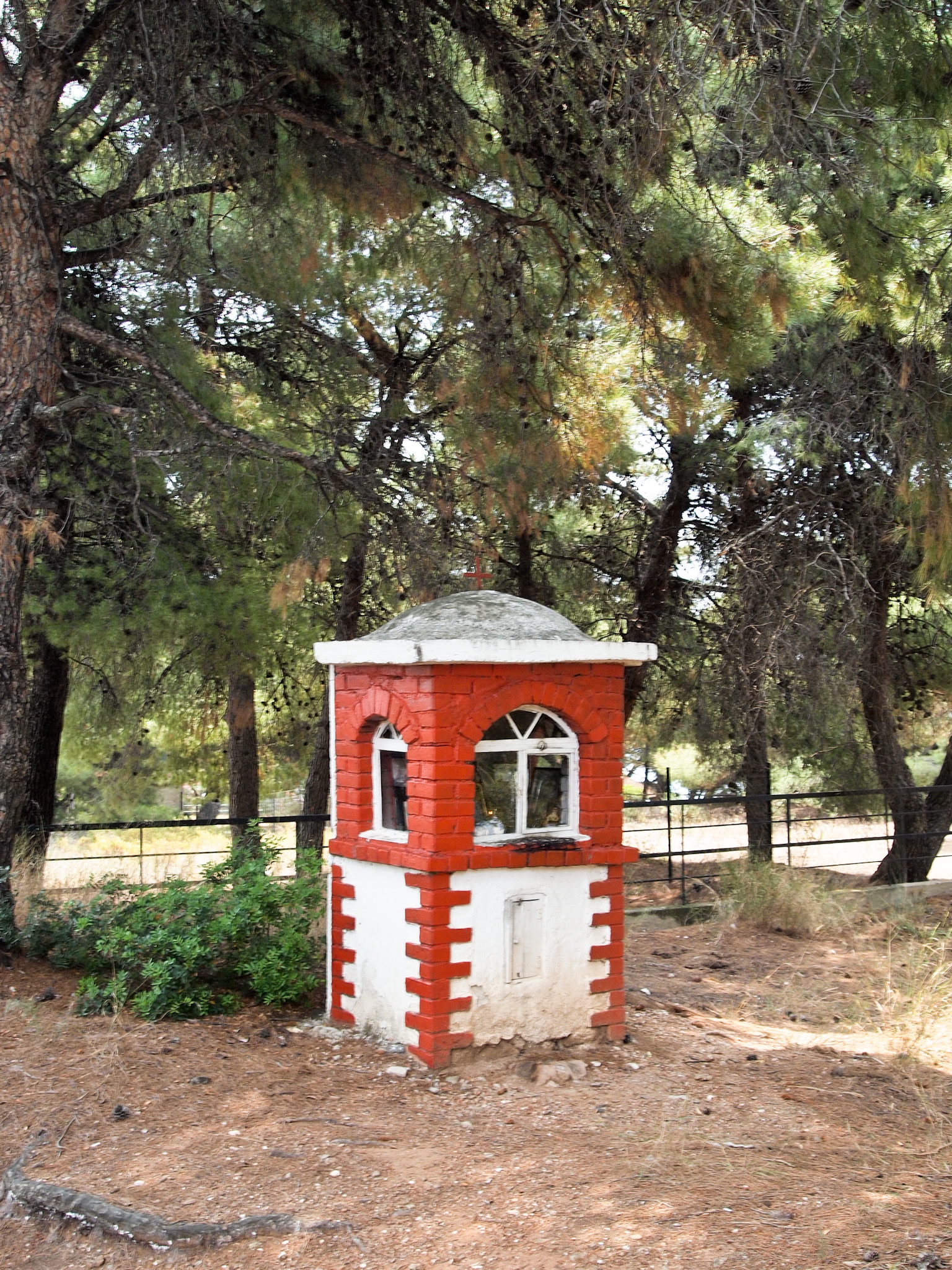
The beating heart of local history lies among the alleys of Palaia Nikiti, the old village located north of the main road. Walking here means taking a step back into the 19th century. The houses are splendid examples of Macedonian architecture: built of local stone, they often feature wooden balconies (the typical 'sachnisi') and chimneys of distinctive shapes. Many of these buildings have been skilfully restored, becoming charming guesthouses or cafés from another era. The central square, with its great centuries-old plane tree, is the perfect place to watch life unfold slowly, far from the bustle of the seaside.
The Church of Agios Nikitas
Overlooking the entire settlement from the highest point of the hill, the Church of Agios Nikitas represents the spiritual symbol of the community. Built in 1867, this imposing stone structure was erected with the contribution of every inhabitant of the village, who carried the materials on mule-back. The interior is sober yet solemn, with a finely carved wooden iconostasis. The church is not only a place of worship but an exceptional vantage point: from its courtyard the view sweeps over the red-tiled roofs and stretches out into the blue of the Thermaic Gulf, offering one of the most striking panoramas in the entire region.
The Basilica of Sofronios: an early Christian treasure
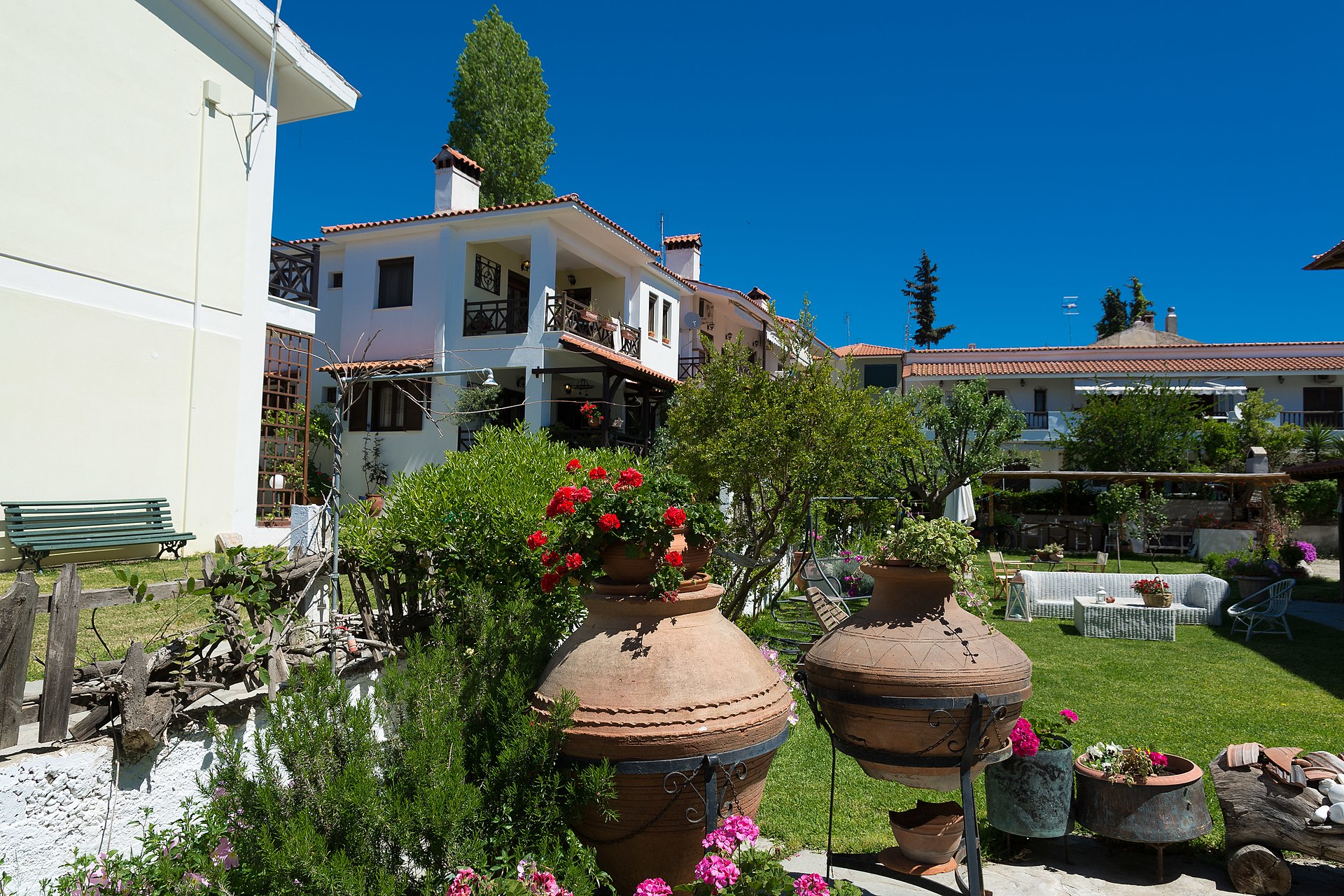
A short distance from the town centre lie the remains of the Basilica of Sofronios, one of the most important early Christian monuments in northern Greece. Dating back to the mid-5th century AD, this three-aisled church testifies to the wealth and religious importance of Nikiti in the Byzantine era. What makes this site extraordinary are its mosaic floors, remarkably well preserved, depicting geometric motifs, birds and hunting scenes. The delicacy of the tesserae and the vividness of the original colours speak of highly skilled craftsmen and a refined aesthetic taste that flourished in these lands as far back as fifteen hundred years ago.
The coastline and beaches of Nikiti
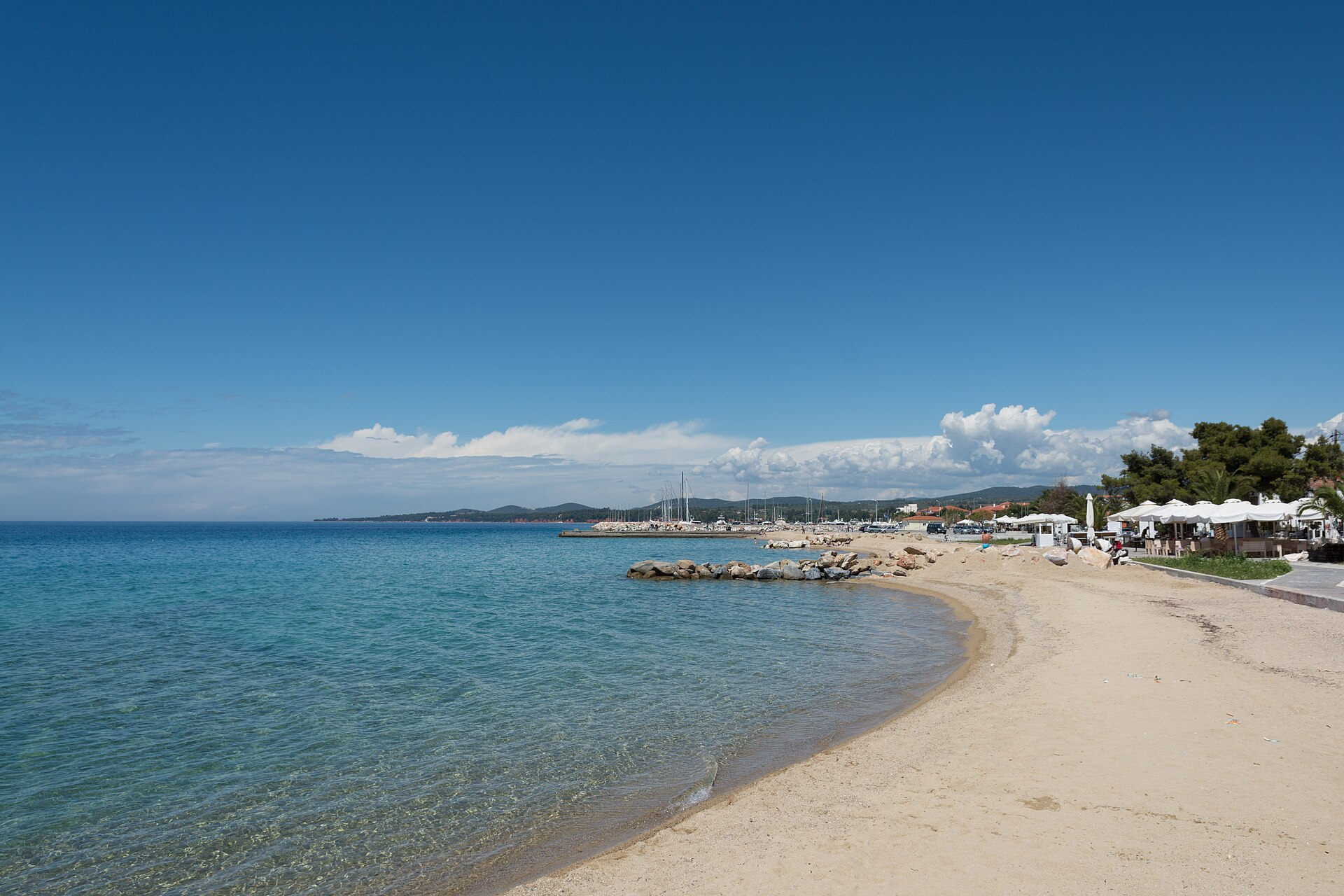
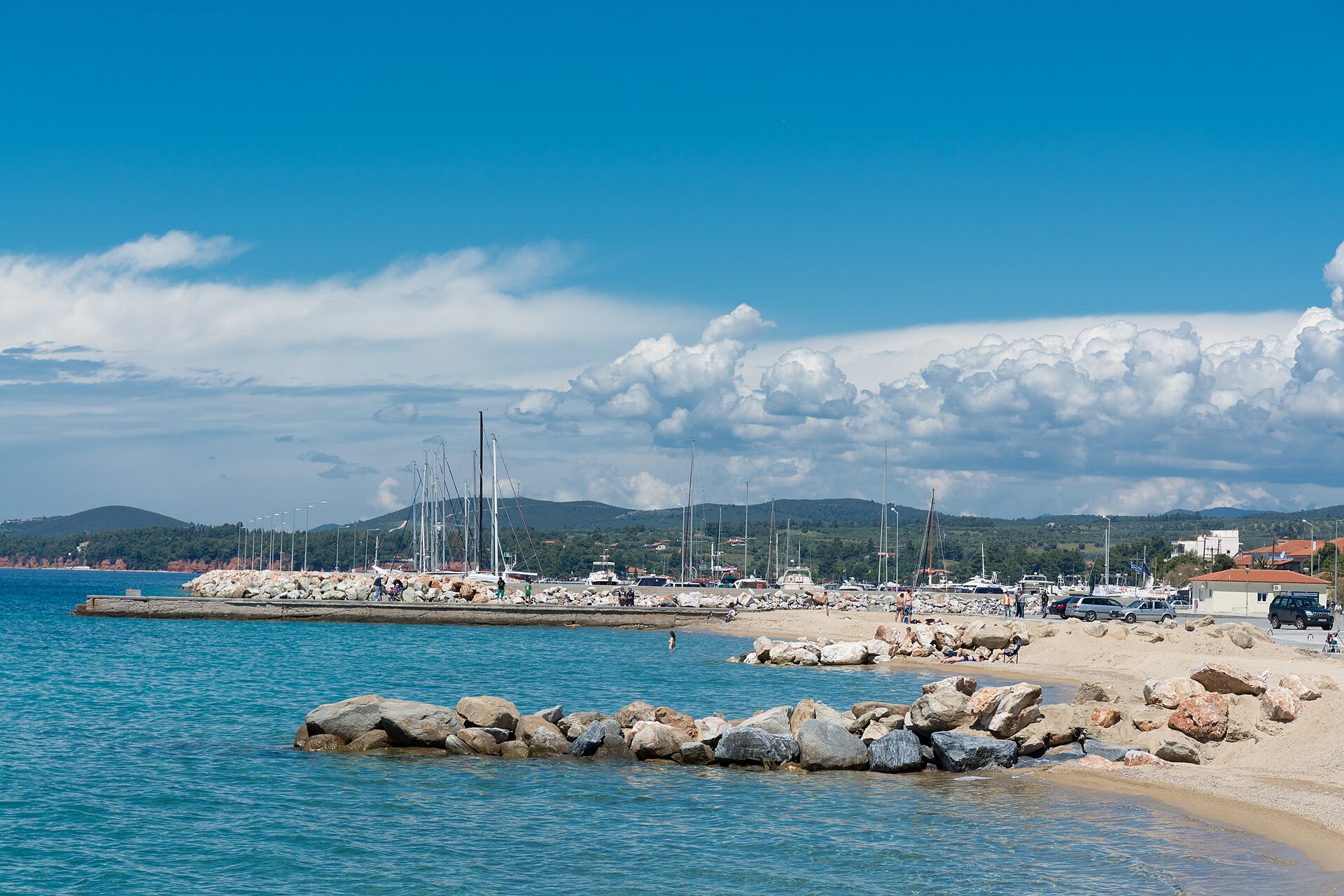
Nikiti's town beach stretches for several kilometres, characterised by light-coloured sand and shallow waters that make it ideal for families. However, the real coastal treasure reveals itself a few kilometres to the south. Along the coast, enchanting bays follow one another, such as Kalogria, famous for its rocky islet reachable by swimming and its emerald-coloured waters, or Spathies beach, a small cove surrounded by pines that offer natural shade almost down to the water's edge. Each cove has its own personality: from those equipped with trendy beach bars to the wilder, quieter ones, where the sound of cicadas is the only soundtrack.
Nature and landscape: Mount Itamos and the pine forests
Behind Nikiti rises the Itamos mountain range, the green lung of Sithonia. This territory is a paradise for trekking and mountain-biking enthusiasts. Trails wind through dense forests of pine and holm oak, offering sudden glimpses of the sea. The biodiversity is surprising: it is not uncommon to spot roe deer or birds of prey in flight. The distinctiveness of the landscape lies in the chromatic contrast between the dark green of the vegetation and the white of the limestone rocks, a combination that makes inland excursions a regenerating sensory experience, especially during the spring bloom.
Traditions and flavours: the honey capital
Nikiti boasts a beekeeping tradition dating back centuries and is considered one of the most important honey-producing centres in Europe. Pine honey and heather honey are the most prized varieties, renowned for their beneficial properties and intense flavour. Besides honey, local gastronomy celebrates the produce of the land: extra virgin olive oil, cracked black olives and 'tsipouro', the strong local spirit often flavoured with anise. In the harbour taverns, fresh fish is the undisputed star, simply grilled and seasoned with lemon and wild herbs gathered on the surrounding hills.
Experiences not to be missed
- Stroll at sunset through the old village of Palaia Nikiti, when soft light illuminates the stone.
- Visit the Folklore Museum, housed in the old elementary school, to discover ancient trades and crafts.
- Rent a boat to explore the secluded coves between Nikiti and Vourvourou.
- Taste the different varieties of local honey at the producers' cooperatives along the main road.
- Take part in the patronal feast of Agios Nikitas on 15 September, with traditional dances and religious celebrations.
- Take a morning hike up to the peak of Itamos to enjoy the panoramic view over both sides of the peninsula.
When to go and how to experience Nikiti
The best time to visit Nikiti depends on the kind of experience you are looking for. From June to August the town is in full swing, the beaches are lively and evenings on the seafront buzz with energy. For those who prefer tranquillity and milder temperatures, the months of May, June and September are ideal: the water is already warm enough for swimming, but the inland trails are less tiring to walk. October offers wonderful autumn colours and the chance to witness the olive harvest. Experiencing Nikiti means embracing its dual soul: devoting the morning to the sea and the late afternoon to discovering the old village, ending the day with a leisurely dinner of local produce.
FAQ
Quanto tempo occorre per visitare Nikiti?
È una meta adatta alle famiglie con bambini?
Dove è meglio parcheggiare?
Qual è il prodotto tipico da comprare assolutamente?
Getting there
- Aeroporto di Salonicco-Macedonia (SKG) - circa 90 km
- Stazione Ferroviaria di Salonicco (collegamenti bus KTEL per Nikiti)
- Da Salonicco seguire la A25 in direzione Nea Moudania, poi proseguire sulla strada statale verso Sithonia/Nikiti.
- Noleggiare un'auto all'aeroporto di Salonicco è il modo più comodo per esplorare anche le spiagge più remote di Sithonia.
Perfect for
Ideale per chi cerca acque cristalline e spiagge sabbiose con tutti i comfort a portata di mano.
Il centro storico offre uno spaccato autentico dell'architettura macedone del XIX secolo.
Un paradiso per i golosi, tra miele pregiato, pesce freschissimo e ottimi distillati locali.
To see
