

Litokhoro
Nestled at the foot of the eastern slope of Mount Olympus, Litochoro is not simply a holiday resort, but a symbolic threshold wher...
Updated 8 July 2026
This season · July · Summer
What to do in Litokhoro now
The story
The story of Litokhoro
Historical roots between myth and seafaring
The history of Litochoro is inextricably linked to its strategic position. Although the area was frequented since antiquity due to its proximity to Dion, the sacred city of the Macedonians, the current settlement has more recent roots, consolidated during the Ottoman period. One aspect that surprises many visitors is the strong seafaring vocation of its historical population: despite its mountainous location, the inhabitants of Litochoro were famous shipowners and sailors between the 18th and 19th centuries. This wealth derived from maritime trade allowed the construction of prestigious buildings and forged a cosmopolitan identity, capable of withstanding the hardships of foreign domination. In 1878, the town became the focal point of the Macedonian revolt against the Treaty of San Stefano, demonstrating a patriotic fervor that would lead, decades later, to definitive liberation and integration into the modern Greek state.
The Enipeas Gorge: the path of the gods
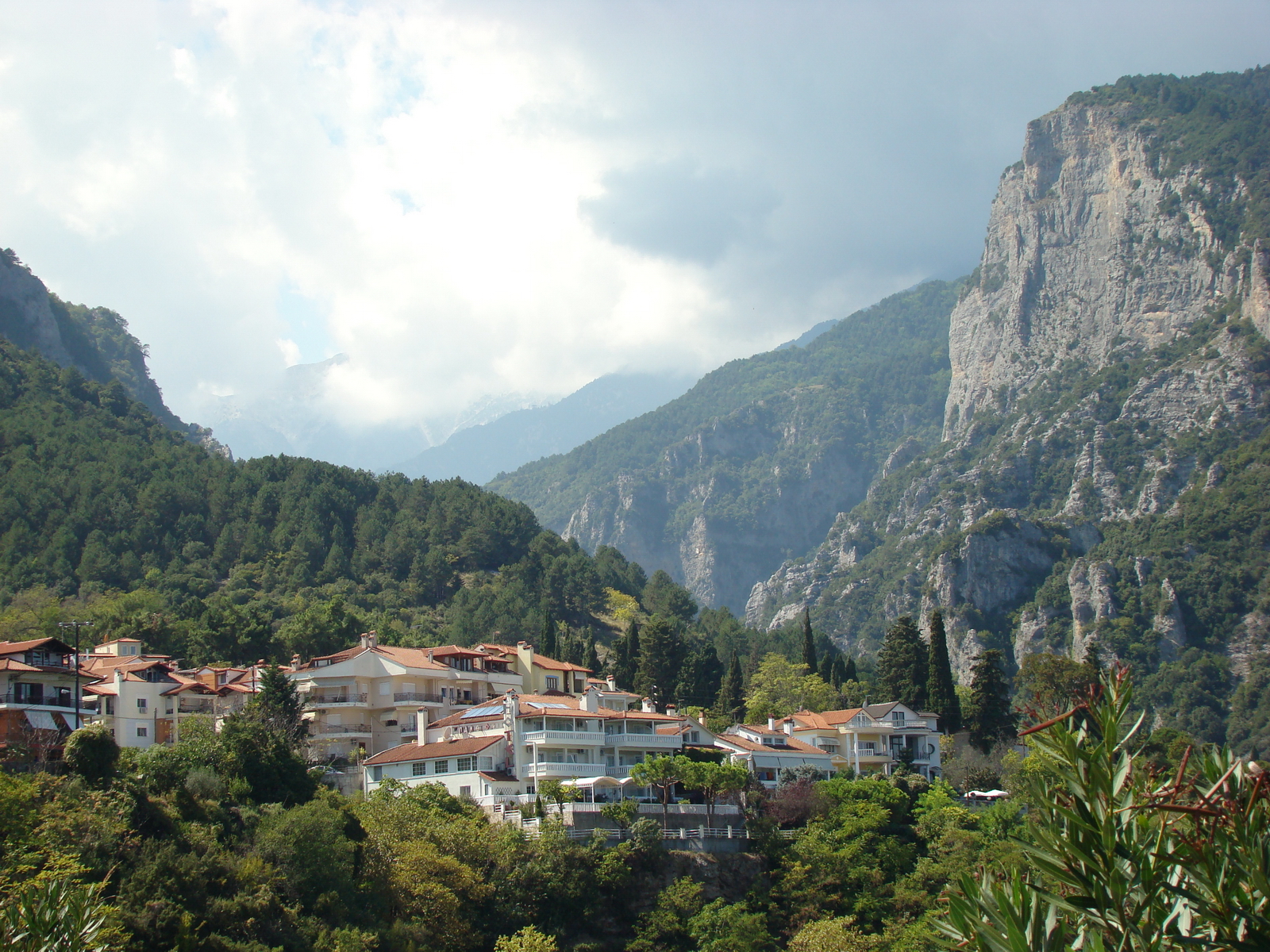
One of the most iconic and evocative places in Litochoro is undoubtedly the Enipeas Gorge. This deep canyon, carved by the river of the same name that originates directly from the slopes of Olympus, offers one of the most beautiful hiking routes in Europe. The E4 trail crosses the gorge, winding between wooden bridges, vertical rock walls and lush vegetation that changes with altitude. According to mythology, this was where the musician Orpheus came to play his lyre and where the beautiful Leto bathed in the crystal-clear waters. Along the way, visitors can admire the 'pools of Zeus', natural pools carved into the rock where the water takes on emerald hues. The gorge is not only a paradise for trekkers, but a precious ecosystem that hosts rare botanical species and protected fauna, making every step a close encounter with the biodiversity of the National Park.
The Old Monastery of Saint Dionysios
Founded in the 16th century by Saint Dionysios of Olympus, the Old Monastery (Agios Dionysios) stands in an isolated and mystical location within the Enipeas Gorge. This monastic complex, once a spiritual and cultural center of primary importance, was seriously damaged by German bombardments during World War II as it served as a refuge for Greek partisans. Today, the remains of the stone walls and fragments of Byzantine frescoes convey a sense of peace and resilience. A short walk from the monastery leads to the 'Sacred Cave', the place where the saint lived as a hermit. Although the monastic community has moved to a new complex further down the valley, the original site remains a place of pilgrimage and a historical monument of extraordinary value, where the silence of the mountain amplifies the sacredness of the place.
The Maritime Museum of Litochoro
To understand the historical anomaly of a mountain town inhabited by sea wolves, a visit to the Maritime Museum is a must. Located in the heart of the town, the museum houses a rich collection of ship models, period navigation instruments, historical photographs and uniforms that tell the epic story of the local sailors. The exhibition highlights how, for centuries, the Litochoro community maintained an active merchant fleet throughout the Mediterranean and the Black Sea. It is a place that celebrates the ingenuity and courage of men who, despite having roots among the rocks of Olympus, kept their gaze constantly turned toward the sea horizon. The attention to detail and the passion with which the exhibits are preserved make this institution a small cultural gem, essential for grasping the anthropological essence of the place.
Prionia: the gateway to the high altitudes
Located at about 1,100 meters above sea level, Prionia is the last point reachable by car and serves as a true gateway to the highest peaks of Mount Olympus. Here the air becomes thinner and scented with resin, while the landscape transforms into a dense forest of pines and beeches. Prionia is not just a parking area for hikers, but a pleasant resting place where you can find a small traditional refreshment stand and an ice-cold spring that flows directly from the rock. From this point begins the climb toward the 'Spilios Agapitos' refuge and, subsequently, toward the mythical peaks of Mytikas (the highest summit in Greece) and Stefani (the throne of Zeus). Even for those who do not intend to reach the summit, a walk around Prionia allows you to savor the alpine atmosphere of Olympus in complete safety.
The architecture of the Katounia and the historic center
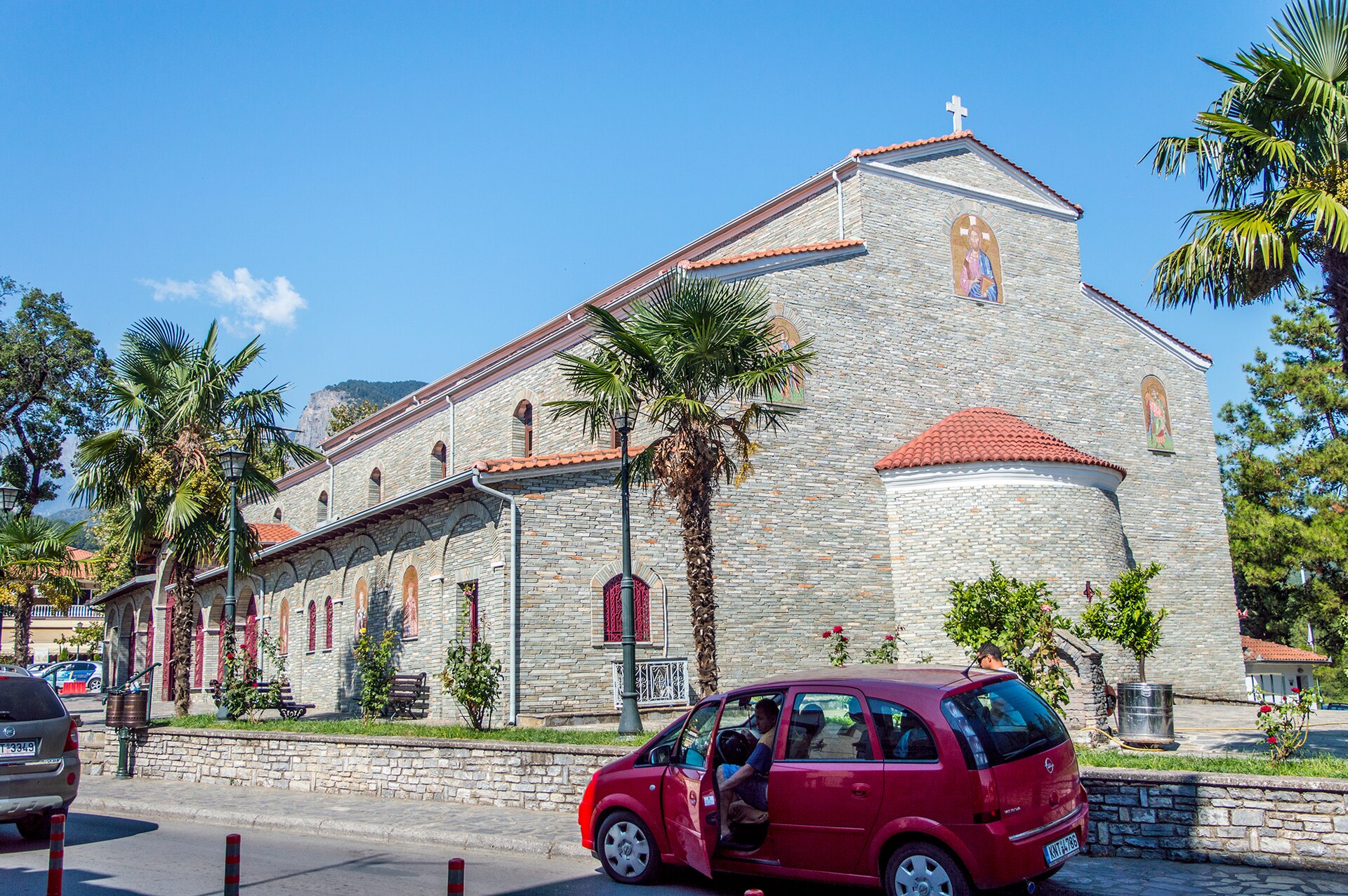
The urban fabric of Litochoro is a maze of streets that rise and fall following the terrain's contours. The upper part of the town, known as 'Katounia', preserves the oldest dwellings, built of local stone with ceramic tile roofs and wooden balconies. Many of these houses have been skillfully restored and transformed into boutique hotels or charming taverns. The beating heart of social life is the central square, dominated by the church of Agios Nikolaos and surrounded by cafés where locals sit for hours discussing politics and mountains over a Greek coffee. It is here that one perceives the true Macedonian hospitality, a frank and unaffected welcome, typical of people who live in contact with a powerful and respected nature.
Plaka Litochorou: where the mountain touches the sea
Just five kilometers from the mountain center stretches the coast of Plaka Litochorou, a long strip of beaches that offer a breathtaking visual contrast. While immersing yourself in the clear waters of the Aegean, your gaze is constantly drawn to the imposing mass of Olympus towering behind you. The coast alternates stretches of white pebbles with sandier areas, with deep and extremely clean waters that have repeatedly received the Blue Flag. Along the coastline are renowned campsites, beach bars and fish restaurants that offer a refreshing alternative to high-altitude excursions. It is the natural extension of the town, the place where the inhabitants take refuge during hot summer days to enjoy the sea breeze without ever losing sight of their sacred mountain.
Gastronomic traditions and flavors of Olympus
The cuisine of Litochoro is a triumph of robust flavors and genuine ingredients, influenced both by the mountain pastoral tradition and the maritime one. Among the dishes not to be missed is 'giouvetsi' cooked in terracotta pots and grilled meats, particularly lamb and wild boar, often accompanied by aromatic herbs gathered directly on the slopes of Olympus. Also highly renowned is the local cheese, Olympus feta, with its decisive flavor. To conclude the meal, mountain tea (Sideritis), known for its healing properties, is a must, as is a glass of artisanal tsipouro, a strong distillate often flavored with anise. Desserts made with local honey and walnuts complete a gastronomic experience that reflects the richness of this borderland between different worlds.
Unmissable experiences in Litochoro
- Trekking through the Enipeas Gorge to the Old Monastery of Saint Dionysios.
- Dinner at one of the taverns in the central square to taste the local grilled meat.
- Visit to the Maritime Museum to discover the history of the captains of Olympus.
- Excursion to Prionia to admire the waterfalls and springs of the river.
- A sunset swim at Plaka Litochorou with the view of Mount Olympus behind you.
- Exploration of the nearby archaeological site of Dion, the sacred city of Philip II and Alexander the Great.
When to go and how to experience the village
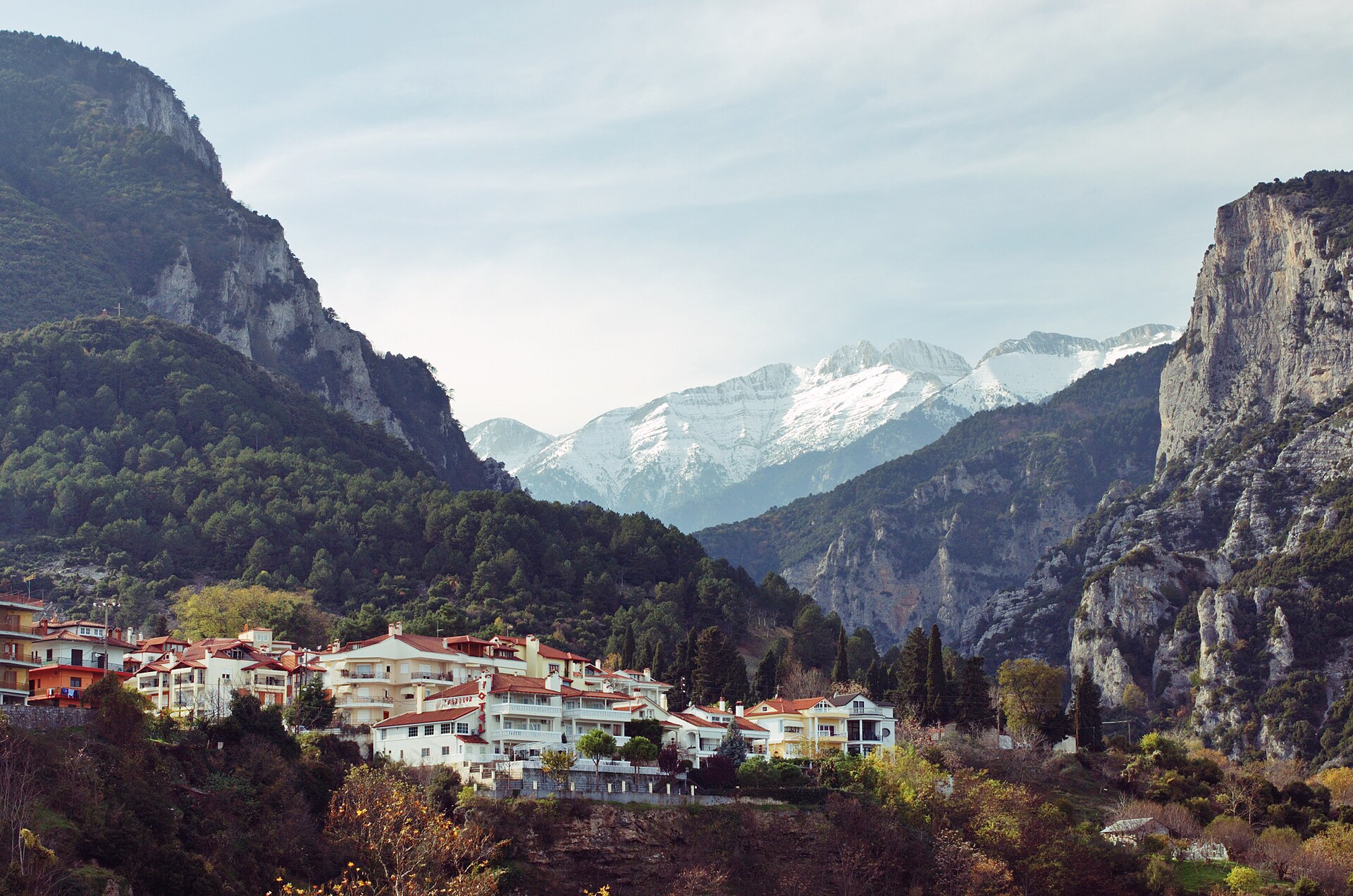
Litochoro is a destination for all seasons, but the best time depends on the desired activities. For hikers, late spring (May-June) and early autumn (September-October) are ideal: temperatures are mild, refuges are open and the colors of nature are at their peak. Summer is perfect for those who want to combine mountains and sea, although the center can be crowded. Winter transforms Litochoro into a cozy alpine village, with snow often whitening the rooftops and lit fireplaces scenting the air with burning wood. Regardless of the season, the advice is to explore the village on foot, letting yourself be guided by the sounds of water and enjoying the typical slowness of Greek Macedonia.
FAQ
È necessario essere esperti per fare trekking sull'Olimpo?
Quanto dista Litochoro dal mare?
Si può visitare il Monastero di Agios Dionysios in auto?
Litochoro è adatta alle famiglie con bambini?
Getting there
- Aeroporto di Salonicco-Macedonia (SKG) - circa 90 km
- Stazione di Litochoro sulla linea ferroviaria Salonicco-Atene (situata vicino alla costa)
- Percorrere l'autostrada E75 (A1) che collega Salonicco ad Atene e prendere l'uscita specifica per Litochoro.
- Dalla stazione ferroviaria partono autobus locali e taxi per coprire i 5 km che portano al centro del paese in collina.
Perfect for
È la capitale greca del trekking, punto di partenza per ogni spedizione sul Monte Olimpo.
Un luogo intriso di leggende antiche e vicinissimo allo straordinario parco archeologico di Dion.
Perfetto per chi cerca aria pura, cucina tradizionale e un'atmosfera autentica lontano dal turismo di massa.
To see
Da vedere a Litokhoro
Routes · Trovido Route