

Ladhadhika
Imagine walking on cobblestones glistening with rain and history, where the smell of sea salt mingles with roasted coffee and spic...
Updated 8 July 2026
This season · July · Summer
What to do in Ladhadhika now
The story
The story of Ladhadhika
Merchant roots: a history of oil and trade
The history of Ladhadhika is intrinsically linked to the sea and the trade that made Thessaloniki the "Bride of the Thermaic Gulf". Already during the Ottoman period, this area was the hub of the city's economic activities. The name itself, derived from the Greek word for oil, testifies to the specialisation of the warehouses that crowded the area: here were stored not only olive oil, but also soap, wax and colonial goods from all over the Mediterranean. The district's structure reflected this practical function, with low, sturdy buildings designed to withstand the weight of goods and ease loading towards the nearby harbour. Despite changing rulers and political upheavals, Ladhadhika remained for centuries the meeting point between East and West, a cosmopolitan bazaar where dozens of different languages were spoken.
The miracle of survival: the fire of 1917
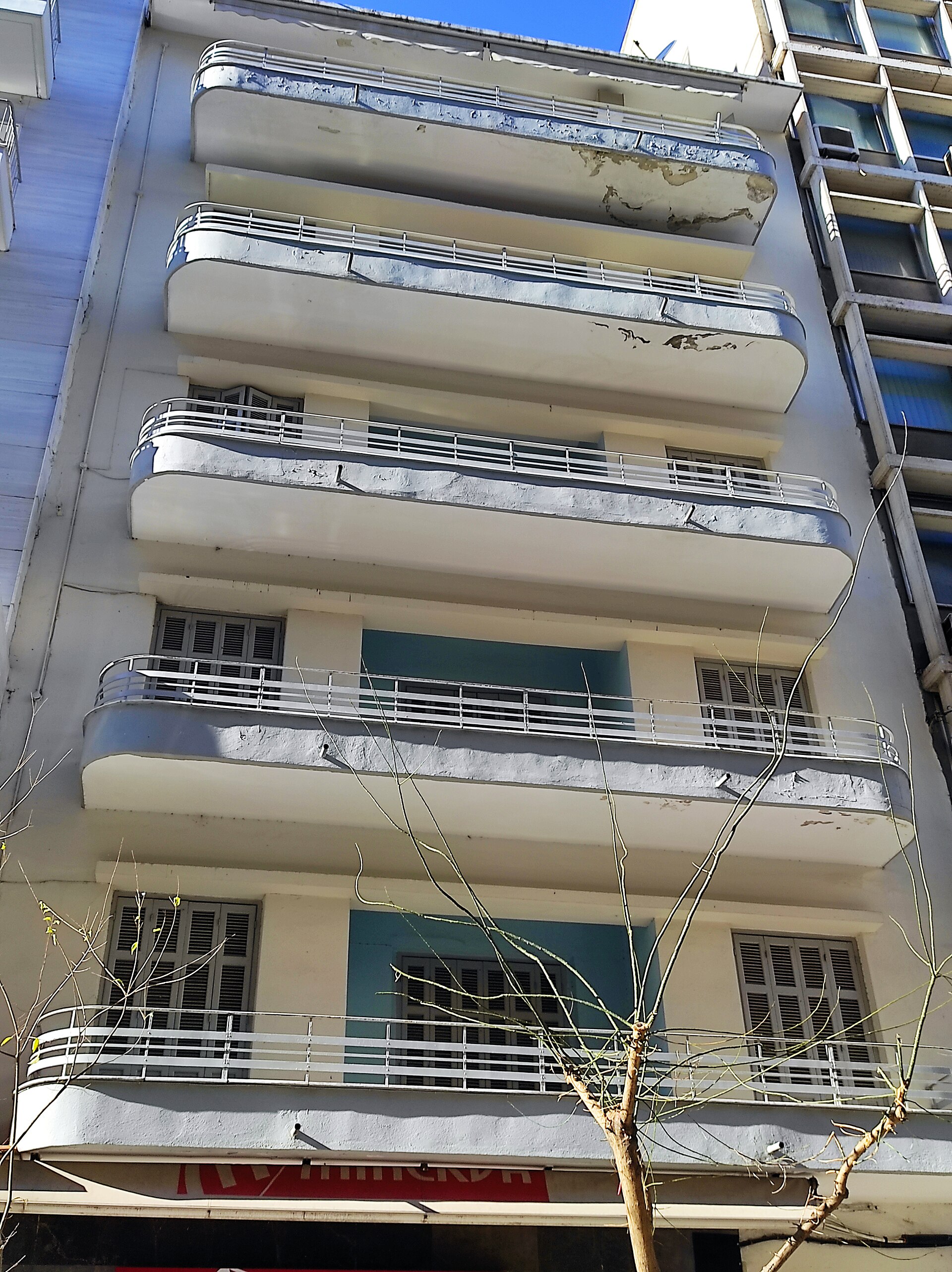
One crucial event defined the architectural identity of Ladhadhika: the Great Thessaloniki Fire of 1917. While much of the historic city was reduced to ashes, Ladhadhika was largely spared the fury of the flames. This stroke of luck allowed the district to retain its original nineteenth-century urban layout, with narrow, irregular streets that contrast sharply with the wide, orthogonal avenues designed by the French architect Ernest Hébrard for the reconstruction of the rest of the city. Walking today among its blocks, you can clearly sense this temporal discontinuity: Ladhadhika is a time capsule that preserves the pre-modern soul of Thessaloniki, offering a visual testimony to how the city looked before its radical twentieth-century urban transformation.
Morihovo Square: the beating heart of the neighbourhood
Morihovo Square is the gravitational centre of Ladhadhika, a wide open space that serves as a stage for the neighbourhood's social life. Marked by a central fountain and surrounded by meticulously restored historic buildings, the square is the ideal place to watch the world go by and immerse yourself in the local atmosphere. Once a space for loading and unloading goods, today it hosts the outdoor terraces of some of the city's most renowned cafés and restaurants. The square is particularly evocative at dusk, when the warm light of the lampposts illuminates the ochre and brick-red facades, creating a colour contrast that enchants photographers and travellers alike. It is here that you can sense the handover between Macedonia's industrious past and its convivial present.
Industrial architecture and the harbour warehouses
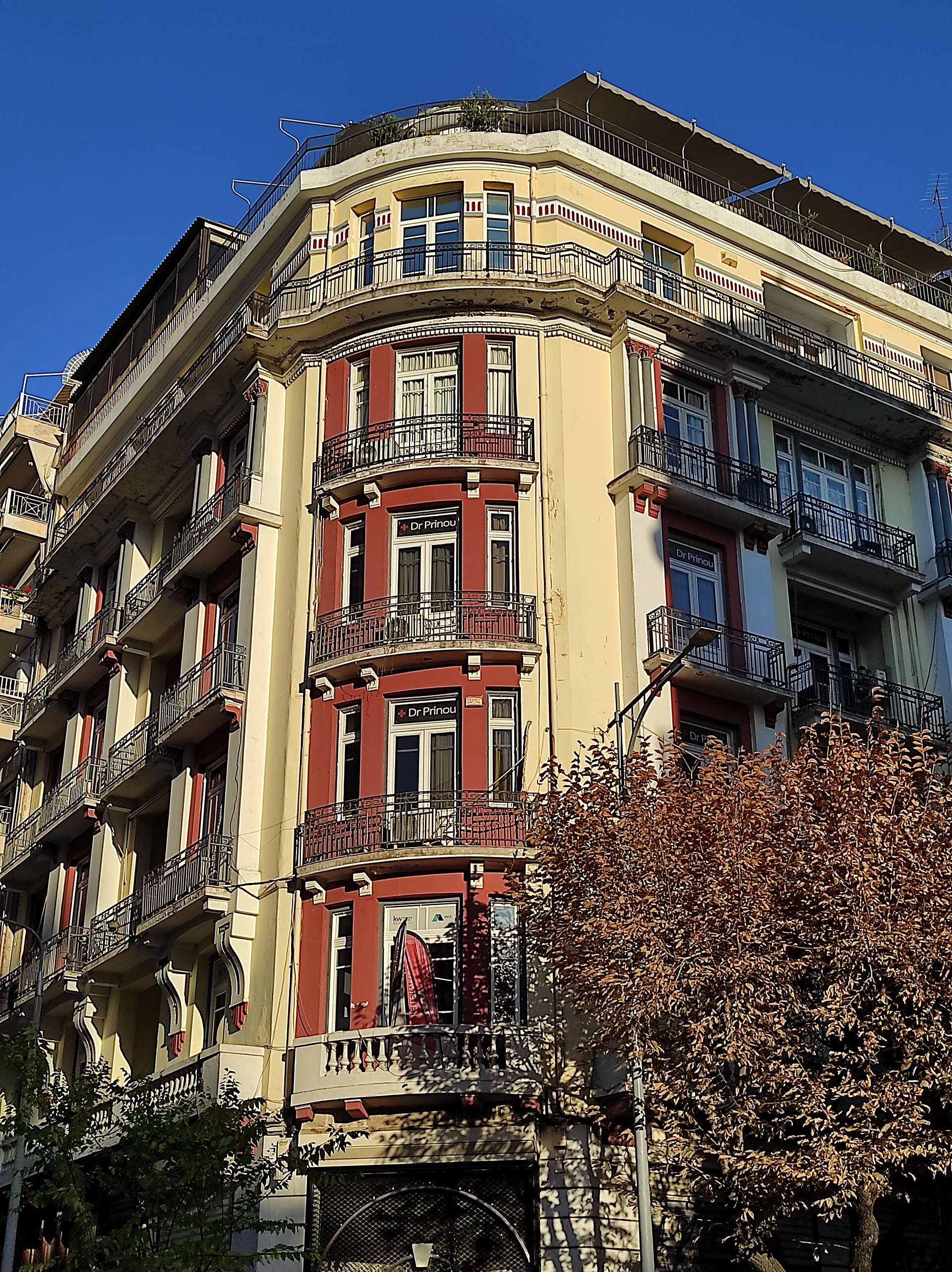
The aesthetic of Ladhadhika is defined by its exposed-brick buildings and iron structures, typical of late nineteenth-century industrial architecture. Many of these former warehouses have been converted with great care, retaining original elements such as heavy wooden doors and wrought-iron grilles. This blend of careful conservation and contemporary design makes the neighbourhood an excellent example of urban regeneration. Just a short walk away, the old harbour area (Pier 1) continues this dialogue between history and modernity: the old port hangars now house the Museum of Photography and the Centre of Contemporary Art, creating a cultural hub that constantly engages with the commercial and gastronomic energy of Ladhadhika.
The Jewish Museum of Thessaloniki
Located on the edge of Ladhadhika, in an elegant building that once housed the Bank of Athens, the Jewish Museum is an essential stop for understanding the historical depth of the place. For centuries Thessaloniki was the "Jerusalem of the Balkans", and the Sephardic Jewish community played a leading role precisely in the trade that animated Ladhadhika. The museum documents the everyday life, traditions and tragic fate of the community during the Nazi occupation. Visiting this institution means honouring the memory of those who built the cultural wealth of this neighbourhood, adding a layer of awareness and respect to the aesthetic beauty of the surrounding streets. It is a place of silence and reflection that balances the liveliness outside.
Landscape and Nature: the Thermaic Gulf waterfront
Although Ladhadhika is a densely urbanised neighbourhood, its soul is inextricably linked to the Thermaic Gulf. The natural landscape here is dominated by the sea horizon, which opens up just metres from the district's last houses. On clear days, the eye can range as far as the snow-capped peaks of Mount Olympus, which stand majestically on the other side of the gulf. The closeness to the sea guarantees a constant breeze that eases the summer heat and delivers spectacular sunsets, when the sky turns shades of violet reflected in the harbour waters. This bond with water has shaped not only the local economy, but also the temperament of its inhabitants, open and outward-looking.
Culinary traditions: the realm of mezedes
Entering a tavern in Ladhadhika is a full sensory experience. Macedonian cuisine is famous for its richness and its skilful use of spices, a legacy of the Ottoman past. Here the ritual of the meal begins with mezedes, small dishes to share ranging from grilled octopus to melted local cheeses (saganaki), from aubergine dips to Florina peppers. Tradition dictates that every bite be accompanied by a sip of ouzo or tsipouro, the local spirit often served with ice. Ladhadhika is the place where culinary modernity meets grandmother's recipes: it is not unusual to find establishments experimenting with gourmet pairings while still keeping the warm, informal welcome typical of the old ouzeries.
Popular culture and Rebetiko: the soundtrack of the alleys
In the evening, Ladhadhika transforms and the notes of the bouzouki begin to echo among the stone walls. This neighbourhood is one of the best places to listen to Rebetiko, the so-called "Greek blues". Born in the slums and ports, this musical genre tells stories of love, exile and everyday resistance. Many taverns offer live music, creating a convivial atmosphere where the boundaries between musicians and audience dissolve. Popular culture in Ladhadhika is not a museum piece, but a living practice: it shows in the way people gather, in the endless length of meals and in the joy of sharing. It is a contagious energy that turns a simple dinner into a celebration of life.
Experiences not to be missed in Ladhadhika
- Dinner at a traditional tavern on Katouni Street, tasting the typical baked Feta cheese.
- An evening stroll through the illuminated alleys to admire the murals and the restored industrial architecture.
- A tsipouro tasting accompanied by fresh fish mezedes in Morihovo Square.
- A visit to the nearby Pier 1 of the harbour to discover the exhibitions at the Museum of Photography.
- Shopping in the small artisan workshops that still hold their ground among the nightlife venues.
- Listening to live Rebetiko music in one of the neighbourhood's historic ouzeries.
When to go and how to experience the neighbourhood
The best time to visit Ladhadhika is during the shoulder seasons, in spring or early autumn, when temperatures are pleasant and allow you to fully enjoy the outdoor tables. Summer can be very hot, but the closeness to the sea brings pleasantly breezy evenings. To experience the neighbourhood like a local, avoid the hottest hours of the afternoon, when many shops close and the streets empty out. The magic begins after eight in the evening: Ladhadhika gradually fills with life, the lights come on and the murmur of conversation becomes the dominant soundtrack. If you are looking for tranquillity, an early-morning stroll will let you admire the architectural details without the crowds, revealing the quieter, more nostalgic face of this corner of Macedonia.
FAQ
Ladhadhika è una zona sicura di sera?
È necessario prenotare per cenare nei ristoranti del quartiere?
Quanto tempo occorre per visitare Ladhadhika?
Si può arrivare in auto?
Getting there
- Aeroporto Internazionale di Salonicco-Macedonia (SKG) - 15 km
- Stazione Ferroviaria Centrale di Salonicco (Neos Sidirodromikos Stathmos) a circa 1,5 km
- Dall'autostrada A1/E75 seguire le indicazioni per il centro di Salonicco e la zona del Porto (Limani).
- Il quartiere è a pochi passi da Piazza Aristotelous; muoversi a piedi è il modo migliore per esplorare il centro storico.
Perfect for
Un vero paradiso per gli amanti della cucina greca autentica, tra mezedes tradizionali e rivisitazioni moderne.
Uno dei rari esempi sopravvissuti della Salonicco pre-1917, con architetture mercantili di grande fascino.
Il centro nevralgico del divertimento cittadino, capace di offrire sia taverne tranquille che bar alla moda.
To see
Da vedere a Ladhadhika
Routes · Trovido Route
