

Nissaki
Nissaki takes its name from a small limestone rock that emerges just a few metres from the shore, so close to the beach that it ca...
Updated 8 July 2026
This season · July · Summer
What to do in Nissaki now
The story
The story of Nissaki
The name, the rock and the geography of the place
The small islet that gives the village its name is in fact little more than a rock covered in low scrub, separated from the mainland by a shallow stretch of sea that bathers cross by swimming or by pedalo on calm days. Around it opens the bay of Nissaki, squeezed between rocky headlands covered with olive trees and cypresses, with the white pebble beach sloping steeply down into water that is already clear and deep just a few metres from the shore. The village proper develops in two clusters: one below, clinging to the coast, with the few taverns and small wooden jetties; the other higher up, along the old panoramic road to Kassiopi, where villas and residences sit immersed in greenery.
Corfu through history: from the Corinthians to the Venetians
To understand Nissaki, one must place it within the long history of Corfu, colonised as early as the 8th century BC by Corinthian settlers who founded Corcyra there, one of the most powerful and contested city-states of the ancient Greek world, protagonist of naval clashes with its mother city Corinth that, according to Thucydides, helped trigger the Peloponnesian War. Through Byzantine rule and Norman and Angevin incursions, the island came in 1386 under the control of the Republic of Venice, which held it for over four centuries, until 1797. It was Venice that left the deepest mark: the two fortresses of Corfu Town, the millions of olive trees planted by order of the governors, the Venetian architecture of the historic centre and even the use of the Italian language among the educated classes are all legacies of those centuries, never erased by the dominations that followed.
From French rule to the British protectorate
After the fall of the Serenissima, Corfu passed briefly under revolutionary France, then became capital of the short-lived Septinsular Republic under Russo-Ottoman protection, before returning to French rule under Napoleon, who built the new fortress and modern defences. In 1815, after the Congress of Vienna, the Ionian Islands became a British protectorate: the British built roads, the aqueduct, the first theatre and even introduced cricket, a sport still played today on the esplanade of Corfu Town. The protectorate lasted until 1864, when the islands were ceded to the Kingdom of Greece as a wedding gift on the occasion of the coronation of King George I. It was precisely the British legacy, combined with the scenic charm of the north-eastern coast, that made places like Nissaki, Kalami and Kassiopi favourite destinations for travellers from across the Channel from as early as the beginning of the twentieth century.
The Pantokrator massif and the hinterland
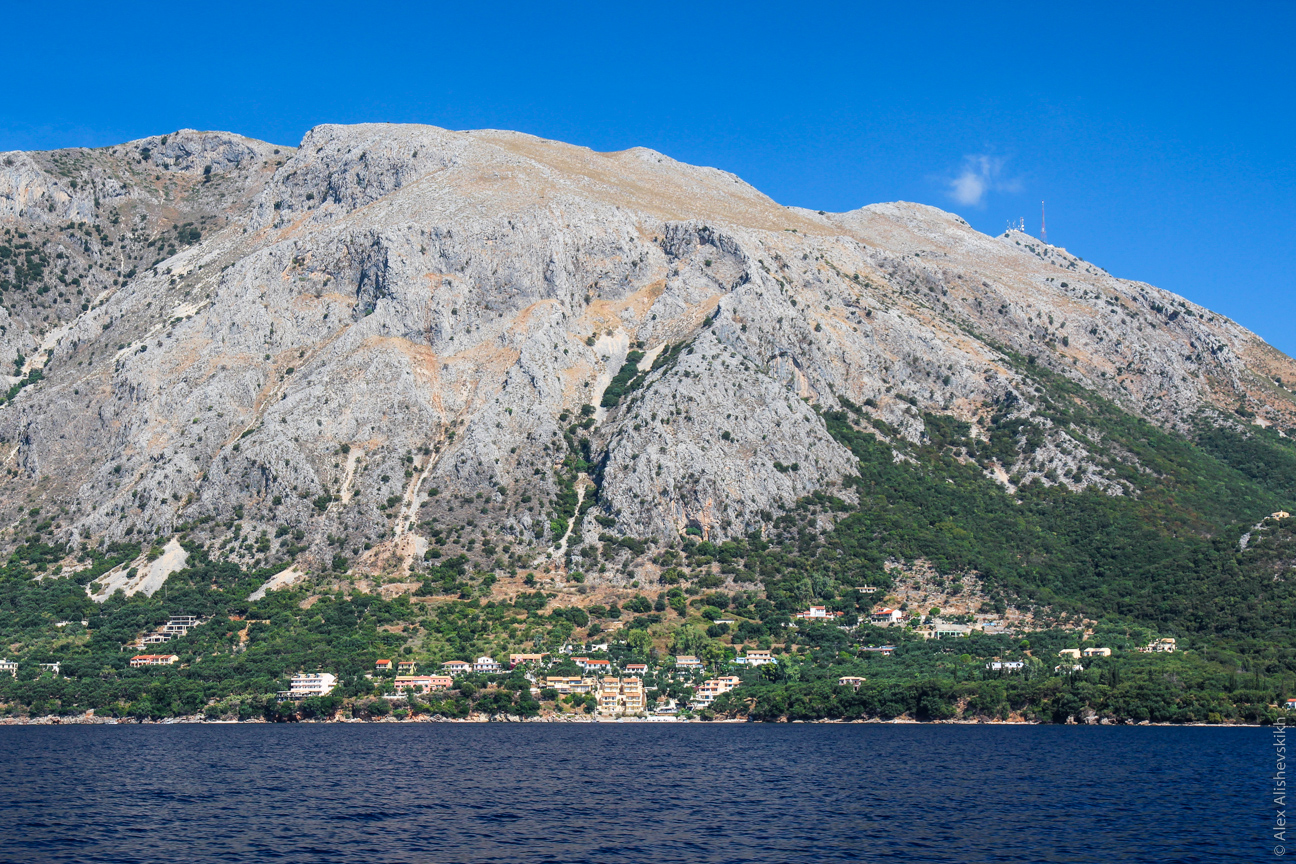
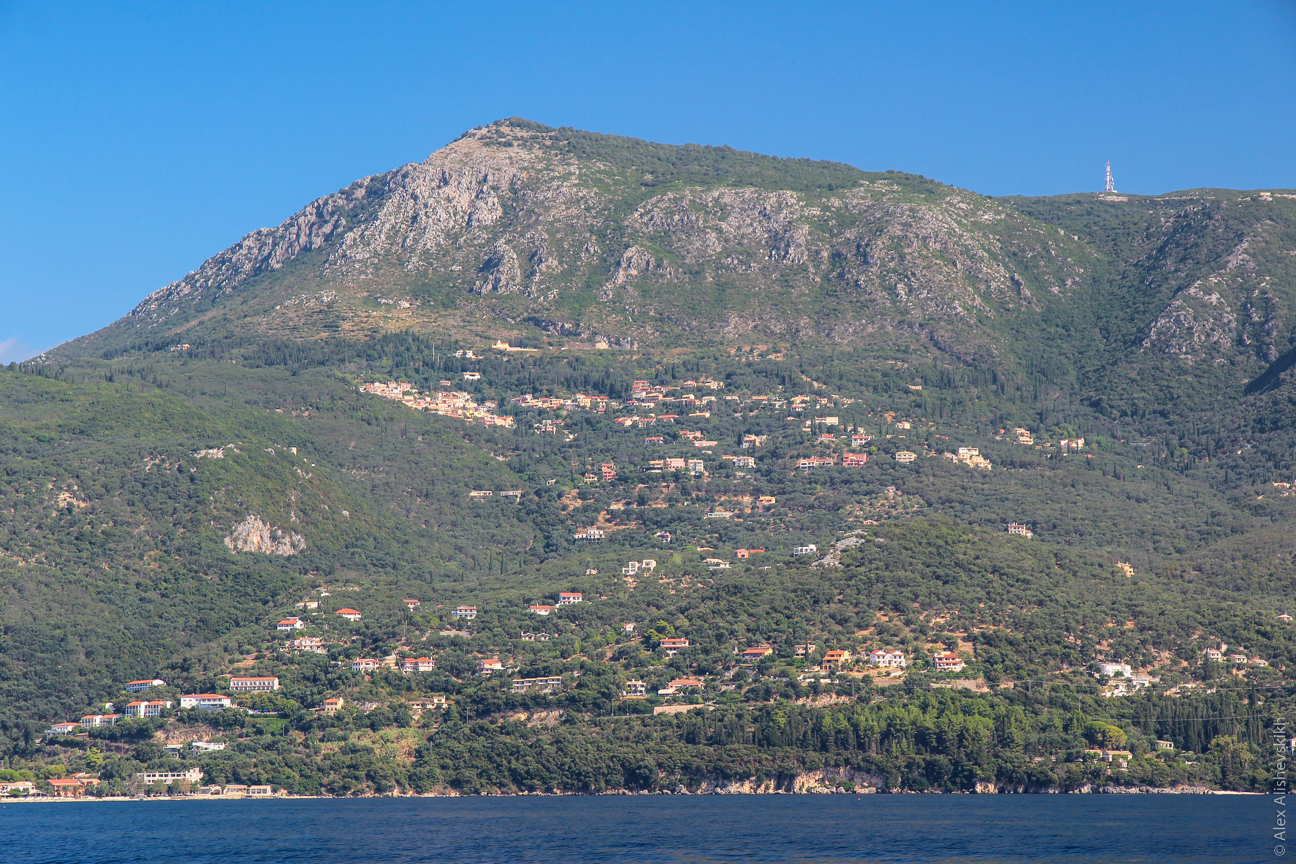
Behind Nissaki rises Pantokrator, Corfu's highest mountain at 906 metres, whose name comes from the monastery dedicated to Christ Pantocrator that crowns its summit. The slopes descending towards the coast are covered with centuries-old olive groves, some with gnarled trunks that are four or five hundred years old, interspersed with small cypress groves and dry-stone terraces built by farmers in the Venetian centuries to gain cultivable land on the steep hillsides. The inland villages, such as Nissaki Chorio further up, retain an almost unchanged rural character, with small Byzantine churches, public fountains and a rhythm of life marked by the olive harvest rather than by coastal tourism.
The beach of Nissaki
Nissaki's main beach is a strip of white, smooth pebbles squeezed between two rocky headlands, with a seabed that shelves rapidly, giving way to intensely turquoise water, among the clearest along the entire north-eastern coast. It is neither a long nor a large-scale developed beach: a few rows of sun loungers, a couple of taverns with tables almost dipping into the water, the gentle rocking of fishing boats moored close by. Directly opposite, the little islet that gives the village its name invites a more demanding swim, while to the north, reachable on foot or by boat, small, more secluded coves open up, appreciated by those seeking a swim away from the busier paths.
Kalami and the Durrell brothers' White House
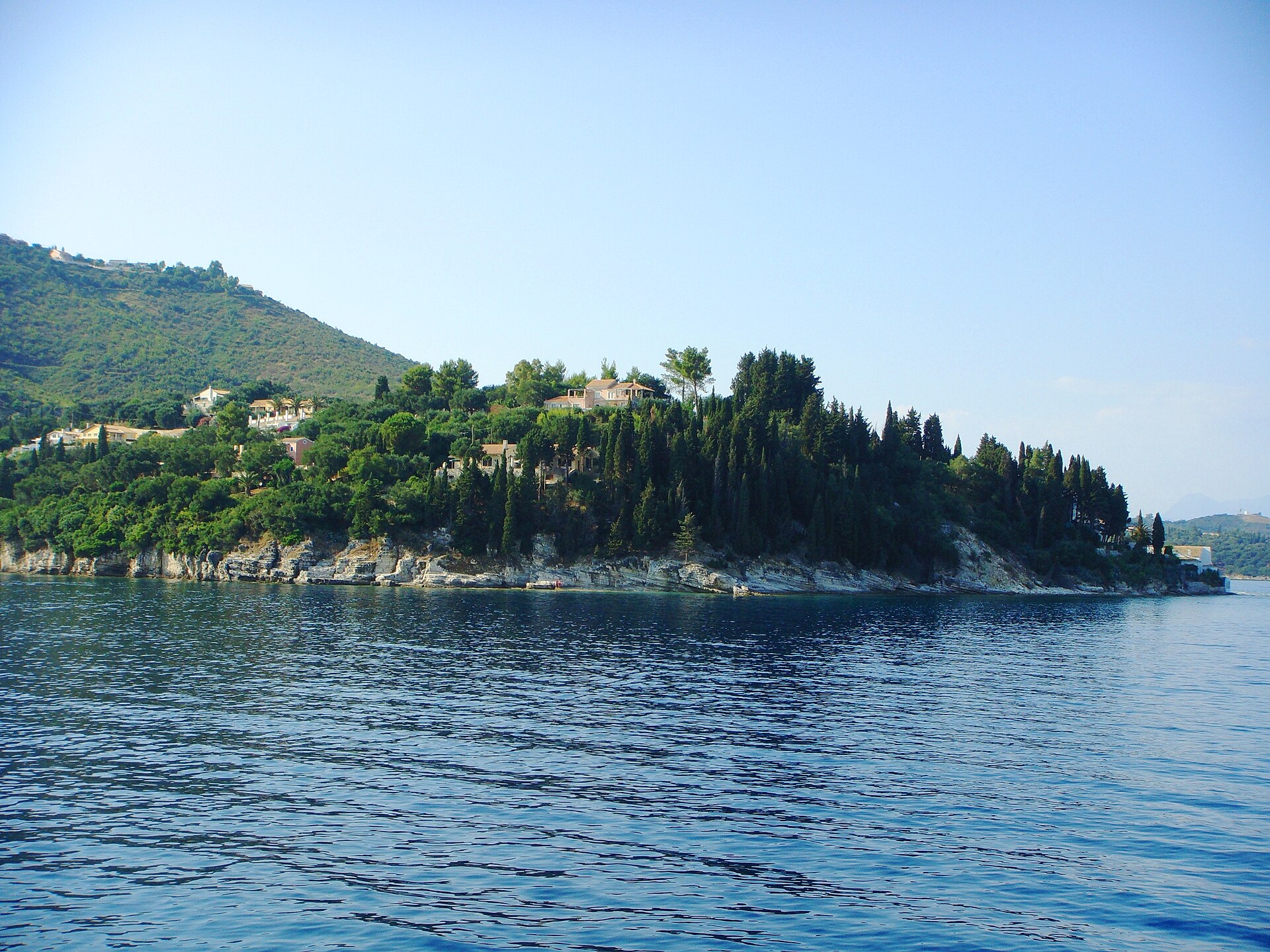
A few minutes north of Nissaki lies Kalami, a small bay made famous by the Durrell family, who stayed here in the 1930s. The "White House" at the tip of the bay was the home of the writer Lawrence Durrell, while his younger brother Gerald, later a naturalist and founder of Jersey Zoo, recounted these very shores in the celebrated childhood memoir "My Family and Other Animals", which over the years has become a classic of travel literature and inspired television series and a literary tourism that remains alive today. The house, now partly converted into a tavern and apartments, remains an almost obligatory stop for those who love retracing the places recounted in the books, strolling along the same cove of pebbles and crystal-clear water described eighty years ago.
Kouloura, the postcard-perfect little harbour
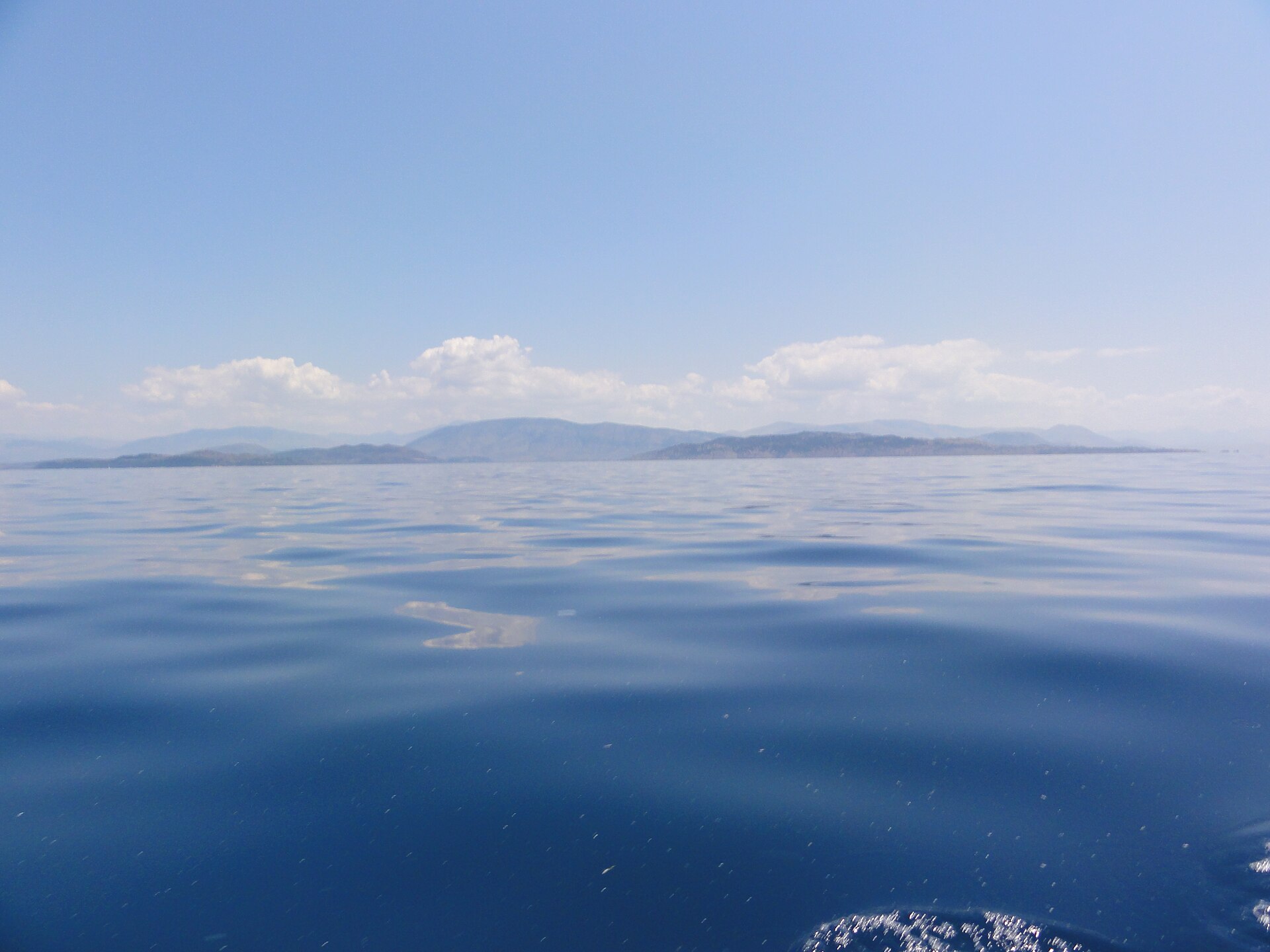
Further north still, beyond Kalami, lies Kouloura, a tiny horseshoe-shaped bay that many photo guides point to as one of the most striking spots on the entire island: a small Venetian jetty, two or three fish taverns, cypresses reflected in the water and, behind, an old citrus grove that once belonged to a noble family of the island. There are no real beaches, only low rocks to dive from, but it is one of the most photographed places in Corfu at sunset, when the colourful fishing boats stand out against the golden light and the mountains of Albanian Epirus turn pink on the other side of the channel.
Agios Stefanos and Barbati
Heading south, towards Corfu Town, the coast offers two more stops that complement Nissaki. Barbati is a long beach of pebbles and fine gravel, wider and more developed, dominated by the rocky outline of Mount Zervos and frequented mostly by families for its gently sloping seabed near the shore. Agios Stefanos, not to be confused with the village of the same name on the north-western coast, is a small fishing hamlet with a natural little harbour and seasonal ferries to Paxos and Antipaxos, the smaller islands to the south that remain one of the most popular boat excursions for those staying along this coast.
Kassiopi, the castle-village to the north
About ten kilometres from Nissaki, Kassiopi ideally closes off the north-eastern coast with its ruined Byzantine-Venetian castle, built on a headland that overlooks two twin bays. Already in Roman times Kassiopi was home to a temple dedicated to Jupiter, said by tradition to have been visited even by the emperor Nero; in the Middle Ages the fortress was fought over by the Angevins and the Venetians before being partly dismantled by the Venetians themselves, who feared it could be used against them. Today the hamlet, with its little harbour full of caiques and its lively evening square, is the liveliest hub of the whole area, a destination for those seeking nightlife and restaurants alongside the sea.
Corfu Town, the World Heritage capital
About twenty-five kilometres to the south, Corfu Town (Kerkyra) is the natural point of reference for anyone staying in Nissaki: the historic centre, with its narrow Venetian "kantounia" alleys, the grassy Spianada, the Georgian-style Palace of St Michael and St George, and the two fortresses, old and new, was declared a UNESCO World Heritage Site in 2007 precisely for the exceptional layering of Venetian, French and British influences that remain intact. It is worth devoting at least a full day to it, between the church of St Spyridon with its relics venerated throughout Greece, the covered market and the cafés under the arcades of the Liston, built in the nineteenth century in imitation of the Rue de Rivoli in Paris.
Traditions, flavours and popular culture
The cuisine of this area combines the Greek tradition with four centuries of Venetian and Italian influence, visible in dishes such as sofrito, veal slices in a garlic and vinegar sauce, pastitsada, a spiced meat sauce served with tube pasta reminiscent of Italian ragùs, and bourdeto, fish stewed with hot paprika. The taverns of Nissaki, Kalami and Kouloura serve extremely fresh fish, often caught by the very boats moored in front of the table, accompanied by the local oil, pressed from olive trees planted precisely in the Venetian era. In the inland villages, religious festivals tied to the Orthodox calendar survive, with icon processions and village bands, while in Corfu Town Easter week is famous throughout Greece for the throwing of the "botides", large clay pots smashed from balconies as the procession of Holy Saturday passes by.
- Swimming out to the islet of Nissaki and back to shore
- Visiting the Durrells' White House at Kalami
- Dining in Kouloura while watching the sunset over Epirus
- Climbing up to the village of Nissaki Chorio through the centuries-old olive groves
- Exploring the Byzantine-Venetian castle of Kassiopi
- Taking the seasonal ferry to Paxos and Antipaxos from Agios Stefanos
- Devoting a day to the UNESCO historic centre of Corfu Town
- Snorkelling in the small coves north of the bay
When to go and how to experience the place
The swimming season in Nissaki runs roughly from May to October, with the sea already pleasant in late spring and still warm well into autumn. July and August bring the area to full capacity along the entire north-eastern coast, with traffic on the panoramic road to Kassiopi in the evening hours; those seeking a calmer atmosphere would do well to aim for June or September, when the taverns remain open but the beaches are less crowded and temperatures are still summery. Winter, as in much of the Ionian Islands, is rainy and many tourist facilities close completely, making the area an almost exclusively seasonal destination, best experienced at the slow pace of someone who chooses a bay to stay in for several days, not merely to pass through.
FAQ
Come si arriva a Nissaki da Corfù città?
Qual è il periodo migliore per visitare Nissaki?
Cosa vedere in una sola giornata nella zona?
Dove si parcheggia a Nissaki?
Nissaki è adatta alle famiglie con bambini?
Si possono raggiungere Paxos e Antipaxos da qui?
Getting there
- Aeroporto Internazionale di Corfù "Ioannis Kapodistrias" (CFU), circa 30 km
- Dalla città di Corfù seguire la strada costiera verso nord in direzione Kassiopi, superando Kondokali, Dassia e Barbati; circa 25 km, 35-40 minuti in auto.
- La strada panoramica è stretta e tortuosa in alcuni tratti: guidare con prudenza, specialmente nelle ore serali estive quando il traffico verso i ristoranti aumenta.
Perfect for
Acque turchesi e trasparenti, isolotto raggiungibile a nuoto e calette appartate lungo la costa.
Duemilacinquecento anni di storia tra colonie greche, dominio veneziano e protettorato britannico.
I luoghi raccontati dai fratelli Durrell, da Kalami alla Casa Bianca.
Taverne di pesce e piatti dal sapore veneziano come pastitsada e sofrito.
Uliveti secolari, cipressi e il massiccio del Pantokrator alle spalle della costa.
To see
