

Moraitika
Nestled on the south-eastern coast of the island of Corfu, Moraitika reveals itself to the traveller as a fascinating geographical...
Updated 8 July 2026
This season · July · Summer
What to do in Moraitika now
The story
The story of Moraitika
Historical roots: from the refugees of the Morea to the Roman era
The history of Moraitika is intrinsically linked to the movements of peoples that characterised the Mediterranean in the 16th century. The name itself derives from the settlers who came from the Morea (present-day Peloponnese), who around 1540 fled the Ottoman advance to find refuge under the protective wing of the Republic of Venice on Corfu. These exiles founded the original settlement on the hill, far from the pirates who then plagued the coasts. However, Moraitika's past runs deeper still, reaching back to the era of Imperial Rome. The fertility of the soil and the mildness of the climate made this area a favourite destination for the Roman aristocracy, who built sumptuous suburban villas here. In the centuries that followed, under Venetian rule, the local economy consolidated around olive cultivation, transforming the landscape into that endless expanse of age-old trees we still admire today.
Ano Moraitika: the ancient heart on the hill
To understand the soul of this place, one must leave the coast behind for a moment and climb up to Ano Moraitika, the old village. Here time seems to have stood still: stone houses with red-tiled roofs huddle together along narrow, winding alleys, originally designed to confuse invaders. The façades are often adorned with cascades of fuchsia bougainvillea and pots of Greek basil. Wandering through these lanes, one discovers small private courtyards and tiny squares where the village elders still gather today to chat in the shade of the vines. This is the most authentic part of the resort, where the architecture reflects traditional Corfiot style, influenced by Venetian taste but adapted to rural needs. From the top of the hill, the view sweeps across the entire bay, offering a spectacle that reconciles one with nature.
The remains of the Roman Villa
One of Moraitika's most significant archaeological treasures lies a short distance from the modern beach. These are the remains of a Roman villa, probably dating back to the 3rd century AD, which testifies to the residential importance of the area in antiquity. Although today only a few perimeter structures and portions of the heating systems (hypocaust) typical of private baths remain visible, the site is fundamental to understanding the continuity of habitation in the area. The presence of these remains suggests that Moraitika was a stopover for rest and pleasure along the routes connecting Epirus to Italy. Imagining the mosaics and marbles that once adorned these rooms, overlooking the sea directly, offers a profound historical perspective to those who today frequent the nearby beach resorts.
The Church of Theotokos Kimisis
The spiritual and architectural landmark of the upper village is the church dedicated to the Dormition of the Virgin (Theotokos Kimisis). This sacred building embodies the ecclesiastical style of the Ionian Islands, characterised by bell towers – whether arched or freestanding – separate from the main body of the church. Inside, the atmosphere is intimate and solemn, enriched by finely crafted wooden icons and an iconostasis that separates the nave from the sanctuary. The church is not merely a monument but the hub of community celebrations, especially during the feast of 15 August, when the village comes alive with processions and celebrations that blend religious faith with popular folklore. Its scenic position makes it one of the most photographed and evocative spots in the whole area.
The Messonghi River and the natural boundary
South of Moraitika flows the Messonghi River, a waterway that serves as a natural boundary with the neighbouring village of the same name. The river mouth is a place of great scenic charm, where fresh water mingles with the salty waters of the Ionian Sea. Along the riverbanks, the characteristic boats of local fishermen, the 'kaiki', are moored, lending the landscape a picturesque, timeless touch. A walk along the river allows one to observe the riverside flora and, not infrequently, several species of waterfowl. The bridge that crosses the Messonghi is the physical link between the two communities of Moraitika and Messonghi, which, although distinct, together form a single large tourist district where life drifts lazily between a coffee at the little harbour and a dinner of the freshest fish.
Moraitika beach: an amphitheatre of sea
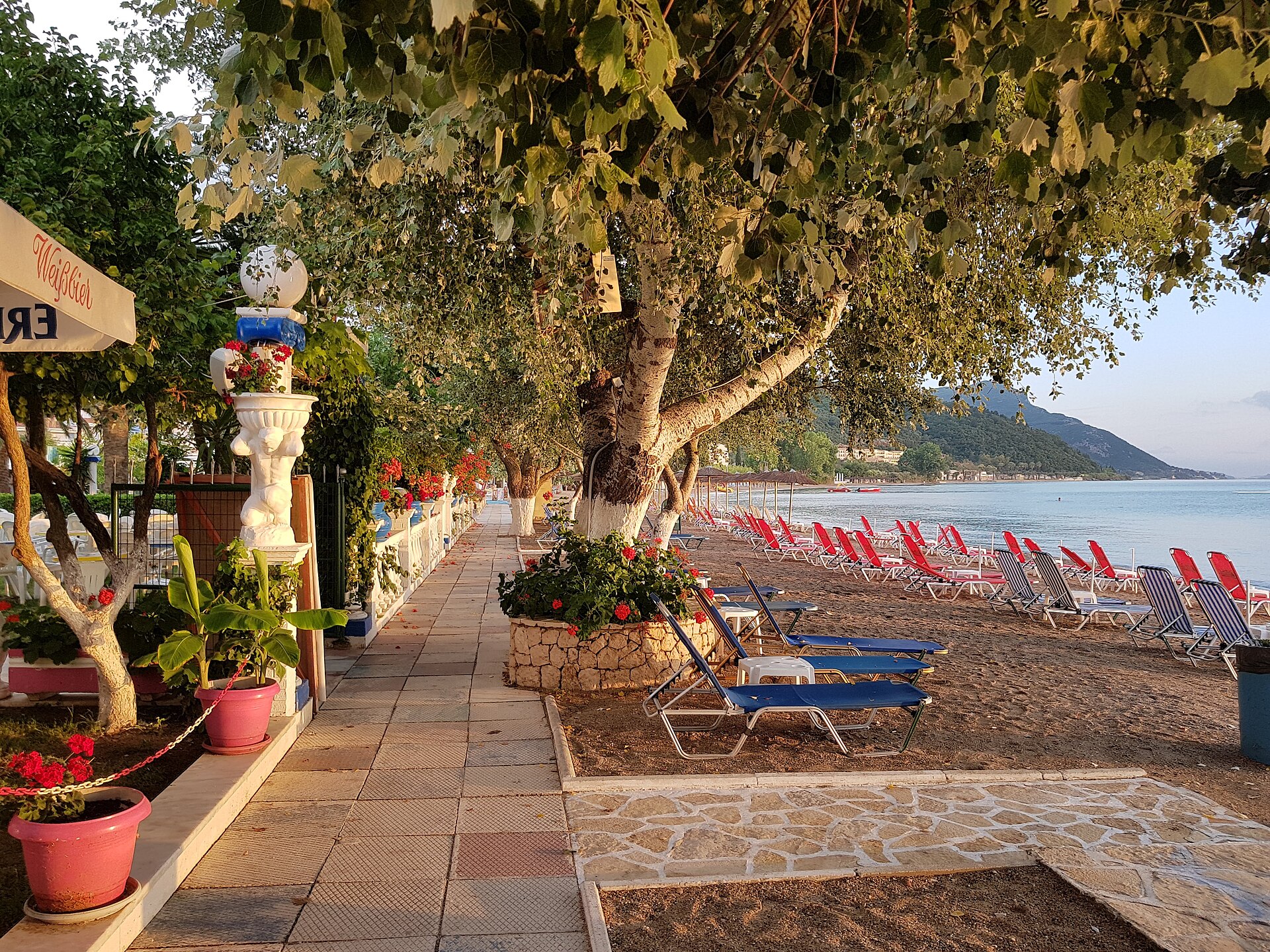
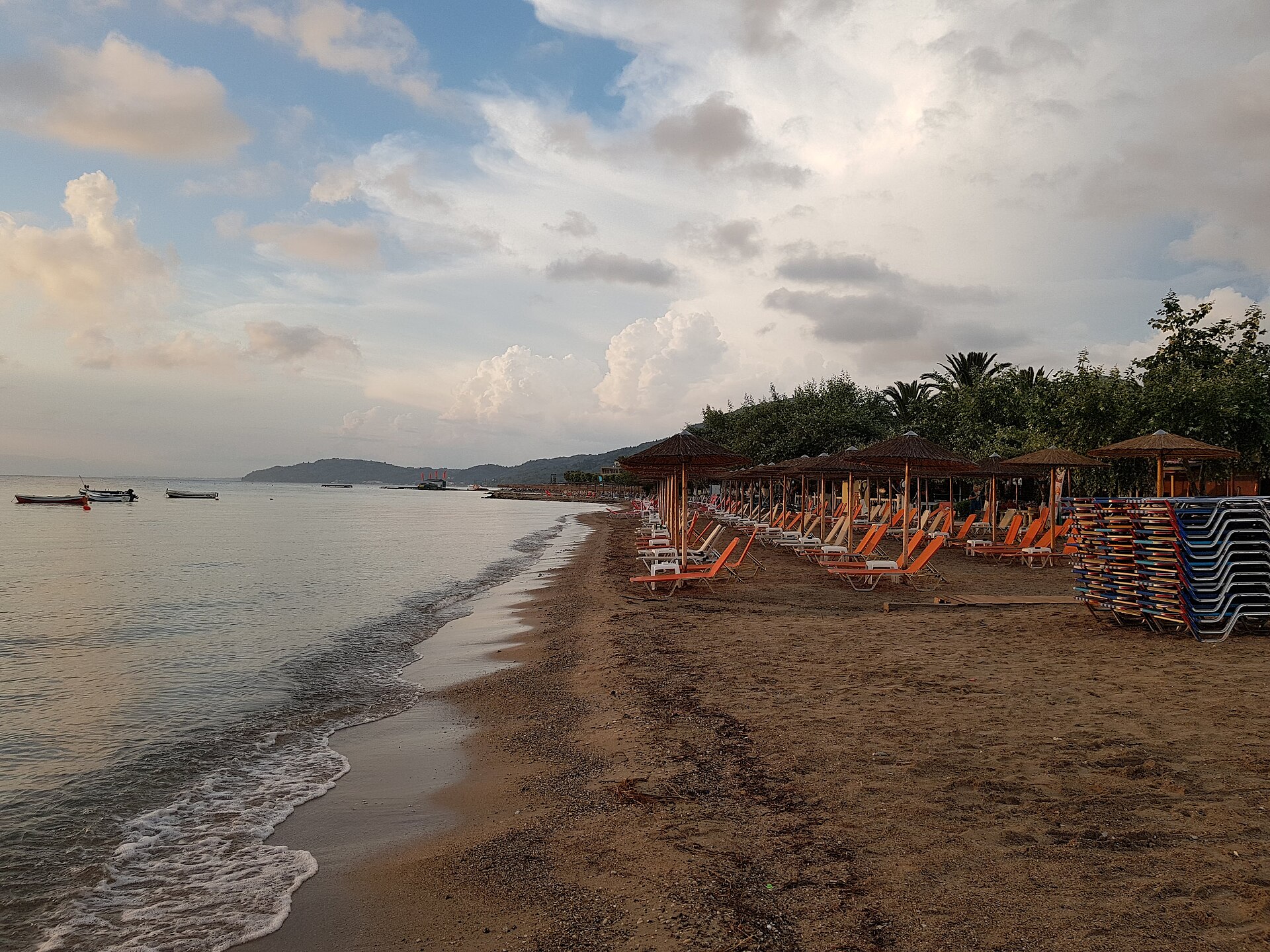
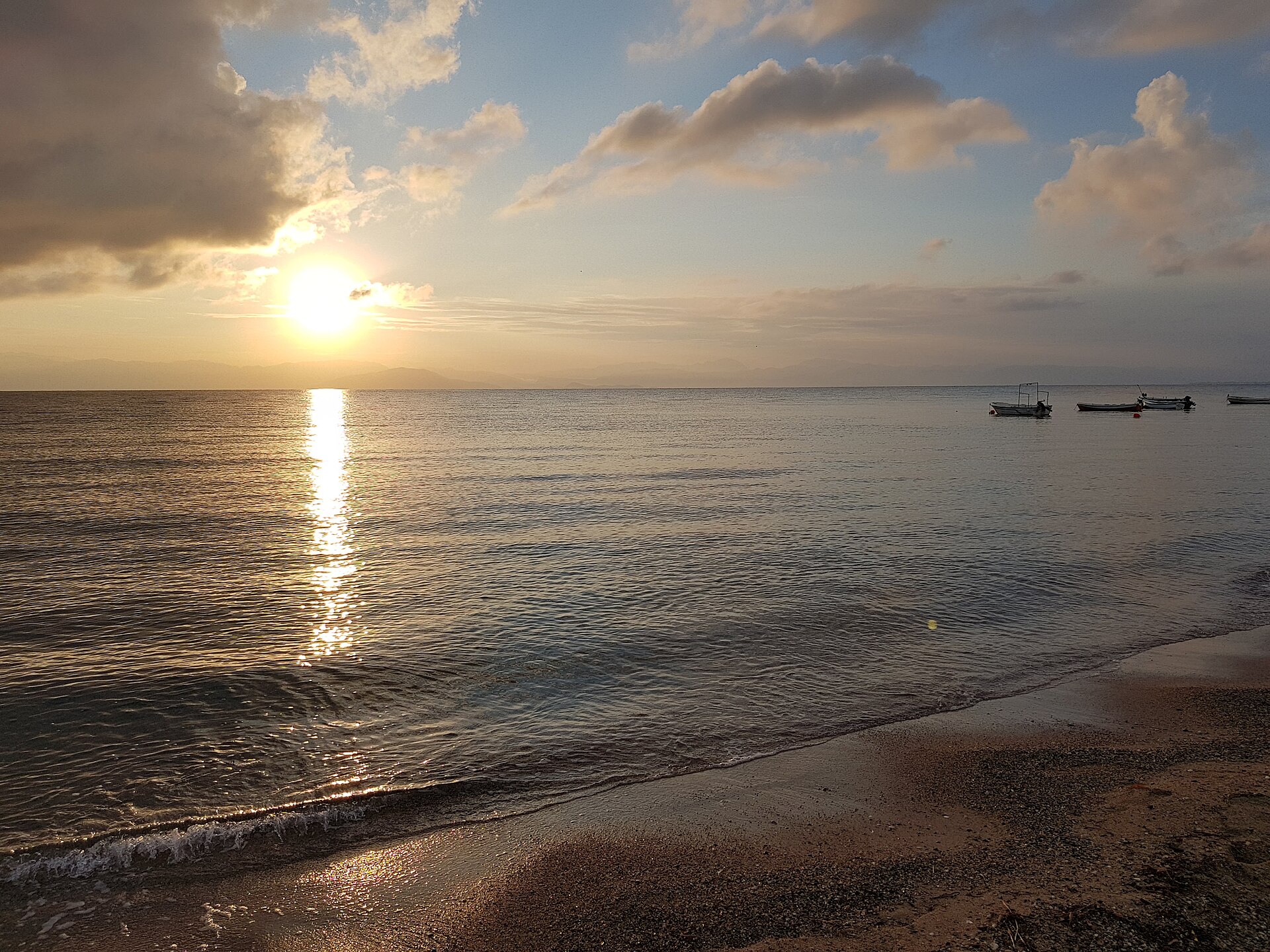
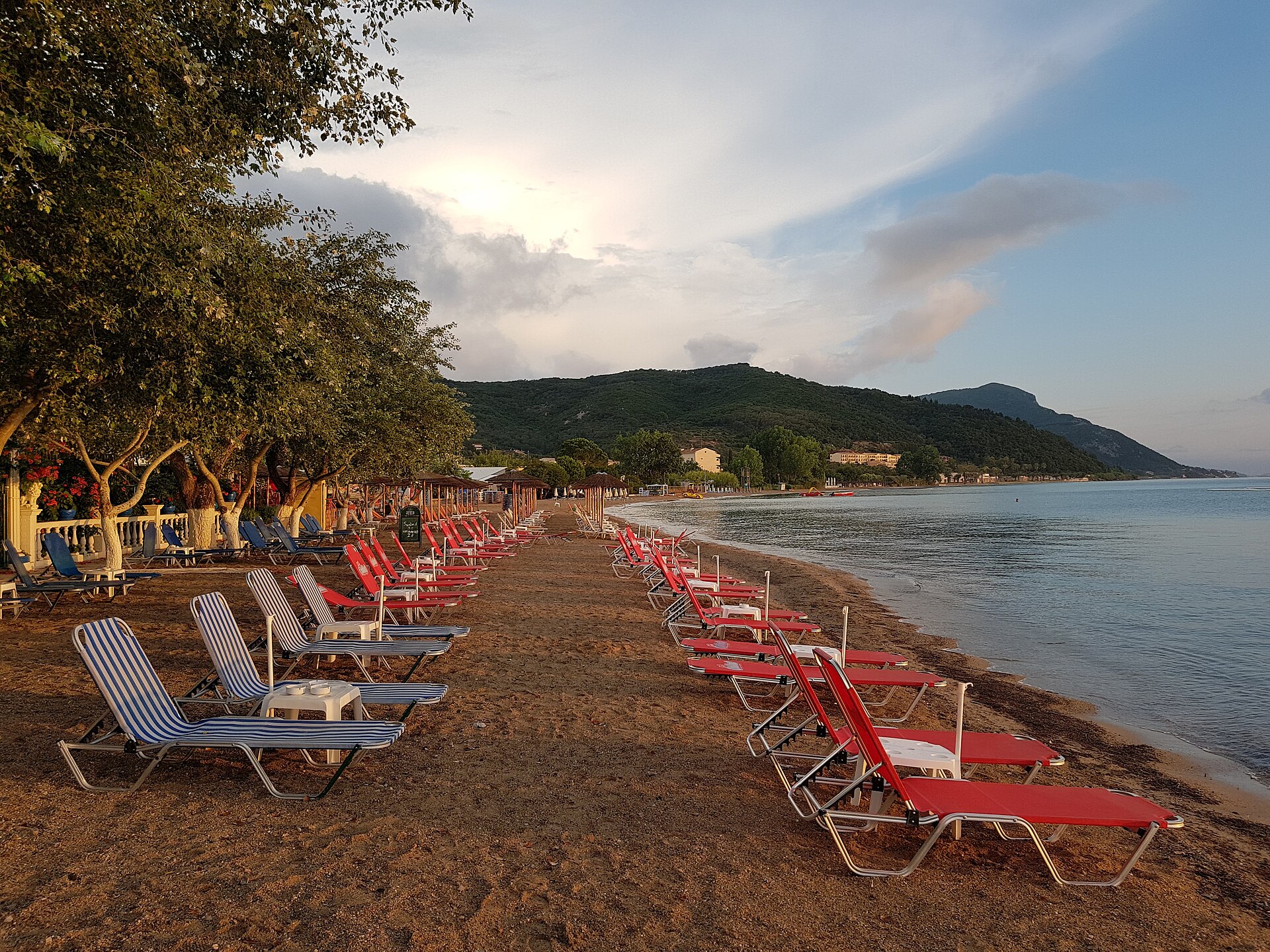
Moraitika's coastline is a long stretch of sand mixed with small smooth pebbles, washed by a crystal-clear sea that remains shallow for many metres from the shore. This configuration makes it one of the safest and most beloved beaches on the island, ideal for those travelling with children or for anyone wishing to swim in waters as calm as a natural swimming pool. The beach is well equipped, yet retains wilder corners the further one moves from the town centre. Behind the shoreline, Mediterranean vegetation provides natural shade, while numerous beach clubs allow for water sports or simply enjoying the sun in comfort. The view towards the Greek mainland and the mountains of Epirus, silhouetted on the horizon, completes a landscape of rare harmony.
Landscape and Nature: between olive groves and dunes
Moraitika's hinterland is a hymn to Mediterranean biodiversity. The dominant feature is the olive tree: Corfu's specimens are renowned for their height and for their twisted, sculptural trunks, which create a silver forest covering the hills. A short distance from here, heading south-west, one reaches Lake Korission, a coastal lagoon separated from the sea by a narrow strip of sandy dunes and a rare cedar forest. This protected area is a paradise for birdwatching, home to flamingos and herons during migration season. Exploring Moraitika's hinterland means immersing oneself in a landscape where traditional agriculture coexists with delicate ecosystems, offering ideal routes for light trekking or cycling, far from the more crowded circuits.
Gastronomic traditions and local flavours
Sitting down to eat in Moraitika means embarking on a journey through the flavours of Corfiot cuisine, a perfect synthesis of Greek ingredients and Venetian influences. Not to be missed is 'Sofrito', thin slices of veal cooked with garlic, parsley and white wine vinegar, or 'Pastitsada', hen or veal stewed with tomato and a secret mix of spices called 'spetseriko', served with long pasta. Being a village of sea and river, fish takes centre stage: 'Bourdeto' is a spicy fish soup that delights the palate with its intensity. All of this should be accompanied by excellent local olive oil and rounded off with a taste of kumquat, the small Chinese citrus fruit that has become a symbol of the island, served as a liqueur or candied. The culture of hospitality manifests itself in family-run taverns, where the meal is a ritual of sharing.
Experiences not to be missed
- Getting lost at sunset among the alleys of Ano Moraitika to take unforgettable photographs.
- Renting a small motorboat to explore the isolated coves of the southern coast.
- Dining at one of the taverns along the Messonghi River, watching the boats return.
- Visiting the nearby village of Chlomos, nicknamed the 'balcony of the Ionian Sea' for its breathtaking view.
- Taking part in an evening of traditional Greek dancing held in the village squares during the summer.
- Taking a morning walk on the beach when the water is flat and clear as glass.
When to go and how to experience Moraitika
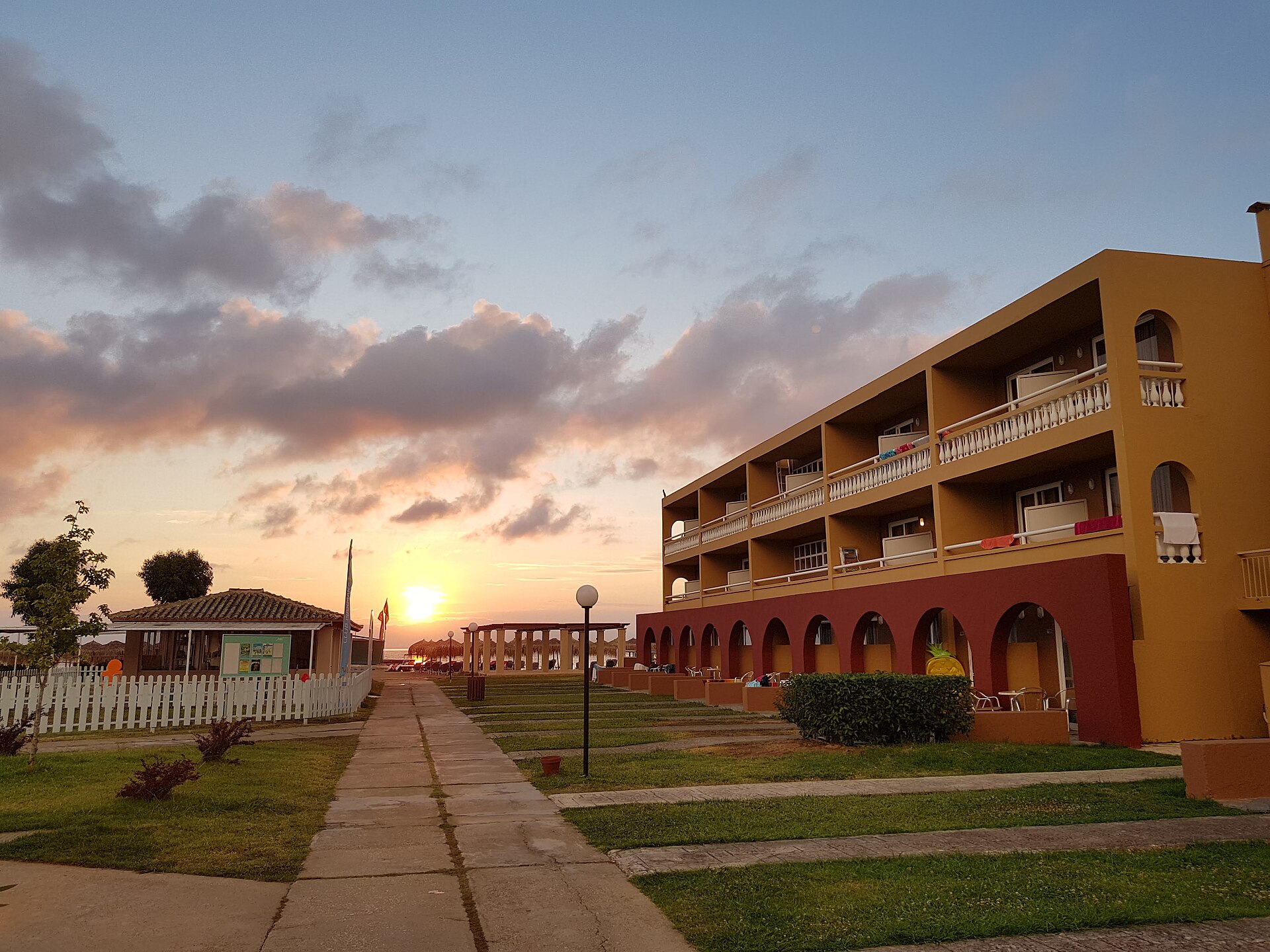
The ideal time to visit Moraitika runs from May to October. Late spring (May and June) offers a burst of blooms and perfect temperatures for excursions inland. July and August are the liveliest months, ideal for those who love beach life and lively evenings, although they are also the hottest and most crowded. September and early October represent perhaps the magic moment: the sea is still warm, the light is golden and the atmosphere becomes more intimate and relaxed. To experience the place fully, the advice is to alternate beach days with exploring the nearby villages. Moraitika is an excellent base for exploring the south of the island, less trodden by mass tourism than the north, offering a more authentic travel experience closer to the rhythms of nature.
FAQ
La spiaggia di Moraitika è adatta ai bambini?
È facile trovare parcheggio vicino al mare?
Quanto tempo occorre per visitare il borgo antico?
Ci sono collegamenti con Corfù Città?
Getting there
- Aeroporto Internazionale di Corfù Ioannis Kapodistrias (CFU) - 20 km
- Non presenti sull'isola
- Percorrere la strada costiera nazionale verso sud (Corfu-Lefkimmi) per circa 20 chilometri dal capoluogo.
- Noleggiare un'auto o uno scooter è il modo migliore per esplorare anche le spiagge selvagge del sud-ovest e i borghi collinari.
Perfect for
Spiagge sicure, servizi eccellenti e un'atmosfera accogliente la rendono una meta ideale per genitori e figli.
Tra uliveti secolari e la vicina laguna di Korission, è il luogo perfetto per staccare la spina e camminare nel verde.
Dalle rovine romane al borgo antico di origine peloponnesiaca, offre spunti continui per gli amanti del passato.
To see
