

Platanias
Nestled along the northwestern coast of Crete, just a few kilometers from splendid Chania, Platanias reveals itself to the travele...
Updated 7 July 2026
This season · July · Summer
What to do in Platanias now
The story
The story of Platanias
A crossroads of epochs: the history of Platanias
The history of Platanias is a long tale of adaptation and resistance, deeply linked to its strategic coastal position. Although its origins sink into the Minoan era, as suggested by some archaeological finds in neighboring areas, it is during the Venetian period that the locality assumes a defined physiognomy. The Venetians knew it as 'Platanea' and appreciated the fertility of its land. With the arrival of the Ottomans, the village gradually moved to the hill (the present-day Ano Platanias) to defend itself from pirate raids, transforming itself into a natural stronghold. However, the most dramatic and significant event of the twentieth century remains the Battle of Crete in 1941. Platanias and nearby Maleme were the theater of the first great airborne operation in history, an event that left deep scars and memorials to memory that still define the cultural and historical identity of the municipality today.
Ano Platanias: the ancient heart on the hill
The Second World War Shelter
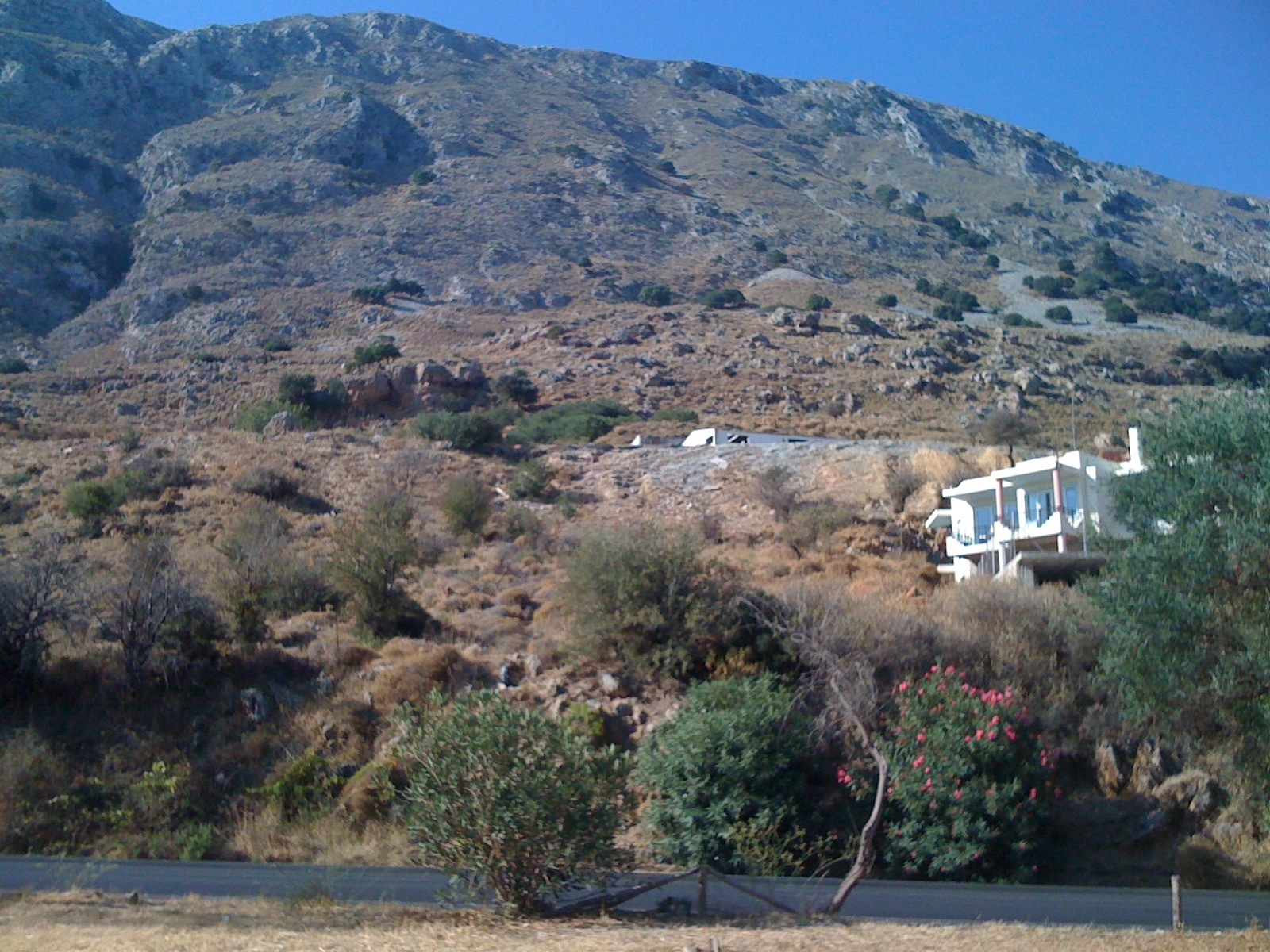
Just beneath the Church of Agios Dimitrios lies one of the most poignant sites in Platanias: an underground shelter dug by locals during the German occupation. This system of tunnels, originally used to protect the population from bombing and later as an ammunition depot, has been transformed today into a small yet powerful museum of memory. Walking through its narrow corridors, where relics, photographs and objects of the era are displayed, allows one to understand the suffering and courage of the civilian population during the conflict. The particularity of the site lies in the fact that it is managed with dedication by the inhabitants themselves, who have preserved this place not as an ordinary tourist attraction, but as a sanctuary dedicated to peace and Cretan resilience, making it an essential stop for anyone visiting the area.
Maleme and the German Military Cemetery
A few kilometers from the center of Platanias lies Maleme, a name that immediately evokes the events of the Second World War. Here stands the German Military Cemetery, situated on a hill overlooking the airport where paratroopers landed in 1941. It is a place of profound contemplation, characterized by neat rows of sober headstones immersed in a well-kept lawn. Over 4,000 soldiers rest here, in a site that invites reflection on the futility of war. The panoramic view enjoyed from the cemetery, which embraces the entire bay, contrasts starkly with the solemnity of the place. A visit to Maleme completes the historical journey begun in Platanias' shelter, offering an international perspective on the events that changed forever the fate of Crete and all of Europe.
Lake Agia: an oasis of biodiversity
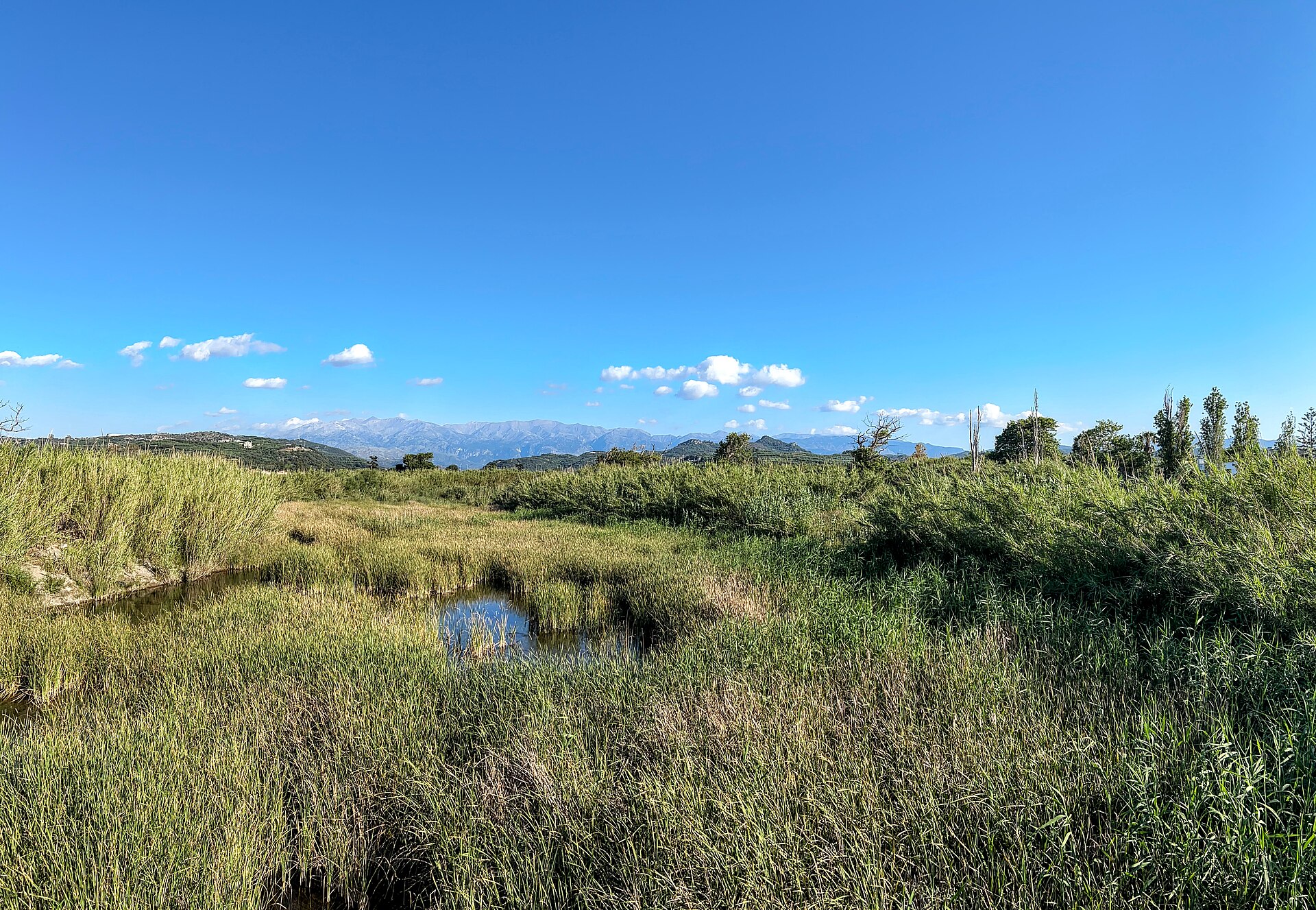
For those seeking a break from the sea salt, the hinterland of Platanias holds an unexpected surprise: Lake Agia. It is an artificial reservoir originally created for irrigation and hydroelectric purposes, which over time has become one of the most important wetlands in Crete. Declared a protected area, the lake is a paradise for bird-watching enthusiasts, hosting numerous species of migratory and resident birds, as well as lush riparian flora. A walk along its banks, perhaps stopping at one of the small cafes overlooking the water, allows you to immerse yourself in a regenerating silence. It is a delicate and precious ecosystem, where water lilies cover large portions of the water's surface, creating an almost fairy-tale landscape that contrasts with the aridity typical of other areas of the island.
Shoreline and beaches: between relaxation and entertainment

The coast of Platanias is a long stretch of sand mixed with pebbles that extends for several kilometers, offering solutions for every type of traveler. The main beach is perfectly equipped with beach clubs, water sports centers and bars that animate the seafront until late at night. However, moving just slightly, toward Gerani or toward the river mouth, one finds quieter corners where to enjoy the sea in solitude. The water is generally clean and crystalline, often awarded with the Blue Flag. Facing the coast stands the island of Agioi Theodoroi, a protected nature reserve where the Cretan wild goat (Kri-Kri) lives; although access to the island is limited to protect the fauna, it is possible to participate in boat excursions to admire its cliffs and snorkel in the surrounding sea caves.
The inland villages: Spilia and Vatolakkos
Exploring the surroundings of Platanias, one encounters hidden gems such as the village of Spilia and that of Vatolakkos. Spilia is famous for the rupestrian church of Agios Ioannis Erimitis, located inside a suggestive cave on the hill, a place of great spirituality and geological fascination. Vatolakkos, on the other hand, is immersed in a lush valley and is renowned for its wine production and for the Museum of Oil and Wine, where it is possible to discover the secrets of the Cretan diet. These villages offer a glimpse of rural life, with their kafenions where the elderly play backgammon and the air smells of wild oregano and burning wood. Visiting these hamlets means discovering the most intimate and least polished face of Platanias, made of peasant traditions and disinterested hospitality.
Flavors and traditions: the Cretan table
Gastronomy at Platanias is a complete sensory experience that draws from the richness of the surrounding land. Locally-produced extra virgin olive oil is the golden thread of every dish. One cannot say one has visited the place without having tasted 'Dakos' (barley rusk with fresh tomato, feta or mizithra cheese and oregano) or 'Kalitsounia', small savory or sweet pastries stuffed with cheese and wild herbs. The tavernas of Ano Platanias offer meat specialties, such as lamb oven-baked with potatoes, while fresh fish reigns on the coast. Popular culture manifests itself strongly during the 'Panigiri', the patron saint festivals, where the music of the Cretan lyra and traditional dances involve both inhabitants and tourists in a collective ritual of joy and conviviality, accompanied by the inevitable tsikoudia, the local distillate symbol of friendship.
- Watch the sunset from the top of Ano Platanias near the Church of Agios Dimitrios.
- Explore the tunnels of the Second World War shelter for a plunge into local history.
- Take a boat excursion around the island of Agioi Theodoroi to spot the Kri-Kri wild goats.
- Taste the local wines in the cellars of Vatolakkos or in the hinterland.
- Stroll along the shores of Lake Agia to observe wildlife.
- Dine in a traditional taverna trying 'Chochlioi Boubouristi' (fried snails).
When to visit and how to experience Platanias
The ideal period to visit Platanias depends on the type of experience desired. Spring (May and June) is extraordinary for nature lovers: temperatures are mild, the hinterland is in full bloom and historical sites are uncrowded. Summer (July and August) is the time of maximum beach splendor and nightlife, ideal for those seeking the energy of classic Greek vacations. Autumn, particularly September and early October, offers still-warm waters and a more relaxed atmosphere, perfect for long walks or bike rides. To experience the place at its best, the advice is to rent a car to alternate sea days with exploring hilltop villages and mountain gorges, letting yourself be guided by curiosity beyond the most beaten paths.
FAQ
Qual è il periodo migliore per una vacanza a Platanias?
È una destinazione adatta alle famiglie con bambini?
Come ci si sposta da Platanias a Chania?
Dove si può parcheggiare a Platanias?
Cosa vedere in un solo giorno?
Getting there
- Aeroporto Internazionale di Chania (CHQ) - 25 km
- Non presente (Creta non dispone di rete ferroviaria)
- Da Chania, seguire la New National Road (VOAK) in direzione Kissamos/Kastelli e prendere l'uscita per Platanias.
- Se arrivate da Heraklion, il viaggio dura circa 2 ore e mezza lungo la strada costiera panoramica.
Perfect for
Perfetto per gli appassionati della Seconda Guerra Mondiale grazie al rifugio sotterraneo e al cimitero di Maleme.
Ideale per chi cerca divertimento serale, beach bar e spiagge attrezzate con ogni comfort.
Un paradiso per scoprire l'autentica dieta cretese, tra frantoi storici e cantine d'avanguardia nell'entroterra.
To see
