

Plakias
Nestled along the southern coast of Crete, where the deep waters of the Libyan Sea caress shores of golden sand, Plakias reveals i...
Updated 7 July 2026
This season · July · Summer
What to do in Plakias now
The story
The story of Plakias
From origins to tourism boom: the history of Plakias
The history of Plakias is inextricably linked to the geography of the territory. Although the current coastal settlement is relatively modern, human traces in the surroundings date back to the Minoan and Byzantine periods, as witnessed by the remains of ancient settlements on the hills above. For centuries, the coast remained almost deserted due to pirate raids, pushing the population to take refuge in the safe villages of Sellia and Myrthios. Plakias served simply as a port for olive oil and carob trade. Only in the early twentieth century did the first fishermen's houses begin to appear, but the real turning point came in the 1970s, when the first backpackers discovered the unspoiled beauty of the bay. Since then, the village has grown steadily, while maintaining respectful architecture and a convivial atmosphere that distinguishes it from the busier resorts on the northern coast.
The Paligremnos promontory and vertical cliffs
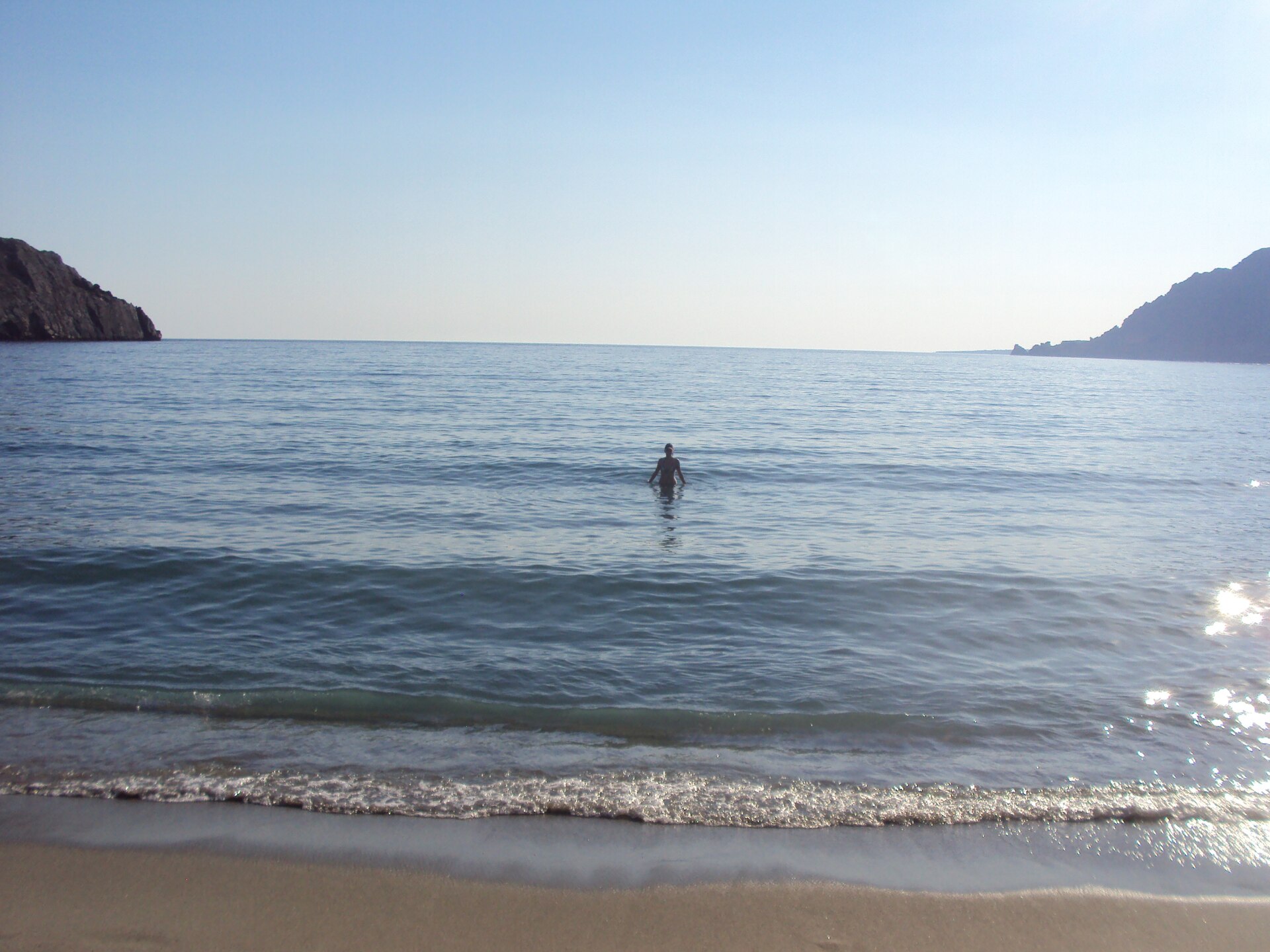
At the eastern end of Plakias' main beach rises the majestic Paligremnos, one of the most iconic rock walls of all Crete. It is an imposing vertical limestone cliff that plunges into the sea, attracting climbers from around the world for its demanding routes. Beyond its geological value, Paligremnos is the protagonist of a fascinating natural phenomenon: during full moons, moonlight reflects off the mirror wall, illuminating the bay and attracting giant squid toward the coast, an event well known to local fishermen. Walking at the foot of this natural wall at sunset, when the rock tinges with ochre and violet, is an experience that restores the sense of the grandeur of Cretan nature.
The Preveli Monastery: spirituality and resistance
A few kilometers from Plakias, perched on a cliff overlooking the Libyan Sea, rises the Preveli Monastery (Moni Preveli), a place of profound devotion and historical importance. Founded in the Middle Ages, the complex is divided into two parts: the lower monastery (Kato Preveli), now in ruins, and the upper one (Piso Preveli), still active and open to visitors. The monastery is famous for its heroic role during World War II, when monks helped Allied soldiers escape to Africa after Crete's fall. Inside the church is preserved the Miraculous Cross of Preveli, a golden reliquary containing a fragment of the True Cross, an object of great veneration. The small attached museum houses rare Byzantine icons and sacred vestments, immersed in a silence broken only by the wind.
Preveli Beach and the Kourtaliotis River
Beneath the monastery opens one of the most photographed places in Greece: Preveli Beach, also known as Palm Beach. Here, the Kourtaliotis River flows into the sea forming a lagoon of freshwater surrounded by a dense forest of endemic palms (Phoenix theophrasti). The contrast between the lush vegetation rising the river banks and the aridity of the surrounding rock walls creates an almost surreal exotic atmosphere. It is possible to follow the river course on foot, between natural pools and small waterfalls, immersing yourself in a unique ecosystem. Despite a 2010 fire that threatened this paradise, the resilience of the palms allowed the forest to regenerate completely, returning to shine in all its primordial vigor.
The Kourtaliotiko and Kotsifou gorges
Access to Plakias is through two spectacular natural gateways: the Kourtaliotiko and Kotsifou gorges. The first is a wild canyon where wind blows with such intensity that it produces sounds similar to hand claps (hence the name 'Kourtala'). Along the way is the small church of Agios Nikolaos, located near springs that gush directly from the rock. The Kotsifou gorge, narrower and equally scenic, offers a panoramic road that seems carved from stone. Both gorges represent a paradise for trekking and birdwatching enthusiasts, being natural habitat for rare raptors such as the griffon vulture, often seen circling high above the rocky ridges.
The villages of Sellia and Myrthios: balconies on the sea
To understand the soul of Plakias, you must climb toward the villages of Sellia and Myrthios, which dominate the bay from above. Sellia preserves intact the traditional Cretan architecture, with narrow alleys and stone houses. Here you can purchase local products such as Graviera cheese and finest quality olive oil. Myrthios, located on the opposite slope, is famous for its taverns that offer breathtaking views of the gulf, particularly suggestive at dinner time when the harbor lights begin to shine. These villages are the ideal starting point for hiking along ancient trails that connect the coast to the interior, offering panoramic views that span to the Gavdos and Paximadia islands on the clearest days.
The bays of Damnoni, Ammoudi and Skinaria
East of Plakias follow some of the most beautiful beaches in southern Crete. Damnoni is a vast expanse of clear sand with crystal-clear waters, ideal for families and water sports. Continuing, you encounter the coves of Ammoudi and Ammoudaki, characterized by intensely turquoise water and seabeds perfect for snorkeling. More isolated and wild is Skinaria Beach, where the water is so clear it seems like a natural aquarium; not surprisingly, it is one of the most renowned diving points on the island, with underwater visibility often exceeding 30 meters. Each bay has its personality, from the liveliness of Damnoni to the contemplative silence of Skinaria, offering alternatives for every type of traveler.
Nature and Landscape: between the Libyan Sea and White Mountains
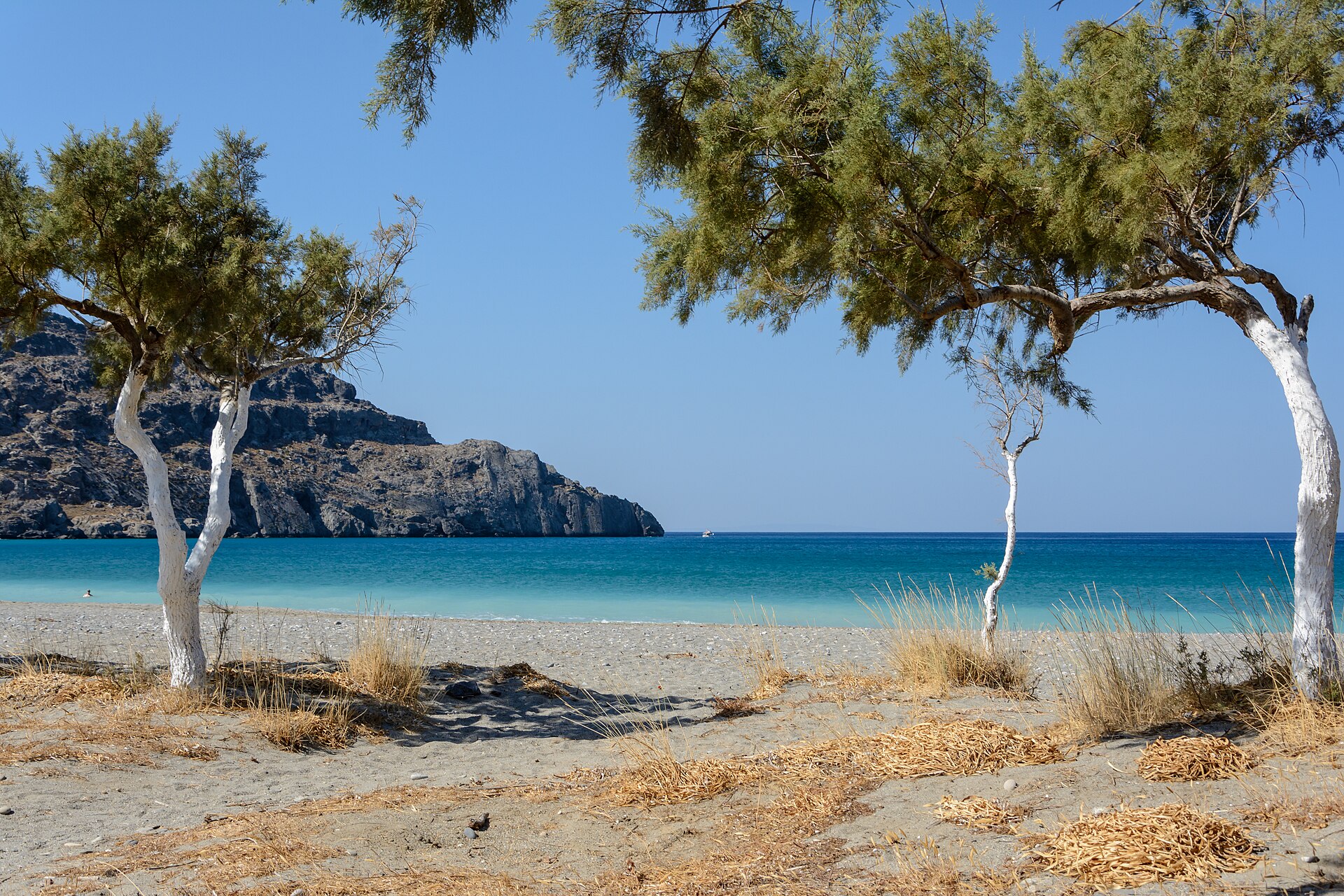
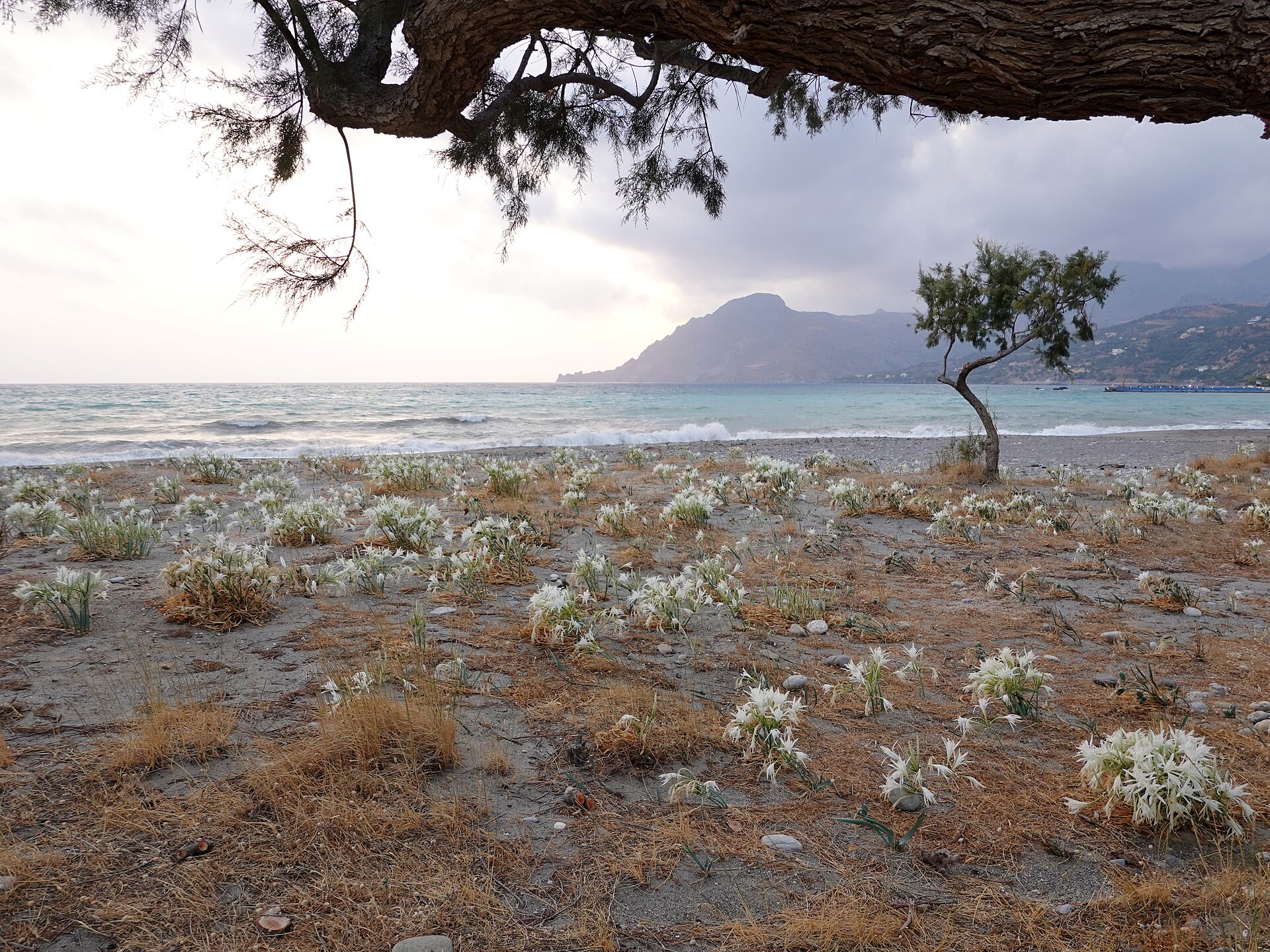
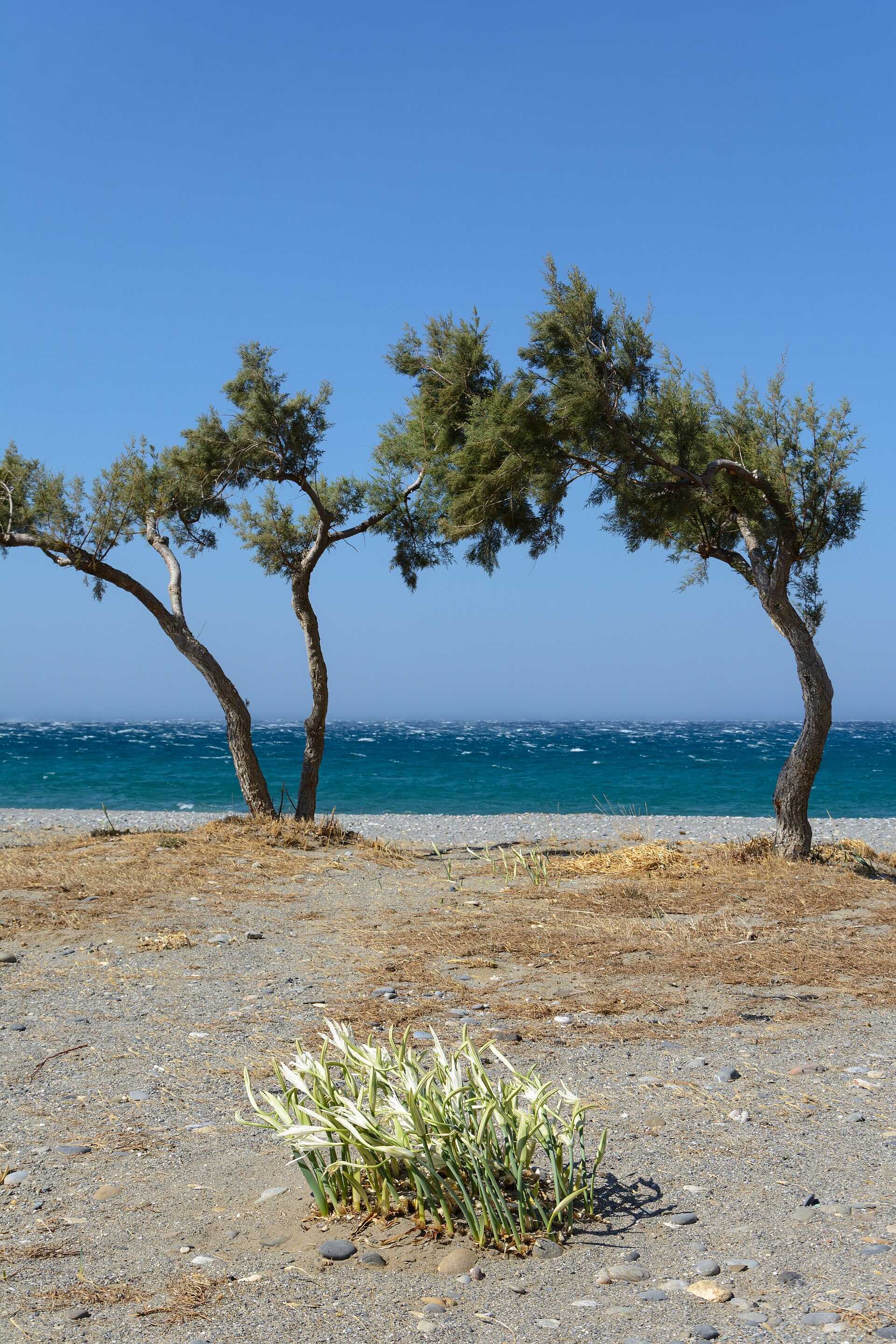
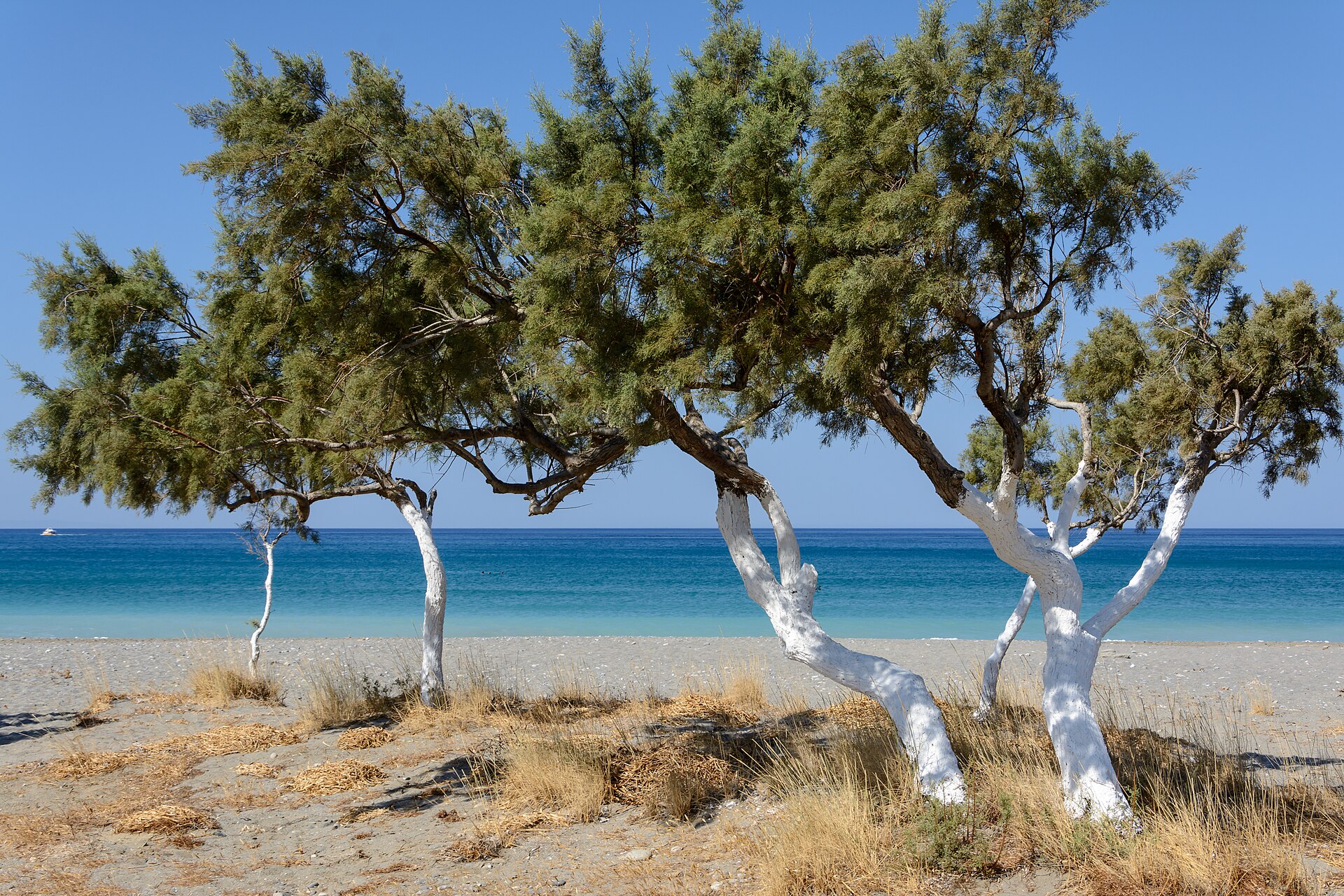
The landscape of Plakias is a compendium of Cretan biodiversity. The interior is dominated by centuries-old olive groves that gently slope toward the sea, while the heights are covered with Mediterranean shrubland, where thyme, sage, and oregano grow spontaneously, perfuming the air throughout the year. The coast is an alternation of dramatic cliffs and sandy dunes. A characteristic element is the Meltemi wind, which here blows with vigor especially in summer, keeping temperatures pleasant even in the hottest months and making the sea spectacularly rough. Local flora includes rare species that flower on the cliffs of the gorges, making the area a privileged destination for botanists and lovers of wild nature.
Gastronomic traditions and flavors of the territory
Cuisine at Plakias reflects the Cretan diet, based on fresh and seasonal ingredients. One cannot visit the area without tasting 'Dakos', a barley rusk topped with fresh tomato, mizithra cheese, and abundant olive oil. Local taverns offer slowly cooked lamb and goat meat dishes, such as lamb with stamnagathi (a bitter wild chicory). Being a seaside village, fresh fish is never lacking, grilled simply with lemon and oil. All accompanied by 'raki', the local brandy that symbolizes Cretan hospitality. Traditional festivals (panigiri), especially summer ones in the villages of Sellia and Mariou, are the perfect occasion to hear the music of the Cretan lyre and witness typical dances, immersing yourself completely in popular culture.
Experiences not to miss
- Hiking through the Kourtaliotiko Gorge to the springs and the church of Agios Nikolaos.
- Panoramic sunset from the village of Myrthios to admire the entire bay coloring in pink.
- Diving or snorkeling in the transparent waters of Skinaria Beach.
- Day of relaxation at Preveli Beach, going up the river among the palms.
- Dinner of local specialties in one of the traditional taverns of Sellia.
- Evening walk along the pier of Plakias, watching the fishing boats return.
When to go and how to experience the place
The best time to visit Plakias is from May to October. Spring (May and June) is extraordinary for blooms and mild temperatures, ideal for trekking. Full summer (July and August) is perfect for seaside life, although wind can be intense. Autumn (September and October) offers still-warm waters and a quieter atmosphere, away from mass tourism. Plakias is best experienced by renting a car to explore the surroundings, but it is also a place that invites discovery on foot. The hospitality of the inhabitants is warm and authentic: do not be surprised if, after a brief chat, you are offered a glass of raki or fruit from the garden. It is this essence of Cretan 'philoxenia' that makes Plakias a place where you always want to return.
FAQ
Qual è la spiaggia più bella vicino a Plakias?
C'è molto vento a Plakias?
È una località adatta alle famiglie?
Quanto tempo serve per visitare la zona?
Si può arrivare a Preveli in barca?
Getting there
- Aeroporto di Chania (CHQ) - circa 95 km
- Aeroporto di Heraklion (HER) - circa 115 km
- Non sono presenti linee ferroviarie a Creta.
- Da Rethymno (35 km), seguire le indicazioni per Spili e poi per Plakias, attraversando la gola di Kourtaliotiko o quella di Kotsifou.
- Noleggiare un'auto è fondamentale per esplorare le baie remote e i villaggi montani, poiché i mezzi pubblici sono limitati.
Perfect for
Un paradiso per camminatori tra gole spettacolari, sentieri costieri e la foresta di palme di Preveli.
Acque cristalline e spiagge variegate, dalle ampie distese sabbiose alle calette rocciose ideali per il diving.
Un'immersione nella Creta autentica dei villaggi montani, dei monasteri storici e della cucina tradizionale.
To see
