

Panormos
Nestled along the northern coast of Crete, midway between the vibrant cities of Rethymno and Heraklion, Panormos reveals itself to...
Updated 7 July 2026
This season · July · Summer
What to do in Panormos now
The story
The story of Panormos
A history of anchorages and fortifications
The roots of Panormos run deep into antiquity, when it served as a strategic port for the powerful city-state of Eleutherna, located inland. During the Roman and Byzantine periods, the locality experienced remarkable flourishing, testified by the presence of imposing religious buildings. However, it was under Venetian dominion that the site assumed a defined military physiognomy: the colonizers of the Serenissima erected the 'Castel Milopotamo', a fortress designed to protect the coast from pirate raids and to consolidate control over the fertile surrounding territory. This castle gave its name to the entire province, underscoring the crucial importance of Panormos as a node of exchange and defence. Despite the damage suffered during Ottoman occupation, the village has maintained an architectural coherence reflecting its historical resilience across the centuries.
The Basilica of Agia Sofia
A short distance from the inhabited centre stand the remains of the Basilica of Agia Sofia, one of the most significant early Christian monuments on the entire island of Crete. Dating from the 5th-6th century AD, this imposing three-nave structure was brought to light in the 1940s, revealing the grandeur of the Christian community that once inhabited the area. Its basilical plan and fragments of sculptural decorations point to an era when Panormos was a religious centre of primary importance. Visiting the site today allows one to perceive the sacredness of the place and to admire the technical prowess of Byzantine builders, who used local materials to erect a temple that would dominate the view of the sea, serving as a spiritual beacon for navigators.
The Harbour and the Venetian Castle
The beating heart of the village is its harbour, where vividly coloured fishing boats still bob alongside small yachts. Here one can glimpse the remains of Venetian fortifications, particularly the foundations of Castel Milopotamo. Although much of the original structure has been lost, the layout of the harbour still reflects Venetian engineering aimed at creating secure basins. Strolling along the pier at sunset, with the ruins silhouetted against the orange sky, offers a unique perspective on Panormos's historical continuity: a place where the defensive function of the past has given way to a convivial vocation, made of harbourside taverns and fishermen mending their nets.
The Historic Centre and Architecture
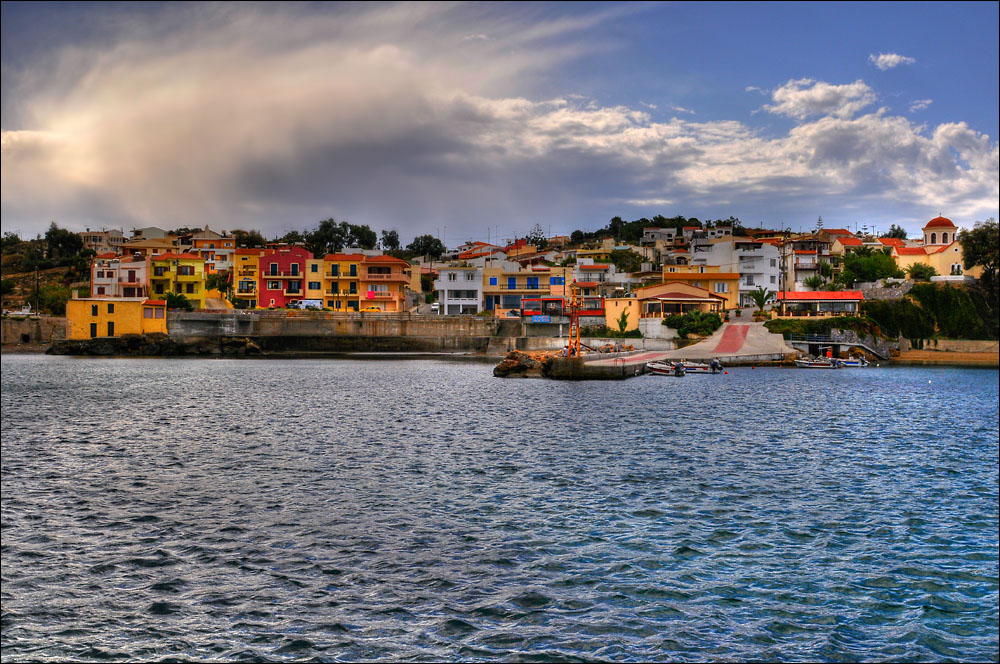
Exploring the labyrinth of alleys that make up the historic nucleus of Panormos is a sensory experience. Unlike many other Cretan coastal centres, the architecture here has preserved neoclassical and traditional elements, with houses of local stone, carved wooden doors and balconies adorned with cascades of bougainvillea. The conservative restoration carried out in recent decades has allowed for the recovery of ancient warehouses and noble dwellings, transformed into boutique hotels or cultural spaces. Particularly interesting is the old carob mill, now converted into the cultural centre 'Epimenides', which hosts exhibitions, concerts and theatrical performances, demonstrating how the local community has managed to regenerate its industrial heritage in an artistic key.
The Beaches: Limani and Limaki
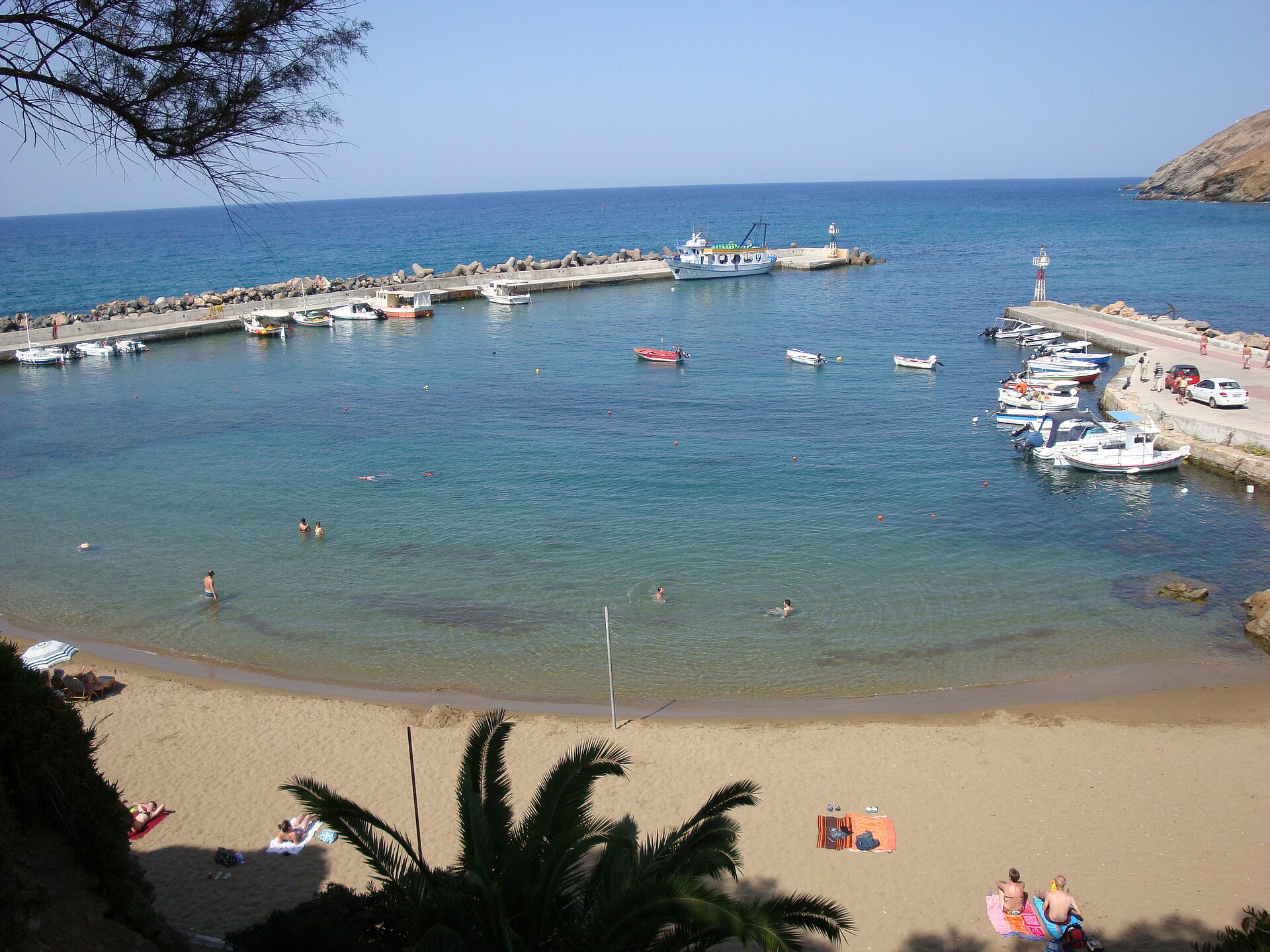
The coastline of Panormos is characterized by small sandy bays and rocky coves offering natural shelter from the Meltemi, the wind that often blows forcefully along Cretan coasts. The main beach, Limani, is situated directly facing the village; it is well-equipped and ideal for families thanks to its shallow depths and calm waters. A little further west lies Limaki, a more intimate and secluded cove, perfect for those seeking tranquillity and wishing to snorkel among the rocks. The configuration of the coast allows you to always find a sheltered corner, where the sea assumes shades ranging from turquoise to cobalt blue, inviting long rejuvenating swims away from the crowds of large resorts.
Surroundings: Ancient Eleutherna and Margarites
A few kilometres from Panormos, the hinterland holds archaeological and artisanal surprises of immense value. Eleutherna, a city that was a bridge between Minoan and classical civilization, offers an archaeological site of rare suggestiveness and a cutting-edge museum displaying precious finds, including jewellery and sculptures. Continuing towards the hills, one encounters the village of Margarites, famous throughout the island for its centuries-old pottery tradition. Here, dozens of artisanal workshops continue to produce vases, plates and art objects using techniques handed down generation after generation. Getting lost among the botteghe of Margarites means touching the artisanal soul of Crete, taking with you a fragment of terracotta that smells of history.
The Melidoni Cave
An unmissable excursion near Panormos leads to the Melidoni Cave, a place full of mythological fascination and tragic historical memory. According to legend, this cavern was the home of Talos, the bronze giant guardian of Crete. Beyond the beauty of its limestone formations, stalactites and stalagmites creating spectacular natural scenery, the cave is a national sanctuary: here, in 1824, hundreds of local inhabitants met their death suffocated by Ottoman troops during the war of independence. The solemn atmosphere that breathes within, united with the majesty of the underground spaces, makes the visit a moment of profound reflection on the struggle for the freedom of the Cretan people.
Flavours and Table Traditions
Gastronomy in Panormos is a celebration of the Cretan diet, based on fresh, seasonal ingredients and locally sourced. Local taverns offer dishes that are true tales of the territory: from 'dakos' (toasted bread with tomato, feta and oregano) to the freshest grilled fish, to meats stewed with wild herbs gathered on the mountains of Mylopotamos. A taste of the local 'graviera' cheese and thyme honey must not be missed, products of excellence from the area. The meal almost always concludes with a glass of 'tsikoudia' (raki), the local eau-de-vie that symbolizes Cretan hospitality. Dining in one of the village squares means sharing not only food, but a rite of sociality that has deep roots in Mediterranean culture of hospitality.
Experiences not to miss
- Sunset aperitif on the old pier, watching the fishing boats return.
- Visit to the Carob Mill Cultural Centre for a concert or contemporary art exhibition.
- Early morning excursion to the Basilica of Agia Sofia to enjoy the raking light on the ruins.
- Tasting of olive oil at one of the traditional mills in the Mylopotamos district.
- Snorkelling in the rocky coves west of the harbour to admire marine fauna.
- Dinner based on 'mezedes' (small tastings) in a tavern hidden among neoclassical alleys.
When to visit and how to experience the village
The ideal period for visiting Panormos runs from May to October, when the climate allows you to fully enjoy the sea and outdoor activities. Spring is particularly evocative for those who love hiking, thanks to the explosive flowering of the hinterland and mild temperatures. Summer, although the warmest season, is mitigated by sea breezes and offers a rich calendar of cultural events. September and October perhaps represent the best time for those seeking maximum tranquillity, with the sea still warm and the village resuming its more authentic rhythms after the peak tourist season. Living Panormos means abandoning the car and moving on foot, allowing yourself to be guided by curiosity and the pleasure of slow discovery.
FAQ
È necessario noleggiare un'auto a Panormos?
Le spiagge sono adatte ai bambini?
Quanto dista Panormos dalle città principali?
Ci sono parcheggi disponibili?
Getting there
- Aeroporto Internazionale di Heraklion (HER) - 60 km
- Aeroporto Internazionale di Chania (CHQ) - 95 km
- Non presente (Creta non dispone di rete ferroviaria)
- Percorrere la New National Road (E75) che collega Heraklion a Rethymno; l'uscita per Panormos è ben segnalata.
- Gli autobus KTEL che collegano Heraklion e Rethymno fermano regolarmente sulla strada principale, a circa 1 km dal centro del villaggio.
Perfect for
Un borgo tranquillo con spiagge riparate, perfetto per chi cerca una vacanza serena lontano dal caos.
Punto di partenza ideale per visitare la Basilica di Agia Sofia e la vicina Eleutherna.
Eccellente cucina cretese autentica, con prodotti locali di alta qualità come olio, miele e formaggi.
To see
