

Palaiokhora
Nestled on a small peninsula that extends proudly towards the turquoise waters of the Libyan Sea, Palaiokhora is one of the most a...
Updated 7 July 2026
This season · July · Summer
What to do in Palaiokhora now
The story
The story of Palaiokhora
A story of borders and rebirths
Palaiokhora's roots stretch back to antiquity, likely rising on the vestiges of the Doric city of Kalamydi. However, its present historical profile was largely shaped during the Middle Ages. In 1282, the Venetians, led by the noble Marino Gradonigo, recognized the strategic importance of this strip of land and built a fortress to control local rebellions and protect maritime routes from pirates. It was precisely this castle, called Selino, that gave its name to the entire surrounding province, testifying to the settlement's central role in the island's administration. The history of the place is marked by moments of dramatic rupture, such as the destruction wrought by the famous pirate Barbarossa in 1539, which reduced the settlement and fortress to ruins, leaving the area nearly deserted for centuries.
Palaiokhora's modern rebirth began only towards the end of the 19th century, when families from the nearby area of Kandanos began resettling on the coast to exploit the agricultural and commercial potential of the port. During this period, the town became an important center for exporting olive oil and agricultural products to the rest of Greece and Egypt. During World War II, the village experienced German occupation, but managed to rise with dignity. In the 1960s and 1970s, Palaiokhora was discovered by hippie travelers, who made it a sanctuary of peace and untouched nature, laying the foundation for the sustainable tourism development that characterizes it today, far from the large hotel complexes of the north.
Fortress Selino: the sentinel of the sea
Dominating the tip of the peninsula, Fortress Selino (Castel Selino) is Palaiokhora's most significant monument. Built by the Venetians in the 13th century, the structure follows an almost square layout, typical of military fortifications of the era. Although mainly the perimeter walls, some cisterns and fragments of corner towers remain today, the site preserves immense evocative charm. Walking through its ruins at sunset allows you to understand why the Venetians chose this spot: the view spans 360 degrees over the Libyan Sea and the peaks of the interior, offering total control of the territory. The castle is not merely an archaeological artifact, but the symbol of the resistance and resilience of the local community against the numerous sieges endured over centuries.
The Church of Evangelistria
In the heart of the town center stands the magnificent Church of Evangelistria, the city's cathedral. This religious building stands out for its imposing bell tower in white stone, crafted with a mastery that recalls Venetian style reinterpreted by local sensibility. The interior is an example of Orthodox devotion, enriched with finely painted icons and an atmosphere of profound spirituality. The church serves as the focal point for the village's social life; the square in front is where the community's most important moments are celebrated, from patron saint festivals to Easter solemnities, representing the beating heart of Palaiokhora's identity.
Pachia Ammos: the golden expanse
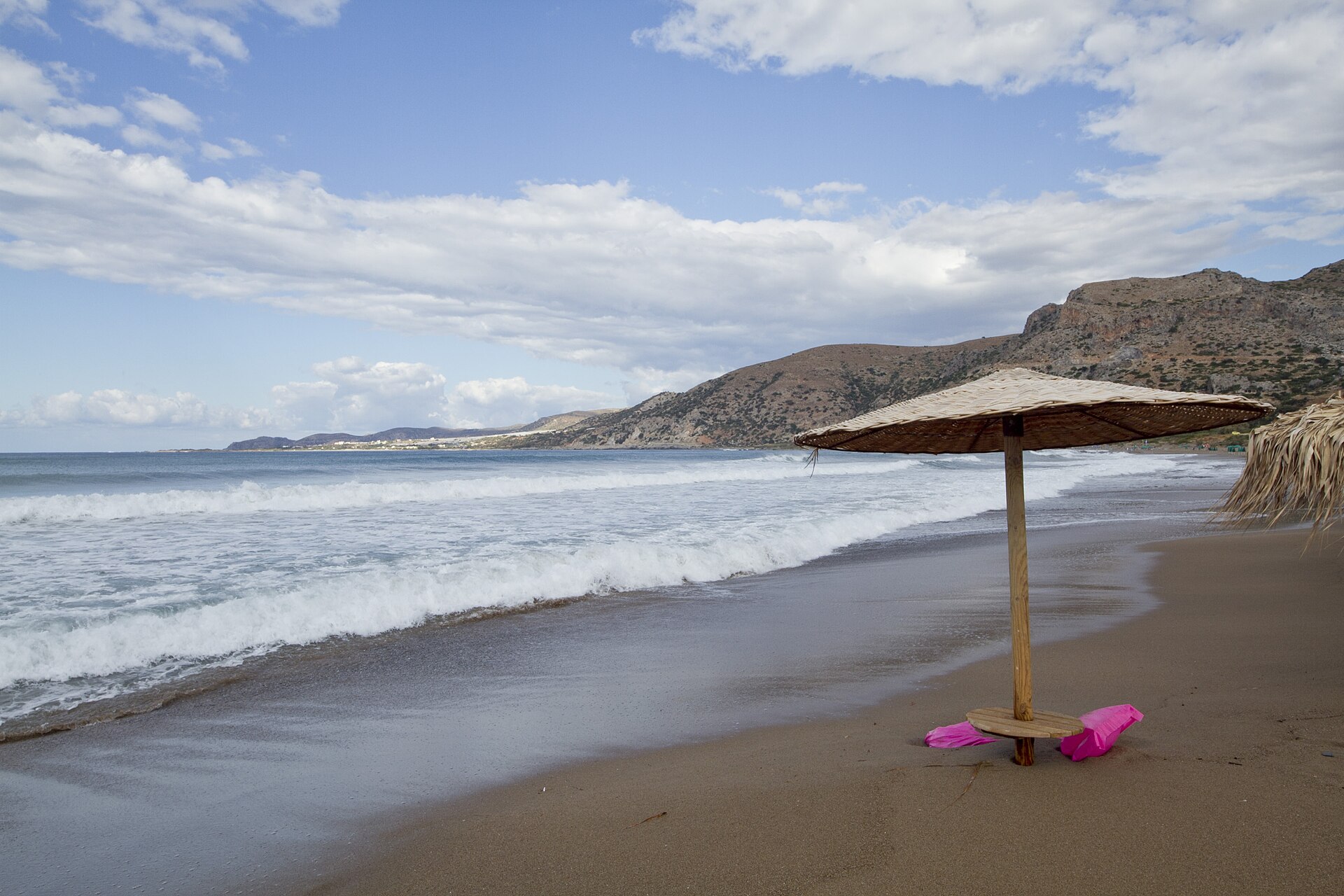
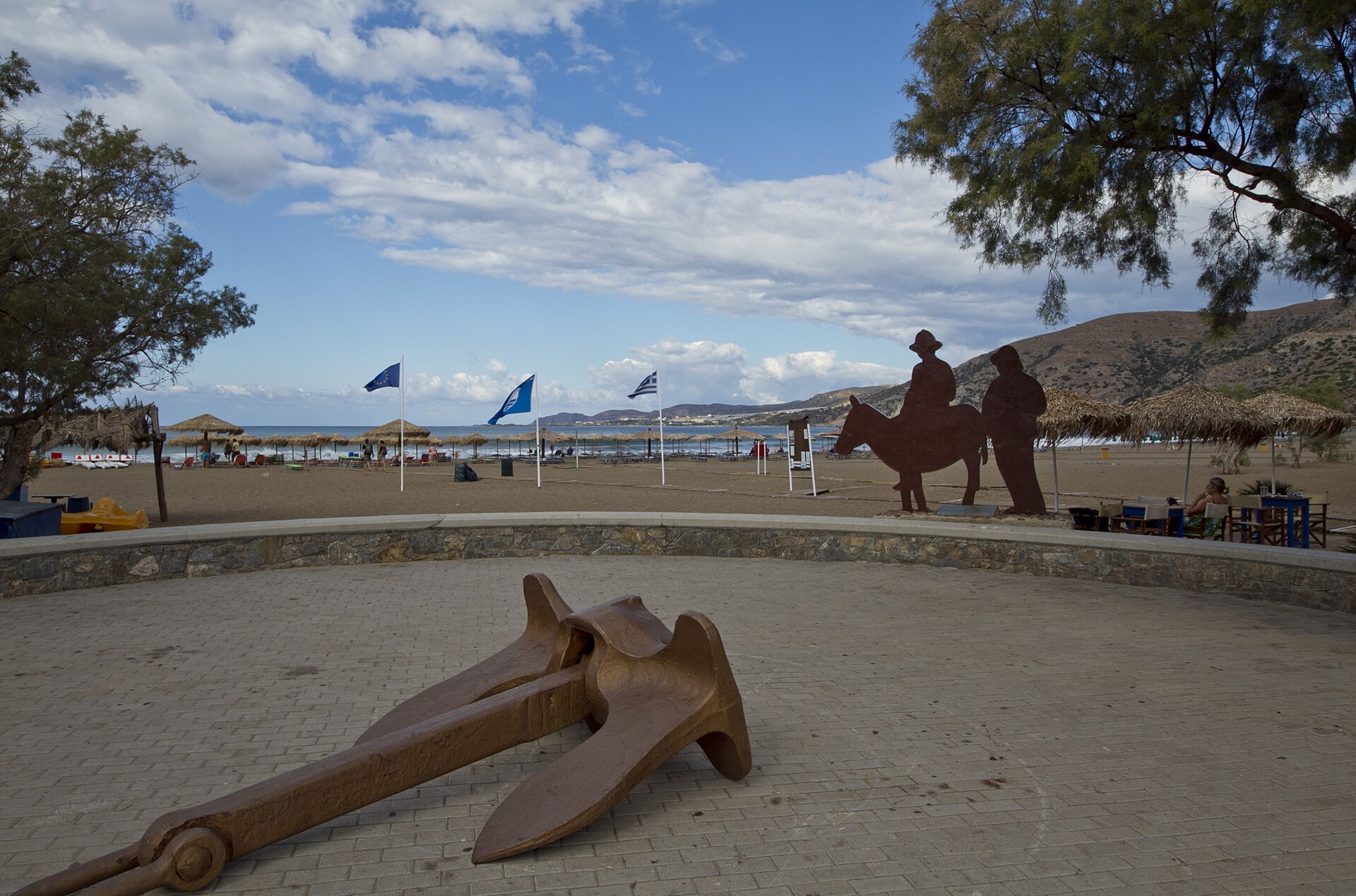
On the western side of the peninsula stretches Pachia Ammos, the area's most celebrated beach. It is a long tongue of golden sand, bathed by waters that slope gently, making it ideal for families and those who love long swims. This beach has received the Blue Flag award multiple times for its water quality and services. It is the perfect place to watch the sun disappear into the sea, painting the sky with violet and orange hues. Despite its popularity, the expansiveness of the shoreline always allows you to find a corner of tranquility, even during the busiest summer months.
Chalikia and the eastern coast
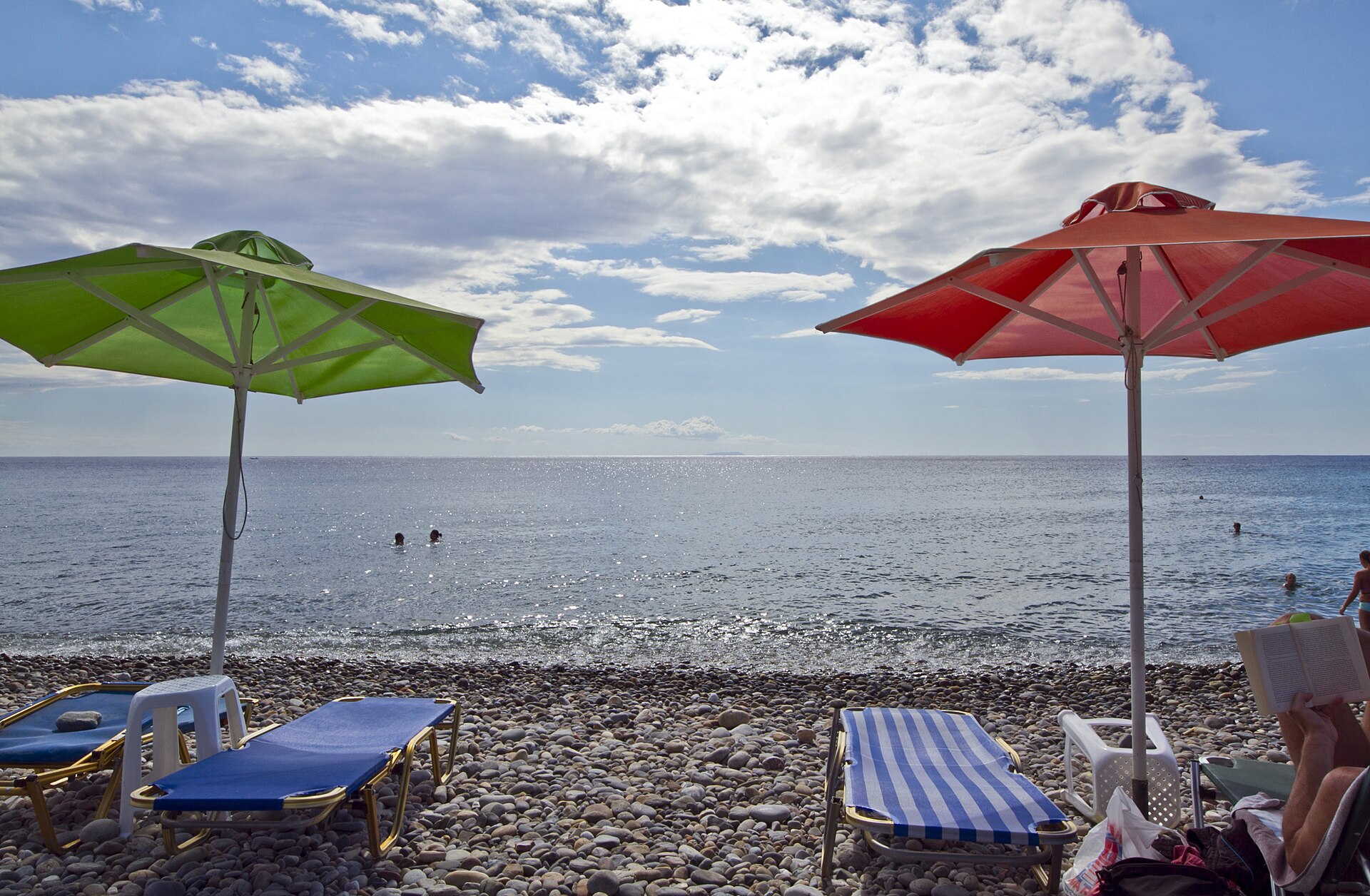
Diametrically opposite to Pachia Ammos lies Chalikia, the pebbled beach facing east towards Sougia. Here the water is incredibly crystalline and assumes deep cobalt blue shades. Chalikia is often preferred by those seeking shelter when the wind blows from the west and by snorkeling enthusiasts, attracted by the rocky seabeds rich in marine life found at the bay's extremities. The walk along this beach is dotted with tamarisks offering natural shade and small tavernas where you can taste fresh fish just landed from fishing boats moored at the nearby harbor.
The village of Azogires and the 99 Fathers
A few kilometers inland lies Azogires, a village wrapped in myth and mysticism. This place is famous for the Monastery of the 99 Holy Fathers, founded according to legend by Saint John the Hermit and his companions in the 17th century. The village is an oasis of coolness, with century-old plane trees, waterfalls and natural caves. Beyond its spiritual value, Azogires offers enchanting trails and breathtaking views over the valley descending towards the sea. It is a place where religious history intertwines with the wild beauty of Cretan nature, offering a regenerating break from the coastal heat.
The Gorge of Anidri and its beach
For trekking enthusiasts, the Gorge of Anidri is an unmissable excursion. The route starts from the picturesque village of Anidri, where the Byzantine church of Agios Georgios decorated with frescoes by Ioannis Pagomenos stands, and descends through a non-too-demanding canyon to the pristine beach of Gialiskari. Walking between rocky cliffs and fragrant bushes of oregano and thyme, you reach a series of small coves of white pebbles bathed by emerald-colored sea. It is an experience that combines physical activity with the discovery of remote corners of rare scenic beauty.
Traditions and flavors of the Libyan Sea
Palaiokhora's cuisine is a hymn to the Cretan diet, based on the freshest and local ingredients. You cannot say you have visited the place without having tasted grilled fish, octopus cooked in wine or inland specialties such as "staka" (a cream of butter and flour) or "kalitsounia" (sweet or savory cheese pastries). The olive oil from the Selino area is considered among the best on the island for its low acidity and intense aroma. Summer evenings are animated by traditional Cretan music, where the sound of the lyra and lute accompany local dances, creating an atmosphere of genuine celebration to which visitors are always invited to participate.
- Explore the ruins of Castel Selino at sunset for the panoramic view.
- Walk the stretch of the E4 trail that connects Palaiokhora to Elafonisi.
- Dine at one of the tavernas on Venizelou street when it becomes pedestrian in the evening.
- Take the ferry for a day trip to Elafonisi beach or the island of Gavdos.
- Visit the local Archaeological and Historical Museum to learn more about the territory's roots.
- Go snorkeling in the clear waters of Gialiskari beach.
When to go and how to experience Palaiokhora
Palaiokhora is a destination that can be enjoyed from April to November. Spring is the magical time for hikers, when nature explodes in wild flowering and temperatures are perfect for walking. Summer is hot but mitigated by the Meltemi wind and sea breeze; it is the ideal period for those seeking seaside life and lively evenings. September and October instead offer still-warm waters and a recovered calm, ideal for those desiring a deep relax. To fully experience the place, forget about your car: the center is small and can be easily explored on foot, allowing you to savor every detail of this Cretan outpost facing the endless sea.
FAQ
Qual è il modo migliore per arrivare a Palaiokhora da Chania?
Le spiagge sono attrezzate?
È una destinazione adatta alle famiglie con bambini?
Si possono fare escursioni in barca?
Getting there
- Aeroporto Internazionale di Chania (CHQ) - 75 km
- Non sono presenti linee ferroviarie a Creta.
- Da Chania, seguire le indicazioni per Kissamos e poi svoltare verso sud in direzione Tavronitis/Palaiokhora, percorrendo la strada panoramica che attraversa l'entroterra montuoso.
- La strada attraversa passi montani; guidate con prudenza e godetevi il panorama dei villaggi tradizionali lungo il percorso.
Perfect for
Perfetta per chi cerca spiagge variegate e acque cristalline lontano dal turismo di massa del nord.
Punto di partenza ideale per il sentiero E4 e per esplorare gole selvagge e villaggi montani.
Un mix affascinante di resti veneziani, chiese bizantine e tradizioni cretesi autentiche.
To see
Da vedere a Palaiokhora
Routes · Trovido Route
