

Palaikastro
At the easternmost tip of the island of Crete, where the sun rises before anywhere else in Greece, lies Palaikastro
Updated 8 July 2026
This season · July · Summer
What to do in Palaikastro now
The story
The story of Palaikastro
A Millennial Legacy: A History of Trade and Rebirth
The history of Palaikastro is inextricably linked to Minoan civilisation, of which it was one of the most flourishing centres. Thanks to its strategic position, the town became a major trading port between 2000 and 1450 BC, acting as a cultural bridge between Crete and the civilisations of the East. Despite the devastation caused by the eruption of the volcano of Thera (Santorini) and the subsequent tsunamis, the site continued to be inhabited and rebuilt several times. In the classical and Hellenistic periods, the area retained its sacred character thanks to the famous Temple of Zeus Diktaios, remaining a spiritual landmark even under Roman rule. Every era has left its mark, turning this plain into a historical palimpsest that archaeologists continue to decipher with wonder.
The Archaeological Site of Roussolakkos
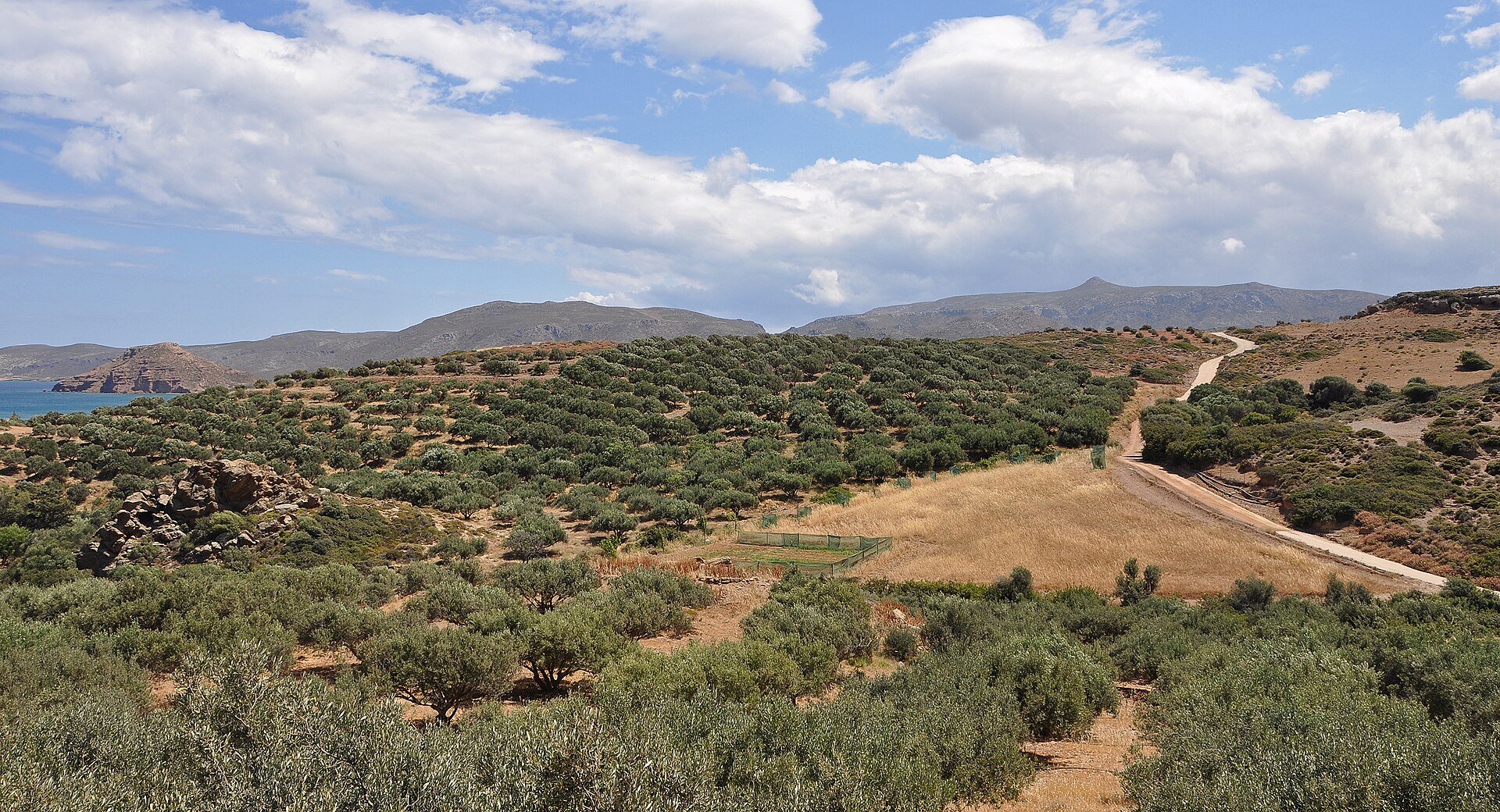
Roussolakkos is the beating heart of local archaeology, an ancient Minoan town that stretches back from Chiona beach. Unlike the palaces of Knossos or Phaistos, here you can admire the urban layout of a genuine port town, with well-defined streets, advanced drainage systems and spacious houses that testify to the high standard of living of its inhabitants. It was at this site that the famous 'Palaikastro Kouros' was found, an extraordinary statuette of hippopotamus ivory and gold, now kept in the Museum of Sitia. Walking among these stone walls means treading the same paths trodden four thousand years ago, imagining the bustle of merchants and the feverish activity of a port that dominated the bronze trade routes.
The Sanctuary of Zeus Diktaios
Above the ruins of the Minoan town, in a later era, rose one of the most important sanctuaries of antiquity dedicated to Zeus. Although few visible traces remain today compared to its original splendour, the site is famous for the discovery of the Hymn to Zeus Diktaios, an inscription that represents one of the most significant religious texts of the Greek world, invoking the god's protection over the city and its inhabitants. The sacred nature of the place is still palpable today, with views stretching towards the Kastri headland, the fortified hill that served as a natural acropolis and offered protection and control over the entire bay below.
Chiona Beach: Archaeology and Gastronomy
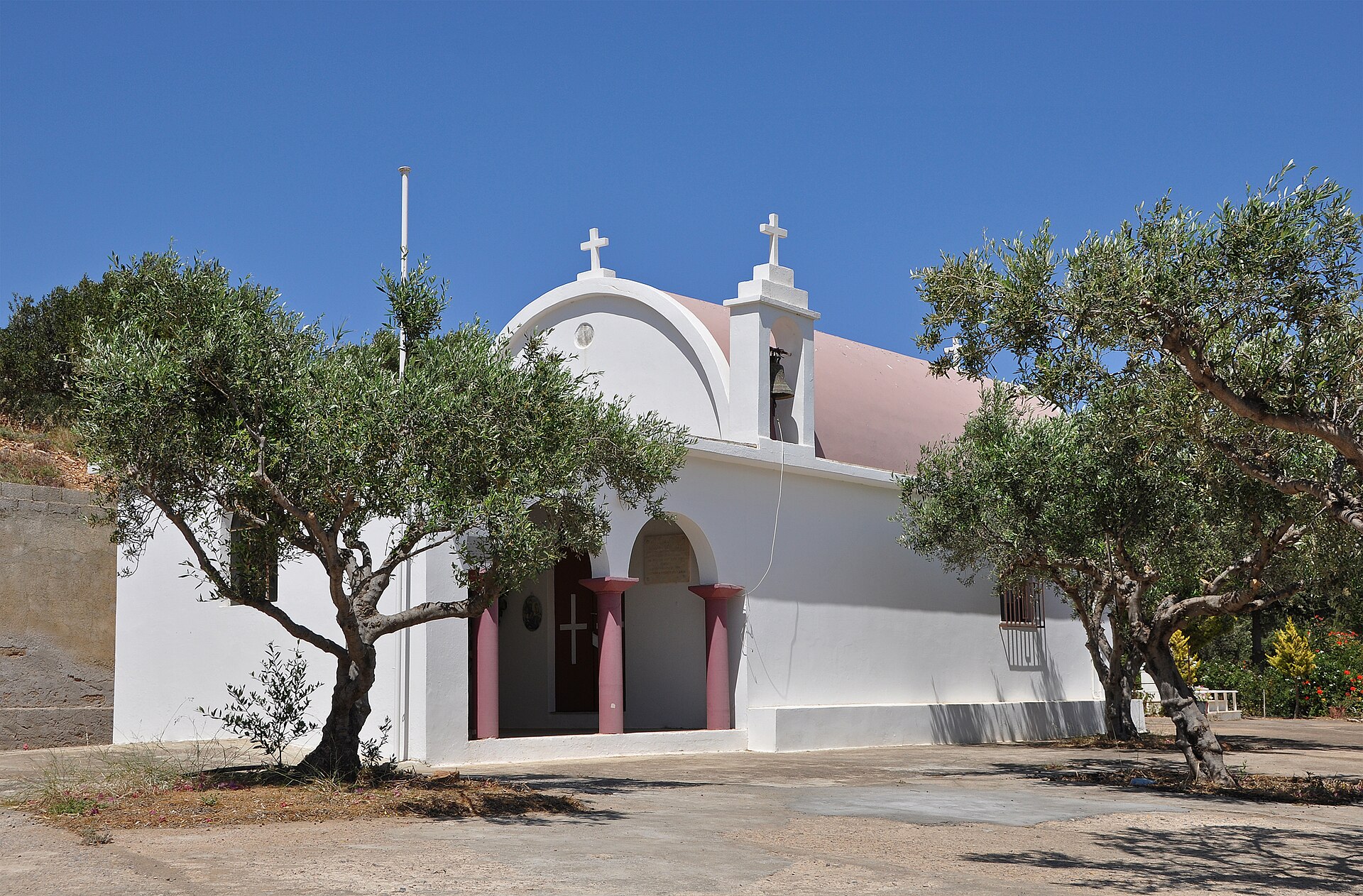
Chiona is the beach closest to the village and represents the perfect synthesis of the Palaikastro experience. Characterised by shallow, crystal-clear waters, it is sheltered from the strongest winds thanks to its shape. But Chiona is famous above all for its fish taverns, considered among the best in eastern Crete. Here you can taste 'kakavia', the traditional fishermen's fish soup, prepared with the day's catch and local olive oil. Behind the beach, the ruins of Roussolakkos are a constant reminder of the deep connection between modern daily life and the glorious Minoan past.
Kouremenos: The Temple of the Wind
A short distance from Chiona lies the long beach of Kouremenos, an iconic spot for water sports enthusiasts. Thanks to the Venturi effect created by the surrounding hills, the Meltemi blows here with such constancy and force that the bay is one of the best windsurfing spots in Europe. The landscape is wild, with sand taking on golden and reddish hues and tamarisks offering natural shelter from the sun. Even for those who do not practise water sports, Kouremenos offers a sense of absolute freedom, with wide open spaces where the sound of the sea and the wind are the sole protagonists of the day.
Toplou Monastery: Faith and Resistance
Located a few kilometres from Palaikastro, Toplou Monastery appears as a medieval fortress isolated in an arid, almost lunar landscape. Founded in the 15th century, it is one of the richest and most historically significant monasteries in Crete. Its thick walls protected monks and rebels during the Ottoman and German occupations, making it a symbol of Cretan resistance. Inside is a precious collection of icons, including the masterpiece 'Great Art Thou, O Lord' by Ioannis Kornaros. Today the monastery is also renowned for its organic production of top-quality wine and olive oil, which visitors can taste in its historic cellars.
The Vai Palm Forest
A short distance from Palaikastro lies one of Europe's natural wonders: the Vai palm grove. It is the largest natural forest of date palms (Phoenix theophrasti) on the continent, stretching down to the shoreline and creating a unique visual contrast between exotic vegetation and the blue of the Aegean. Legend has it that the palms grew from date stones thrown away by Egyptian soldiers or Saracen pirates, but science confirms that this is an endemic species that has been present in Crete for millennia. Vai beach, with its fine sand and turquoise water, is a must for anyone visiting this part of the island.
Ancient Itanos and the Hidden Bays
Continuing beyond Vai, you reach the remains of the ancient city of Itanos. It was an autonomous maritime power, with its own currency and in constant conflict with neighbouring cities. Today the site offers a romantic, faded scene, with the ruins of early Christian basilicas and Hellenistic walls overlooking three small sheltered bays. These coves, often less crowded than nearby Vai, offer clear waters ideal for snorkelling, allowing you to swim above the submerged remains of the ancient port. It is a place where history literally merges with the sea.
The Landscape: Between Plateaus and Cliffs
The territory of Palaikastro is characterised by a rugged, dramatic nature. The hinterland is a succession of limestone plateaus dotted with caves and wild gorges, such as the Chochlakies Gorge that leads to the remote bay of Karoumes. The flora is dominated by Mediterranean scrub, with aromatic herbs that scent the air after every rain. The cliffs that drop steeply into the sea offer extraordinary panoramic points, especially at sunset, when the rock turns shades of ochre and violet. This landscape variety makes the area ideal for trekking and for those wishing to explore a Crete far from conventional circuits.
Local Flavours and Traditions
The gastronomy of Palaikastro is a tribute to simplicity and the quality of raw ingredients. Olive oil from the Sitia area (PDO) is considered among the best in the world, a fundamental base for every dish. Not to be missed are 'kalitsounia', small sweet or savoury pastries filled with mizithra cheese, and dishes based on wild goat cooked with mountain herbs. Popular culture is still alive at village festivals, the 'panigiria', where lute and lyra music accompanies traditional dances that last until dawn, offering visitors an authentic glimpse of the Cretan soul.
Not-to-be-missed experiences
- Explore the Minoan ruins of Roussolakkos early in the morning to enjoy the silence.
- Take a windsurfing lesson in the windy waters of Kouremenos.
- Enjoy fresh fish in one of the historic taverns on Chiona beach.
- Visit Toplou Monastery and taste its organic wines and extra virgin olive oil.
- Go trekking through the Chochlakies Gorge to the secluded beach of Karoumes.
- Admire the sunrise from the Kastri headland, the easternmost point of the island.
When to go and how to experience the place
The best time to visit Palaikastro is from May to October. Spring (May-June) is ideal for hiking and admiring the Mediterranean scrub in bloom, with mild temperatures and uncrowded archaeological sites. Summer is perfect for those who love the sea and windsurfing, since the Meltemi cools the hottest days. September and October offer still-warm sea and an atmosphere of absolute peace. To fully experience the place, it is advisable to rent a car, as public transport is limited and the most hidden gems require independent travel.
FAQ
Come si raggiunge Palaikastro?
È una località adatta alle famiglie?
Cosa vedere in un solo giorno?
Palaikastro è molto ventosa?
Dove posso vedere il Kouros di Palaikastro?
Getting there
- Aeroporto di Sitia (JSH) - 20 km
- Aeroporto di Heraklion (HER) - 145 km
- Nessuna linea ferroviaria disponibile a Creta
- Seguire la strada costiera E75 da Heraklion verso Agios Nikolaos e Sitia, quindi proseguire verso est seguendo le indicazioni per Palaikastro.
- La strada tra Sitia e Palaikastro è panoramica ma presenta diverse curve; guidate con prudenza e godetevi il paesaggio.
Perfect for
Un viaggio nel tempo tra i resti della civiltà minoica a Roussolakkos e i templi classici.
Destinazione d'eccellenza per il windsurf grazie ai venti costanti della baia di Kouremenos.
Perfetta per chi cerca spiagge incontaminate, foreste di palme uniche e trekking in gole solitarie.
Eccellenze locali come l'olio di Sitia, il vino di Toplou e il pesce freschissimo delle taverne di Chiona.
To see