

Mirtos
Nestled on the shores of the Libyan Sea, along the southern coast of the island of Crete, Mirtos presents itself as a refuge of ra...
Updated 8 July 2026
This season · July · Summer
What to do in Mirtos now
The story
The story of Mirtos
A journey through time: from Minoan origins to modern history
The history of Mirtos has its roots in the most glorious period of Minoan civilisation, when the area was a nerve centre for controlling the southern sea routes. The remains of the settlements of Fournou Korifi and Pyrgos bear witness to an organised human presence as early as the 3rd millennium BC, capable of developing agriculture, trade and refined pottery production. Through the centuries, the village lived through the island's changing fortunes, passing under Roman, Byzantine, Venetian and Ottoman rule, while remaining an isolated place protected by its geography. However, the most dramatic and defining page in the village's history dates back to 15 September 1943, during the Nazi occupation. Following an act of local resistance, German troops razed the village to the ground and executed eighteen civilians. This tragic event deeply marked the community, which with resilience rebuilt Mirtos from its ashes, transforming it today into a symbol of peace and hospitality, where memory is honoured not with rancour, but with the celebration of everyday life and freedom.
Fournou Korifi: the dawn of civilisation
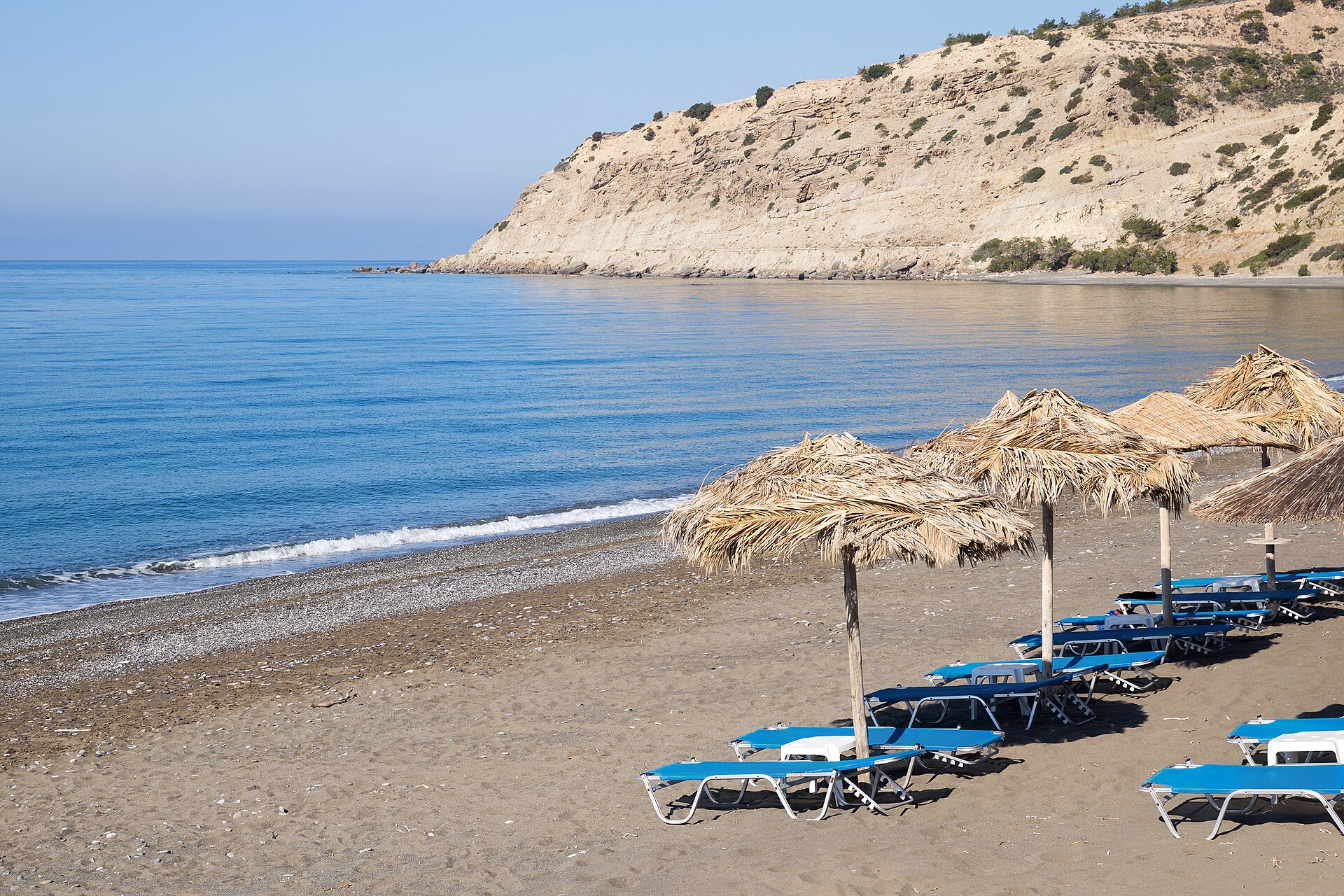
Located on a hill overlooking the sea east of the village, the settlement of Fournou Korifi represents one of the most significant archaeological sites of the Early Minoan period. Brought to light in the 1960s, this prehistoric village offers an extraordinary insight into archaic urban planning, with a complex of around a hundred interconnected rooms that served both as dwellings and craft workshops. It is here that the famous 'Goddess of Mirtos' was found, a ritual vase in the shape of a female figure now kept in the Archaeological Museum of Agios Nikolaos. Walking among these ancient foundations allows one to sense the deep connection between man and landscape: the ancient inhabitants chose this place not only for its defensive position, but for the sweeping view over the sea horizon, the very same view that still enchants anyone who climbs up here to admire the panorama.
Pyrgos: the Minoan villa between sky and sea
A short distance from Fournou Korifi lies the site of Pyrgos, a settlement spanning a much longer time span, reaching its peak during the Neopalatial period. Unlike the previous village, Pyrgos housed a stately residence, often called a 'Minoan villa', characterised by sophisticated architecture that included a central courtyard, storerooms for foodstuffs and an advanced drainage system. The distinctive feature of Pyrgos lies in its strategic position at the mouth of the valley, which allowed control of both access to the fertile hinterland and the coast. The ruins, immersed among Mediterranean scrubland, tell of a prosperous society that had learned to tame the land without disfiguring it. A visit to Pyrgos is a contemplative experience, where silence is broken only by the wind and the call of cicadas, offering a privileged perspective on the historical continuity of this region.
The Mirtos Museum: guardian of local memory
In the heart of the village, next to the main church, stands the small but precious Mirtos Museum. Founded thanks to the passion of John de Bree, a Dutch resident enamoured of this land, the museum gathers artefacts spanning from the Minoan era to contemporary history. Inside, visitors can admire scale models that faithfully reconstruct the settlements of Fournou Korifi and Pyrgos, helping visitors picture how these places looked millennia ago. In addition to archaeological finds, the museum devotes a moving section to traditional rural life and the events of the Second World War, displaying everyday objects and historical documents. It is an essential place for understanding the soul of the village: not a mere display of objects, but a collective account of a community that recognises in its past the roots of its welcoming and self-aware present.
The War Memorial and the value of freedom
At the entrance to the village, a sober and solemn monument recalls the sacrifice of the citizens of Mirtos during the 1943 massacre. This place is not merely a point of historical commemoration, but a constant reminder of the fragility of peace. Every year, on 15 September, the community gathers here to honour its ancestors in a ceremony that unites different generations. For the traveller, pausing before this memorial means going beyond Mirtos's touristic surface and connecting with the pain and strength that forged the character of its inhabitants. The dignity with which the tragedy is remembered helps create that atmosphere of mutual respect felt throughout the village's streets, where the guest is never regarded as a stranger, but as a witness to the rediscovered beauty of a place that knew destruction and was reborn with pride.
The coastline and the beach: an embrace of sand and light
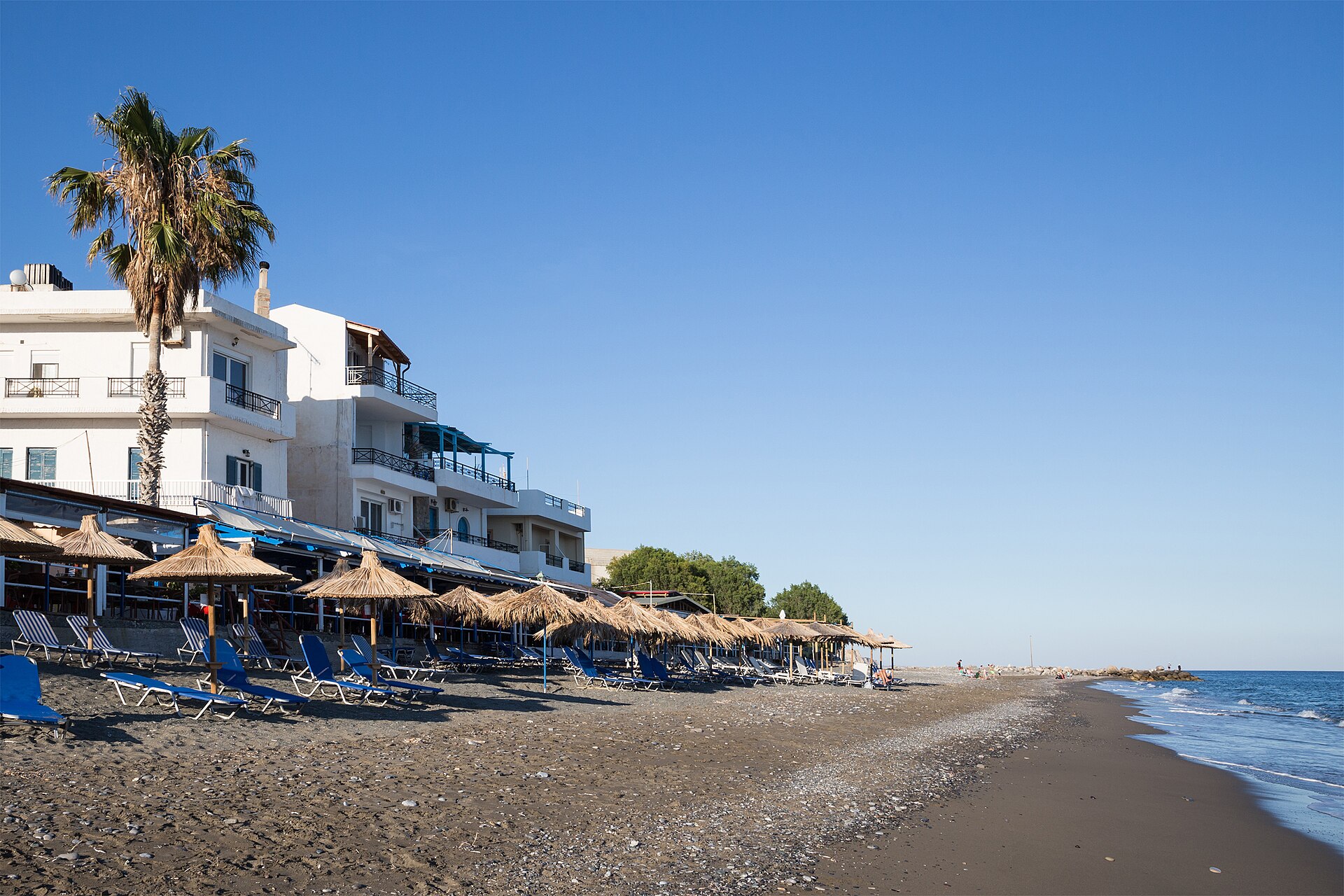
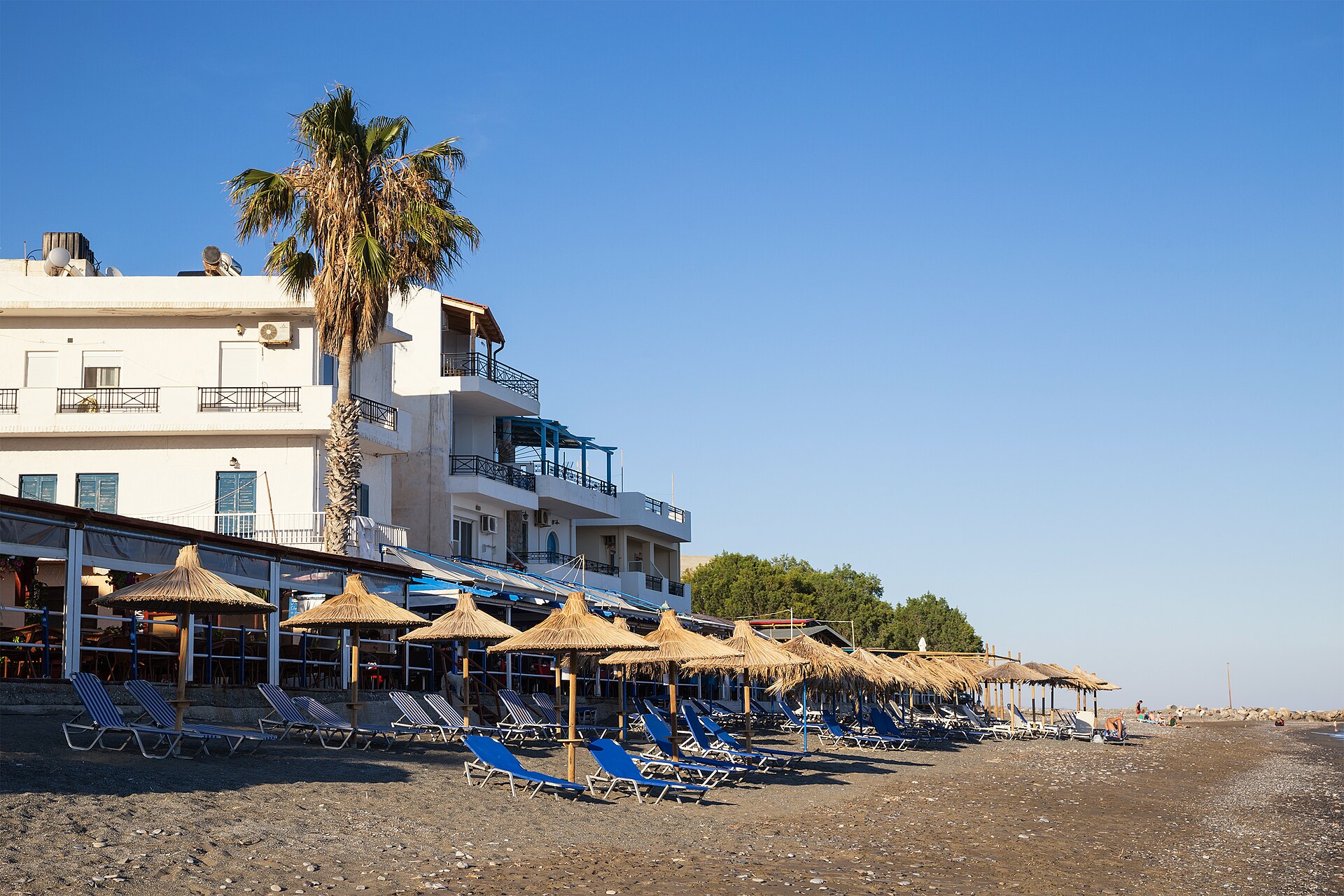
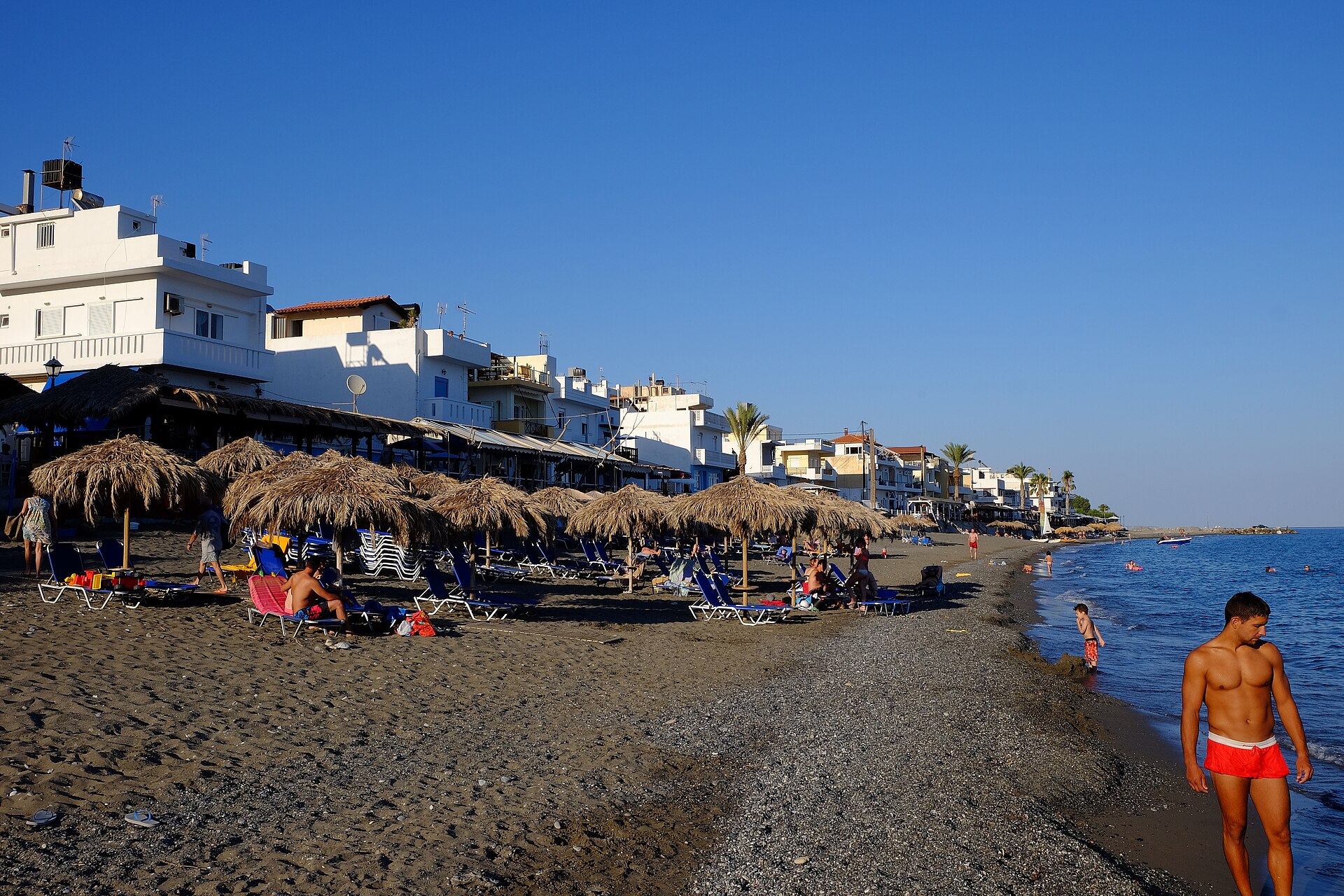
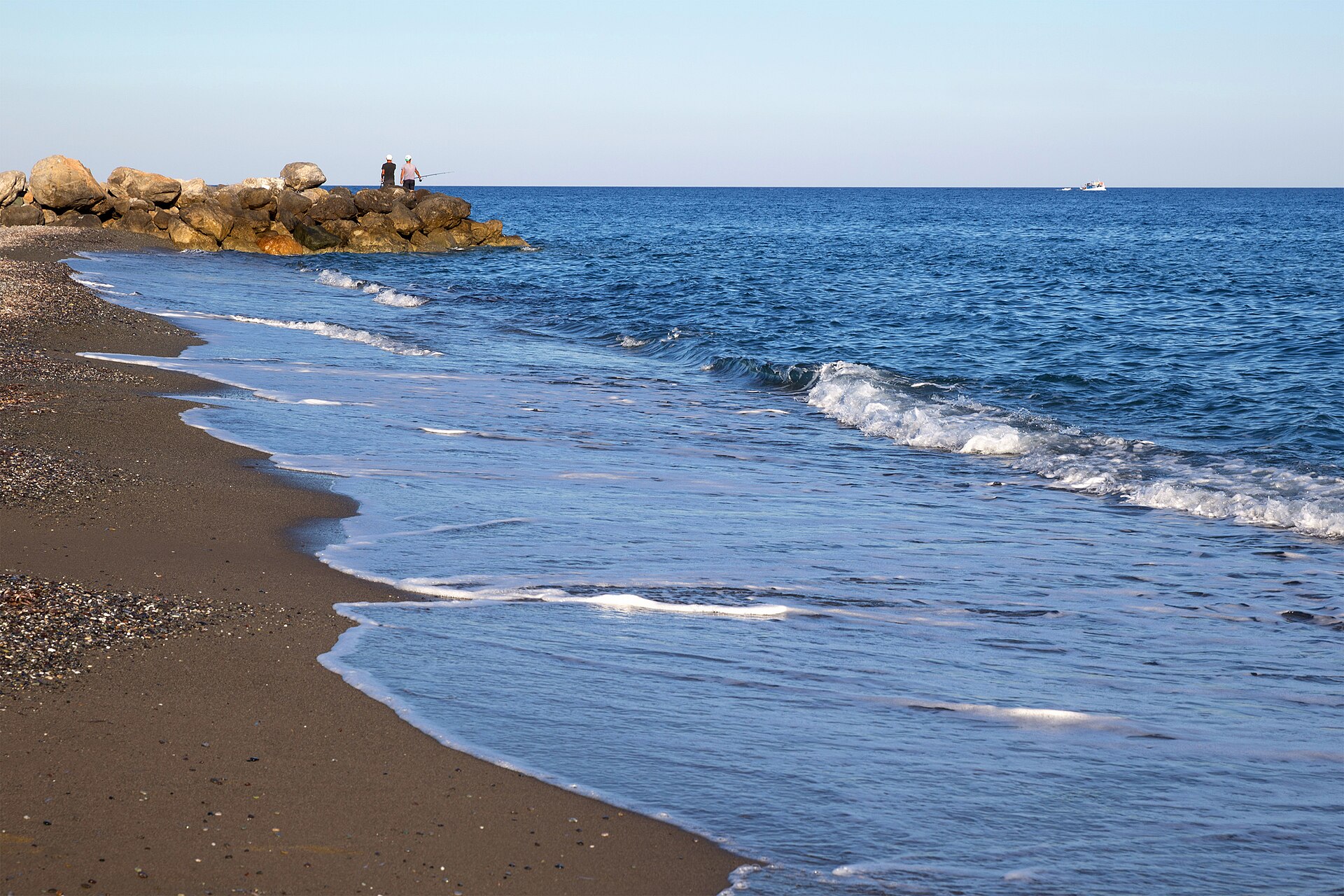
Mirtos beach is the beating heart of the village, a long stretch of grey sand and small pebbles washed by crystal-clear waters that shade from turquoise to deep blue. Its main feature is its protection from the strong northerly winds, the famous Meltemi, which often make other Cretan beaches unusable in summer; here, the sea remains almost always calm and inviting. The seafront is dotted with tamarisk trees offering natural shade and a series of traditional taverns where you can dine with your feet almost in the water. Despite its popularity, the beach retains a relaxed and spacious feel, ideal for those seeking a day of relaxation without the chaos of noisy beach clubs. At sunset, the sky turns warm colours and the beach becomes the perfect place for a solitary walk, listening to the hypnotic rhythm of the surf that accompanies the close of the day.
Nature and surroundings: the Sarakina Gorge
For lovers of adventure and wild landscapes, just a few kilometres from Mirtos lies the natural spectacle of the Sarakina Gorge. According to legend, the gorge was created by the giant Sarantapiho who, bending down to drink from the river, cut through the mountain with his beard. This narrow cleft between towering rock walls is a paradise for hiking: the trail winds along the bed of a stream that creates small waterfalls and natural pools where you can cool off. The gorge is relatively short but intense, with passages requiring a minimum of agility among boulders smoothed by water and lush vegetation. It is an experience that contrasts magnificently with the coast's marine setting, offering a taste of inland Crete, rugged and powerful, where the force of the elements has sculpted breathtaking scenes of primordial beauty.
The village of Tertsa: a refuge out of time
Continuing along the coast westward, you come to the hamlet of Tertsa, a small cluster of houses and greenhouses that embodies the essence of the most bohemian and unspoiled Crete. Here, paved roads give way to even slower rhythms and deserted beaches where time seems to have stopped in the 1970s. Tertsa is famous for its outdoor-grown bananas, thanks to the exceptional climate, and for its few taverns serving dishes made with locally sourced ingredients, often grown in the gardens behind them. It is the ideal destination for a day trip from Mirtos for those seeking even deeper solitude, or for those wishing to explore hidden coves where nature reigns supreme. The coastal road connecting the two villages offers unforgettable panoramic views over the cliffs plunging into the Libyan Sea, making even the simple journey an integral part of the travel experience.
Traditions and flavours: the cuisine of the sun
The gastronomy of Mirtos is a hymn to the Cretan diet, based on the absolute quality of local produce. Olive oil produced in the surrounding hills is the liquid gold that seasons every dish, from the classic 'dakos' (barley rusk topped with tomato, feta and oregano) to wild greens sautéed in a pan. Tavern menus always feature the fresh catch of the day, meats slow-cooked in wood-fired ovens, and 'kalitsounia', small sweet or savoury pastries filled with mizithra cheese. A meal in Mirtos almost always ends with an offer of 'raki' (a local grape spirit) accompanied by fresh fruit or honey sweets. This generosity is not merely a commercial practice, but a social ritual that invites conviviality. Attending one of the village festivals, especially in summer, also allows visitors to discover traditional Cretan music, dominated by the hypnotic sound of the lyra, which draws residents and tourists alike into energetic communal dances.
When to go and how to experience Mirtos
Mirtos is one of the few Cretan destinations that can be visited enjoyably in every season. Summer is hot but tempered by the sea breeze and the village layout, which offers shade and coolness. However, it is during spring and autumn that the village reveals its most magical side: spring blossom tints the hills with vibrant colours, while autumn extends summer with water temperatures still perfect for swimming until November. Even winter has its charm, attracting those seeking a mild refuge to write, read, or simply unwind from the hustle of northern Europe. Living Mirtos means forgetting the car, moving around on foot through the alleys, greeting neighbours sitting outside their doors, and letting curiosity guide you, perhaps discovering a small craft shop or a garden corner hidden behind a white stone wall.
- Exploring the remains of the Minoan settlement of Fournou Korifi at dawn.
- Hiking through the Sarakina Gorge for an immersion in wild nature.
- Dining at a seafront tavern, savouring fresh fish from the Libyan Sea.
- Visiting the Mirtos Museum to discover the secrets of the 'Goddess of Mirtos'.
- Taking a walk to the nearby village of Tertsa along the coastal road.
- Attending an evening of traditional Cretan music in the square.
- Relaxing on the grey sandy beach sheltered from the northerly winds.
FAQ
Mirtos è adatta alle famiglie con bambini?
È facile trovare parcheggio a Mirtos?
Quanto tempo è consigliabile restare?
Qual è la città più vicina per servizi importanti?
Il mare è adatto allo snorkeling?
Getting there
- Aeroporto Internazionale di Heraklion (Nikos Kazantzakis) - 80 km
- Non ci sono linee ferroviarie a Creta.
- Da Heraklion, seguire la strada nazionale verso sud in direzione di Ierapetra, quindi svoltare a destra seguendo le indicazioni per Mirtos/Viannos.
- Noleggiare un'auto è il modo migliore per raggiungere Mirtos e visitare i dintorni, poiché i bus locali hanno orari limitati.
Perfect for
Ideale per chi vuole fuggire dal turismo di massa e vivere secondo i ritmi lenti della tradizione cretese.
Un punto di partenza eccellente per scoprire importanti siti minoici minori ma di grande fascino storico.
Tra gole spettacolari come Sarakina e sentieri costieri, offre scenari perfetti per gli amanti dell'outdoor.
Perfetto per vacanze fuori stagione grazie alla protezione delle montagne che garantisce sole e temperature miti.
To see
