Limenas Khersonisou
Limenas Khersonisou, or more simply Hersonissos, reveals itself to the traveller as a two-faced Janus lying along Crete's northern...
Updated 7 July 2026
This season · July · Summer
What to do in Limenas Khersonisou now
The story
The story of Limenas Khersonisou
A millennia-old chronicle: from Minoan origins to modernity
The story of Limenas Khersonisou does not begin with mass tourism, but thousands of years ago, when it served as the strategic port for the powerful city-state of Lyttos, located inland. During the Minoan era and later the Hellenistic period, this harbour was essential for maritime trade. It was under Roman rule, however, that the town reached its greatest splendour: it became an opulent centre, equipped with theatres, aqueducts and monumental fountains, remains of which are still visible today. With the arrival of the Byzantine era, the town retained its importance as an episcopal seat, but had to face constant threats from Saracen pirates, which gradually forced the population to move to the safer hills, giving rise to the villages of Ano Hersonissos.
During the Venetian and Ottoman periods, the coastal area remained almost uninhabited, used mainly for farming and fishing. It was only from the 1960s onwards that Limenas Khersonisou began its remarkable transformation. What had been a small cluster of fishermen's houses and carob storehouses rapidly evolved into one of the most renowned seaside resorts in the Mediterranean. Yet this evolution has not erased the past; every excavation for a new foundation often brings to light fragments of a classical heritage that continues to coexist, sometimes surreally, with the vibrancy of the present.
The Sarakinos Fountain and Roman secrets
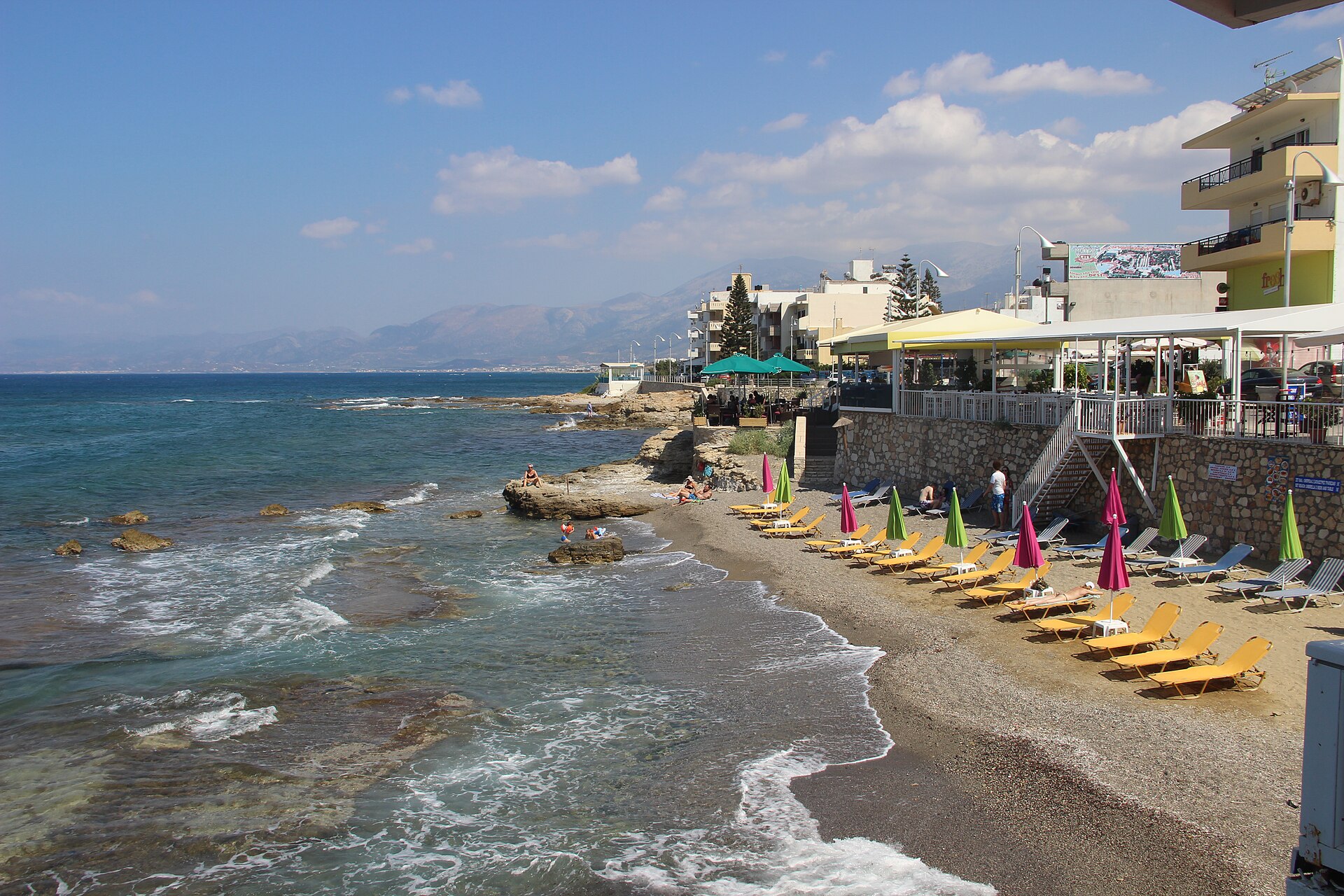
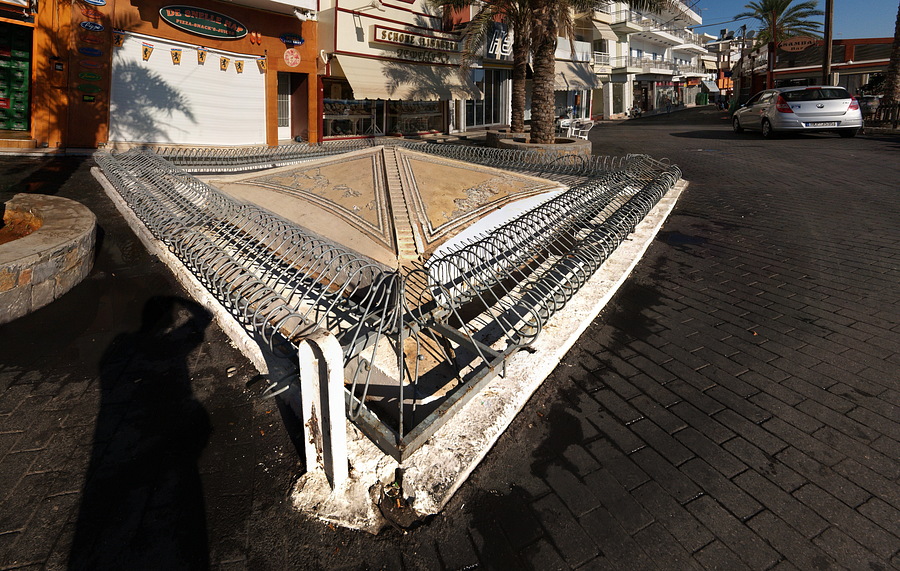
At the heart of the modern seafront lies one of the most precious treasures of the Roman era: the Sarakinos Fountain. It is a truncated pyramidal structure, decorated with exquisite mosaics depicting scenes of marine life and fishing activities. Dating back to the 2nd century AD, this fountain was not merely a utilitarian structure for the water supply, but a true symbol of the ancient town's prestige and refinement. Observing the detail of the tesserae, one can still sense the aesthetic of an age when water was celebrated as a divine gift. Despite the surrounding urban development, the fountain remains an essential landmark for anyone wishing to connect with imperial Chersonesos.
The Church of Agios Nikolaos and the Kastri headland
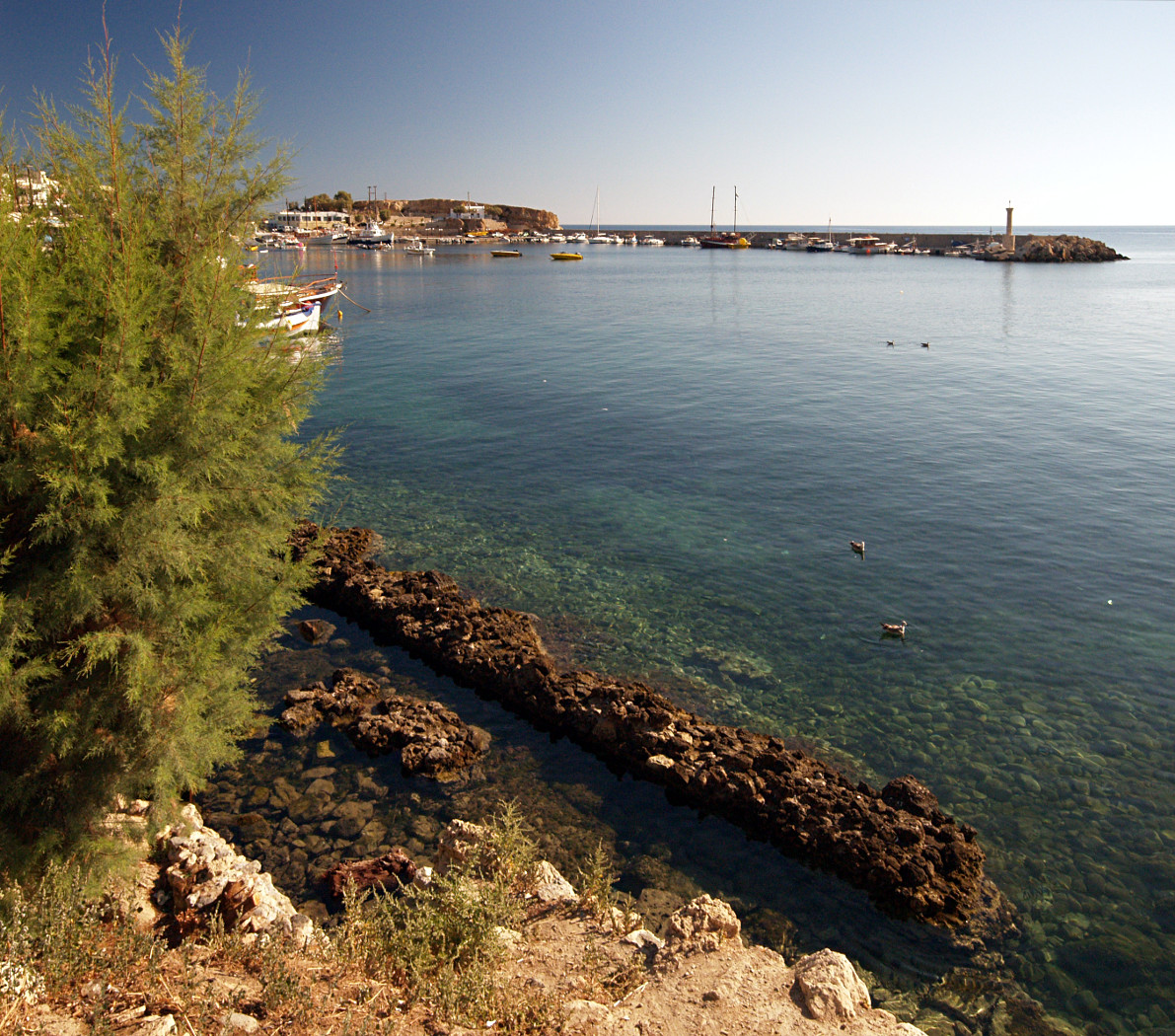
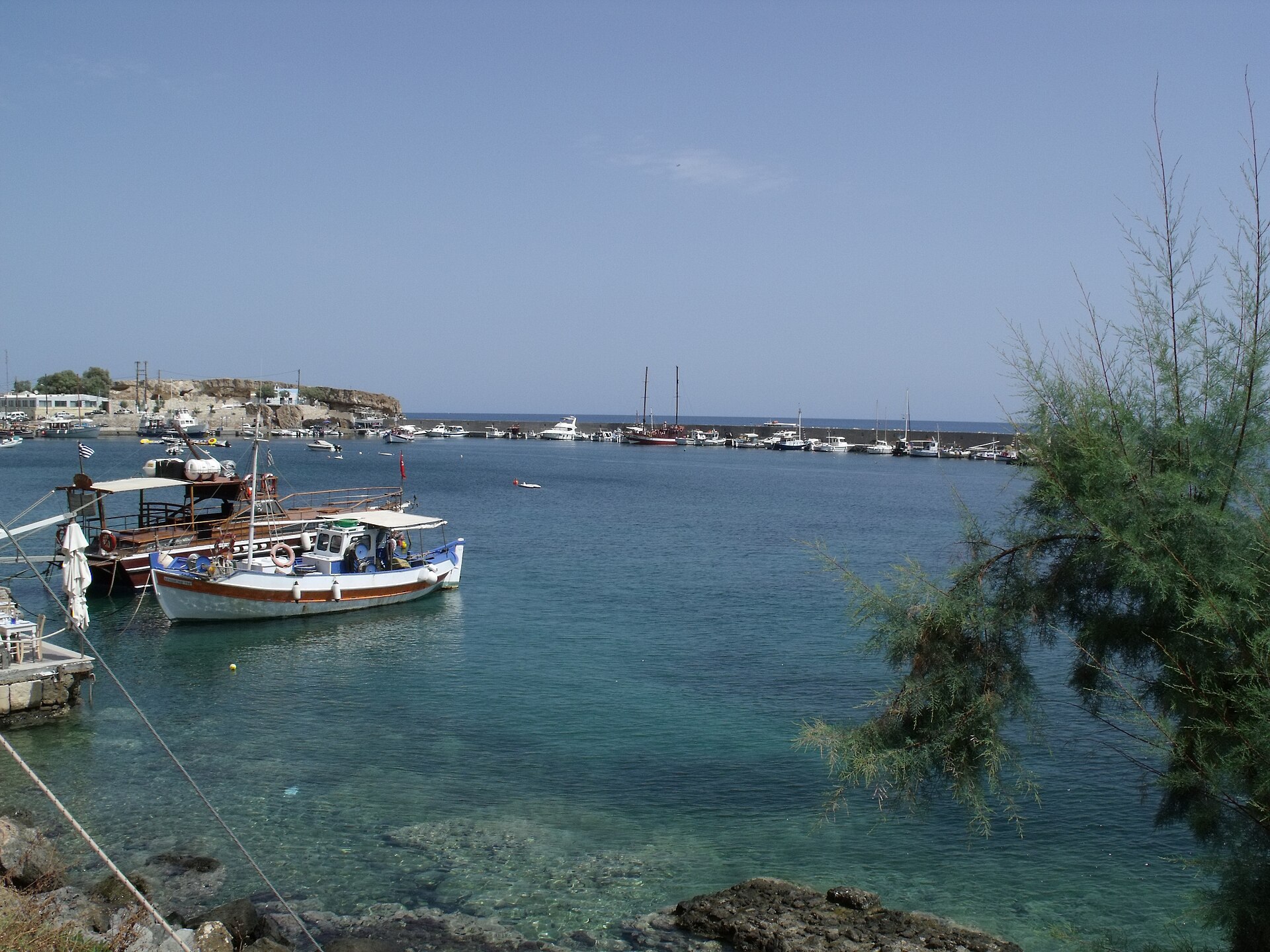
At the tip of the small headland sheltering the harbour stands the picturesque little church of Agios Nikolaos, dedicated to the patron saint of sailors. This dazzling white building, its azure dome standing out against the sky, rises directly above the ruins of a 5th-century early Christian basilica. The surrounding area, known as Kastri hill, holds the remains of ancient fortifications and mosaic floors that testify to the continuity of worship at this scenic spot. It is the ideal place to admire the sunset, when the golden light envelops the ancient stones and the sea seems to calm, offering a privileged view over the bay and the majesty of the northern coast.
Lychnostatis: the open-air museum of folk culture
For those wishing to understand the rural soul of Crete, a visit to the Lychnostatis Museum is a must. Located on the eastern edge of town, this open-air folk museum is no cold display of objects, but a complete sensory experience. Built with natural materials and traditional techniques, the complex recreates a typical Cretan village with farmhouses, olive presses, weaving workshops, raki distilleries and even a small theatre. Here one learns how the island's inhabitants lived for centuries in harmony with a generous yet demanding land, celebrating the cycle of the seasons and traditional craftsmanship. The scent of aromatic herbs from the adjoining botanical garden completes a moving journey into local folklore.
Aquaworld Aquarium: conservation and nature
A short distance from the centre lies the Aquaworld Aquarium & Reptile Rescue Centre, a one-of-a-kind establishment in Crete. Founded with a strong ethical commitment, this centre does more than display local marine wildlife — it serves as a shelter for rescued or abandoned animals. It is especially beloved by families for its educational, hands-on approach: here you can see sea turtles, pythons and iguanas up close, while learning about the importance of preserving Mediterranean biodiversity. The intimate atmosphere and the volunteers' passion make the visit a moment of reflection on the relationship between humans and the environment, far from the bustle of the busier beaches.
The hillside villages: Piskopiano, Koutouloufari and Ano Hersonissos
Just a couple of kilometres inland reveals a completely different world. The three traditional villages of Piskopiano, Koutouloufari and Ano Hersonissos form a natural amphitheatre overlooking the sea. Here the streets are narrow and paved, the stone houses adorned with blooming bougainvillea, and the atmosphere is that of an authentic, relaxed Crete. Koutouloufari, in particular, is renowned for its excellent taverns where you can dine beneath vine-covered pergolas. Piskopiano is home to an interesting Museum of Agriculture, while Ano Hersonissos still has a central square where the elderly gather for coffee, keeping alive a pace of life that seems to ignore the frenzy of the harbour below.
The Sarandaris Coves: the wild side of the coast
West of the main harbour, the coastline breaks up into a series of small inlets known as the Sarandaris Coves. Sheltered by tall limestone cliffs, these beaches offer crystal-clear waters and shallow seabeds ideal for snorkelling. Unlike the large organised beaches, the Sarandaris coves retain a wilder, more intimate charm. Here the colour of the sea shifts from turquoise to emerald, and the shape of the rocks creates natural pools perfect for those seeking a closer connection with nature. It is the locals' favourite spot for a refreshing early-morning swim, when the silence is broken only by the lapping of the waves.
Unmissable experiences
- A romantic dinner at a Koutouloufari tavern at sunset.
- An archaeological stroll in search of Roman mosaics hidden among the cafés.
- A boat trip to the uninhabited island of Dia for snorkelling.
- Tasting extra virgin olive oil at a local press.
- Joining a 'panigyri' (traditional festival) in Ano Hersonissos during summer.
- A relaxing afternoon at the Sarandaris bays, away from the crowds.
Traditions and flavours: the Cretan diet at the table
The cuisine of Limenas Khersonisou is an extension of the famous Cretan diet, based on fresh, local, seasonal ingredients. No visit here is complete without tasting 'Dakos', a barley rusk topped with fresh tomato, mizithra cheese and plenty of olive oil. Meat, often grilled or stewed with wild herbs, is a mainstay of the table, as is the extremely fresh fish brought in each morning by local fishermen. The meal invariably ends with 'Raki' (or Tsikoudia), the local spirit that symbolises hospitality: offered as a gesture of welcome or to close an evening in conviviality, often accompanied by fresh fruit or honey pastries such as 'Kalitsounia'.
When to go and how to experience Limenas Khersonisou
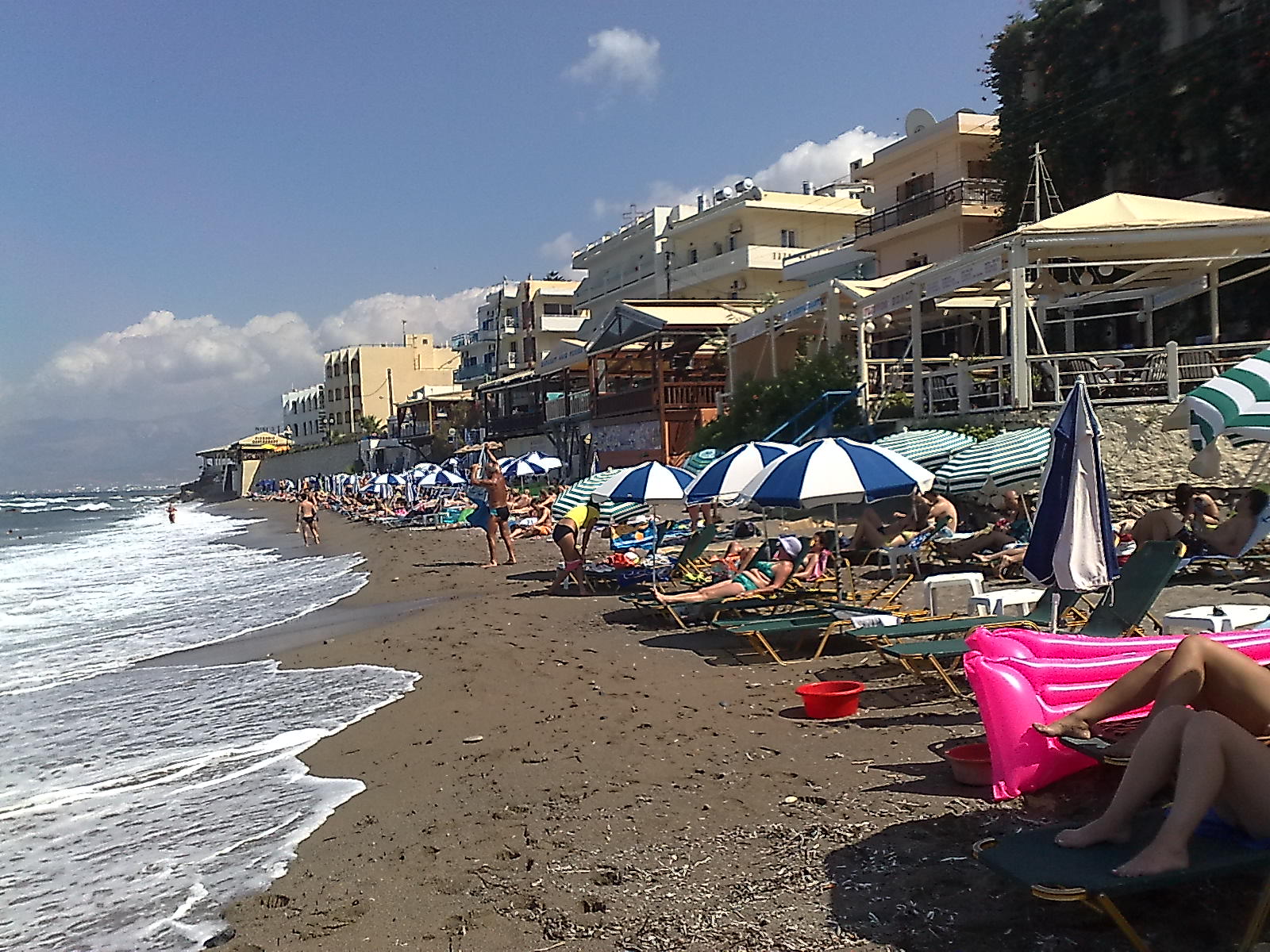
The best time to fully enjoy Limenas Khersonisou is spring (May–June) or early autumn (September–October). During these months the temperatures are pleasant, nature is lush or golden, and tourist crowds are moderate, allowing you to enjoy both the archaeological sites and the beaches in complete tranquillity. High summer is ideal for those seeking the vibrant energy of the nightlife and the intense heat of the Greek sun, but it calls for a flexible spirit to cope with the liveliness of the place. To experience Hersonissos like a local, walk along the coast and use local buses to explore the hinterland: the true magic is often found by straying from the main routes, following the scent of wild thyme.
FAQ
È una località adatta alle famiglie con bambini?
Come sono i prezzi rispetto ad altre zone di Creta?
Si può girare a piedi?
Com'è la vita notturna?
C'è parcheggio facile?
Getting there
- Aeroporto Internazionale di Heraklion 'Nikos Kazantzakis' (HER) - 25 km
- Non sono presenti linee ferroviarie a Creta.
- Percorrere la strada statale E75 (National Road) verso est da Heraklion per circa 25-30 minuti.
- I bus della compagnia KTEL collegano l'aeroporto e il centro di Heraklion a Hersonissos ogni 15-30 minuti.
Perfect for
Il lungomare è il paradiso del divertimento notturno con club e cocktail bar aperti fino all'alba.
Dalla Fontana Sarakinos ai villaggi tradizionali, il passato romano e bizantino è ovunque.
Le calette di Sarandaris offrono acque trasparenti e un'atmosfera più intima rispetto alle spiagge centrali.
To see