

Iraklio
Heraklion, also known as Iraklio, is not merely the administrative capital of Crete, but a temporal threshold where myth and moder...
Updated 7 July 2026
This season · July · Summer
What to do in Iraklio now
The story
The story of Iraklio
A history of sieges and rebirths
Heraklion's roots reach back to the Minoan era, when it served as the maritime gateway for nearby Knossos. However, the urban character truly began to take shape in 824 AD, when the Saracens fortified it, surrounding it with a deep moat, from which the Arabic name Khandaq derived. With the Byzantine reconquest in 961, the city became a strategic center, but it was under the rule of the Republic of Venice, beginning in 1204, that it assumed the role of capital of the Kingdom of Candia. The Venetians transformed it into a cutting-edge fortress, capable of withstanding the Ottoman siege for 21 years, one of the longest in military history. In 1669, the city finally fell into Turkish hands, beginning a period of decline interrupted only by liberation and union with Greece in 1913. Every domination has left an indelible mark, making Heraklion a historical palimpsest of rare complexity.
The Palace of Knossos: the heart of the myth
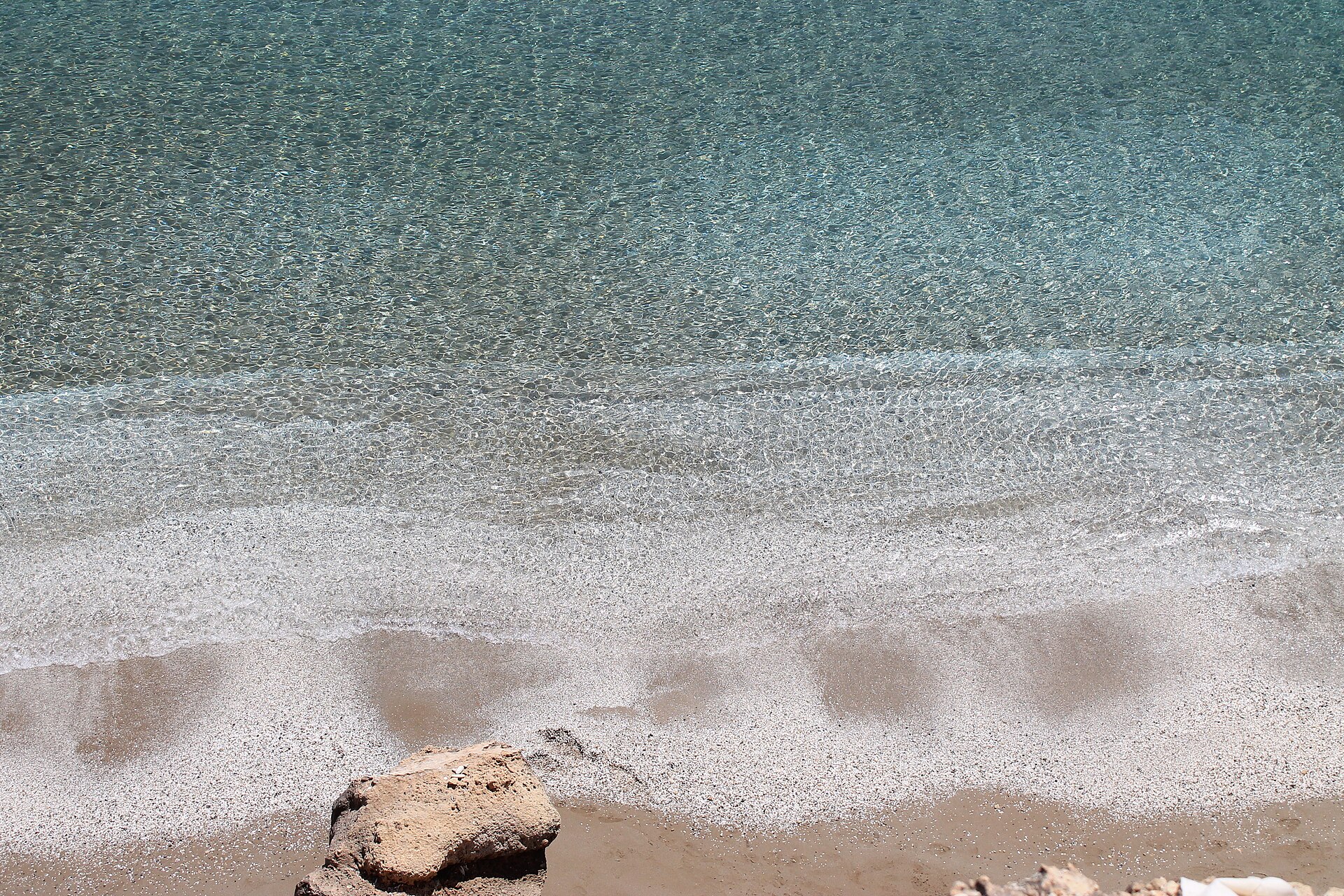
A few kilometers from the modern center lies the archaeological site of Knossos, the place where the legend of the Minotaur and Daedalus's labyrinth takes tangible form. Brought to light in the early 20th century by British archaeologist Arthur Evans, the palace was the political and religious center of Minoan civilization. The structure is an intricate complex of over a thousand rooms, courtyards, and sanctuaries, characterized by the iconic red columns that taper downward. Although Evans's reconstructions are sometimes debated by scholars for their interpretive style, they offer a vivid and evocative vision of what the palace must have looked like at its peak splendor. Admiring the storerooms with their large pithoi (terracotta jars) and the Throne Room allows one to sense the refinement of a people who dominated the sea four thousand years ago.
The Heraklion Archaeological Museum
Considered one of the most important museums in the world, this institution is the temple of Minoan civilization. Inside are kept the original artifacts found at Knossos, Phaistos, and other sites on the island, spanning a period of over five thousand years. Among the most celebrated pieces are the vibrant frescoes of the 'Prince of the Lilies' and the 'Bull-Leapers', which testify to a joyful, naturalistic art. No less fascinating are the mysterious Phaistos Disc, still not fully deciphered today, and the statuette of the Snake Goddess. The museum is organized chronologically, allowing visitors to follow Crete's technological and artistic evolution, from Neolithic pottery to finely worked gold jewelry, offering an essential key to understanding the island's profound identity.
The Koules Fortress: sentinel of the harbor
At the entrance to the old harbor stands the Rocca a Mare, better known as Koules. This massive 16th-century Venetian fortress is the symbol of Heraklion's resistance against threats coming from the sea. Its outer walls, up to nine meters thick, still house marble bas-reliefs depicting the Lion of St. Mark. Visiting the interior means walking through cool corridors and wide halls that once served as ammunition depots, prisons, and quarters for garrisons. From its summit, one enjoys an unparalleled view of the fishing harbor, where colorful boats contrast with the grey of the ancient stone, and of the expanse of blue sea fading toward the horizon. It is the ideal place for a sunset stroll, when the golden light illuminates the Venetian walls.
The Venetian Walls and the Tomb of Kazantzakis
Heraklion is encircled by one of the most imposing defensive systems in the Mediterranean. The Venetian walls, designed by architect Michele Sanmicheli, form a fortified ring with seven bastions enclosing the historic center. Today these structures have been transformed into city parks and elevated pedestrian paths. On the Martinengo bastion, the highest point of the fortifications, lies the tomb of Nikos Kazantzakis, author of 'Zorba the Greek'. His burial place is austere, a simple wooden cross atop a mound of earth, with the epitaph reading: 'I hope for nothing. I fear nothing. I am free'. From here, the view embraces the entire city all the way to Mount Juktas, offering a moment of reflection on Greek history and literature amid absolute serenity.
The Morosini Fountain and the Loggia
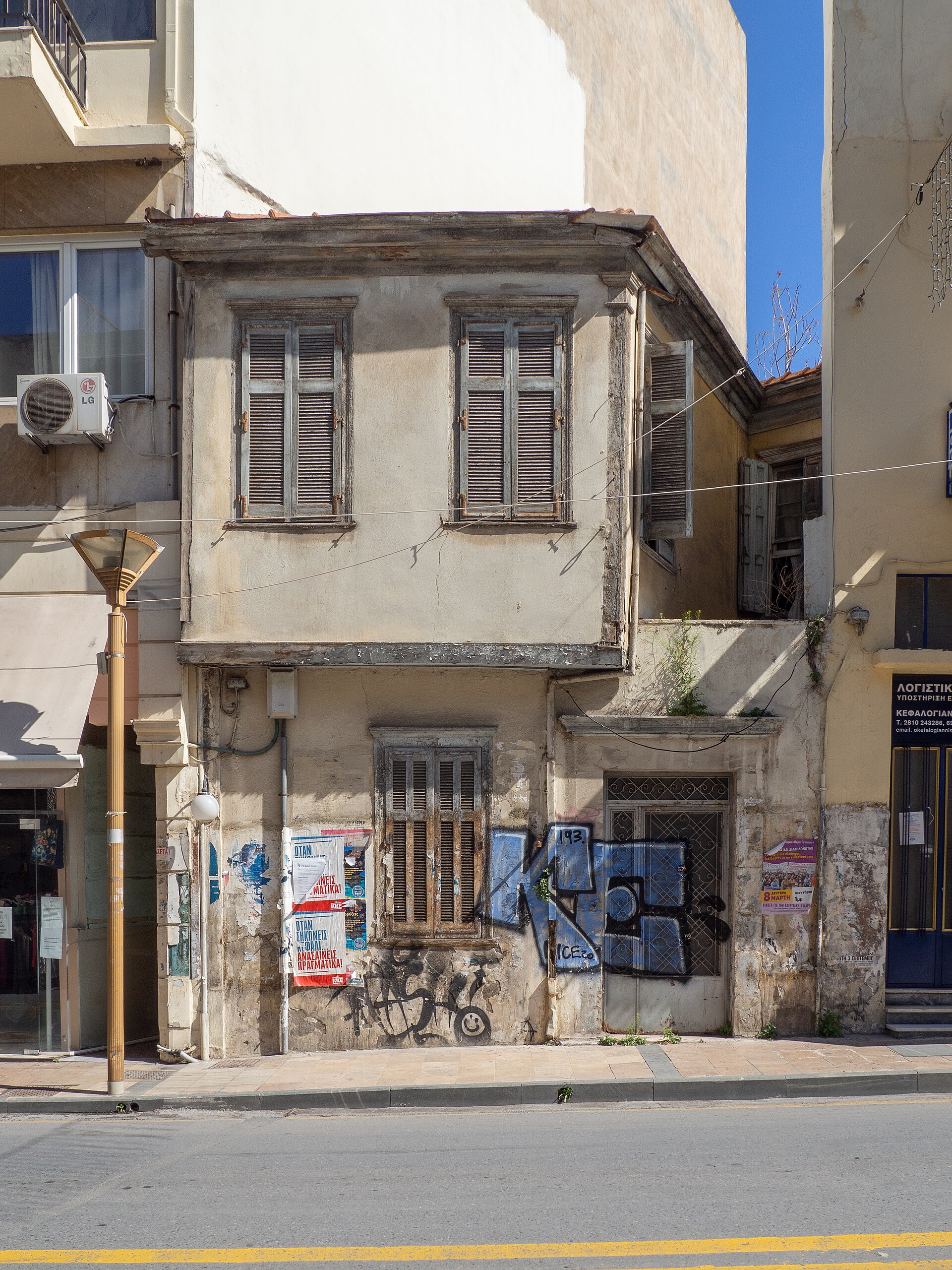
The social heart of Heraklion beats in Venizelou Square, home to the Morosini Fountain, also known as the Lions Fountain. Inaugurated in 1628, it served not only an aesthetic function but a practical one: supplying the city with drinking water through a complex aqueduct system. The four lions supporting the central basin are a direct reference to Venetian power. A short distance away stands the Venetian Loggia, an elegant two-story building with Palladian arcades, once a gathering place for Candia's nobility to discuss politics and business. Today the Loggia houses the city hall and is considered one of the best-preserved Venetian monuments in all of Greece, an example of architectural grace that enriches the modern urban fabric.
The Basilica of St. Titus
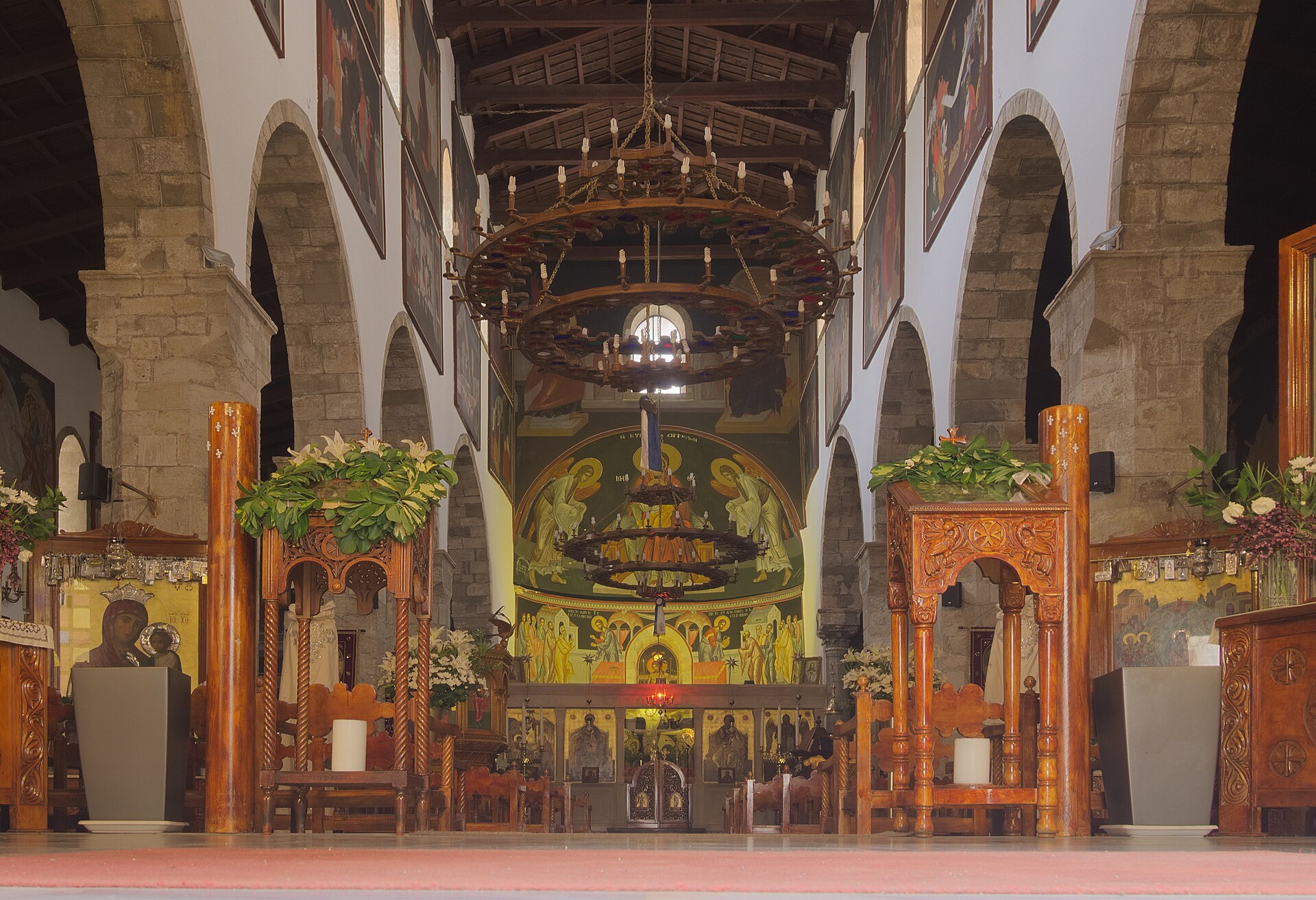
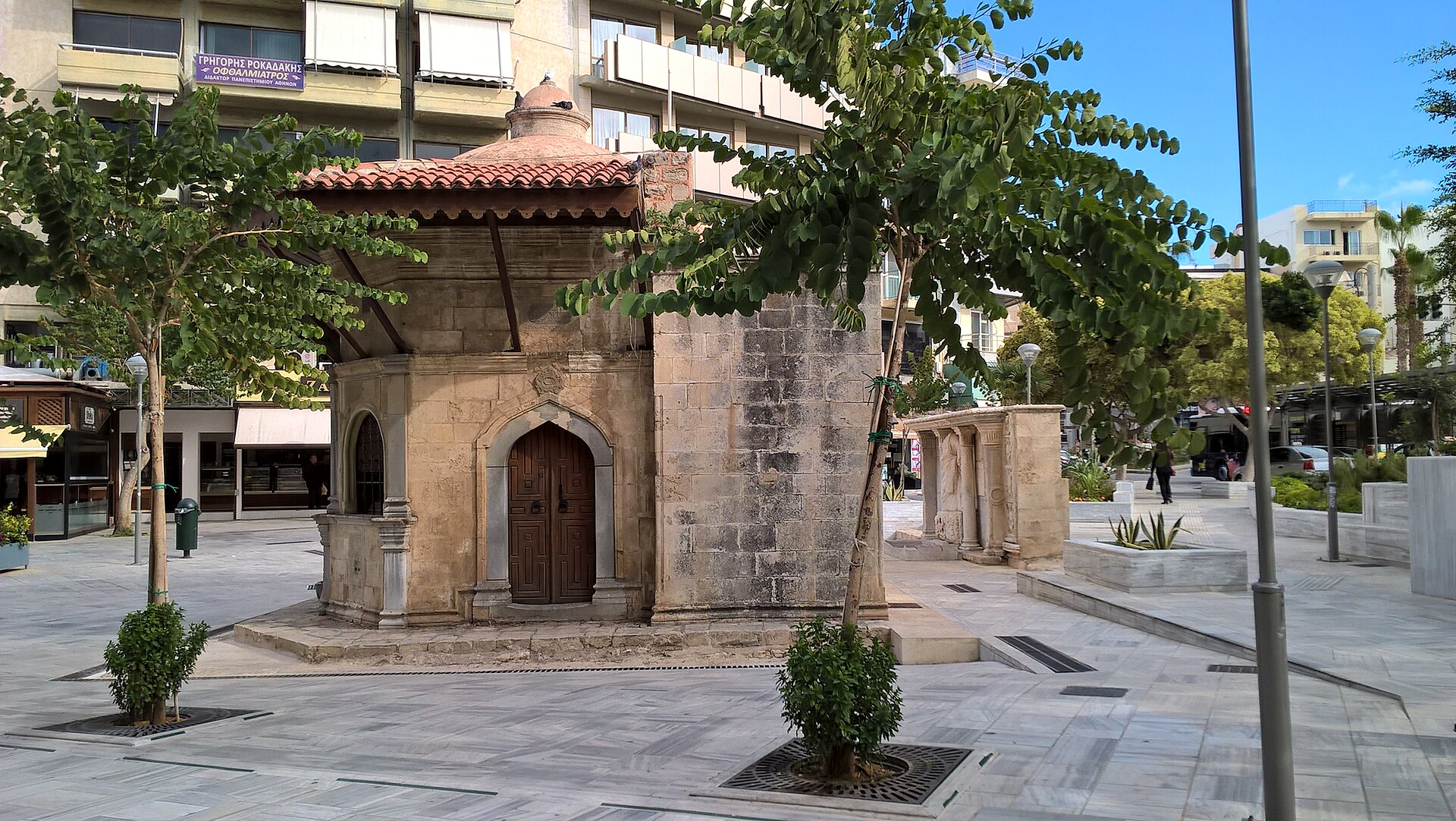
The church of Agios Titos is a monument that sums up the religious vicissitudes of Crete. Originally dedicated to the island's first bishop and disciple of St. Paul, the current structure has undergone numerous transformations: it was a Byzantine church, then a Catholic cathedral under the Venetians, and finally a mosque during the Ottoman occupation, as some architectural elements still attest today. After 20th-century restoration, it returned to Orthodox worship. The surrounding square, paved in stone and lined with elegant cafés, is one of the city's most evocative corners. Inside, worshippers and visitors can admire the reliquary containing the skull of St. Titus, brought back here from Venice in 1966 as a gesture of reconciliation between the churches.
The landscape between sea and hills
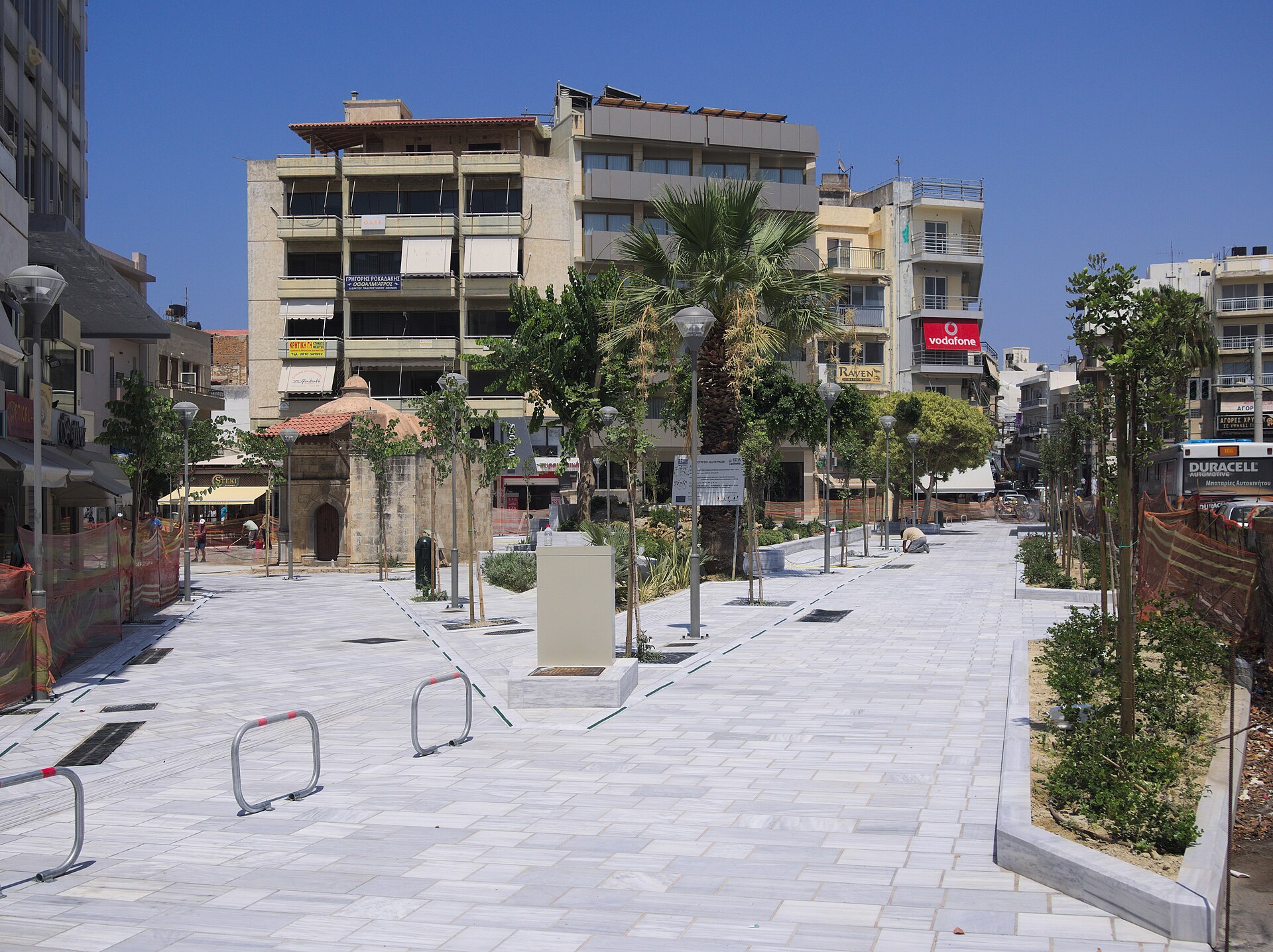
Heraklion is not just stone and history; its geographic position offers a varied landscape ranging from sandy coasts to limestone hills. A short distance from the city lie the beaches of Ammoudara to the west and the Karteros area to the east, ideal destinations for those seeking sea-side refreshment. However, it is the hinterland that hides the region's most authentic face. Mount Juktas, which legend says is the profile of Zeus's sleeping face, dominates the southern horizon. The surrounding valleys are a mosaic of silvery vineyards and dense olive groves, where the air is scented with oregano and wild thyme. This area is the realm of Cretan biodiversity, a territory where nature blends with traditional agriculture in a balance that has persisted for centuries.
Flavors and traditions: the Cretan table
Heraklion's cuisine is the ultimate expression of the Cretan diet, celebrated for its longevity and authenticity. In the city, the market on 1866 Street is the place to discover local products: cheeses such as graviera or fresh mizithra, plump olives, and the famous thyme honey. An unmissable experience is tasting 'dakos', a barley rusk soaked in oil, fresh tomato, and cheese, or 'kalitsounia', small sweet or savory pastries filled with wild herbs. The meal invariably closes with 'tsikoudia' (or raki), the local spirit offered as a sign of hospitality. Popular traditions also come alive during patron saint festivals and summer festivals, where the music of the Cretan lyre accompanies collective dances involving entire generations, uniting the community in an ancestral rite.
Surroundings and authentic villages
Moving away from the urban center, one encounters towns that deserve a thorough visit. Archanes, located at the foot of Mount Juktas, is an award-winning village for the restoration of its traditional houses and for the production of fine wines. Here one breathes an atmosphere of bygone times, strolling among flower-filled courtyards and small squares. For literature enthusiasts, the village of Myrtia is home to the Nikos Kazantzakis Museum, located in the writer's family home, offering an intimate journey into his life and works. Further south, one can reach the archaeological sites of Phaistos and Gortyn, less crowded than Knossos but equally evocative, set in a solitary countryside that offers glimpses of rare rural beauty.
When to go and how to live the city
The best time to visit Heraklion is spring (April-June) or early autumn (September-October), when temperatures are mild and allow exploration of archaeological sites without the excessive heat of summer. Summer is perfect for those who want to combine culture with nightlife and the sea, although the city is very crowded. To experience Heraklion like a local, one should take the time for a 'frappé' coffee in Liberty Square, get lost in the side streets of the Agia Triada neighborhood, and frequent the 'mezedopolia', the small taverns serving small dishes to share. The city is also an excellent starting point for exploring the whole island, thanks to its central location and well-developed transport network.
- Explore the Palace of Knossos in the early morning light to avoid the crowds.
- Admire the Minoan masterpieces at the Archaeological Museum.
- Stroll along the pier to the Koules Fortress.
- Pause in front of the Morosini Fountain to watch the city's comings and goings.
- Visit the tomb of Nikos Kazantzakis on the Venetian walls.
- Taste bougatsa (custard-filled filo pastry) at one of the historic cafés in the center.
- Take a trip through the vineyards of the village of Archanes.
FAQ
Quanto tempo serve per visitare Iraklio?
Come si arriva dal porto o dall'aeroporto al centro?
È facile parcheggiare a Iraklio?
Iraklio è adatta alle famiglie con bambini?
Getting there
- Aeroporto Internazionale di Heraklion 'Nikos Kazantzakis' (HER) - 4 km
- Non sono presenti linee ferroviarie a Creta.
- Percorrere la National Road (E75) che attraversa l'intera costa nord di Creta, collegando Iraklio a Chania (ovest) e Agios Nikolaos (est).
- Per spostarsi nell'entroterra o raggiungere le spiagge più isolate, il noleggio auto è vivamente consigliato, data l'estensione dell'isola.
Perfect for
Un paradiso per gli amanti della storia antica, con il Palazzo di Cnosso e uno dei musei più ricchi al mondo.
Ideale per scoprire la cucina cretese autentica, tra mercati rionali e taverne tradizionali.
Perfetto per chi cerca una città vivace, ricca di eventi, musei moderni e una vibrante vita notturna.
To see
