

Bali
Until the mid-twentieth century, the name Bali appeared on nautical charts more for the shelter it offered fishing boats than for...
Updated 8 July 2026
This season · July · Summer
What to do in Bali now
The story
The story of Bali
The story of a fishing village
Bali's origins are lost in the minor history of Crete, that of the small fishing landings along the northern coast, between Rethymno and Heraklion. The settlement that today bears this name was probably born in the Venetian era, when the island was an outpost of the Serenissima and the coast was dotted with watchtowers against pirate raids; one of these lookouts, now in ruins, still stands on the hill overlooking the harbour. With the Ottoman conquest, from the seventeenth century onward, the hinterland of Mylopotamos lived through centuries of tension that culminated in the nineteenth century with dramatic episodes such as the massacre at the Melidoni cave, not far away. Bali remained for generations a marginal fishing hamlet, until, between the 1970s and 1980s, its isolated coves began to attract the first independent travellers, sparking a tourist growth that has transformed the village without erasing its original character.
The Monastery of Agios Ioannis Prodromos
Above the village, reachable by a short climb through olive trees and Mediterranean scrub, lie the remains of the monastery dedicated to Saint John the Forerunner, known locally as Moni tou Baliou: according to one of the most accredited theories, it is from this monastic complex that the village would have taken its name. Founded in the Venetian era and expanded in the following centuries, the monastery was a spiritual and economic centre for the whole Mylopotamos area, with cells for the monks, an olive press and cisterns for collecting water. Gradually abandoned during the twentieth century, it is today largely in ruins, but the small chapel is still consecrated and is reopened on the days of the saint's feast, when the villagers climb up in procession from the village. The view enjoyed from the forecourt, with the Sea of Crete in the background, is worth the walk on its own.
The old harbour and the four coves
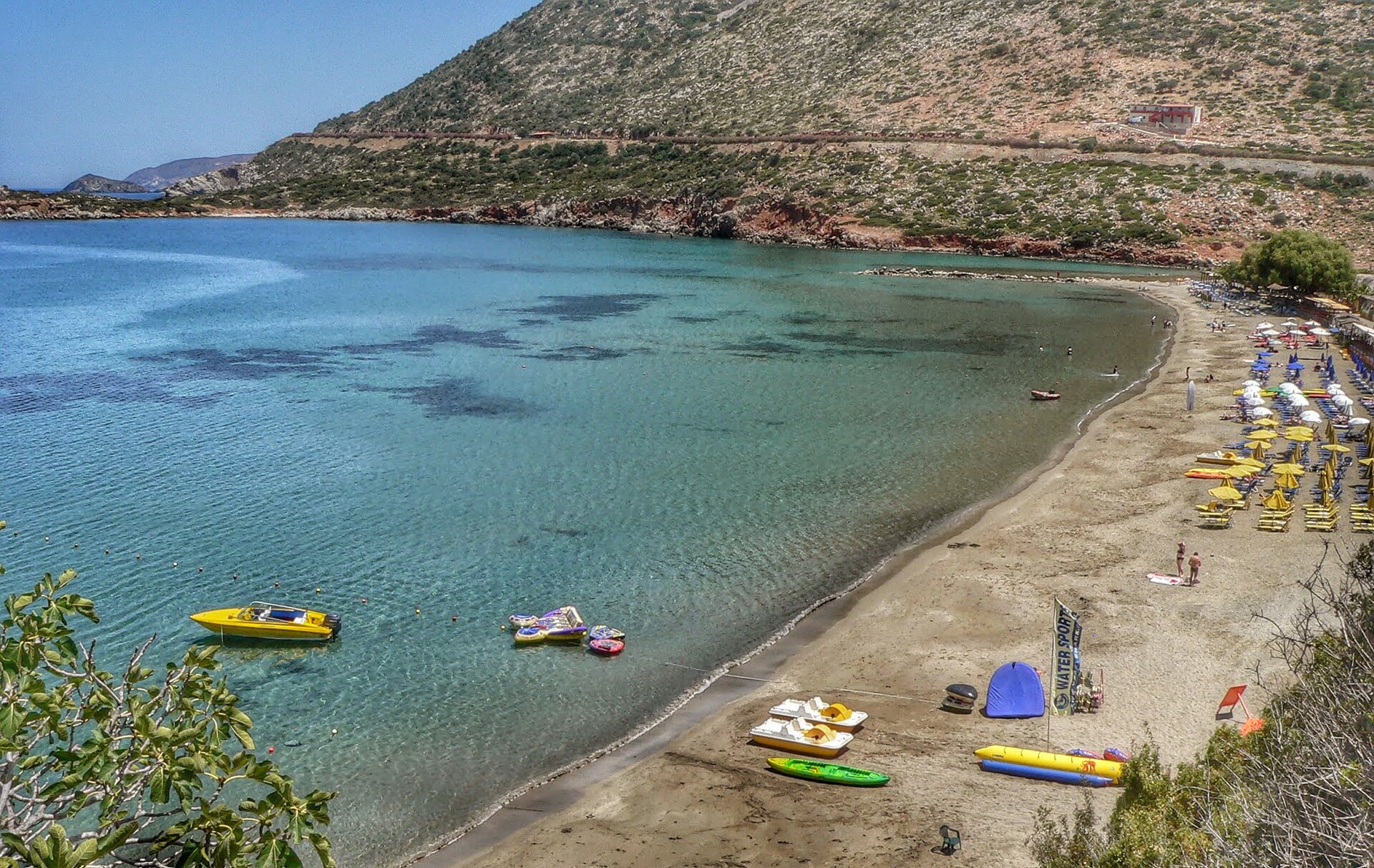
The visual heart of Bali remains the small harbour, a patch of calm water protected by a low pier where the boats of local fishermen can still be seen drawn up on the shore, alongside the small craft that carry bathers to the more isolated coves. Around the harbour cluster the village's first houses, today occupied by fish taverns and small family-run hotels, while the rest of the settlement has developed along the road that climbs toward the hinterland. What sets Bali apart from most of Crete's coastal towns is its sequence of four closely spaced bays, separated by low rocky spurs and linked by paths and stairways: just a few minutes' walk are enough to pass from a busier beach to an almost deserted cove, each with its own microclimate and its own character.
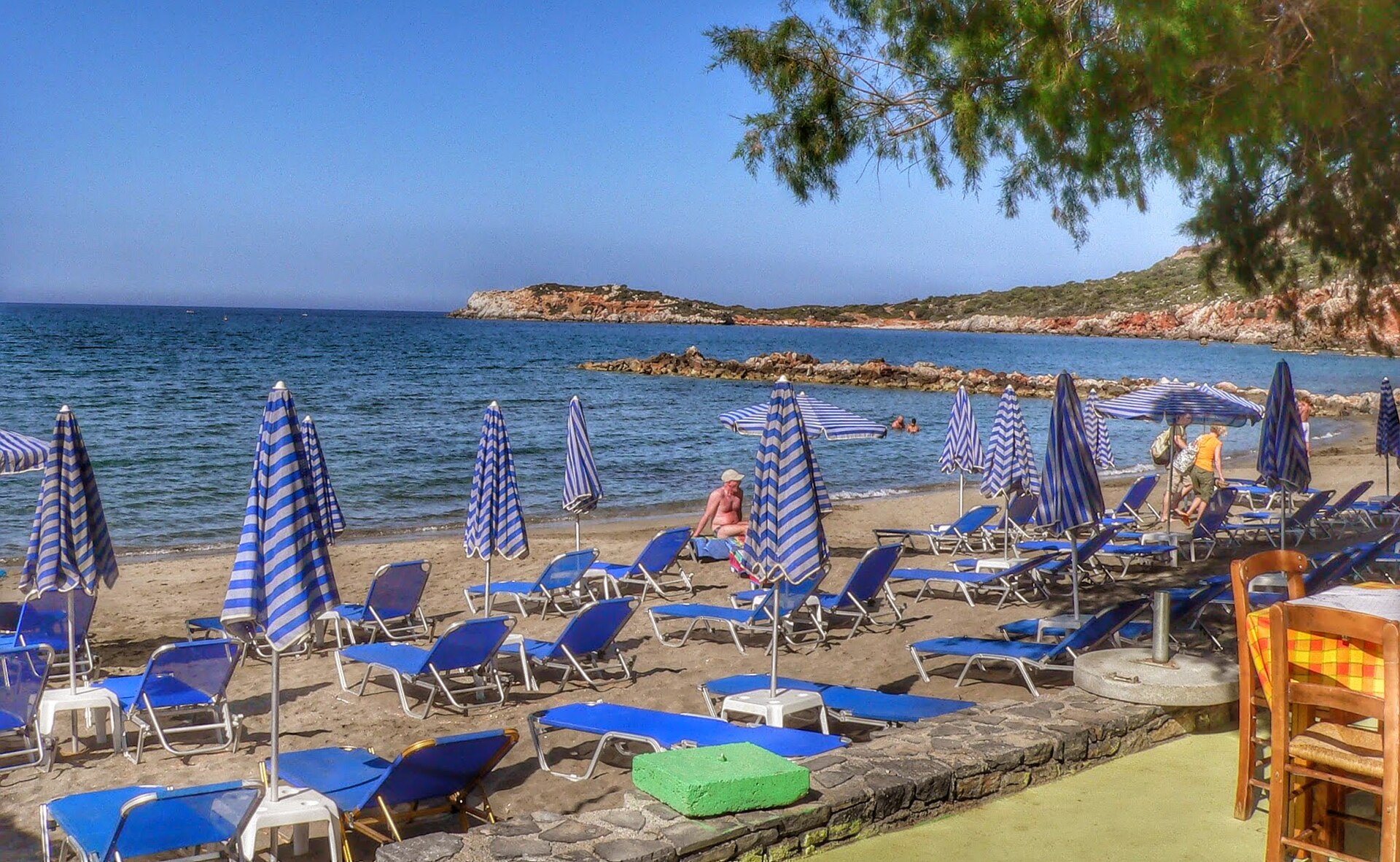
- Livadi – the largest and most equipped bay, with fine sand and gravel, sun loungers and the greatest concentration of seaside taverns.
- Karavostasi (Evita Beach) – the most popular with families, sheltered from the wind and with a gently sloping seabed.
- Limanakia – the small coves beside the old harbour, loved for their closeness to the centre and for the rocks to dive from.
- Varkotopos – the northernmost and most secluded bay, reachable on foot along a coastal path, ideal for those seeking quiet.
Historic surroundings: the Melidoni cave and the Arkadi monastery
The hinterland behind Bali holds two of the most memory-laden places in all of Crete. About fifteen kilometres away, near the village of Melidoni, opens the Gerontospilios cave, linked in mythology to the bronze giant Talos and sadly known for the 1824 massacre, when hundreds of local inhabitants, having taken refuge inside during the Greek War of Independence, died of asphyxiation from smoke set by Ottoman-Egyptian troops: today a small shrine commemorates the victims. Further south, toward Rethymno, stands the monastery of Arkadi, a symbol of Cretan resistance, where in 1866 the defenders blew up the powder magazine rather than surrender. Both sites can comfortably be visited on a half-day trip from Bali.
The landscape between the sea and Psiloritis
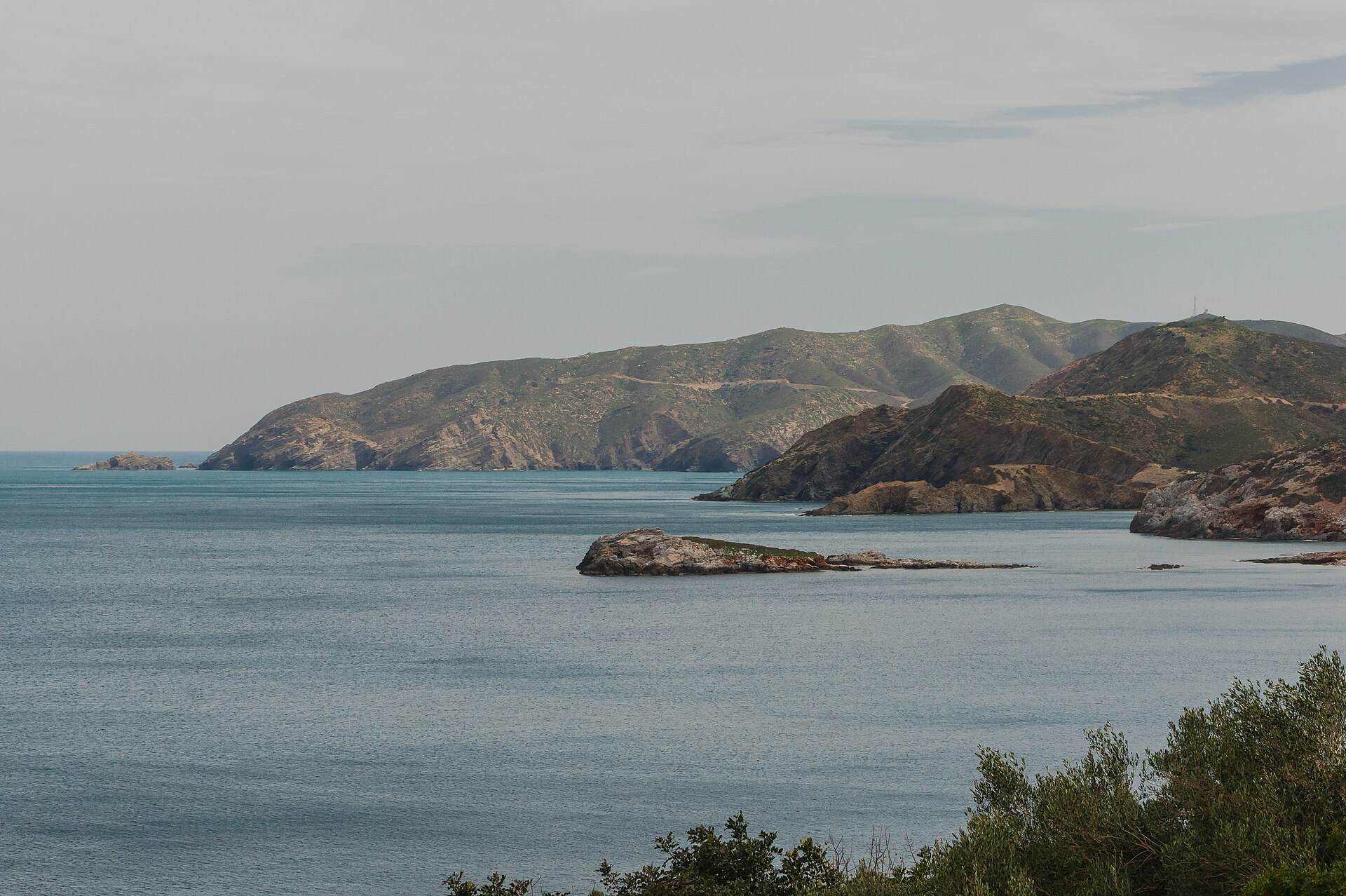
Bali occupies a hinge position between two very different landscapes. To the north opens the Sea of Crete, with waters that shift from the turquoise of the coves to a deep blue just offshore, often stirred by the meltemi winds in the summer months. To the south the land rises quickly in a succession of hills terraced with olive groves and vineyards, up to the slopes of Psiloritis, the island's highest mountain at 2,456 metres, which is covered in snow in winter and visible from the village on clear days. This close proximity of such different elevations makes for excursions of great variety: one can swim in the morning and in the afternoon head into the country paths of Mylopotamos, among stone farmhouses, small isolated Byzantine chapels and centuries-old olive groves.
Flavours, traditions and experiences in Bali
Bali's cuisine follows the calendar of Mylopotamos, one of the areas most devoted to olive oil production in all of Crete: in the harbour taverns the catch of the day is almost always accompanied by a drizzle of local oil, cheeses such as graviera and myzithra, and a glass of raki, the pomace brandy often offered at the end of a meal as a gesture of hospitality. Dishes of Cretan peasant tradition are never lacking, from horta, the wild country greens, to dakos, the Cretan take on caprese made with dry barley rusk. Between one swim and the next, the most authentic experiences remain the simple ones: a walk at dawn along the old harbour pier, a boat trip along the rocky coast to the sea caves, or an evening dinner overlooking the lights of the fishing boats. The best seasons remain late spring and early autumn, when the sea is already warm but the village keeps a quieter pace than in the height of summer.
- Swimming or snorkelling in the clear waters of the four bays, moving from one cove to the next on foot.
- Climbing up to the monastery of Agios Ioannis Prodromos for the view over the coast and the village.
- Devoting half a day to the Melidoni cave and the Arkadi monastery, among the symbolic sites of Cretan history.
- Driving the roads of the Mylopotamos hinterland among olive groves, vineyards and mountain villages.
- Dining at one of the taverns on the old harbour, with the catch of the day and a glass of raki.
FAQ
Come si arriva a Bali da Rethymno o Iraklio?
Qual è la spiaggia migliore per le famiglie con bambini?
Cosa vedere a Bali in un solo giorno?
Dove si parcheggia a Bali?
Quanti giorni conviene restare a Bali?
Bali è adatta a chi viaggia con animali?
Getting there
- Aeroporto di Chania (CHQ) – circa 95 km
- Aeroporto di Iraklio "Nikos Kazantzakis" (HER) – circa 50 km
- Da Rethymno, circa 25 km, o da Iraklio, circa 50 km, lungo la strada costiera che segue la National Road settentrionale di Creta; da Bali si esce con una breve deviazione verso il mare.
- In alta stagione le stradine del paese e i parcheggi vicino al porto si riempiono rapidamente: conviene arrivare in mattinata o a fine pomeriggio.
Perfect for
Quattro calette ravvicinate con acque turchesi, ideali per il nuoto, lo snorkeling e le gite in barca lungo la costa rocciosa.
Un monastero veneziano, una torre di avvistamento e, poco distante, la grotta di Melidoni e il monastero di Arkadi, tra i luoghi simbolo della storia di Creta.
Il contrasto ravvicinato tra il mare di Creta e le pendici dello Psiloritis, tra uliveti, vigneti e sentieri di campagna.
Taverne di pesce sul porto vecchio, olio d'oliva del Mylopotamos, formaggi locali e raki offerto a fine pasto.
Un paese piccolo e a misura d'uomo, perfetto per chi cerca un soggiorno di mare senza la mondanità delle località più grandi di Creta.
To see
