

Zefiria
Immersed in the golden silence of Milos' interior, Zefiria appears today as a peaceful, rural village, almost suspended in a time...
Updated 7 July 2026
This season · July · Summer
What to do in Zefiria now
The story
The story of Zefiria
Venetian roots and the golden age
Zefiria's origins date back to the period of Venetian rule, when the island was part of the Duchy of Naxos. The choice to build the capital away from the sea was not accidental, but dictated by the need to defend the population from the constant threats of pirates infesting the Aegean. Between the 14th and 18th centuries, the city experienced extraordinary expansion, becoming a cosmopolitan center where administrative authorities, the Latin bishop, and the wealthiest families resided. Elegant architecture, lordly palaces, and numerous churches defined the profile of a wealthy community, whose economy flourished through the trade of agricultural products and minerals extracted from the island's depths.
The exodus of 1767 and decline
Zefiria's destiny changed drastically in the 18th century. A series of violent earthquakes, combined with the onset of serious epidemics favored by gaseous exhalations from the volcanic subsoil and stagnant water in surrounding areas, made life in the city unsustainable. The final blow came in 1767, when the population, exhausted by malaria and unhealthy conditions, decided to abandon the settlement en masse. The inhabitants moved to more ventilated and safer areas, founding or enlarging the centers of Plaka and Adamas. Zefiria remained for decades a heap of silent ruins, silent testimony to vanished glory, until, in the last century, a new agricultural community breathed life back into part of the ancient settlement.
The Church of Panagia Portiani
The most significant and moving monument of Zefiria is undoubtedly the Church of Panagia Portiani. Built in the 17th century, it originally served as the city's cathedral and is one of the few structures that survived the 18th-century abandonment almost intact. Its name derives from its original position near one of the gates of the ancient defensive walls. The architecture is an admirable example of fusion between Byzantine elements and Western influences, typical of the Venetian period. Inside, the atmosphere is intimate and solemn, enriched by precious icons and an ornate wooden iconostasis. Every August 15th, the church becomes the focal point of community life with a celebration that draws worshippers from across the island, renewing a spiritual bond never broken.
The Church of Agios Nikolaos
Not far from the main cathedral stands the Church of Agios Nikolaos, another fundamental piece of Zefiria's historical mosaic. Although less imposing than the Portiani, this church represents the residents' devotion to the protector of navigators, a central figure in a seafaring island like Milos. Its simple structure, with white walls reflecting the intense light of the Cycladic sun, holds architectural details revealing the site's antiquity. Walking among these walls allows one to perceive the historical stratification of the village, where every stone seems to tell of the population's attempts to keep their traditions alive despite natural adversities.
Wandering among the vestiges of the lost city
Exploring Zefiria requires attentive observation and a willingness to lose oneself among the paths branching from the modern settlement center. Many of the ancient noble dwellings are today reduced to evocative ruins, partially reclaimed by vegetation. It is possible to glimpse stone arches, foundation remains, and fragments of decorations that once adorned the palaces of Venetian nobles. This contrast between today's agricultural village, made of low houses and tended gardens, and the monumental ruins of the past, gives Zefiria a melancholic and unique charm. It is an open-air museum that needs no barriers, where history can be touched along the dry stone walls that demarcate properties.
The rural landscape and fertile plain
Unlike coastal villages perched on cliffs, Zefiria rises in one of Milos' most level and fertile zones. The surrounding landscape is dominated by a patchwork of cultivated fields, where vegetables, grapevines, and fruit trees benefit from volcanic soil rich in minerals. During spring, the plain is tinged with vivid colors thanks to the blooming of wild species, offering a natural spectacle of rare beauty. This agricultural vocation allowed the village to survive after the great exodus, becoming the island's granary. The gentle hills surrounding the valley protect the center from the most impetuous winds, creating a microclimate that invites long walks on foot or by bicycle.
Culinary traditions and flavors of the territory
Zefiria's cuisine is deeply rooted in the products of the land. Here it is possible to taste the most authentic variants of Milos specialties, such as 'pitarakia,' small empanadas filled with spicy local cheese and onion, fried until golden and crispy. Another pillar of the local table is 'belte,' a dense and savory tomato preserve obtained from tomatoes ripened under the plain's sun, often served simply on slices of homemade bread. Artisanal cheeses are not lacking, such as 'manouri' and 'skotyri,' produced following methods handed down from generation to generation. Dining in one of the few village tavernas means rediscovering the genuineness of zero-kilometer ingredients, far from the coastal tourist reinterpretations.
Experiences not to miss
- Attend the Panigiri of Panagia Portiani on August 15th, with traditional dances and live music.
- Explore on foot the trails connecting Zefiria to the abandoned ancient sulfur mines.
- Taste the local thyme honey, produced by beekeepers in the area.
- Visit the small craft shops working with pottery and glass.
- Walk the scenic road leading to the beaches of Paliochori and Agia Kyriaki.
Surroundings and connections to the coast
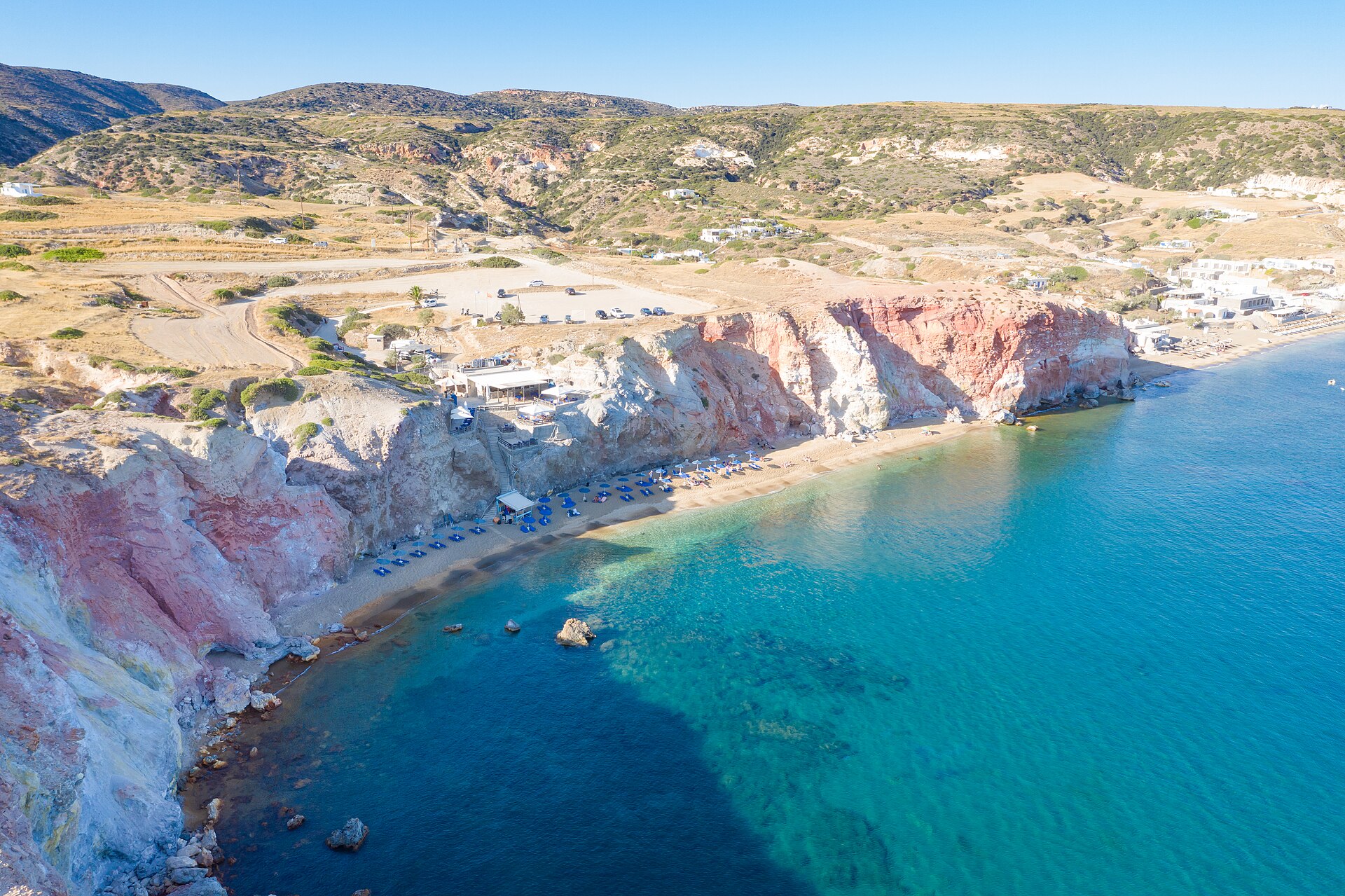
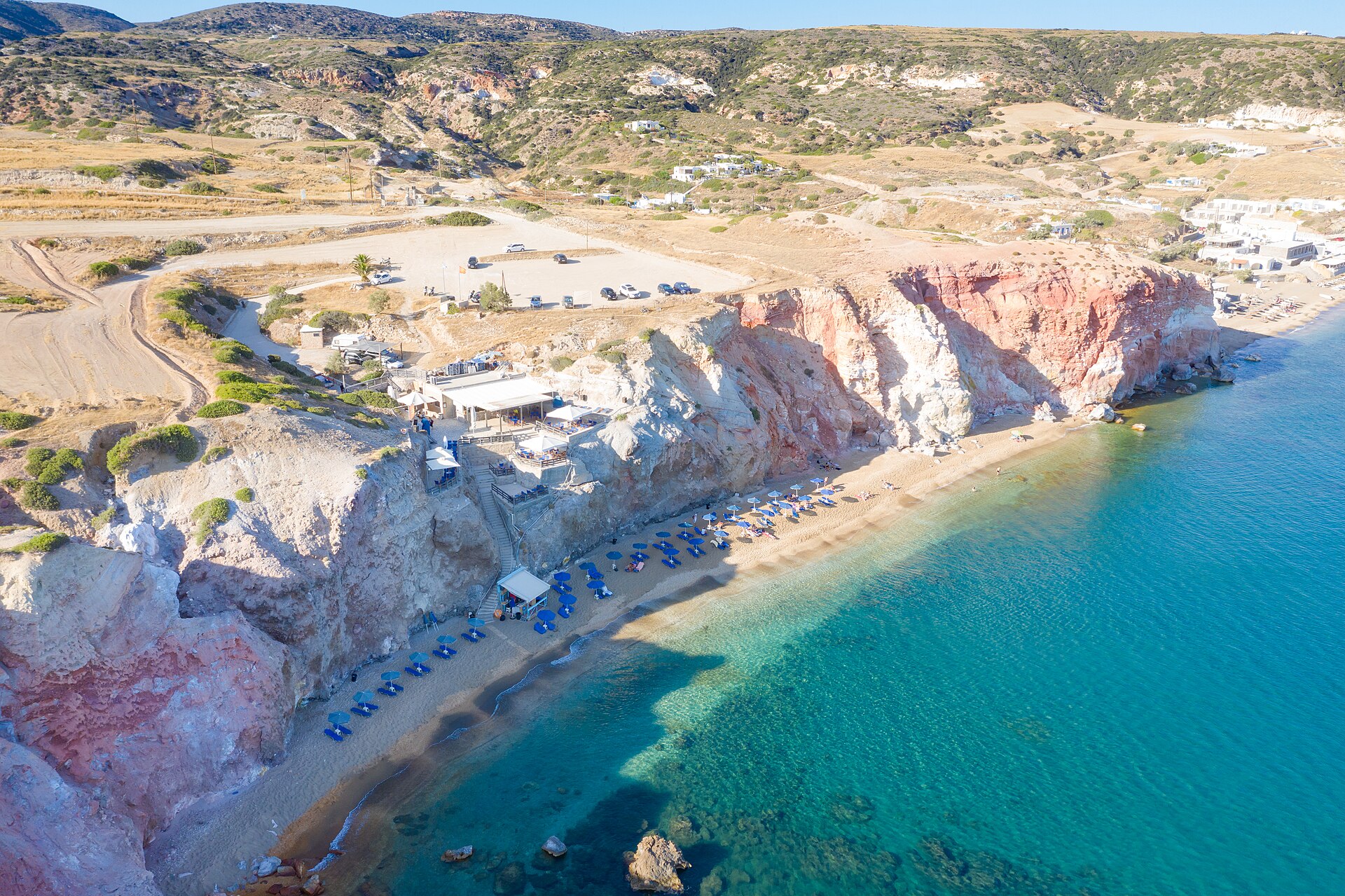
Although Zefiria is an interior village, its location is strategic for exploring Milos' southern slope. In just minutes by car or scooter one can reach some of the island's most spectacular beaches, such as Paliochori, famous for its waters warmed by submarine thermal springs and its multicolored pebbles. The beach of Agia Kyriaki, with its white sand and crystal-clear sea, is also easily accessible. This proximity allows one to combine a morning of beach relaxation with an afternoon dedicated to discovering the village's history and culture, offering a perfect balance between nature and memory.
When to go and how to experience the village
The best time to visit Zefiria is late spring, between May and June, when temperatures are mild and nature is in full splendor, or early autumn. September offers warm, golden light that enhances the ruins and rural landscape, far from the excessive heat of July and August. To fully experience the essence of the place, it is recommended to visit it in the late afternoon hours, when shadows lengthen on the old walls and silence is interrupted only by the sound of grazing bells. It is the ideal moment to sit in the main square, observe the daily life of residents, and let oneself be carried away by the Olympic calm of this ancient provincial capital.
FAQ
Quanto tempo serve per visitare Zefiria?
È possibile arrivare a Zefiria con i mezzi pubblici?
Zefiria è adatta alle famiglie con bambini?
Ci sono strutture dove alloggiare nel borgo?
Cosa vedere assolutamente oltre alle chiese?
Getting there
- Aeroporto di Milos (MLO) - 4 km
- Non presenti sull'isola
- Da Adamas, seguire la strada principale verso sud-est in direzione Paliochori; Zefiria è chiaramente indicata a circa 10 minuti di guida.
- Noleggiare uno scooter o un'auto è il modo migliore per esplorare Zefiria e le spiagge vicine in totale libertà.
Perfect for
Un viaggio nel passato medievale e moderno di Milos attraverso le rovine dell'antica capitale veneziana.
Il luogo ideale per scoprire i sapori rurali e i prodotti vulcanici autentici dell'isola.
Perfetto per chi cerca un'esperienza autentica lontano dai percorsi turistici più battuti e commerciali.
To see
