

Psarrou
Imagine a cove where the cobalt blue of the Aegean dissolves into an almost unreal transparency, sheltered by the rugged Cycladic...
Updated 7 July 2026
This season · July · Summer
What to do in Psarrou now
The story
The story of Psarrou
The roots of a myth: from archaic Mykonos to the jet-set
The history of Psarrou is inextricably linked to that of its mother island, Mykonos. According to mythology, the island was the battlefield where Hercules defeated the Giants, whose petrified bodies gave rise to the sheer rocks we admire today. Over the centuries, this area saw the passage of Phoenicians, Ionians, Romans, and Byzantines, before falling under the long Venetian rule and finally Ottoman. Yet for much of its existence, Psarrou remained a silent agricultural and pastoral valley, where local farmers cultivated barley and vines among stone walls. The turning point came in the 1980s, when the sheltered beauty of the bay attracted the first pioneers of international tourism. From that moment, the locality experienced a vertiginous rise, transforming from a well-kept secret into a stage for celebrities and magnates, while always maintaining a visual connection to the vernacular architecture of the Cyclades.
Psarrou Beach: a natural amphitheater
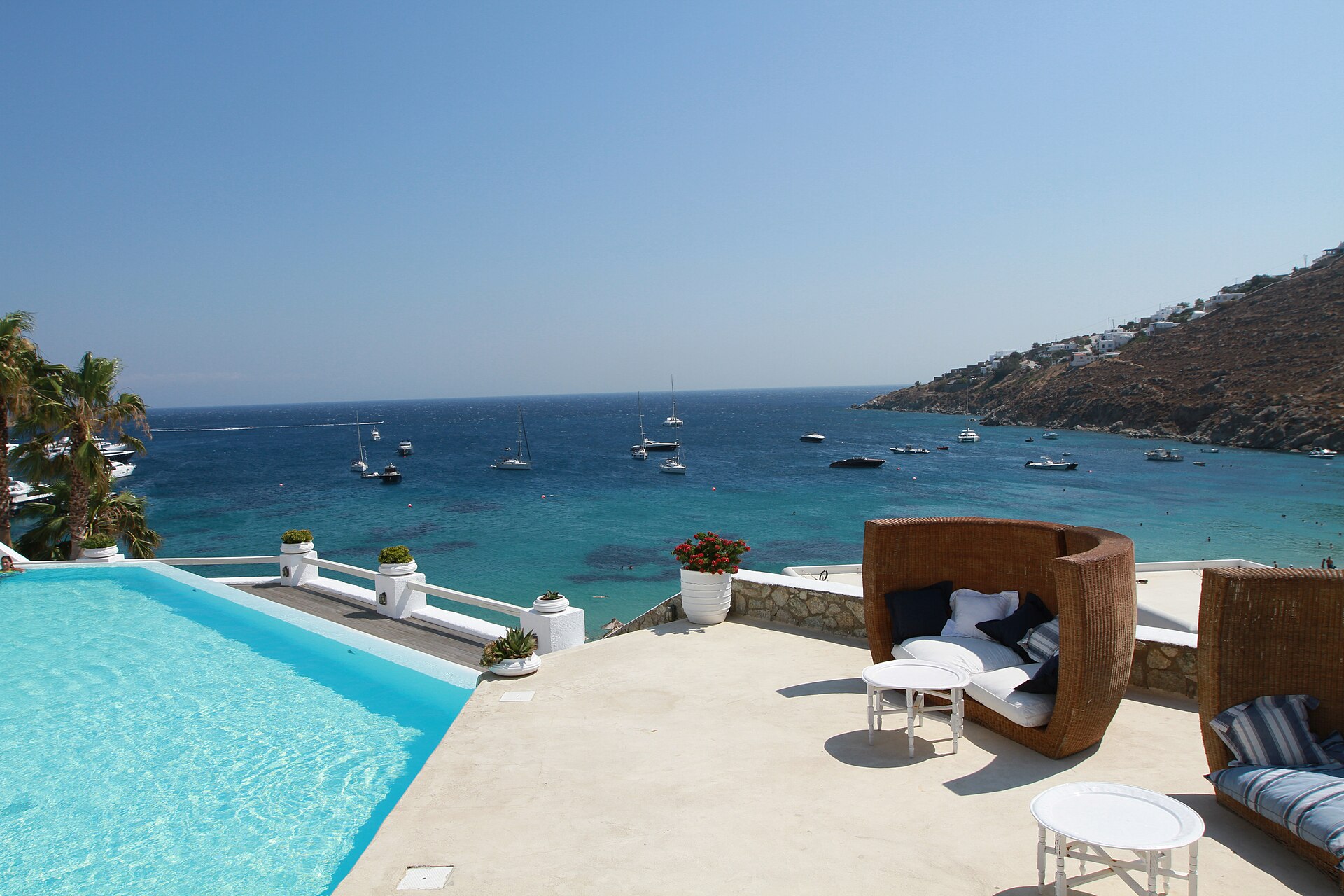
The pulsating heart of the locality is undoubtedly its beach, a crescent of clear sand lapped by waters that slope gently seaward. What makes this stretch of coast special is not only the quality of the shore, but its incredible climatic stability: while nearby beaches can be lashed by gusts, Psarrou remains a mirror of still water. This has allowed the development of highest-level bathing facilities, where comfort is taken to the extreme. The beach is the place where one observes and is observed, but it is also a starting point for marine exploration. Here the concept of beach establishment has been redefined, transforming time under the umbrella into a complete sensory experience involving music, design, and impeccable service that responds to every visitor's desire.
Nammos and the village of luxury
It is impossible to speak of Psarrou without mentioning Nammos, the institution that redefined summer entertainment in Greece. Born as a simple beachfront restaurant, it has become a veritable 'village' that includes high fashion boutiques, art galleries, and event spaces. Its importance lies in having created a hospitality model that fuses modern hedonism with Greek hospitality. Architecturally, the complex respects the soft lines and natural materials of local tradition, integrating itself into the coastal landscape. Visiting this area means immersing yourself in a microcosm of cosmopolitan elegance, where it is possible to shop among the world's most prestigious brands just a few steps from the water's edge, making Psarrou a destination that goes far beyond simple beach tourism.
The hill of Agios Lazaros and its views
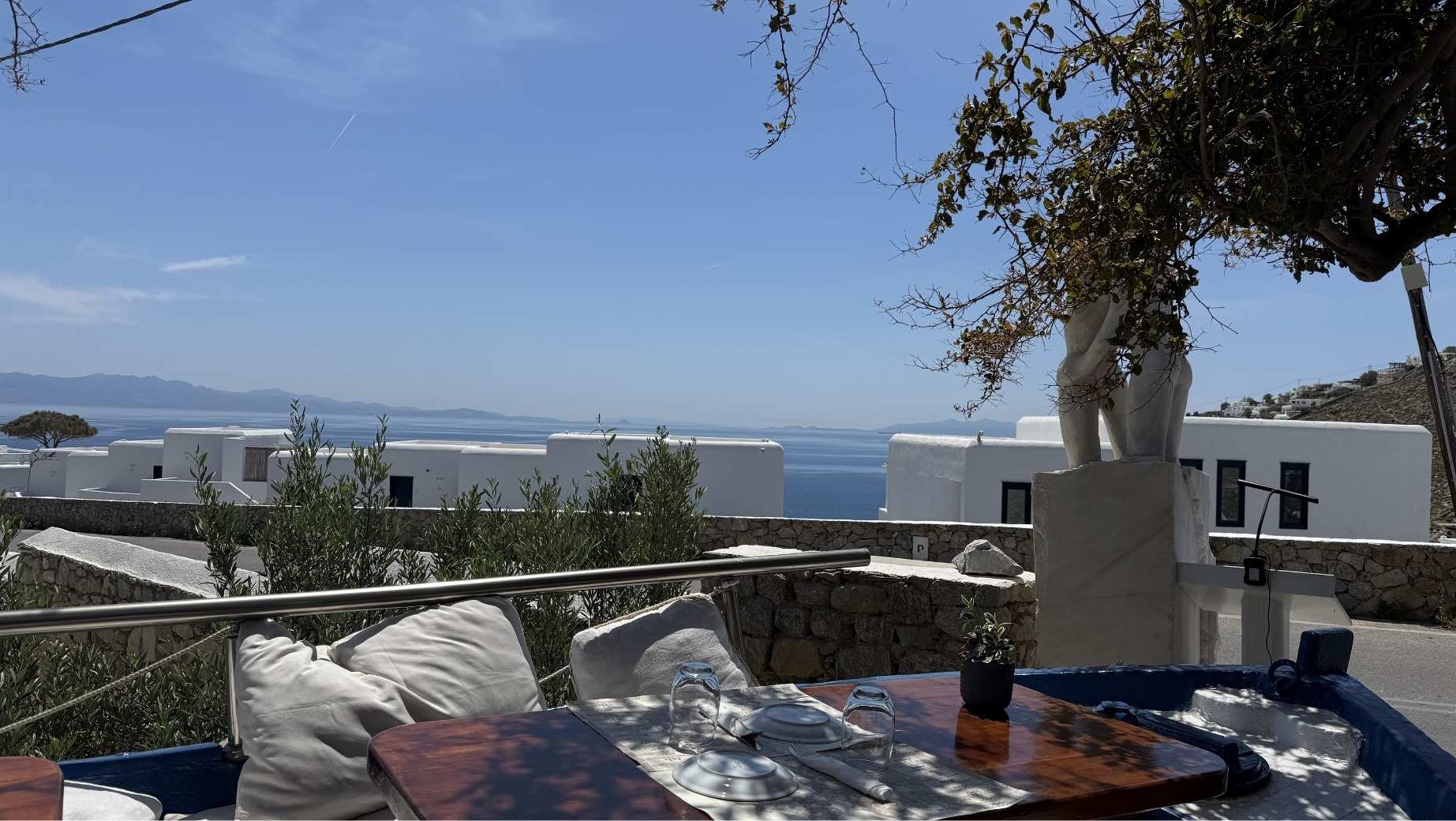
Overlooking the bay rises the hill of Agios Lazaros, a residential promontory that hosts some of the most spectacular villas in the Aegean. This place is fundamental to understanding the prestigious urban planning of the area: the constructions are built following strict aesthetic criteria that favor local stone and pristine white, camouflaging themselves among spontaneous vegetation of mastic trees and prickly pears. From the top of the hill you enjoy a breathtaking view that spans to the islands of Delos and Rhenia. Here you will also find a small Orthodox chapel, typical of the Cycladic landscape, that offers a moment of quiet and spirituality in contrast to the vibrant energy of the coast below. It is the ideal point to admire the sunset, when the sun sets the waters of the bay ablaze and the lights of the yachts begin to shine like constellations reflected.
The coastal trail towards Platis Gialos
For those wishing to discover the more natural and dynamic side of the territory, there is a charming pedestrian path that connects Psarrou to the nearby locality of Platis Gialos. This route winds along the cliff, offering panoramic views of rare beauty and allowing you to observe the island's geology up close. Along the way, you encounter small rocky coves less frequented, where the water takes on emerald hues. The path is an excellent opportunity to exercise surrounded by the scents of the Mediterranean scrub, such as wild thyme and sage. It represents the physical bond between the different souls of southern Mykonos, uniting the refinement of Psarrou with the more familiar and sporty liveliness of Platis Gialos, and is easily walkable in less than fifteen minutes.
Experiences not to be missed at Psarrou
- Rent a tender to explore the sea caves and hidden inlets in the vicinity of the bay.
- Lunch pieds-dans-l'eau tasting the fresh fish of the day prepared according to revisited local tradition.
- Walk the panoramic trail at sunset to admire the lighting of the entire southern coast.
- Shop in the exclusive Nammos Village boutiques to discover limited collections inspired by the island.
- Snorkel along the rocky edges of the bay, where underwater visibility is exceptional.
- Enjoy an aperitif on one of the private docks observing the hustle and bustle of sailing boats and luxury yachts.
The natural landscape and the hinterland
The landscape of Psarrou is a perfect example of balance between aridity and sea. The immediate hinterland is characterized by granitic reliefs that reflect sunlight, creating violent chromatic contrasts with the blue of the water. The vegetation is typical of xerophile zones: hardy plants, low shrubs, and silvery olives that defy the summer drought. Despite strong anthropization linked to tourism, the rock formations and purity of the air retain a wild character. Towards the interior, you can still see the remains of ancient farms and cisterns for rainwater collection, testimonies of a past when survival depended on the ability to manage scarce natural resources. This contrast between the opulence of the coast and the sobriety of the hinterland is what gives Psarrou its magnetic charm.
Flavors and culinary traditions
Gastronomy in Psarrou is a journey among the authentic flavors of the Cyclades and the most refined international techniques. Here raw materials reign supreme: grilled octopus, sea urchins, and red mullet are the protagonists of the tables. Yet there are no shortage of land products, such as Kopanisti cheese, a Mykonos specialty with a peppery and aromatic taste, or Louza, a prized pork fillet seasoning dried in the sun and scented with spices. Folk tradition is also expressed in sweets, such as Amigdalota (almond biscuits) perfumed with rose water. Eating in Psarrou means participating in a collective ritual where Greek conviviality weds carefully curated aesthetic presentation, making every meal a memorable event.
When to visit and how to experience the locality
The best time to visit Psarrou depends on the type of experience desired. For those seeking maximum energy, parties, and glamour, the months of July and August are the peak of the season, with the bay at the height of its sophisticated splendor. However, to fully appreciate the natural beauty and tranquility of the place, the months of May, June, and September offer perfect weather and a more relaxed atmosphere. In these periods, the water is already warm and the light is extraordinarily clear, ideal for photography. Living Psarrou means surrendering to the slow rhythm of the morning, enjoying the zenith sun and letting yourself be transported by the informal elegance of Aegean evenings, where time seems to flow with a grace different from the rest of the world.
FAQ
È necessario prenotare in anticipo per accedere alla spiaggia?
La spiaggia è adatta alle famiglie con bambini?
Come si raggiunge Psarrou dal centro di Mykonos (Chora)?
C'è un parcheggio disponibile?
Getting there
- Aeroporto Internazionale di Mykonos (JMK) - circa 4 km
- Non presenti sull'isola; collegamento via mare dal porto di Mykonos (5 km)
- Da Mykonos Town seguire le indicazioni verso sud per Platis Gialos/Psarrou. La strada è asfaltata ma stretta e trafficata in estate.
- Per un arrivo scenografico, considerate il taxi d'acqua (water taxi) che fa la spola tra le spiagge principali della costa meridionale.
Perfect for
Psarrou è la destinazione definitiva per chi cerca beach club esclusivi, shopping d'alta moda e ristorazione stellata in riva al mare.
Grazie alla protezione dai venti, offre le acque più calme e cristalline dell'isola, ideali per nuotate rigeneranti in totale relax.
La baia è uno dei punti di ormeggio più prestigiosi del Mediterraneo, perfetta per chi viaggia in yacht o desidera noleggiare imbarcazioni di pregio.
