

Pollonia
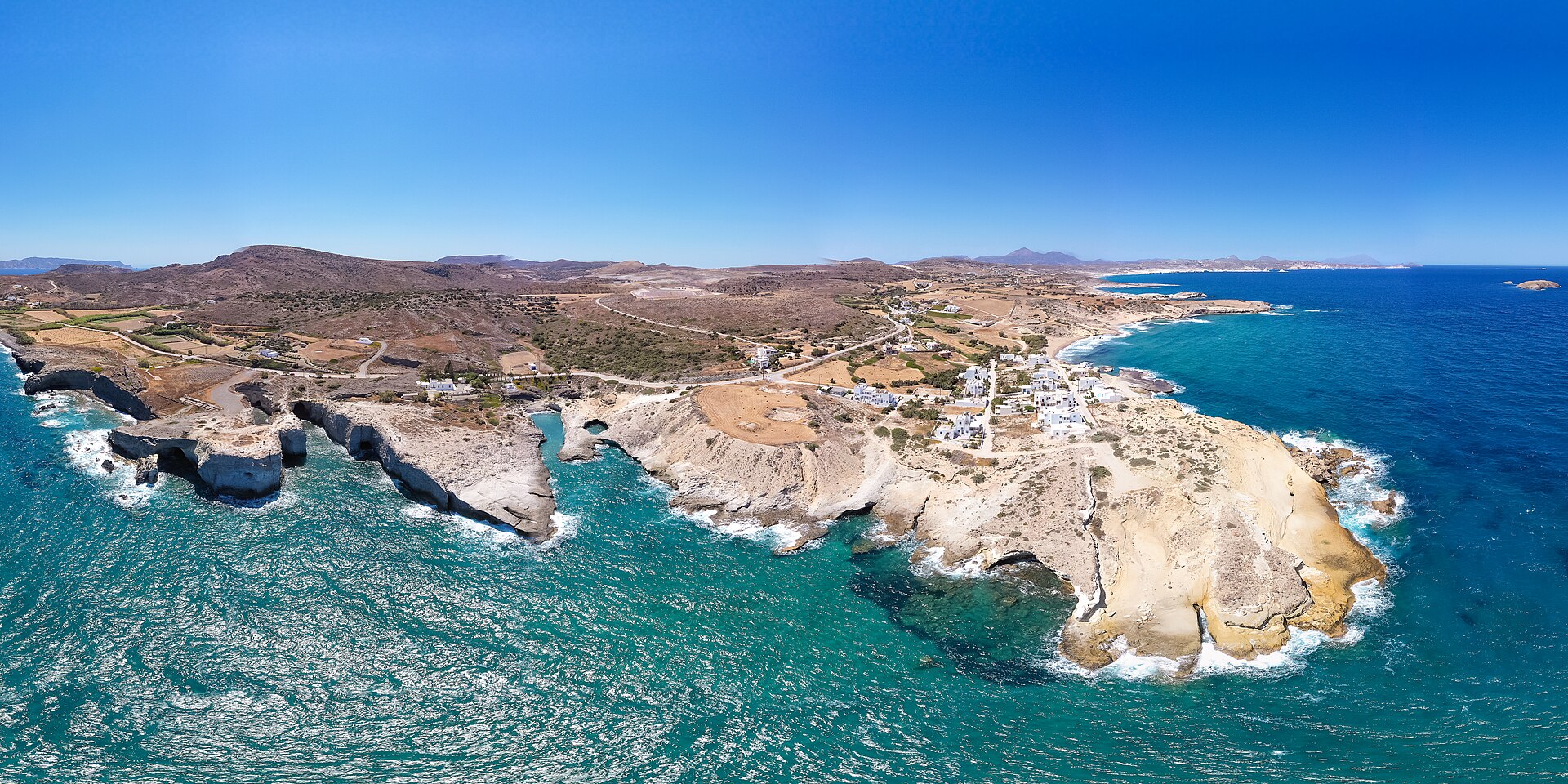
Nestled on the northeastern tip of the island of Milos, Pollonia presents itself as a haven of tranquility and refined simplicity,...
Updated 7 July 2026
This season · July · Summer
What to do in Pollonia now
The story
The story of Pollonia
Historical roots: from the ancient temple to maritime tradition
Pollonia's history is inextricably linked to its strategic position and the sacredness of its soil. The village's very name derives, according to tradition, from an ancient temple dedicated to Apollo that stood on the Pelekouda peninsula, testament to how treasured this strip of land was in antiquity. Though monumental traces of that era are scarce today, the aura of sacredness lingers in the atmosphere of the place. Over centuries, Pollonia passed through the various dominions that characterized the Cyclades, from Byzantines to Venetians, to the long Ottoman period. Yet its identity remained deeply rooted in the life of fishermen. For generations, the village was a modest maritime outpost, a departure point for trade routes to neighboring islands and a base for coastal fishing, an activity that today still defines the authentic and industrious character of its community.
The Church of Agia Paraskevi: the spiritual heart of the village
Dominating the village's skyline with its typically Cycladic architecture, the Church of Agia Paraskevi represents the focal point of Pollonia's religious and social life. This sacred edifice, characterized by dazzling white walls and a dome reflecting the azure of the Greek sky, was rebuilt after the destructions of World War II, becoming a symbol of resilience for the inhabitants. The interior is an example of Orthodox devotion, with finely crafted icons and an atmosphere of profound peace that invites contemplation. The church is not only a place of worship but a visual landmark for navigators and the center of community celebrations, especially during the patron saint's feast, when the square fills with music and colors, uniting generations in a rite of belonging and faith.
The Pelekouda Peninsula and the legend of lovers
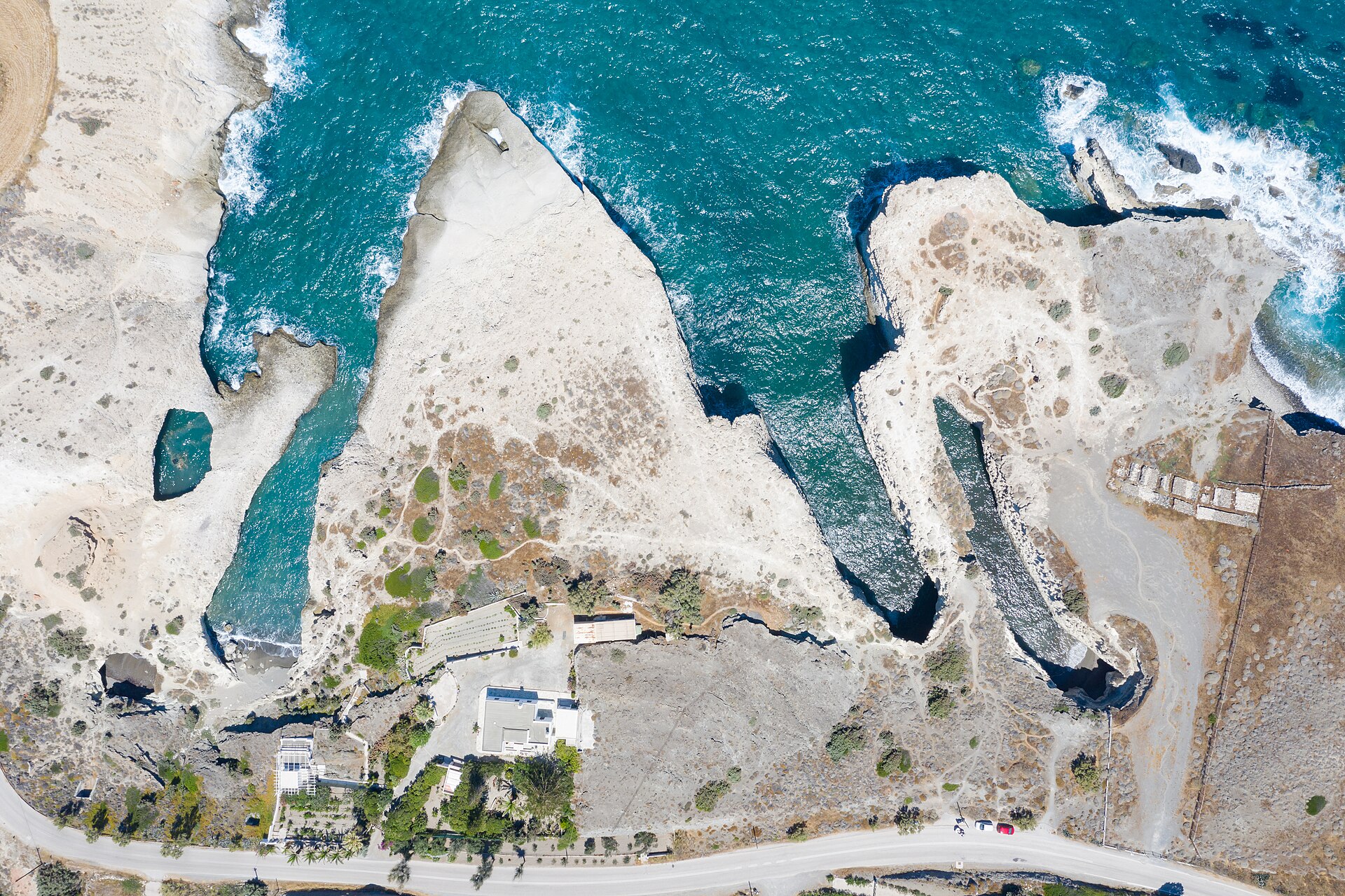
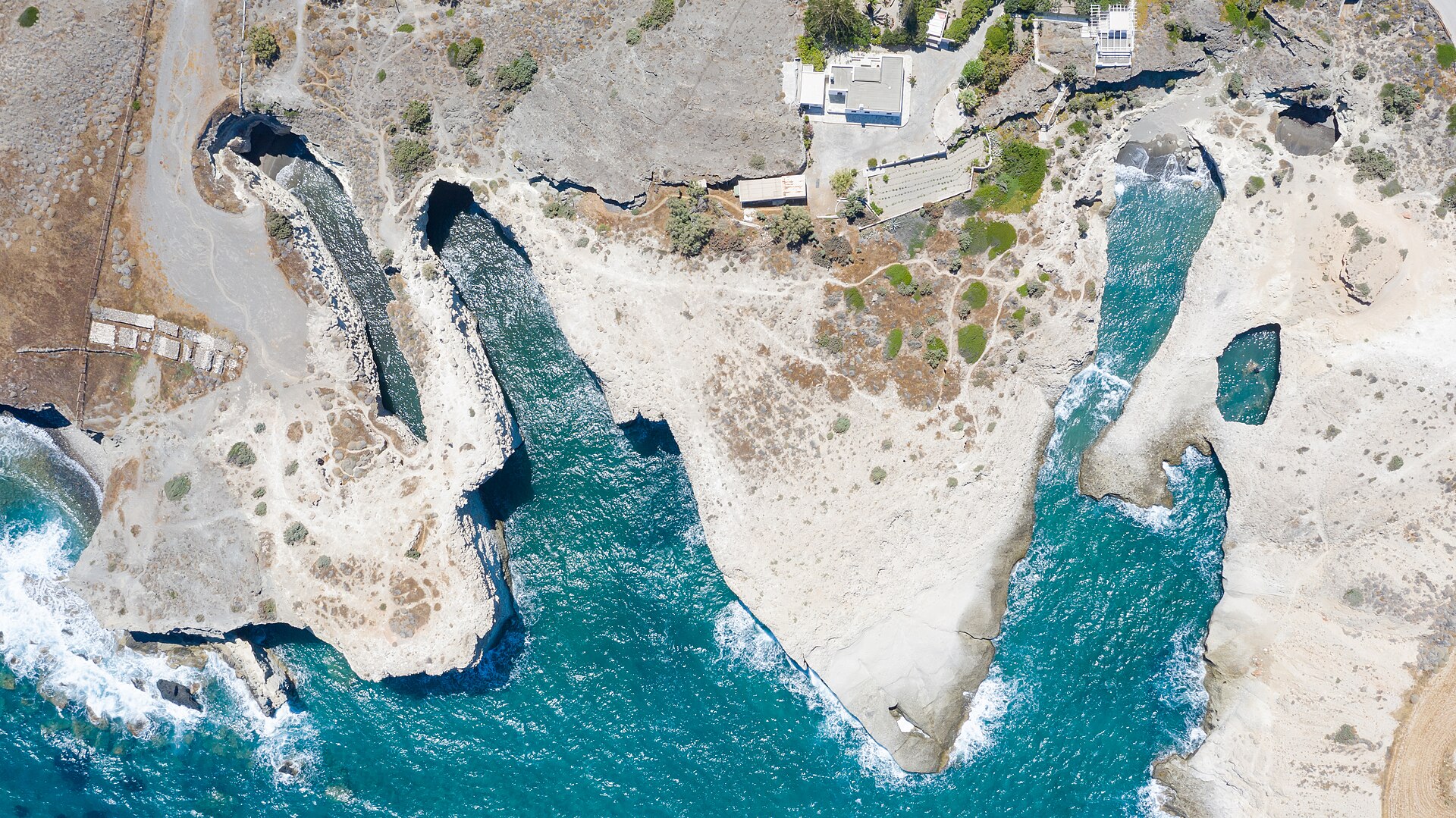
Stretching toward the sea like an outstretched finger, the Pelekouda peninsula is one of Pollonia's most evocative and enchanting places. This zone, characterized by rock formations smoothed by salt and wind, hosts a small chapel dedicated to Saint Nicholas, protector of sailors. But Pelekouda is celebrated above all for a curious chair-shaped rock formation: local legend tells that couples sitting together on this stone will remain united forever. Beyond folklore, the peninsula offers one of the privileged vantage points for admiring the sunset, when the sun slowly disappears beyond the horizon, tinting the water with fiery hues. It is a place where Milos' volcanic geology manifests itself in all its naked and wild beauty, offering extraordinary color contrasts between white stone and the profound blue of the Aegean.
Phylakopi: the Bronze Age legacy
Just a few kilometers from Pollonia lies the archaeological site of Phylakopi, one of the most important Bronze Age settlements in the entire Aegean Sea. Founded around 3000 BC, this ancient city experienced three distinct phases of splendor, influenced first by Minoan culture and later by Mycenaean civilization. Excavations have unearthed imposing Cyclopean walls, sanctuary remains, and precious frescoes, including the famous flying fish artifact. Visiting Phylakopi means immersing yourself in the deep roots of Greek civilization and understanding Milos' strategic importance in obsidian trade, the volcanic glass that made the island wealthy and influential in antiquity. The site, scenically perched on the cliff, allows you to walk among the ruins of thousand-year-old houses and streets, perceiving the historical continuity linking the remote past to Pollonia's present.
The harbor and life along the waterfront
The pulsing heart of Pollonia is undoubtedly its little port, where life flows following the activities of fishermen and the coming and going of small ferries. Here, traditional Greek boats, the 'kaikia', bob alongside modern yachts, creating a fascinating contrast that tells the story of the village's evolution. The waterfront is a promenade of flavors and aromas: tavernas follow one another offering tables just centimeters from the water, where you can taste fish just landed. It is not uncommon to see fishermen busy mending nets or beating octopus on the rocks to tenderize the meat, an ancient ritual repeated every day before visitors' eyes. This zone is not only the logistical hub for excursions but the place where you breathe true Greek conviviality, made of sunset chatter and the reassuring sound of waves.
Geology and Nature: Papafragas and marine caves
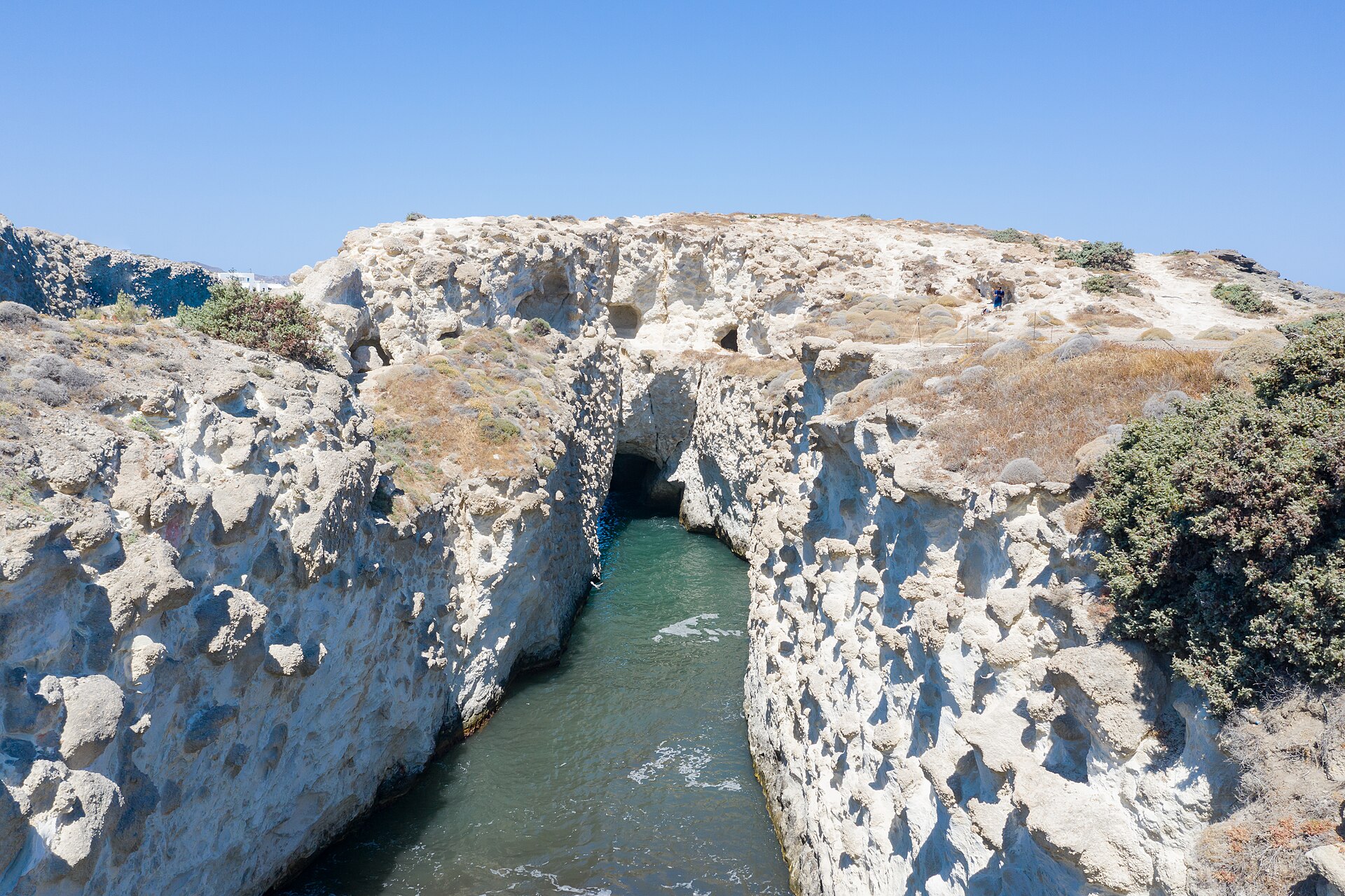
In the immediate vicinity of Pollonia, the coast reveals the most spectacular face of Milos' volcanic nature. Papafragas is a must-see: a deep inlet carved into the rock forming a natural pool of crystalline water, accessible via a narrow path cut into the cliff face. The marine caves dotting this stretch of coast, such as those of Kapros, offer almost surreal scenarios, where light plays with water reflections inside natural cavities shaped by millennia of erosion. Nearby, the Glaronisia islands emerge from the sea with their spectacular hexagonal basalt columns, a rare and fascinating geological formation testifying to past volcanic activity. This landscape, both harsh and poetic, makes Pollonia the ideal starting point for those wishing to explore the biodiversity and natural wonders of the Cyclades.
Experiences not to be missed in Pollonia
- A sunset dinner at one of the harbor's tavernas to taste fresh fish carpaccio and grilled octopus.
- The short ferry journey to the island of Kimolos to explore the village of Chorio and its unspoiled beaches.
- A boat excursion to the Glaronisia islands to admire up close the basalt columns unique in the world.
- A morning walk to the tip of Pelekouda when the sea is calm and the air is clear.
- A visit to the Phylakopi archaeological site to discover the island's prehistoric origins.
- A regenerating swim in the waters of Papafragas, surrounded by tall white rock walls.
Gastronomic traditions and local flavors
Pollonia is renowned as the gastronomic capital of Milos, a place where the culinary tradition of the Cyclades meets contemporary pursuit of high quality. The absolute protagonists are seafood products, but local cuisine offers much more. Not to be missed are the 'pitarakia', small fried pastries filled with spicy local cheese and onion, and the 'karpouzopita', a watermelon cake typical of Milos, sweet and aromatic thanks to the addition of honey and sesame. The island's wine production, favored by volcanic soil rich in minerals, yields fresh, mineral white wines that pair perfectly with fish dishes. Sitting at table in Pollonia is not simply consuming a meal, but participating in a ritual of sensory pleasure, where the quality of raw materials and the beauty of the setting create an unforgettable experience.
When to visit and how to experience the village
To fully enjoy Pollonia's magic, the best months are May, June, and September. In these periods, temperatures are pleasant, the summer crowds are absent, and nature is in its full splendor. July and August offer the vibrancy typical of Greek summer, with cultural events and a more lively nightlife, but always more restrained than other more chaotic locations. Living Pollonia means abandoning your car and moving on foot, letting yourself be guided by curiosity through alleys and beaches. It is a perfect place for families thanks to its shallow and safe waters, but also for couples seeking romance and for geology and history enthusiasts. Each season gifts a different light, making this corner of Milos a destination capable of surprising at any time of year.
FAQ
È necessario noleggiare un'auto a Pollonia?
Pollonia è adatta alle famiglie con bambini?
Quanto tempo occorre per visitare Pollonia?
Si possono fare gite alle isole vicine?
Dove si può parcheggiare a Pollonia?
Getting there
- Aeroporto Nazionale di Milos (MLO) - 12 km
- Non presenti sull'isola
- Da Adamas (porto principale) seguire la strada costiera verso nord-est per circa 15-20 minuti.
- In estate, prenotate in anticipo il traghetto per Kimolos se intendete imbarcare l'auto, poiché lo spazio è limitato.
Perfect for
Atmosfera tranquilla, spiagge sicure e ottimi servizi rendono Pollonia una delle mete più accoglienti per chi cerca riposo.
Un vero paradiso per i buongustai, con alcune delle migliori taverne di pesce e ristoranti gourmet dell'isola.
Punto di partenza privilegiato per scoprire le grotte di Papafragas e le spettacolari formazioni di Glaronisia.
To see
