

Plaka
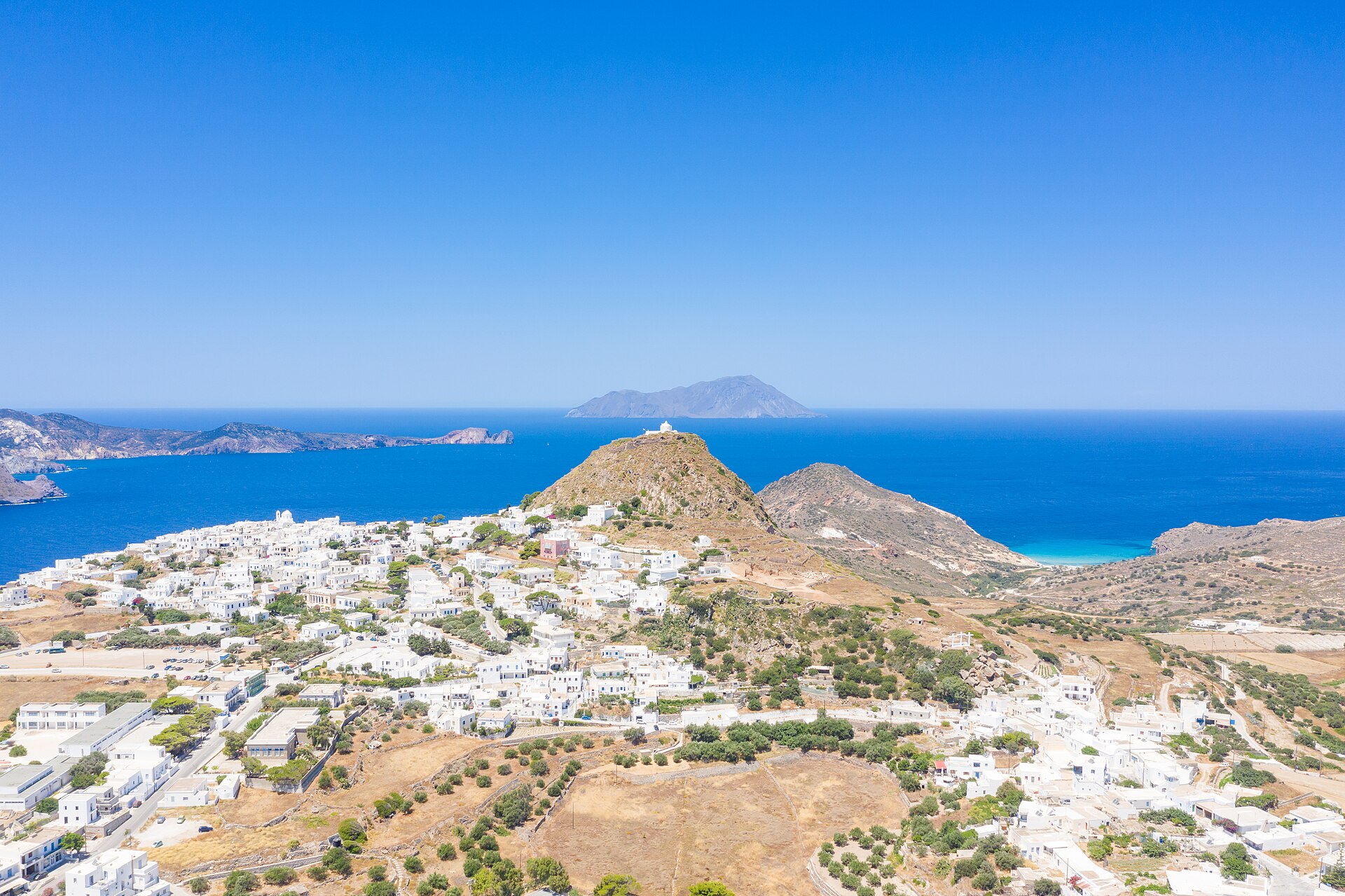
Suspended between the crystalline azure of Cycladic skies and the profound blue of the Aegean, Plaka rises like a white crown atop...
Updated 7 July 2026
This season · July · Summer
What to do in Plaka now
The story
The story of Plaka
A Story of Rebirth and Heights
Plaka's origins as the island's principal center are relatively recent, dating to 1824. Before then, Milos's capital was Zefyria, situated in lower-lying terrain but progressively abandoned due to epidemics and unhealthy climate conditions. The inhabitants thus decided to relocate to the highlands, seeking not only healthier air but also a strategic defensive position against pirate raids that had plagued the Aegean for centuries. The name 'Plaka' likely derives from the flat terrain upon which the first cluster of houses was built, in contrast to the steep slopes surrounding it. Under Ottoman rule and later with Greek independence, the village expanded around the ruins of a pre-existing Venetian castle, blending medieval heritage with the characteristic island style we admire today.
The Kastro: A Venetian Legacy
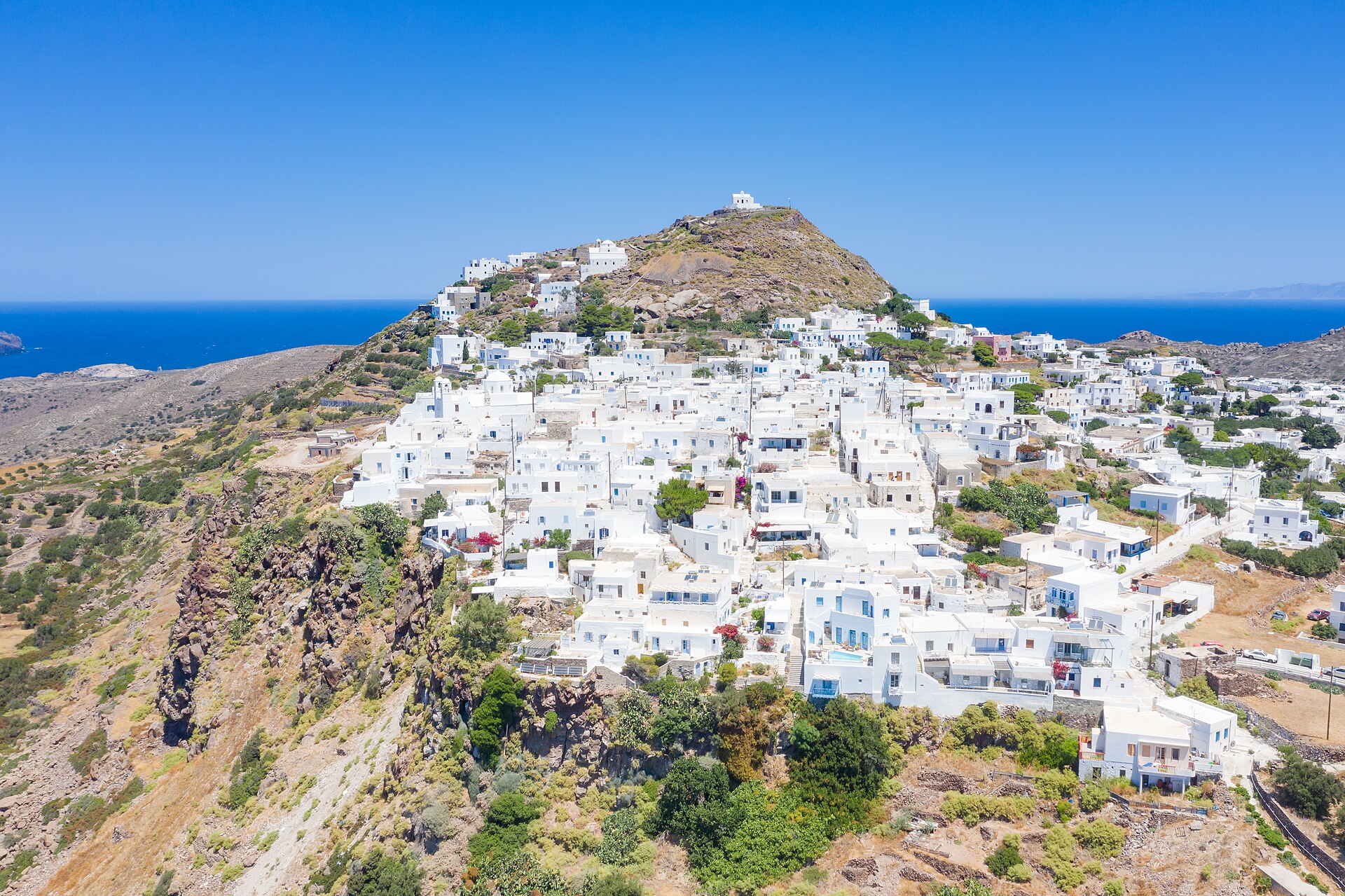
The highest point of the village is crowned by the Kastro, an ancient thirteenth-century Venetian fortress. Though few original structures remain today, the ascent to the summit is an unmissable rite for every visitor. Built by the Sanudo family, dukes of Naxos, the castle served as a fortified refuge for the population. The climb winds along stone-paved paths passing beside white houses nestled into the rock. Once at the top, the gaze commands the entire surrounding archipelago. This is the favored location for observing the sun dissolving into the sea, staining the horizon with fire and violet hues, while the marine breeze refreshes the air after the day's heat.
Panagia Thalassitra: Patroness of Seafarers
Located within the Kastro's perimeter, the Church of Panagia Thalassitra stands as one of Milos's most iconic religious buildings. Distinguished by elegant architecture and a bell tower that reaches toward the azure sky, this church is historically bound to the island's maritime life. Inside, one can admire precious wooden icons and an atmosphere of profound devotion. Its exposed position to the winds and breathtaking seascapes render it a symbol of hope and protection for sailors who, looking upward from their vessels, found in the church's profile a familiar and spiritual point of reference.
Panagia Korfiatissa and Its Panoramic Plaza
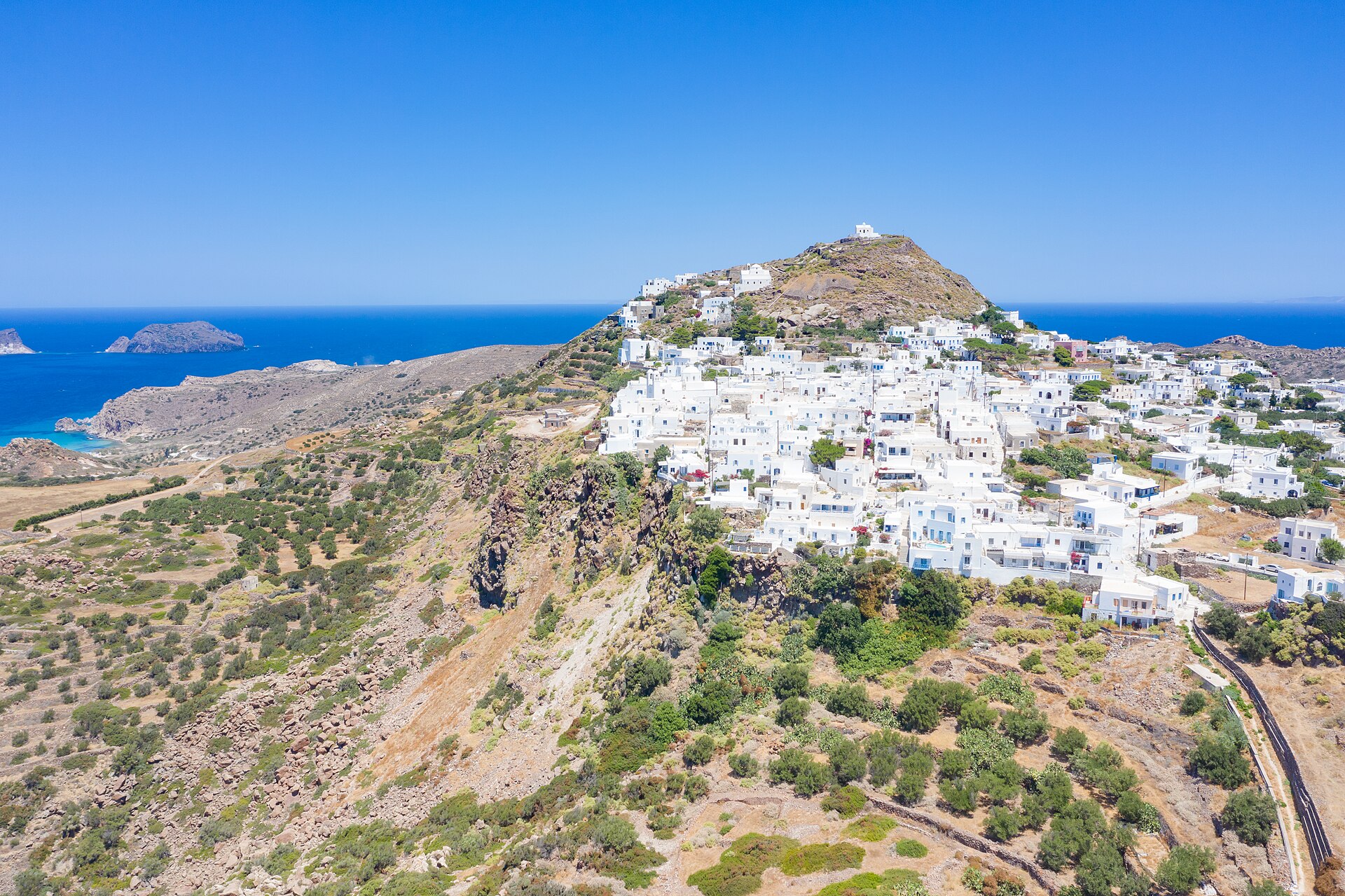
At the margins of the inhabited center, overlooking a precipice that gazes toward the gulf, stands the Cathedral of Panagia Korfiatissa. Constructed in 1810, the church is renowned not only for its interior treasures, such as the gilded epitaphios and icons of the Cretan school, but especially for its expansive plaza. The pavement is decorated with typical 'chochlakia'—mosaics fashioned from white and black sea pebbles forming geometric and symbolic patterns. This plaza serves as Plaka's outdoor parlor: here locals and travelers converge at sunset, seated on stone walls, to witness nature's spectacle as light transforms the landscape into a living canvas.
The Archaeological Museum and the Myth of Venus
Housed in an elegant neoclassical building designed by architect Ernst Ziller, the Archaeological Museum of Plaka safeguards Milos's millennial memory. The principal attraction, though a faithful replica, is the celebrated Venus of Milos (the original resides in the Louvre), discovered in 1820 by a local farmer in a field near the village. The museum also displays an extraordinary collection of obsidian, the black volcanic glass that rendered Milos a fundamental commercial hub during the Bronze Age, alongside Cycladic figurines, geometric ceramics, and inscriptions attesting to the island's significance through successive eras, from the Minoan period to the Roman age.
The Folklore Museum: Quotidian Life of Other Times
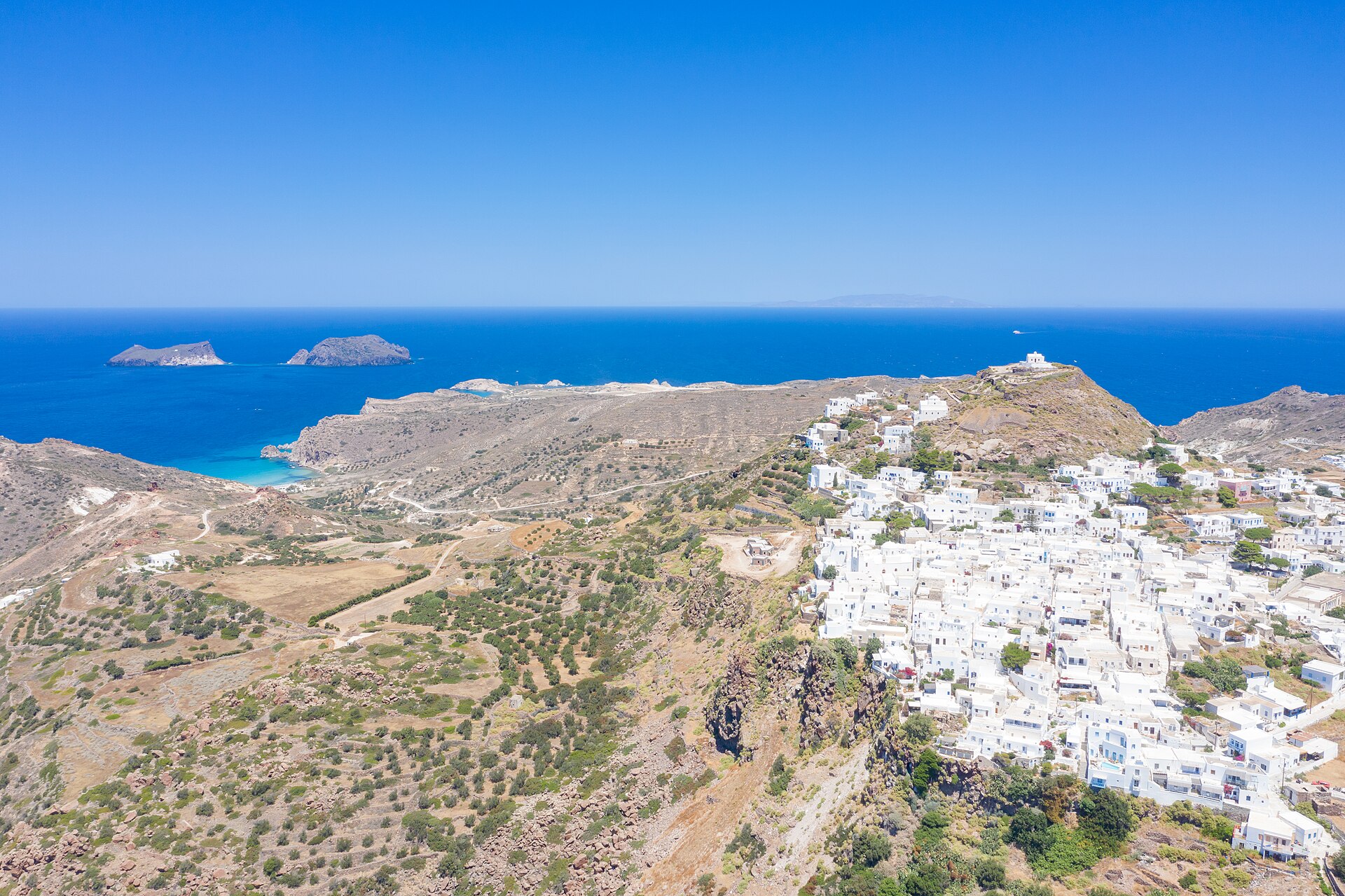
To understand Plaka's most authentic essence, a visit to the Museum of Popular Art and History is essential, situated in a typical nineteenth-century dwelling near the Church of Panagia Korfiatissa. The museum's rooms faithfully recreate the domestic environments of the past: the kitchen with traditional utensils, the bedroom with hand-embroidered linens and looms, and areas dedicated to agricultural processing. It is a journey into the resilience of Milos's inhabitants, who have managed to sustain themselves from volcanic soil of difficulty, developing refined craftsmanship and social traditions that endure today in village festivities and attention to architectural detail.
Geology and Landscape: The Volcanic Visage
The landscape surrounding Plaka is the result of millennia of volcanic activity that has sculpted jagged coastlines and rocks of unreal hues. From the village, one clearly perceives the island's morphology, with arid hills interrupted by patches of Mediterranean vegetation. The earth here is mineral-rich, and this wealth reflects in the cliff-side gradations beneath, transitioning from candid white to rust red, then sulfurous yellow. The elevated view permits appreciation of Adamantas harbor's inlet, one of the Mediterranean's largest and most secure natural ports, formed within an ancient volcanic caldera flooded by the sea.
Immediate Surroundings: Trypiti and Klima
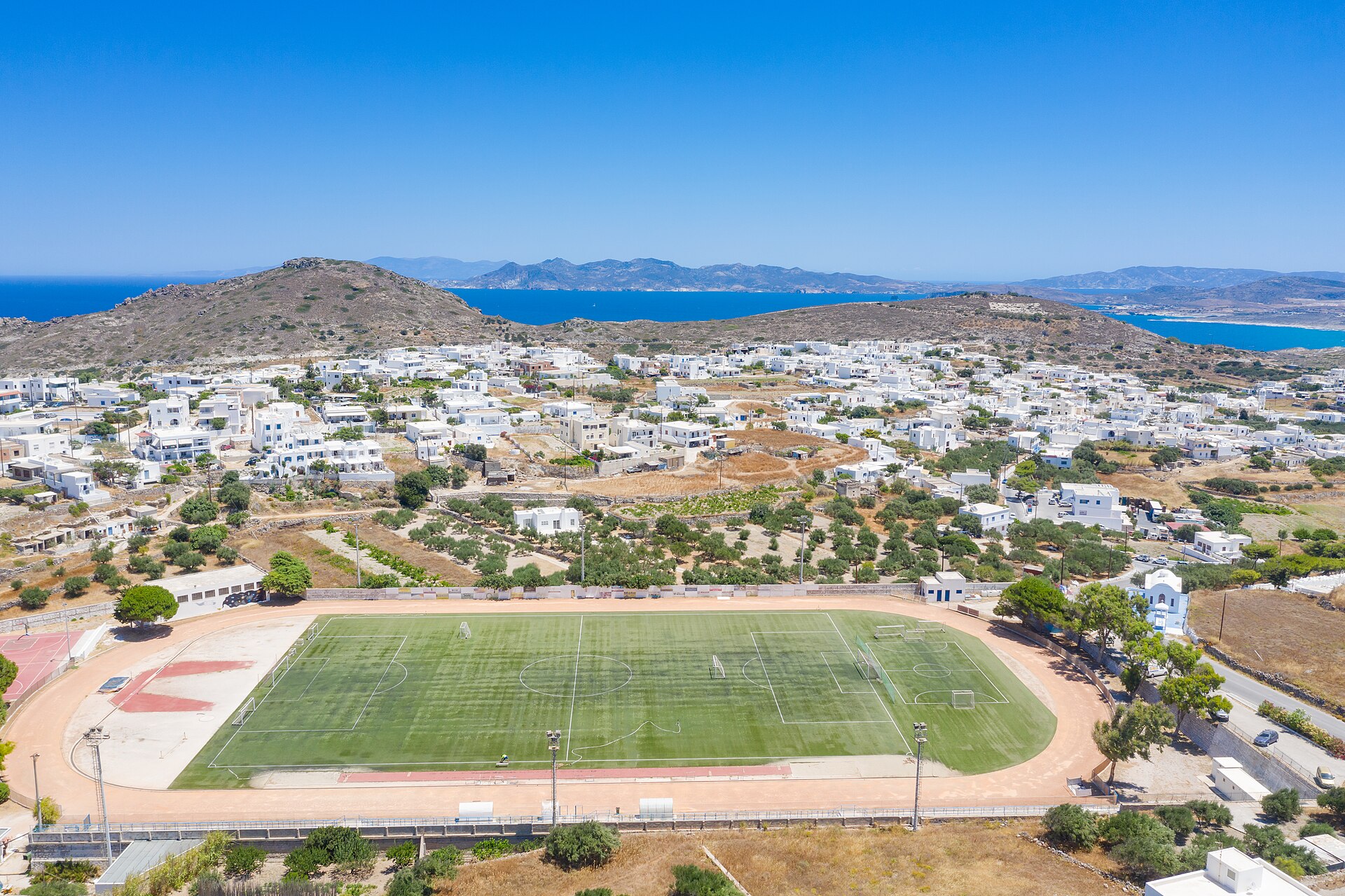
A short walk from Plaka lies the village of Trypiti, known for its windmills converted into dwellings and proximity to significant archaeological sites, such as Christian catacombs and an ancient theater. Descending toward the sea, one reaches Klima, a picturesque fishing village famous for its 'syrmata'—colorful houses carved into the rock where boats were stored on the ground floor during winter. The contrast between Plaka's aristocratic elevation and Klima's maritime humility offers a complete cross-section of the island's duality, between land and sea, between defense and commerce.
Traditions and Local Flavors
Plaka's gastronomic culture is an hymn to simplicity and the quality of raw materials. Walking through the alleys, it is impossible to resist the aroma of 'pitarakia', small pastries filled with piquant local cheese and onion. Another cornerstone of tradition is 'koufeto', a sweetmeat typical of wedding celebrations prepared with white pumpkin pulp, honey, and whole almonds, symbolizing wishes for a sweet and prosperous life. During religious festivals, such as the Panagia celebration in August, the village animates with traditional music played on lute and violin, while tables overflow with dishes of roasted kid and garden vegetables, cultivated with effort in the volcanic soil.
Experiences Not to Miss
- Watch the sunset from the plaza of Panagia Korfiatissa, a collective ritual of rare beauty.
- Wander aimlessly through the village alleys early in the morning, when light is still soft and the town awakens.
- Visit the Sand Museum, a small gem displaying colored sands from around the world, with emphasis on Milos's geological varieties.
- Climb to the Kastro for a 360-degree view of the Aegean and the islands of Kimolos, Sifnos, and Serifos.
- Enjoy Greek coffee or 'ouzo' at one of the small outdoor bars, observing the slow passage of local life.
- Shop in artistic craftsmanship boutiques, where one finds jewelry inspired by Cycladic motifs and handcrafted ceramics.
When to Visit and How to Experience the Village
The ideal period to visit Plaka spans May through June or September through early October. In these months, the climate is temperate, days are long, and the village escapes the high-season tourist throngs, allowing full enjoyment of the silence and authenticity of the places. Peak summer, though enchanting, can be quite hot and windy owing to the Meltemi, the wind that sweeps from the north. To experience Plaka as a local, the recommendation is to visit it in the late afternoon, allowing time for dinner at one of the taverns that conceal flower-adorned interior courtyards, where the evening breeze renders the atmosphere magical and regenerative.
FAQ
Si può arrivare in auto nel centro di Plaka?
Quanto tempo occorre per visitare Plaka?
Plaka è adatta a chi ha difficoltà motorie?
Qual è il punto migliore per vedere il tramonto?
Ci sono spiagge vicine a Plaka?
Getting there
- Aeroporto di Milos (MLO) - circa 9 km
- Non presenti sull'isola
- Da Adamantas (il porto), seguire le indicazioni per Plaka/Triovasalos. La strada è asfaltata e ben segnalata, percorribile in circa 10-15 minuti.
- In estate i parcheggi si riempiono velocemente nel tardo pomeriggio; cercate di arrivare un po' prima dell'ora del tramonto per trovare posto facilmente.
Perfect for
Ideale per coppie grazie ai suoi tramonti spettacolari, vicoli intimi e ristoranti con vista mare.
Un concentrato di reperti che spaziano dall'età del bronzo al neoclassicismo, con il mito della Venere di Milos come protagonista.
Un paradiso per i fotografi grazie ai contrasti tra il bianco della calce, il blu degli infissi e i colori vivaci dei fiori e del mare.
To see