

Mikonos
Suspended in the cobalt blue of the Aegean, Mykonos emerges as a fragment of white marble and granite, kissed by a light that pain...
Updated 7 July 2026
This season · July · Summer
What to do in Mikonos now
The story
The story of Mikonos
A story carved in wind and granite
Mykonos's history is rooted in myth, according to which the island would have been formed from the petrified bodies of Giants defeated by Heracles during the Gigantomachy. Beyond legend, the earliest traces of settlements date to the Neolithic, but it was the Ionians from Athens who settled permanently in the 11th century BCE. During antiquity, Mykonos lived in the shadow of the nearby and sacred Delos, serving as an important commercial port and supply center. After the fall of the Roman Empire, the island came under Byzantine control and subsequently, in 1207, became a Venetian possession under the Ghisi family. This domination left an indelible mark on local architecture and culture, still visible today in the structure of some districts.
In 1537, the island was conquered by the celebrated pirate Barbarossa for the Ottoman Empire. Despite submission to the Turks, Mykonos maintained a certain autonomy and developed a formidable merchant fleet, becoming a crucial hub for trade in the eastern Mediterranean. A moment of absolute glory was the Greek War of Independence in 1821, during which local heroine Manto Mavrogenous financed the fleet and led resistance against the invaders, becoming an eternal symbol of freedom. With the decline of sailing in the 20th century, the island went through a period of poverty, until tourism rediscovered it in the 1950s, when artists, intellectuals, and the international elite were enchanted by its wild and authentic beauty.
Chora: the white labyrinth
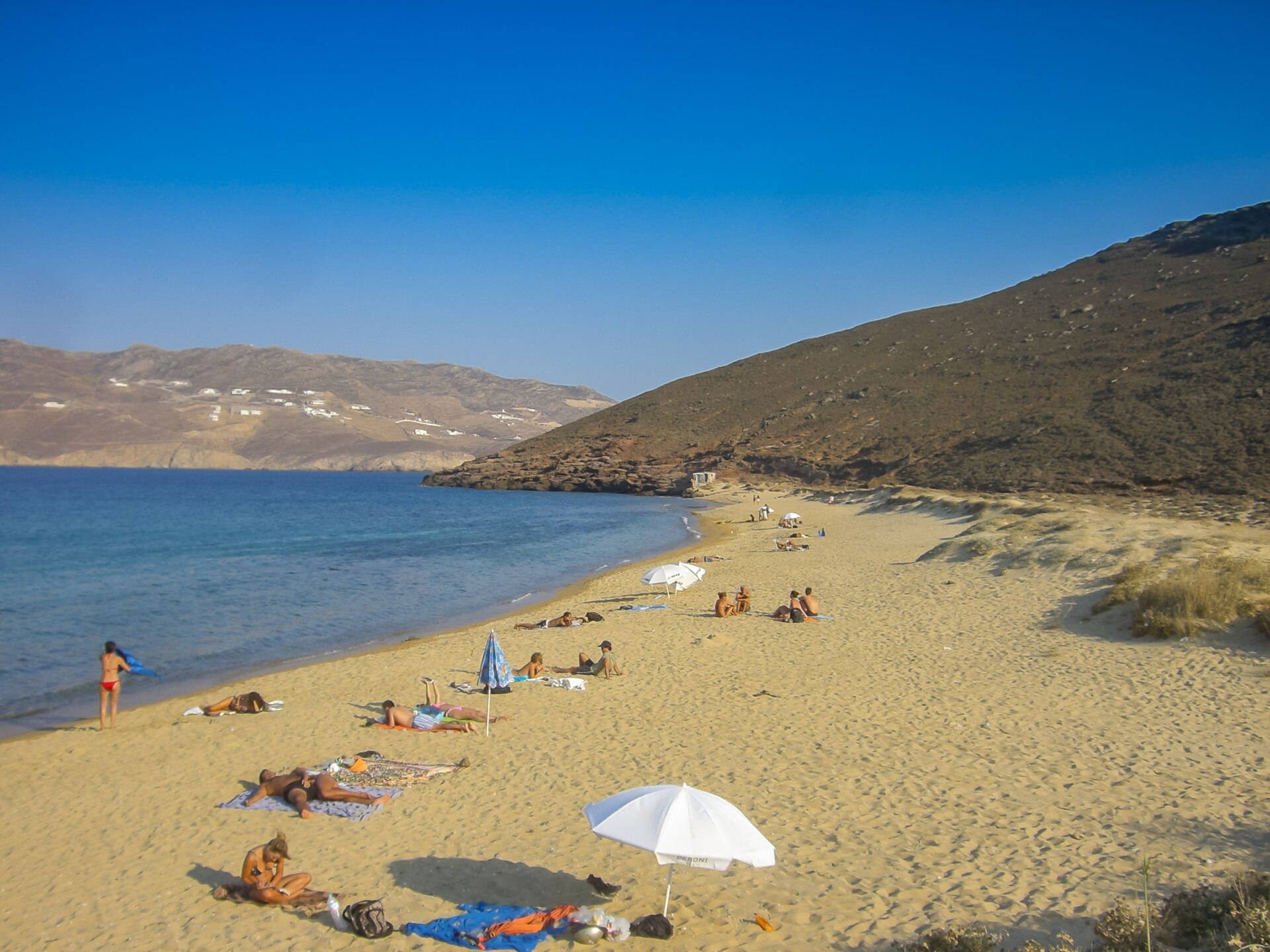
The island's capital, simply known as Chora, is a masterpiece of spontaneous urban planning. Its narrow and winding streets were not designed by chance, but with the precise intent to confuse the pirates who once assaulted the coasts and to mitigate the force of the impetuous winds. Walking through Chora is a hypnotic experience: every corner reveals a small votive chapel, a stairway decorated with geranium pots or a hidden artisan shop. The street pavement, characterized by typical flat stones bordered in white, leads the visitor on a timeless journey where the cubic architecture of the houses fits together perfectly, creating a mosaic of volumes and shadows. Despite summer crowding, Chora manages to preserve corners of absolute peace, especially in the early morning hours when raking light emphasizes the purity of the whitewashed surfaces.
Little Venice: where the sea kisses the houses
Alefkandra, better known as Little Venice, is perhaps the most romantic and photographed neighborhood on the island. Built from the mid-18th century by wealthy merchants and sea captains, it stands out for its elegant residences that seem to float on the water. The houses are characterized by colored wooden balconies that jut directly over the sea, offering an unparalleled view of the horizon. Once these dwellings were used to unload goods quickly from sailing ships, away from the prying eyes of authorities. Today, Little Venice is the place of choice for admiring the sunset, sipping a drink while waves break gently against the foundations of buildings, creating a magical atmosphere that evokes, indeed, the allure of the Venetian lagoon in Cycladic key.
The windmills of Kato Milli
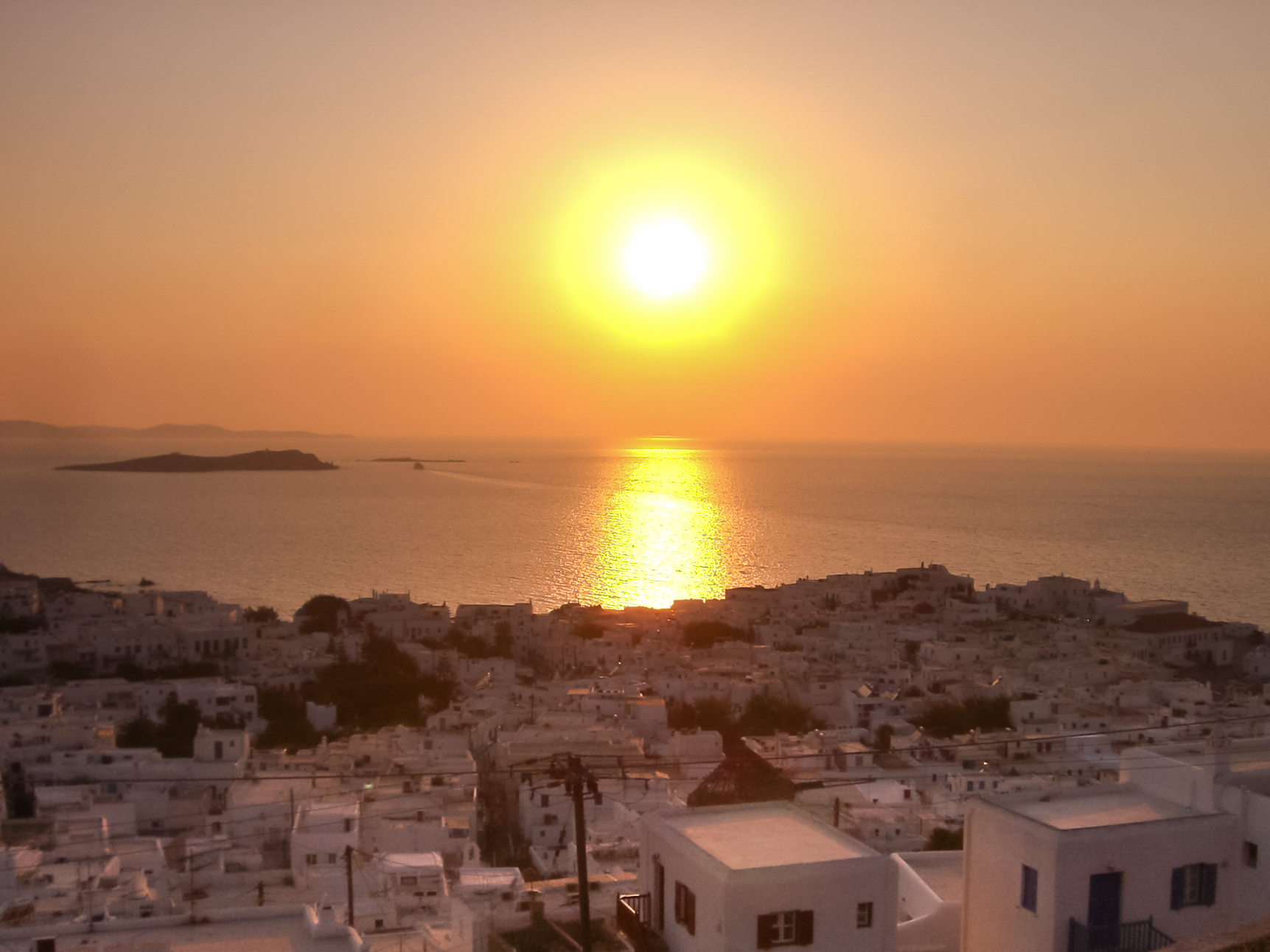
On the hill overlooking the Little Venice neighborhood stand the celebrated windmills, known as Kato Milli. These imposing circular structures with straw roofs and large white blades represent the iconic symbol of Mykonos and testify to the island's agricultural past. Built by the Venetians in the 16th century to mill grain by harnessing the strong northern winds, the mills were essential to the local economy, allowing the production of flour that was then exported throughout the Aegean. Of the numerous mills that once dotted the island, only a few perfectly preserved ones remain today, some transformed into museums or private residences. Their silhouette against the blue sky is a vision that evokes the toil and ingenuity of ancient inhabitants, while simultaneously offering one of the most evocative panoramic points to embrace the entire harbor at a glance.
Panagia Paraportiani: sculpture of faith
Located in the Kastro district, Panagia Paraportiani is considered one of the most significant and original churches in all of Greece. It is not a single building, but an asymmetrical complex composed of five distinct churches, built one on top of or beside the other between the 14th and 17th centuries. The structure owes its name to its proximity to a small gate (paraporti) of the ancient medieval walls. What makes it extraordinary is its organic, almost fluid form, reminiscent of a sculpture of ice or whipped cream under the sun. The absence of right angles and the brilliant whiteness create a play of light and shadow that constantly changes throughout the day. It is a pure example of Cycladic vernacular architecture, where religious function is wedded with a plastic beauty that has fascinated architects of the caliber of Le Corbusier.
Ano Mera and the monastery of Panagia Tourliani
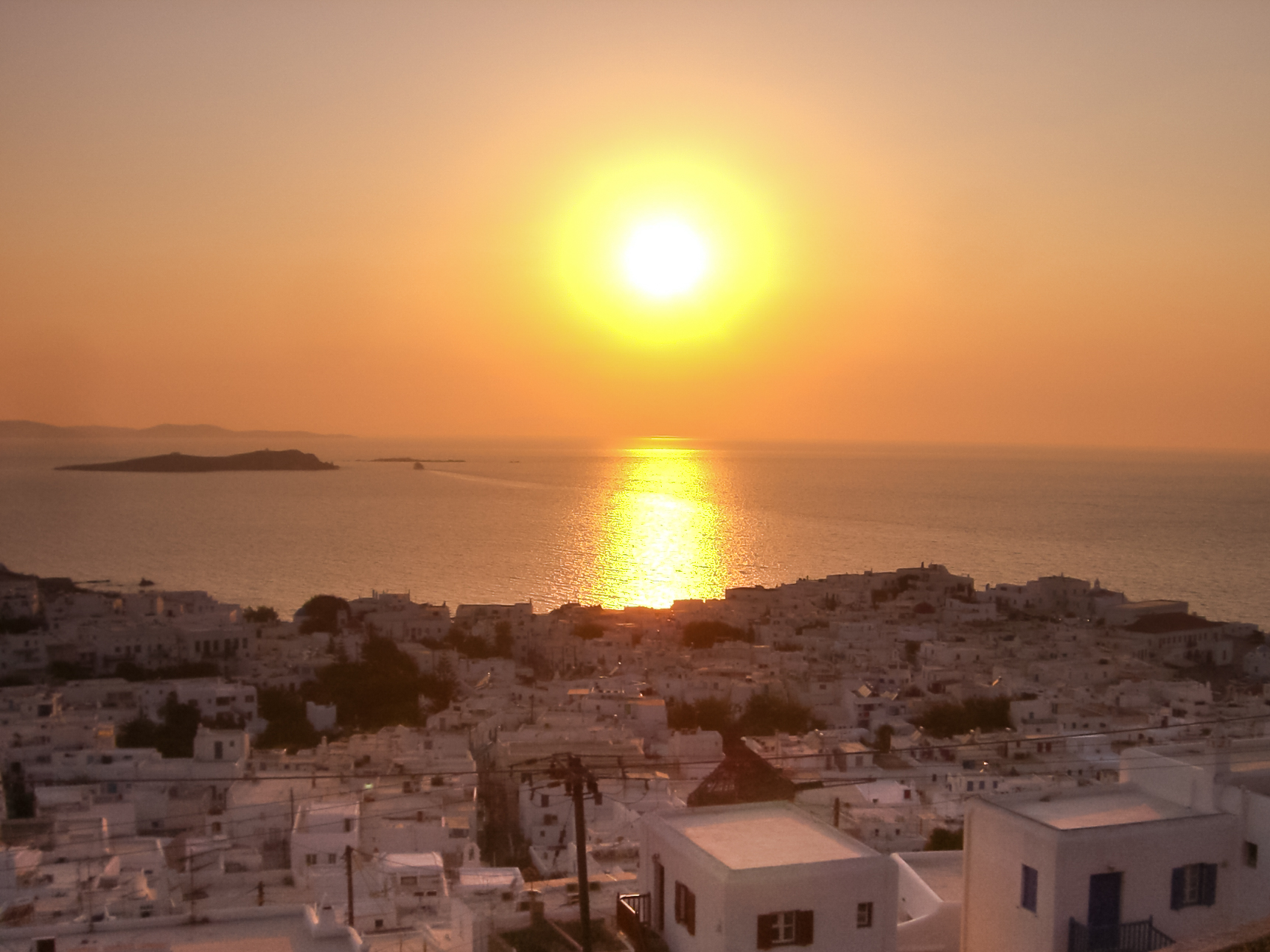
To discover the most authentic and rural face of Mykonos, one must venture inland to the village of Ano Mera. Located about seven kilometers from Chora, this village is the second inhabited center on the island and preserves a slow and traditional pace of life, far from coastal frenzy. The beating heart of Ano Mera is the Monastery of Panagia Tourliani, founded in 1542 by two monks from the island of Paros. The building impresses with its imposing marble bell tower and its precious Baroque altar in gilded wood, created by Florentine craftsmen in the 18th century. The village square, with its taverns serving typical dishes in the shade of trees, is the ideal place to savor local cuisine in a convivial and genuine atmosphere, surrounded by countryside silence.
Delos: the sacred island at Mykonos's doorstep
A short sailing distance from Mykonos lies Delos, one of the most important archaeological sites in the Greek world and a UNESCO World Heritage site. According to mythology, it was here that Leto gave birth to Apollo and Artemis, making the island a sacred place where it was forbidden to be born or die. In antiquity, Delos was a flourishing religious and commercial center, the pulsing heart of the Delian League. Today, walking among the ruins of the Sanctuary of Apollo, admiring the celebrated Terrace of the Lions and the refined mosaics of ancient noble dwellings, is like traveling back in time more than two thousand years. The energy emanating from this desolate place, where the wind blows through marble columns, is palpable and offers a profound and necessary contrast with the worldly vitality of nearby Mykonos.
Beaches and landscape: between granite and crystal waters
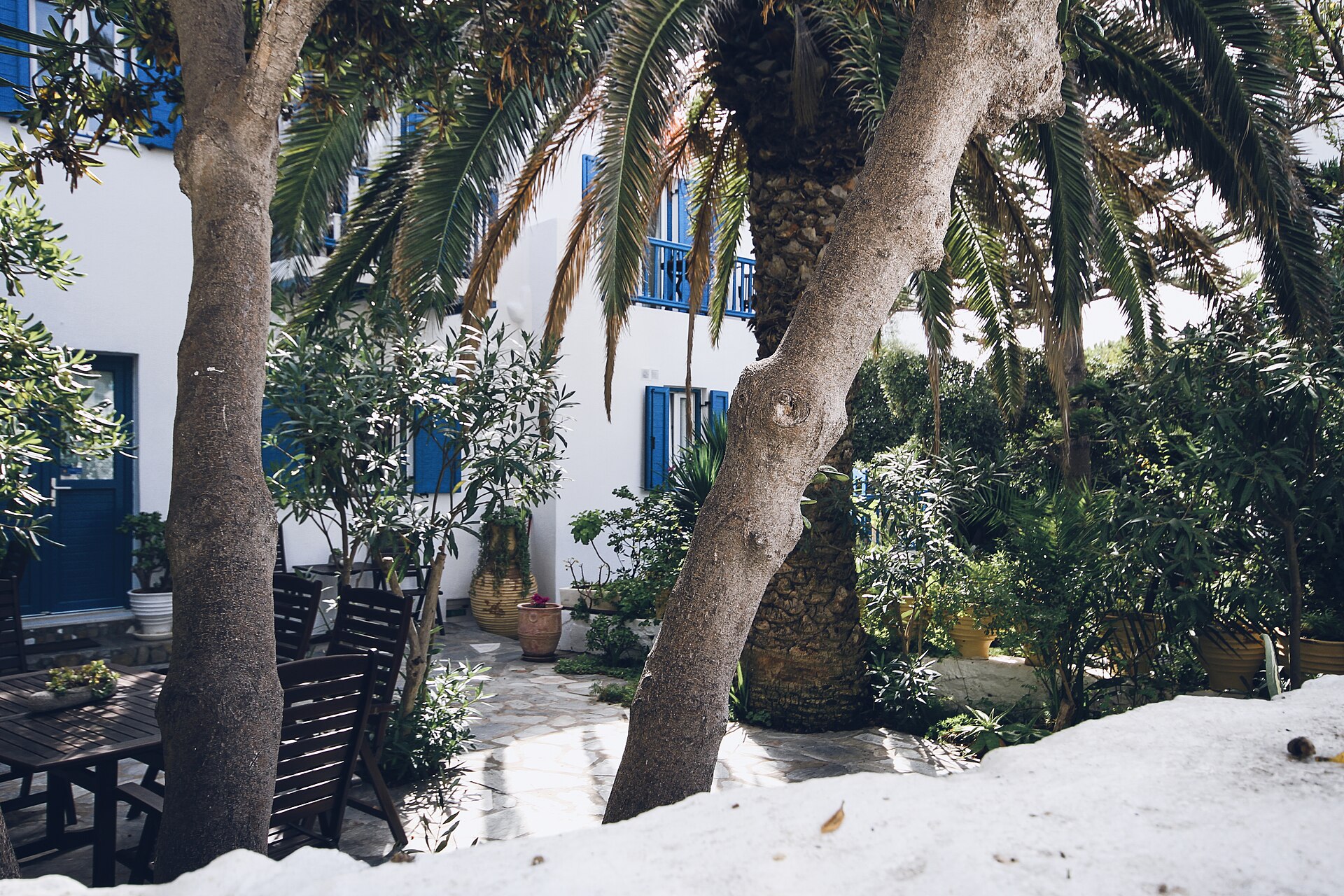
Mykonos's landscape is characterized by arid hills, dry stone walls and spectacular granite formations that descend to the sea. The coasts offer an incredible variety of beaches, capable of satisfying every desire. To the south are the most famous and wind-sheltered bays, such as Psarou, Ornos and Platis Gialos, where turquoise waters lap golden sands and exclusive establishments. For those seeking the energy of beach parties, Super Paradise and Paradise Beach are mandatory stops. However, Mykonos also hides wilder and more solitary shorelines, especially along the northern coast: beaches like Agios Sostis or Panormos offer direct contact with unspoiled nature, free of umbrellas and surrounded only by the sound of the sea and the scent of wild herbs from the hinterland.
Flavors and traditions: the excellence of the table
Mykonos's gastronomy is a triumph of bold flavors and excellent ingredients. The most celebrated product is undoubtedly kopanisti, a creamy cheese with a piquant and aromatic flavor, often served on 'mostra', a slice of local twice-baked bread (paximadi) topped with tomato and olive oil. Another unmissable specialty is louza, a prized dried salami of pork tenderloin seasoned with pepper and cinnamon, dried in the Aegean wind. For lovers of sweets, amygdalata (almond sweets perfumed with rose water) represent the quintessence of island pastry. The popular celebrations, or 'panigiria', held in honor of patron saints, are the perfect opportunity to experience local culture amid traditional dances, wine flowing freely and typical dishes shared with the entire community.
- Get lost at dawn through the alleys of Chora before the tourists arrive.
- Watch the sunset from the windmills of Kato Milli.
- Visit the Archaeological Museum to admire the celebrated vase depicting the Trojan Horse.
- Take a day trip to the sacred island of Delos.
- Taste louza and kopanisti in a traditional tavern in Ano Mera.
- Search for the secret beach of Agios Sostis for a swim in total freedom.
- Observe the passage of the pelican Petros, the island's historic mascot.
FAQ
Qual è il periodo migliore per visitare Mikonos?
Come ci si sposta sull'isola?
È un'isola adatta alle famiglie?
Dove si trova il parcheggio a Chora?
Getting there
- Aeroporto Internazionale di Mykonos (JMK) - 4 km dal centro
- Non presenti linee ferroviarie sull'isola
- L'isola è piccola e ben collegata da una rete stradale asfaltata; si guida sul lato destro.
- Se arrivate via mare da Atene, preferite i traghetti veloci dal porto di Rafina, che è più vicino all'aeroporto di Atene rispetto al Pireo.
Perfect for
Mikonos è l'epicentro del divertimento mondiale, con club esclusivi e dj set internazionali che animano le spiagge e il centro fino all'alba.
Oltre alla mondanità, l'isola offre tesori storici inestimabili, grazie alla vicinanza con Delos e ai suoi musei cittadini.
Dalle baie attrezzate e lussuose ai lidi selvaggi del nord, l'isola vanta alcune delle acque più limpide di tutte le Cicladi.
To see