

Khora
Welcome to Khora, the pulsating heart and luminous soul of the Cyclades
Updated 7 July 2026
This season · July · Summer
What to do in Khora now
The story
The story of Khora
A history between myth and dominations
Khora's origins are rooted in the Proto-Cycladic period, but it was during the Classical era that the center assumed a role of strategic and religious prominence. The city experienced centuries of splendor alternating with moments of obscurity, profoundly marked by the Fourth Crusade, when in 1207 the Venetian Marco Sanudo chose it as the capital of the Duchy of the Archipelago. This Latin domination, lasting over three centuries, left an indelible imprint on urban planning and architecture, still visible today in the fortified structure of the upper part. Subsequently, the transition under Ottoman control in the sixteenth century did not diminish the Catholic and aristocratic identity of part of the population, maintaining alive a cultural duality that makes Khora one of the most interesting and complex localities in all of insular Greece.
The Portara: the gate of the sun
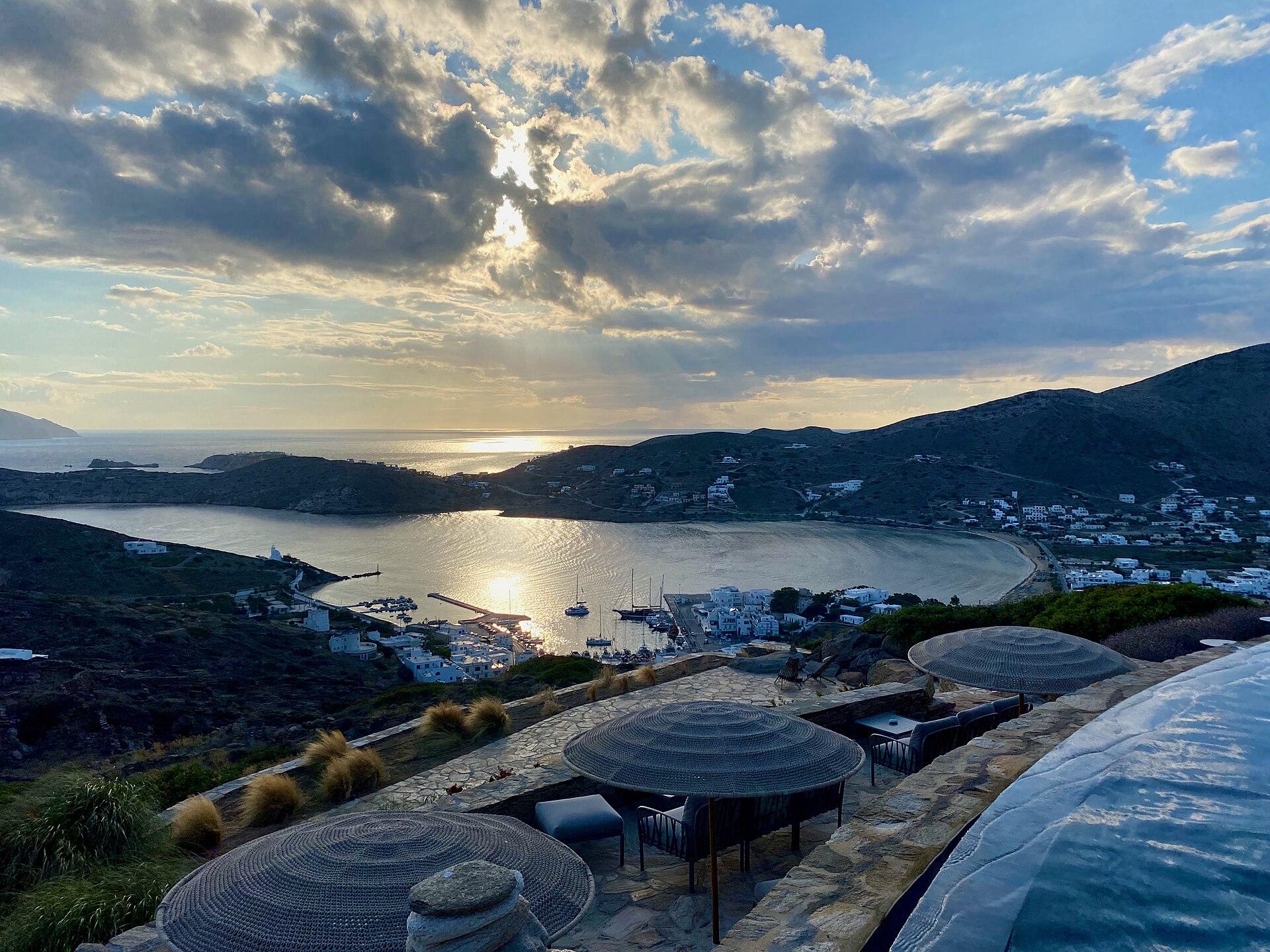
The undisputed symbol of Khora, the Portara stands alone on the island of Palatia, now connected to the mainland by an artificial isthmus. It is the imposing marble frame of an unfinished temple dedicated to Apollo, dating to the VI century B.C. at the behest of the tyrant Ligdamides. Approximately six meters high and constructed of enormous blocks of local marble, the gate faces Delos, the sacred island of the god. Its majesty is such that, despite the temple never being completed and being largely stripped in subsequent centuries, the structure still communicates a sense of sacrality and power. It is the favored place for travelers to admire the sunset, when the sun seems to nestle perfectly in the rectangle of stone before diving into the Aegean.
The Kastro: the Venetian citadel
Climbing toward the summit of the hill, you enter the Kastro, the fortified quarter that constituted the center of Venetian power. Designed with a pentagonal plan, the Kastro is a labyrinth of narrow alleys, depressed arches, and stone staircases, originally conceived for defensive purposes against pirate raids. Here, the facades of houses still bear the noble coats of arms of the Latin families who resided there. Unlike the rest of the city, the Kastro emanates an atmosphere of aristocratic austerity; its buildings still house today the descendants of Venetian colonists, as well as prestigious cultural institutions. Strolling here at dusk, when silence is interrupted only by the tolling of bells, is like taking a leap back into the Mediterranean Middle Ages.
The Catholic Cathedral and the Archaeological Museum
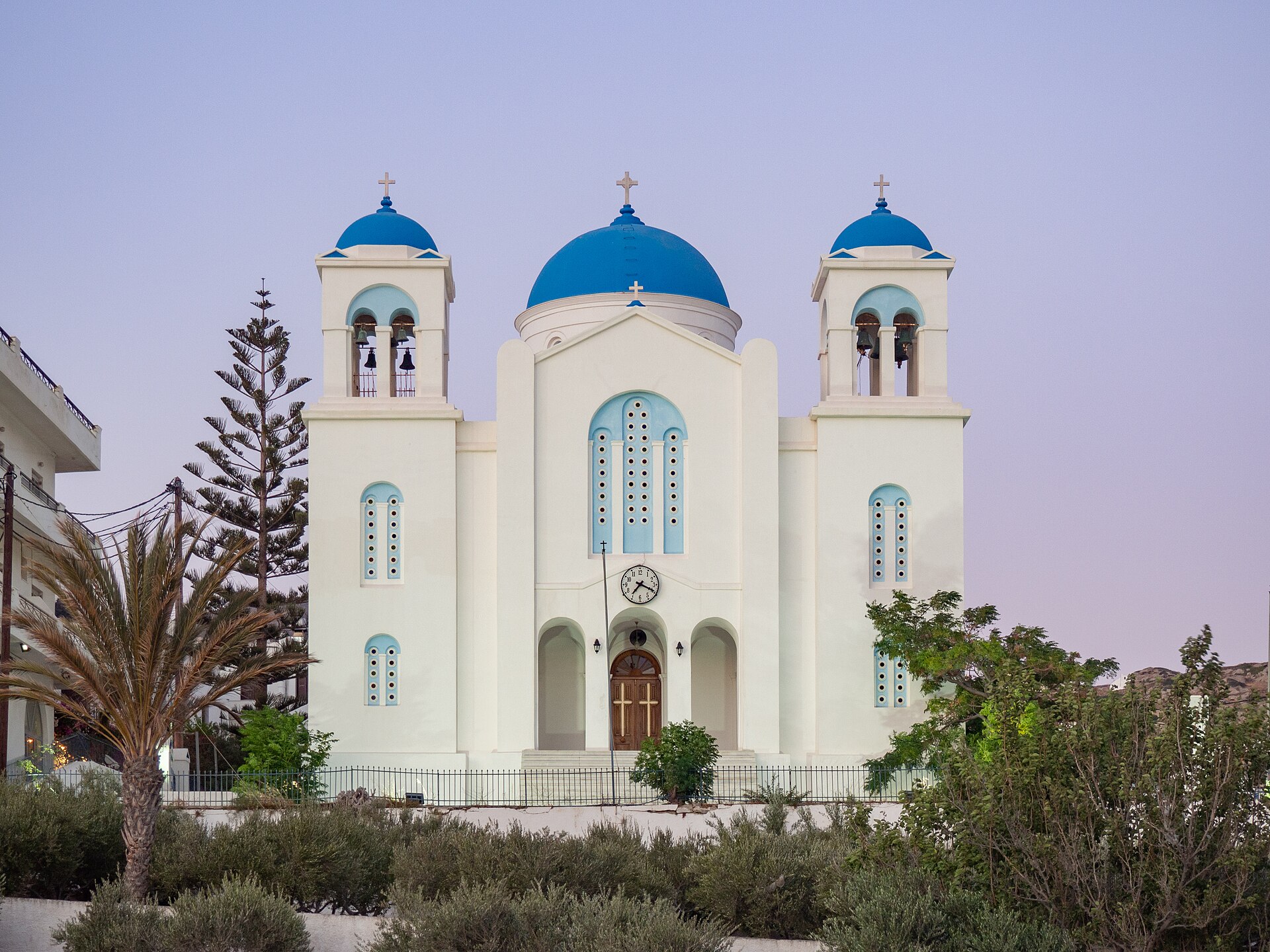
Within the walls of the Kastro stands the Catholic Cathedral of Saint Anthony of Padua, a building of great historical value that testifies to the long coexistence between Latin and Orthodox rite. Its austere facade hides an interior rich in treasures, including a two-sided Byzantine icon from the XII century. A few steps away stands the Archaeological Museum, housed in an ancient Jesuit college. This museum is celebrated internationally for its collection of Cycladic marble statuettes, works of extraordinary stylistic modernity dating from the III millennium B.C. The visit allows one to understand the artistic evolution of the area, from geometric vases to splendid Roman mosaics, offering a perfect synthesis of the millennial continuity of habitation in Khora.
The Bourgos quarter
Between the port and the walls of the Kastro extends the Bourgos, historically the quarter where the Greek population resided during Venetian rule. It is the most lively and dynamic area of Khora, characterized by organic and spontaneous urban planning. Here the alleys become even narrower, adorned with pots of geraniums and fuchsia bougainvillea that contrast with the whitewash. The Bourgos is the ideal place to get lost among small artisan shops selling ceramics, silver jewelry, and typical products. Despite its strong tourist vocation, the quarter preserves corners of surprising authenticity, such as tiny Byzantine chapels nestled between houses or old taverns where inhabitants still gather for morning coffee.
Landscape and surroundings: between sand and hills
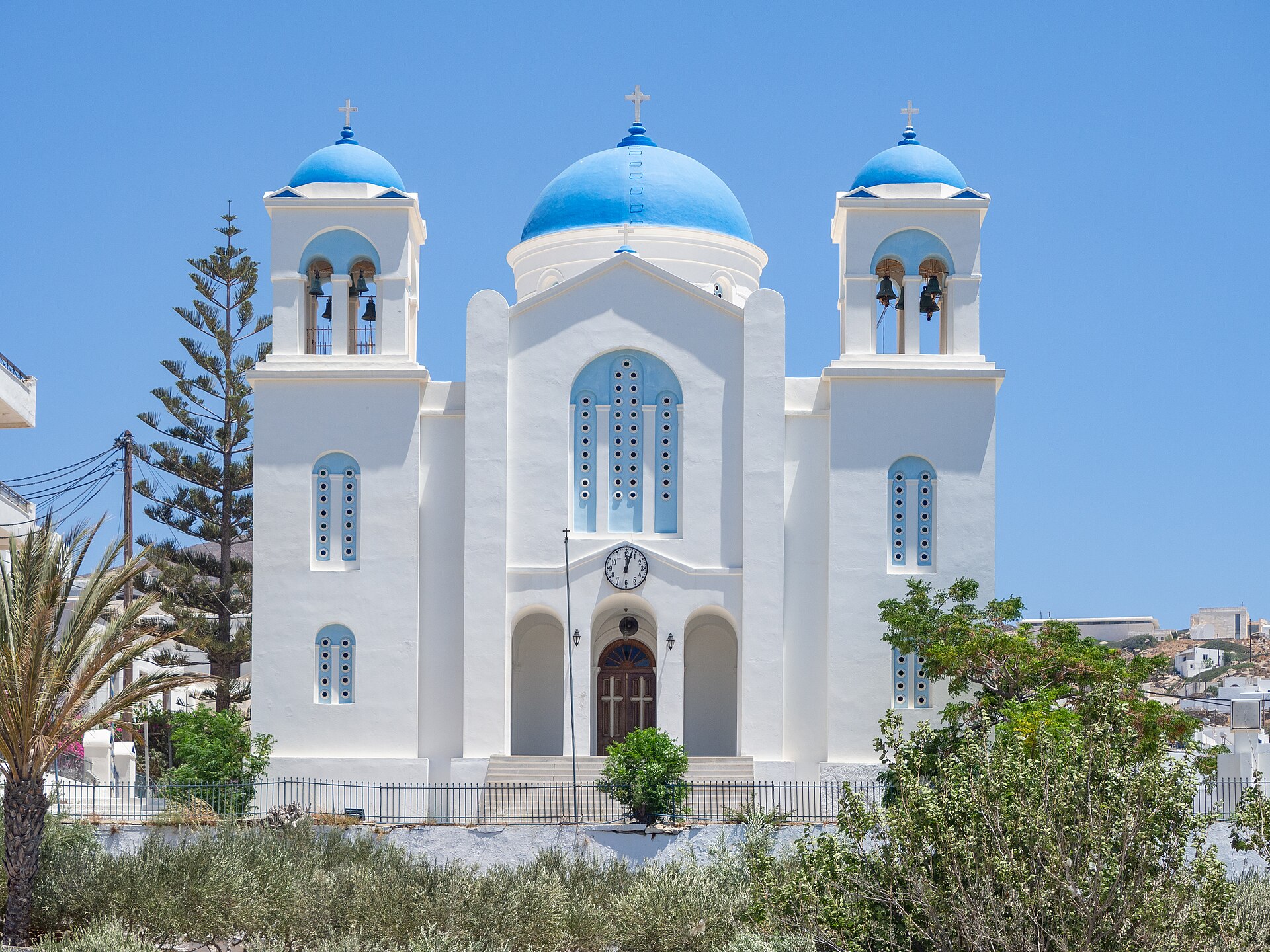
The landscape surrounding Khora is a harmonious blend of sea and land. Immediately south of the settlement extends the beach of Agios Georgios, a bay sheltered from the winds with shallow depths and golden sand, ideal for those wishing to relax without straying far from the center. Moving toward the interior, the coastal profile gives way to a fertile valley, dotted with reeds and gardens, which rises gently toward the granite reliefs of the island. The hills around Khora offer panoramic trails from which you enjoy an unparalleled view of the surrounding archipelago, with the profiles of Paros and the Small Cyclades standing out against the horizon, creating a panorama that changes colors and hues depending on the time of day.
Traditions and local flavors
The gastronomic culture of Khora is the daughter of a generous land and an ancient pastoral tradition. Unlike other more arid islands, here agriculture thrives, offering products of excellence such as the renowned potatoes and aged cheeses, among which the Graviera of Naxos stands out. A mandatory stop is at the historic distilleries in the center to taste Kitron, an aromatic liqueur obtained from the leaves of a particular type of citrus that grows only in these areas. Popular traditions are still strongly felt: during the summer, the squares come alive with celebrations of patron saints, where the music of the violin and lute accompanies group dances involving entire generations, in a collective ritual that celebrates belonging to this magical land.
Experiences not to be missed
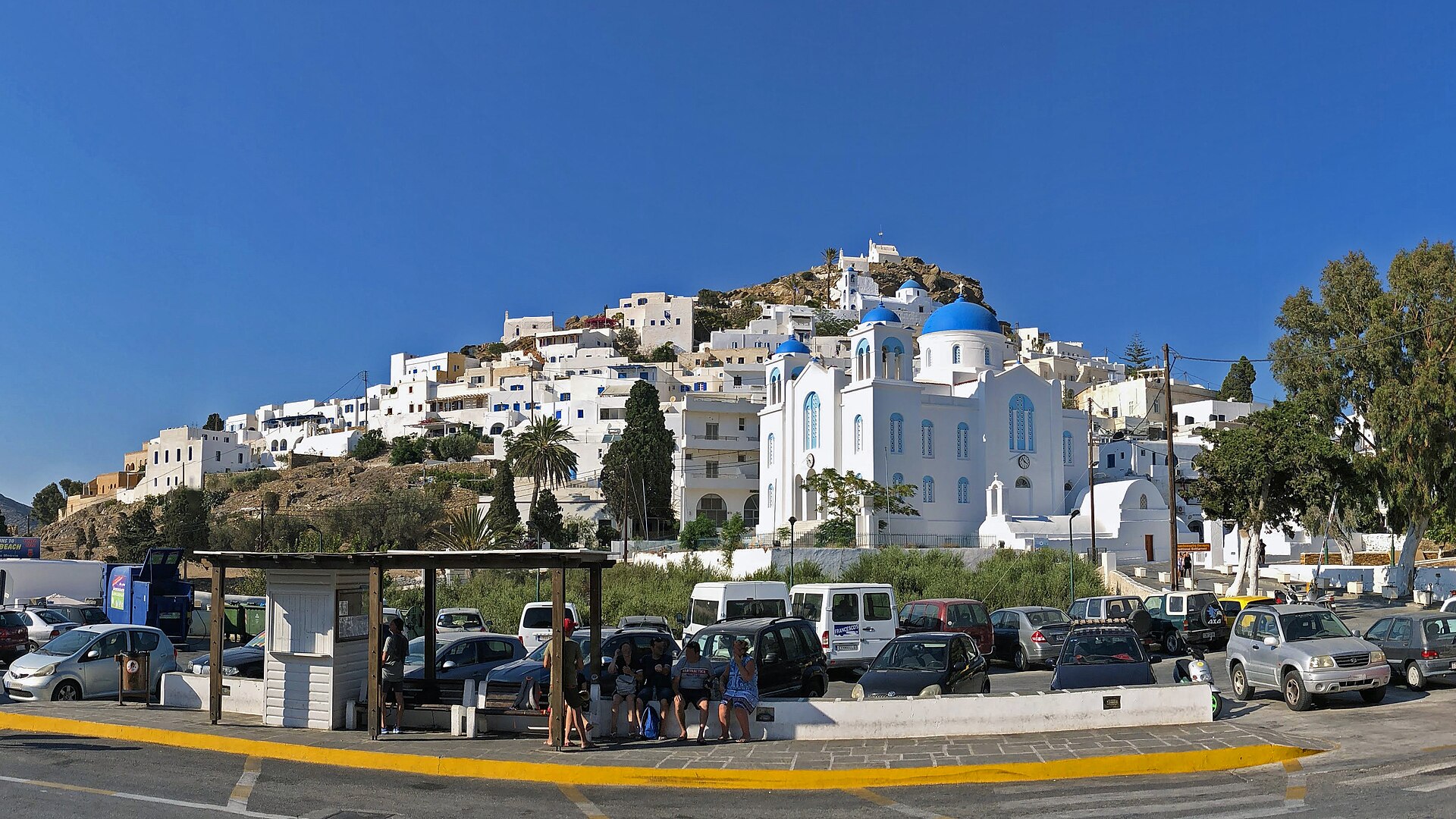
- Admire the sunset from the Portara, feeling the millennial energy of Apollo's temple.
- Deliberately get lost among the alleys of the Kastro in search of Venetian coats of arms and art shops.
- Taste a selection of local cheeses and Kitron in one of the wine bars overlooking the port.
- Visit the Archaeological Museum to discover the enigmatic charm of Cycladic statuettes.
- Dine in a tavern of the Bourgos, savoring dishes based on the freshest fish and garden produce.
- Take the promenade along the waterfront early in the morning, when the city awakens and fishermen return with their nets.
When to visit and how to experience Khora
The best time to visit Khora is from May to mid-July and from September to October. In these months, the climate is mild, the days are long, and the crowds of the central summer months are still distant, allowing you to fully enjoy the quiet of the alleys. In August, the Meltemi blows powerfully refreshing the air, but the port becomes extremely lively. To experience Khora like a local, avoid the hottest hours of the afternoon, preferring the soft light of the morning for cultural visits and the evening for social life. Remember that Khora should be explored strictly on foot: leave your car in external parking lots and let your instinct guide you among its white staircases.
FAQ
Quanto tempo occorre per visitare Khora?
È una località adatta alle famiglie con bambini?
Dove si può parcheggiare vicino al centro?
Cosa vedere a Khora in un solo giorno?
Getting there
- Aeroporto Nazionale di Naxos (JNX) - 3 km
- Non presenti (trasporti su gomma o via mare)
- Khora è il fulcro stradale dell'isola; si raggiunge facilmente seguendo le indicazioni per il porto da qualsiasi altra località.
- Il modo più suggestivo per arrivare è via mare: la vista della Portara dal traghetto è indimenticabile.
Perfect for
Un viaggio nel tempo che va dal 3000 a.C. della civiltà cicladica al medioevo veneziano.
Perfetta per chi ama i sapori autentici, dai formaggi DOP ai liquori di cedro artigianali.
I tramonti sulla Portara e le cene nei vicoli del Kastro offrono scenari da sogno per le coppie.
To see
Da vedere a Khora
Routes · Trovido Route
