

Chora Naxos
Chora of Naxos welcomes the traveler with an image that seems suspended between myth and reality: a towering gate of white marble...
Updated 7 July 2026
This season · July · Summer
What to do in Chora Naxos now
The story
The story of Chora Naxos
A thousand-year history between East and West
Chora's history is a fascinating interweaving of dominations that have left indelible marks on its urban fabric. Inhabited since the Neolithic era, Naxos became a crucial center of Cycladic civilization, then flourished in the Archaic age under the tyrant Ligdamis. However, it is the Middle Ages that define the current aesthetics of the upper city. In 1207, Venetian Marco Sanudo conquered the island and established the seat of the Duchy of the Archipelago, a Latin dominion that lasted for over three centuries, influencing architecture, religion and social hierarchies. Even during the long Ottoman parenthesis, the Venetian nobility maintained privileges and properties, creating a unique cultural mix in Greece. This heritage is visible in the coexistence of Catholic and Orthodox churches and in the noble palaces that still house descendants of ancient European families.
The Portara: the eternal incompleteness of Apollo
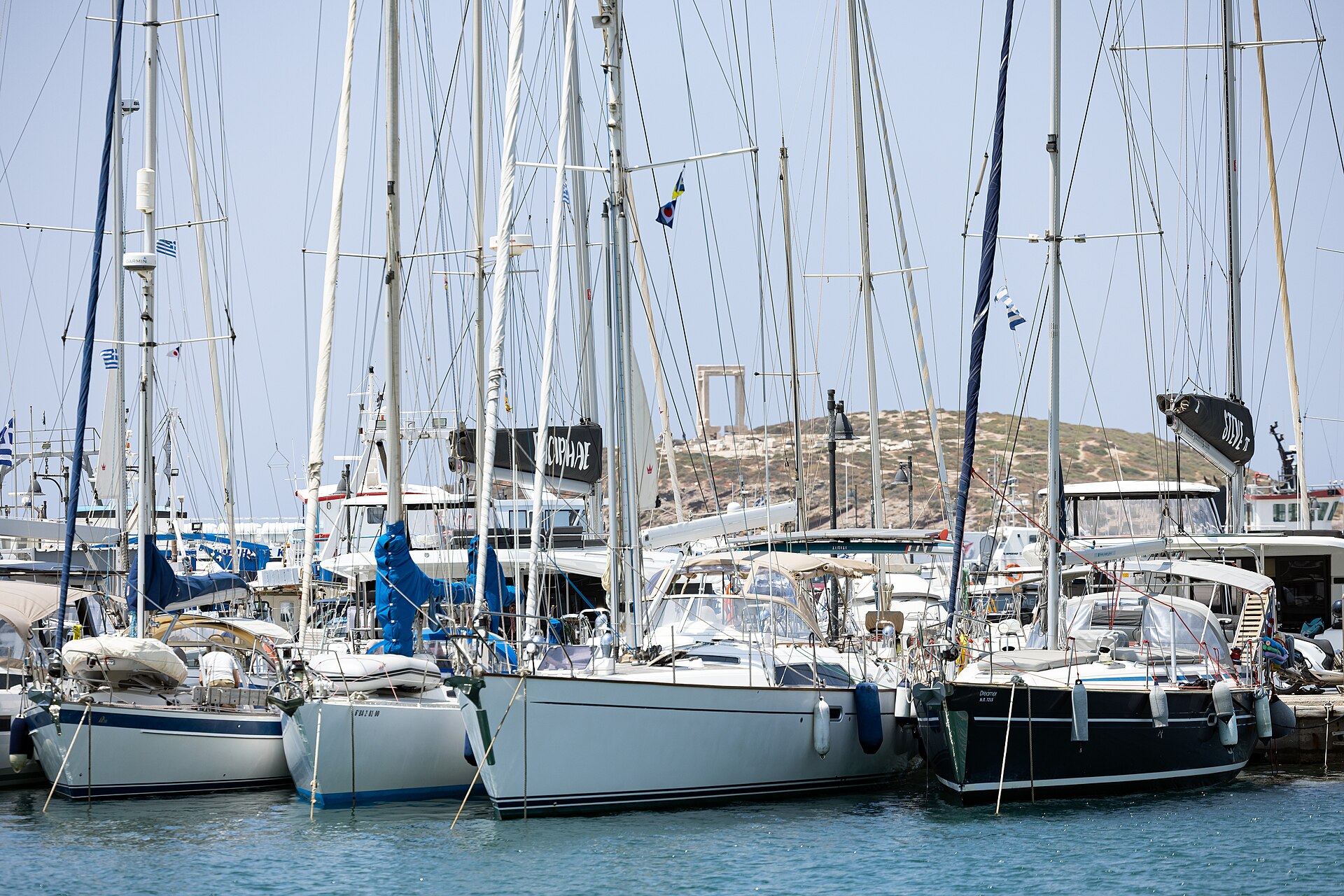
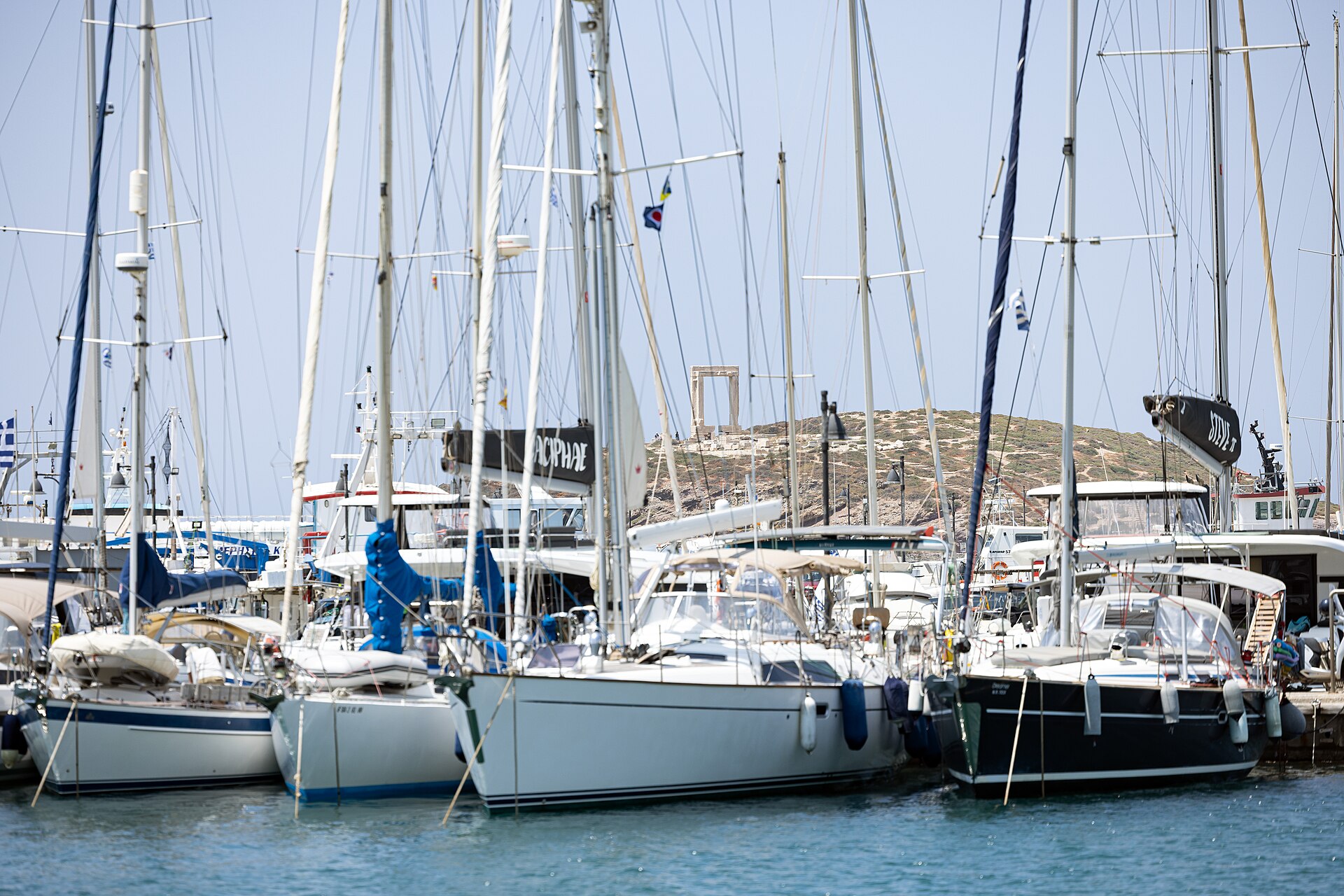
An undisputed symbol of the island, the Portara rises on the island of Palatia, connected to Chora by a thin strip of land. It is the enormous marble frame of what was to be the Temple of Apollo, begun in the VI century BC at the behest of Ligdamis. The tyrant aspired to build the most majestic temple in Greece, but work stopped abruptly and the structure remained unfinished. Today, the three enormous blocks of Naxian marble, weighing tons, form a gateway to nothingness that seems to dialogue with the horizon. It is the preferred place to admire the sunset, when the stone takes on ochre and gold hues, offering a spectacle that reconnects modern man to the sacred of the ancient Greeks.
The Kastro: the Venetian citadel
The Kastro is the aristocratic heart of Chora, a fortified hamlet built by the Venetians atop a hill. Entering through ancient gates, such as the Trani Porta, one accesses a world of silence and stone, where time seems to have stopped in the XIII century. Here the streets are narrow and winding, designed for defense, and the facades of houses still display the coats of arms of crusader families. The Kastro is not a museum, but a living district where the island's historic Catholic communities reside. Walking here means admiring the harmony between medieval buttresses and flower-filled balconies, discovering corners of absolute peace just steps away from the bustle of the port.
The Catholic Cathedral of the Presentation
Located in the central square of the Kastro, the Catholic Cathedral is a monument of exceptional historical value. Dating originally to the XIII century but extensively reworked in the XVII, it features a floor covered with marble tombstones celebrating Venetian nobles and dignitaries of the Duchy. The interior is sober and solemn, characterized by a double-sided Byzantine icon of the XII century depicting the Virgin and Child on one side and Saint John the Baptist on the other. This place of worship testifies to Naxos's secular religious coexistence and represents the spiritual center of the island's Latin community, maintaining an atmosphere of austere devotion.
The Archaeological Museum and the Jesuit School
Housed in an imposing XVII century building that was the seat of a Jesuit school (also attended by Nikos Kazantzakis), the Archaeological Museum of Naxos is an essential stop for understanding the historical depth of the island. Its collection of marble Cycladic idols is second only to that of Athens in importance and beauty: these stylized figures, with crossed arms and enigmatic faces, have inspired modern artists such as Modigliani and Picasso. The museum also preserves splendid Roman mosaics and Mycenaean ceramics, offering a complete overview ranging from the late Neolithic to the early centuries of the Christian era, all within a setting of great architectural charm.
The Bourgos district and the waterfront
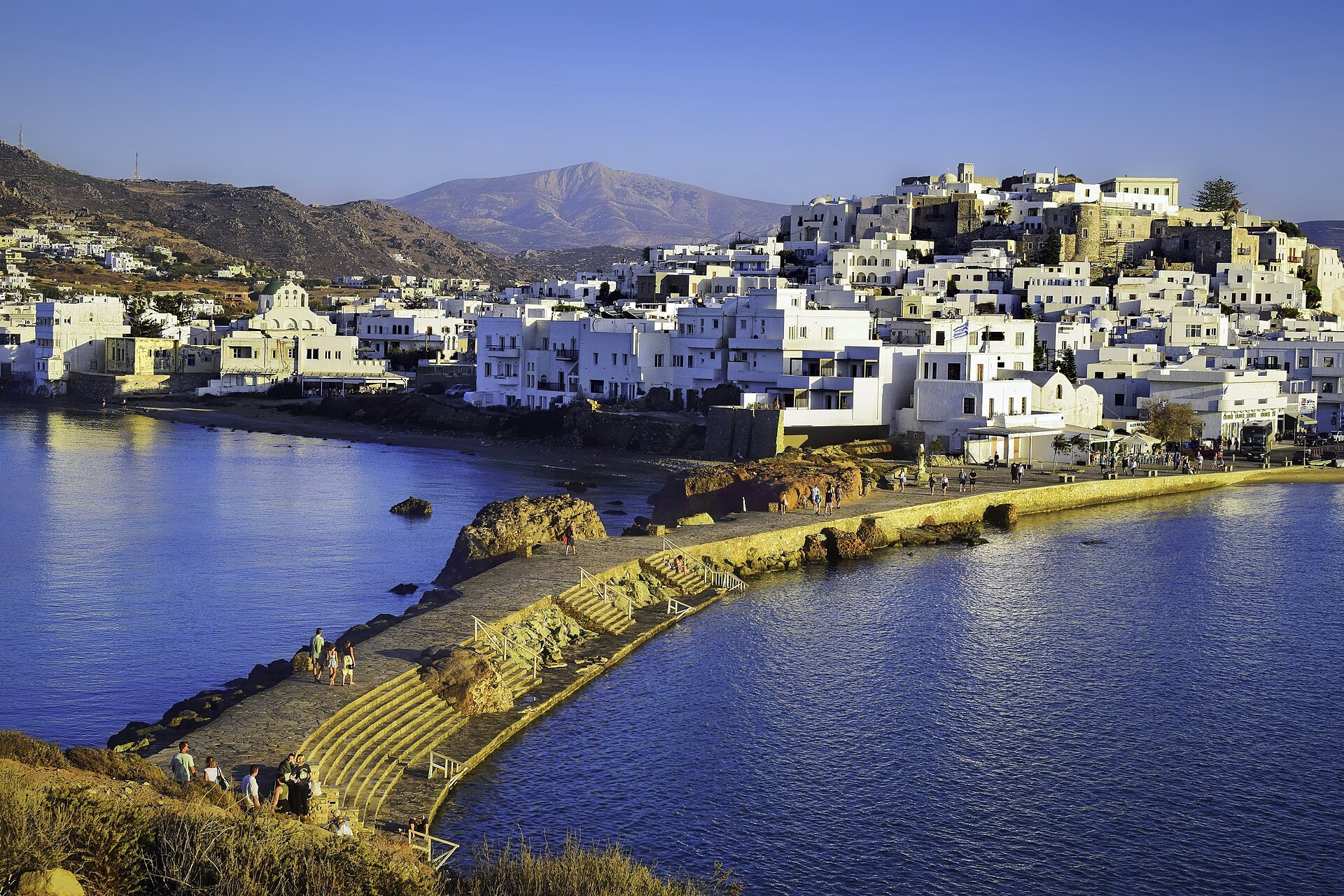
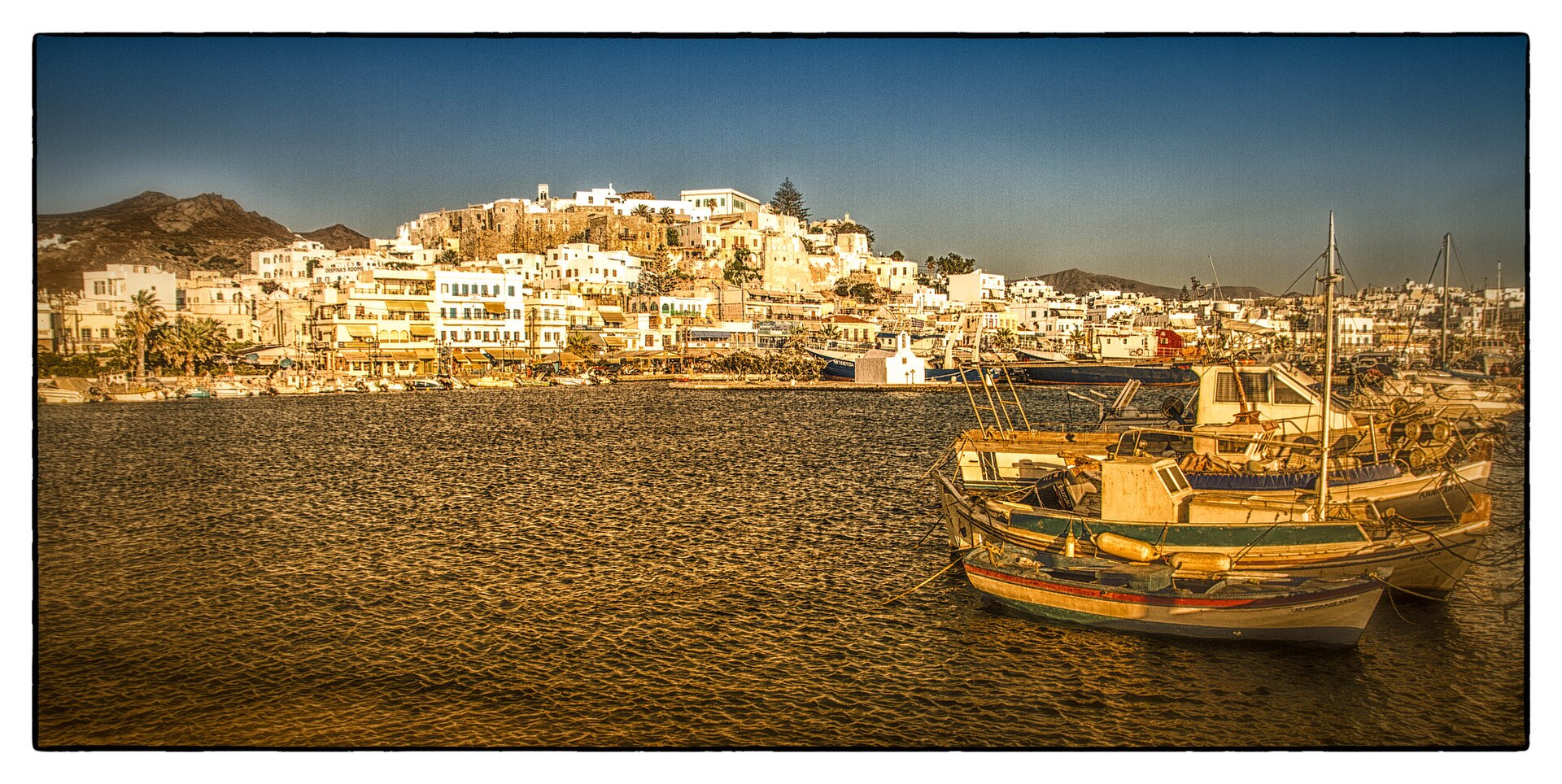
At the foot of the Kastro extends Bourgos, the district historically inhabited by the Greek population during Venetian rule. It is a vibrant area, where the alleys become narrower and fill with artisanal workshops, traditional taverns and small shops of local products. Here the architecture is more typically Cycladic, with whitewashed walls and colored shutters. Chora's waterfront, on the other hand, is the center of contemporary social life: a succession of cafes and restaurants where one sits to observe the flow of fishing boats and ferries, sipping a glass of ouzo while the sea breeze cools the summer evenings.
Panagia Myrtidiotissa: the church of the waters
Looking towards the port, attention is often captured by a small white church that seems to float on the sea. It is Panagia Myrtidiotissa, located on a tiny rock a short distance from the shore. Reachable only by boat or, for the more adventurous, with a brief swim, this small church is one of the most photographed subjects of Chora. Its isolated position, surrounded by crystal-clear blue, makes it a symbol of protection for Naxian sailors. It is a place of great suggestiveness, especially during religious holidays, when boats of fishermen gather around the rock for celebrations, creating a bridge of faith between land and sea.
Grotta: between myth and underwater archaeology

The area of Grotta, located on the northern side of Chora, takes its name from the numerous marine cavities that dot the cliffs. This stretch of coast is of great archaeological interest: here lie the submerged remains of the Mycenaean city of Naxos. When the sea is calm, it is possible to glimpse underwater the foundations of ancient dwellings and port structures. On land, excavations have unearthed a necropolis and remains of settlements that testify to the importance of Naxos already in the Bronze Age. Grotta beach, battered by the north wind, offers a wild and powerful landscape, in sharp contrast with the protected calm of the main port.
The landscape: between sea and fertile plains
Chora is not an isolated entity, but the gateway to an extraordinarily fertile hinterland, a rare case in the arid Cyclades. Behind the city extend valleys rich in olive groves, citrus orchards and vegetable gardens, dominated in the distance by Mount Zas, the highest peak of the archipelago. The coast immediately south of Chora offers fine sandy beaches and shallow waters, such as Agios Georgios, ideal for families, gradually transforming into the long golden stretches of Agios Prokopios and Agia Anna. This landscape variety allows you to pass in a few minutes from the bustle of the capital to the rural peace of villages or to the wild beauty of coastal dunes.
Flavors and traditions of Naxos
Naxos's gastronomic culture is celebrated throughout Greece for the quality of its raw materials. In Chora it is possible to taste the famous Graviera Naxou, a PDO cheese with a sweet and hazelnut flavor, and the island's celebrated potatoes, considered the best in the country thanks to the mineral-rich soil. An unmissable experience is tasting the Kitron, a liqueur obtained from the leaves of a particular citrus fruit similar to citron, produced in the historic Vallindras distillery in the village of Halki but omnipresent in Chora's bars. Local cuisine also celebrates meat, with dishes such as 'Rosto' (braised pork in red wine), reflecting the island's agricultural soul that marries maritime traditions.
Experiences not to be missed
- Watch the sunset from the Portara, feeling the force of wind and history.
- Get lost in the alleys of the Kastro at dusk, when soft lights ignite the medieval atmosphere.
- Visit the Archaeological Museum to admire Cycladic idols in their land of origin.
- Dine in a Bourgos tavern trying Naxos potatoes and Graviera cheese.
- Take a morning walk along the pier to the small church of Panagia Myrtidiotissa.
- Explore artisan shops selling loom-made textiles and silver jewelry.
- Sip a glass of Kitron in one of the bars overlooking the port.
When to go and how to experience the city
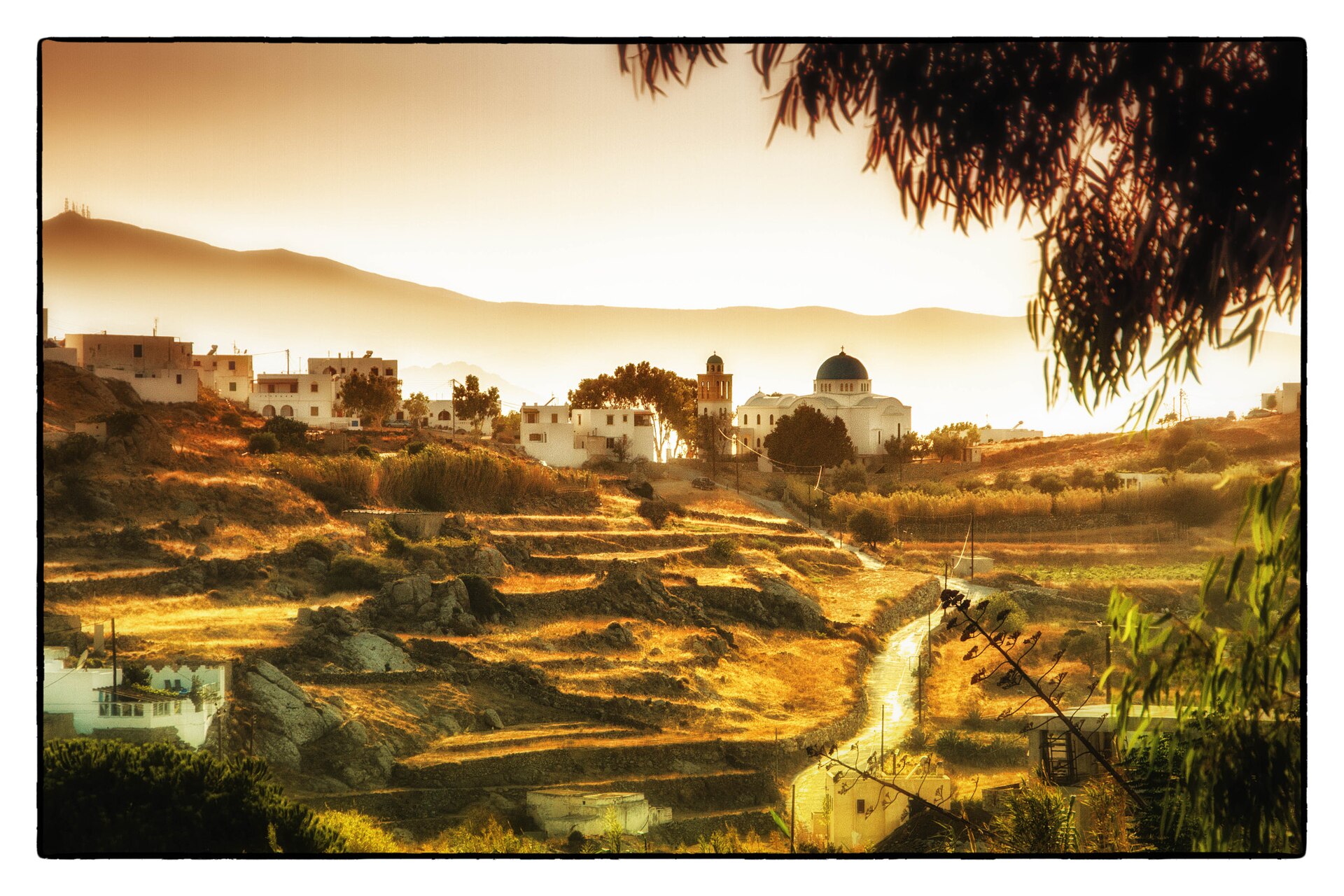
Chora of Naxos is an enjoyable destination for much of the year, but it is at its best between May and June or in September. In these periods the climate is ideal for exploring on foot and the crowds are moderate, allowing you to grasp the authentic essence of island life. July and August are the liveliest months, perfect for those seeking entertainment and nightlife, although the Meltemi wind can blow with force. To experience Chora like a local, dedicate the hot hours to museum visits or beach relaxation nearby, reserving late afternoon for the climb up to the Kastro. The city is very safe and can be navigated entirely on foot; a pair of comfortable shoes is essential for tackling the cobblestones and staircases of the historic districts.
FAQ
Quanto tempo occorre per visitare Chora?
Dove si può parcheggiare vicino al centro?
Chora è adatta alle famiglie con bambini?
Qual è il momento migliore per fotografare la Portara?
Getting there
- Aeroporto Nazionale di Naxos (JNX) - 3 km
- Non presenti sull'isola
- Chora è il fulcro stradale dell'isola; tutte le strade principali partono dal porto e collegano i villaggi dell'entroterra.
- Il modo più suggestivo per arrivare è via mare da Atene (Pireo o Rafina) o dalle isole vicine come Paros e Santorini.
Perfect for
Un viaggio nel tempo che spazia dagli idoli cicladici alla dominazione veneziana, con monumenti unici come la Portara.
Naxos è il paradiso dei buongustai grazie a formaggi DOP, patate celebri e il liquore Kitron.
I tramonti sul mare e le cene nei vicoli del Kastro rendono Chora una meta ideale per le coppie.
To see
