

Shkodër
A legend tells of three brothers who, while building the walls of a fortress above the confluence of two rivers, watched everythin...
Updated 8 July 2026
This season · July · Summer
What to do in Shkodër now
The story
The story of Shkodër
Illyrian origins: Scodra and the kingdom of Gentius
Shkodër is one of the oldest cities in the Balkans, continuously inhabited for over two and a half millennia. Under the name Scodra it was the capital of the Illyrian kingdom of the Labeates and, in the 2nd century BC, the residence of the last independent Illyrian ruler, Gentius, who organized resistance against Rome here during the Third Illyrian War. In 168 BC, Gentius's defeat marked the end of Illyrian autonomy and the beginning of Roman rule, which would fold the city first into the province of Illyricum and later into Praevalitana. Latin historians, Livy foremost among them, describe it as a natural stronghold, defended by the river's course and a steep hill: the same hill on which, centuries later, Rozafa Castle would rise.
Byzantium, the Balshas and the Venetian century
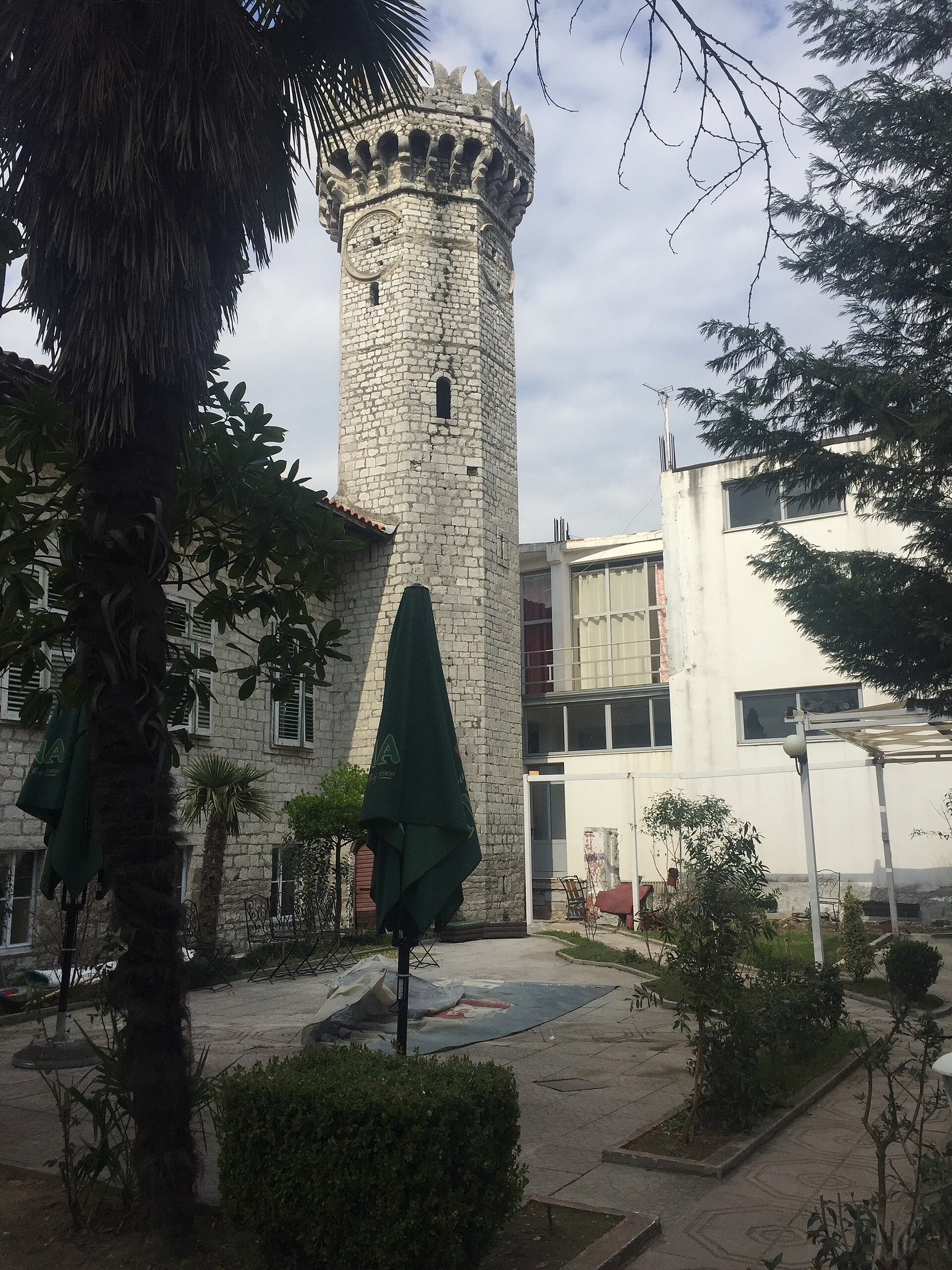
After the fall of the Western Roman Empire, Scodra remained for centuries within the Byzantine orbit, later contested between Serbs and local Albanian lordships. In the 14th century the city became the seat of power of the Balsha (Balšić) family, who made it one of the political capitals of medieval Albania before ceding it, in 1396, to the Republic of Venice. For nearly a century Scutari, as the Venetians called it, was a Christian bastion on the eastern Adriatic: reinforced walls, garrisons, trade with the Balkan hinterland. It was the Ottoman siege of 1478-79, recounted by the Scutarine chronicler Marin Barleti, that brought this era to a close: after a memorable resistance, the city fell under the control of the Sublime Porte, ushering in over four centuries of Ottoman rule.
Rozafa Castle
On the rocky hill at the confluence of the Buna and Drin rivers stand the walls of Rozafa Castle, occupied since Illyrian times and rebuilt in successive layers by Byzantines, Venetians and Ottomans. It is the city's iconic monument and the place where the legend of Rozafa's sacrifice takes shape: certain cracks in the rock, locals say, still seep a whitish water. Within the walls, among the remains of a church converted into a mosque and then left to ruin, a small museum tells the story of the site, while from the ramparts the view sweeps over Lake Shkodër, the plain of the two rivers and, on clear days, the first peaks of the Albanian Alps.
St. Stephen's Cathedral
St. Stephen's Cathedral, seat of the Archdiocese of Shkodër-Pult, perhaps tells the story of the city's troubled relationship with faith better than any other building. Closed and converted into a sports gymnasium in 1967, when Enver Hoxha's regime proclaimed Albania the world's first officially atheist state, it was returned to worship only after the fall of communism in 1990, among the first masses celebrated openly in the country. Its reconstruction and the return of the bells ringing over the old town have become, for many Scutarines, the tangible symbol of religious freedom regained, in a city that for centuries was the main outpost of Albanian Catholicism.
The Lead Mosque
In the heart of the old town stands out the Xhamia e Plumbit, the Lead Mosque, built between 1773 and 1774 on the orders of Mehmet Pasha Bushati, founder of the dynasty that governed Shkodër as a semi-independent pashalik in the late eighteenth century. Its name comes from the lead sheets covering its dome, a rare construction solution for the era and the region. Having survived the campaigns of demolition of places of worship in the 1960s, when most of the city's mosques were torn down or repurposed, it remains today one of the few well-preserved examples of Ottoman religious architecture in Albania, a testament to the long coexistence of Muslim and Catholic communities in the city.
The Mes Bridge
A few kilometers from the center, where the Kir river flows between rocks and reed beds, one crosses a humpbacked stone bridge that is among the most photographed in northern Albania: the Ura e Mesit, built in the eighteenth century, again at the behest of the Bushati family. With its long sequence of uneven arches, designed to fit the river's irregular bed, it is considered the best-preserved Ottoman bridge in the country. A trip to the village of Mes, reachable by car or bicycle, offers a glimpse of the Shkodër countryside far from city traffic and a good sense of what the region looked like before modern roads arrived.
The Marubi National Museum of Photography
Shkodër holds a heritage unique of its kind: Albania's oldest and richest photographic archive, begun in the mid-nineteenth century by the Italian photographer Pietro Marubi, who arrived in the city as a political exile and became the first to systematically capture Albanian society. The collection, continued for three generations by the Marubi family, numbers over half a million images and is now housed in the Marubi National Museum of Photography, in a modern building in the old town. Leafing through those black-and-white plates means watching Shkodër, and Albania as a whole, pass through empires, kingdoms and regimes through the faces of its inhabitants.
The old town and Kolë Idromeno street
The ancient core of Shkodër winds through a network of low streets, arcades and Italian-inspired facades, a legacy of long-standing trade ties with Venice and, later, with early-twentieth-century Italy. The most elegant pedestrian thoroughfare bears the name of Kolë Idromeno, a Scutarine painter, photographer and architect responsible for some of the city's finest buildings. Today the street is the city's living room: outdoor cafés, craftsmen's workshops, passersby stopping to chat as if time, here, flowed at a different pace than in the rest of the country.
Lake Shkodër and the Buna and Drin rivers
Right beside the city opens Lake Shkodër, the largest in southern Europe, shared with neighboring Montenegro and a refuge for colonies of pelicans, herons and other protected waterbirds. From its waters rises the Buna river, which flows placidly to the Adriatic through a plain of orchards, reed beds and small river harbors, while a little further south the waters of the Drin, one of the longest rivers in the Balkans, trace an equally striking landscape. Boat trips, traditional fishing and simple walks along the banks reveal the more rural, quiet face of Shkodër, just minutes from the bustle of downtown.
The Albanian Alps and the gateway to Theth
To the northeast, behind the last houses of the city, the skyline rises sharply into the Bjeshkët e Nemuna, the so-called Albanian Alps or Accursed Mountains, among the least tamed mountain ranges in Europe. Shkodër is their natural gateway: from here depart the buses and vans that climb the gorges up to Theth and Valbona, shepherd villages that have become destinations for international trekking, with their stone kulla towers and trails crossing passes over two thousand meters high. Even without venturing to high altitude, a single day's excursion is enough to breathe the different air, clearer and steeper, that separates the Shkodër plain from the mountainous hinterland.
Traditions, faith and coexistence
For centuries Shkodër has been a laboratory of coexistence among Catholic, Muslim and, to a lesser extent, Orthodox communities, a balance that has endured despite the religious persecutions of the twentieth century. In the mountainous region surrounding it, the principles of the Kanun of Lekë Dukagjini still survive, the ancient code of customary law that regulated honor, hospitality and one's given word, the famous besa. The epic tradition of northern Albania, once sung by rhapsodes to the sound of the lahutë, the one-stringed instrument, has left a cultural legacy still felt in city festivals and ethnographic museums, while hospitality toward strangers remains, even today, an almost sacred value.
Scutarine cuisine
The proximity of the lake and the two rivers has shaped a cuisine strongly tied to freshwater fish: carp, eel and lake trout appear in dishes such as krap me salcë, carp in sauce, or grilled eel served with seasonal vegetables. Alongside the lake dishes, meat preparations typical of the hinterland endure, from tavë kosi to byrek filled with cheese, spinach or meat, often accompanied by a glass of homemade raki distilled by the family. The Italian influence, a legacy of decades of trade and cultural contact, can be felt in the quality of the coffee and in some of the pastry shops downtown, where the local sweet meets recipes that crossed over from the other side of the Adriatic.
When to go and how to experience the city
Spring and early autumn are the best seasons to visit Shkodër: mild temperatures, clear light over the lake and mountains, and days still long enough to combine a visit to the castle with a trip out of town. Summer brings intense heat to the plain but is also the best time to head up toward Theth and Valbona, while winter, colder, offers an old town that is almost deserted and the snow-capped roofs of the Albanian Alps as a backdrop. Shkodër is known throughout Albania as the city of bicycles: the most natural way to move between the castle, the lake and the pedestrian center is on a saddle, following the unhurried rhythm its people have preserved despite the turbulent history.
- Climb up to Rozafa Castle at sunset, when the light sets the lake and the two rivers aglow
- Stroll or cycle along Kolë Idromeno street and through the old town
- Visit the Marubi National Museum of Photography
- Cycle out to the Mes Bridge along the Kir river
- Take a boat trip on Lake Shkodër among reed beds and bird colonies
- Set off on a day trip to Theth, in the Albanian Alps
- Try lake carp or eel at a trattoria in the center
- Watch the sunset over the Buna from the city bridge
FAQ
Come si arriva a Shkodër?
Quanto tempo dedicare alla visita?
Cosa vedere se si ha solo un giorno?
Dove parcheggiare l'auto?
Shkodër è adatta a una visita con bambini?
Qual è il periodo migliore per andare?
Getting there
- Aeroporto Internazionale di Tirana 'Nënë Tereza', circa 90 km (1h30 in auto o corriera)
- Da Tirana si percorre la strada statale SH1 fino a Shkodër (circa 1h30); da nord si entra dal valico di Hani i Hotit, sul confine con il Montenegro, a circa 30 km da Podgorica.
- Il centro storico è quasi interamente pedonale: conviene parcheggiare vicino al ponte sul Buna o ai piedi del Castello di Rozafa e spostarsi a piedi o in bicicletta, il mezzo più diffuso tra gli abitanti.
Perfect for
Duemilacinquecento anni di stratificazioni illiriche, veneziane, ottomane e comuniste racchiuse in poche colline.
Il lago più grande dell'Europa meridionale e i fiumi Buna e Drin, a un passo dalle prime cime alpine.
Porta d'accesso naturale alle Alpi Albanesi, con Theth e Valbona raggiungibili in giornata.
Il Museo Marubi e il centro storico raccontano un secolo e mezzo di fotografia e architettura italo-albanese.
Pesce di lago, byrek e raki casalingo in una cucina a metà tra montagna e acqua dolce.
To see
