

Ayios Nikolaos
Nestled on the shores of the Gulf of Mirabello, Ayios Nikolaos (or Agios Nikolaos) reveals itself to travelers as one of the brigh...
Updated 7 July 2026
This season · July · Summer
What to do in Ayios Nikolaos now
The story
The story of Ayios Nikolaos
From ancient Lato pros Kamara to Venetian rule
The history of Ayios Nikolaos has its roots in the archaic era, when it served as a strategic port for the powerful city-state of Lato, situated inland. During this period, known as Lato pros Kamara, the settlement became a thriving trading centre thanks to its sheltered position in the Gulf of Mirabello. With the decline of the city-states and the arrival of the Roman era, the area retained its maritime importance, but it was under Venetian rule that the town's profile changed radically. The Venetians built the Mirabello fortress here in the 13th century, of which only a few traces remain today, but which gave its name to the entire gulf. The town's current name instead comes from the small Byzantine church of Saint Nicholas, located on the Nissi peninsula, which bears witness to the spiritual continuity of the place through the dark centuries of Saracen raids and the long Ottoman occupation.
Lake Voulismeni: the mythological heart of the town
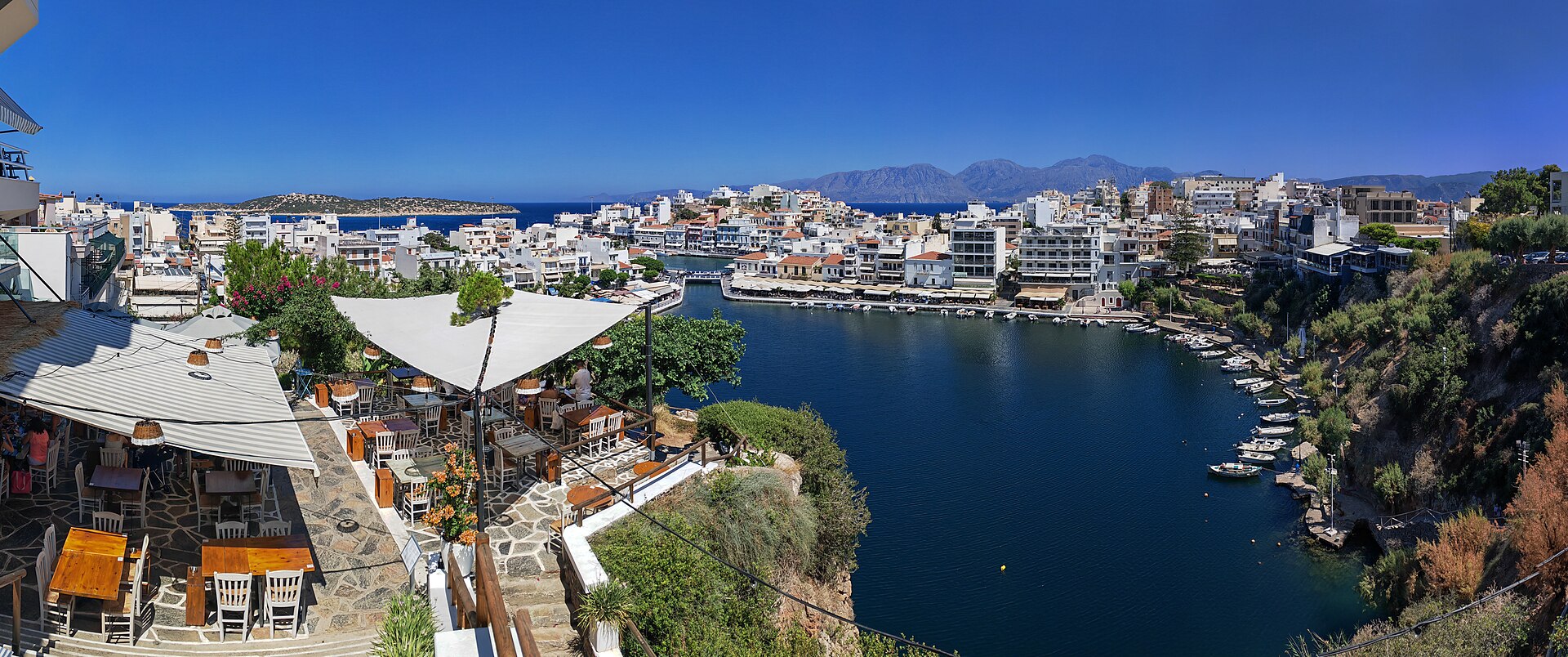
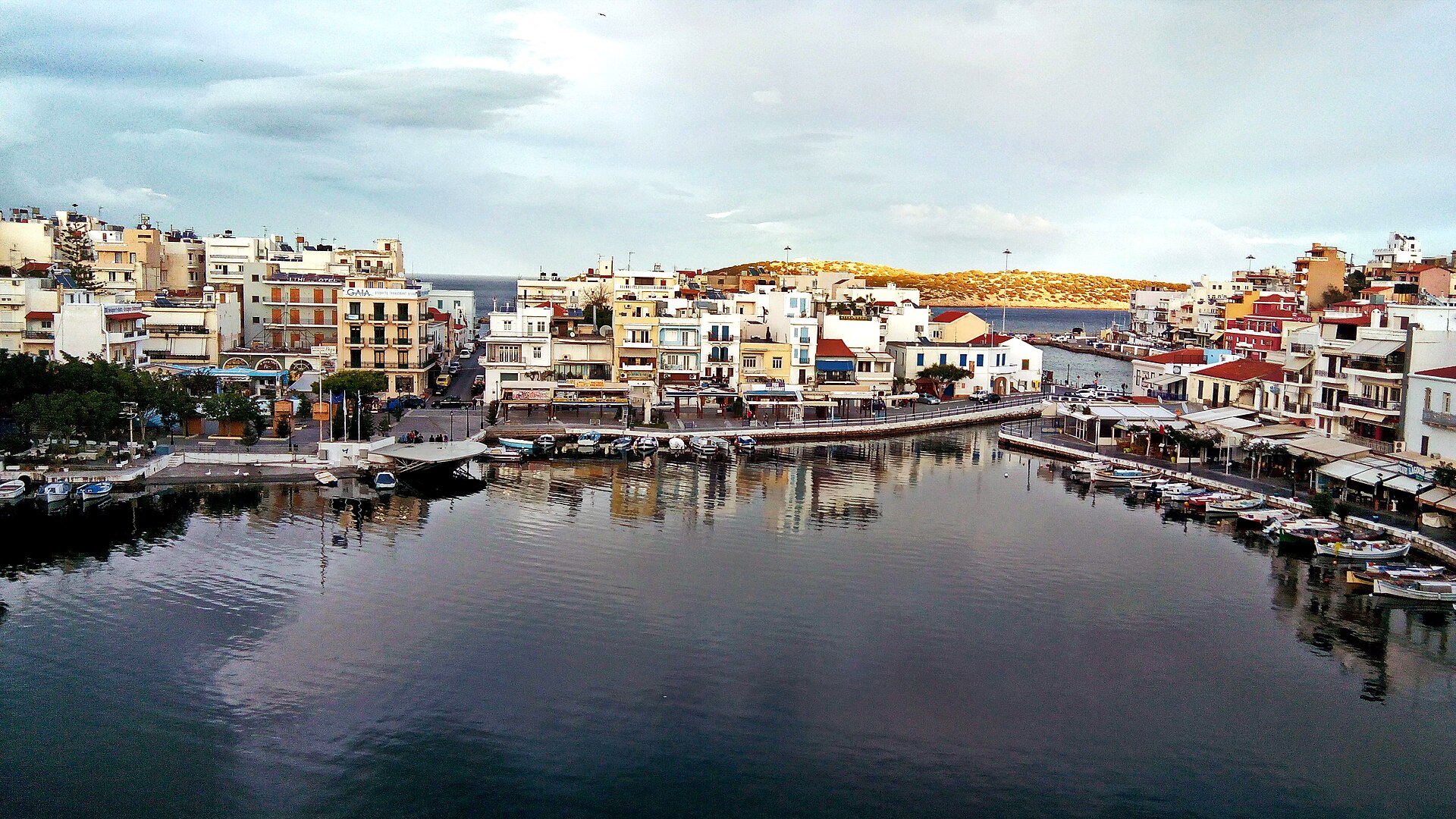
The most iconic and evocative feature of Ayios Nikolaos is undoubtedly Lake Voulismeni, an almost perfectly circular body of fresh water connected to the sea by an artificial channel dug in 1870. Legend has it that the goddesses Athena and Artemis used to bathe in its waters, which for centuries were believed to be bottomless. Although science later established a depth of around 64 metres, the aura of mystery surrounding it remains intact. The lake is ringed by red rock walls and tamarisk trees, with a walkway that lets visitors stroll while admiring the colourful boats moored along its shores. In the evening, the lights of the many restaurants and cafés overlooking the water create magical reflections, making it the social heart of the town and the most photographed spot in the whole Lasithi region.
The Church of Agios Nikolaos: the origin of the name
Standing on a promontory overlooking the bay, north of the modern harbour, is the small, essential Church of Agios Nikolaos, one of the oldest Christian monuments on Crete. Dating back to the 7th century, this domed Byzantine structure is the architectural gem that gave the town its name. Inside, despite the damage suffered over the centuries, fragments of original frescoes can still be admired, representing one of the rare examples of art from both the pre-iconoclastic period and the era that followed. The simplicity of its rough-stone lines contrasts with the intense blue of the surrounding sea, offering a corner of peace and spirituality far from the bustle of the centre. Its panoramic position makes it a privileged vantage point for taking in the full extent of the gulf and the shape of the coastline.
The Archaeological Museum and the treasures of Lasithi
For anyone wishing to explore the visceral bond between Ayios Nikolaos and its Minoan past, the town's Archaeological Museum is an essential stop. Considered one of the most important on the island after the one in Heraklion, it houses extraordinary finds from excavations across eastern Crete. Its most famous piece is the so-called "Goddess of Myrtos", an exquisite vase shaped like a female figure dating back to the Bronze Age, a symbol of Minoan craftsmanship. The collections range from the Neolithic period right through to the end of the Greco-Roman era, offering a complete overview of the region's social and artistic evolution. Through gold jewellery, painted pottery and bronze weapons, the museum tells the story of a people of sailors and traders who made this part of Crete a nerve centre of the ancient Mediterranean.
Kitroplatia: the town beach and the story of the citron
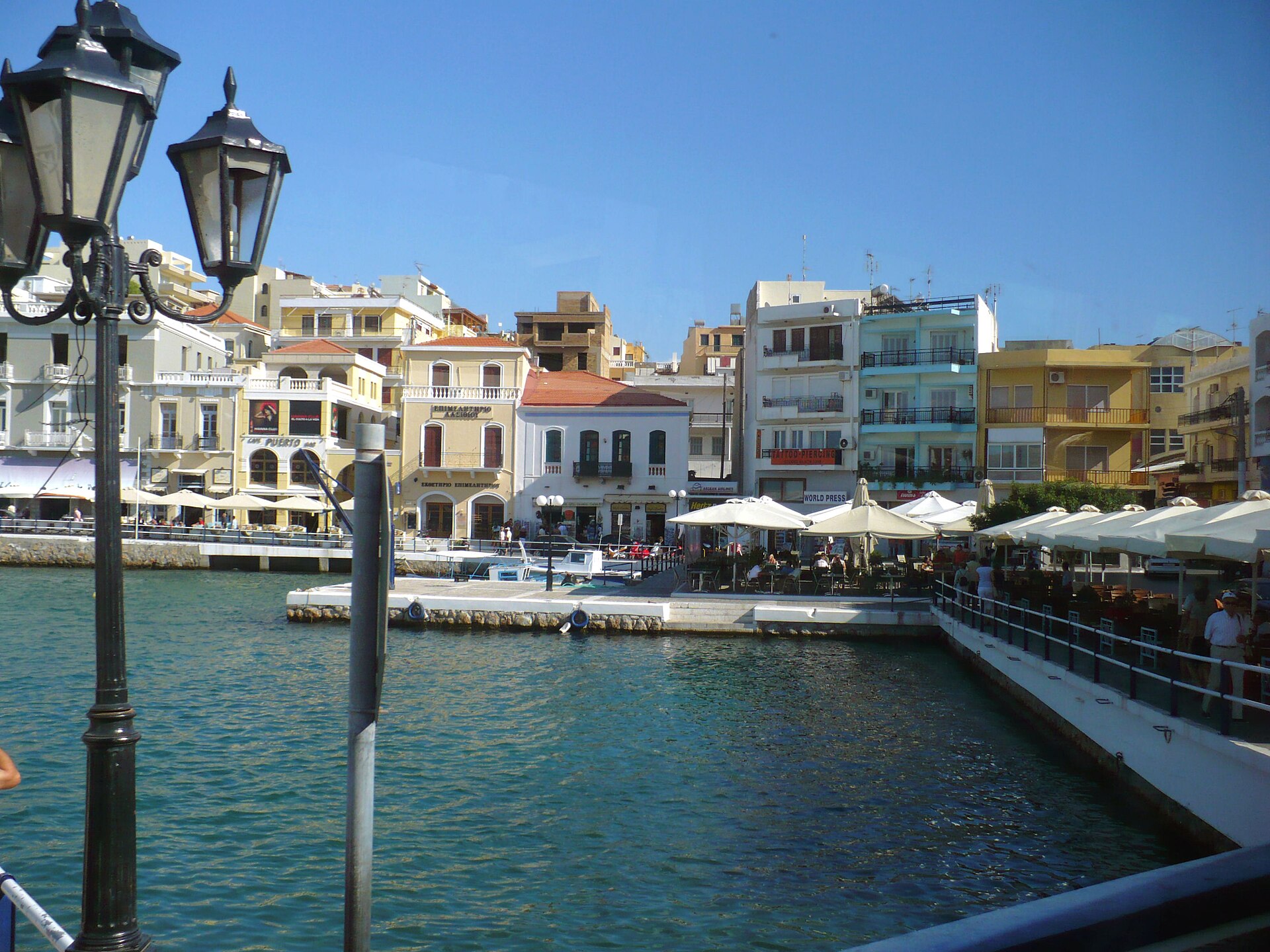
Kitroplatia is far more than a simple town beach; it is a place steeped in local history. Its name comes from the citron (kitro) trade, when the fruit was once gathered from the surrounding valleys and shipped from this small bay to markets around the world. Today the square is paved and ringed by traditional taverns serving ultra-fresh fish just steps from the shore. It is the locals' favourite spot for a quick morning swim or a sunset drink. Although right in the centre of town, the beach boasts crystal-clear water and a magnificent view of the mountains plunging into the sea. Walking along the coastal path that starts here leads to the "Horn of Amalthea" sculpture, a modern work celebrating the myth of the goat that nursed Zeus, a symbol of abundance and an unbreakable bond with the land of Crete.
Precious surroundings: Elounda and the island of Spinalonga
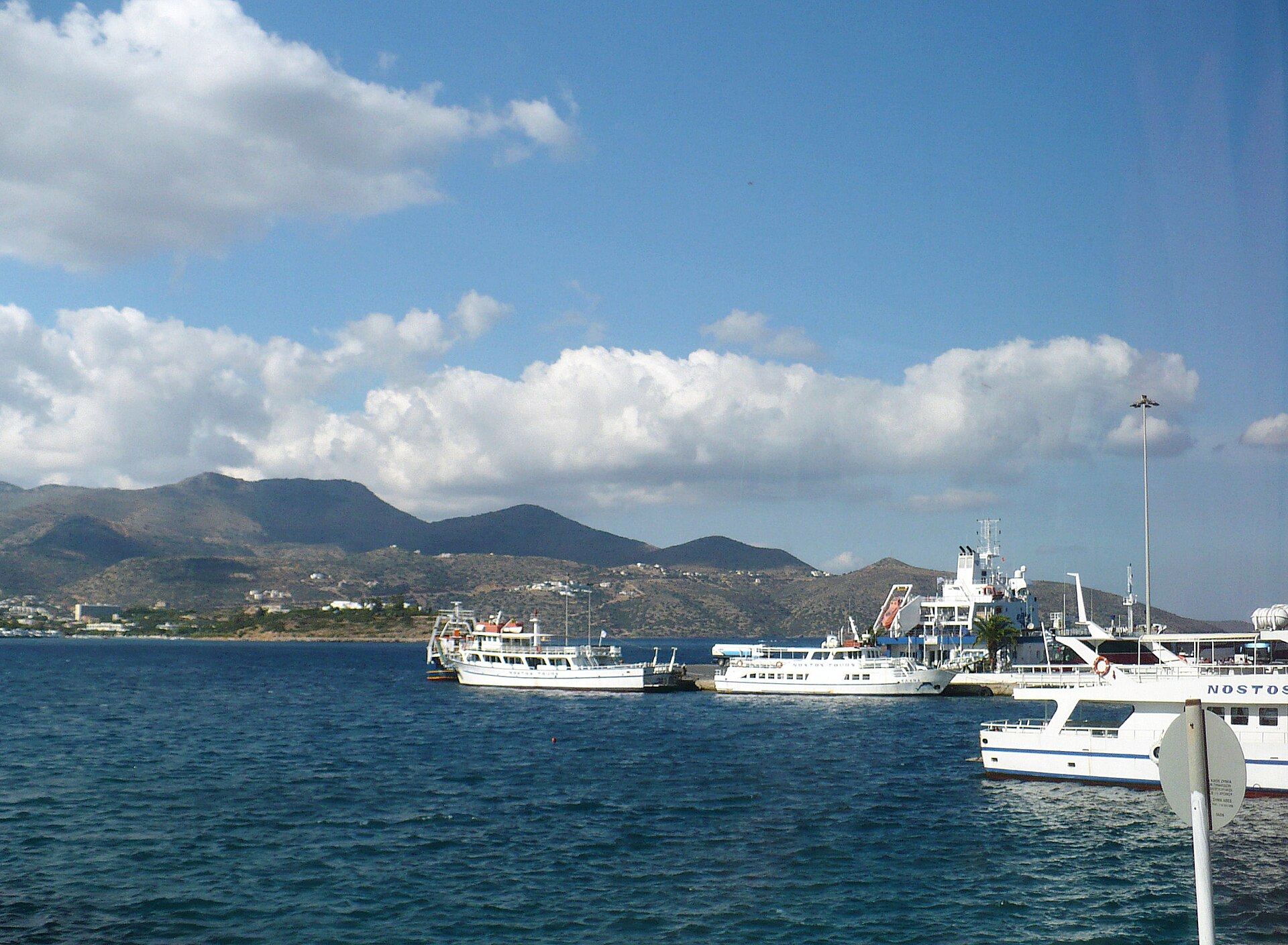
A few kilometres north of Ayios Nikolaos lies Elounda, once a quiet fishing village and today synonymous with luxury and exclusivity thanks to its world-famous resorts. Yet the area's true historical attraction is the island of Spinalonga, reachable by a short boat crossing. This Venetian fortress, later transformed into an Ottoman citadel, is sadly known for having been one of the last leper colonies in Europe, in use until 1957. Walking among the ruins of the houses, the old hospital and the church of Spinalonga is a deeply moving experience, a journey into the memory of an isolated community that managed to organise itself with dignity despite its suffering. The poignant beauty of the surrounding landscape, with turquoise waters lapping the stone walls, creates an emotional contrast that stays etched in every visitor's heart.
The hinterland: the village of Kritsa and ancient Lato
Moving away from the coast and climbing towards the slopes of the Dikti mountains, you come to Kritsa, one of the most traditional and picturesque villages in Crete. Famous for producing top-quality olive oil and for the art of weaving, Kritsa retains an untouched rural architecture with narrow lanes and whitewashed houses. Just before the village stands the church of Panagia Kera, renowned for its 13th- and 14th-century Byzantine frescoes, among the best preserved on the island. Continuing further on, you reach the ruins of ancient Lato, the mother city of Ayios Nikolaos. Set in a defensive position between two hills, Lato offers a breathtaking view over the Gulf of Mirabello and lets visitors explore the remains of the agora, the prytaneion and an ancient theatre, testifying to the greatness of a civilisation that ruled these valleys millennia ago.
Landscape and Nature: between golden beaches and centuries-old olive groves
The landscape around Ayios Nikolaos is a triumph of Mediterranean biodiversity. The coast unfolds as a succession of sheltered coves and broader beaches such as Almyros, where a small river flows into the sea, creating a distinctive ecosystem of cool waters and lush vegetation. The hinterland, meanwhile, is dominated by endless expanses of olive trees, many of them centuries old, producing Crete's liquid gold. The surrounding mountains offer hiking trails leading to legendary caves and solitary plateaus, such as Katharo, where nature reveals itself wild and untouched. The Gulf of Mirabello, with its uninhabited islets such as Kolokytha, is a paradise for sailing and snorkelling enthusiasts, thanks to seabeds teeming with life and waters that shade from cobalt blue to emerald green, sheltered from the strong winds that often blow across other parts of the island.
Traditions and flavours: the cuisine of Lasithi
The gastronomic culture of Ayios Nikolaos reflects the richness of the Cretan diet, based on simple yet exceptional-quality ingredients. You cannot leave town without having tried "Dakos", a barley rusk topped with fresh tomato, mizithra cheese and plenty of extra-virgin olive oil. The local taverns offer specialities such as "Chochlioi Boubouristi" (fried snails), kid goat stewed with wild herbs, and traditional sweets like "Kalitsounia", pastries filled with sweet cheese or greens. The ritual of hospitality is always sealed with a glass of Raki (or Tsikoudia), the local spirit that accompanies every gathering. During religious festivals, such as Easter or the feast of Saint Nicholas in December, folk traditions come alive in group songs and dances, where the sound of the Cretan lyra sets the rhythm of a community still deeply bound to its farming and seafaring roots.
- Strolling around Lake Voulismeni at sunset, as the lights reflect on the water.
- Visiting the island of Spinalonga to immerse yourself in its intense, moving history.
- Exploring the lanes of Kritsa and buying handwoven textiles from local artisans.
- Taking a dip in the icy, invigorating waters of Almyros beach.
- Admiring the Byzantine frescoes of the church of Panagia Kera.
- Tasting Lasithi's extra-virgin olive oil at a local agricultural cooperative.
- Catching a ferry for a day trip to the wild beaches of the island of Chrissi.
FAQ
Qual è il periodo migliore per visitare Ayios Nikolaos?
È facile parcheggiare in centro?
Quanto tempo occorre per visitare la città?
La città è adatta alle famiglie con bambini?
Getting there
- Aeroporto Internazionale di Heraklion (Nikos Kazantzakis) - 60 km
- Non sono presenti linee ferroviarie a Creta.
- Percorrere la National Road (E75) verso est da Heraklion; il tragitto dura circa un'ora.
- I bus della compagnia KTEL collegano frequentemente Heraklion ad Ayios Nikolaos con un servizio affidabile ed economico.
Perfect for
Un viaggio tra siti minoici, fortezze veneziane e chiese bizantine di inestimabile valore.
Spiagge Bandiera Blu e un golfo protetto ideale per chi cerca acque calme e cristalline.
La patria dell'olio d'oliva e della cucina cretese più autentica, tra taverne di mare e borghi montani.
To see
