

Tiranë
In 1614 the Ottoman pasha Sulejman Bargjini had a mosque, a hammam and a public bakery built at the foot of Mount Dajti: around th...
Updated 8 July 2026
The story
The story of Tiranë
From Ottoman origins to the capital of the young Albanian state
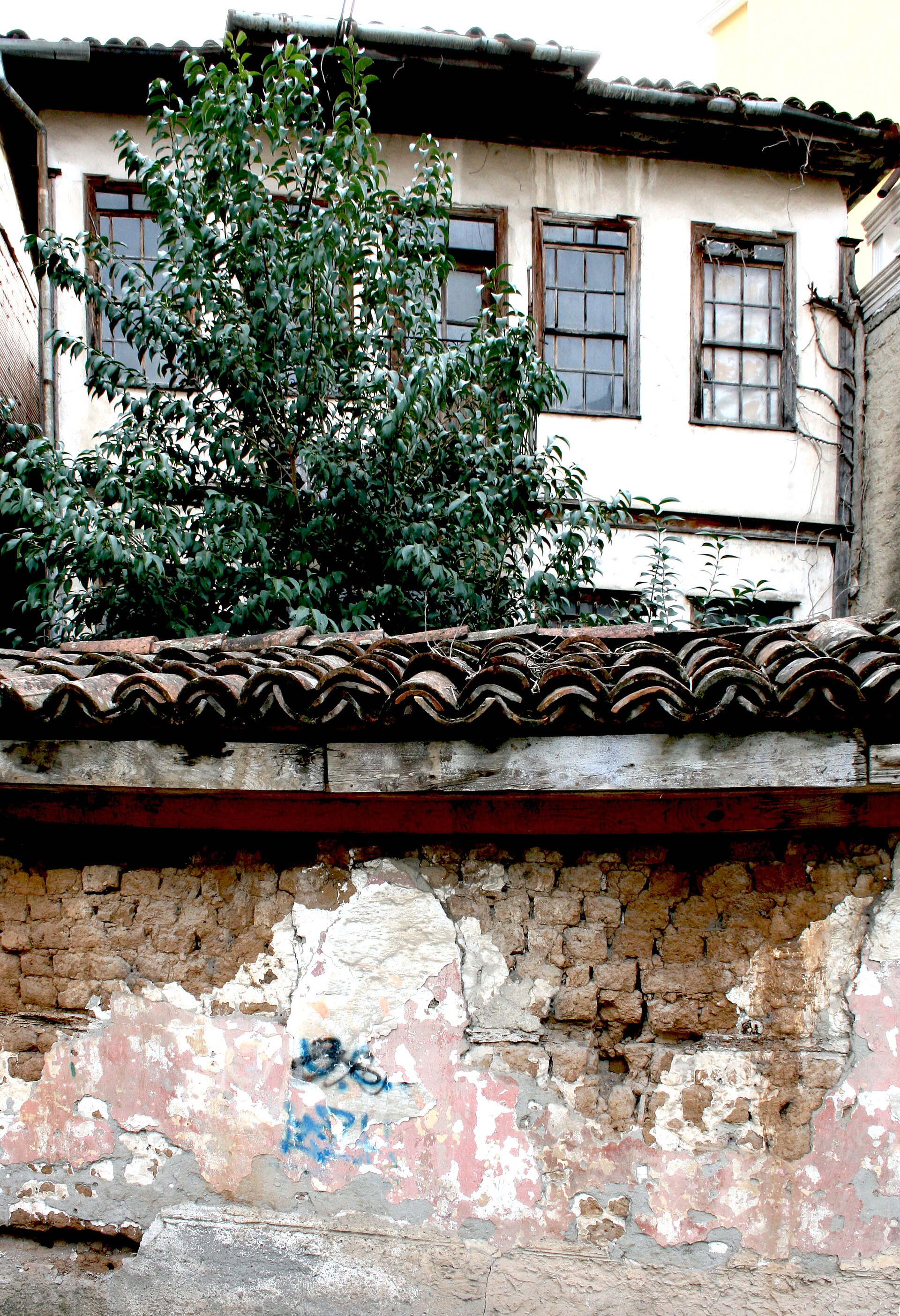
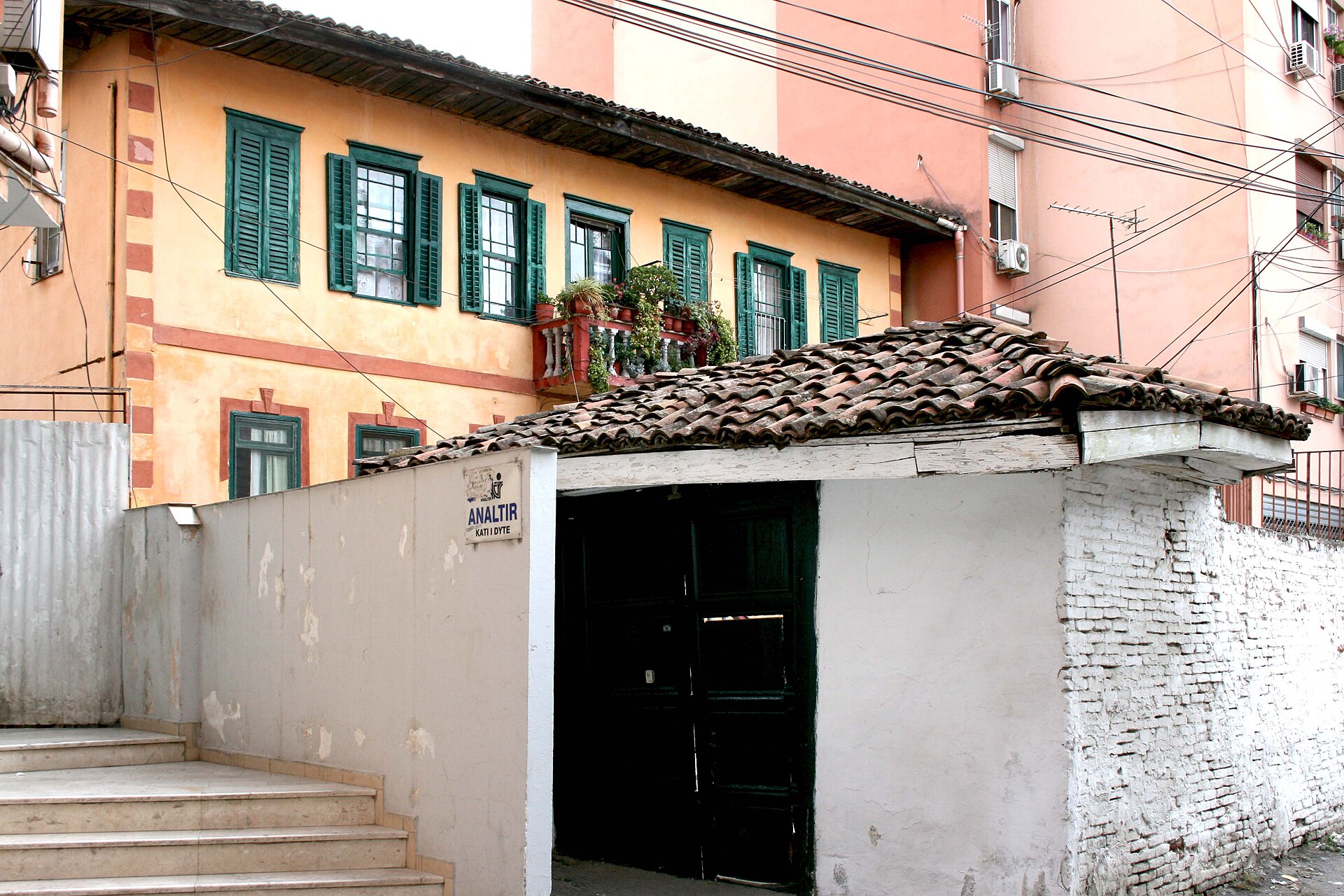
Tirana was born as a typical Ottoman çarshi: a grid of craft workshops, a mosque and public baths, in a territory disputed between local pashaliks and the Sublime Porte. It grew slowly over three centuries, remaining a secondary centre compared to Shkodra or Elbasan, until the First World War and the collapse of the Ottoman Empire opened the way to Albanian independence, proclaimed in 1912. In 1920 the Congress of Lushnjë designated it provisional capital precisely for its central position, equidistant from the northern and southern regions and less exposed to rivalries among the country's great historic centres. In the 1930s King Zog I summoned Italian architects such as Armando Brasini, Gherardo Bosio and Florestano Di Fausto to Tirana, who designed the ministries around Skanderbeg Square and the future Boulevard of the Martyrs of the Nation, giving the young capital a rationalist face that still coexists today with the surviving Ottoman architecture.
Enver Hoxha's communism and the forty years of isolation
With the victory of the communist partisans in 1944, Tirana became the nerve centre of one of the most closed regimes of the twentieth century. Enver Hoxha progressively broke with Tito's Yugoslavia, then with the Soviet Union, and finally with China, driving Albania into near-total isolation from the rest of the world. Obsessive fear of a foreign invasion led, between the 1970s and 1980s, to the construction of hundreds of thousands of reinforced-concrete bunkers across the whole country, many of which are still visible along the roads around the capital. The city was divided into restricted-access zones, with the Blloku district reserved exclusively for the party leadership and off-limits to the population. When Hoxha died in 1985, the system began to crumble, until its definitive collapse in 1990 and the first free elections of 1991, which marked the start of a radical transformation for Tirana.
Skanderbeg Square, the city's rediscovered living room
The symbolic heart of Tirana is a vast square named after Gjergj Kastrioti Skanderbeg, the hero who held out against the Ottoman armies for a quarter of a century in the fifteenth century: his equestrian statue, the work of sculptor Odhise Paskali, has watched over it since 1968. For decades the square was an enormous car park split up by traffic roundabouts; the transformation carried out between 2015 and 2017, signed by the Belgian studio 51N4E in dialogue with Albanian artist Anri Sala, turned it into a pedestrian expanse of pyramidal stone, dotted with green hillocks and almost free of cars. Around it stand the National History Museum, the Et'hem Bey Mosque, the Palace of Culture with its opera house, the town hall and some of the ministries designed by the Italian architects: in just a few steps you cross eighty years of Albanian urban history.
The Et'hem Bey Mosque and the Clock Tower
A short distance away stands the Et'hem Bey Mosque, begun in 1789 on the orders of Molla Bey and completed in 1823 by his son Haxhi Ethem Bey. It is famous for the frescoes decorating its portico and interior: landscapes with trees, waterfalls and bridges, an unusual figuration for an Islamic place of worship, owing much to the itinerant painting workshops of the late Ottoman period. Hoxha's regime, which in 1967 proclaimed Albania the world's first atheist state and closed or destroyed thousands of places of worship, spared it by classifying it as a cultural monument: at its reopening in 1991, more than ten thousand people gathered for the first public prayer after decades of prohibition. Beside it stands the Clock Tower, the Kulla e Sahatit, erected in 1822 on the model of Balkan Ottoman towers: you can still climb its narrow staircase today for a close-up view over the rooftops of the centre.
The National History Museum and the great mosaic of the Albanians
The facade of the National History Museum, the largest in Albania, stands out on the square; it opened in 1981 to recount, in chronological sequence, Illyrian archaeology, the Ottoman era, the National Renaissance, the anti-fascist resistance and, in rooms reopened only in recent years, the crimes of communism. Visitors are greeted by the enormous mosaic entitled 'Shqiptarët' (The Albanians), created by a collective of artists including Kristaq Rama, father of the future mayor and former prime minister Edi Rama: a procession of Illyrian warriors, national heroes, partisans and workers advancing as one towards the viewer, rifle and flag in hand, in the triumphant iconography of socialist realism. Left in place even after the fall of the regime, the mosaic has become one of the city's most photographed symbols, suspended between cumbersome memory and recognised artistic value.
Dëshmorët e Kombit Boulevard, the city's Italian backbone
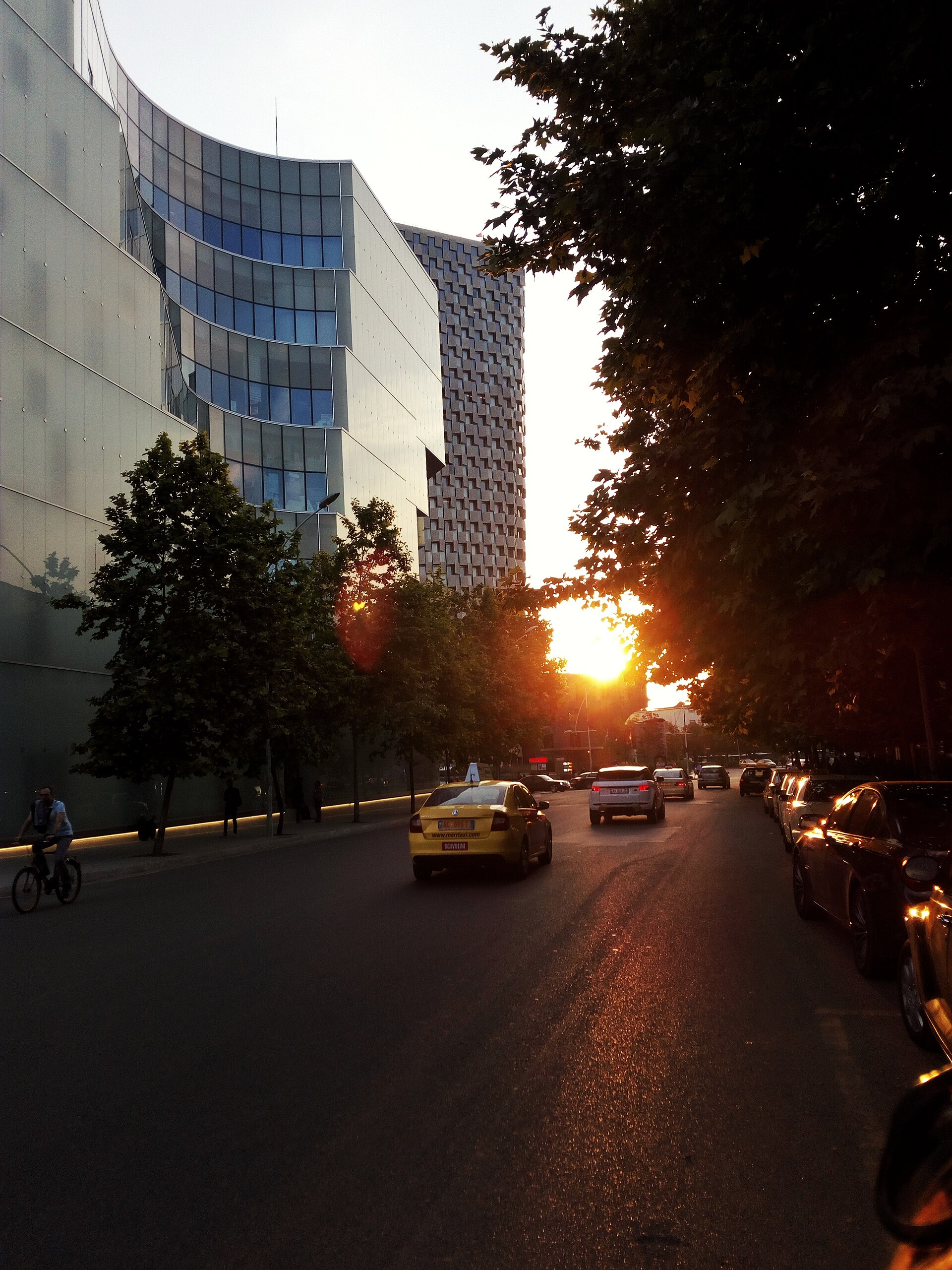
From the square, the long straight axis of Bulevardi Dëshmorët e Kombit, the Boulevard of the Martyrs of the Nation, runs south, laid out by Italian town planners in the 1930s as 'Viale Littorio' and renamed several times over the following decades. Flanked by rationalist-style ministries, the University of Tirana, the former Pyramid and some of the city skyline's newest skyscrapers, the boulevard still functions today as the city's spine: it links the old railway station area to the historic centre and continues on to the entrances of the Grand Park, tracing in a straight line the whole twentieth-century urban expansion of Albania. Walking along it, perhaps in the late afternoon when it fills with strollers, remains one of the most direct ways to read the overlapping layers of Tirana's urban planning.
Blloku, from armoured district to nightlife
A few blocks from the main boulevard lies Blloku, 'the block', the residential district reserved until 1990 for the leadership of the Party of Labour: a fenced and guarded area, off-limits to ordinary people on pain of arrest, where the villas of Enver Hoxha and Politburo members once stood. When the regime fell, the ban fell with it, and within a few years the district turned itself completely inside out: the same once-armoured streets today host the highest concentration of bars, restaurants, boutiques and nightspots in the capital, frequented above all by a young population and an international crowd. Hoxha's villa, still standing but abandoned behind a discreet fence, remains one of the few visible traces of that era in a district that has chosen to reinvent itself as its opposite symbol: that of freedom regained.
The Pyramid of Tirana, from mausoleum to cultural centre
A little further on you come across the angular silhouette of the Pyramid, built in 1988 as a museum dedicated to the memory of Enver Hoxha, who had died three years earlier, designed by his daughter Pranvera Hoxha and his son-in-law Klement Kolaneci. When the regime fell, the building lost its celebratory function and went through a long period as a discotheque, a conference hall, a NATO logistics base during the Kosovo crisis, and finally an abandoned ruin, its sloping walls used by neighbourhood kids as an improvised slide. After years of neglect and controversy over its possible demolition, the Pyramid was restored between 2022 and 2023 to a design by the Dutch studio MVRDV, which clad its sides in coloured panels and fitted it out with a digital training centre for young people, offices and event spaces.
Edi Rama's colours and the new face of the facades
One of contemporary Tirana's most photographed interventions arose from an apparently simple choice: from the early 2000s the then-mayor Edi Rama, a painter by training even before he was a politician, had the grey facades of socialist-era apartment blocks painted with cobalt blue, orange, yellow and geometric patterns designed together with local artists. The operation, carried out without large budgets, sprang from the idea that giving colour back to the buildings could also give back confidence and civic pride to a city that had emerged exhausted from the 1990s decade, amid the collapse of pyramid savings schemes and social unrest. The project drew the attention of the international press and helped launch Rama's political career, who later became Albanian prime minister. Walking today through the residential neighbourhoods around the centre, you still come across these patchwork buildings, by now part of the capital's visual identity.
Bunk'Art, the regime's underground memory
Among the most singular legacies of the regime's defensive paranoia are the two Bunk'Art museums, housed in genuine underground bunkers built for Hoxha and his entourage. Bunk'Art 1, dug into the hillside on the edge of the city towards Mount Dajti, spreads over five levels and more than a hundred armoured rooms, designed to house the entire party leadership in the event of an attack: today its halls recount, amid concrete corridors and airtight doors, the military and political history of communist Albania. Bunk'Art 2, smaller and located beneath the city centre just a few steps from Skanderbeg Square, is instead dedicated to the Sigurimi, the secret police, and the surveillance network that kept the whole population under control. Visiting them in sequence conveys, better than many books, the physical sense of those forty years.
The Dajti Ekspres cable car and Mount Dajti
To the east of the city rises the silhouette of Mount Dajti, which the people of Tirana have always called 'Tirana's balcony'. Since 2005 it has been reached by the Dajti Ekspres, the longest cable car in the Balkans, almost five kilometres of cable that in about fifteen minutes climbs from the eastern outskirts to a plateau around a thousand metres high, offering on clear days a view that sweeps across the whole Tirana plain and, in the distance, the Adriatic. At the top there are trails through pine woods, a small amusement park, restaurants with terraces and paragliding take-off points; in winter the altitude makes the occasional snowy outing possible, a rarity in the city below. It is the most immediate excursion for anyone wanting to get away from the traffic of the centre without really leaving the city.
The Grand Park and the artificial lake
South of the Boulevard of the Martyrs stretches the Grand Park, Parku i Madh, dozens of hectares of mixed woodland created largely through the voluntary labour of the population in the 1950s, when levelling hills and planting trees was also a collective ritual of building the new socialist state. Inside it lies Tirana's artificial lake, created by damming the course of the Lana river, today surrounded by a pedestrian lakeside promenade with cafés, kiosks and jogging tracks much frequented by students and families in the evening hours. The park also houses the university's botanical garden, an amphitheatre and broad shaded areas that, in the hottest months, offer real relief from the asphalt of the centre: it is the green lung the people of Tirana rely on for a break just steps from home.
The Pazari i Ri and the flavours of Tirana
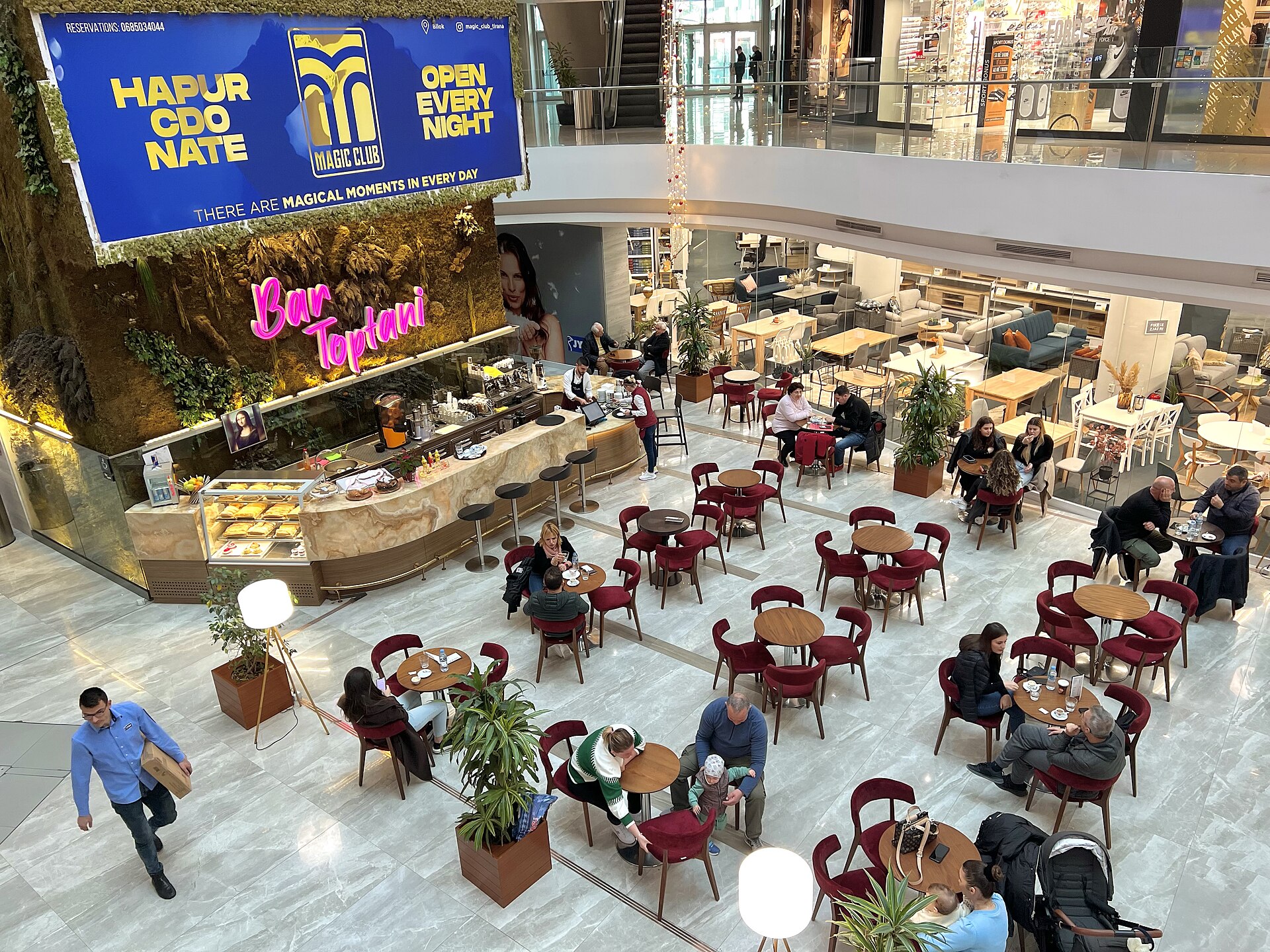
A little north of the centre, the Pazari i Ri, the new bazaar, has in recent years become once again one of the liveliest places in the city, following a refurbishment that has showcased its large octagonal brick pavilion and the fruit and vegetable stalls coming in from the surrounding countryside. Around the market, establishments serving everyday Tirana cuisine have multiplied: byrek filled with cheese or spinach, spiced meat qofte, fërgesë made with peppers, tomato and melted cheese, tavë kosi, baked lamb with yoghurt and eggs, often accompanied by a glass of home-made raki. Coffee culture, a strong legacy of Italian influence, punctuates the day here as much as anywhere: an espresso at the counter, standing up, is still the ritual with which many people in Tirana begin their day.
When to go and how to experience Tirana
Tirana can be visited comfortably almost all year round, but the most pleasant seasons remain spring, between April and June, and early autumn, between September and October, when temperatures allow for long walks without suffering the muggy heat of July and August or the heavier rains of winter. In high summer the centre can feel overheated and partly deserted, as many residents head off to the coastal beaches, an hour or so away. Two or three days are enough for the historic core around Skanderbeg Square, Blloku and a trip on the Dajti Ekspres; those with more time can add an excursion to the northern lakes or to the ruins of Apollonia and Berat to the south. The city gets around comfortably on foot or with local taxi apps, and it is on Blloku's evening strolls that its informal character comes across best.
- Climb the Clock Tower for a close-up view over the rooftops of the centre
- Get lost in the armoured corridors of Bunk'Art 1 and Bunk'Art 2
- Take the Dajti Ekspres cable car at sunset for a view over the plain
- Stroll among the coloured buildings of the residential districts designed under Edi Rama
- Have an evening aperitivo among the bars of Blloku
- Have breakfast at the Pazari i Ri with a byrek fresh out of the oven
FAQ
Quanti giorni servono per visitare Tirana?
Come si arriva dall'aeroporto al centro città?
Qual è il periodo migliore per andare a Tirana?
Cosa vedere a Tirana in un solo giorno?
Tirana è adatta a una visita con bambini?
Dove parcheggiare in centro?
Getting there
- Aeroporto Internazionale di Tirana Nënë Tereza (Rinas), circa 17 km a nord-ovest del centro
- Tirana è il principale nodo stradale del paese, raggiungibile in auto da Durazzo (circa 30 minuti), Scutari (circa 2 ore) e Valona (circa 2 ore e mezza) lungo la rete di superstrade nazionali.
- Il centro è in gran parte pedonale o a traffico limitato: meglio lasciare l'auto in un parcheggio custodito e muoversi a piedi o con le app di taxi locali.
Perfect for
Musei, bunker e mosaici raccontano cinquant'anni di dittatura e la rinascita post-1990.
Il Blloku, ex quartiere blindato del regime, oggi concentra i bar e i locali più frequentati della capitale.
Il monte Dajti, raggiungibile in funivia, e il Grande Parco con il suo lago offrono un contrappunto verde alla città.
Facciate dipinte, la Piramide riconvertita e i ministeri razionalisti italiani compongono uno skyline in continua trasformazione.
Il Pazari i Ri e la cucina di byrek, qofte e tavë kosi raccontano la Tirana quotidiana.
To see
Da vedere a Tiranë
Routes · Trovido Route